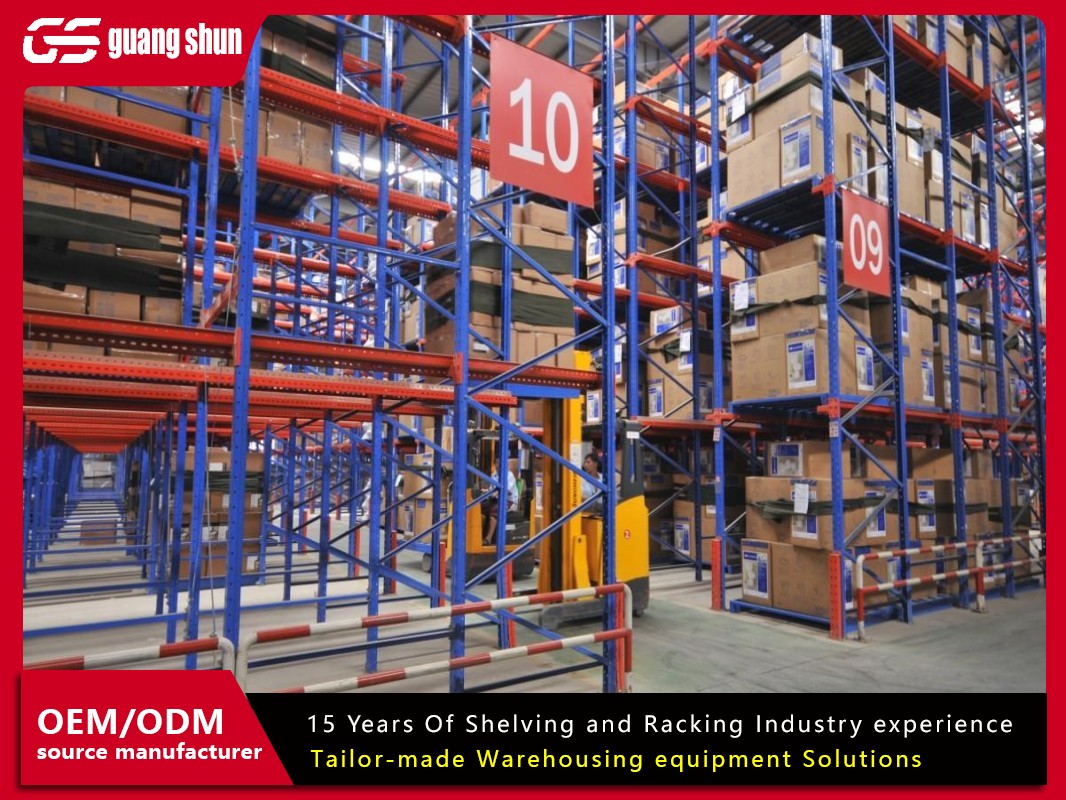
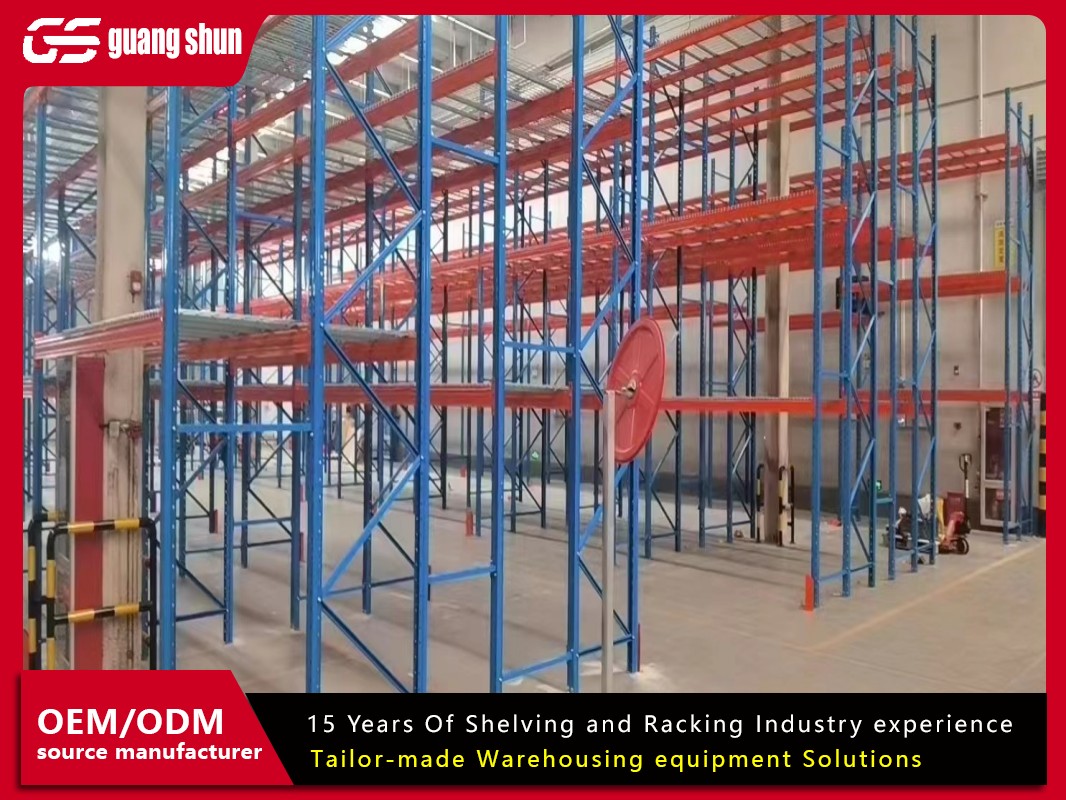
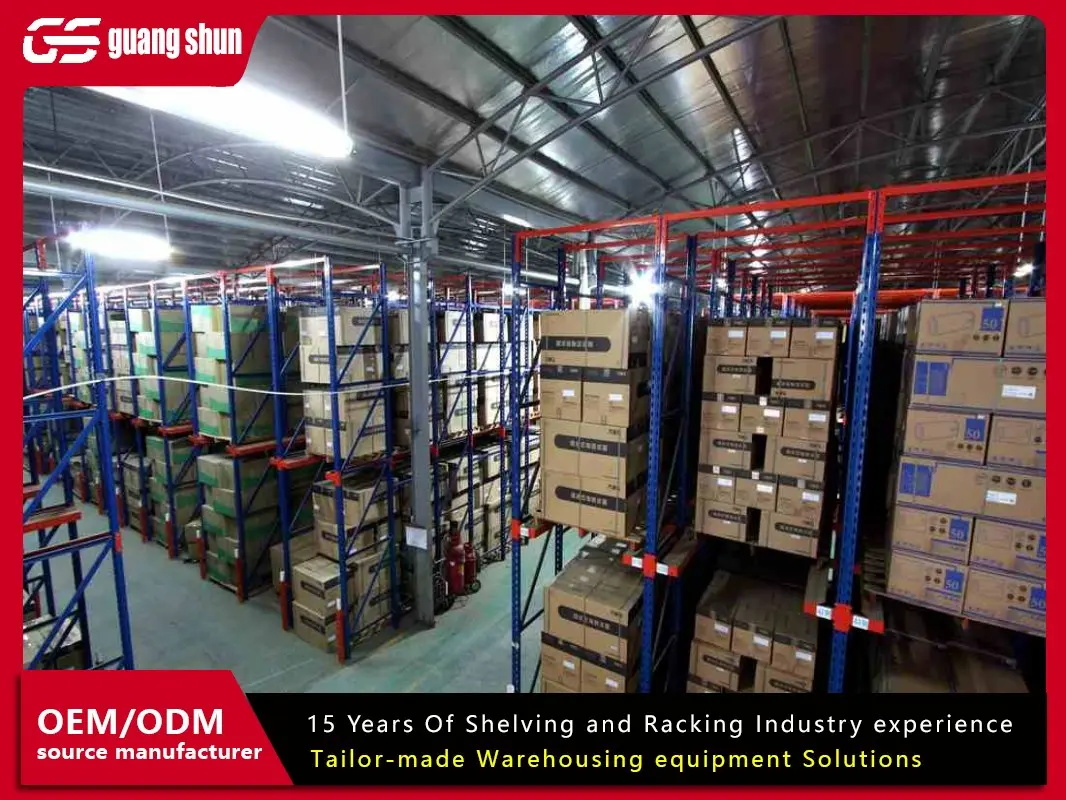
Rapid pallet racking systems address a critical industry need: the ability to deploy high-density storage infrastructure quickly without compromising structural integrity or long-term durability. Unlike traditional racking that requires extensive welding, drilling, and on-site fabrication, modern rapid pallet racking utilizes engineered boltless connections, pre-assembled components, and modular designs that reduce installation time by up to 60%. This article examines the mechanical engineering, material specifications, and application scenarios that define these systems. Guangshun has deployed rapid installation racking across automotive, e-commerce, and cold storage sectors, and the following data derives from those projects.
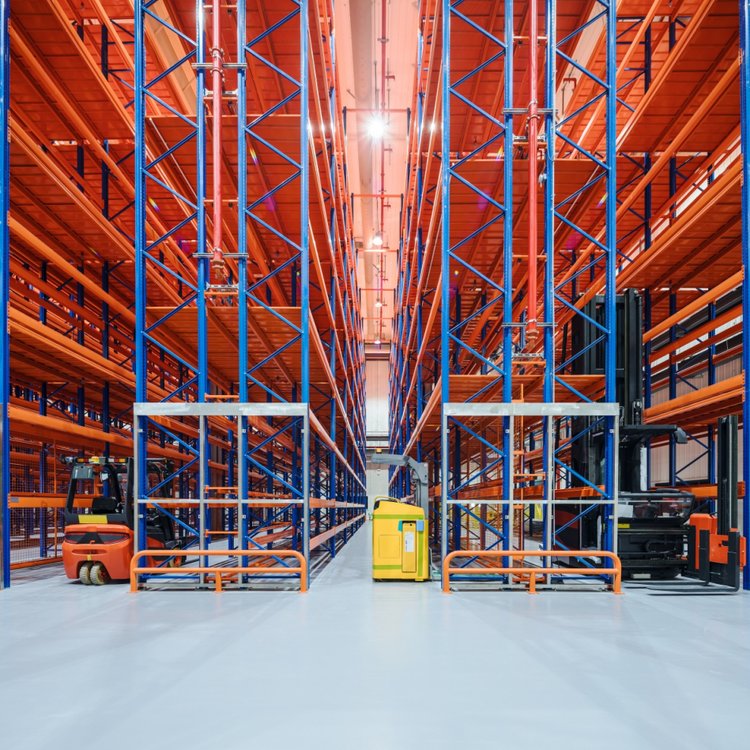
The term rapid pallet racking encompasses systems engineered for accelerated deployment while meeting all structural standards (RMI, FEM, AS4084). Speed is achieved through:
Boltless connections: Punched columns with integral tabs that lock beams without tools or minimal hand tools.
Pre-fabricated sub-assemblies: Upright frames pre-welded with bracing, delivered ready for positioning.
Modular bay design: Standardized bay widths (typically 2.4 m, 2.7 m, or 3.0 m) allow repetitive installation sequences.
No welding on site: All connections are mechanical, eliminating hot work permits and fire watch requirements.
Comparative data from Guangshun installations shows:
Traditional welded racking: 40–60 man-hours per 100 pallet positions.
Conventional bolted racking: 25–35 man-hours per 100 pallet positions.
Rapid pallet racking (boltless): 12–18 man-hours per 100 pallet positions.
This speed translates to reduced project timelines, lower labor costs, and minimized facility downtime during expansion or retrofits.
The reliability of rapid pallet racking hinges on connection design. Tab-and-slot connections must resist shear, moment, and uplift forces under full load and seismic events.
Beam-end tabs are stamped from the beam section itself or welded. Key parameters:
Tab thickness: Typically 5/16" (8 mm) for heavy-duty applications.
Tab width: Engineered to match keyhole slots in upright columns.
Engagement depth: Minimum 25 mm to resist dislodgement.
Safety locks: Spring-loaded or bolt-in clips that prevent accidental beam lift-off from forklift impact.
Guangshun's tab connections are tested to withstand 1.5× rated load without permanent deformation. Each batch undergoes pull-out testing per manufacturer quality protocols.
Upright columns for rapid pallet racking feature precisely punched keyholes at 50 mm or 75 mm vertical increments. Punching must maintain column strength—perforation reduces buckling capacity by 10–20% compared to solid columns. Finite element analysis (FEA) optimizes hole placement to minimize strength loss while allowing full adjustability.
While tab connections are considered pinned (non-moment-resisting) in traditional analysis, modern designs incorporate friction or integral locks that provide partial moment resistance. This improves overall frame stability under horizontal loads. For seismic zones, some rapid systems add bolted moment plates at key bays while maintaining rapid assembly for the remainder.
Rapid pallet racking uses the same steel grades as conventional systems but with optimized thickness-to-weight ratios.
SS400 / A36: 36–40 ksi yield; standard for light-to-medium loads.
Q355B / A572 Grade 50: 50 ksi yield; allows lighter sections for same capacity, reducing component weight for faster handling.
HSLA (High-Strength Low-Alloy): Used for high-capacity beams where weight reduction is critical.
Powder coating: 60–80 μm polyester or epoxy; color-coded for visual management. Curing time may extend lead times; pre-coated coil minimizes on-site finishing.
Pre-galvanized steel: Zinc coating applied before roll-forming; ideal for cold storage where corrosion resistance is required without additional processing.
Hot-dip galvanized: Post-fabrication dipping provides maximum corrosion protection; adds 2–3 days to lead time.
Rapid pallet racking is particularly valuable in contexts where time-to-operate is critical.
E-commerce and retail warehouses face seasonal surges. Rapid racking allows temporary expansion of storage capacity within weeks rather than months. Modular systems can be dismantled and reconfigured for off-peak operations. Guangshun's rapid systems have been deployed in as little as 14 days from order to operation for peak season readiness.
Cold storage facilities have high carrying costs during construction. Accelerated racking installation reduces the time between building completion and revenue-generating storage. Rapid pallet racking with pre-galvanized components eliminates field painting, which is difficult in cold environments.
Existing facilities often need to adapt to changing SKU profiles. Rapid systems allow reconfiguration of beam levels without drilling or welding. Beam adjustments can be completed in hours rather than days, minimizing disruption to ongoing operations.
Fast-moving consumer goods (FMCG) require frequent rack modifications. Rapid pallet racking's tool-free adjustability enables warehouse managers to reconfigure pick faces as product velocity changes.
Rapid pallet racking must meet the same seismic and safety standards as traditional systems.
In seismic zones, rapid systems incorporate:
Seismic clips: Additional bolted plates at beam ends to prevent disengagement during cyclic loading.
Baseplate anchors: Ductile expansion anchors with embedment depths per ASCE 7.
Cross-aisle bracing: Pre-fabricated rod or angle braces that bolt to upright frames.
Guangshun provides seismic calculations for all rapid systems, including non-linear time-history analysis where required.
Forklift impact remains the leading cause of rack damage. Rapid racking systems can include:
Column protectors: Bolt-on guards that absorb impact energy.
Sacrificial beam ends: Replaceable connectors that fail before uprights.
Load indicators: Visual deflection gauges for post-impact assessment.
Boltless connections rely on safety locks (spring clips) to prevent beam lift-off. Guangshun's locks are engineered to resist 500 kg upward force, exceeding forklift lifting forces.
Certified rapid pallet racking requires rigorous testing of connections and components.
Beam-end connections are proof-tested to 1.5× rated beam capacity. Permanent set after unloading must be <0.2% of connection height. Guangshun conducts destructive testing on each connection design batch.
Perforated columns are tested in compression to verify buckling capacity. Stub-column tests per AISI S100 validate the effect of perforations on strength.
Powder coating is tested for crosshatch adhesion (ASTM D3359) and impact resistance (ASTM D2794). Galvanized components meet ASTM A123 for coating thickness.
To realize the speed benefits of rapid pallet racking, installation processes must be optimized.
Floor flatness: FM2 or better (≤4 mm deviation over 3 m).
Anchor layout: Pre-marked templates from engineering drawings.
Component staging: Kitted bays delivered to installation zone.
Baseplate installation: Laser-aligned and grouted day one.
Upright erection: Plumbed and braced before beam installation.
Beam installation: Insert tabs, engage safety locks, verify level.
Bracing and accessories: Installed after beam alignment.
Guangshun's installation crews are factory-trained and can erect 200–300 pallet positions per day on typical projects.
Rapid pallet racking often yields lower total installed cost despite potentially higher material costs than conventional systems.
Welded racking: $250–400 per pallet position (installed).
Bolted racking: $200–350 per pallet position.
Rapid boltless racking: $180–300 per pallet position due to lower labor.
Reduced downtime during installation: Facilities can begin operations 2–4 weeks sooner.
Lower maintenance: No weld inspections; connections easily replaced if damaged.
Flexibility: Reconfiguration costs 50–70% less than welded systems.
For time-sensitive expansions, the payback from earlier revenue generation often offsets premium material costs within 6–12 months.
Rapid pallet racking represents an evolution in storage system engineering, combining the structural integrity of traditional racks with accelerated deployment and operational flexibility. Advances in connection design, material processing, and modular construction have made these systems viable for a wide range of industrial applications. Rapid pallet racking from Guangshun integrates FEA-validated connections, seismic-ready components, and factory-trained installation teams to deliver projects on compressed schedules without compromising safety or longevity.
A1: Rapid pallet racking typically installs in 12–18 man-hours per 100 pallet positions, compared to 25–35 hours for bolted systems and 40–60 hours for welded systems—a 50–70% reduction in installation labor.
A2: Yes, when engineered correctly. Boltless connections are proof-tested to 1.5× rated capacity and meet RMI/FEM standards. However, for extreme seismic zones or very high loads (>6,000 kg per level), bolted or welded connections may still be specified. Guangshun offers both options with documented capacities.
A3: Yes. Beam levels can be moved to different keyhole positions without tools or with basic hand tools. This allows warehouses to adapt to changing SKU profiles without welding or drilling, typically taking 1–2 hours per bay for reconfiguration.
A4: Rapid systems use spring-loaded or bolted safety locks that engage automatically when beams are seated. These locks resist upward forces up to 500 kg, preventing dislodgement during forklift impacts. Guangshun's locks are tested to withstand repeated impacts without failure.
A5: Yes, with additional seismic detailing. This includes seismic clips at beam ends, cross-aisle bracing, and ductile baseplate anchors. Guangshun provides seismic calculations and stamped engineering drawings for all rapid systems installed in SDC D–F zones.
A6: Lead times vary by quantity and customization. Standard components stocked by Guangshun can ship within 2–3 weeks. Custom heights or coatings add 2–4 weeks. Total project timeline from order to operation typically ranges from 4–8 weeks, compared to 10–16 weeks for conventional racking.
For project timelines, load tables, or seismic design assistance, visit Guangshun's rapid pallet racking page or contact our deployment specialists.

 Wechat
Whatsapp
Wechat
Whatsapp