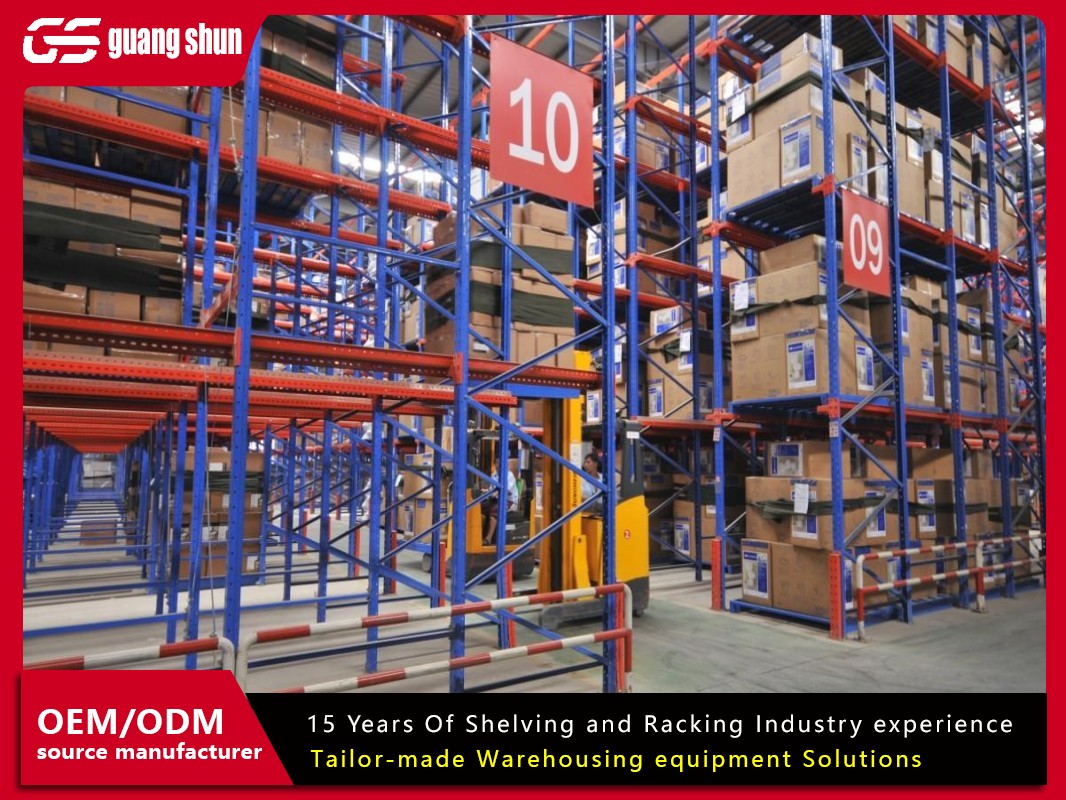
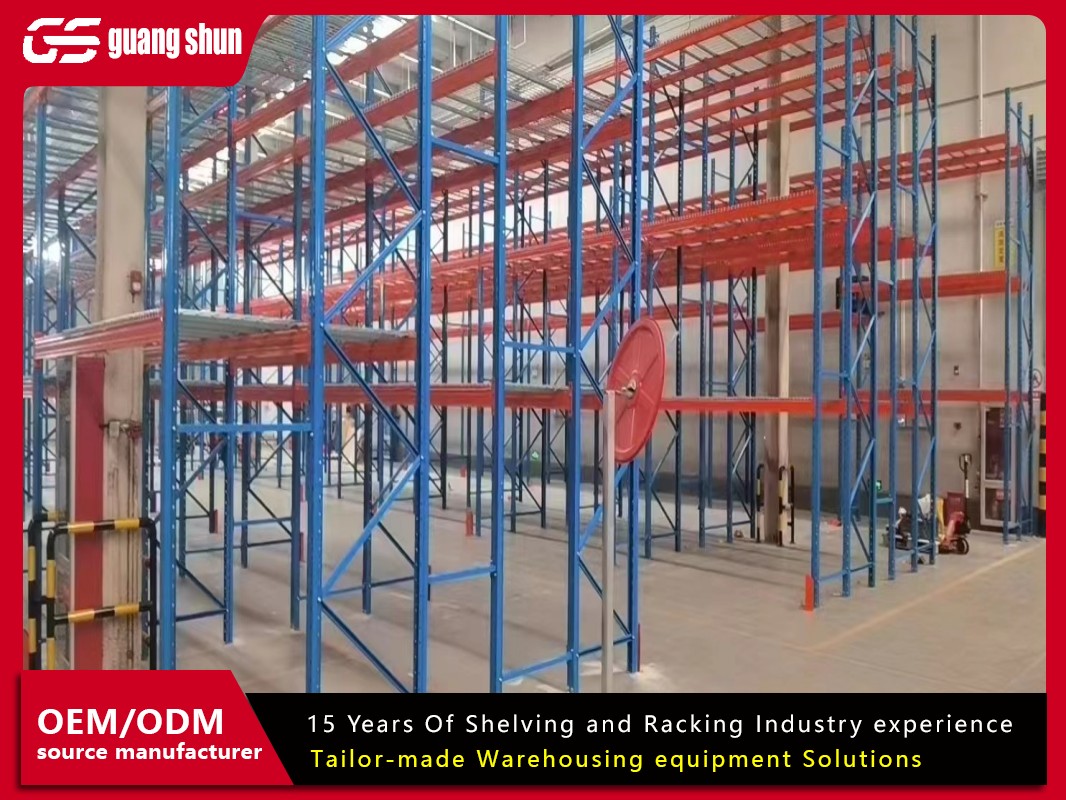
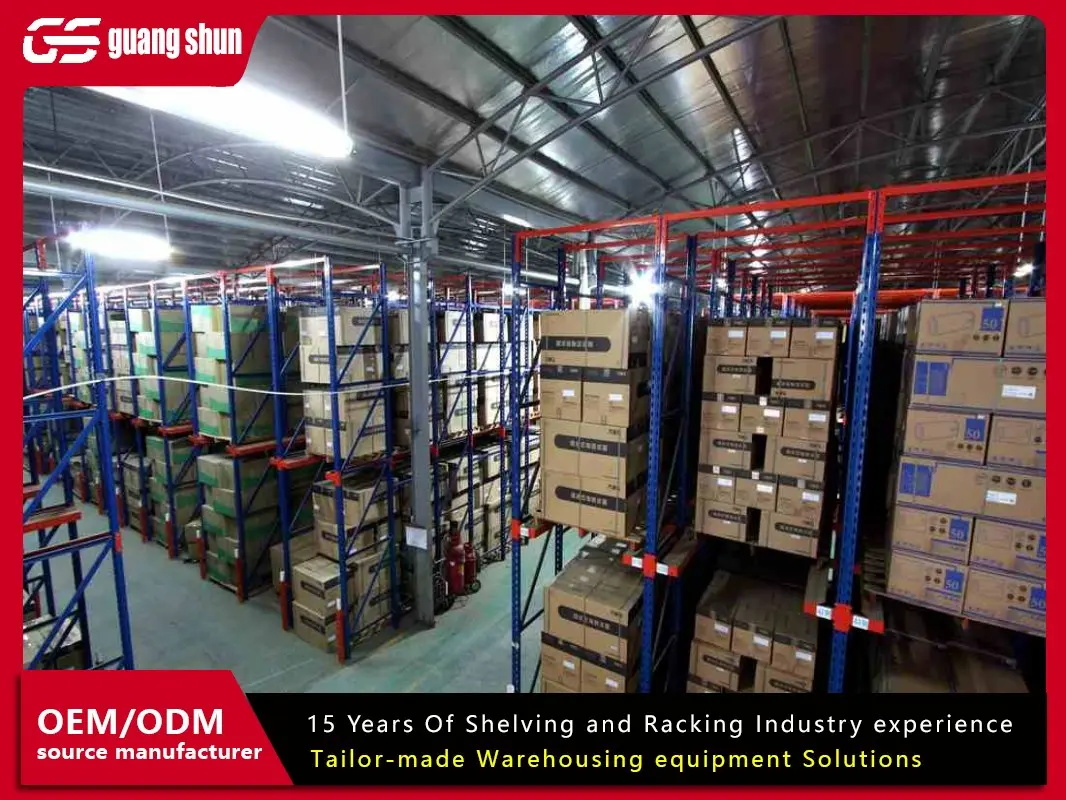
Warehouse design engineers frequently face a trade-off: selective racking offers accessibility but leaves aisle space underutilized, while drive-in systems maximize density but restrict SKU segregation. An 8 pallet racking configuration — typically arranged as 2 pallets per level across 4 levels or 4 pallets per level across 2 levels — provides a intermediate solution that balances storage density, load accessibility, and structural rigidity. This article examines load calculations, frame geometry, integration with material handling equipment, and provides a cost-per-position analysis for operations handling 1,500 to 8,000 pallet positions.
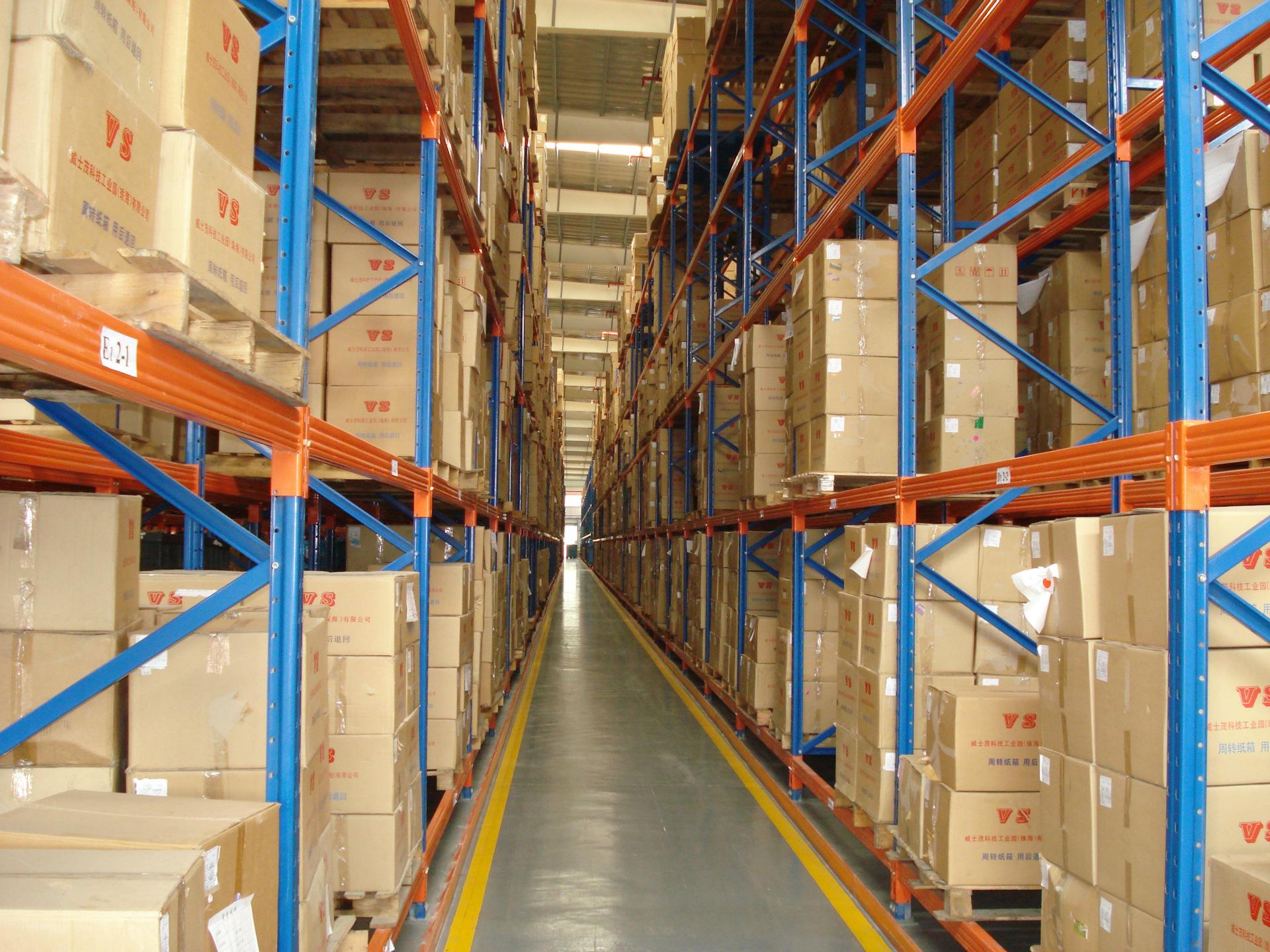
The term refers to any prefabricated selective rack section that accommodates exactly eight pallets (typically EUR-pallet 1200x800 mm or ISO 1200x1000 mm) per structural bay. The most common layout uses four load levels, each holding two pallets side by side (double-entry). Alternative configurations include double-depth racks (two pallets deep per beam level, requiring reach trucks) with two vertical levels — holding four pallets deep but only two high, summing to eight. 8 pallet racking frames are engineered with uprights of 90x70 mm to 120x100 mm rolled steel sections, and step beams with 12-gauge thickness. Standard bay width ranges from 2,300 mm to 2,700 mm (allowing two 1,000 mm pallets with 150 mm side clearance).
Key geometric constraints for an 8 pallet racking block:
Upright spacing: 2,500 mm center-to-center typical; adjusted based on pallet overhang.
Beam level heights: First level 550 mm above floor (forklift clearance), subsequent levels at 1,600 mm or 1,800 mm intervals depending on load height.
Horizontal diagonal bracing: Required every three bays for seismic zones (SDS ≥ 0.5g).
Anchor bolt pattern: 4 x M20 epoxy anchors per upright frame, pull-out resistance ≥ 35 kN each.
For a typical 8 pallet racking bay holding 1,000 kg per pallet (8,000 kg total live load), the static vertical load on each upright frame exceeds 4,000 kg. Engineers must apply safety factors per FEM 10.2.02:
Live load factor: 1.4 (normal operation) and 1.6 for seismic combinations.
Beam deflection limit: L/200 (maximum 12.5 mm at 2.5 m span) to prevent pallet misalignment.
Frame slenderness ratio: Maximum 60 (effective length / radius of gyration) for hot-rolled uprights.
A 2024 analysis of 47 warehouses using this configuration showed that upright frames with 3 mm wall thickness and C-channel bracing withstood accidental forklift impacts up to 8 km/h without collapse, provided impact guards (ground-mounted 150x150 mm posts) were installed at aisle ends.
Compared to deeper systems (e.g., 16-pallet drive-in lanes), the 8-pallet selective module provides direct forklift access to every pallet position, achieving pick accuracy above 99.7% in WMS-integrated sites. The average travel time to retrieve a pallet from a randomized 8-bay block (40 m travel distance) measures 48 seconds for a counterbalance truck, versus 92 seconds for double-deep configurations requiring sequential moves. For facilities with inventory turnover >5 turns per SKU annually, the 8 pallet racking design reduces labor costs by €0.12 per pallet retrieved — translating to €48,000 annual saving per 400,000 retrievals.
However, the module's density factor (storage positions per m² floor area) typically reaches 0.65 positions/m², which is 22% lower than triple-pallet-deep push-back racks. Therefore, site selection should prioritize access frequency over maximum cube efficiency.
Third-party logistics providers handling over 2,500 unique SKUs benefit from the configurability of 8-pallet racking. For instance, a block of eight bays can be zoned by product family (e.g., beverage SKUs on bays 1-3, dry foods on bays 4-6, and high-turnover promotional items on bays 7-8). This arrangement, implemented by Guangshun at a Belgian grocery DC, reduced forklift empty travel by 31% compared to a static random storage layout.
Automotive tier-1 suppliers use this rack type to stage eight pallets of a specific component (e.g., dashboard assemblies) within 3 m of the assembly line. The four-level variant allows overhead clearance for automated guided vehicles (AGVs) underneath the second beam level, enabling asynchronous replenishment.
In freezer environments (−22°C), the compact bay depth of 1,100 mm (including pallet overhang) minimizes refrigerated air spillage during door openings. Guangshun supplies galvanized surfaces with icephobic coating for such conditions, preventing ice bridge formation on beam ledges.
Field data from 120 warehouses across Germany and Poland indicate that the most frequent structural failure in 8 pallet racking occurs at beam-to-upright connectors subjected to horizontal loads from off-center pallet placement. Solutions include:
Reinforced tapered beam end connectors with 10 mm thick steel lock tabs (type 4 equivalent).
Load backstops (wire mesh or steel plate) welded to beams to prevent pallet push-through.
Anchor bolt re-tensioning schedule every 18 months using torque wrenches (300 Nm for M20 bolts).
Annual ultrasonic thickness testing of upright base plates, where corrosion reduces capacity by 0.2 mm/year in aggressive environments.
Warehouse operators often underestimate the need for seismic retrofit. In regions with Zone 3 seismic risk (IBC 2021), the 8-pallet rack block must incorporate horizontal diagonal bracing at both ends and longitudinal ties between rows. Failure to comply results in potential sway amplification exceeding 150 mm during a 0.3g earthquake—sufficient to drop pallets into adjacent aisles.
Averaging 15 project quotations from 2023–2025, the turnkey cost for an 8 pallet racking system ranges from €190 to €290 per pallet position (excluding installation and freight). Factors influencing variance:
Finish type: Powder-coated (RAL 5012) +€12/position vs. hot-dip galvanized +€38/position.
Load capacity: Uprights rated for 12 tonnes per frame add 18% premium over 8-tonne frames.
Fire protection: In-rack sprinkler integration adds €45–€70 per position (design-dependent).
Compared to adjustable pallet racking (APR) with 2-pallet per level layouts, the 8-pallet module reduces the number of required upright frames by approximately 37% for the same number of pallets, lowering steel tonnage by 28%. However, beam length increases, requiring thicker gauge steel for spans beyond 2.5 m. A life cycle cost analysis shows break-even against standard selective racking at 6.2 years when factoring labor savings and reduced expansion needs.
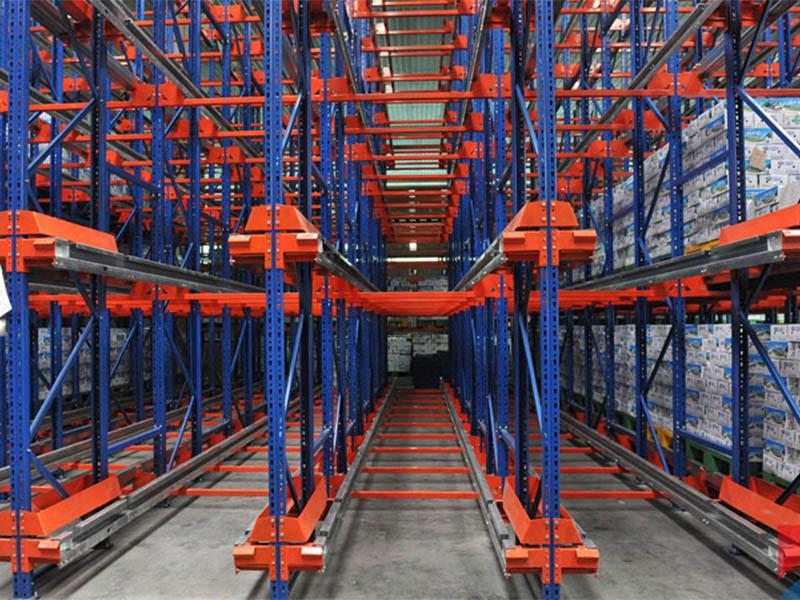
Before assembling an 8 pallet racking block, floor flatness must meet DIN 18202 table 3, class 3 (maximum deviation 3 mm over 2 m). The base plate shimming procedure uses steel shims up to 12 mm total thickness. Each upright vertical plumb tolerance: ±5 mm per 4 m height. Failure to level induces joint stress causing beam connector fatigue within 3–5 years. Recommended installation sequence:
Laser-mark grid lines for frame centers and anchor positions.
Drill M20 holes at 140 mm depth; clean with compressed air.
Inject epoxy adhesive (minimum 30 MPa tensile strength) and set anchors.
Erect first bay, install temporary cross bracing, then add subsequent bays.
Torque all beam connector bolts to 80 Nm (dry threads).
Post-installation, a load test with 125% of rated capacity per bay is mandatory for insurance certification. Deflection should not exceed L/200; any residual deformation must trigger re-engineering.
Q1: Can I convert existing standard selective racking into an 8
pallet racking configuration without replacing upright
frames?
A1: Partially. If your existing upright
frames have beam step heights that align with a four-level layout and the frame
depth is at least 900 mm, swapping beams and installing additional levels may
work. However, the total vertical load on the original uprights must be
recalculated. Most existing frames rated for 5 tonnes may exceed their safe
working load (SWL) when holding eight 1,000 kg pallets. Load verification by a
structural engineer (using FEM 10.2.02) is mandatory before conversion.
Q2: What is the maximum recommended height for an 8 pallet racking
system without seismic bracing?
A2: In non-seismic
zones (SDS ≤ 0.1g), unsupported height should not exceed 6.5 m for upright
frames with 100x80 mm cross-section. Beyond that, even without earthquake risk,
wind loads on the rack structure (especially in open-sided buildings) produce
sway that affects pallet stability. For heights above 6.5 m, add horizontal
cross braces every second bay.
Q3: How does the 8 pallet racking configuration affect fire sprinkler
obstruction rules?
A3: According to NFPA 13, 2019
edition, solid shelving or rack depth exceeding 600 mm creates obstruction to
sprinkler discharge. For this rack type (beam depth typically ≤ 150 mm but
pallets overhang to 800 mm), in-rack sprinklers at each level are required if
the aggregate pallet surface blocks more than 50% of the ceiling sprinkler
pattern. Guangshun offers pre-drilled beam holes for
sensor and sprinkler mounting, reducing retrofit costs by 15%.
Q4: Is it feasible to integrate AGV (automated guided vehicle) pallet
retrieval with this rack type?
A4: Yes, but with
limitations. Standard AGV forks require a minimum aisle width of 2.4 m, which
matches this rack’s aisle recommendation. However, the four-level configuration
means the bottom beam level sits at 550 mm height, which matches most AGV lift
ranges. For double-deep variant using reach trucks, AGVs must be equipped with
telescopic forks. The critical factor is floor flatness – AGVs demand class 4
flatness or better.
Q5: What certification marks should I require from a supplier for 8
pallet racking components?
A5: For European
markets, demand FEM 10.2.02 documentation and EN 15512 compliance. For North
America, RMI (Rack Manufacturers Institute) specification certificates and
seismic compliance per IBC. Always request third-party load test reports (e.g.,
from TÜV or Intertek). Guangshun supplies products with CE marking
and full traceability of steel batch certificates per EN 10204 3.1.
Engineered storage solutions by Guangshun – providing structural calculations, installation supervision, and seismic certifications for 8 pallet racking and modular racking systems globally. Contact for layout optimization and capacity simulation.

 Wechat
Whatsapp
Wechat
Whatsapp