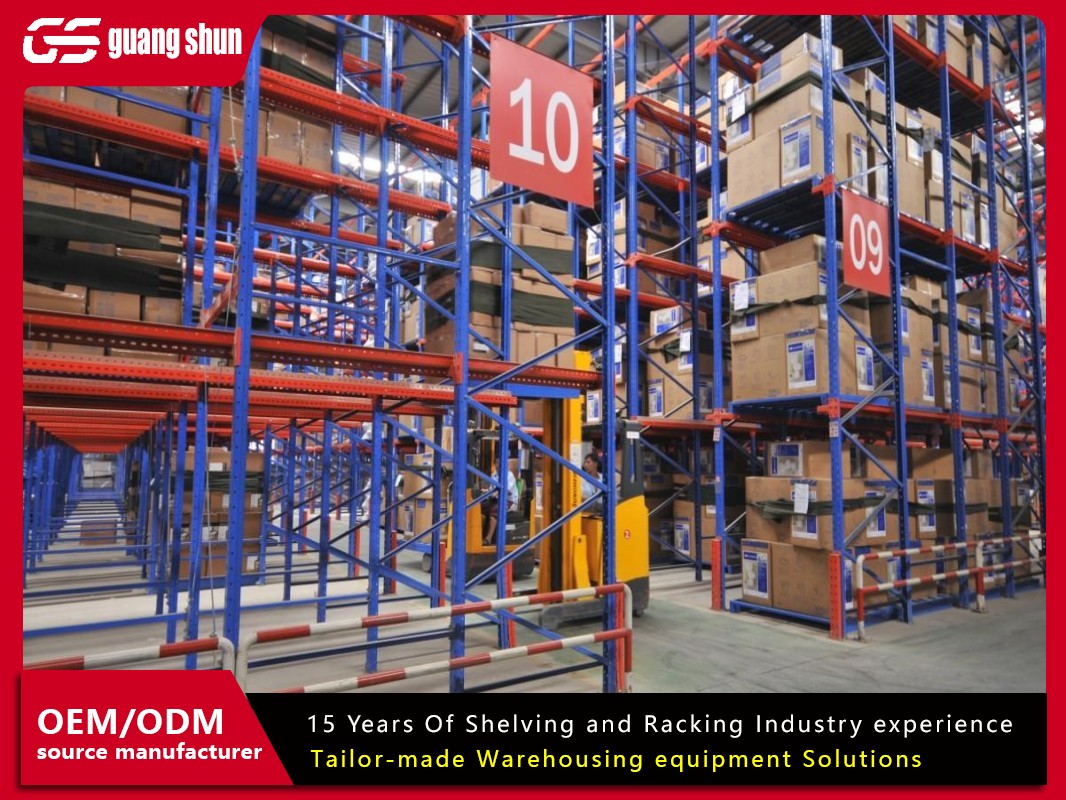
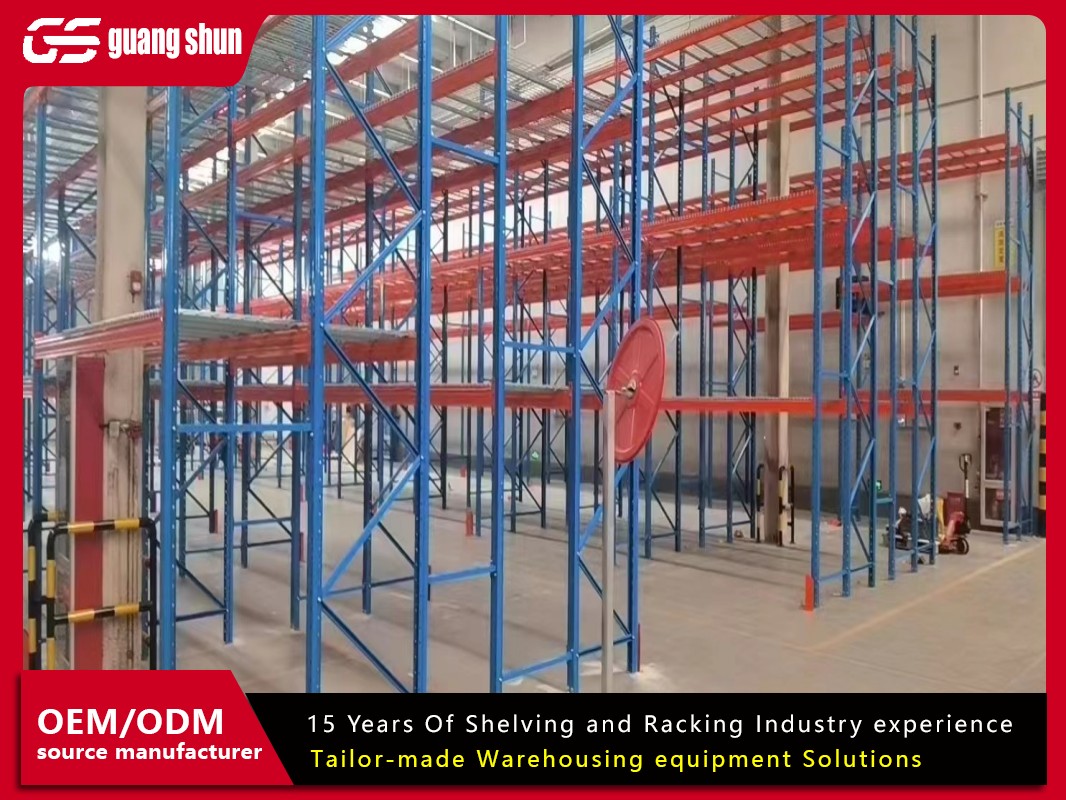
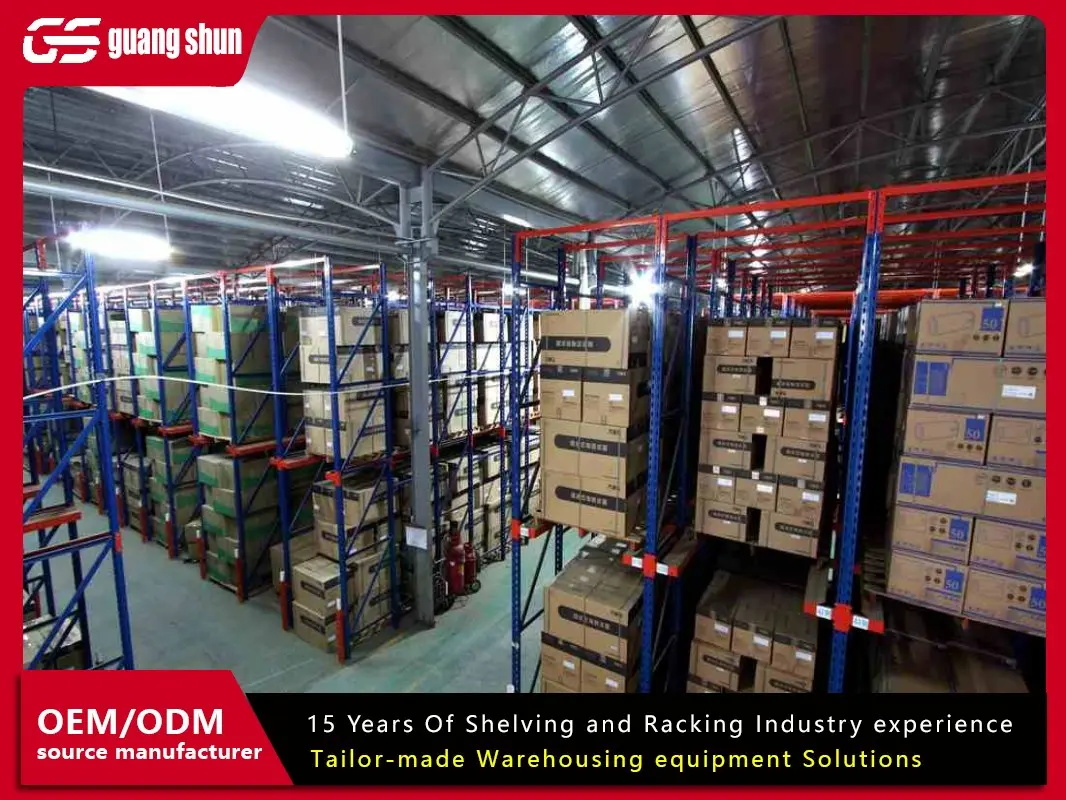
Warehouse operators face a persistent contradiction: maximize cubic utilization while preserving selective access to palletized inventory. Static selective racking wastes 45–55% of floor space on fixed aisles. Moving pallet racks — motorized carriages mounted on steel rails — dissolve this conflict by transforming fixed aisles into movable channels. This article provides a component-level analysis of the technology, quantifies real-world density gains, examines safety architecture, and offers an ROI framework validated by logistics engineering standards.
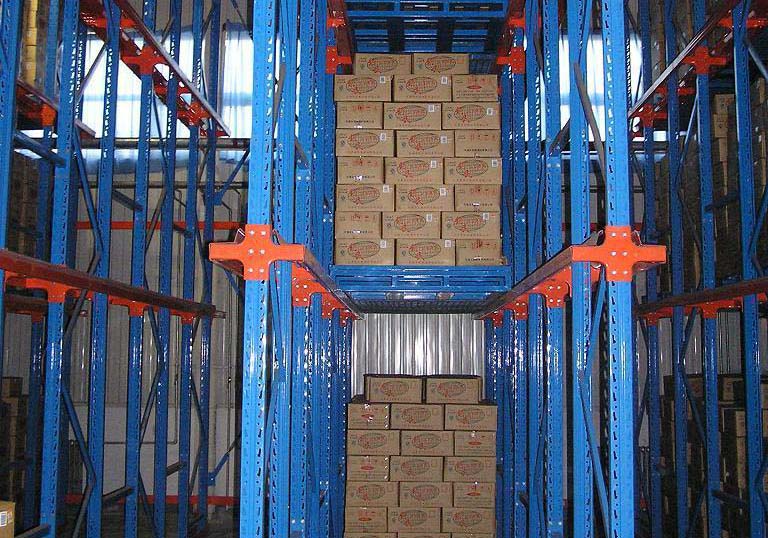
Unlike static racks anchored to the floor, moving pallet racks are installed on reinforced rails embedded flush with the warehouse slab. Each bay row rests on wheeled carriages driven by geared motors (typically 0.75–2.2 kW). A programmable logic controller (PLC) coordinates movements, opening a single aisle only when an operator commands that specific bay. The remaining rows remain compressed, eliminating wasted space. Three actuation variants dominate the market:
Remote-controlled mobile systems – Handheld transmitter or wall-mounted panel; suitable for medium-activity zones.
Full automatic with WMS integration – Barcode or RFID-triggered movement; real-time location system (RTLS) compatible.
Manual-assist mobile bases – Lower initial cost for static storage conversion, though limited to lighter loads and less frequent moves.
Engineers must evaluate travel speed (typically 0.05–0.1 m/s) and acceleration ramps to prevent load sway. Quality systems from manufacturers like Guangshun incorporate soft-start/stop inverters and anti-collision laser scanners on each carriage face.
Comparing a standard selective rack layout (2.8 m aisles, 1.2 m pallet depth) against a mobile configuration using identical load dimensions yields the following floor-space efficiency metrics:
Static selective racking: ~38% storage utilization (62% dedicated to aisles and lost corners).
Moving pallet racks: 78% to 86% storage utilization — only one movable aisle per block of up to 12 rows.
Effective pallet positions per 1,000 m²: Increases from 860 (static) to 1,930–2,150 with mobile systems (depending on load depth and row count).
For facilities where cubic volume is constrained by building height, the density advantage translates directly to avoided expansion costs. A 2023 study of food distribution centers reported that converting 4,500 m² of static racking to moving pallet racks recaptured the equivalent of 1,800 m² for new storage — a 40% virtual expansion without construction.
Operational safety of moving pallet racks relies on redundant, fail-safe subsystems. Global standards (ANSI MH28.3-2020, EN 1570-1) demand the following minimum protections:
Pressure-sensitive floor edges: Cease carriage motion instantly upon contact (≤ 2 cm deflection).
Infrared / laser area scanning: Creates a two-zone protection field — warning zone (speed reduction) and danger zone (zero speed).
Emergency stop lanyards running the full length of each mobile row.
Seismic interlock systems: In earthquake-prone regions, motor brakes engage automatically when ground acceleration exceeds 0.1g, preventing rack toppling.
In addition, Guangshun integrates a load-dependent braking algorithm that adjusts clamping force based on real-time weight distribution — reducing wear while maintaining stopping distance below 15 mm at full 15-tonne row weight.
While drive-in racks and push-back systems offer density, they introduce forklift penetration constraints and SKU limitations. Moving pallet racks excel in specific operational profiles:
Refrigerated warehouses face enormous energy costs per cubic meter. Tighter packing reduces the refrigerated volume that must be maintained. By eliminating every fixed aisle except one, moving pallet racks lower refrigeration load by 20–28%. Furthermore, the electric carriage motors operate reliably at subzero temperatures when equipped with low-temperature grease and heated control cabinets — a proven design standard from Guangshun’s polar-grade series.
Automotive and aerospace plants manage thousands of SKUs with variable throughput. A moving pallet rack block can be zoned by part family — each row dedicated to a specific supplier or production line. When a row is required, the aisle opens within 8–12 seconds, enabling just-in-sequence delivery while maintaining a compact footprint close to assembly lines.
E-commerce fulfillment for bulky items (furniture, pet food, tires) struggles with low cube utilization. Implementing moving pallet racks with double-deep carriages and integrated mezzanine levels pushes storage density above 90%, while pick-to-light systems mounted on moving rows maintain accuracy above 99.8%.
Converting to moving pallet racks is not simply bolting racks to wheels. The concrete floor must meet DIN 18202 table 3, class 4 flatness (max deviation 2 mm over 2 m straightedge) and a load-bearing capacity ≥ 25 N/mm². Rail embedment methods differ based on retrofit goals:
Surface-mounted rails: Quickest installation (3–5 days per 1,000 m²), requires floor grinding and creates a 15 mm step — manageable with tapered aluminum transition ramps.
Flush-mounted (recessed) rails: Grooves cut into the slab; zero floor profile. Preferred for AGV (automated guided vehicle) zones and pallet jack cross-traffic.
Power supply is typically 380–480 V three-phase delivered via energy chains (cable carriers) or, for longer blocks, conductor bars integrated into the rail profile. Backup battery packs for each carriage allow emergency opening even during mains failure — a mandatory feature for fire code compliance in many jurisdictions.
Project leaders often hesitate due to the higher upfront cost of moving pallet racks (€350–550 per pallet position vs. €150–200 for static selective). However, an integrated TCO analysis over 10 years reveals strong payback:
Lease/rental avoidance: Every 1,000 m² of saved floor space at €6/m²/month = €72,000 annual avoidance.
Energy savings (cold storage): 25% reduction in refrigeration energy for the same pallet count = typical saving of €40–60 per pallet position/year.
Labor efficiency: Reduced travel distance for put-away and order picking by 35–50% (measured via warehouse execution system telemetry).
A case example: A beverage distributor in Hamburg replaced 4,200 m² of static racking with moving pallet racks supplied by Guangshun. Total project investment: €890,000. Annual savings: €215,000 (avoided lease costs and fork truck reduction). Payback period: 4.1 years. Over 10 years, net present value (NPV) reached €1.29 million.
To prevent unscheduled downtime in mobile rack systems, facility engineers should implement the following quarterly and annual procedures:
Rail cleaning and debris removal: Compacted dust increases rolling resistance and motor amperage. Dry lubricant film (PTFE-based) applied every 500 cycles reduces wear.
Encoder and limit switch verification: Positioning error above ±5 mm leads to aisle alignment faults. Calibrate using laser distance measurement.
Load testing: After any seismic event or modification, conduct full-rated load movement tests across all rows to confirm braking distances.
Firmware updates: Control PLC and safety relay logic should be audited annually by the manufacturer’s service team.
Meticulous documentation of each carriage’s movement cycle counter is advised — motor replacement is typical every 12,000–15,000 hours, depending on duty cycle.
Q1: Can moving pallet racks be installed in existing buildings with
uneven floors without costly grinding?
A1: Partial.
Floor deviations up to 4 mm per linear meter can be compensated by
adjustable-height carriage wheels (using eccentric bushings). However,
deviations beyond 6 mm cause uneven load distribution and accelerated rail wear.
A concrete self-leveling overlay (minimum 25 MPa) is the recommended remediation
— typically costing €18–25 per m², far lower than building expansion.
Q2: How does the access time for moving pallet racks affect overall
warehouse throughput?
A2: Each aisle opening takes
8–15 seconds (depending on row weight and motor power). For operations with less
than 60 openings per hour, the delay is negligible. For higher frequency zones,
zoning strategies apply: keep 15–20% of fast-moving SKUs in a static “fast
aisle” within the mobile block, while slower movers reside on fully compressed
rows. WMS integration can pre-position rows during idle periods.
Q3: Are moving pallet racks compliant with FM Global or NFPA fire
code requirements?
A3: Yes, provided the system
includes an automatic “fail-open” mechanism: upon fire alarm activation, all
carriages move to create the required number of transverse and longitudinal
aisles (≥ 1.2 m width) as specified by NFPA 13. Additionally, each row must have
in-rack sprinklers. Guangshun certifies its mobile systems to
meet FM Global data sheet 8-9 for high-density storage.
Q4: What is the realistic maximum live load per moving pallet rack
carriage?
A4: Standard moving modules accommodate
up to 18,000 kg per row (including rack structure and pallet loads). Heavy-duty
engineering versions support 25,000 kg. Factors limiting capacity are rail gauge
(≥ 100 mm wide hot-rolled steel) and motor brake torque. For loads exceeding 25
tons, a multiple-axle carriage with synchronized drives is required.
Q5: How often do the electrical cables in the energy chain need
replacement?
A5: In standard three-shift operation
(approx. 250–300 cycles per day), the flexible control and power cables inside
the energy chain should be inspected at 10,000 cycles. Replacement interval is
typically 25,000 cycles for PUR-jacketed cables. Using fiber-optic rotary joints
for data transmission eliminates cable fatigue — a premium option for
high-throughput cold storage sites.
Engineered storage solutions from Guangshun integrate moving pallet rack technology with warehouse control systems, offering certified seismic compliance and thermal-expansion compensation for extreme environments. Technical consultation and site surveys available for >5,000 pallet position projects.

 Wechat
Whatsapp
Wechat
Whatsapp