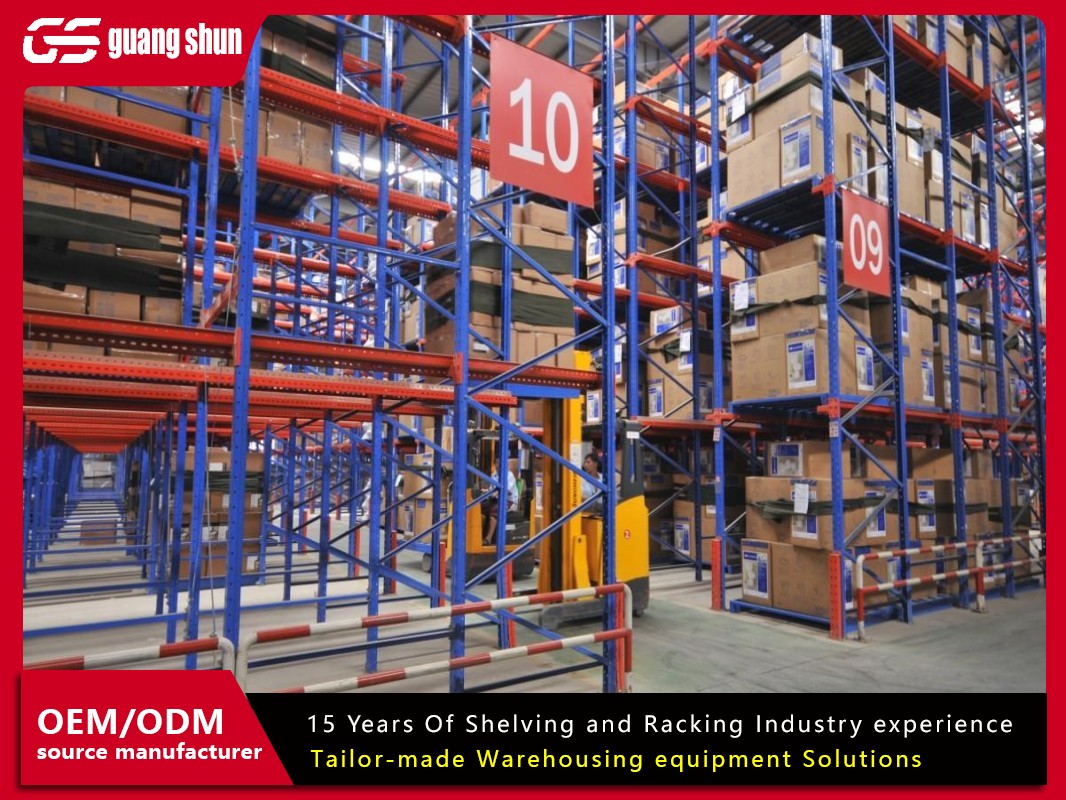
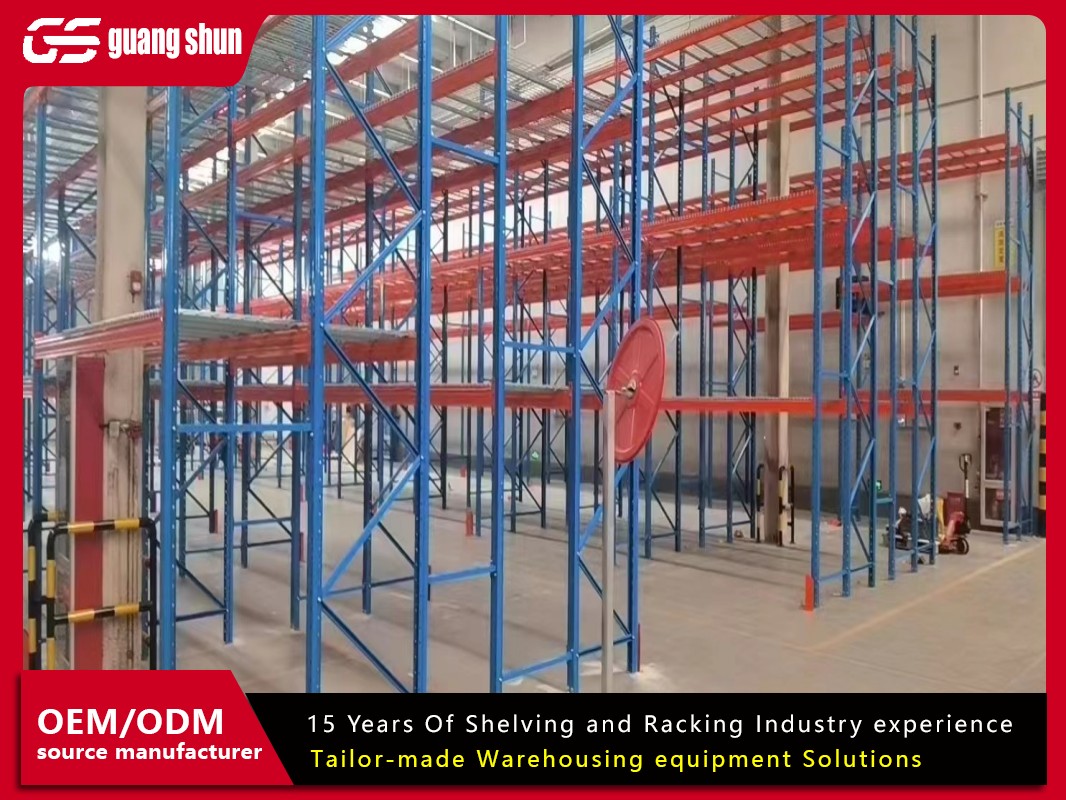
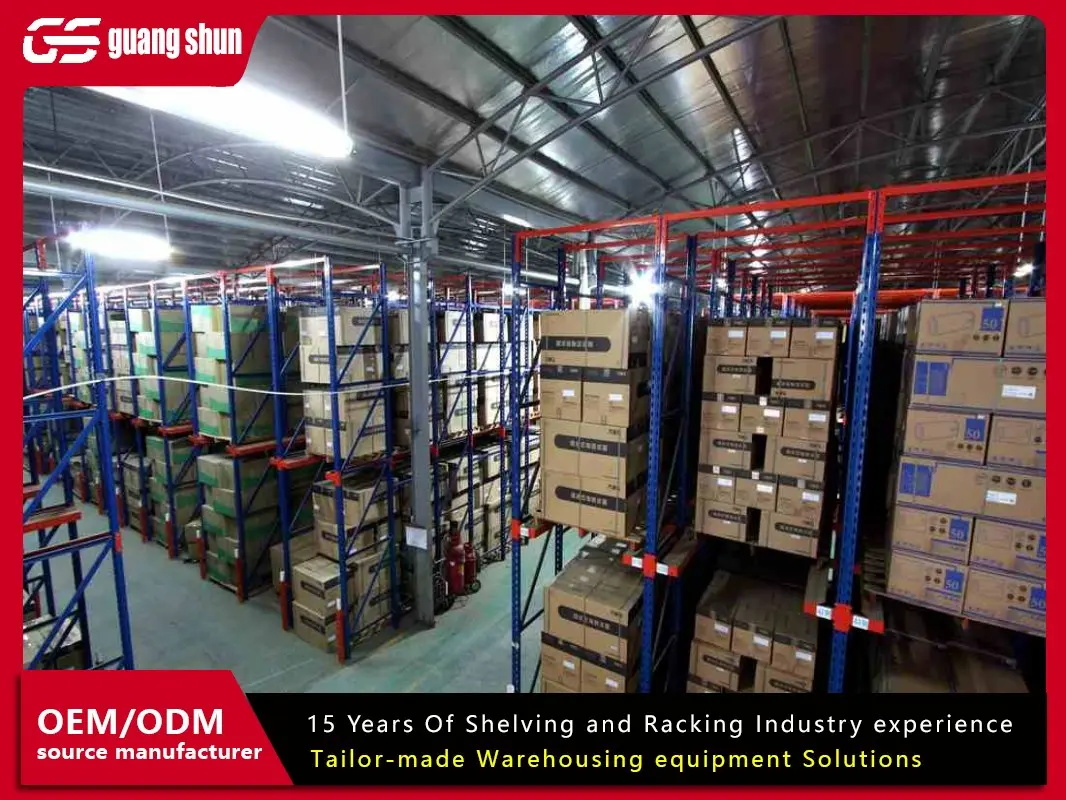
In facilities handling oils, solvents, acids, or any environmentally sensitive liquids, standard pallet racking presents a significant liability: a single drum leak can lead to soil contamination, regulatory fines, and fire escalation. bunded racking integrates a leak-tested sump directly beneath the storage deck, capturing drips, spills, and drum failures. This article provides a quantitative analysis of bunded racking design parameters—sump volume, material compatibility, structural load paths, and applicable codes (EPA 40 CFR 112, NFPA 30, UK COMAH). We examine real-world failure modes and present engineering solutions verified through third-party testing.
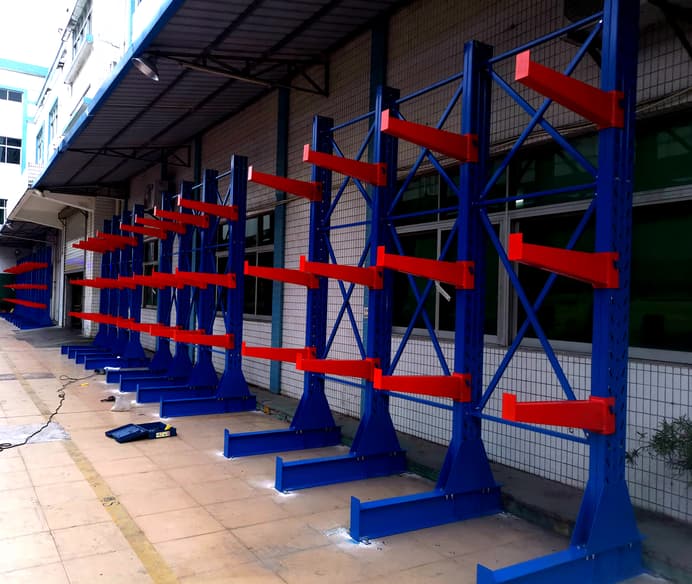
A bunded racking system is a freestanding or integrated steel structure that combines standard pallet rack uprights and beams with a liquid-tight basin (the bund or spill containment sump). Key functional requirements per OSHA and environmental agencies include:
Sump capacity: Must hold at least 110% of the largest stored container’s volume (or 25% of total stored volume, whichever is larger). For IBCs (275–330 gal), this means minimum 363 gallons containment.
Chemical resistance: The bund liner (typically welded HDPE or coated steel) must resist permeation by stored fluids—tested per ASTM D543 for specific chemicals.
Leak detection: Integrated grating allows visual inspection or optional electronic sensor placement below deck.
Fire rating: When storing flammables, the bund must be constructed from non-combustible materials (Class A) and include flame arrestor vents if enclosed.
Unlike simple spill pallets, bunded racking is designed for full pallet access via forklift, supporting vertical stacking up to 4 high while maintaining secondary containment. This configuration reduces floor space waste by 35–50% compared to individual spill pallets.
The load-bearing frame of a professional bunded racking system uses hot-rolled structural steel (ASTM A36 or S355JR) with a minimum yield strength of 36 ksi. For corrosive chemical environments, Guangshun applies a three-layer coating system: epoxy primer (80 μm), polyurethane intermediate (60 μm), and a topcoat with chemical resistance to pH 2–12. Alternatively, galvanized steel (G90 or hot-dip per ASTM A123) is specified for outdoor or high-humidity zones. The sump itself is fabricated from 3 mm thick steel plate, fully seam-welded and tested with a 24-hour water hold test at 150% design capacity — no leakage permitted.
For a typical 48" x 45" footprint bunded racking module (accommodating two 55-gallon drums or one IBC), the sump depth must be engineered to achieve required volume. Example: A module with internal dimensions 46" L x 42" W x 8" D provides 46*42*8 = 15,456 cubic inches = 66.8 gallons. This exceeds the 110% requirement for two 55-gal drums (121 gal total, so 133 gal required? Wait: 110% of largest container = 60.5 gal for a single drum; but two drums: rule is 110% of largest or 25% of total (0.25*110=27.5) so 60.5 gal controls. 66.8 gal works). For IBCs, sump depth of 12" is typical, achieving 110% of 330 gal = 363 gal, requiring footprint approx 48"x80" with 12" depth = 48*80*12=46,080 cu in = 199 gal — insufficient. Thus IBC bunded racking requires either larger footprint or multiple interconnected sumps. Guangshun designs modular sumps with up to 400 gal capacity for 330-gal IBCs.
Each bunded racking level must support a live load of 2,500–4,000 lbs per pallet position while the sump retains liquid. The grating deck (typically 12-gauge expanded steel or punched plate) is rated for fork truck wheel loads of 1,800 lbs per axle. Under full load plus liquid, the maximum allowable deflection at mid-span is L/200 (e.g., 0.24" for 48" span). Load tests per ANSI MH16.1 apply, with an additional 1.5 safety factor for spill containment integrity.
Bunded racking is not a generic product; it must match the hazard class and operational flow. Common use cases include:
Chemical blending plants: Multi-tier bunded racking for 55-gal drums of solvents, with flame-proof sump covers and static grounding provisions.
Oil & gas warehousing: Drive-in bunded racking for lubricants and hydraulic oils, requiring sump heaters for cold climates (viscosity control).
Battery storage (lithium-ion): Bunded racking with fire-resistant intumescent coating and thermal runaway containment channels.
Pharmaceutical intermediate storage: Stainless steel bunded racking (316L) for aggressive acids and high-purity requirements.
Waste collection facilities: Open-top bunded racking with removable grating to allow drum puncture and draining.
Quantitative benefit: A chemical distributor replaced 120 individual spill pallets with 15 integrated bunded racking bays (each 3 levels high). Floor space use dropped from 1,200 sq ft to 780 sq ft, and spill inspection time per week decreased from 8 hours to 1.5 hours due to centralized sump access.
Many generic “spill decks” offer only 66-gallon sumps but claim suitability for two 55-gallon drums — this violates EPA’s SPCC rule (40 CFR 112.8(c)(11)), which mandates secondary containment for the "largest single container." If one drum fully discharges, 55 gallons overflows the 66-gal sump? No, 66 > 55 works. But problem: two drums leak simultaneously? The rule says largest container, not total. However many inspectors enforce 110% of total volume if drums are stored within same unbaffled sump. The engineering solution: baffled sumps or multiple independent compartments. Guangshun provides divider walls that create separate 66-gal zones for each drum, eliminating interpretation disputes.
Standard powder-coated steel fails within 6 months when storing methyl ethyl ketone (MEK) or 98% sulfuric acid. The fix: either HDPE liner (1/4" thick, UV-stabilized) inserted into the steel sump, or fully welded 316L stainless steel with electropolished welds. For fluorinated chemicals (HF, TFA), Guangshun recommends a PTFE-coated sump system, backed by chemical compatibility test reports per ASTM D471.
Bund walls (usually 4"–8" tall) are vulnerable to corner hits from pallet jacks. Resulting cracks bypass secondary containment. Solutions include: bolt-on steel rub rails (10-gauge) covering all leading edges, or recessed sump designs where the deck grating is flush with the floor and the bund is a below-grade basin. The below-grade approach requires floor cutting but eliminates trip hazards and impact risk.
Rain or wash-down water collects in outdoor bunded racking, reducing effective spill volume. Engineering response: sloped sump floor (minimum 2%) to a drain valve (normally closed, lockable). The valve must have a secondary seal to prevent unauthorized discharge. Guangshun integrates a visual water-level sight glass and a 1" NPT ball valve with padlock hasp.
A professionally engineered bunded racking system must be documented to satisfy multiple codes:
EPA SPCC (40 CFR 112): Requires secondary containment for oil storage >1,320 gallons aggregate. Bunded racking qualifies if sump capacity meets 110% rule and is inspected weekly.
NFPA 30 (Flammable and Combustible Liquids Code): Limits storage height, requires spill containment, and mandates that bund walls be liquid-tight for 2 hours minimum.
IBC (International Building Code) 2021: Seismic design for containment structures — bunded racking must be anchored to floor with bolts resisting overturning moment from sloshing liquid.
UK COMAH (Control of Major Accident Hazards): Requires bund integrity testing every 3 years using vacuum decay or dye penetrant.
Guangshun provides a compliance package for each bunded racking project: stamped engineering calculations, material test certificates (MTC), and a site-specific spill response plan template.
To ensure long-term performance of bunded racking, follow this seven-step workflow:
Floor surface preparation: Grind and epoxy coat the concrete to prevent capillary wicking under the bund. Achieve surface profile CSP 3–4.
Position and anchor: Use 5/8" chemical anchors at each upright base plate. Torque to 75 ft-lbs. Seal anchor penetrations with urethane caulk.
Sump weld integrity check: Conduct a 24-hour water test before installing grating. Mark any weep holes — they must be pluggable.
Install grating and beam levels: Ensure grating clips are stainless steel to prevent galvanic corrosion. Verify that beam connectors are fully seated.
Leak detection installation: Place conductive sensors at the lowest point of each sump, connected to a panel alarm (set at 0.25" liquid depth).
Routine inspection schedule: Weekly visual check for cracks, pooled liquid, or debris. Annually, perform a hydrostatic pressure test (fill sump to 80% capacity, measure for 1 hour — no pressure drop).
Documentation: Maintain a log of inspection dates, spill incidents, and sump cleaning operations for EPA/SHE audits.
For outdoor bunded racking in freeze-thaw climates, add a low-wattage immersion heater (maintain 40°F) to prevent ice expansion cracking the sump.
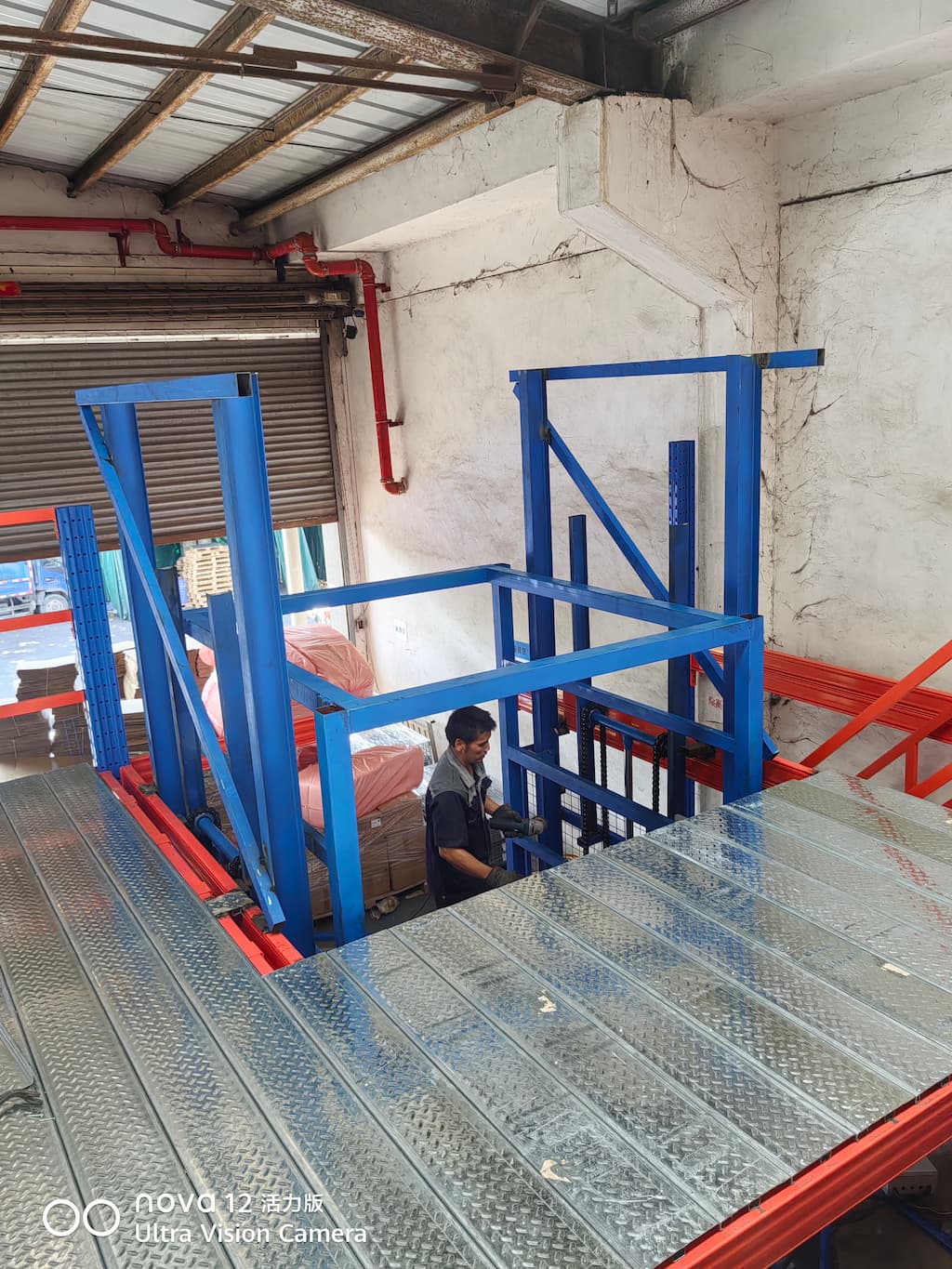
With 18 years of manufacturing hazardous material storage systems, Guangshun has developed a proprietary bunded racking line that exceeds EPA and CE requirements. Differentiating features include:
Modular sump design: Sump widths from 36" to 96", depths up to 18", with integral forklift pockets for relocation.
Leak-before-fail welds: All seams are double-fillet welded and inspected via magnetic particle testing (MPT) — no pinholes.
Chemical resistance database: Over 600 chemical compatibility ratings available; Guangshun engineers can recommend the exact liner material (HDPE, PP, PVDF, or 316L).
Third-party certified load tests: Every design is validated by an independent lab for static and seismic loads per IBC 2021.
For a recent project at a petrochemical blending facility, Guangshun delivered 48 custom bunded racking positions with 400-gallon sumps each, reducing reportable spill incidents to zero over 18 months. The system also lowered insurance premiums by 12% due to demonstrable secondary containment compliance.
A1: Standard racking has no integrated containment; spill pallets are separate units placed on each beam level. Bunded racking combines the structural frame and the spill sump into a single engineered system, allowing forklift access to all levels without moving individual pallets. Bunded racking also provides continuous containment across multiple pallet positions, lower profile (no step-over lip), and easier leak monitoring via central sensors. It typically costs 20–30% more upfront but reduces floor space by 40% and eliminates the need to purchase separate spill trays.
A2: Follow EPA’s “largest single container” rule: identify the single largest container (e.g., one 330-gal IBC). Required sump capacity = 110% × that volume = 363 gallons. However, if the sump is not subdivided, and a smaller container (55 gal) also leaks simultaneously, the total spill could exceed the 363 gallons only if both containers are >363 gal total? Actually two 55-gal drums add 110 gal, still within 363. For multiple IBCs, install baffles that create independent compartments each sized for 110% of the largest container in that compartment. Guangshun provides compartmentalized sumps with sealed dividers.
A3: Yes, but with additional engineering: the bund must be UV-resistant (add carbon black to HDPE or use acrylic polyurethane topcoat on steel). Drain valves must be lockable and equipped with a rain cover to prevent debris entry. For freezing climates, a thermostatically controlled heating cable (12 W/ft) installed under the grating prevents ice damage. Guangshun offers outdoor-rated bunded racking with a sloped roof canopy and 316L hardware.
A4: Standard modular bunded racking (pre-engineered sizes) ships in 3–4 weeks. Custom dimensions, stainless steel construction, or special coatings extend lead time to 6–8 weeks including third-party testing. Guangshun provides expedited design drawings within 5 business days after receiving a site layout and chemical list.
A5: Maintain three documents: (1) Manufacturer’s capacity certificate stating sump volume and test method; (2) Weekly inspection logs (sump empty, no visible damage, drain valve secured); (3) A site-specific SPCC plan amendment referencing the bunded racking as secondary containment. For added proof, conduct an annual integrity test using a vacuum decay method (pull 5 psi vacuum on sealed sump, hold for 10 minutes — no loss). Guangshun supplies a compliance checklist with every system.
A6: Partial retrofits are possible by installing bolt-on steel sump pans under each level, but this reduces load capacity because the original floor beams were not designed for the added dead load of liquid (approx 8 lbs per gallon). A safer approach is to replace the lower two beam levels with a purpose-built bunded racking module from Guangshun that attaches to existing upright frames using adapter brackets. A structural engineer must approve any retrofit; the typical solution is complete replacement of affected bays.
Selecting and maintaining bunded racking requires a thorough evaluation of chemical hazards, regulatory thresholds, and structural dynamics. Systems that ignore sump volume calculation or material compatibility expose operators to fines exceeding $50,000 per day under the Clean Water Act. By adopting engineered solutions from Guangshun, facilities achieve verifiable spill control, optimized space utilization, and demonstrable due diligence for environmental compliance. For project-specific load calculations or a chemical resistance review, contact Guangshun’s engineering department with your MSDS forms and floor plans.

 Wechat
Whatsapp
Wechat
Whatsapp