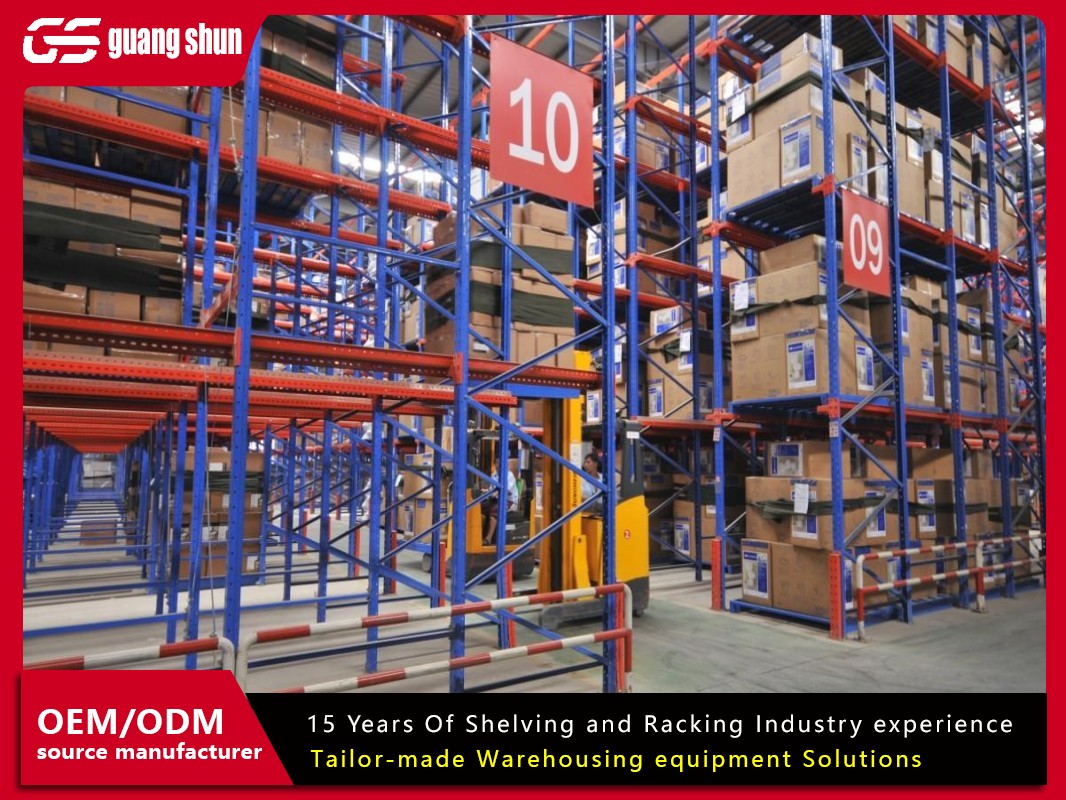
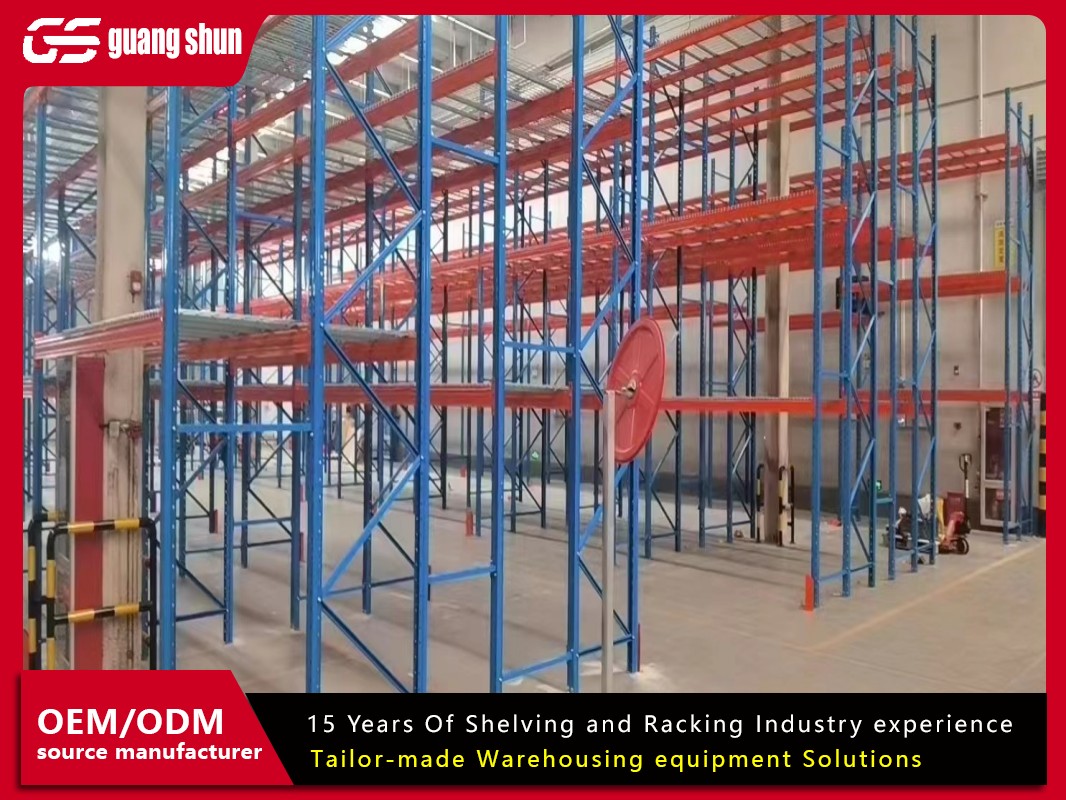
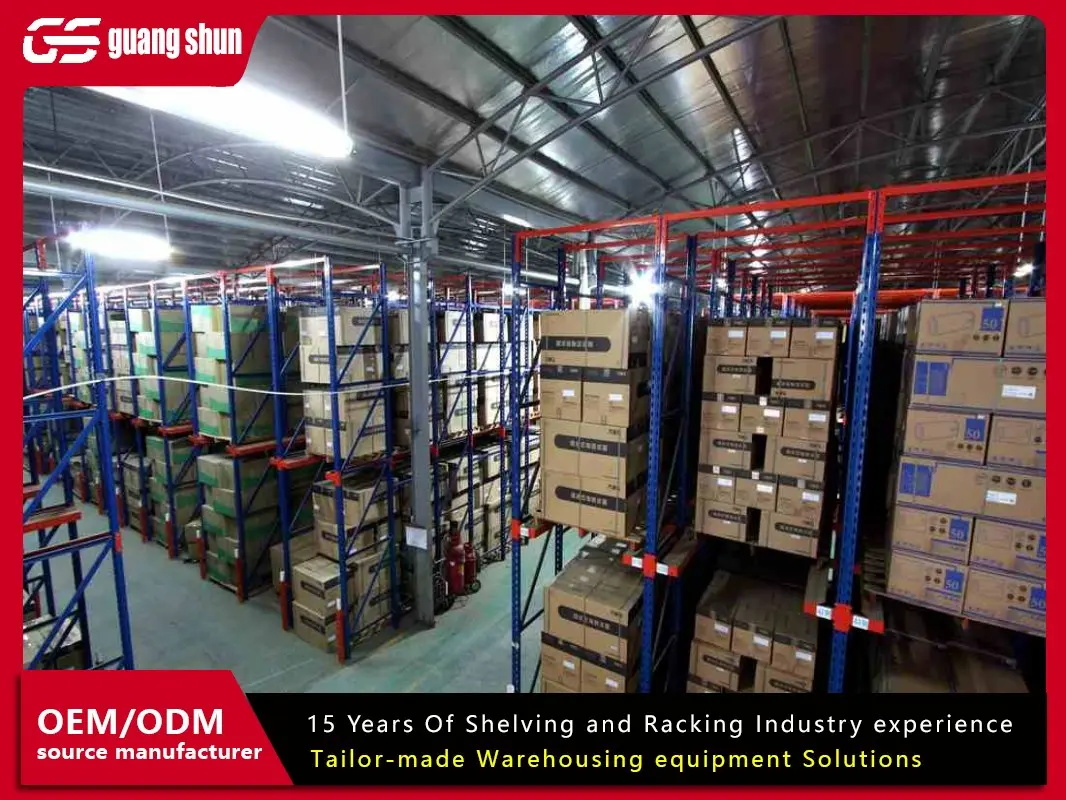
In high-throughput warehouses and distribution centers, the vertical columns—formally known as industrial shelving uprights—determine the reliability, safety, and density of the entire storage system. These roll-formed steel components transfer all beam loads to the floor, while withstanding seismic forces, impact loads, and daily operational stress. Selecting the wrong upright profile or gauge leads to progressive rack deformation, costly downtime, and potential safety violations. This guide dissects the engineering parameters, manufacturing tolerances, and industry-specific selection logic for industrial shelving uprights, backed by data from ANSI MH16.1-2023 and field failure analysis.
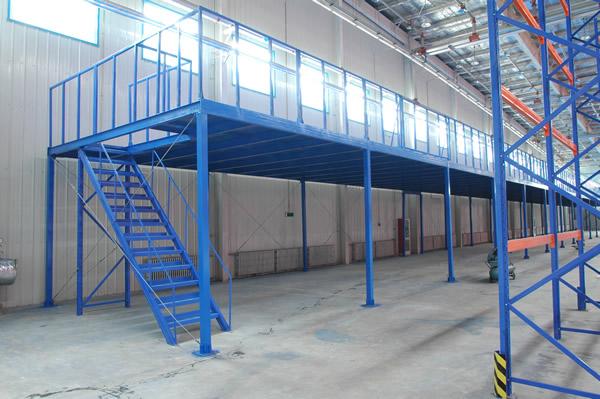
Unlike beams that primarily handle bending moments, industrial shelving uprights function as slender compression members. Their failure mode is typically buckling, not yield. A 2.5 mm thick upright with 100x80 mm cross-section can support up to 9,800 lbs per leg under concentric loading, but eccentric loads from beam connections reduce this capacity by 30-40%. Modern uprights integrate punched hole patterns—teardrop, T-bolt, or keyhole—to provide positive beam locking. The most critical performance parameters are:
Slenderness ratio (KL/r): Must stay below 200 for roll-formed steel per AISI S100.
Minimum yield strength: 370 MPa (54 ksi) for standard cold-formed steel; 450 MPa for high-capacity applications.
Base plate thickness: 6 mm to 10 mm with 4 anchor bolts per upright.
Perforation geometry: Reduces cross-sectional area by 15-25%; finite element analysis ensures stress redistribution.
Without rigorous upright design, warehouse operators face rack collapse under dynamic loads—forklift braking forces or uneven pallet placement. A 2023 study by the Rack Manufacturers Institute (RMI) attributed 62% of reported rack failures to degraded or undersized uprights.
All industrial shelving uprights are fabricated from hot-rolled coils that undergo cold-forming processes. Grade selection directly impacts long-term creep resistance and impact toughness. The industry standard is ASTM A653/A653M SS Grade 50 (340 MPa yield) or Grade 80 (550 MPa yield) for high-seismic zones. For cold storage environments (−30°C), charpy V-notch tests are mandatory to avoid brittle fracture. Thickness ranges from 1.8 mm to 3.5 mm, with heavier gauges used for drive-in racks. Guangshun’s manufacturing line applies strict gauge tolerances of ±0.07 mm, exceeding RMI recommendations.
Beam connectors engage upright holes at 50 mm or 75 mm vertical pitches. Two dominant patterns exist:
Teardrop (HP series): Self-locking, reduces bolt usage; requires 0.5 mm clearance for thermal expansion.
Keyhole with safety clip: Allows 100% visual inspection; preferred for high-vibration environments like automotive manufacturing.
Misalignment between beam connectors and upright holes accounts for 18% of installation rework. Leading suppliers like Guangshun provide certified hole pattern templates and 3D laser measurement reports for each production batch, ensuring interchangeability with legacy systems.
Determining the safe working load (SWL) for industrial shelving uprights involves multiple variables beyond simple material strength. The RMI specification mandates a safety factor of 1.5 for static loads and 1.65 for combined static+impact loads. The axial capacity formula for a single upright is:
P_all = (Fy * A_eff) / (FS * (1 + (KL/r)^2/(2*π^2*E/Fy)))
Where A_eff = effective area after hole deduction, FS = 1.65, and E = 200 GPa. For a typical 3.0 mm upright with 100x100 mm section, hole pattern reduces A_eff by 22%, dropping theoretical capacity from 85 kN to 62 kN. Field engineers must also account for:
Eccentricity from beam end connectors: adds bending moment up to 12% of axial load.
Group reduction factor: when multiple uprights are linked by horizontal braces, capacity reduces by 10-15%.
Seismic load combinations: per ASCE 7-22, overturning moments require base plate bending checks.
Many suppliers provide generic load charts without considering hole pattern effects. Guangshun publishes column-specific capacity tables derived from full-scale push-over tests performed at third-party laboratories.
Different material handling environments impose unique stress profiles on uprights. Below are three high-risk scenarios with proven solutions:
Automotive parts warehouses (heavy cantilever loads): Uprights experience torsional stresses from asymmetric beam loading. Require closed-section uprights (tubular) or additional gussets. Failure sign: twisting of punched hole edges.
Cold storage freezers (−25°C): Moisture condensation leads to hidden corrosion behind base plates. Specify hot-dip galvanized uprights with a minimum 85 µm zinc coating and raised footplate standoffs.
E-commerce micro-fulfillment centers (high cycle, low weight): Thousands of pick-to-light operations cause fatigue at beam connection points. Use boltless systems with double-locking tabs; replace uprights every 8-10 years regardless of visual condition.
A common industry mistake is mixing uprights from different manufacturers without verifying hole pitch compatibility. Even a 1 mm discrepancy in hole center spacing generates progressive beam tilt and eventual rack failure. Always request mill certificates and hole pattern drawings.
Warehouse uprights suffer three primary degradation mechanisms: impact deformation (forklift strikes), galvanic corrosion (mixed metals with floor anchors), and fatigue micro-cracking at punched holes. The RMI classifies damage into four levels:
Level 1 (cosmetic): Scratches or minor paint loss – monitor annually.
Level 2 (local dent < 6 mm deep): Reduce load capacity by 20% and install upright protectors.
Level 3 (flange separation > 12 mm): Immediate unload and replace upright section or sister with repair channel.
Level 4 (crack through hole): Structural write-off – cut and remove the rack bay.
Retrofit solutions include bolt-on reinforcement sleeves (2 mm thick steel, 500 mm height) that restore 85% of original capacity. However, welding on cold-formed uprights is prohibited due to loss of heat-treated properties. Guangshun offers pre-fabricated repair columns matched to specific hole patterns, reducing downtime from weeks to hours.
With over 18 years of serving logistics integrators worldwide, Guangshun has developed a proprietary roll-forming line that produces industrial shelving uprights with residual stress below 50 MPa—significantly lower than the industry average of 120 MPa. Low residual stress eliminates warping during welding or anchor drilling. Their testing protocol includes:
100% eddy current inspection for hairline cracks on hole edges.
Salt spray testing (ASTM B117) exceeding 600 hours for powder-coated finishes.
Seismic shake table validation per AC156 for Zone 4 seismic areas.
Every upright shipped includes a traceable QR code linking to the coil certificate, forming parameters, and load test data. This transparency aligns with ISO 9001:2025 requirements and major retailer compliance standards.
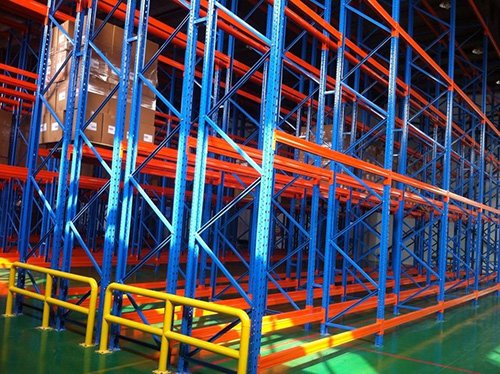
When specifying industrial shelving uprights for a new or retrofitted rack system, use the following technical checklist to avoid under-engineering:
☐ Confirm floor flatness (max 3 mm deviation over 3 meters); uneven floors induce secondary bending in uprights.
☐ Calculate actual beam moment transfer using manufacturer’s published P-Δ curves, not simplified charts.
☐ Specify seismic base plate gussets if rack height exceeds 8 m or local PGA (peak ground acceleration) > 0.3g.
☐ Require fork impact protection: either sacrificial bolt-on columns or concrete bollards spaced 300 mm from uprights.
☐ For multi-tier shelving, verify that upright splice connections (if used) maintain at least 80% of continuous column strength.
Advanced users may request finite element model (FEM) simulation of the entire rack structure. This identifies buckling modes that standard load tables miss, especially for non-standard bay widths.
Q1: What is the standard column depth for industrial shelving
uprights in selective rack systems?
A1: Most
selective pallet racks use upright depths of 800 mm, 900 mm, or 1000 mm to
accommodate 1200x1000 mm Euro-pallets. Depth choice depends on load overhang:
for 1000 mm deep pallets, select 900 mm uprights + 50 mm beam connector offset
to keep load center within 75% of column face. Deeper uprights (1200 mm) are
used for double-deep racks.
Q2: How do I calculate the anchor bolt pull-out resistance for
upright base plates?
A2: Use the concrete breakout
strength per ACI 318-19. For 5/8" diameter wedge anchors embedded 100 mm in 25
MPa concrete, the design tension capacity is about 12 kN per anchor. Multiply by
number of anchors (typically 4 per upright) and safety factor of 1.8 for seismic
zones. Always perform a field pull-out test on three anchors before full
installation.
Q3: Can I repair a bent upright by heating and straightening
it?
A3: No. Heating cold-formed steel above 300°C
permanently reduces yield strength by 40-60% due to recrystallization. The only
approved repair is bolting a pre-fabricated repair channel (same gauge) using at
least 8 grade 8.8 bolts per meter. The repaired section must be derated to 70%
of original SWL and inspected quarterly.
Q4: What is the typical service life of industrial shelving uprights
in dry, non-corrosive environments?
A4: With proper
maintenance (annual torque checks on anchors, repainting scratches), the
mechanical life exceeds 30 years. However, fatigue cycles from daily
loading/unloading cause microscopic cracks near punched holes. At 2 million
cycles (approx. 12-15 years in high-volume DCs), ultrasonic inspection is
recommended. Many insurers require replacement at 25 years regardless of
appearance.
Q5: How do seismic upright requirements differ from standard static
designs?
A5: Seismic design adds two provisions:
(1) additional diagonal bracing in the down-aisle direction to prevent sway, and
(2) base plate anchors with 50% higher tension capacity to resist overturning.
Also, upright hole patterns must be staggered (not in-line) to avoid crack
propagation during cyclic loading. ASTM E2126 testing protocol is mandatory for
seismic-rated uprights.
Q6: What is the maximum allowable upright height-to-depth ratio
without bracing?
A6: According to RMI, unbraced
upright frames have a maximum slenderness of 15:1 (height to depth) for up to 8
m height. For example, a 100 mm deep upright cannot exceed 1.5 m without
horizontal bracing if unsupported. Most designs integrate beam connections every
1.5-2.0 m, which acts as lateral bracing. Exceeding this ratio causes column
buckling under nominal loads.
Q7: Does galvanic corrosion occur between stainless steel anchors and
standard uprights?
A7: Yes. When 304 stainless
anchors contact carbon steel uprights in humid environments, the steel upright
becomes the anode and corrodes rapidly. Use zinc-plated anchors with a nylon
washer separator, or specify hot-dip galvanized uprights for all wet areas. The
potential difference of 0.5 V accelerates corrosion up to 0.5 mm/year.
Selecting the correct industrial shelving uprights requires balancing material science, structural dynamics, and real-world operational loads. By following the engineering parameters and manufacturer-specific data from established suppliers like Guangshun, warehouse operators can achieve safe, code-compliant storage density without unnecessary over-specification. Regular audits of upright condition—including bolt torque, plumbness, and surface corrosion—remain the most cost-effective method to extend system life beyond 20 years.

 Wechat
Whatsapp
Wechat
Whatsapp