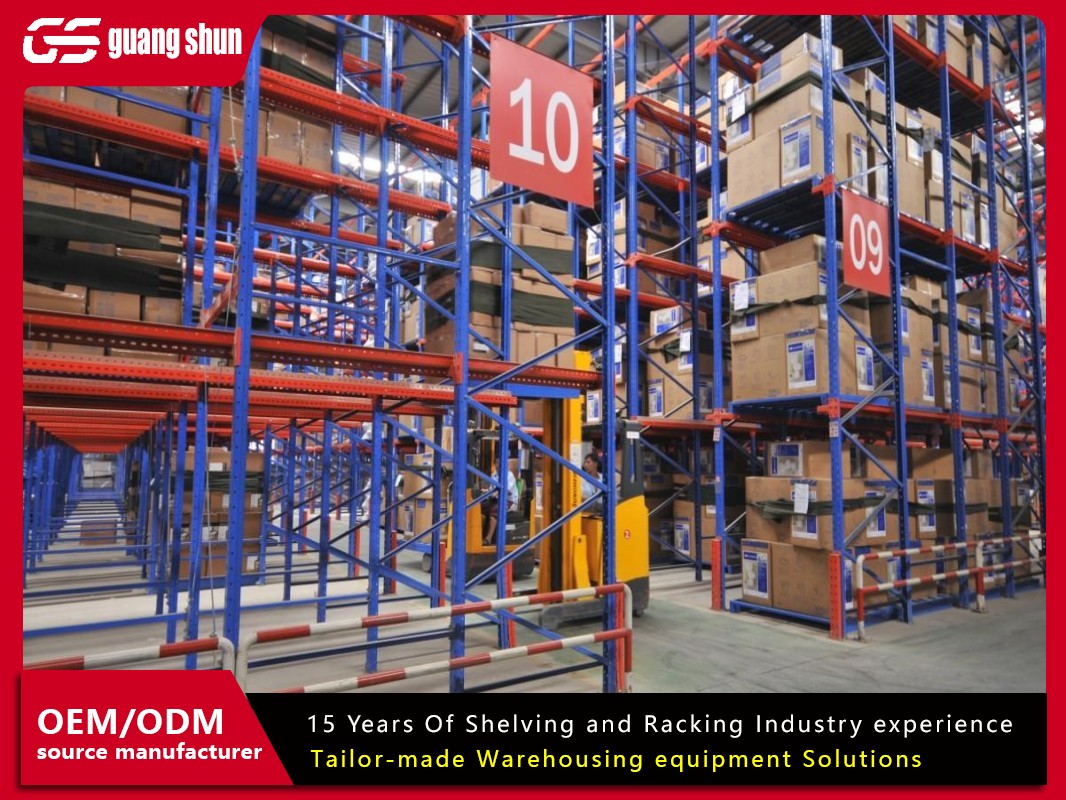
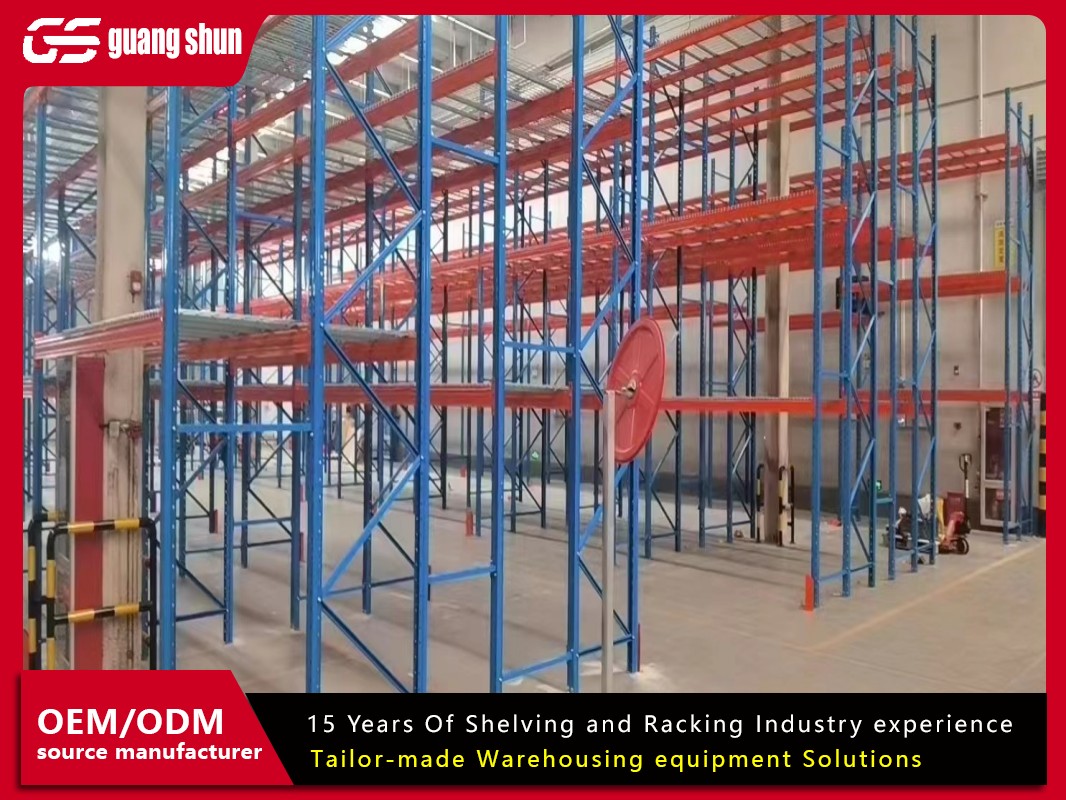
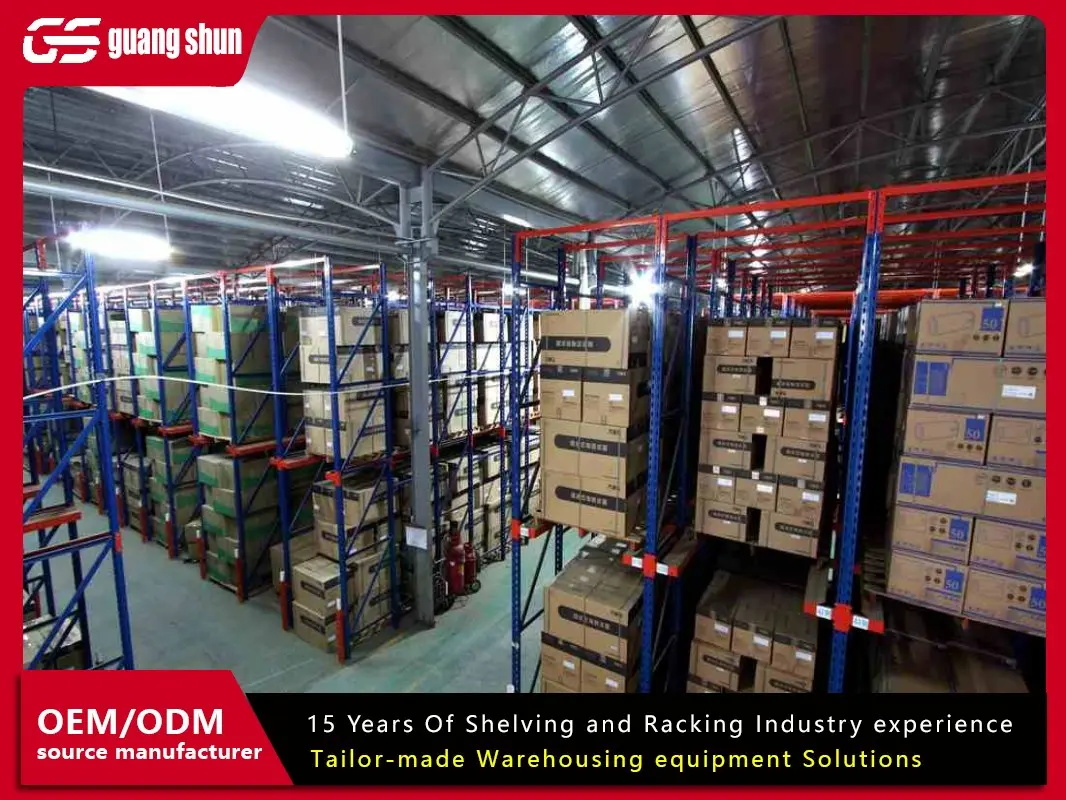
Optimizing warehouse storage density without sacrificing accessibility remains a persistent engineering challenge. For operations handling mixed palletized goods, bulky components, or non-standard inventory, industrial longspan shelving provides a structural middle ground – offering greater clear spans and higher beam load capacities than standard clip-in shelving, while maintaining selectivity that selective pallet racks cannot achieve for irregular items. This guide examines the technical mechanics, material science, and application-specific load planning required to deploy longspan systems effectively.
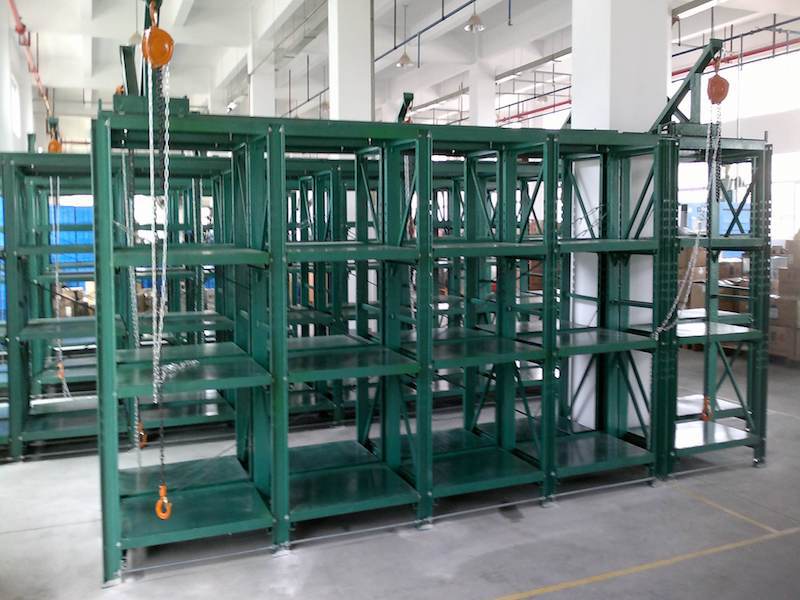
Unlike standard boltless shelving limited to 600–900mm bay widths, true industrial longspan shelving utilizes cold-formed steel uprights (typically 100×50mm to 120×60mm cross-sections, 2.0–2.5mm base metal thickness) and roll-formed box beams with keyhole or teardrop punch patterns. The critical engineering parameter is the span-to-deflection ratio: for beam spans exceeding 2400mm, manufacturers specify a maximum deflection of L/240 under full uniform load to maintain structural integrity. Most industrial systems support beam lengths from 1800mm up to 3600mm, with depth options ranging 600mm to 1200mm.
Key design variables that influence global stability include:
Column pitch and bracing: Back-to-back uprights with diagonal X-bracing increase lateral rigidity for seismic zones (tested to ASCE 7-16 standards).
Beam-to-upright connection: 3-pin or 4-pin locking clips with anti-splay tabs prevent accidental dislodgment under dynamic loads.
Footplate design: Adjustable shim plates (2–10mm) compensate for floor unevenness, crucial for longspan structures with multiple upright frames.
Material grade: Q235B or Q355B structural steel (yield strength ≥235 MPa) with pre-galvanized or electrostatic powder coating (minimum 60μm thickness for C5 corrosion environments).
Determining working load limits for industrial longspan shelving requires more than per-level ratings. Engineers must account for load distribution, point load concentration, and cumulative column loading. The industry standard calculation uses the formula: Allowable load = (beam section modulus × material yield strength) / (span × safety factor). For most longspan configurations, safety factors range between 1.5 and 1.8 (static loads) and up to 2.5 for seismic or impact-prone zones.
Typical load benchmarks per shelf level (uniformly distributed):
1800mm span → 600–800 kg per level (using 80×40×1.8mm beams)
2400mm span → 450–650 kg per level (heavy-duty 120×50×2.0mm beams)
3000mm span → 300–450 kg per level (reinforced beams + anti-deflection inserts)
3600mm span → 200–300 kg per level (maximum configuration, requires upright bracing)
For mixed loads (e.g., 60% uniformly distributed + point loads), industrial longspan shelving from experienced fabricators includes FEA (finite element analysis) load charts. Always include a 15–20% reserve capacity for load miscalculation or accidental overload.
Several sectors benefit from the adjustable bay sizes and medium/heavy-duty capacity of longspan systems:
Just-in-sequence delivery of bulky bumpers, exhausts, and body panels requires span widths above 2500mm to accommodate non-collapsible racks. Using industrial longspan shelving with 2700mm beams and 900mm depth reduces aisle frequency while providing 5-level storage of up to 550kg/level. One German tier-1 supplier reduced storage footprint by 34% after replacing standard shelving with a cantilever-assisted longspan design.
Low-volume, high-mix assembly environments (aerospace, heavy machinery) require multi-bin access to tools, castings, and welded parts. Longspan’s 2000–3000mm clear spans allow vertical separation of large inventory categories without dedicated rack structures. Adding wire decking or steel panels prevents small parts from falling through.
Non-conveyable items like gym equipment, furniture cartons, and industrial tools exceed standard carton dimensions. Operators in 3PL warehouses achieve 180% higher storage density by switching from selective racks to mezzanine-integrated longspan with 4.2m height and 2400mm spans.
Frozen environments (‑25°C) require specially treated, notch-tough steel (impact resistance tested at low temperatures). industrial longspan shelving with moisture-resistant epoxy coating and freeze-tolerant clip lubricants extends service life beyond 15 years in such conditions.
Many warehouses attempt to use medium-duty selective racks for bulky SKUs, leading to three recurrent problems:
Vertical space waste: Standard shelving often maxes at 3m height due to stability limits. Longspan uprights designed for 4–6m heights with integrated cross bracing optimize cubic capacity.
Accessibility bottlenecks: Deep pallet racking (2.5m+ depth) forces FIFO or LIFO constraints. Longspan with double-sided access and 1.2m depth supports both pick-and-pack operations and bulk reserve.
Structural failure risk: 43% of shelving accidents originate from mismatched beam spans and actual loads (OSHA data). Longspan systems with factory-stamped load plaques per beam level reduce human error during reconfiguration.
Additional engineering solutions include integrated anti-seismic back ties, anchored base plates for high-seismic zones, and optional drop-in dividers for mixed SKU segregation.
Selecting optimal storage requires understanding performance trade-offs:
Standard boltless shelving (light-duty): Span limit 900mm, load up to 250kg/level – not viable for industrial parts or bulk goods.
Selective pallet racking: Spans >2700mm, loads >2000kg/level but lacks shelf adjustability (requires beams and pallet supports). High cost per cubic meter when storing small/medium items.
Industrial longspan shelving: Bridge category – 1800–3600mm spans, per-level loads from 300kg to 1000kg, full beam adjustability on 50mm increments. Best value for “too large for shelving, too light for pallet rack” inventory.
Investment ROI analysis: For warehouses with average SKU dimensions of 1100×800×600mm and weight 400kg, longspan reduces cost per stored unit by 27–32% compared to mixed fleets of shelving + racking, according to IWLA benchmarking studies.
To achieve rated capacities for industrial longspan shelving, adhere to these engineering protocols:
Anchoring: Use 12mm expansion anchors every 1200mm along the base plate. Torque to 75 N·m for concrete slabs of C25/30 or stronger.
Beam level spacing: Maximum vertical spacing of 500mm for upright stability; if loads exceed 400kg per level, reduce spacing to 400mm.
Back-to-back row ties: For double-run rows above 4m height, install horizontal row spacers at every third beam level to prevent parallelogram collapse.
Floor flatness: Tolerances should meet ±5mm over 3000mm span for proper load distribution; use shims otherwise.
Seismic restraint: In zones with PGA ≥0.2g, include overhead wall ties or cable-braced top sills per ASCE 7-16 Chapter 13.
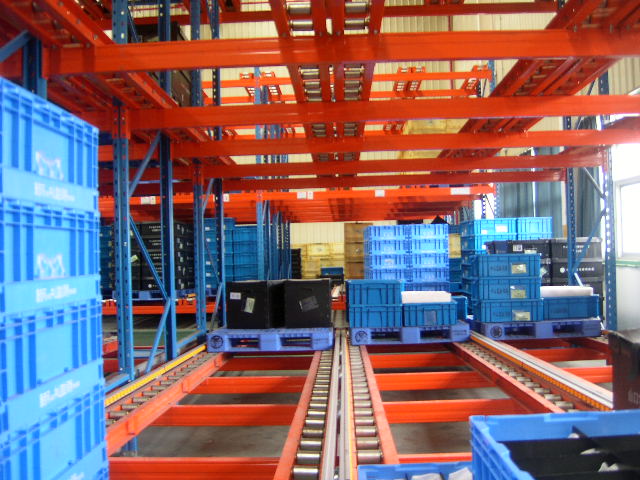
With over 18 years specializing in welded and bolted storage systems, Guangshun provides certified industrial longspan shelving compliant with EN 15512, FEM 10.2.02, and RMI MH16.3 standards. Every batch of uprights undergoes 12-stage surface treatment (degreasing → nano-ceramic coating → 80μm polyester powder curing) ensuring 1200+ hours salt spray resistance. Guangshun offers custom beam punching patterns, variable load ratings up to 1200kg per level, and 3D finite element analysis for seismic zone D/E projects. Global clients in automotive, chemical distribution, and cold chain logistics report 22–35% space efficiency gains after deploying Guangshun longspan architectures.
Free engineering consultation includes load requirement worksheets, span optimization studies, and on-site layout drawings. All components are fully boltless assembly compatible, reducing installation time by 40% compared to drilled systems.
Proactive inspections extend service intervals beyond 12 years. Implement quarterly checks focusing on:
Beam clip deformation: Gap between lock tab and upright hole should be <0.5mm.
Vertical deflection: Use laser level to measure maximum lateral sway under 75% rated load – sway should be ≤ L/240.
Corrosion audit: Especially for coastal or chemical storage facilities; touch-up zinc-rich paint for any coating breach >5mm².
Load sign updates: After any reconfiguration, replace load plaques indicating current per-level capacity.
Deploying purpose-engineered industrial longspan shelving transforms disjointed storage zones into high-density, high-selectivity inventory buffers. From load-specific beam design to seismic bracing strategies, the technical depth of longspan systems exceeds that of conventional shelving while remaining more adaptable than pallet racks. Manufacturers like Guangshun deliver certified performance data, enabling warehouses to achieve verifiable space utilization above 85% and aisle productivity gains of 18–24%. Evaluate your current SKU dimensional matrix and load envelopes – if more than 40% of items exceed standard shelving capacity, longspan provides the rational engineering upgrade.
A1: Heavy-duty configurations from manufacturers like Guangshun achieve up to 3600mm clear spans using box beams (120×60×2.5mm) with anti-deflection ribs. However, for loads exceeding 400kg uniformly distributed, spans above 3000mm require either beam reinforcement inserts or a reduction of beam spacing to 1800mm. For most mixed-item storage, 2400mm spans provide optimal cost-to-capacity ratio.
A2: Yes, hybrid designs are feasible. Some providers offer bolt-on cantilever arms (load capacity 150–300kg per arm) attached to the upright columns of longspan frames. This works well for storing pipes, rods, or sheets while retaining adjustable shelves on the opposite side of the same bay. Check column section modulus – a 100×50mm upright supports up to 1800mm cantilever arms if back-to-back bracing is added.
A3: In most jurisdictions (e.g., NFPA 13, EN 12845), longspan systems with solid shelves require in-rack sprinklers when storage height exceeds 3.7m or when flue spaces are obstructed. Wire mesh decking (50×50mm openings) maintains flue space integrity and typically avoids extra sprinkler tiers. Always consult local building codes – clearance from ceiling sprinklers must be ≥500mm for standard-response heads.
A4: Hot-dip galvanizing (minimum 85μm) provides superior corrosion protection in high-humidity or chemical environments (>15 years to red rust). Electrostatic powder coating (60–80μm polyester or epoxy) offers better scratch resistance and aesthetic color choices but degrades sooner if coating is breached. For dry warehouses (<60% RH), powder coating is sufficient. For cold storage or coastal zones, specify pre-galvanized steel with additional epoxy topcoat.
A5: Standard sizes (2400mm height × 2000mm span × 800mm depth) ship within 15–20 working days. Fully customized projects (special hole punching, non-standard depths, seismic-rated bracing) normally require 30–35 days including FEA load documentation and third-party test reports. Guangshun offers express engineering for urgent layouts, with partial shipments possible within 18 days.

 Wechat
Whatsapp
Wechat
Whatsapp