As a B2B storage equipment consultant with over 17 years in material handling and logistics optimisation, I have audited thousands of warehouse operations across Europe, North America, and Southeast Asia. One recurring question from supply chain directors is: storage cage price – not just the purchase invoice, but the real cost of integration, maintenance, and residual value. While a cheap storage cage might seem attractive, hidden variables such as wire gauge tolerances, welding consistency, finish durability, and load cycle fatigue directly impact your total cost of ownership (TCO). In this technical guide, I break down every component that influences pricing, provide industry-benchmark ranges, and share procurement tactics used by leading logistics firms. References to Guangshun and other reputable manufacturers will illustrate best practices. By the end, you will be able to negotiate storage cage price with full confidence, understanding exactly what you pay for.
No two storage cages are identical. The storage cage price varies by over 350% based on engineering choices. Below are the core parameters that professional buyers evaluate.
Industrial storage cages are primarily constructed from low-carbon steel Q235 or equivalent. Premium cages use higher-grade steel (e.g., SS400, S235JR) with consistent carbon content. Wire diameter typically ranges from 4.0 mm to 8.0 mm. Light-duty cages (4.0–4.5 mm) support <500 kg, while heavy-duty (6.0–8.0 mm) can handle 1500–2000 kg. A shift from 4.5 mm to 6.0 mm increases raw steel consumption by ~78%, directly raising storage cage price by 40-55%. Always request mill certificates to verify gauge consistency; under-gauged wires lead to deformation under dynamic loads.
Standard mesh openings: 50×50 mm, 50×100 mm, or 100×100 mm. Tighter meshes (50×50) prevent small parts from falling but require more welding points — adding 12-18% to manufacturing costs. Conversely, 100×100 mm grids reduce weight and cost, but are unsuitable for small components. For high-value inventory, many logistics centers specify 50×50 mm mesh with U-panel reinforcement, a feature that elevates storage cage price by about $8–$15 per unit but prevents product loss.
Three main options: electro-galvanized (zinc-plated), hot-dip galvanized, or powder-coated. Electro-galvanized offers basic indoor protection (up to 200 hr salt spray test) and adds ~7% to base cost. Hot-dip galvanizing provides 800+ hr salt spray resistance, ideal for cold stores or high-humidity environments, but raises price by 25-30%. Powder coating (RAL colours) adds 15-20%, offering excellent abrasion resistance and brand visibility. Many clients of Guangshun request 80–120 µm powder coating for automated warehouse environments, balancing storage cage price with 10+ year lifecycle.
Static vs dynamic load ratings differ significantly. A cage rated for 1000 kg static (stacked) might only hold 600 kg when moved by a forklift. Engineering features like additional crossbars, reinforced bottom U-channels, and corner gussets increase safety margins but add 10–18% to production costs. Collapsible cages (fold-flat design) save 75% return shipping space – a premium of $20–$35 per cage, which often pays back in less than four logistics cycles.
Adding swivel casters (two fixed, two swivel with brakes) typically adds $12–$28 per cage. Removable dividers or hinged doors add $10–$20 each. For automated guided vehicle (AGV) compatibility, precision base plates and QR code holders are extra. Such modifications increase the final storage cage price by 20-40%, but are essential for Industry 4.0 workflows.
Based on 2025–2026 global market data (excluding extreme custom projects), here are typical price brackets per unit (ex-works, order quantity ≥100 pcs).
Economy / Light-duty (≤500 kg capacity, 4.0–4.5 mm wire, electro-galvanized, non-collapsible, 800×600×840 mm): $32 – $52
Standard / Medium-duty (800-1200 kg, 5.0–5.5 mm wire, powder-coated, 1000×800×840 mm, collapsible): $68 – $112
Heavy-duty (1500-2000 kg, 6.0–8.0 mm wire, hot-dip galvanized, reinforced base, stackable up to 4 high): $145 – $265
Custom / AGV-ready (with casters, dividers, RFID holders, special mesh): $210 – $380+
Note that storage cage price for large-volume contracts (500+ units) can be reduced by 12-20%, while single-unit purchases via distributors add a 25-40% markup. Always request a detailed cost breakdown per component to identify fair pricing.
Many warehouse managers focus solely on the purchase price, overlooking three major cost drivers:
Freight & Packaging: Collapsible cages reduce volumetric weight by up to 70%, slashing sea freight costs. A rigid cage shipment of 500 units from Asia to Europe may cost $6,800, while knock-down cages cost only $2,100. Ask your supplier (e.g., Guangshun) for nesting ratio data.
Assembly Labor: Some cages arrive in semi-knocked-down condition, requiring manual welding or bolt tightening. Assembly time per cage can range from 2 minutes (simple hinges) to 12 minutes (complex locks). At $25/hour labor, this adds $1–$5 per unit.
Maintenance & Replacement: Cages with poor weld penetration or thin zinc coating show rust after 18 months in humid warehouses. Replacement cost and downtime far exceed the initial savings. Based on a 2024 study, low-cost cages had a 22% failure rate within 3 years vs 3% for premium units. The TCO advantage of a higher storage cage price becomes evident over 5+ years.
When evaluating storage cage price, use this ROI formula over a 5-year horizon:
ROI = (Labor savings + Damage reduction + Space efficiency gain + Asset residual value) / (Initial procurement + Assembly + Maintenance cost)
Labor savings: Foldable cages reduce retrieval time by 18–25% due to consistent dimensions (source: MHEDA). For a 10-person warehouse, annual saving can reach $14,000.
Damage reduction: Powder-coated, smooth-edge cages cut product abrasion claims by 30-40%, recovering up to $0.10 per unit handled.
Space efficiency: Nesting cages return 3.5× more empty storage capacity compared to rigid cages. In high-rent areas (e.g., $12/sqft), this alone justifies a 15% premium on the initial storage cage price.
Leading logistics companies demand a clear 18–24 month payback period. If a higher-priced cage delivers shorter payback due to durability, it’s the financially smarter choice.
Different sectors impose unique standards that directly shift the storage cage price upward.
Automotive cages require precise exterior dimensions (±2 mm), conductive paint for ESD protection, and barcode compatibility. These specifications add 25-35% to standard prices. Tier-1 suppliers often mandate ISO/TS 16949-certified production.
Stainless steel 304 or 316 cages are mandatory for wash-down areas. Prices start from $280 for a basic 800×600 mm unit, four times higher than carbon steel equivalents. However, they eliminate corrosion and contamination risks.
Lightweight, collapsible cages with drop gates are preferred. Higher mesh density (40×40 mm) prevents small items from escaping. Expect a 15% premium over generic designs.
Based on my experience negotiating over $30M in storage equipment contracts, follow these five rules:
Demand 3D drawings and welding specifications – request WPS (Welding Procedure Specification) documents to ensure uniform penetration.
Test sample cages under dynamic load – simulate your forklift cycles for 500 repetitions; check for permanent deformation.
Verify finish thickness with a coating thickness gauge – acceptable range: 60–120 µm for powder coat.
Negotiate spare parts kits – 5% extra casters or door hinges at no cost can extend asset life.
Opt for modular designs – suppliers like Guangshun offer interchangeable side panels and base grids, reducing long-term replacement costs.
Remember, the lowest tender often results in change orders and early replacements. An optimized storage cage price balances quality, compliance, and performance metrics.
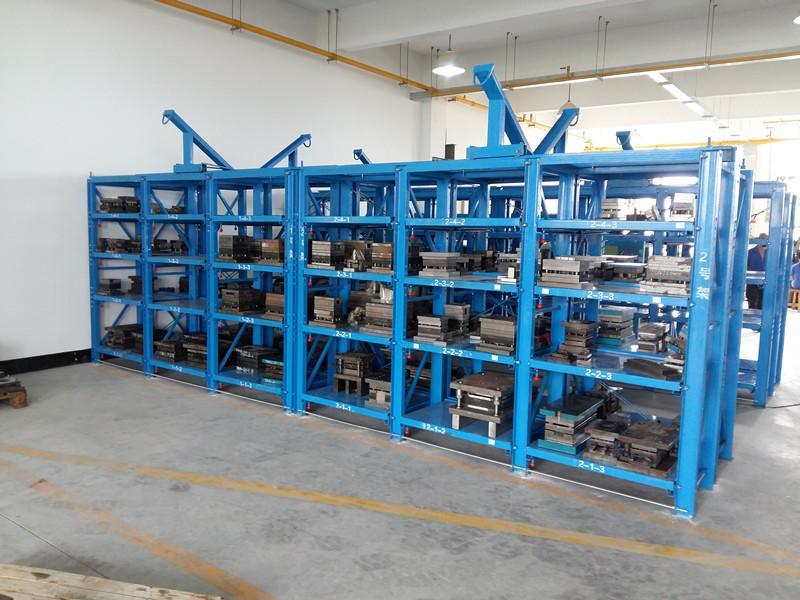
After analyzing steel index trends (hot-rolled coil up 9% year-over-year) and logistics inflation, expect standard-grade storage cage price to range between $78 and $118 for most warehouse applications. For heavy-duty, high-corrosion environments, budget $160–$220. Avoid sub-$45 cages unless used for extremely light, dry goods. Always request a comprehensive TCO projection. Reliable manufacturers like Guangshun provide full lifecycle cost analysis and third-party load test certificates, aligning with ISO 14001 and CE standards. Investing in proper specifications reduces workplace injuries and increases throughput.
A1: Variations stem from wire gauge consistency, welding robot precision, surface treatment thickness, and compliance testing. Some factories skip annealing or use recycled steel, leading to brittle welds. Always ask for a material test report (MTR) and a sample under full load. The storage cage price should reflect documented quality controls.
A2: Absolutely, for any operation that ships empty cages back to suppliers or redistributes them between sites. The fold-flat mechanism reduces return freight by 65-75%. A $25 premium on the initial storage cage price typically pays back in 8-12 return trips. For static in-house storage only, rigid cages may be more economical.
A3: Request a load test certificate from an accredited lab (e.g., TÜV, SGS). The test should include both static stacking and dynamic handling simulation (forklift/pallet jack). Reputable suppliers like Guangshun provide 1.5× safety factor testing. Never rely solely on marketing brochures.
A4: Yes, but only if the coating is applied over a proper phosphate pretreatment. In cold stores (-10°C to +4°C), condensation accelerates corrosion. A hybrid epoxy-polyester powder coat with 100–120 µm thickness outperforms standard zinc plating by 3:1. However, hot-dip galvanizing remains the gold standard for extreme environments, albeit at a 25-30% higher storage cage price.
A5: For non-standard dimensions (e.g., 1200×1000 mm or 700×500 mm), production lead times range from 25 to 45 days after sample approval. Suppliers with automated welding lines and flexible tooling – like Guangshun – can reduce that to 20–30 days. Always factor in sea freight (4–6 weeks) if sourcing internationally. Urgent air freight may add 40% to logistics costs but is possible for small batches.
A6: Not recommended unless the stacking feet and corner designs are identical. Incompatible stacking interlocks create instability, increasing tip-over risk. Always stack cages from the same manufacturer series. Mixed stacking voids most safety certifications. If you need to unify an existing fleet, consult a supplier for custom adapter rings — expect a 10-15% premium to the base storage cage price for retrofits.
© 2026 Expert analysis for warehouse professionals. For detailed quotations and engineering consultation, contact established manufacturers directly.

 Wechat
Whatsapp
Wechat
Whatsapp