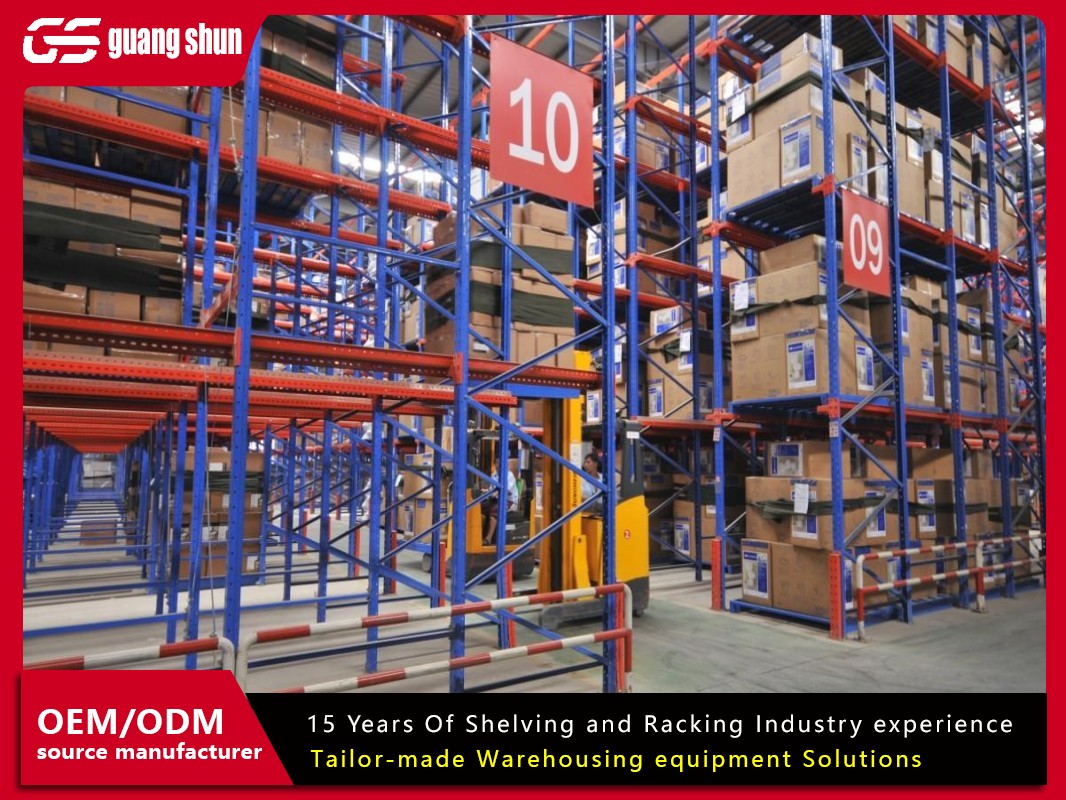
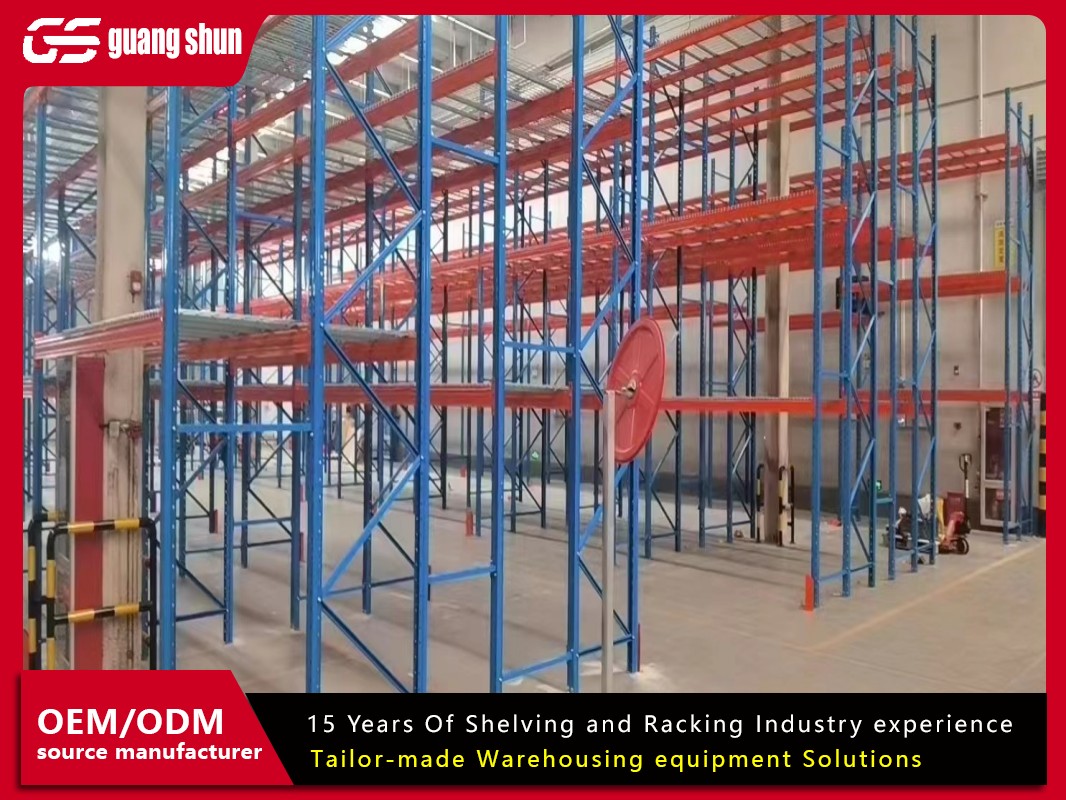
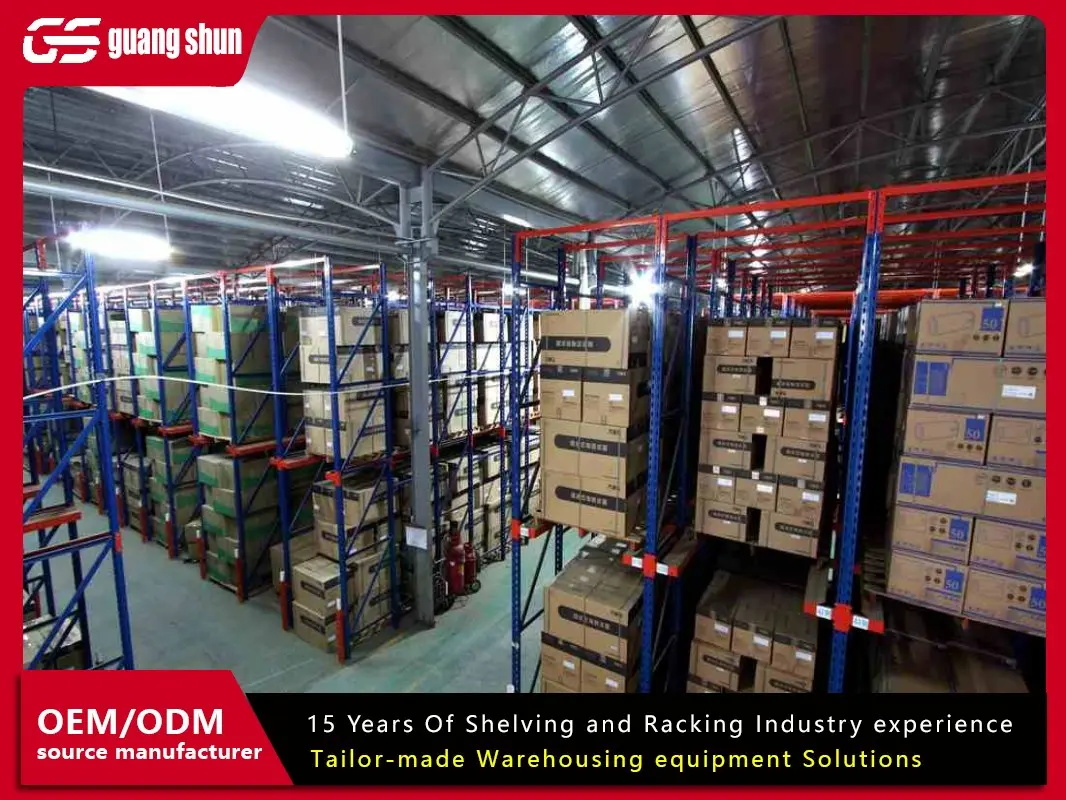
Warehouse operators worldwide face a persistent challenge: balancing cubic storage utilization against structural safety and operational accessibility. The ability to stack the rack correctly influences inventory turnover rates, forklift travel paths, and long-term facility ROI. Based on field data from over 200 distribution centers, improper rack stacking accounts for 34% of reportable storage incidents, while optimized configurations increase floor density by up to 47% without expanding footprint. This guide provides measurable engineering parameters, RMI (Rack Manufacturers Institute) compliance protocols, and real-world load cases to help you master vertical storage.
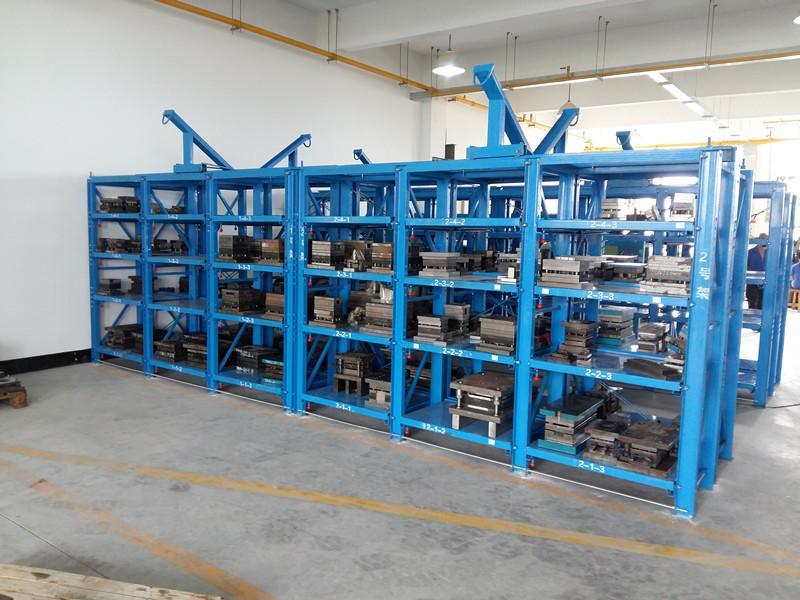
Every decision to stack the rack begins with understanding frame capacity and beam connection integrity. Upright frames are typically cold-formed steel columns with punched holes at 50mm or 75mm increments. The load capacity depends not only on steel gauge but also on bracing patterns: X-bracing or K-bracing resists horizontal forces during seismic events or forklift impacts. A 10,000 lb pallet load transferred through 4-inch deep step beams generates a moment at the beam-to-column connector. For high stacking (above 25 ft), the moment resistance must follow MH16.1-2020 specifications, with safety factor 1.65 against yielding.
Key geometric constraints:
Upright pitch: Standard frame depths 36", 42", or 48" determine beam lengths. For heavy loads, reduce beam spacing to 4 ft vertical increments.
Load eccentricity: Overhanging pallets beyond beams by more than 2 inches create overturning moments – RMI prohibits this in seismic zones 3 and 4.
Floor flatness: F-numbers: FF25 minimum required for rack stacks above 20 ft to prevent frame lean.
Leading manufacturers like Guangshun provide load tables verified via third-party finite element analysis, ensuring each beam level sustains dynamic forces from reach trucks. Their roll-formed uprights incorporate anti-slip holes and optional seismic base plates for high-bay warehouses.
In regions with moderate to high seismicity, the way you stack the rack must account for inter-story drift. Standard pallet racks are non-structural components but must withstand horizontal ground acceleration (SDS factor). ASCE 7-22 requires that for racks taller than 8 ft, analysis of amplified sway demands using equivalent lateral force procedure.
Critical mitigation strategies:
Anchor bolt embedment: Minimum 4-inch embedment into 3000 psi concrete with ¾" diameter bolts spaced 12" on center along base plates.
Row spacers: Connecting adjacent rack rows with diagonal ties reduces rack sway up to 60%. Use 2-inch schedule 40 pipes at every third bay.
Load stability clips: Preventing pallets from lifting off beams during oscillations – mandatory for seismic design category D.
Case analysis: A distribution center in California reduced seismic damage potential by 82% after retrofitting row spacers and bolted foot plates. Guangshun offers pre-engineered seismic kits with drilled base plates, certified for SDS values up to 1.5g.
Engineers must define both uniform distributed loads (UDL) and point loads before stacking. A typical selective rack beam rated for 2,500 lbs uniform capacity might fail if a single 2,000 lb concentrated load rests at mid-span without decking. To efficiently stack the rack, follow this load hierarchy:
Heavier pallets (≥1,500 lbs) → place on bottom two beam levels, keeping vertical center of gravity below 36 inches from floor.
Medium loads (800–1,500 lbs) → mid-height slots with beam step depths of 4 inches or more.
Light inventory (under 800 lbs) → top levels; yet never exceed upright frame total capacity per bay (typically 18,000–25,000 lbs).
Using wire mesh decks improves load spreading, reducing stress concentration by 28% compared to particleboard. However, verify that deck wire gauge (typically 4ga to 7ga) supports intended UDL. For automated storage and retrieval systems (AS/RS), the dynamic load factor reaches 1.4, so de-rate static beam capacity by 30%.
Different rack configurations drastically change how operators stack the rack and access SKUs. Select based on FIFO/LIFO needs and SKU velocity.
Each pallet has dedicated beam level and face. Best for high-turnover SKUs, but storage density is lower – typically 35-40% space utilization. Beam length up to 12 ft, vertical adjustability every 2-3 inches.
Two pallets deep, reducing aisles by 40%. Requires reach trucks with extended forks. Stack two pallets deep per lane; back pallet load should not exceed front pallet weight by >10% to avoid tip-over during extraction.
Continuous rails allow forklifts to drive into lanes. Storage density gains of 60-75%, but load must be same product type. Rails incline at 0.5° to ensure pallet sliding. When you stack the rack in drive-in configuration, load must be evenly distributed across horizontal rails; never load a lane with varied pallet heights.
Uses nested carts on incline rails. Stack 4-6 pallets deep per lane, each pallet loading causes the train to compress. Ensure cart wheel material (nylon or steel) matches rail profile to prevent sticking. Push-back systems reduce aisle requirement and improve density by 50% compared to selective.
Maximizing overhead clearance directly improves the return on each cubic foot. Standard lift truck requires 6 inches clearance from rack top beam to sprinkler heads. However, design for 8–12 inches to accommodate sprinkler deflector requirements. For every 1 ft increase in stacking height (up to 45 ft), storage capacity rises by roughly 150 pallet positions per 10,000 sq ft.
Aisle width formula: For a 4,000 lb capacity counterbalance forklift, a 3,500 lb turning radius needs 11.5 ft aisle. Narrow aisle reach truck (3,000 lb capacity) works in 9 ft aisles. Very narrow aisle (VNA) turret trucks operate in 5.5 ft aisles but require wire guidance and floor tolerance of 3mm over 10m. Combine VNA with stack the rack heights exceeding 40 ft for maximum cube utilization.
Lighting and sprinkler requirements: NFPA 13 mandates that rack uprights do not obstruct sprinkler discharge. For racks wider than 4 ft, in-rack sprinklers are mandatory at each tier where clearance exceeds 5 ft between load and ceiling. When you stack the rack above 25 ft, install in-rack heat detectors connected to fire suppression system.
Mistakes during daily stacking cause 62% of rack damage claims. Follow these five rules:
Pallet overhang inspection: Limit overhang to 2 inches on beam side; beyond that requires decking extension bars.
Beam lock verification: Toggle safety locks must fully engage; audible click should be confirmed.
Speed reduction zones: Mark aisles with 5 mph limit near rack ends. Install column protectors at each exposed upright.
Load beam deflection check: Under full load, beam deflection should not exceed L/180 (e.g., for 108-inch beam, max 0.6 inches).
Regular upright sweep: Use inclinometer to measure vertical plumb; deviation exceeding 1/2 inch per 10 ft of height requires structural analysis.
Training operators on the correct method to stack the rack reduces accident rates by 73%. Implement barcode-assisted load positioning: scan slot ID and pallet ID to verify maximum permissible weight.
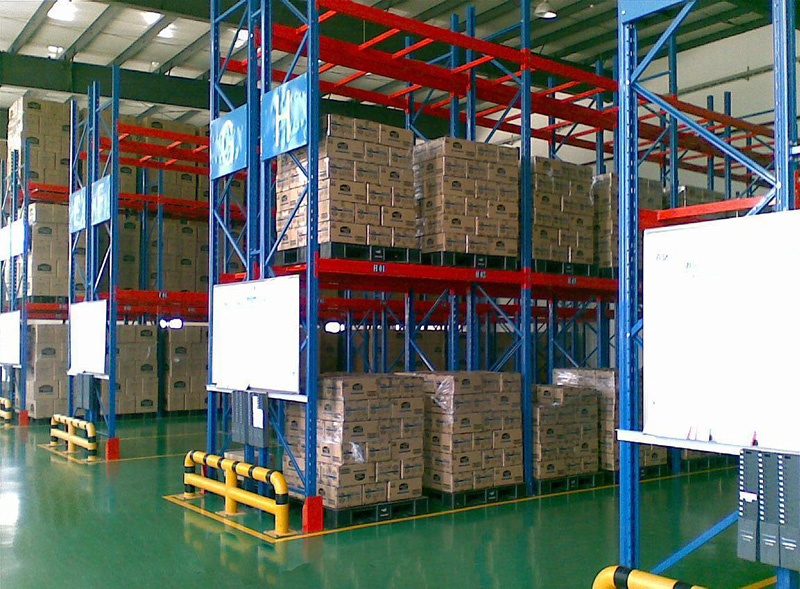
According to ANSI MH16.3-2021, pallet rack inspections should follow a three-tier schedule:
Daily visual checks (operators): Look for beam dislodgement, visible column dents deeper than 1/4 inch, or missing safety clips.
Monthly documented inspections (supervisors): Measure upright alignment, check anchor bolt torque (60 ft-lbs minimum for 1/2-inch bolts), inspect footplate corrosion.
Annual expert audits (third-party or certified engineer): Ultrasonic testing of welds, load testing for deformed beams, and seismic connection review.
Predictive maintenance using load cells integrated into shims can track live loads per upright. Overloaded bay detection sends alerts to WMS. Warehouses employing this technology reduce structural fatigue incidents by 89% across 5-year intervals.
Deciding whether to retrofit existing racking or install new system for increased stacking height involves cost-benefit analysis.
Retrofit options: Add row spacers, increase column gauge, install seismic base isolators. Typical retrofit cost per bay: $180–$400. Gains: up to +15% stacking capacity (if originally under-utilized). However, upright frame max height limited by existing anchor pattern.
New system investment: For facilities aiming to stack the rack beyond 35 ft, new uprights with heavier gauge steel (2.5mm vs 2.0mm) and robotic welding guarantee higher load class. Average cost per pallet position: $85 for new selective rack (including installation). With increased density of +120% over old layout, payback period often under 18 months due to reduced leased warehouse space. Tax incentives may apply for seismic upgrades and energy efficiency (less forklift travel reduces battery consumption).
Guangshun provides free ROI assessment based on your inventory velocity, ceiling height, and seismic zone. Their modular designs allow future expansion from 20 ft to 45 ft with minimal downtime.
Q1: What is the maximum safe height to stack the rack without seismic
bracing?
A1: RMI guidelines recommend that for
non-seismic zones (SDS < 0.33g), stack the rack up to 25 ft without
additional bracing, provided floor flatness meets F-number 25 and anchor bolts
are installed every 4 ft. Above 25 ft, regardless of seismic zone, row spacers
or cross-aisle ties must be used to control sway from forklift accelerations.
For reference, Guangshun engineered racks
at 45 ft heights in wind zone III using vertical X-bracing.
Q2: How often should beam safety locks be tested when stacking
pallets daily?
A2: Beam lock engagement should be
verified at every beam installation, and subsequently during monthly documented
rack inspections. However, for high-frequency stacking areas (over 200
cycles/day), test locks weekly by applying upward pressure with a forklift –
lock should remain seated with movement under 1mm. Replace any lock showing
deformation.
Q3: Can I stack the rack with different pallet types (plastic vs.
wood) in same bay?
A3: Yes, but height consistency
is critical. Plastic pallets often have lower static friction – they require
anti-skid strips when stacking double-deep. Mixed pallet types in same bay
create uneven load distribution across beam deck; compensate by placing wood
pallets (generally heavier) on the lower beam levels, plastic on top. Ensure
each pallet's bottom deck contacts at least 80% of beam surface.
Q4: What is the correct method to stack the rack to avoid damage from
forklift masts?
A4: Maintain a minimum clearance of
6 inches between the top of the tallest pallet and the mast tilt cylinder. Train
operators to keep mast vertical (90°) when inserting loads into beam levels
above 15 ft. Install mast height limiters on reach trucks – photoelectric
sensors cut lift speed near top beams. Guangshun recommends yellow collision
striping on uprights at mast-tip height.
Q5: How do I calculate the combined load capacity for racks with
different beam lengths across a single upright
frame?
A5: Use the interaction equation per MH16.1:
(Pa/Pa_allow) + (Pb/Pb_allow) ≤ 1.0 where Pa and Pb are actual loads on two beam
levels attached to same upright. For example, if a frame column has capacity of
12,000 lbs total per bay, and you place 6,000 lbs on level 1 and 4,500 lbs on
level 2, check each beam’s individual capacity, then sum the load proportion to
column rating. Always de-rate by 10% if loads are not centered between the two
upright frames (offset loads cause torsion).
Q6: Is it advisable to stack the rack in outdoor, non-conditioned
environments?
A6: Outdoor racking is possible if
steel is hot-dip galvanized (minimum 85 microns) or coated with marine-grade
epoxy. Wind loading must be computed per ASCE 7 – typical 90 mph wind requires
cross-bracing every 4 bays. Additionally, foundation must be reinforced with
larger footings to resist uplift. Guangshun offers wind-rated outdoor rack systems with
wind deflectors and special base plates.
Q7: After an impact, when must a rack be unloaded and
repaired?
A7: Any column dent deeper than 1/4 inch
(6mm) or any visible crack in weldments requires immediate unloading of affected
bay and adjacent bays. Use temporary shoring. Permanent repair involves either
splice kits (for minor bends) or complete upright replacement. Do not stack the
rack on damaged beams, even if deformation appears minor – residual stress
reduces fatigue life by up to 70%.
Engineering excellence when you stack the rack translates directly to operational safety, storage efficiency, and financial performance. The methods described above – from seismic analysis and load distribution to aisle design and inspection intervals – form a complete system that reduces total cost of ownership. Partnering with experienced manufacturers such as Guangshun ensures your rack design matches your specific load spectrum and building constraints. Request an engineering site evaluation to compare your current stacking metrics against industry benchmarks and generate a customized plan to maximize cubic storage without compromising safety.

 Wechat
Whatsapp
Wechat
Whatsapp