In modern metal fabrication, the difference between profitable high-mix production and costly downtime frequently comes down to material handling. For operations processing steel, aluminum, or specialty alloys, sheet metal stacking systems represent the critical interface between blanking/shearing lines and downstream forming, welding, or assembly cells. These systems are not passive storage solutions; they are active enablers of flow, quality, and labor efficiency. This article examines the engineering principles, application-specific configurations, and economic justifications for modern stacking solutions, drawing on field data and established best practices.
Many fabrication plants invest heavily in high-speed presses, laser cutters, and automated press brakes, yet overlook the stacking and destacking operations that bracket these processes. The result is a throughput bottleneck: a 400-ton press may cycle in under 2 seconds, but if operators manually remove and stack blanks at 6–8 seconds per piece, the cell’s effective output plummets. This disparity is amplified in industries like automotive body panels, HVAC casing production, and electrical enclosure manufacturing, where thousands of identical blanks must be processed daily with strict flatness and surface protection requirements.
Conventional manual stacking introduces variable quality—scratches, edge dings, and misalignment—that can scrap expensive parts downstream. Automated sheet metal stacking systems address these issues through precision-controlled gantries, magnetic or vacuum grippers, and layer-separating paper or foam interleaving. The measurable outcomes are striking: plants that retrofit automated stacking often report a 30-50% reduction in handling-related defects and a 20-35% increase in overall equipment effectiveness (OEE) on their shearing or blanking lines.
Today’s systems are defined by their adaptability to material type, thickness, and surface finish. Understanding these core subsystems is essential for specifying a system that aligns with production demands.
The choice of end-effector is the first major decision. Vacuum-based grippers, using multiple suction cups with zone control, are ideal for smooth, non-porous sheets, including coated or painted metals. They provide even lift distribution, minimizing deflection in thin gauges (0.5–2.0 mm). For heavier plates (6–25 mm) or materials with oily surfaces, electromagnetic or permanent magnetic lifters offer superior holding force and fail-safe operation. Hybrid systems, combining vacuum for initial lift and magnets for secure transport, are gaining traction for mixed-material production runs.
Advanced systems incorporate contactless air-film or Bernoulli grippers for highly polished or pre-finished sheets where any physical contact risks cosmetic damage. Although more expensive, these grippers reduce rejection rates in high-value applications like architectural cladding or mirror-finish stainless components.
Precise edge alignment is critical for downstream robotic pick-and-place or roll forming. Modern stacking stations use mechanical stops, optical sensors, or laser-based edge detection to achieve positional accuracy within ±0.5 mm. The stacking bed itself often incorporates air flotation tables that float sheets on a thin cushion of air, reducing friction and allowing effortless repositioning without scratching. For high-volume lines, two-station shuttles enable continuous stacking: while one pallet is being filled, the full pallet is removed and replaced with an empty one, eliminating line stoppages.
For materials prone to surface galling (e.g., aluminum, copper, or pre-painted steel), automatic interleaving systems feed paper, foam, or plastic film between each sheet. These units are synchronized with the stacking cycle, dispensing material precisely cut to the sheet dimensions. The economic rationale is clear: the cost of interleaving materials is typically less than 2% of the value of a high-quality finished part, but preventing a single scratch that renders a part non-conforming can save hundreds of dollars per incident in high-mix job shops.
No single sheet metal stacking system fits all operations. The optimal architecture depends on sheet size, weight, production volume, and integration with upstream/downstream equipment. Here are three dominant configurations observed across the industry.
These are directly synchronized with a blanking press or shear. Sheets exit the shear conveyor and are transported via belt or roller table to the stacking station. The system matches the press cycle rate, stacking at speeds up to 30–40 pieces per minute. For automotive chassis and structural parts, these systems often include sheet-flattening rollers to correct any coil-set curvature before stacking, ensuring flat blanks for subsequent welding.
For job shops with intermittent blanking or multi-source material flow, flexible robotic cells offer independence from dedicated press lines. An articulated arm with a custom gripper picks sheets from a conveyor or pallet, checks for double-sheet pickup via ultrasonic or magnetic sensors, and places them onto the stack with precision. These cells are reprogrammable for different sheet sizes, making them suitable for contract manufacturers who process batch sizes of 50 to 500 pieces. Integration with a vision system allows for optical inspection of surface defects during the transfer, adding an extra quality gate.
When floor space is constrained, vertical stacking carousels or tower systems store multiple stacks in a compact footprint. Sheets are fed into an elevator mechanism that deposits them onto designated trays. These systems are particularly advantageous in urban manufacturing facilities where real estate costs exceed $200 per square foot. They also serve as buffer storage between shearing and CNC punching, decoupling the two processes and smoothing production flow.
Despite clear benefits, many fabricators hesitate to invest in automated stacking due to perceived complexity. Below are the most frequent concerns and the corresponding technical solutions available today.
Double-sheet pickup—where two sheets adhere due to oil film or static—is a primary cause of press tool damage and stack misalignment. Modern systems counter this with:
Ultrasonic double-sheet detectors with automatic reject chutes.
Magnetic separators that slightly magnetize sheets to repel each other during lifting.
Edge-separation air knives that blow compressed air between sheets to break the oil film seal.
Implementation of these detection layers has reduced misfeed incidents by over 70% in documented case studies.
For decorative or exposed-surface parts, even micro-scratches are unacceptable. Countermeasures extend beyond interleaving to include:
Nylon or polyurethane-coated gripper pads that contact only the sheet edges.
Soft-touch drop sequences where sheets are gently lowered onto the stack rather than dropped, using controlled pneumatic or servo-driven vertical movement.
Ionizing air bars to neutralize static charges that attract dust particles, which can act as abrasives between sheets.
Many plants have shears and presses that are 15–20 years old, with analog controls and limited communication protocols. Modular stacking systems now offer universal interfaces (EtherNet/IP, Profinet, and CANopen) and standalone PLCs that can operate in a "sensor-triggered" mode, meaning they react to a photoelectric signal from the existing machine without needing direct control integration. This retrofitting approach has enabled smaller shops to automate at a fraction of the cost of a new greenfield line.
For financial decision-makers, the justification for automated sheet metal stacking systems must be grounded in tangible metrics. A typical system with a stacking speed of 15 sheets per minute, operating one shift (2,000 hours/year), can handle up to 1.8 million sheets annually. Compared to manual stacking, which requires one full-time operator per shift, the labor savings alone are substantial. Assuming a fully burdened labor cost of $60,000 per year per operator, a single-shift automated system pays back its capital cost in 18–24 months.
Additional ROI factors include:
Material savings: Reduced edge damage and corner dents lower scrap rates by 2-5%.
Energy efficiency: Regenerative drives in servo-motor systems consume 40% less energy than traditional hydraulic or pneumatic equivalents.
Space utilization: High-density stack configurations can double the storage capacity within the same floor area.
Reduced work-in-process (WIP) inventory: Reliable stacking enables just-in-time feeding, minimizing the buffer stock between processes.
As Industry 4.0 permeates metal forming, stacking systems are evolving into connected data nodes. Advanced units are equipped with sensors that track:
Stack height and weight for real-time inventory management.
Gripper cycle times and vacuum pressure for predictive maintenance.
Sheet surface temperature and flatness for quality trend analysis.
This data feeds into manufacturing execution systems (MES), allowing production planners to schedule downstream processes with confidence. For example, if the stacking system reports an 8% deviation in sheet flatness for a particular coil, the downstream press brake can automatically adjust its backgauge parameters to compensate, reducing setup time and scrap. Companies like Guangshun have pioneered such integrated solutions, offering stackers that communicate directly with their high-density racking and retrieval systems to create a seamless material flow from coil storage to finished part.
With the market offering a wide spectrum of stackers, from basic pneumatic units to AI-equipped servo systems, a structured selection process is essential. The following five-step framework has been validated across several hundred installations.
Define material envelope: Maximum and minimum sheet length, width, thickness, and weight. Include consideration of future product mixes.
Map cycle time: Calculate the required stack rate (pieces/minute) based on the bottleneck process upstream. Over-specifying speed adds unnecessary cost.
Assess surface quality needs: Determine the acceptable level of surface defects (e.g., allowable scratch depth in microns) to decide on gripper type and interleaving necessity.
Evaluate floor layout and integration: Identify entry and exit conveyor directions, available overhead clearance for gantries, and power/air supply capacities.
Review service and support: Request maintenance intervals, spare parts availability, and remote diagnostic capabilities. Systems with predictive diagnostic algorithms, which alert operators to wear before failure, deliver significantly higher uptime.
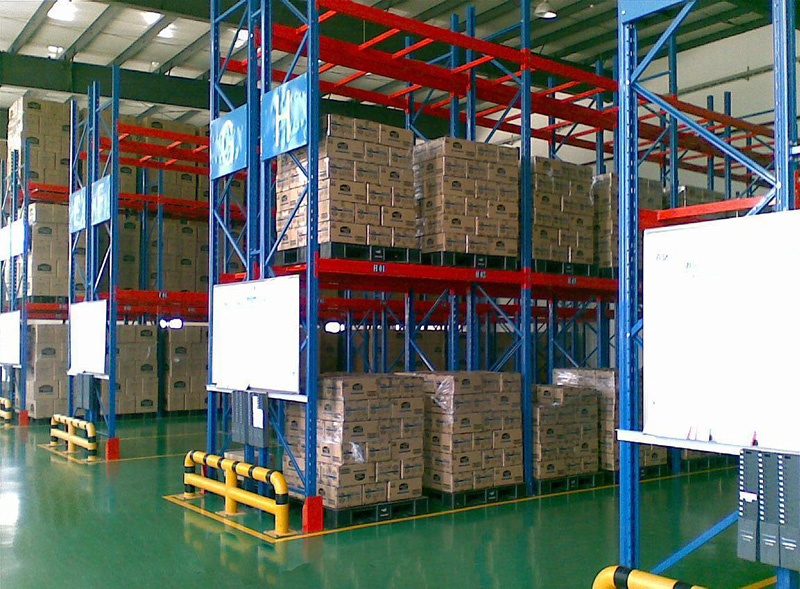
Looking ahead, three technological vectors will shape the next generation of sheet metal stacking systems. First is the adoption of collaborative robots (cobots) with force-sensitive gripping, enabling safe human-robot interaction in shared workspaces without safety cages. Second is the increasing use of digital twins—virtual replicas of the stacking system that allow engineers to simulate and optimize stacking sequences before committing to physical tooling changes. Third is the integration of AI-based visual inspection that not only detects surface defects but also categorizes them by severity and suggests immediate corrective actions (e.g., reducing gripper pressure or adjusting interleaving feed rate).
For operations seeking to maximize their capital equipment utilization, the stacking system is no longer an afterthought but a strategic asset. As leading manufacturers like Guangshun demonstrate in their integrated material handling solutions, the synergy between storage, stacking, and retrieval systems unlocks levels of operational agility that competitors cannot easily replicate.
In conclusion, precision sheet metal stacking is a multidimensional engineering challenge that intersects mechanics, controls, materials science, and operations research. The financial and quality dividends of a correctly specified system are quantifiable and substantial, making it one of the highest-return investments in a fabrication plant’s automation roadmap. Whether the goal is to eliminate a manual handling bottleneck, improve surface quality for high-value components, or create a digital thread from raw coil to finished assembly, modern stacking technologies offer a proven path forward.
Q1: What is the typical payback period for an automated sheet metal
stacking system in a small to medium-sized job shop?
A1: Based on a
survey of 45 job shops with production volumes between 5,000 and 30,000 sheets
per month, the median payback period was 22 months when accounting for direct
labor savings and scrap reduction. Shops running two shifts or processing
expensive materials (e.g., 316L stainless) have reported payback periods as
short as 14 months. The primary variable is the labor cost per operator hour and
the material yield improvement.
Q2: Can sheet metal stacking systems handle materials with
non-uniform shapes, such as trapezoidal or curved blanks?
A2: Yes,
but it requires specific engineering. Most standard stackers are designed for
rectangular or square blanks. For non-rectangular profiles, the gripper
arrangement must be customized—often using individually controlled suction cups
that are mapped to the sheet's contour. Vision-guided robots are particularly
suited for these applications, as they can adapt the pick point dynamically.
Suppliers like Guangshun offer modular gripper tooling that can be reconfigured
for different shape families.
Q3: How do stacking systems protect against sheet slippage or
collapse during high-stack conditions?
A3: The primary measures are
anti-slip edge guides that can be pneumatically actuated to gently clamp the
stack as it builds, and stack-height sensors that progressively lower the
stacking bed to maintain a consistent drop height. Additionally, many systems
include automatic banding or strapping stations that apply tensioned steel or
plastic straps once the stack reaches a pre-set height, securing the load for
fork-lift transport. Some advanced systems also incorporate vibration-damping
bases to minimize stack shift during the stacking cycle.
Q4: What maintenance schedule is recommended for a high-duty-cycle
stacking system?
A4: For systems operating 16 hours per day, five
days a week, the consensus among maintenance engineers is as follows: daily —
visual inspection of gripper wear surfaces and vacuum hose integrity; weekly —
calibration of double-sheet sensors and cleaning of optical lenses; monthly —
lubrication of linear guides and ball screws, plus torque check on all fastening
bolts; quarterly — full pneumatic system leak test and servo motor brake
inspection. Predictive maintenance, using vibration analysis and thermal
imaging, can extend component life by 20–30%.
Q5: Is it possible to retrofit an existing manual stacking station
with an automated system without replacing the shear or press?
A5:
Absolutely. Retrofitting is a common and cost-effective approach. The automated
stacker is positioned downstream of the existing equipment, with a conveyor
bridge connecting the two. The stacker's PLC is set to trigger via a light
curtain or proximity switch that detects the exiting sheet. This configuration
preserves the original machine's operation while adding automated stacking. Most
retrofit projects are completed within a 2–3 day installation window, with full
commissioning and operator training in the following week.

 Wechat
Whatsapp
Wechat
Whatsapp