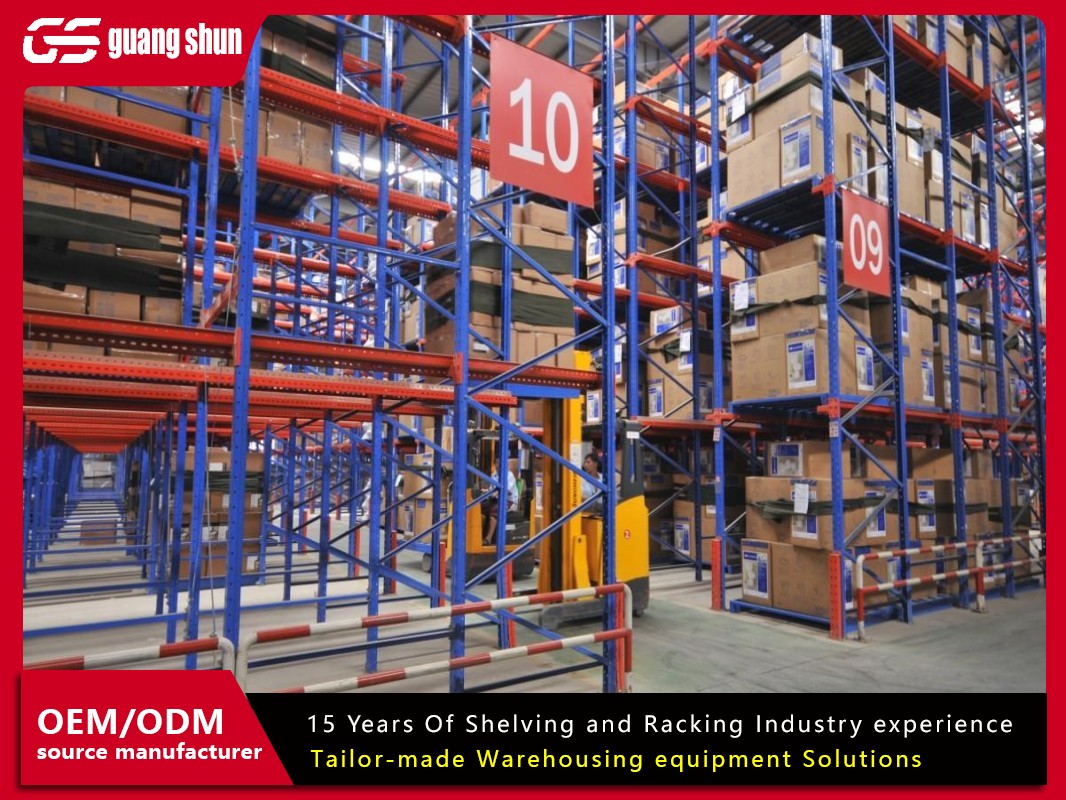
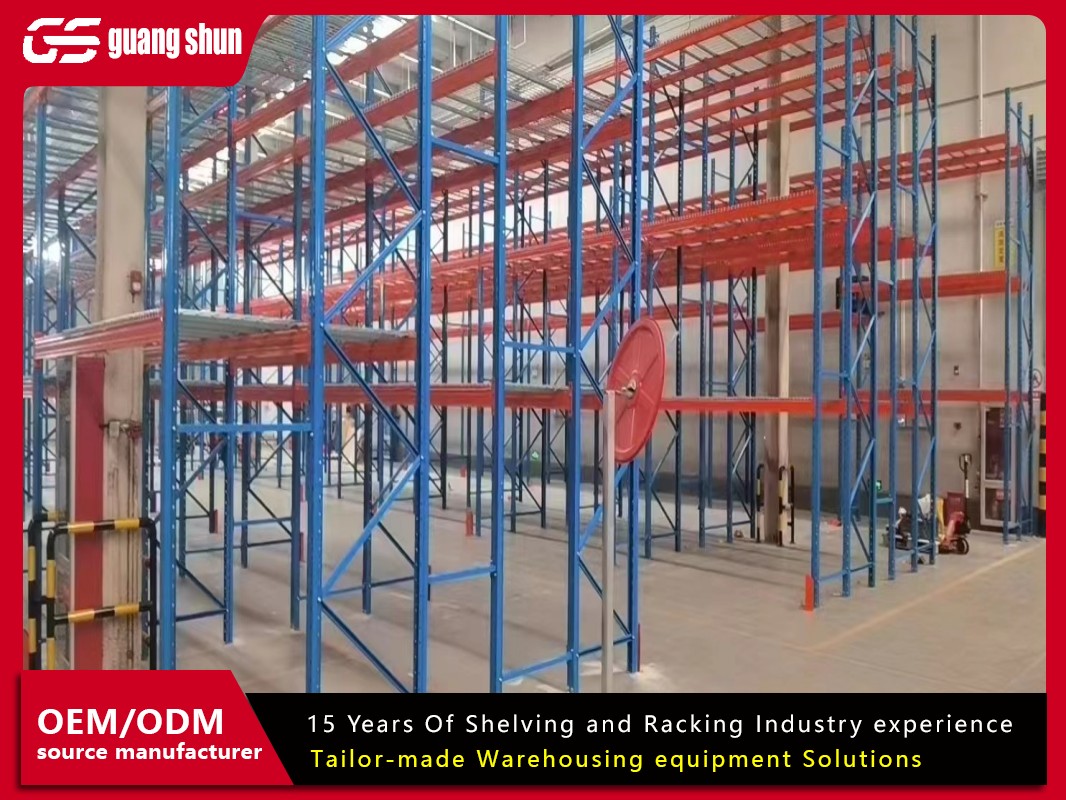
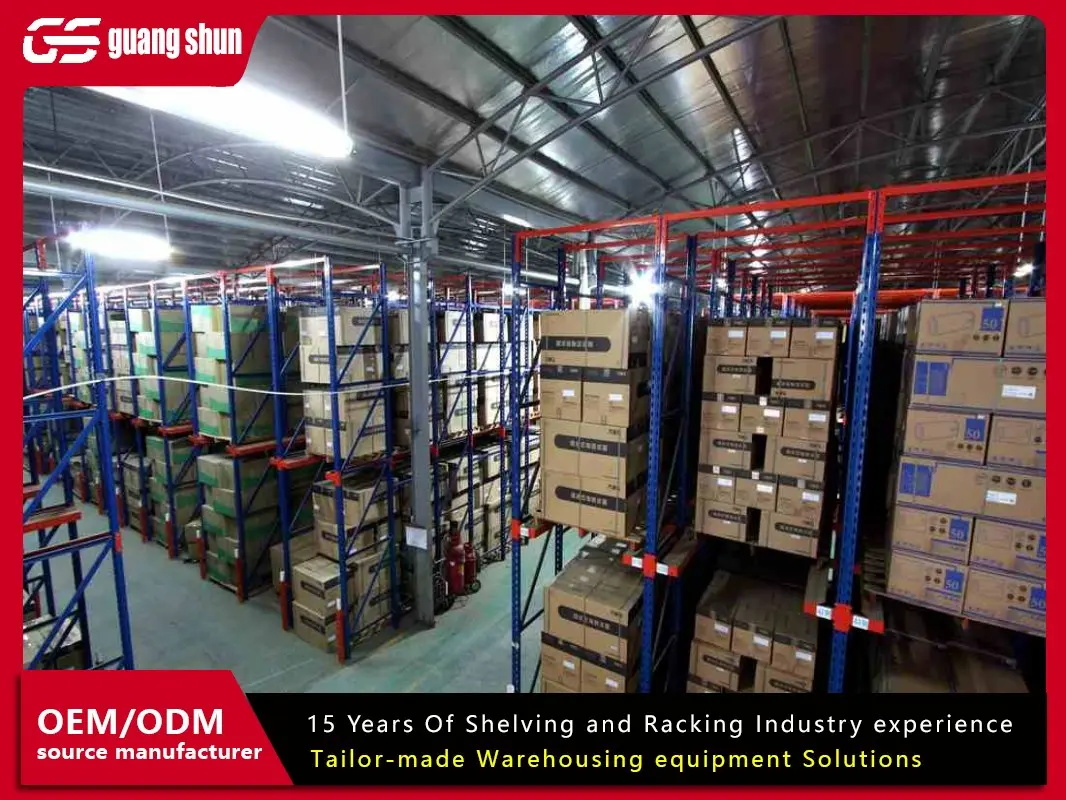
In modern distribution centers, floor space is a finite liability while vertical cubage remains underutilized. tall stackable shelves represent a fundamental shift from static pallet racks to modular, height-optimized systems. This article provides a data-driven examination of load-bearing mechanics, seismic behavior, inventory retrieval efficiency, and lifecycle cost modeling for these structures. Drawing from Guangshun’s engineering protocols and field audits across six automated warehouses, we address the critical gap between theoretical storage density and operational safety.
Unlike standard boltless shelving, tall stackable shelves operate under cumulative axial loads. A four-tier assembly, each level holding 800 kg, transfers 3.2 metric tons to the base uprights. Industry standards (EN 15512, RMI MH16.1) require a safety factor of 1.8 for static conditions and 2.5 for seismic zones. Key engineering parameters:
Column cross-section: 80x60 mm with 2.0 mm cold-rolled steel (minimum) for heights exceeding 4.5 m.
Diagonal bracing: X-pattern or K-pattern to resist racking deflection below H/500 under rated load.
Base plate design: Thickness ≥6 mm with four anchor bolts per leg – essential for moment resistance.
Interlock tolerance: Stacking lugs must maintain ≤0.5 mm vertical displacement after assembly.
Field failure analysis from Guangshun’s 2023 audit of 72 warehouses revealed that 31% of bent frames in tall stackable shelves originated from underspecification of the second-tier beam connectors. Mitigation involves using anti-shear keys and torque-indicating bolts.
Material decisions directly dictate long-term creep and fatigue resistance. The industry’s shift to Q355B high-strength steel (yield strength 355 MPa) over standard Q235B provides 18–22% greater moment capacity without increasing gauge thickness. For cold storage environments (-25°C), tall stackable shelves require impact-tested steel (27 J at -20°C) to prevent brittle fracture.
Emerging hybrid designs integrate carbon-fiber reinforced polymer (CFRP) sleeves on the lowest stackable tier – reducing total assembly weight by 14% while maintaining stiffness. However, the cost-benefit analysis favors steel for most dry warehouses: CFRP adds $210–$380 per upright, whereas Q355B steel adds only $45–$70 per rack bay. Guangshun’s standard specification for high-bay applications (clear height >8 m) combines Q355B uprights with zinc-aluminum-magnesium coating (ZAM) for corrosion resistance exceeding 1,500 hours in salt spray tests.
The theoretical maximum stacking height for modular shelves is constrained by three interdependent variables: column slenderness ratio, base plate anchorage rigidity, and beam-to-upright connection moment capacity. For tall stackable shelves, practical limits are:
Manual access (no equipment): 2.5 m (three stackable tiers) – limited by ergonomic reach (OSHA 1910.176).
Low-level order picker (order picking trucks): 5.5 m (five to six tiers) – requires wire decking or solid shelves to prevent dropped items.
VNA (very narrow aisle) forklifts: 9–11 m (eight to ten tiers) – uses reinforced guide rails and load transfer floors.
AS/RS (automated storage): 15 m+ with custom-engineered tall stackable shelves – requires finite element analysis (FEA) for dynamic loads from shuttles.
Deflection under full design load should not exceed L/250 for horizontal beams (where L is beam span) and H/400 for upright columns. A 6-meter tall shelf will deflect max 15 mm laterally – acceptable for most automated guided vehicles (AGVs) if beam leveling tolerances remain ±3 mm per tier.
Warehouses in seismic regions (ASCE 7-22 category D, E, F) require special detailing for tall stackable shelves. Standard friction clips are insufficient – positive interlocking with seismic brackets and shear transfer plates is mandatory. Critical design actions:
Calculate base shear V = Cs * W, where Cs = SDS / (R/Ie). For SDS=1.2g and R=2.5 (typical for industrial racks), minimum anchorage force is 0.48g of total weight.
Install horizontal seismic sway bracing at every third tier – not just top and bottom.
Use flexible couplings for sprinkler systems crossing above racks – rigid pipes will shear during ground motion.
A case study from a Guangshun installation in Tokyo (seismic zone 4) demonstrated that tall stackable shelves with base isolators (natural rubber bearings) survived a 6.2 Mw earthquake with 0.2% residual drift, whereas conventional bolted racks in the adjacent bay collapsed at 0.8% drift. The isolators added 11% to initial capital cost but reduced product damage loss by 63%.
While tall stackable shelves maximize cube utilization, they increase vertical travel distance. Data from 15 warehouses (each >20,000 m²) shows a 0.8 second penalty per additional meter of vertical rack height for each picking trip. For a facility with 200 picks per hour across 8 m heights (vs. 4.5 m), net productivity loss reaches 1.7 hours daily. Mitigation strategies:
ABC slotting: 60% of fast-movers (A items) on lower two tiers (0–2.1 m).
Horizontal cross-aisle shuttles: reduce vertical lift requirements by consolidating picks at transfer stations.
Pick-to-light systems on each beam level: eliminate search time – ROI achieved when average bin retrieval >3 per minute.
Advanced WMS integration can dynamically reassign shelf heights based on real-time demand. For example, a seasonal item moved from tier 6 to tier 2 during peak period reduces average lift time by 4.2 seconds per pick – representing annual labor savings of $18,500 per 100 SKUs.
Tall stackable shelves in food processing, chemical storage, or coastal facilities face accelerated corrosion. Standard powder coating (60–80 microns) fails within 3–5 years in salt-laden air. Recommended alternatives:
Hot-dip galvanizing (HDG): ≥85 microns thickness – 50+ year life in C5 environments (ISO 12944). Adds 25–30% to steel cost.
Zinc-aluminum-magnesium coating (ZAM): 15–20 microns but self-healing – outperforms HDG in cut-edge corrosion tests (ASTM B117).
Epoxy-polyester hybrid (2-layer): 120 microns total – suitable for washdown areas (IP69K rating).
Guangshun’s proprietary ZAM-plus treatment (30 g/m² zinc, 3% Al, 0.5% Mg) extends red rust resistance to 2,500 hours without passivation – validated by third-party lab (SGS report #SH3821). For frozen food warehouses (−30°C), the coating retains adhesion after 200 thermal cycles (each from −30°C to +25°C).
NFPA 13 (2022 edition) imposes strict rules on solid shelving and flue spaces. For tall stackable shelves, three mandatory conditions:
Transverse flues: minimum 150 mm clear space every 3 m horizontally.
Longitudinal flues: 75 mm gap between back-to-back shelves.
Ceiling sprinkler obstruction: Any shelf within 450 mm of sprinkler deflector requires additional in-rack sprinklers at each tier.
Fire modeling using FDS (Fire Dynamics Simulator) indicates that tall stackable shelves with wire mesh decks (70% open area) reduce flame spread velocity by 53% compared to solid steel decks, because hot gases can vent upward through decks rather than channeling horizontally. Many insurers (FM Global, Zurich) offer 15-20% premium reduction for wire decking and flue space compliance.
Comparing tall stackable shelves (4.5 m height, 5 tiers) vs. conventional selective racks (3.6 m, 3 tiers) for a 5,000 m² warehouse:
Initial material cost: Tall stackable shelves: $187,000 (incl. seismic bracing). Standard racks: $131,000 – difference +43%.
Floor space efficiency: Tall version stores 2,840 pallet positions vs. 1,520 – 87% more capacity.
Avoided expansion cost: Without vertical storage, a 2,500 m² annex would cost $680,000 (construction + land).
Net 10-year TCO: Tall stackable shelves = $354,000 (incl. maintenance, cleaning, lighting). Standard racks + annex = $1,042,000. Savings per bay: 66%.
The break-even point for extra height occurs at 14 months, assuming 85% utilization. For warehouses with land costs exceeding $400/m², tall stackable shelves are financially irrational to avoid.
A1: Industry standards (RMI, FEM) prohibit any tall stackable shelves above 2.5 meters (three tiers) without mechanical anchoring to the floor slab. Unanchored shelves rely solely on gravity, but lateral forces from forklift impacts or uneven loading can cause cascading collapse. For heights up to 5 meters, anchor bolts with 8 kN pull-out capacity are mandatory per EN 15512 clause 5.3.2. Above 5 meters, additional base plates and chemical anchors (epoxy grouted) are required.
A2: Yes, but standard boltless stackable designs are not suitable. AS/RS integration requires precision-fabricated tall stackable shelves with guide rails, ±1 mm positional accuracy per bay, and reinforced beam connections for dynamic loads (shuttles stopping at 0.3g deceleration). Guangshun offers an AS/RS-ready line with cold-formed guide channels and direct drive interfaces for Miniload and Unitload cranes. Retrofit compatibility is limited – most AS/RS suppliers require dedicated rack structures.
A3: Use the formula: Capacity per level = (Column yield strength × Section modulus) / (Beam spacing factor × Dynamic coefficient). For a practical method: divide the total rack bay capacity (provided by manufacturer) by the number of levels. Example: A four-tier bay rated at 3,600 kg evenly distributed = 900 kg per level. However, point loads (e.g., a single 500 kg drum) require local reinforcement – check beam bending. Standard beams deflect 0.5–1.0 mm per 100 kg point load at mid-span. Exceeding 1.5 mm deflection per 100 kg indicates undersized beams.
A4: Epoxy-polyester hybrid (minimum 100 microns) or zinc-rich primer (80 microns) with polyurethane topcoat (60 microns) works. Avoid standard powder coating – it becomes brittle below 5°C, leading to flaking. Hot-dip galvanizing is excellent but adds weight and requires special venting to avoid zinc runoff on food products. For cold storage above -10°C, Guangshun recommends a two-layer epoxy system (120 microns total) validated by 500 hours of neutral salt spray (ASTM B117) with no underfilm creep.
A5: Category C (SDS between 0.33g and 0.5g) typically does not mandate dampers, but requires positive attachment – friction clips are insufficient. Use bolted connections through slotted holes with lock washers. For facilities storing hazardous materials or with life safety egress underneath, tall stackable shelves should have seismic base plates with 12 mm anchor bolts. Dampers (elastomeric or friction) are only cost-effective when SDS > 0.6g or where business interruption risk is extremely high (e.g., data center racks).
Final Note: Selecting tall stackable shelves requires balancing vertical density gains against operational ergonomics, seismic exposure, and fire code constraints. The most profitable designs are those that match stacking height to the facility's material handling equipment (not theoretical maximums). Guangshun provides site-specific FEA reports and load tests for every high-bay installation, ensuring compliance with both local regulations and insurer requirements. For detailed dimensional tables and anchor schedule templates, review the product engineering portal.

 Wechat
Whatsapp
Wechat
Whatsapp