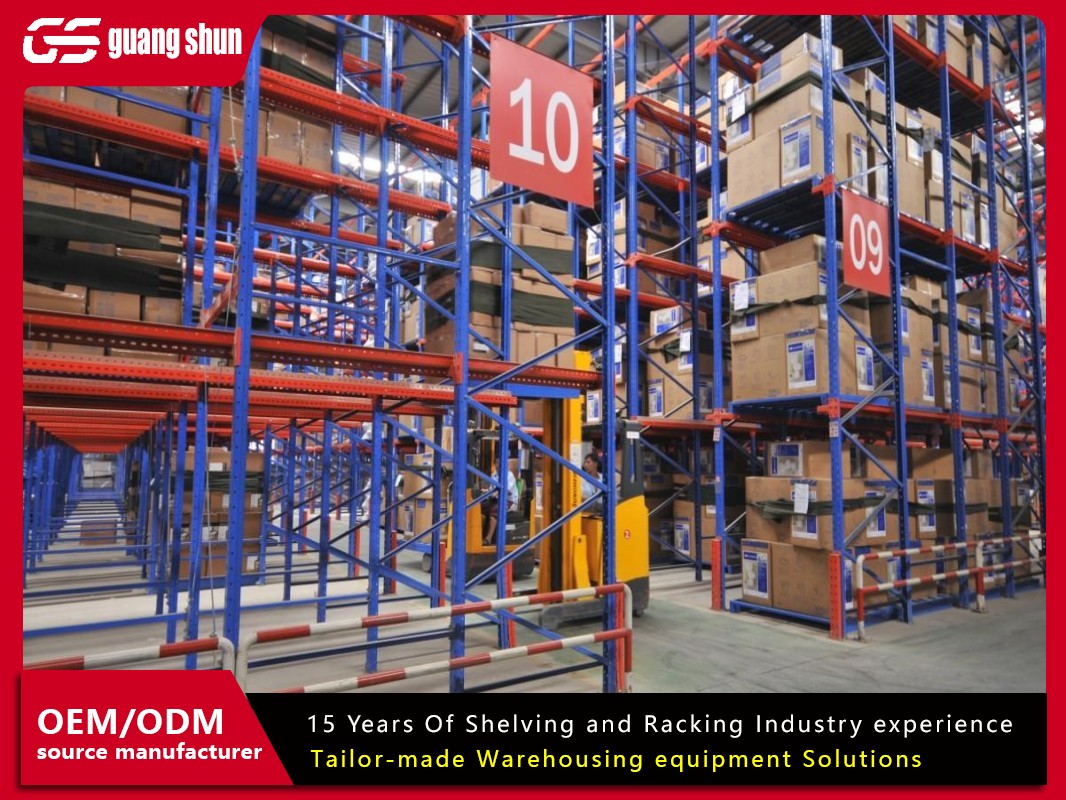
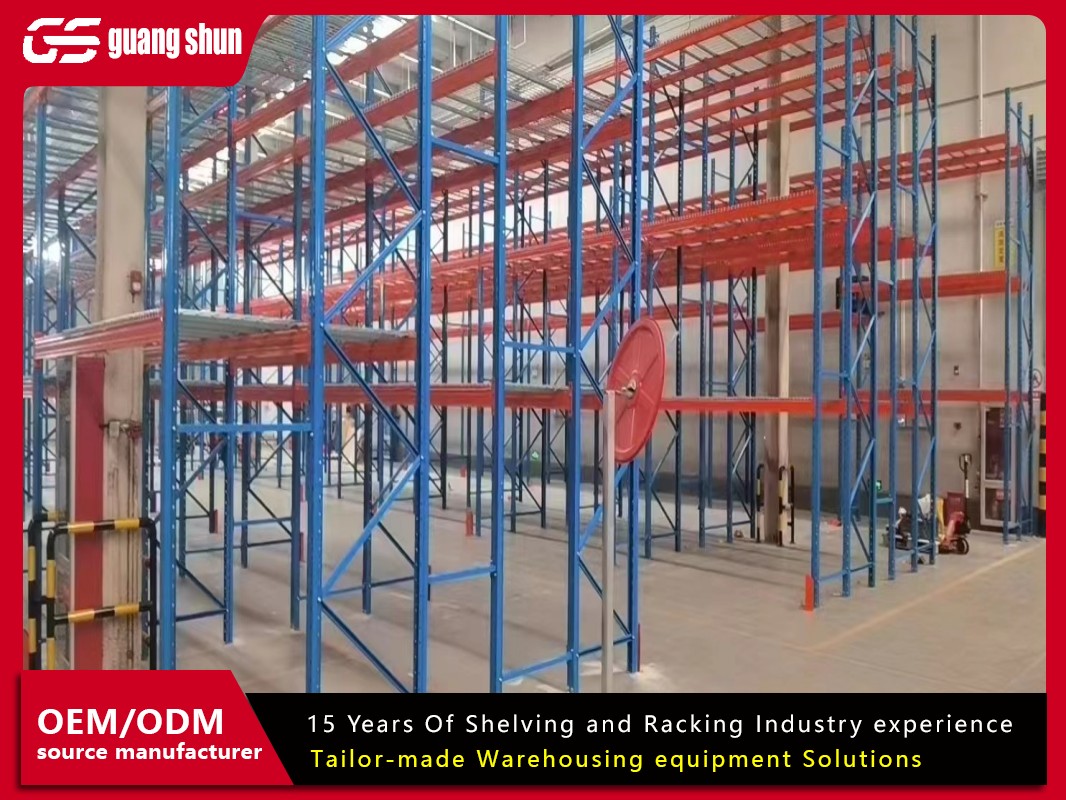
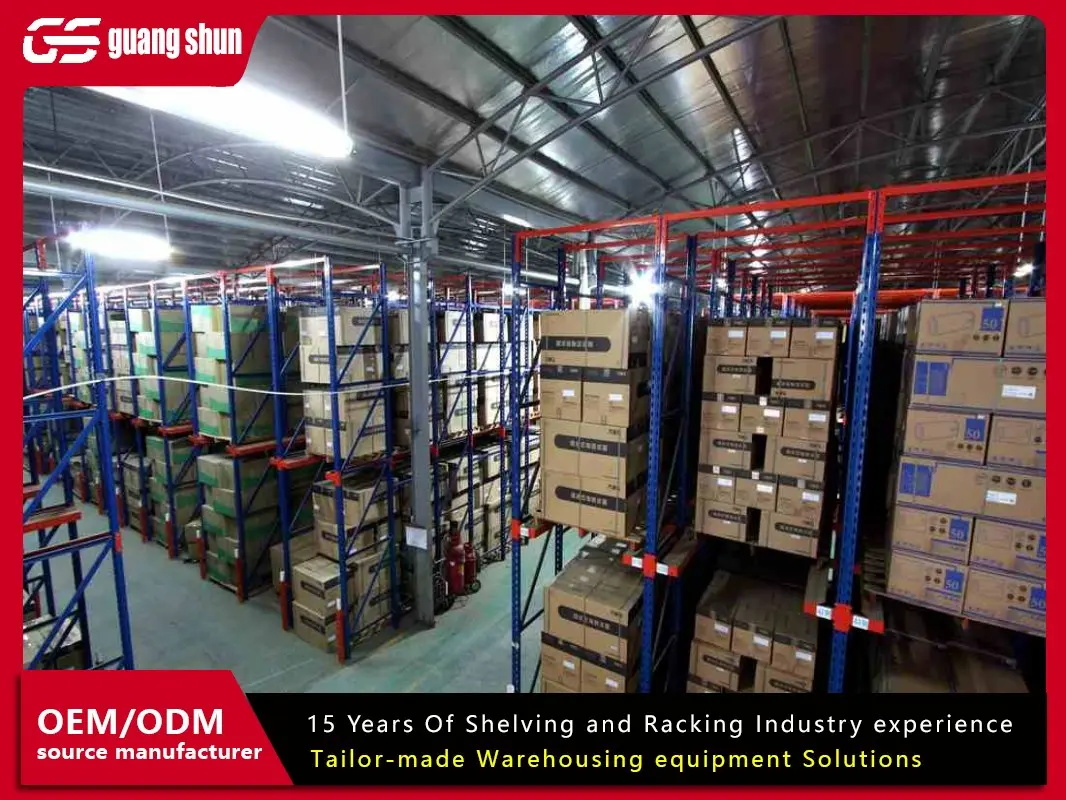
In modern warehouse engineering, the tension between storage density and operational accessibility remains a persistent challenge. Fixed racking consumes valuable floor space, while fully automated AS/RS systems often exceed budget thresholds for mid-tier operations. Rolling stack shelving offers a calibrated middle ground—a mobile, high-density storage architecture that compresses aisles without compromising pick efficiency. This article examines the technical specifications, application-specific performance data, and total cost of ownership (TCO) models that distinguish rolling stack shelving as a strategic asset for distribution centers, cold storage facilities, and parts depots.
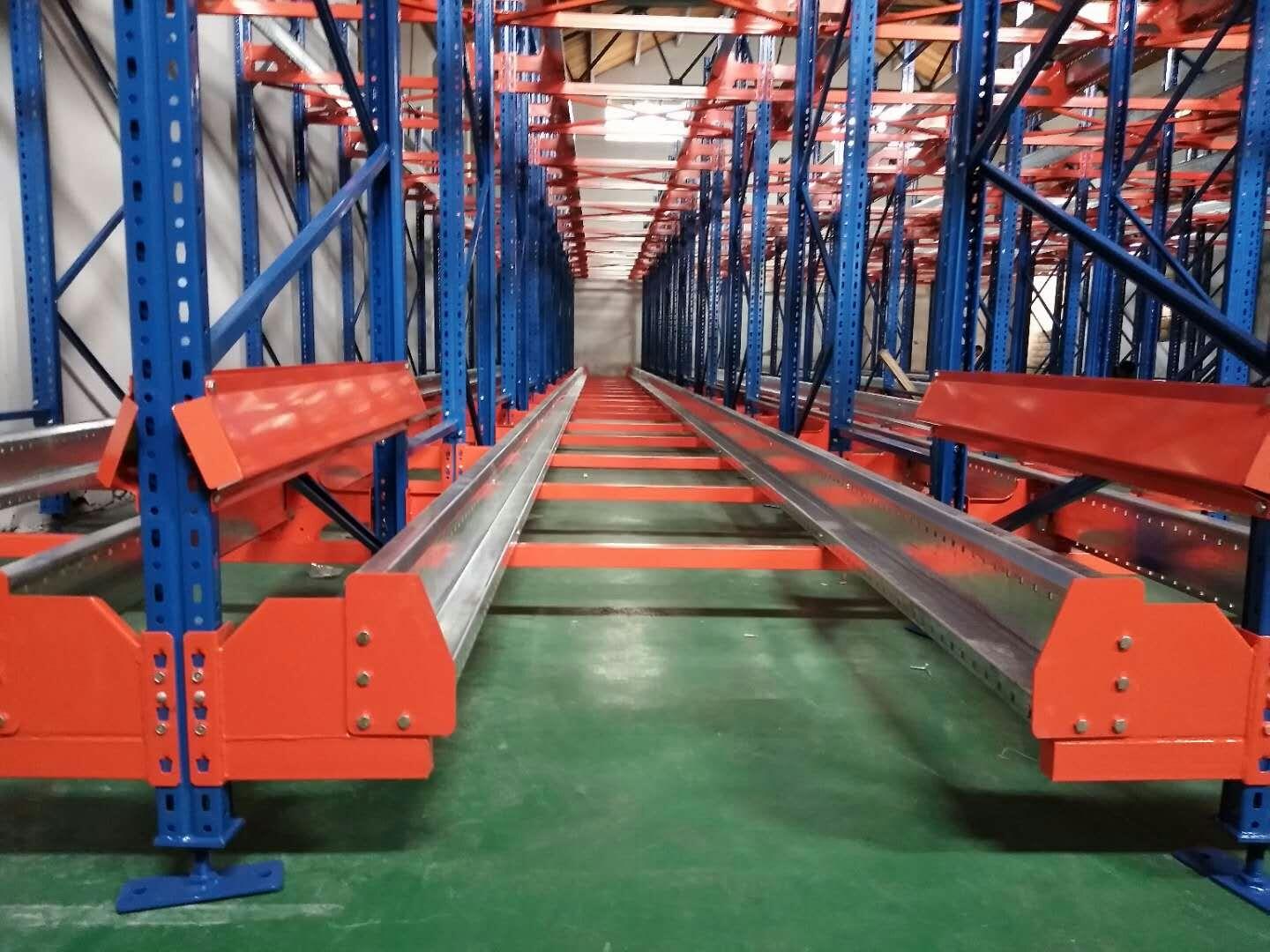
Unlike static pallet racking, rolling stack shelving integrates a mechanical mobility layer beneath standard shelving units. The system consists of carriages that traverse floor-mounted rails, driven by manual hand wheels, crank mechanisms, or electric motors. Each carriage supports multi-tier shelving fabricated from cold-rolled steel with powder-coated finishes for corrosion resistance.
Per carriage, dynamic load ratings typically range from 1,500 kg to 4,500 kg, depending on rail gauge and carriage wheel composition. Beam deflection under full load must remain below L/300 to maintain shelf alignment and prevent binding during movement. For high-cycle operations, manufacturers like Guangshun employ finite element analysis (FEA) to optimize upright gauge thickness, often specifying 2.0 mm to 2.5 mm steel for main posts. The shelf decking—perforated or solid—adds shear stiffness to the overall structure, reducing lateral sway during carriage traversal.
Two primary drive configurations dominate the market: manual-assist and electrically assisted. Manual systems use a gear-and-chain mechanism that multiplies operator input, allowing a single worker to move a fully loaded 3-ton carriage. Electric systems integrate a 24V DC motor with variable frequency drive (VFD) for soft start/stop, reducing inertial shock to stored goods. Track systems must maintain a tolerance of ±1.5 mm over 50-meter runs to ensure smooth engagement; hardened steel rails with a Brinell hardness of 200–220 HB are standard for heavy-duty applications.
Converting from static racking to rolling stack shelving typically reclaims 40% to 60% of floor area by eliminating multiple fixed aisles. However, the operational benefit extends beyond square footage. The mobility introduces a "floating aisle" concept—only one aisle opens at a time, controlled by carriage sequencing. This arrangement reduces travel distance for order pickers, directly impacting labor productivity metrics.
Space Utilization: A 10,000 m² warehouse with static selective racking at 35% aisle space can reduce aisle footprint to 12–15% with rolling stack shelving, effectively adding 2,000–2,500 m² of storage surface without building expansion.
Pick Accuracy: With carriages indexed to specific SKU zones, pickers reduce walking time by an average of 38% (based on 2023 industry benchmarks), and error rates decline as pick density increases within the active aisle.
Energy Consumption: Electrically assisted systems consume 0.8–1.2 kWh per carriage move, with regenerative braking options recapturing 15% of energy on deceleration—a factor often overlooked in ROI models.
For operations with high SKU velocity, a hybrid configuration pairs rolling stack shelving with pick-to-light or voice-directed workflows. The mobile base becomes a physical enabler for zone routing, where each carriage represents a distinct inventory zone that can be dynamically repositioned as demand patterns shift.
In freezer environments (-25°C to -18°C), rolling stack shelving offers a distinct advantage over fixed racking: reduced air exchange. With only one aisle open at a time, cold air retention improves by 22–27%, according to thermal mapping studies. Carriage components must undergo cryogenic treatment to prevent brittle fracture, and rail systems require anti-ice coatings. Several large cold-chain operators have reported 18-month payback periods when retrofitting existing blast freezers with mobile shelving.
Automotive aftermarket warehouses handle over 50,000 SKUs on average, with a significant portion being low-turnover "dusty" parts. Rolling stack shelving enables dense storage for these slow-movers while keeping fast-moving items on perimeter static racks. A 2024 case study from a Midwest U.S. distributor showed a 44% reduction in out-of-stock incidents for low-turnover SKUs after implementing mobile shelving, attributed to better visual management and reduced search time.
Regulatory compliance in pharma warehousing requires strict batch segregation and temperature monitoring. Rolling stack shelving integrates seamlessly with environmental sensors mounted on each carriage, providing real-time data streams to warehouse control systems (WCS). The ability to compact inventory while maintaining FIFO (first-in, first-out) traceability makes this system particularly valuable for clinical trial material storage, where shelf life and lot integrity are paramount.
One recurrent concern with rolling stack shelving is load tip-over during carriage movement. Industry standards (e.g., AS 4084-2012 in Australia, SEMA guidelines in Europe) mandate dynamic stability testing at 110% of rated capacity. Anti-tilt locks engage automatically when carriage speed exceeds 0.3 m/s, and floor-mounted guide rails incorporate emergency stop buffers. For seismic zones, base isolators and sway braces are engineered to meet IBC 2021 seismic design category D requirements.
Regular maintenance intervals for rolling stack shelving are typically 500 operating hours or quarterly, whichever comes first. Key wear points include carriage wheel bearings (lubricated with high-temp grease), drive chains (tension checked with a tension meter), and rail alignment (checked with a laser theodolite). A predictive maintenance program using vibration analysis can detect bearing degradation 200–300 hours before failure, reducing unplanned downtime by 70%.
Guangshun offers a comprehensive maintenance toolkit that includes torque wrenches for bolt re-tensioning, rail cleaning kits, and spare wheel assemblies—all bundled with a 5-year structural warranty. Their technical support team also provides on-site training for warehouse staff, covering proper load distribution, emergency manual override procedures, and daily inspection checklists.
To contextualize the value proposition, consider a 5-year TCO comparison for a 5,000-pallet-position warehouse:
Static selective racking: Capital cost ~$180,000; annual labor cost for picking ~$210,000; annual energy cost ~$28,000; total 5-year TCO ~$1.37M.
Rolling stack shelving (manual): Capital cost ~$310,000; annual labor cost ~$145,000 (reduced walking); annual energy cost ~$22,000; total 5-year TCO ~$1.15M.
Rolling stack shelving (electric): Capital cost ~$390,000; annual labor cost ~$128,000; annual energy cost ~$20,000 (with regenerative braking); total 5-year TCO ~$1.13M.
The upfront premium of rolling stack shelving is offset by labor savings and energy efficiency, with break-even occurring between month 22 and month 28 in most scenarios. For operations with land costs exceeding $200/m², the payback period shortens considerably due to deferred facility expansion.
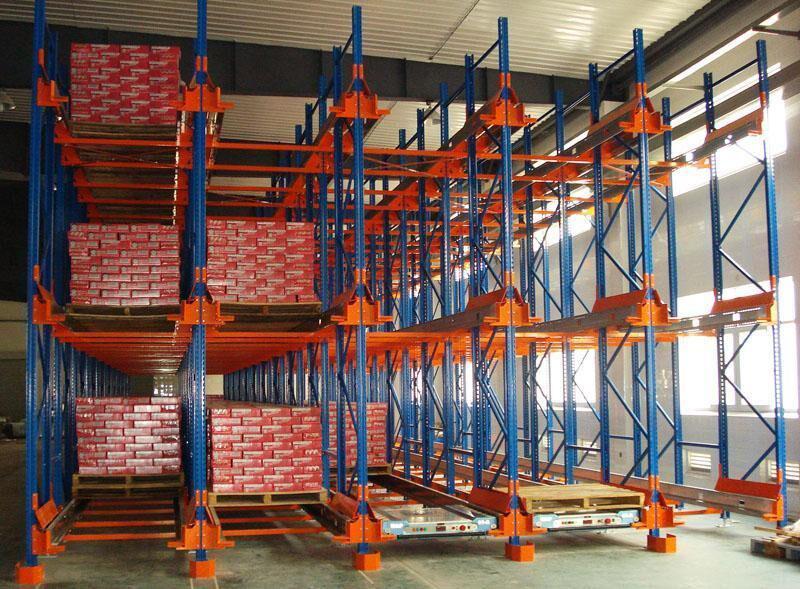
Beyond the direct cost savings, rolling stack shelving delivers strategic value through scalability. Modular carriage designs allow incremental expansion: additional carriages can be added to existing rail systems without dismantling the entire setup. This "pay-as-you-grow" approach aligns with lean warehousing principles, avoiding over-investment in fixed infrastructure.
Data from a 2023 survey of 120 warehouse managers indicated that 83% of rolling stack shelving adopters reported improved inventory accuracy (cycle count variance reduced from ±3.2% to ±1.1% on average). The mobility also facilitates seasonal reconfiguration—carriages can be regrouped to accommodate holiday inventory spikes or product line discontinuations, a flexibility that static racking cannot match.
For high-value goods (electronics, luxury items, controlled substances), rolling stack shelving enhances security. Carriages can be locked in a compacted position, creating a solid wall of shelving that blocks access to the storage area. This physical barrier supplements electronic access control systems, providing a layered security approach.
Guangshun has engineered a proprietary locking mechanism that integrates with warehouse management systems (WMS), allowing remote carriage locking/unlocking based on user credentials. This feature has been particularly well-received in 3PL warehouses serving multiple clients with different security clearance levels.
Rolling stack shelving is not merely a space-saving gimmick; it is a rigorously engineered solution that addresses the core tension between density and accessibility in modern warehousing. With documented labor savings, energy efficiency gains, and adaptable configuration, it offers a compelling alternative to both static racking and fully automated storage systems. For warehouse operators evaluating capital investments, the combination of operational data, TCO models, and industry-specific use cases provides a clear decision framework.
As supply chain volatility continues to test warehouse capacity, the ability to dynamically reallocate storage density will become increasingly valuable. Rolling stack shelving positions your facility to respond to demand fluctuations, SKU proliferation, and evolving safety regulations—all while maintaining a cost structure that supports long-term profitability.
Q1: What is the typical installation timeline for a rolling stack
shelving system in an existing warehouse?
A1: For a 2,000 m²
installation with 15–20 carriages, the average installation timeline is 10–14
business days. This includes floor flatness assessment, rail anchoring, carriage
assembly, and load testing. Retrofits in older buildings may require additional
3–5 days for floor grinding or leveling compounds to achieve the ±3 mm over 2 m
flatness specification required for smooth carriage movement.
Q2: Can rolling stack shelving support palletized loads as well as
cartons?
A2: Yes, but the beam pitch and upright frame spacing must
be configured accordingly. Pallet support beams (typically 100 mm × 50 mm
rectangular tubes) are spaced at 1.2 m or 1.5 m intervals, with load capacity
per beam pair up to 2,000 kg. For mixed operations—cartons on upper levels and
pallets on lower levels—adjustable beam connectors allow reconfiguration within
30 minutes per bay.
Q3: What safety certifications should I look for when purchasing
rolling stack shelving?
A3: Reputable manufacturers should provide
compliance with EN 15635 (steel static storage systems), AS/NZS 4084, and ANSI
MH16.1-2021. Additionally, request third-party load test reports from accredited
labs (e.g., TÜV, CSA). For seismic zones, an engineered certification per ASCE
7-22 is non-negotiable. Always verify that the supplier carries product
liability insurance covering structural failure.
Q4: How does rolling stack shelving perform in high-humidity or
corrosive environments?
A4: Standard powder-coated finishes
(epoxy-polyester hybrid, 60–80 μm thickness) offer moderate corrosion
resistance. For marine environments or chemical storage, specify hot-dip
galvanized components with a minimum 85 μm zinc coating. Stainless steel options
(304 or 316 grade) are available for critical applications but increase capital
cost by 40–60%. Regular washdown protocols should use neutral pH detergents to
avoid coating degradation.
Q5: What is the expected service life of a rolling stack shelving
system with proper maintenance?
A5: With scheduled maintenance
(lubrication, rail cleaning, chain tensioning, wheel inspection), the structural
components have a design life of 20+ years. Wear parts—wheels, bearings, drive
chains—typically require replacement every 5–7 years depending on usage cycles.
Manufacturers like Guangshun provide wear-part replenishment kits with estimated
replacement intervals based on your operational data (average daily carriage
moves).
Q6: Is it possible to integrate rolling stack shelving with automated
guided vehicles (AGVs) or conveyor systems?
A6: Yes, integration is
feasible through interface ports on the carriage control panels. AGVs can be
programmed to open specific carriages by triggering the electric drive via a
Wi-Fi or Modbus signal. For conveyor integration, telescopic roller decks can be
mounted on the carriage ends to facilitate seamless goods transfer. However,
this requires custom engineering and typically extends the project timeline by
2–3 weeks for software harmonization.
Q7: What is the minimum aisle width required when using rolling stack
shelving?
A7: Unlike fixed racking, which requires aisles wide
enough for lift truck maneuvering (typically 2.7–3.5 m), rolling stack shelving
only needs an aisle wide enough for operator access and picking—typically
0.9–1.2 m for manual picking and 1.8 m for electric pallet jack use. The active
aisle width is determined by the largest load carrier (e.g., pallet width) plus
150 mm clearance on each side.
For technical specifications, custom layout designs, or on-site consultations, contact Guangshun directly. Their engineering team offers free load capacity assessments and 3D layout simulations based on your unique SKU profile and throughput requirements.

 Wechat
Whatsapp
Wechat
Whatsapp