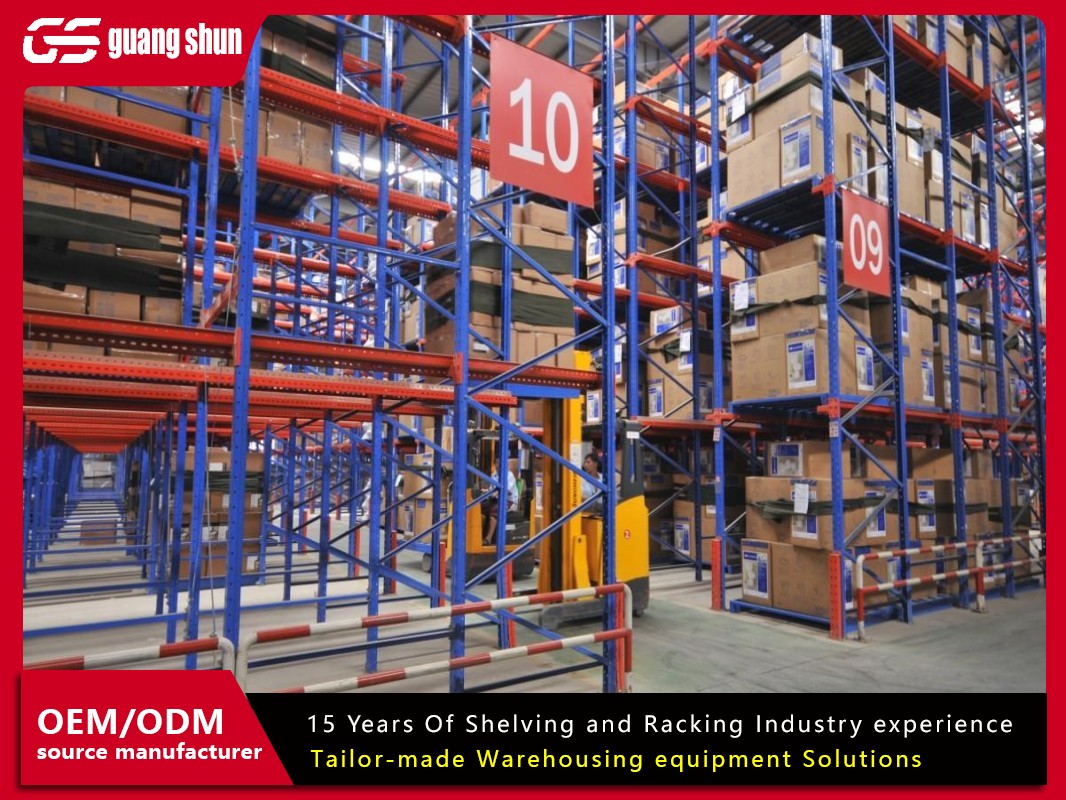
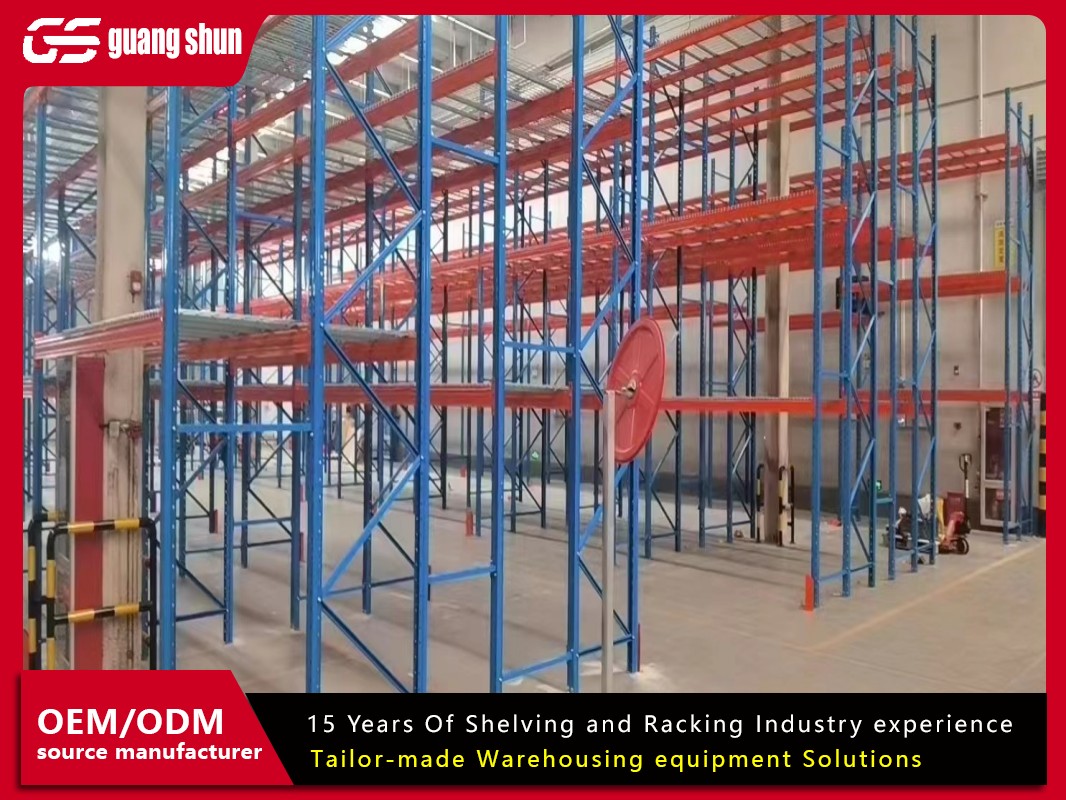
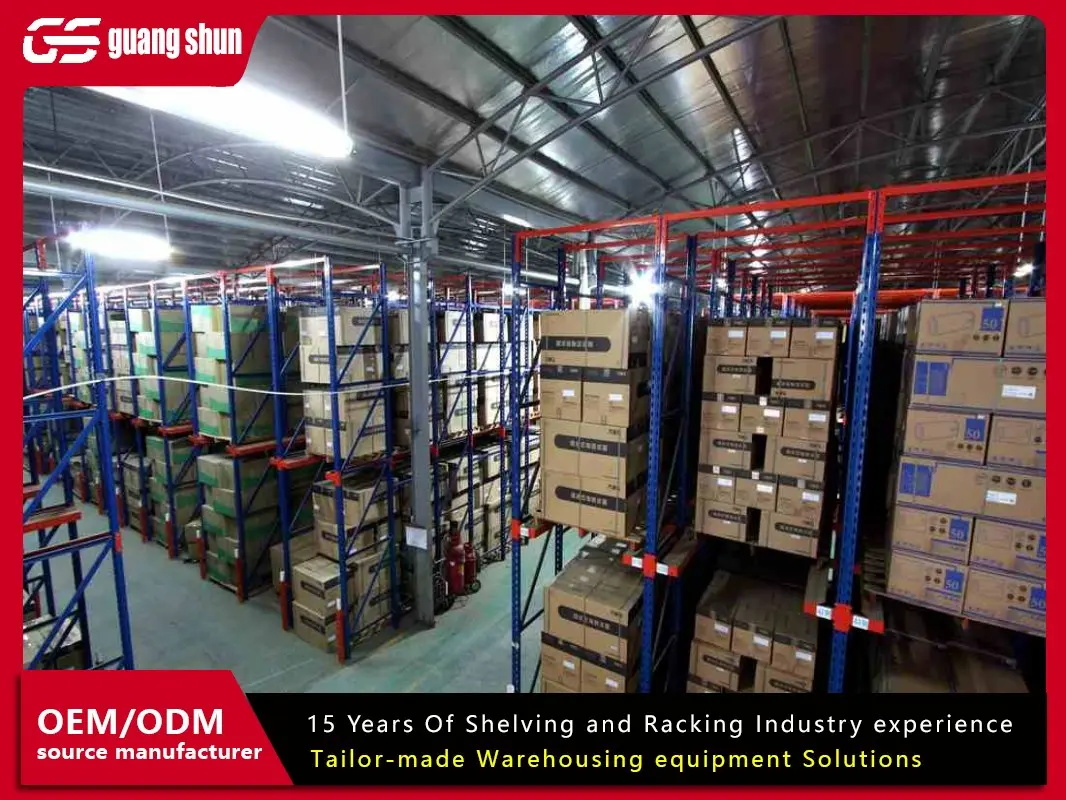
Industrial environments such as automotive assembly lines, aerospace tool cribs, and maintenance depots require storage that adapts to changing floor layouts. Fixed shelving creates permanent aisles that waste valuable square footage. A properly specified rolling metal shelves heavy duty combines structural rigidity with controlled mobility, allowing operators to reconfigure storage zones on demand. However, standard office-grade casters fail under 800+ kg loads, and poor floor flatness leads to jamming or tip-over risks. This guide provides mechanical engineers and facility planners with quantitative methods for caster selection (load capacity per caster, swivel radius), frame stiffness calculations (deflection under rolling start/stop), floor tolerance specifications (Fmin numbers), and locking mechanism fatigue life. Guangshun has delivered such mobile systems to heavy equipment manufacturers and aircraft parts distributors, achieving documented gains in floor space utilization and reduced forklift dependency.
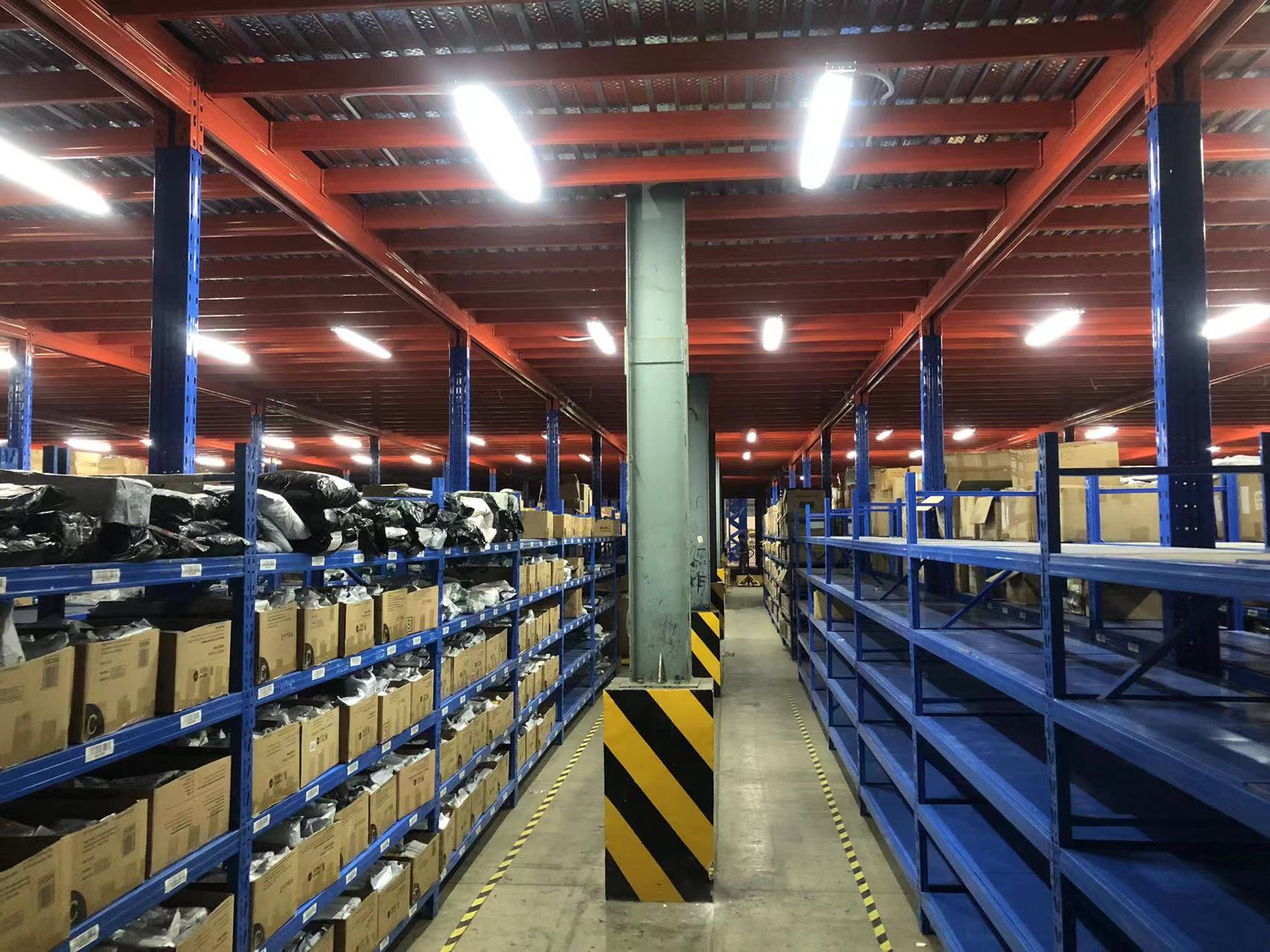
Unlike static industrial shelving, a rolling metal shelves heavy duty must resist both vertical storage loads and horizontal forces generated during acceleration, braking, and turning. The primary structural elements include:
Upright frames: Fabricated from 2.0–3.0 mm thick cold-rolled steel (grade Q355B minimum yield strength 355 MPa). Corner gussets and cross-bracing prevent parallelogram distortion when the unit is pushed from one end. Perforated pitch (50 mm or 75 mm) allows beam height adjustment.
Base frame (subframe): A perimeter box-section beam (120×60×3 mm) welded to the uprights. This distributes point loads from shelves to the caster mounting plates. For units wider than 2.4 meters, an intermediate longitudinal beam prevents floor plate deflection.
Shelf beams and decking: Box beams (80×40×2.5 mm) with integral locking tabs. Decking options include 2.0 mm steel solid panels (rated 1,200 kg per shelf) or wire mesh (rated 800 kg per shelf) for air circulation and light passage.
Caster mounting plates: 8–10 mm thick steel plates welded to the base frame corners. Four bolt holes (M12 or M16) per plate to attach heavy-duty casters.
Diagonal sway braces: Required for any mobile unit exceeding 2.2 meters height. X-bracing on the rear face increases lateral stiffness by a factor of 4 compared to unbraced frames.
Surface finish: electrostatic powder coating (70–90 μm) over zinc phosphating. For food or pharmaceutical environments, stainless steel uprights (304 grade) and sealed casters are available. Guangshun offers a 10-year structural warranty when floor flatness and anchoring conditions meet specified tolerances.
The mobility and safety of any rolling metal shelves heavy duty depend entirely on caster selection. Four critical parameters must be calculated:
Dynamic load capacity per caster: For a 4-caster unit with total shelf load 3,000 kg, each caster must support 750 kg. However, uneven floors may load one caster up to 50% of total weight. Select casters with a safety factor of 2.0 → rated capacity ≥ 1,500 kg each. Use the formula: Caster rating ≥ (Total Load / Number of Casters) × 1.5.
Wheel material and hardness: Polyurethane (PU) on nylon core provides 85 Shore A hardness, low rolling resistance (coefficient 0.03 on steel), and floor protection. For oily or chip-covered floors, cast iron wheels (hardness 60 HRC) resist cutting but require protective floor coating. Nylon wheels (Shore D 70) offer chemical resistance but higher noise levels.
Swivel radius and clearance: A 200 mm diameter swivel caster requires at least 220 mm clearance from adjacent fixed objects to avoid binding. For units pushed around corners, use two fixed casters (rigid) at one end and two swivel casters at the opposite end to reduce turning radius by 40%.
Brake type and holding force: Total locking brakes (both wheel rotation and swivel) are mandatory for units exceeding 1,000 kg. The brake must withstand a horizontal push force of 250 N per 1,000 kg of shelf weight without creeping. Cam-actuated brakes provide 2,500 N holding force per caster.
In a heavy stamping die storage application, Guangshun equipped mobile shelves with 250 mm diameter polyurethane casters rated 2,000 kg each, reducing push force from 480 N to 120 N compared to standard 150 mm casters.
Even the best casters cannot compensate for uneven concrete floors. For manual movement of heavy loads, floor flatness directly affects rolling resistance and tip stability.
Floor flatness specification: For units up to 2,000 kg, require Fmin = 50 (F-number system) or a 3 m straightedge deviation ≤ 5 mm. For units above 2,000 kg, Fmin = 75 (deviation ≤ 3 mm per 3 m). Measure using a digital level or laser tracker.
Floor level variation across aisles: Maximum slope 1:200 (0.5%) for manual pushing. Exceeding this increases required push force exponentially; a 2% slope doubles the force needed to start movement.
Recessed floor tracks (guide rails): For very heavy units (5,000+ kg), install U-shaped steel channels (80×40×5 mm) embedded in the concrete. Guide rollers on the shelf base engage the tracks, eliminating lateral drift and reducing push force by 60%.
Floor joint management: Expansion joints wider than 5 mm cause caster drop and shock loading. Install steel bridging plates (6 mm thick, beveled edges) across joints in mobile storage zones.
Data from a defense logistics center showed that replacing a 3,200 kg rolling metal shelves heavy duty unit from a floor with Fmin=25 to a ground Fmin=70 reduced push force from 520 N to 180 N, lowering operator fatigue complaints by 73%.
Mobile shelving poses unique seismic risks because casters allow horizontal displacement. Building codes (IBC 2021, ASCE 7-22) require specific provisions:
Seismic caster locks: In zones with PGA ≥ 0.2g, each caster must have an automatic seismic lock that engages when floor acceleration exceeds 0.1g. The lock prevents wheel rotation and limits sway to ±25 mm.
Tip-over ratio (height to base width): The overall height of the loaded unit divided by the base frame width (narrowest dimension) shall not exceed 3.5 for manually moved units. For example, a 2.1 m tall unit requires a base width ≥ 0.6 m. Exceeding this ratio requires outrigger casters or floor anchors.
Inter-unit coupling bars: When multiple mobile units are parked side by side, horizontal coupling bars (removable) connect frames at 300 mm and 1,500 mm heights. This creates a rigid bank that resists seismic tipping. The coupling must withstand 2,000 N horizontal force without plastic deformation.
Post-seismic inspection protocol: After any earthquake exceeding PGA 0.1g, inspect caster mounting bolts (torque to 120 Nm for M16 bolts), check for wheel deformation, and verify that seismic locks still engage properly.
Rolling metal shelves heavy duty installed in a Southern California aerospace plant passed shake-table testing at 0.4g PGA after adding automatic caster locks and base outriggers, whereas standard units tipped at 0.25g.
Real-world factory floors expose mobile shelving to three common failure modes. Engineering solutions with field data follow:
Floor surface damage from steel wheels: Cast iron wheels on uncoated concrete create ruts after 500 cycles. Solution: Specify polyurethane wheels (85 Shore A) with 25 mm tread thickness. In a metal stamping plant, switching from cast iron to PU reduced floor resurfacing costs from $12,000/year to zero over 3 years.
High push force causing operator strain: A 1,500 kg unit on 125 mm nylon casters requires 250 N to start moving (≈ 25 kg force). For units moved > 20 times per shift, this exceeds NIOSH recommended limits. Solution: Upgrade to 200 mm diameter PU casters with precision ball bearings (ABEC-3). Starting force drops to 90 N. Alternatively, install motorized drive units (24V DC, 200W) on one caster.
Noise generation during movement: Steel-on-steel swivel bearings produce 85 dBA at 1 meter, exceeding OSHA action level. Solution: Use double-shielded sealed bearings with synthetic grease, plus polyurethane wheel treads. Measured noise reduces to 68 dBA.
For a heavy equipment assembly line, Guangshun retrofitted 42 mobile shelves with 250 mm PU casters and central braking systems, reducing average push force from 380 N to 110 N and eliminating floor re-coating for 18 months.
Beyond static storage, rolling metal shelves serve as mobile kitting carts, line-side supply stations, and tool staging platforms. Design features that enable these roles:
Tow bars and hitch points: For train movements of 3–5 units, each shelf includes a retractable tow bar (load rating 5,000 N) and rear hitch socket. Reduces individual pushes.
Work surface attachment: A foldable laminate top (600×1,200 mm, 25 mm thick) mounted to the side of the unit creates a mobile assembly station. Hinged supports lock at 90°.
Power distribution rails: Vertical rails on the upright (IP54 rated, 110V AC) with plug-in outlets every 400 mm allow tools to be powered directly from the moving shelf. Cable management arms prevent tangling.
Barcode and RFID tracking: Mount RFID antennas on the base frame; floor-embedded tags identify each parking position. Integration with WMS enables real-time location of each rolling metal shelves heavy duty unit.
In an automotive final assembly plant, Guangshun provided 24 mobile shelves with tow bars and power rails, reducing line-side walk time by 62% and eliminating 14 forklift trips per shift.
To achieve 15+ years of service, rolling metal shelves require documented preventive maintenance:
Caster bearing relubrication: Every 6 months or 10,000 cycles, apply lithium-based grease (NLGI grade 2) to swivel bearings. Use a grease gun with a needle adapter.
Wheel tread inspection: Monthly check for flat spots, chunking, or embedded debris. Replace PU wheels when tread wear exceeds 3 mm depth. Typical lifespan: 5 years in clean environments, 2 years in metal chip areas.
Bolt torque verification: Quarterly, torque all caster mounting bolts to manufacturer specification (usually 100–120 Nm for M12 grade 8.8). Loose bolts cause frame twisting.
Floor debris sweeping: Daily removal of metal shavings or sand from movement paths prevents wheel damage and reduces rolling resistance by 15%.
Following this schedule, a rolling metal shelves heavy duty in a heavy fabrication shop achieved 12 years of operation with only two caster replacements.
Q1: How do I calculate the required number of casters for a rolling
metal shelves heavy duty unit?
A1: For rectangular units, use four
casters (two rigid, two swivel) for loads up to 4,000 kg. For longer units (≥ 3
meters) or loads exceeding 4,000 kg, use six casters (two rigid in the center,
four swivel at corners). Formula: Minimum number of casters = (Total Load × 1.5)
/ (Rated capacity per caster). Always ensure that any single caster can support
50% of total load in worst-case floor unevenness.
Q2: What floor flatness tolerance is required for safe manual
movement of a 2,500 kg unit?
A2: For a unit of 2,500 kg with 200 mm
casters, require Fmin = 65 (F-number system) or a 3 m straightedge deviation ≤ 4
mm. Measure using a digital level and a 3 m straightedge. Deviations exceeding 6
mm increase push force by 200% and cause caster bounce, risking shelf
instability. If floor cannot meet tolerance, install steel track channels
(50×50×5 mm angle) bolted to the floor to guide the casters.
Q3: Can rolling metal shelves heavy duty be used outdoors on asphalt
or gravel?
A3: No, standard polyurethane or nylon casters will sink
into gravel and degrade on hot asphalt. For outdoor use, specify pneumatic tires
(load rating up to 1,200 kg per caster) or extra-wide solid rubber wheels (150
mm width). However, pneumatic tires require monthly pressure checks (recommended
4 bar) and are susceptible to punctures. A better solution for outdoor storage
is to keep the shelves indoors and use forklift-transfer carts. Guangshun can supply all-terrain caster options upon request.
Q4: How often should I replace the casters on a heavy-duty mobile
shelf used daily?
A4: Based on duty cycle: for 50 full movements (20
meters each) per shift, 250 days/year, polyurethane wheels typically require
replacement every 3–4 years due to tread wear. Nylon wheels last 6–8 years but
cause more floor wear. Swivel bearings usually need replacement every 5 years.
Perform a monthly check: lift the shelf and spin each wheel; if you feel
roughness or hear grinding, replace the caster immediately. Also replace if the
wheel has flat spots from locked braking.
Q5: What braking system is recommended for a 3,000 kg rolling metal
shelves heavy duty on a 2% slope?
A5: On any slope > 1%, use
total-lock brakes (prevents both wheel rotation and swivel) on all four casters.
Additionally, install a floor-engaging parking brake: a spring-loaded steel pin
(25 mm diameter) that drops into a floor socket when the shelf is parked. For a
3,000 kg unit on a 2% slope, the gravity-induced rolling force is approximately
588 N. A single total-lock brake typically provides 1,200 N holding force, but
to meet safety codes (ASME B30.20), you need either two total-lock brakes or one
floor pin. Always test by applying 500 N horizontal pull to the loaded unit; it
must not move more than 10 mm.
Q6: How does Guangshun validate the structural integrity of a custom
rolling metal shelves heavy duty unit?
A6: Guangshun follows a four-step validation: (1) Finite element analysis (FEA) of the frame
under static load + dynamic acceleration (0.3g horizontal); (2) Prototype load
testing: apply 125% of rated shelf load and measure frame deflection (max
L/200); (3) Caster push/pull test: measure starting force and rolling resistance
on a floor with known flatness; (4) Seismic shake table test per ICC-ES AC156
for units intended for high-risk zones. A stamped engineering report and load
notice are provided with each unit.
Q7: Can I mount a rolling metal shelves heavy duty unit on a
mezzanine floor?
A7: Yes, but the mezzanine must have a live load
rating at least 1.5 times the fully loaded shelf weight. Check point load
capacity: each caster applies concentrated load. For a 3,000 kg unit on four
casters, each caster applies 7.5 kN point load. Mezzanine decking (typically 18
mm plywood or steel grating) may require additional support beams directly under
caster paths. Also install edge guarding to prevent rolling off the mezzanine
edge. Consult a structural engineer before placing any mobile unit above ground
level.
Q8: What is the maximum recommended travel distance for manually
moving a rolling metal shelves heavy duty unit?
A8: For manual
pushing by a single operator, the maximum travel distance should not exceed 30
meters per move to avoid exceeding NIOSH lifting index limits (push force >
220 N for distances > 30 m). For longer moves (e.g., 100 meters across a
warehouse), either install a tow bar and use a tugger (AGV or walkie tractor) or
motorize one caster. Motorized drive wheels (24V DC, 300W) provide speeds up to
0.8 m/s and allow unlimited travel. Always provide emergency stop buttons
accessible from both ends of the unit.

 Wechat
Whatsapp
Wechat
Whatsapp