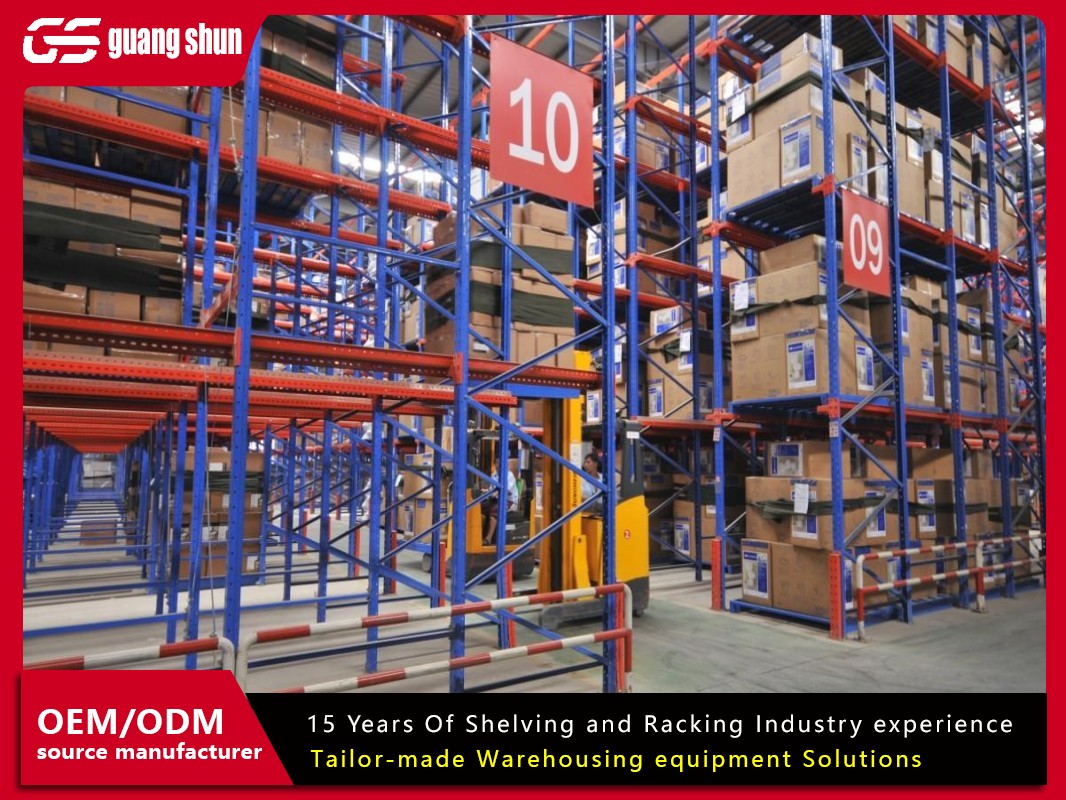
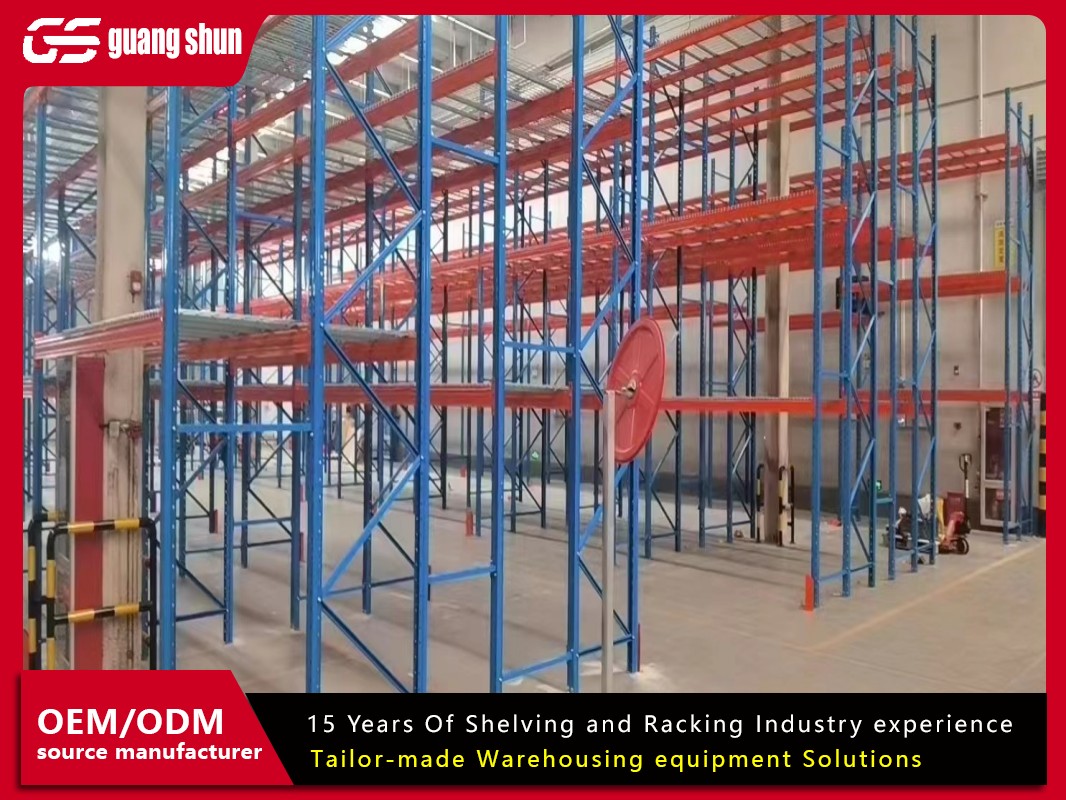
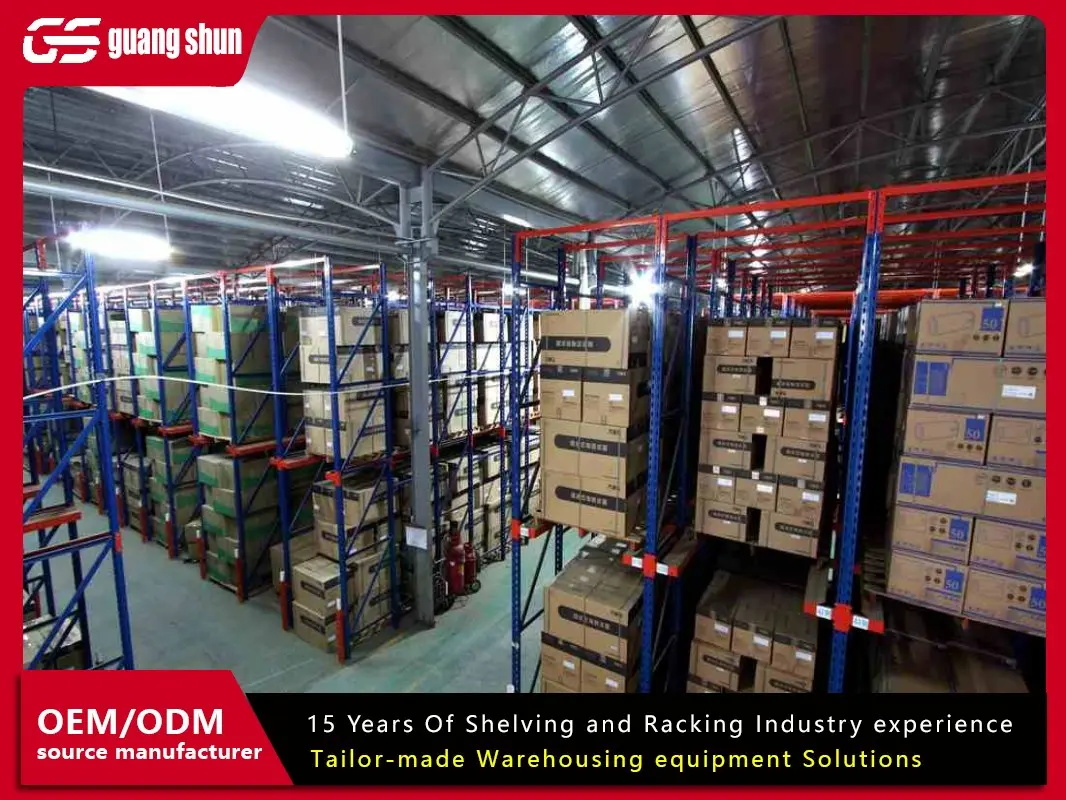
Distribution centers and manufacturing facilities constantly face the pressure of increasing storage density without sacrificing accessibility or safety. For bulk storage of heavy components, palletized goods, or mixed SKUs, the most structurally efficient solution is large stackable shelves. Unlike fixed racking systems, these modular units allow vertical expansion based on real-time inventory volume, reducing floor space consumption by up to 40% compared to single-level shelving. This article examines engineering data, application scenarios, and long-term ROI considerations for heavy-duty stackable systems, drawing on established industrial standards and field performance data.
With over two decades of engineering experience, Guangshun has developed a comprehensive product line that addresses the specific demands of automated and manual warehouses. Their approach combines finite element analysis with practical adjustability, ensuring that large stackable shelves meet both seismic requirements and daily operational stress. This guide provides warehouse managers and procurement specialists with quantifiable criteria to evaluate, specify, and maintain stackable shelving assets.
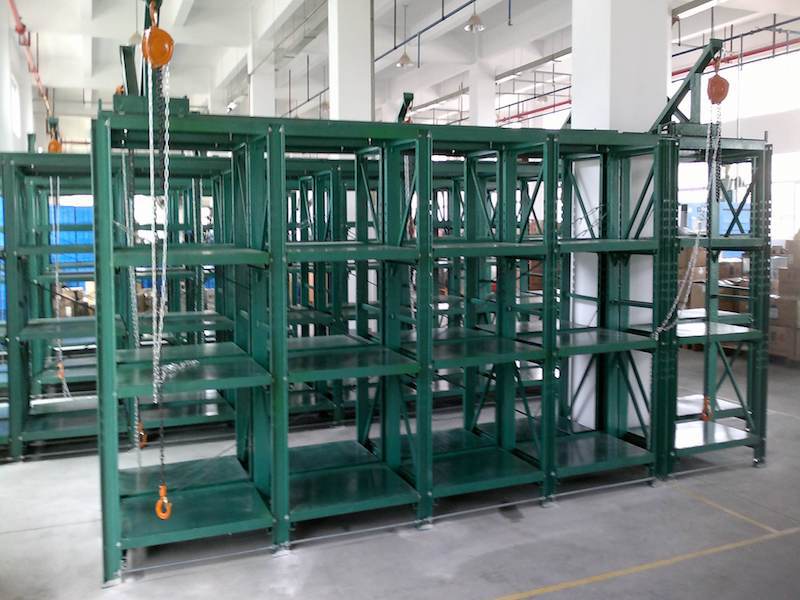
The performance of any stackable shelf begins with its column cross-section and steel grade. Most industrial-grade large stackable shelves utilize Q235 or Q355 cold-rolled steel with a yield strength of 235–355 MPa. However, the critical factor is the column’s moment of inertia—the resistance against buckling when multiple units are stacked three or four high. For a standard 48” depth × 120” width unit, a 2.0 mm thick C-channel column with a 70 mm flange offers 22% higher load capacity than a 1.8 mm open-box design, tested per ANSI MH16.3-2022.
Static load per shelf level: 2,500 to 6,000 lbs evenly distributed, depending on beam pitch (every 2” or 4” increments).
Stacking height capacity: Up to 4 tiers high (approx. 20 feet total) when interlocking pins and anti-slip footplates are used.
Connection mechanism: Boltless rivet or tapered wedge connections reduce assembly errors and maintain structural rigidity under dynamic forklift impact.
Engineers must also account for the load distribution on the warehouse floor. A 4‑high stack of fully loaded units can exert point loads exceeding 12,000 lbs per leg. Therefore, floor flatness (within ±1/8” over 10 ft) and concrete compressive strength (minimum 3,000 psi) are prerequisites. Guangshun provides base plate spreaders to distribute vertical loads, minimizing the risk of local floor failure—a detail often overlooked when specifying large stackable shelves.
Stackable shelving is not simply placing one unit on top of another. Industrial best practices require engineered anti-tilt mechanisms, especially when shelves are not anchored to the building structure. Four common stacking methods are used in heavy-duty environments:
Pin-interlocked stacking: Solid steel pins inserted into column holes, preventing lateral displacement. Recommended for seismic zones.
Step-stacking with corner brackets: Lower unit has welded pockets that receive upper legs, allowing quick rearrangement.
Bolted tier frames: A separate frame sits between layers, adding 8–12 inches of vertical clearance for oversize items.
Hybrid base + leveling feet: Adjustable shims compensate for uneven floors, ensuring the entire stack remains plumb.
A risk assessment should always include the “stacking stability index” (SSI), calculated as (base width × number of stacked units) / (center of gravity height). For example, a 4-high stack with a 48” wide base and a COG at 36” from ground yields an SSI of 5.3, which is above the accepted threshold of 4.0 for unanchored applications. Furthermore, large stackable shelves should incorporate safety clips on beam connectors and rated foot caps to prevent sliding during forklift engagement. Many facilities also install column protectors at the base level to absorb impacts from pallet jacks.
The versatility of modular stacking systems is demonstrated across diverse industries:
Automotive parts distribution: Heavy engine blocks, transmissions, and stamped body panels are stored on stackable pallet shelves with integrated dividers. Each unit can be barcoded, and the empty units are collapsed and nested for return logistics.
Construction material storage: Steel pipes, lumber packs, and roofing coils—unpredictable lengths and weights—benefit from adjustable beam positions. Open front design allows overhead crane access without dismantling the stack.
Cold storage & food-grade facilities: Galvanized or powder-coated finishes (tested to 1,000 hours salt spray) prevent corrosion in high-humidity environments. Stainless steel options for wash-down areas.
E‑commerce mezzanine integration: Placing stackable shelving units on a raised mezzanine doubles the effective picking area. The low profile of each unit (as low as 36” high) facilitates wave picking without ladders.
One European 3PL provider replaced selective pallet racks with large stackable shelves in a 30,000 sq. ft. zone, achieving 63% more storage positions and reducing travel distance between SKUs by 22%. The system was reconfigured three times in two years to accommodate seasonal SKU volatility—something fixed racking could not offer.
Warehouse managers report three persistent challenges with traditional bulk storage: wasted cubic volume due to fixed shelf heights, difficulty in accessing bottom layers, and high reconfiguration costs when inventory mixes change. Engineered stackable systems address each point:
Pain point 1 – Underutilized vertical space
Conventional
wide-span shelving has fixed upright frames, forcing uniform beam levels.
Stackable units allow each tier to be individually adjusted in 50mm increments,
and empty upper shelves can be temporarily removed and stacked aside, freeing up
vertical clearance for forklifts to double-stack pallets
beneath.
Pain point 2 – Accessibility to lower stored
items
By using “walk-in” deep stackable bays (up to 120” depth),
operators can retrieve items from both sides. Adding removable wire decking
prevents small items from falling through while still allowing visual inventory
checks. For bottom-level accessibility, some configurations include a built-in
kick plate that raises the lowest shelf 8” from the floor, enabling pallet jack
entry.
Pain point 3 – Costly and slow
reconfiguration
Data from the MHI Annual Industry Report indicates
reconfiguring fixed racking costs $4–$7 per sq. ft. plus two weeks of downtime.
Conversely, large
stackable shelves are demountable with hand tools, and the components
are fully reusable. A 2023 case study showed a consumer goods warehouse
reorganized 150 stackable units over a weekend at a cost of $0.60 per sq. ft.,
mostly labor.
Environmental conditions dramatically affect the service life of steel shelving. For indoor ambient warehouses, a polyester powder coating (60–80 microns) with a 5-stage pretreatment provides 10–15 years of protection. However, for facilities storing corrosive chemicals, fertilizer, or operating in coastal areas, a hot-dip galvanized finish (ASTM A123, minimum 85 microns) is mandatory. Tests show galvanized large stackable shelves maintain 98% of original load capacity after 2,000 hours of salt spray testing, while powder-coated samples show 12% reduction at weld points. Guangshun offers three finish options with documented accelerated life test reports, enabling precise specification based on storage environment pH and humidity cycles.
Modern warehouses are increasingly deploying autonomous mobile robots (AMRs) for put-away and retrieval. To ensure reliable operation, large stackable shelves must provide consistent reflectivity markers, clear corner clearance, and structurally predictable floor contact. Optimal design features for automation include:
Base plates with chamfered edges (≥ 30°) to prevent AMR wheel scuffing.
Precision-welded columns with ±1mm tolerance on bolt hole patterns.
Integrated QR code plates on each stackable unit for real‑time location tracking.
Minimum aisle width compatibility: 2.8 m for counterbalance forklifts or 1.2 m for narrow-aisle AGVs.
When combined with a warehouse execution system, stackable shelves equipped with low‑profile load cells can report fill levels to trigger automatic replenishment. A pharmaceutical distributor in New Jersey reduced cycle counting errors by 37% after deploying RFID-tagged stackable units. The flexibility of large stackable shelves also allows easy relocation of pick faces as demand patterns shift, without reprogramming AGV maps extensively.
While the upfront purchase price of heavy-duty stackable shelving may be 15–20% higher than comparable static racks, the total cost of ownership (TCO) over a 10-year horizon is significantly lower. Key factors:
Reusability rate: >95% of components from a disassembled system can be used in a new layout. Fixed racking often requires new uprights after relocation due to drilled anchor holes.
Maintenance: No moving parts, but annual inspection of welds and finish is recommended. Replacement beams cost 30% less than welded frame sections.
Depreciation schedule: IRS classifies modular industrial shelving as 7‑year property (MACRS), but actual service life often reaches 20+ years with proper coating care.
Energy efficiency: Open construction allows natural light penetration and air circulation, reducing lighting and HVAC costs by 8% compared to solid shelving.
Moreover, stackable units add resale value—a secondary market exists where used large stackable shelves in good condition sell for 40% of original price, whereas fixed racking has negligible salvage value. Guangshun provides a 12-year structural warranty on its heavy-duty stackable product line, covering deformation under specified load limits, which further reduces risk for procurement departments.
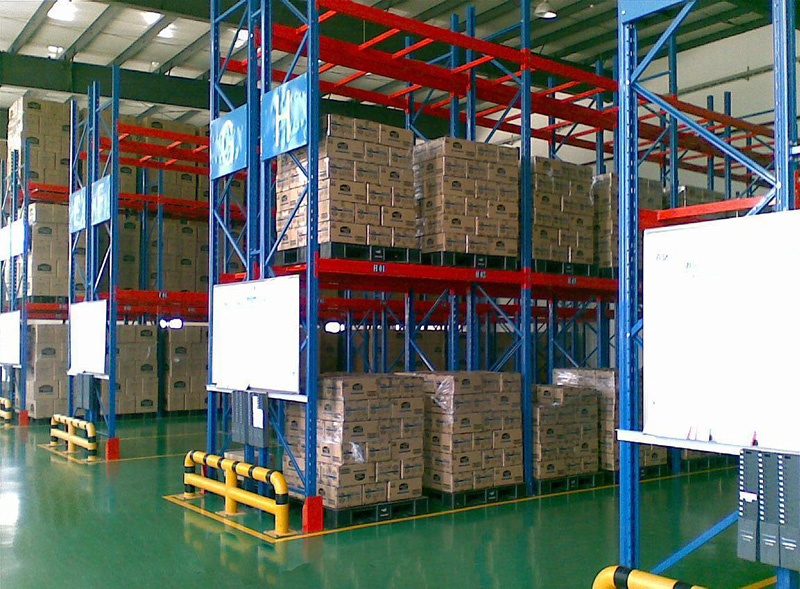
A Midwest automotive logistics hub faced seasonal surges requiring 300% temporary storage capacity. The fixed racking layout could not accommodate the overflow, and leasing external trailers was costing $18,000 per month. Guangshun designed a fleet of 400 large stackable shelves with collapsible end frames and integrated wheel dollies. During peak months, the units are deployed in double-high stacks along a 200‑foot drop zone; during low season, 80% of the shelves are nested (collapsed) and stored in a 3,000 sq. ft. corner. This solution eliminated outside storage fees, reduced internal travel time by 18%, and paid for itself in nine months. The facility now uses the same shelving fleet across three shifts, proving the adaptability of well-engineered modular systems.
A1: According to ASCE 7-22 and RMI guidelines, for Seismic Design Category D or higher, the maximum stacking height for unanchored stackable shelves is limited to three tiers (approx. 12–15 feet total) unless each unit is interlocked with steel pins and the bottom unit is bolted to the floor. For anchored systems, four tiers are permissible if the column base plates are designed for seismic overturning moments. Always consult a structural engineer to perform site-specific calculations.
A2: Pallet racking typically has higher point loads per upright (up to 15,000 lbs) but requires permanent floor anchoring and has fixed beam levels. Large stackable shelves offer moderate per-level loads (2,500–6,000 lbs) but provide superior footprint efficiency because they can be completely dismantled and reconfigured. Additionally, stackable shelves leave no floor anchors, making them ideal for leased warehouses where modifications are restricted.
A3: Industry best practice strongly advises against mixing brands or even different production batches from the same manufacturer. Variations in column dimensions (even 1.5 mm difference) and locking pin locations lead to unstable stacks. For guaranteed safety and stackability, always use identical models from a single supplier. Guangshun offers batch traceability and certified interoperability drawings for all its large stackable shelves.
A4: NFPA 13 requires in-rack sprinklers when solid shelving exceeds 5 feet in height and storage is high-piled. However, because stackable shelves are open (wire mesh or perforated decks), many authorities allow a reduction in sprinkler density. Check local amendments: if the vertical flue spaces (the gaps between stacked units) are at least 3 inches wide, the system may qualify as “open rack storage,” permitting lower water flow rates. Provide clearance to ceiling sprinklers—minimum 18 inches for ordinary hazard occupancy.
A5: Perform visual inspections monthly for damage (bent beams, missing pins, cracked welds). A detailed engineering inspection, including torque checks on all bolted connections and a load test of one shelf per 50 units, should be conducted annually. After any impact from forklifts or seismic event, immediately inspect affected columns for vertical alignment using a spirit level—more than 1/4” deviation requires replacement of the damaged component. Guangshun provides a digital inspection checklist and remote support to streamline this process.
A6: Yes, provided the shuttle rails are installed on each shelf level and the stackable units are pinned to prevent lateral movement. The shuttle system’s travel path must align with the shelf channel; this requires high manufacturing precision (frame diagonal tolerance ≤2 mm). Large stackable shelves from Guangshun can be pre-drilled for rail mounting, and the company provides rail alignment brackets that maintain compatibility even when the shelves are restacked at different heights.
A7: For non-standard depths (beyond 24”, 36”, 48”) or special coatings, lead times range from 4 to 8 weeks depending on powder coating batch schedules. Standard sizes with common finishes ship within 2–3 weeks for orders up to 500 units. Always request a “stacking compatibility certificate” from the manufacturer if ordering multiple batches over time.
All technical data provided reflects industry standards and field experience as of 2026. For project-specific calculations, consult with a licensed structural engineer or contact Guangshun engineering department.

 Wechat
Whatsapp
Wechat
Whatsapp