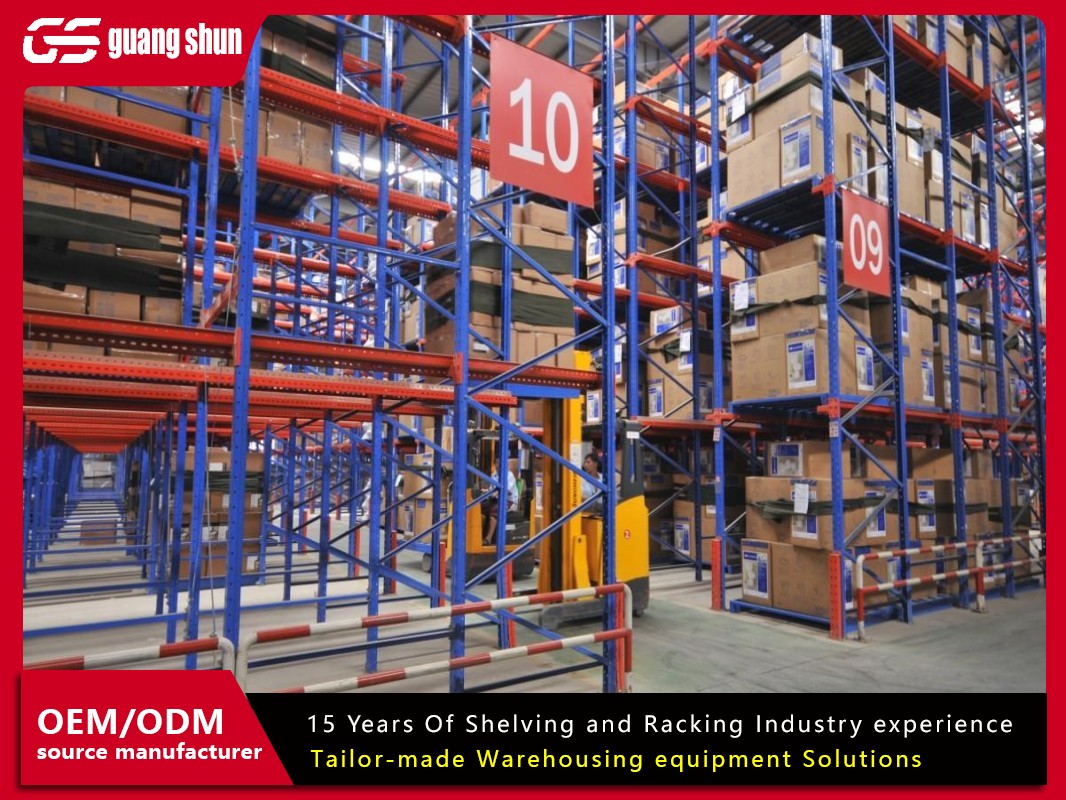
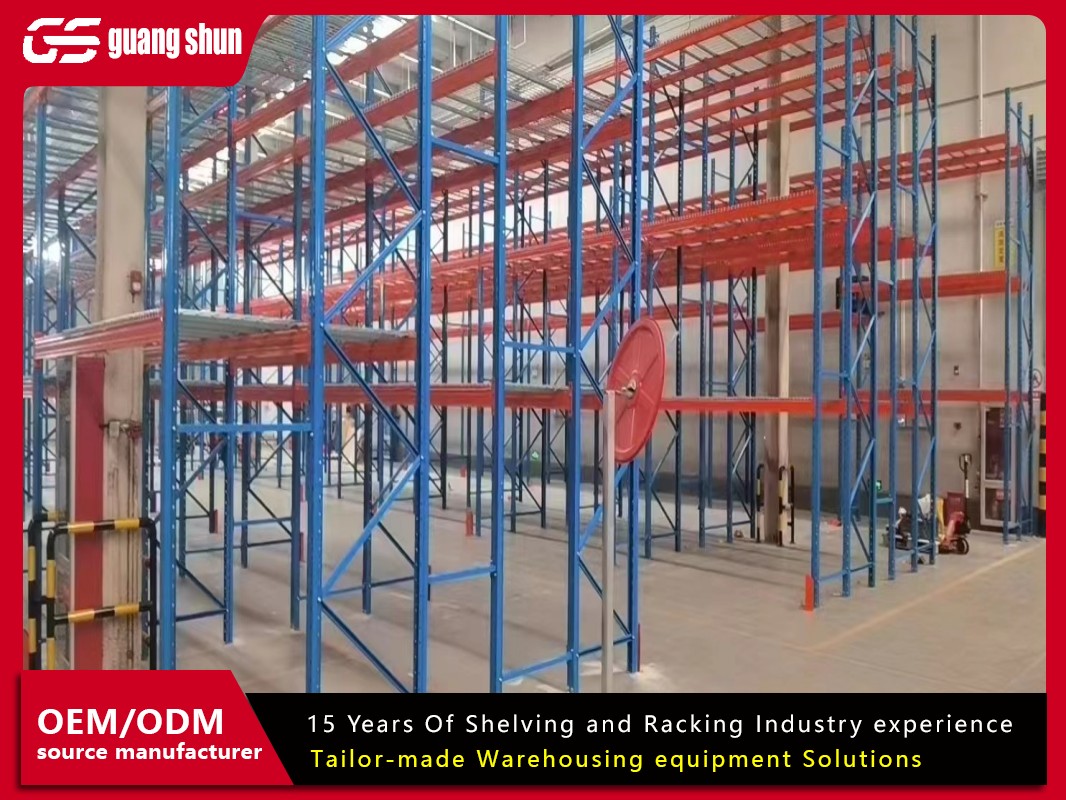
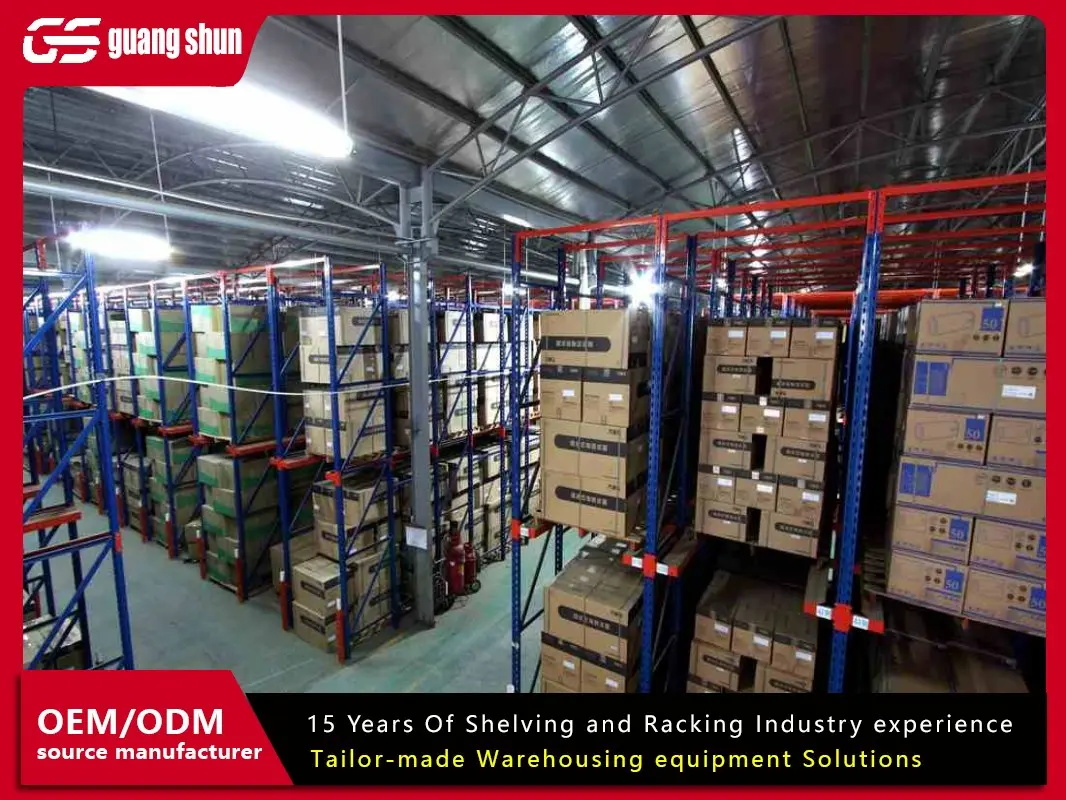
Warehouse operators face a constant pressure: increase storage density without compromising safety or picking efficiency. The storage system's structural integrity begins with the supplier's engineering standards. Selecting the right partner among industrial racking suppliers directly influences load handling, seismic resilience, and maintenance intervals. This guide provides a technical framework for comparing suppliers based on metallurgical data, safety factors, and real-world application engineering.
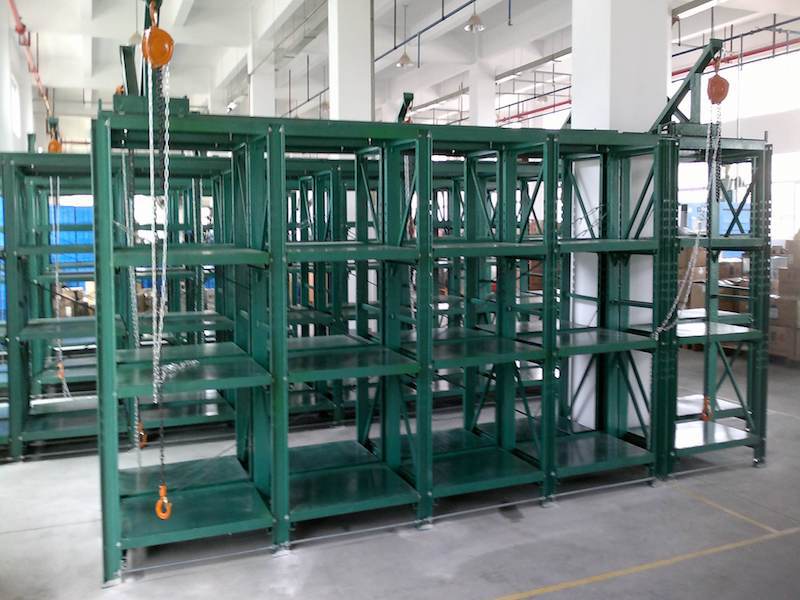
When auditing potential vendors, go beyond the basic catalog. Competent industrial racking suppliers provide detailed documentation on three critical areas:
Steel composition and forming process: Request mill certificates showing yield strength (minimum 235 MPa for Q235B or equivalent ASTM A36). Cold-formed profiles must have consistent wall thickness – deviation below ±0.15mm. Inferior suppliers often use reclaimed steel with unpredictable ductility.
Surface protection longevity: Electrostatic powder coating with zinc phosphate pre-treatment achieves 800+ hours of salt spray resistance (ASTM B117). Ask for cross-cut adhesion test results (ISO 2409) to confirm coating durability under warehouse humidity cycles.
Connection design: Bolted beam-to-column connections should feature lock washers and a minimum of three engagement threads. Some suppliers use punched holes with burrs that reduce fatigue life – request edge profile microscopy images.
Rated load capacity is the most manipulated parameter in the racking industry. Professional industrial racking suppliers follow RMI MH16.1-2020 or FEM 10.2.16 standards, applying a safety factor of 1.65 to 1.8 against yield. This means a beam rated for 2,000 kg static load actually withstands 3,300 kg before permanent deformation. Lower-tier providers often use a 1.5 factor or recalculate based on theoretical values without dynamic impact considerations. To verify, request:
Full-scale load test reports (applying 125% of rated load for 24 hours, measuring residual deflection below 0.2% of beam length).
Finite element analysis (FEA) showing stress distribution at beam-column junctions under eccentric loading.
Impact load simulations – typical forklift braking generates 1.3g horizontal force; proper designs incorporate reinforced column bases.
A documented example: Guangshun provides third-party witnessed load tests for every custom configuration, with stamped capacity labels placed on each bay. This transparency separates engineering-focused suppliers from transactional vendors.
In regions with moderate to high seismicity (e.g., Pacific Rim, Mediterranean, Andean belt), standard rack anchoring is insufficient. Advanced industrial racking suppliers integrate seismic design per ASCE 7-16 or Eurocode 8. Key differentiators include:
Base plate thickness: Minimum 10mm for single-aisle racks, 12mm for double-deep configurations.
Anchor bolt specification: Instead of standard 12mm expansion anchors, seismic-rated designs use adhesive anchors with 150mm embedment and pull-out resistance >22 kN.
Diagonal bracing patterns: X-bracing provides better energy dissipation than K-bracing. Request inter-story drift calculations – should remain below 2% under design basis earthquake ground motion.
Base isolation options: For high-value inventory, some suppliers offer elastomeric pads that decouple rack structure from floor motion.
Warehouse operators in seismic zones should demand a site-specific dynamic analysis. A Guangshun project in Chile's wine region used FEA to verify that drive-in racks would survive a 7.5 Mw event with less than 5mm residual drift – a requirement from the local mining authority.
Different inventory profiles demand different structural configurations. Below is a technical breakdown of common systems with operational metrics:
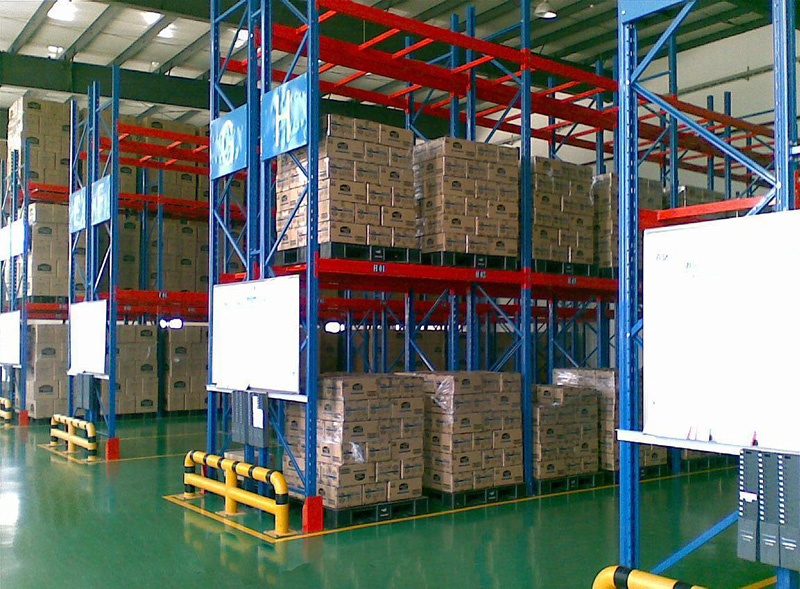
Selective pallet racking (SPR): 100% accessibility. Ideal for mixed SKUs with fast turnover. Beam step increments every 75mm allows fine-tuned vertical space utilization. Typical column depth: 800-1,200mm. Load per beam level: up to 4,500 kg.
Double-deep racking: Increases density by 40% but requires reach trucks with 1,800mm fork length. Beam connectors must be reinforced for off-center loading because operators place pallets with lateral errors up to 100mm.
Drive-in / drive-through racking: Achieves 75% density for homogeneous loads (e.g., bagged goods, beverage cases). Rail thickness should be at least 3mm hot-rolled steel. LIFO discipline mandatory. Collapse risk higher if rails are misaligned – ask for laser-alignment verification during installation.
Push-back racking (LIFO): Uses inclined carts on telescopic rails. Each lane depth up to 6 pallets. Rail straightness tolerance ±1mm per 3m length to prevent cart jamming. Maintenance cost approx. $0.08 per pallet stored for bearing lubrication.
Cantilever racking: For long goods (steel bars, lumber, piping). Arm load capacity from 500 kg to 2,000 kg. Critical parameter: torsional rigidity of the column under eccentric load – request twist angle measurement under full load (should be <0.5°).
After installation, warehouse managers often change beam positions or add levels without engineering review. This alters the column's slenderness ratio and can reduce safe capacity by 30-40%. Solution: Professional industrial racking suppliers provide a “load application drawing” for each bay, plus a cloud-based configuration tool that recalculates capacities when beam positions are changed. They also offer annual inspection services using laser plumb meters to detect column verticality deviations beyond 1:500 ratio.
Over 65% of rack failures start with damaged uprights from low-speed collisions. Standard plastic bollards only absorb minor energy. Advanced solution: Suppliers now offer column protectors with energy-absorbing foam-filled steel sleeves rated for impacts at 8 km/h (5 mph) with a 5-ton forklift. Replaceable “sacrificial” base plates that buckle without transferring force to the main column are another option. Guangshun's column protection system includes a visual indicator: when impact exceeds 80% of design energy, a red tab deploys, signaling mandatory inspection.
AGVs require extremely consistent beam flatness to navigate. Conventional racks have deflection under load up to L/200 (e.g., a 2,700mm beam deflects 13.5mm), causing AGV laser navigation errors. High-tolerance suppliers guarantee beam deflection below L/250 (<10.8mm) and provide mounting points for photoelectric sensors every 300mm. Some suppliers offer pre-machined reference surfaces on beam tops for AGV magnetic tape alignment.
Request the full design package: Includes FEA reports, bolt shear calculations, and seismic drift analysis. Reject any supplier unable to provide these within five business days.
Inspect a reference installation older than 36 months: Check for corrosion at welds, shim settlement under base plates, and anchor bolt torque retention (test with a torque wrench to 75% of installation value).
Review third-party certifications: ISO 9001:2015 for quality, ISO 3834 for welding, and either RMI (North America) or FEM (Europe) membership. For automated racking, also look for ISO 9409-1 interface compliance.
Order a sample component test: Send a beam and column to an independent lab for tensile testing (ASTM E8) and salt spray (ASTM B117). Expect results within 10 days.
Evaluate spare parts and repair response: Ask about availability of beam connectors, column shims, and bolt kits for 10+ years. Premium suppliers guarantee dispatch of emergency replacement parts within 48 hours.
A 5,000-pallet-position warehouse provides a clear TCO example over 10 years:
Low-cost, uncertified supplier: Initial cost $180,000. Expected service life 6 years before major repairs (corrosion, fatigue cracks). Annual maintenance $8,000 (beam straightening, anchor retorquing). Replacement cost in year 7 $210,000 (adjusted). Total 10-year = $180,000 + ($8,000×6) + $210,000 + ($10,000×3) = $486,000. Safety incidents not included.
Engineered supplier (e.g., Guangshun or comparable RMI-certified): Initial cost $265,000. Expected life 15+ years with regular inspections. Annual maintenance $3,000 (due to better coating and connection design). Total 10-year = $265,000 + ($3,000×10) = $295,000. Higher safety margins and lower downtime risk.
The engineered solution saves $191,000 over the decade while offering documented load capacities and seismic resilience. Additionally, certified racks retain 30-40% resale value after 10 years, whereas unbranded racks are typically scrapped.
The choice of industrial racking suppliers determines not just initial capital outlay but also daily operational safety, storage density, and long-term replacement cycles. Warehouses benefit from demanding technical documentation – steel grades, load test reports, seismic analysis – rather than accepting vague claims. Firms like Guangshun demonstrate that engineering-first suppliers provide measurable ROI through reduced maintenance and extended asset life. Before finalizing any purchase, apply the five-step audit and calculate your TCO using the framework above.
A1: Minimum requirements: ISO 9001:2015 (quality management system) and ISO 14001 (environmental management). For safety compliance, ask for RMI (Rack Manufacturers Institute) certification for North American projects, or FEM 10.2.16 for European warehouses. Additionally, request third-party seismic test reports (e.g., ICC-ES or ETA-Danmark). Reputable suppliers publish these credentials on request.
A2: OSHA and RMI recommend a formal structural inspection every 12 months by a qualified rack engineer. However, best practice includes internal visual checks every 3 months (looking for column dents, loose anchors, beam connector gaps) plus a full third-party inspection every 2 years. Many top suppliers offer inspection contracts with laser alignment and torque verification as part of a maintenance package.
A3: No. Any modification – adding a beam level, changing beam positions, or relocating uprights – alters the structural load path and slenderness ratio. This voids warranties and can cause collapse. You must contact the original industrial racking suppliers for a retroactive design analysis. If the supplier is unavailable, hire a licensed structural engineer to perform a field assessment and stamp modification drawings.
A4: Standard selective racks with common dimensions: 4–6 weeks from order to delivery. For complex systems (push-back, drive-in, seismic-rated, or automated shuttle compatible): 8–12 weeks, including FEA validation and prototype connection testing. Expedited services may add 20-25% to costs. Always request a Gantt chart showing design, material sourcing, fabrication, coating, and quality hold points.
A5: Do not rely solely on printed labels. Ask for the supplier’s load test certificate from an accredited lab (TÜV, SGS, or Bureau Veritas). For additional verification, perform a spot test: load a beam to 100% of rated capacity with calibrated load cells, measure deflection at mid-span, then increase to 125% for 1 hour. After unloading, measure residual deformation. If permanent deflection exceeds 0.2% of beam length, the rating is overestimated. Professional suppliers welcome such validation tests and often include them in quality agreements.

 Wechat
Whatsapp
Wechat
Whatsapp