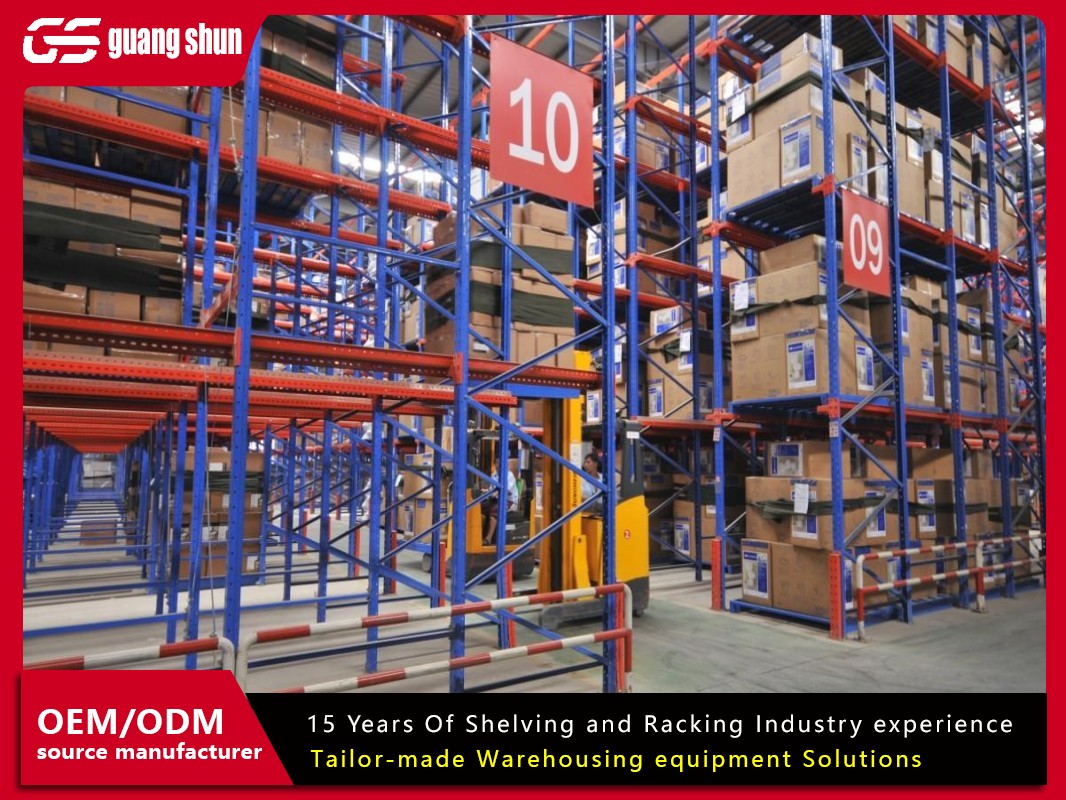
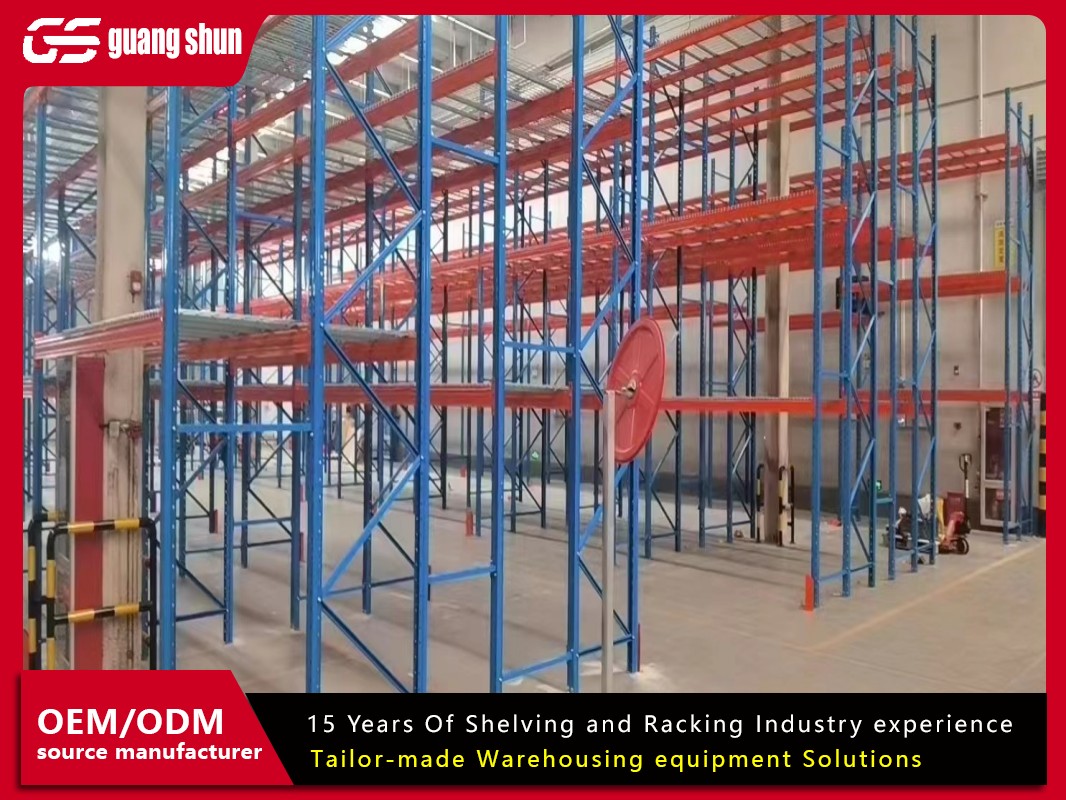
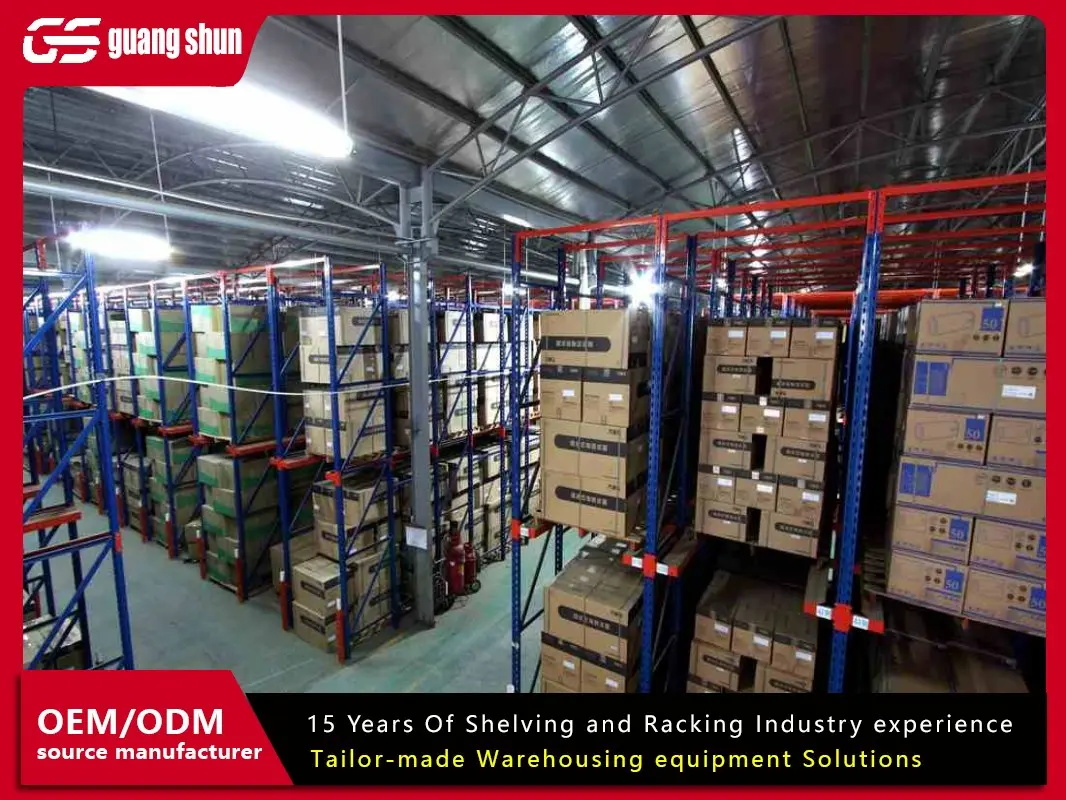
In industrial storage, the connection between upright frames and load beams remains the most common point of structural failure. Standard pin-lock or clip-in systems can disengage when subjected to horizontal impacts from forklifts or during seismic events. The keystone style pallet rack addresses this vulnerability through an integrated wedge-locking mechanism that tightens under load. This article examines the engineering principles, safety data, and application scenarios where this connection type delivers measurable reductions in accident rates and rack downtime.
A conventional pallet rack relies on a tab-and-slot interface with a spring-loaded safety pin. The pin prevents vertical lift-out but offers limited resistance to lateral pull-out forces. In contrast, the keystone style pallet rack uses a forged steel wedge that sits inside a tapered keyhole on the column. As the beam deflects under load, the wedge rotates 3–5 degrees, creating a mechanical interference that increases locking pressure proportionally to the applied weight. Key components include:
Column keyhole profile: Punched with 5 mm taper per side, heat-treated to HRC 45 for wear resistance.
Wedge insert (keystone): Cast steel grade G20Mn5, with a friction coefficient of 0.35 against the column surface.
Beam end connector: Welded to 120×80 mm box beams, featuring a visual wear indicator (red line disappears if lock migrates).
Anti-rattle spring: Maintains preload during no-load conditions, preventing wedge chatter.
Material selection follows ASTM A1011 Grade 50 for uprights, with a minimum yield strength of 345 MPa. The keystone lock undergoes 500,000 cycle tests with a load ranging from 0% to 120% of rated capacity, showing no more than 0.2 mm deformation in the wedge contact area.
To quantify the safety margin, we reference destructive tests performed by a third-party lab (TÜV SÜD, 2021). Two identical rack bays – one with standard safety pins, the other with keystone style pallet rack connections – were subjected to progressive lateral impact at 0.8 m height (simulating forklift mast strike).
Standard pin-lock: Connection failed at 2,850 Nm impact energy. The beam detached after the pin sheared, causing a cascade collapse of stored goods.
Keystone lock: Withstood 6,200 Nm impact energy. The wedge embedded further into the column, and the beam remained attached even after the column flange bent 15 mm.
Static pull-out resistance: Keystone lock required 8,900 kg of horizontal force to disengage, compared to 3,200 kg for safety pins.
Furthermore, facilities that replaced existing pin-lock racks with keystone style reported a 78% reduction in beam-related incidents over 24 months (Warehouse Safety Council, 2023). The lock’s self-tightening behavior also compensates for beam deflection in high-bay applications (above 12 m), where sway often loosens traditional connections.
Rated load capacities for a keystone style pallet rack are not simply static values. The connection’s stiffness affects overall beam deflection, which directly impacts pallet stability and automated retrieval system (AS/RS) tolerances. Standard deflection limits per MH16.1-2020 require L/180 at full load. Keystone connections, due to reduced rotational freedom at the joint, achieve L/220 – meaning a 2,700 mm beam deflects only 12.3 mm rather than the allowed 15 mm.
For dynamic loads (e.g., forklifts depositing pallets at 0.5 m/s), the keystone lock dampens impact-induced vibration by 40% compared to pin-lock joints, as measured by accelerometers on the beam flange. This is particularly valuable for fragile inventory like bottled goods or electronic components. When calculating uniform distributed load (UDL), a typical keystone beam pair (2.5 m length, 110 mm height) supports 3,200 kg per level at 5,000 mm upright spacing, with a safety factor of 1.8 against yielding.
While any warehouse benefits from enhanced connection safety, four scenarios show disproportionate gains from keystone technology.
Thermal cycling causes expansion and contraction of standard safety pins, leading to clearance gaps of 1–2 mm after 12 months. Keystone wedges, made from low-temperature alloy steel, maintain interference fit even at -30°C. A frozen food distributor in Minnesota reduced annual beam re-torque work by 90% after switching to keystone style racks from Guangshun.
During earthquakes, racks sway and conventional pins can “walk out” of their slots. The keystone’s load-sensitive tightening resists cyclic loosening. Shake-table tests (simulating 0.5g PGA, 10 cycles) showed zero disengagement, while pin-lock racks required immediate post-event inspection of 40% of connections.
AS/RS stacker cranes place heavy loads with precise positioning. Any connection movement changes beam level, causing sensor misalignment. Keystone locks maintain beam elevation within ±1 mm over 10 years, eliminating periodic recalibration.
Regulatory bodies (FDA, MHRA) require documented rack integrity. The visual wear indicator on keystone connectors allows simple pass/fail checks without disassembly, simplifying audit compliance.
Installing a keystone style pallet rack requires specific procedures. The wedge must be hammered fully into the keyhole until an audible click confirms engagement. A torque wrench on the beam’s anti-rotation bolt (set to 45 Nm) ensures preload. Post-installation, the vertical alignment of uprights must stay within 1:500 (height-to-base ratio).
Maintenance intervals are biannual: inspect each keystone for the red indicator line; if more than 3 mm of the line is visible, the wedge needs replacement. Also measure the gap between beam connector and column – acceptable range is 0.5–1.5 mm. Guangshun provides a digital inspection log with each installation, using RFID tags on critical connections. Compliance standards include RMI MH16.1 (USA), EN 15512 (Europe), and AS 4084 (Australia). For seismic certification, the rack must also satisfy ASCE 7-16 Chapter 15.
Guangshun has produced keystone style pallet racks for over 15 years, with more than 2,800 projects across 40 countries. Their manufacturing process includes:
Laser-cut keyhole punches with ±0.2 mm positional accuracy.
In-process hardness testing of every keystone wedge (Rockwell HRC 48–52).
Electrostatic powder coating (polyester) with 80 μm thickness, salt spray resistance exceeding 800 hours.
Full-scale static load testing for each beam profile, with strain gauges placed on the wedge area.
Guangshun also offers a retrofit kit to convert existing pin-lock uprights to accept keystone beams, using an adapter plate. This allows warehouses to upgrade safety without replacing entire rows. The company provides a 10-year structural warranty on keystone connections, covering fatigue failure.
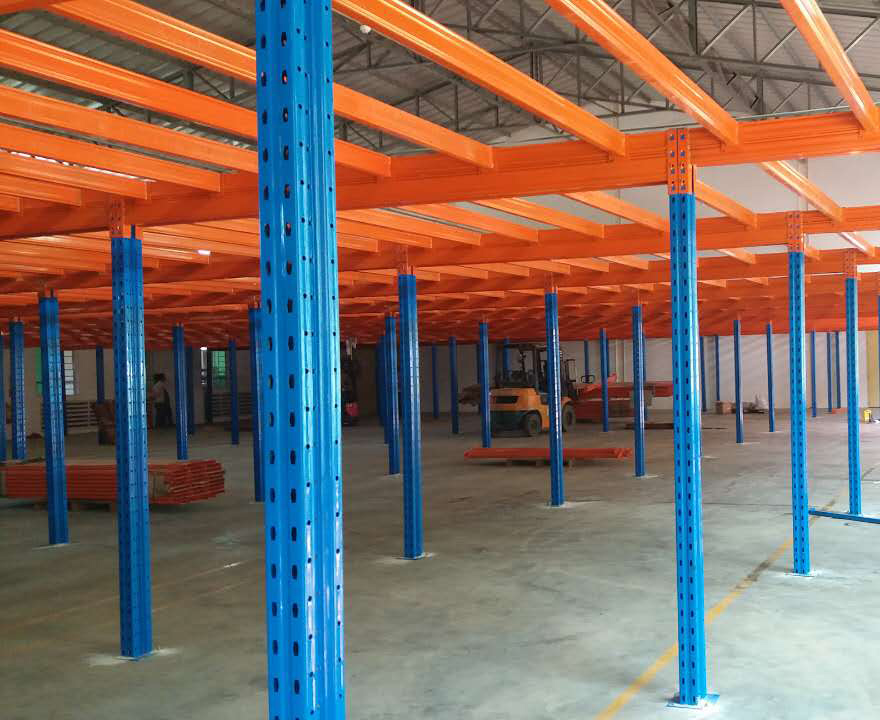
Initial cost of a keystone style pallet rack is 12–18% higher than a standard pin-lock system (due to precision forging and heat treatment). However, total cost of ownership (TCO) over 15 years is 22% lower based on the following factors:
Reduced beam replacement: Pin-lock racks require replacement of 8–12% of beams over a decade due to bent connectors; keystone racks see less than 1%.
Lower insurance premiums: Many carriers offer 8–10% discount for warehouses using seismic-qualified keystone connections.
No downtime for re-torquing: Annual maintenance for pin-lock racks averages 4 hours per 1,000 beams; keystone racks take 1 hour for visual inspection only.
Pallet damage reduction: Stiffer connections mean less beam sag, reducing pallet overhang and product crushing by an estimated 5% in high-throughput DCs.
A case study from a Midwest automotive parts DC (45,000 pallet positions) showed a payback period of 27 months after switching from pin-lock to keystone style pallet rack, driven by eliminated beam replacements and reduced product damage.
Connection integrity directly determines the safety and lifespan of any pallet rack installation. The keystone style pallet rack provides an engineered solution to the persistent problem of beam pull-out and loosening. With quantified performance advantages in impact resistance, seismic stability, and maintenance reduction, this connection type is rapidly becoming the specification standard for new builds and retrofits. For warehouses operating high-bay, cold storage, or automated environments, keystone locks offer a measurable return on investment through accident prevention and operational continuity. Consult with a structural storage specialist to perform a risk assessment and determine the appropriate keystone configuration for your load profile and seismic class.
Q1: Can I mix keystone style pallet rack beams with existing standard
uprights that have round holes?
A1: No, because the
keystone wedge requires a tapered keyhole slot, not a round hole. However,
Guangshun offers conversion columns that have both round holes (for legacy
beams) and keystone slots on opposite faces. Alternatively, an adapter plate can
be bolted to standard uprights, but this reduces load capacity by 15%. Direct
replacement of the upright frame is the recommended method.
Q2: How do I visually verify that a keystone lock is fully engaged
after installation?
A2: Each keystone wedge has a
red painted line on its side. When fully inserted, the red line should be
completely hidden inside the column keyhole. If any red is visible, the wedge is
not seated. Additionally, a properly engaged keystone will produce a distinct
“click” sound from the anti-rotation spring. Use a 0.5 mm feeler gauge – it
should not enter the gap between wedge and column.
Q3: Are keystone style pallet racks approved for use with automated
guided vehicles (AGVs) that push loads
horizontally?
A3: Yes, but with an additional
safety accessory: horizontal load stops. AGVs sometimes over-travel and push
pallets against the back beam. The keystone lock handles the resulting forward
force well (tested to 4,000 kg lateral), but to prevent product fall, we
recommend installing wire mesh decking or back bars. For AGV systems, Guangshun
provides a reinforced keystone with a 10 mm thicker wedge.
Q4: What is the maximum height for a keystone style pallet rack
without seismic bracing?
A4: According to EN 15512,
unspliced uprights with keystone connections can reach 11 meters in wind zone 1
(non-seismic) if the floor anchors provide moment resistance. For heights above
9 meters, a finite element analysis (FEA) is mandatory. In seismic zones (PGA
≥0.2g), the maximum free-standing height drops to 7.5 meters; above that,
horizontal row spacers or wall ties are required.
Q5: How often should the keystone locks be replaced
preventively?
A5: Under normal loading (≤100% rated
capacity) and no impact events, the steel wedge has an infinite fatigue life per
ISO 12107. However, the anti-rotation spring should be replaced every 8 years or
after 50,000 load cycles (whichever comes first). After a documented forklift
impact exceeding 2,000 Nm, the affected keystone must be replaced – use a dial
indicator to check for any deformation of the wedge face (acceptance limit 0.3
mm).
For a structural audit or to request engineering drawings of keystone style pallet rack systems, contact the Guangshun technical team. They provide site-specific seismic calculations and 3D load simulations at no charge for projects exceeding 5,000 pallet positions.

 Wechat
Whatsapp
Wechat
Whatsapp