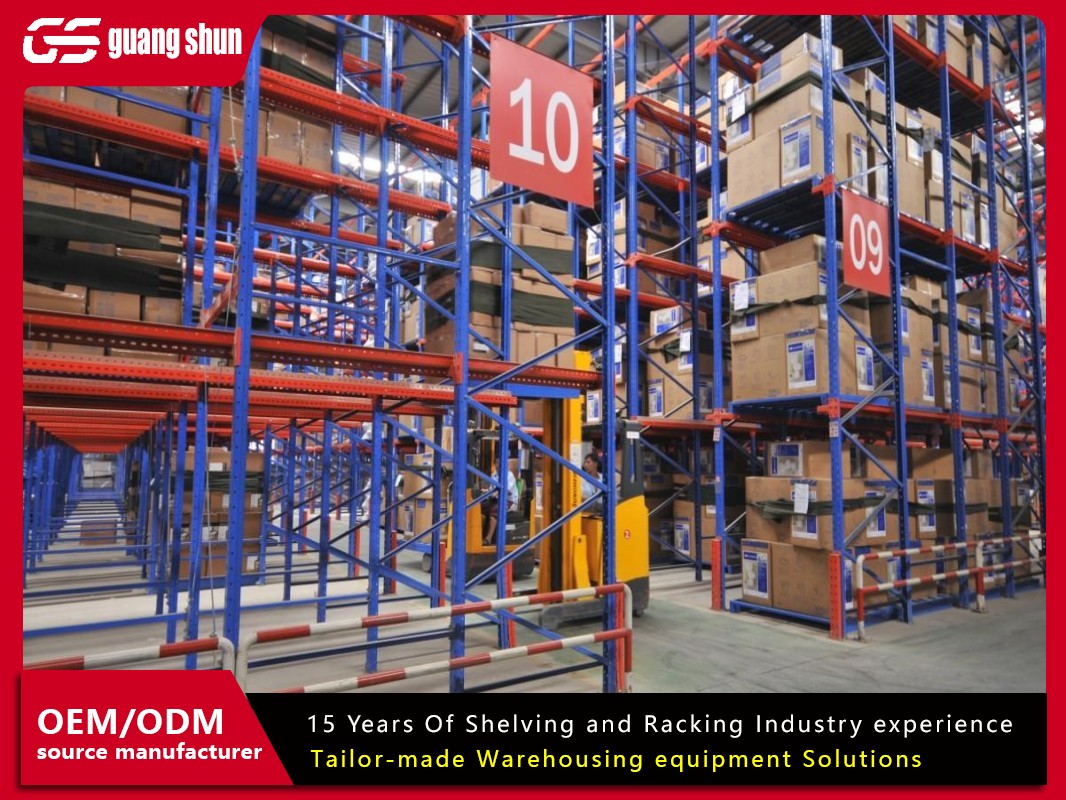
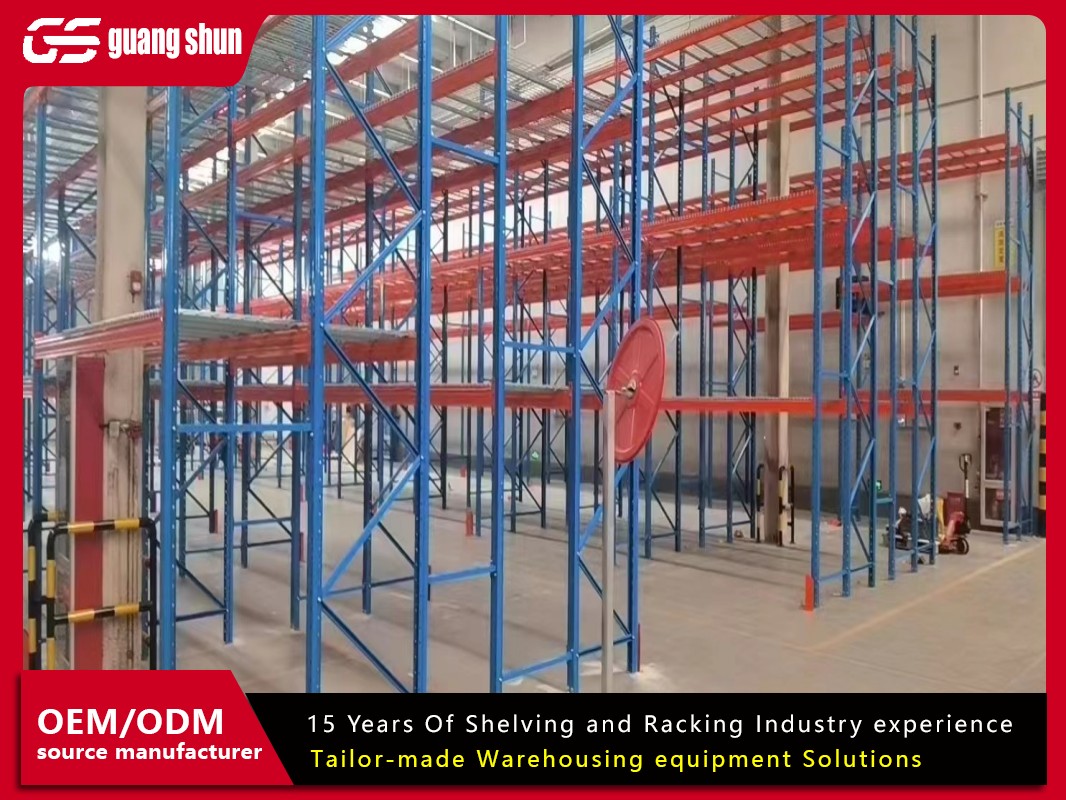
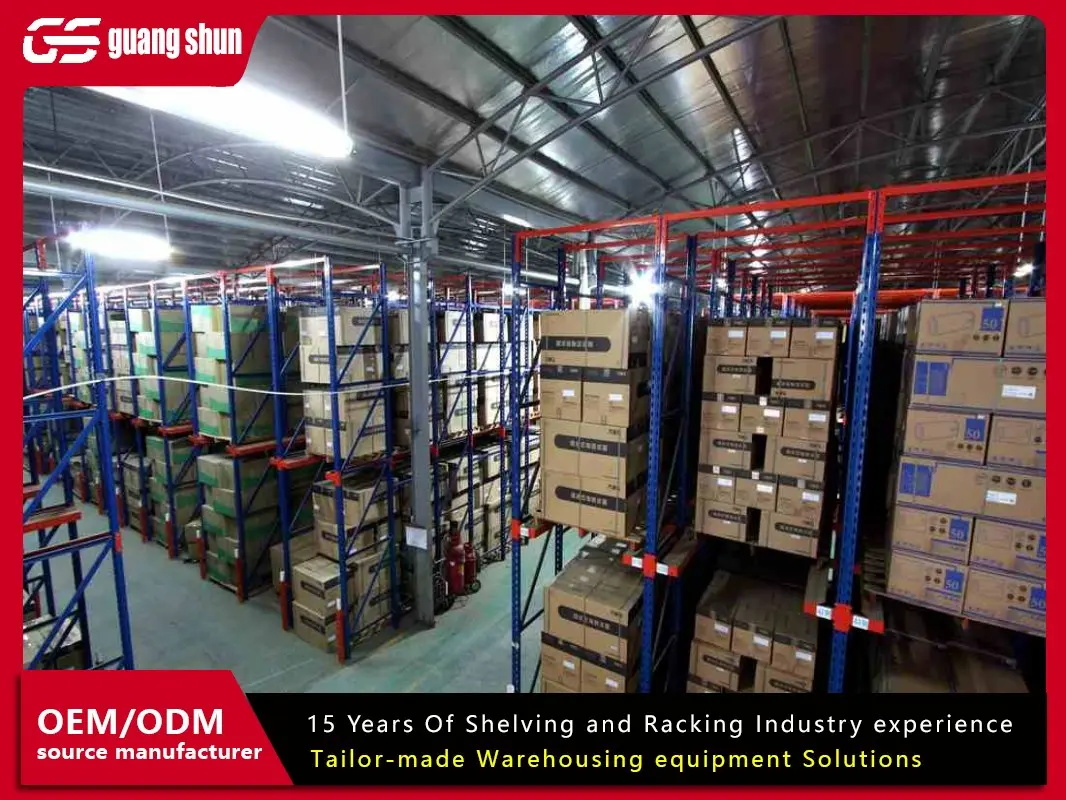
In modern logistics and warehousing, floor space is a finite and expensive resource. Traditional static racking systems force a trade-off between accessibility and density, requiring wide aisles that often represent 40–60% of the total warehouse footprint. Mobile warehouse racking systems eliminate this compromise by mounting racks onto motorized carriages that move along fixed rails. This article provides a data-driven analysis of the engineering principles, safety mechanisms, application-specific configurations, and financial justification for adopting mobile racking solutions — written from the perspective of a specialist with field experience in international storage facilities projects.
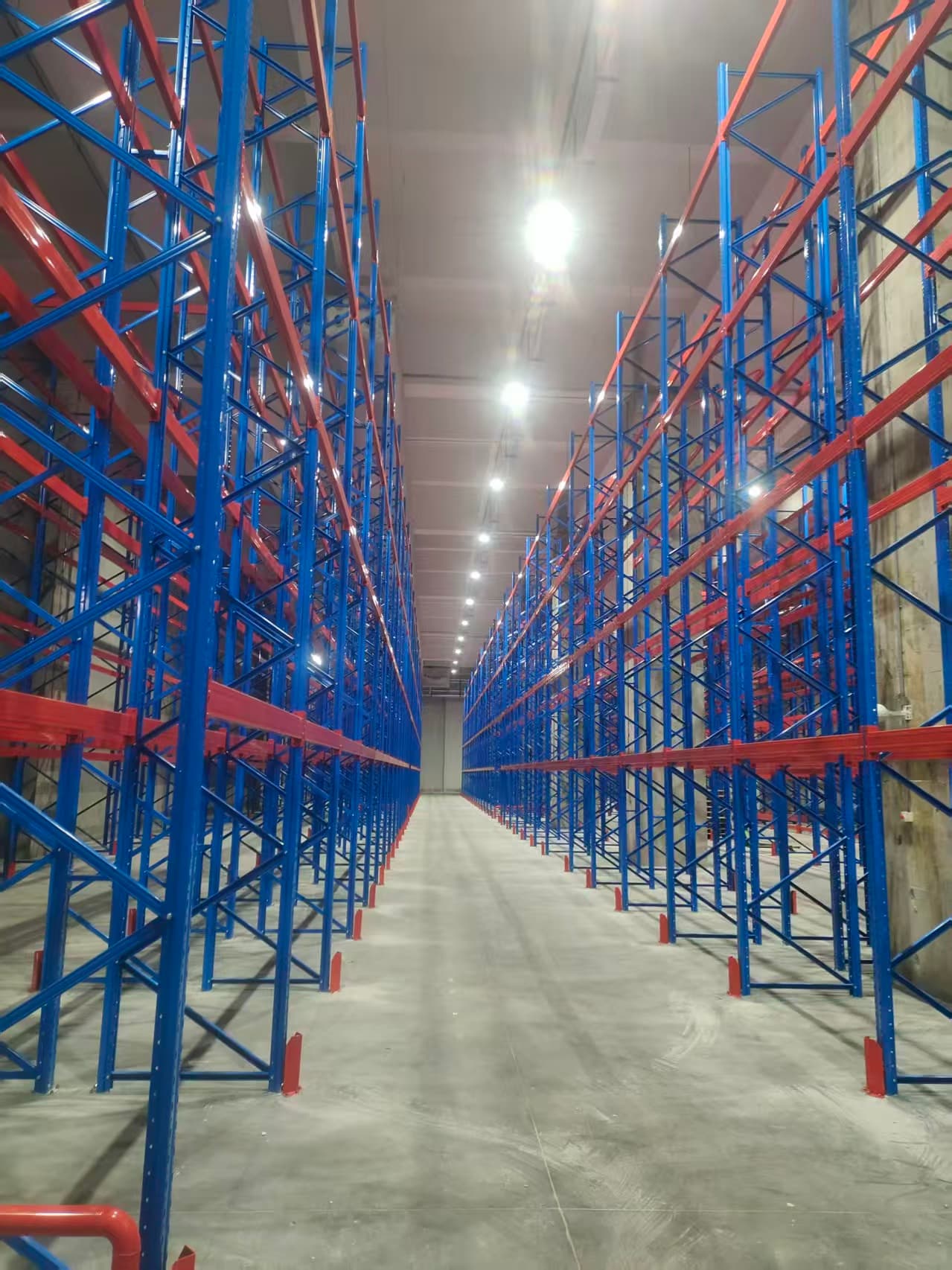
Unlike static selective pallet racks, a mobile warehouse racking system consists of rack bays installed on steel carriages equipped with electric motors, drive wheels, and guide rollers. These carriages travel on embedded floor rails, allowing entire rows to compress together, leaving only one moving aisle. When an operator needs access to a specific bay, they use a remote control, smartphone app, or integrated touch panel to open an aisle between the required rows. The adjacent carriages shift laterally, creating a working aisle exactly where needed.
Carriage Frame & Motor Drive: Heavy-duty welded steel frames with IP54-rated AC motors (0.55–2.2 kW depending on load). Each carriage supports dynamic loads up to 48,000 kg per bay, with travel speeds of 4–6 m/min for safety and precision.
Rail System: Cold-rolled steel rails with 12–15 mm thickness, anchored directly into reinforced concrete floors. Floor flatness tolerance must be ≤ ±3 mm per 10 meters to prevent binding or derailment.
Power & Control: Copper busbars or cable reels supply 24V DC or 380V AC power. Modern systems use frequency inverters for soft start/stop, reducing load sway. Remote controls operate via encrypted 433 MHz or Wi-Fi with failsafe stop buttons.
Safety Peripherals: Infrared light curtains, pressure-sensitive floor mats, and manual release handles for emergency access. Seismic locking pins secure carriages during earthquakes (tested to Zone 4 requirements).
To justify investment, facility managers need hard numbers. The table below compares a standard 1,000 m² warehouse equipped with adjustable pallet racking (static) versus the same building utilizing mobile warehouse racking systems. Calculations follow DIN EN 15635 standards.
Space utilization: Static racking uses ~40% of floor area for aisles; mobile systems reduce aisle area to 8–12%, achieving 70% more pallet positions.
Pallet capacity (EUR-pallets): Static = 1,200 pallets; Mobile = 2,040 pallets (same building footprint).
Access time to a random pallet: Static = 45 seconds (forklift travel); Mobile = 25–35 seconds (aisle opens in front of target).
Energy consumption per move: Mobile systems require 0.12 kWh per aisle opening, which is negligible compared to the energy saved from not expanding warehouse footprint.
Retrofit feasibility: Mobile systems require a reinforced floor and a power supply; static racks do not. However, the ROI period for mobile is typically 12–24 months due to eliminated expansion costs.
Through installations across cold storage, automotive parts, and pharmaceutical distribution, certain environments consistently yield the highest returns from mobile racking.
Refrigerated warehouses face energy costs proportional to cubic volume. By compressing aisles, mobile systems reduce the required refrigerated area by up to 50%. Low-temperature compatible models from Guangshun feature anti-condensation heaters on control panels, silicone-sealed connectors, and cold-resistant lubricants down to -30°C. One dairy distributor reduced their cold store energy bill by 38% after switching to mobile racking.
For boxed records or light-duty items, mobile shelving systems (a subcategory of mobile racking) achieve the highest density. Fire-rated models with VdS approval are mandatory for legal archives. The integration of aisle-finding software reduces retrieval errors by 90%.
Automotive suppliers often use mobile racking to store sequenced components. The system interfaces with the customer’s EDI feed: when a specific part number is called, the mobile rack opens the aisle and LED lights on the beam indicate the exact pick location. This has shown to increase picking accuracy to 99.97%.
Warehouse operators repeatedly encounter the following challenges. Here is how mobile warehouse racking systems resolve each one.
Pain point: Expanding an existing facility is cost-prohibitive (€800–1500 per m² for new construction). Solution: Mobile racking adds 60–70% more positions within the same footprint, postponing or eliminating the need for expansion.
Pain point: Low turnover items occupy expensive prime floor space. Solution: Use mobile racking for slow-movers (C and D items) in the back of the warehouse, while keeping fast-movers in static racking near shipping. Hybrid layouts are standard.
Pain point: Forklift operators waste time navigating long aisles. Solution: Mobile racking creates short, direct aisles. One study (WERC, 2022) showed a 22% reduction in travel time for order picking.
Pain point: Damage to racks from forklift impacts. Solution: Mobile carriages are protected by steel bumpers and photoelectric sensors that stop movement immediately if an obstruction is detected. Many insurance companies offer lower premiums for mobile racking with active safety systems.
Pain point: Seasonal inventory spikes cause overflow into trailers or off-site storage. Solution: Mobile racking density can be reconfigured: add extra carriages or adjust compression levels. Some systems allow manual disengagement to create fixed aisles during peak seasons.
A modern mobile warehouse racking system is not a standalone mechanical device; it is an intelligent node in the digital warehouse ecosystem. Guangshun provides OPC UA and Modbus TCP interfaces, enabling direct communication with leading WMS packages (SAP EWM, Manhattan, Blue Yonder).
Real-time carriage position and aisle status (open/closed).
Load sensing per bay (via strain gauges on rails) to prevent overloading.
Predictive maintenance alerts: motor current deviations, rail wear thresholds.
Safety loop integration – any WMS command to move a carriage is denied if a personnel access sensor is triggered.
Safety is non-negotiable. All systems comply with EN 1570-1 for lifting tables and ISO 13849 for control systems. The mandatory safety features include: three-stage enabling switches, emergency stop cords along each aisle, and acoustic alarms before carriage movement. Regular inspection intervals (every 12 months) are defined by FEM 10.2.04.
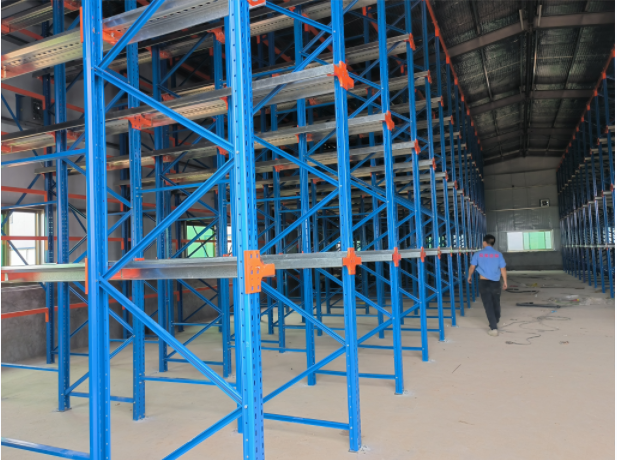
Assume a 5,000 m² distribution center currently operating with static racks (1,200 mm aisle width, 3,200 mm load beam length). The cost to build new warehouse space locally is €1,200/m². The alternative: installing mobile warehouse racking systems at an investment of €380/m² for equipment plus €45/m² for floor reinforcement and power.
Static rack capacity: 8,000 pallet positions.
Mobile rack capacity (same 5,000 m²): 13,600 pallet positions (70% increase).
Cost to achieve 13,600 pallets with static racks: Requires additional 3,500 m² building = €4.2 million construction + extra racking.
Cost of mobile racking solution: €2.125 million (including installation and safety systems).
Net savings: €2.075 million avoided capital expenditure. Additional operational savings: lower heating/lighting per pallet, reduced forklift fleet (15% fewer trucks needed due to shorter travel distances). Payback period typically 18–26 months.
With over two decades of engineering mobile storage solutions, Guangshun has delivered projects across 40+ countries, including seismic-active zones (Chile, Japan) and high-hygiene pharmaceutical warehouses (GMP-certified). Their mobile racking systems are manufactured with ISO 9001:2015 processes, and each carriage undergoes a 200-hour load cycling test. The company provides 3D laser scanning of existing floors to verify rail flatness before installation – a critical step that generic suppliers often skip. For facilities requiring explosion-proof environments (ATEX Zone 2), Guangshun offers customized copper-free motors and anti-static wheels. Their global service network includes remote diagnostics via IoT gateways, reducing mean time to repair (MTTR) to under 8 hours.
Warehouses that treat floor space as a dynamic resource rather than a fixed constraint gain a competitive advantage. Mobile warehouse racking systems convert previously wasted aisle space into productive storage, without sacrificing safety or accessibility. Whether the goal is to defer a costly expansion, improve picking productivity, or consolidate inventory from multiple off-site locations, the engineering and financial case is robust. By integrating with modern WMS and adhering to stringent safety norms, these systems have matured from niche solutions to mainstream best practices. Consult with a specialist to conduct a site-specific feasibility study – including floor load tests and SKU turnover analysis – to determine the exact density gains achievable in your operation.
Q1: Can mobile warehouse racking systems be installed in an existing
building without major construction?
A1: Yes, but
two conditions must be evaluated. First, the concrete floor must have a minimum
thickness of 150 mm with reinforcement rebar; older buildings may require local
thickening under the rails. Second, the floor’s flatness must be verified – a
tolerance of ±5 mm over 6 meters is acceptable for most systems. Guangshun
provides a pre-installation laser survey to determine if floor grinding or
self-leveling compound is needed. No structural changes to columns or roof are
required.
Q2: What happens during a power outage? Can we still access
pallets?
A2: Every mobile racking carriage is
equipped with a manual crank handle or a hydraulic hand pump that disengages the
motor brake, allowing an operator to move the carriages by hand. The force
required is approximately 15–25 kg per carriage, even with a full load, due to
the precision roller bearings. Additionally, battery backup modules (optional)
keep the control panel and safety sensors active for 2 hours.
Q3: How does seismic activity affect the stability of mobile racking
systems?
A3: In earthquake-prone regions, mobile
carriages are fitted with automatic seismic locks that engage when a vibration
sensor exceeds 0.2 g acceleration. The locks physically pin the carriage to the
rail, preventing rack toppling. The rack structure itself is braced with
diagonal ties per ASCE 7-16 standards. Post-earthquake, a manual inspection
resets the locks. Guangshun has successfully installed systems in Istanbul and
Mexico City with certified seismic compliance.
Q4: Are mobile racking systems compatible with automated guided
vehicles (AGVs) and forklifts?
A4: Yes, with proper
aisle width design. For AGVs (e.g., Toyota, Balyo), the mobile system can be
programmed to open an aisle and then send a signal to the AGV’s traffic
controller that the aisle is ready. For counterbalance forklifts, the aisle
opening is typically 3,200 mm – identical to static rack aisles. The only
restriction is that the aisle cannot be occupied during carriage movement; thus,
interlocking with the forklift’s telematics system is recommended for fully
automated facilities.
Q5: What is the typical maintenance schedule for a mobile racking
system?
A5: Preventive maintenance is performed
every 2,000 operating hours or quarterly. The checklist includes: cleaning rail
debris, inspecting motor brushes, testing safety light curtains, lubricating
carriage wheels (with food-grade grease for cold storage), and verifying
carriage synchronization (max 5 mm deviation between left and right sides). A
full load test and emergency stop response measurement are done annually. Most
suppliers like Guangshun offer predictive IoT sensors that send email alerts
when vibration or current draw exceeds thresholds.
For a customized density analysis or to request a 3D simulation of mobile warehouse racking systems in your facility, contact the engineering team at Guangshun.

 Wechat
Whatsapp
Wechat
Whatsapp