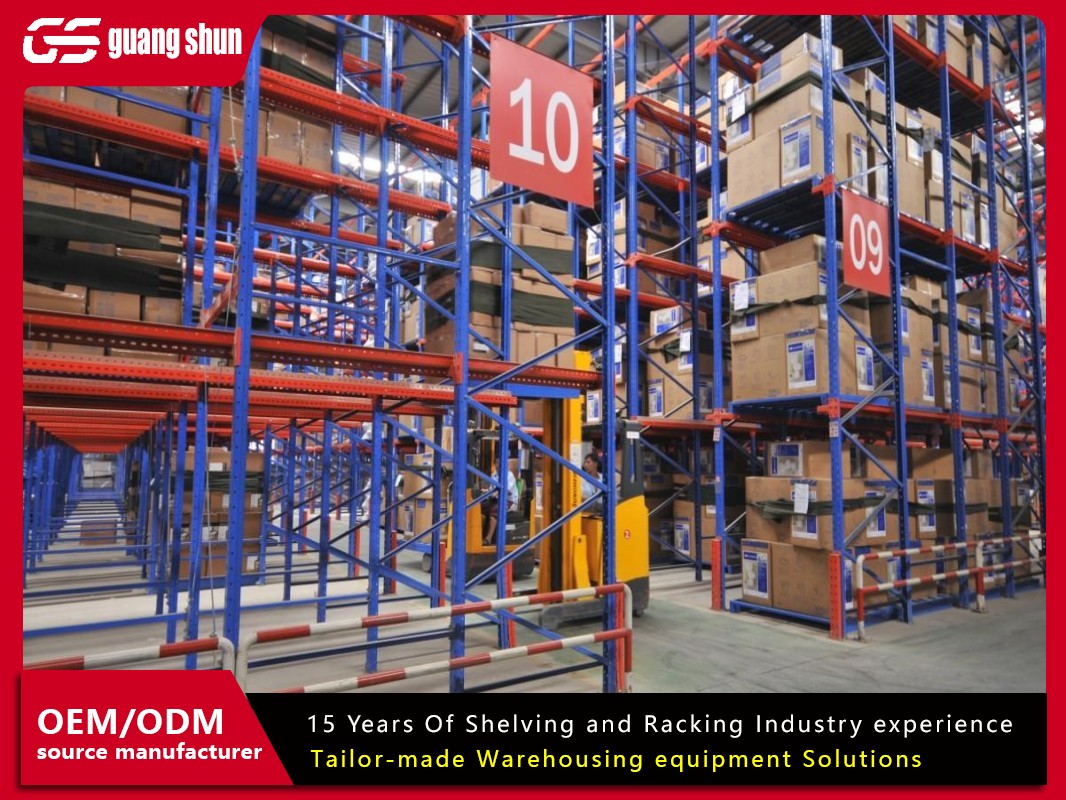
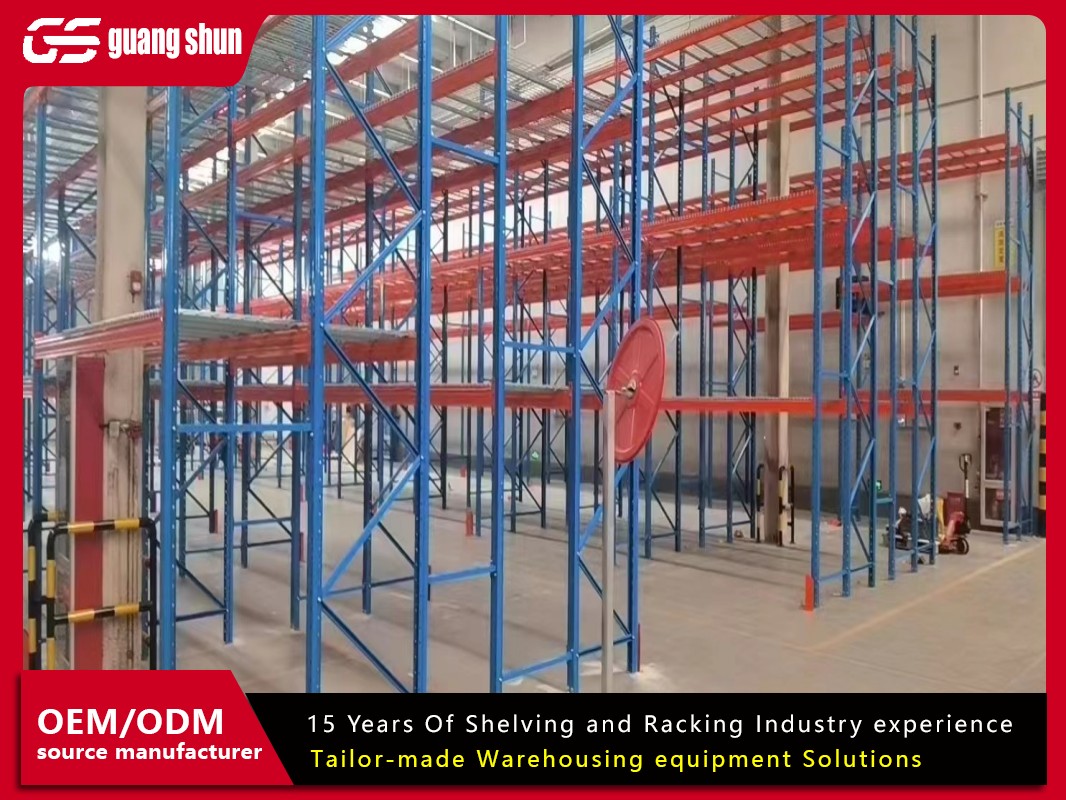
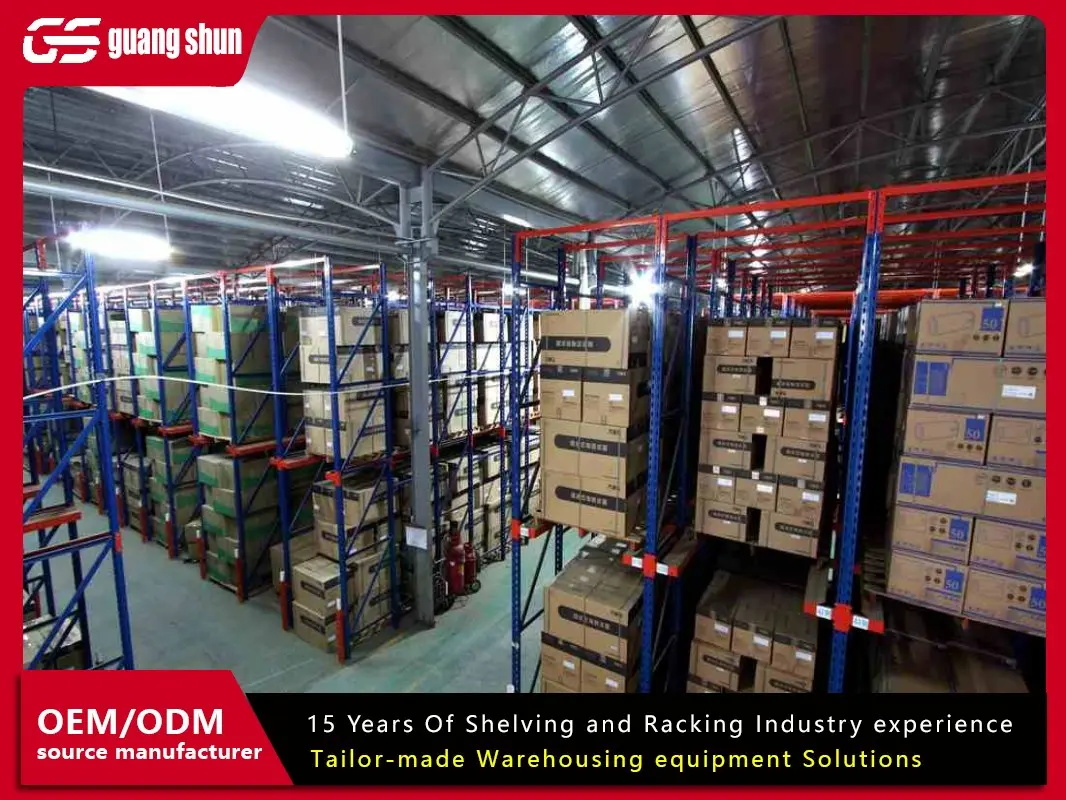
When storage density becomes the primary driver—cold storage, long-term inventory, or raw material buffers—conventional selective racking underperforms. Deep lane systems push pallets up to 40 positions deep in a single aisle. Among these, 24 deep pallet racking represents a specific engineering threshold: beyond 20 pallets deep, rail deflection, shuttle battery autonomy, and first-in-last-out (LIFO) constraints require systematic re-engineering. This article dissects the mechanical parameters, load rail design, shuttle navigation protocols, and fire safety adjustments for installations reaching 24 pallets per lane. We reference FEM 9.831, RMI deep lane annex, and operational data from three high-density sites across Europe and North America.
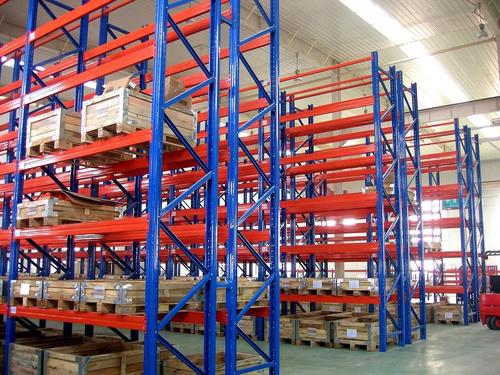
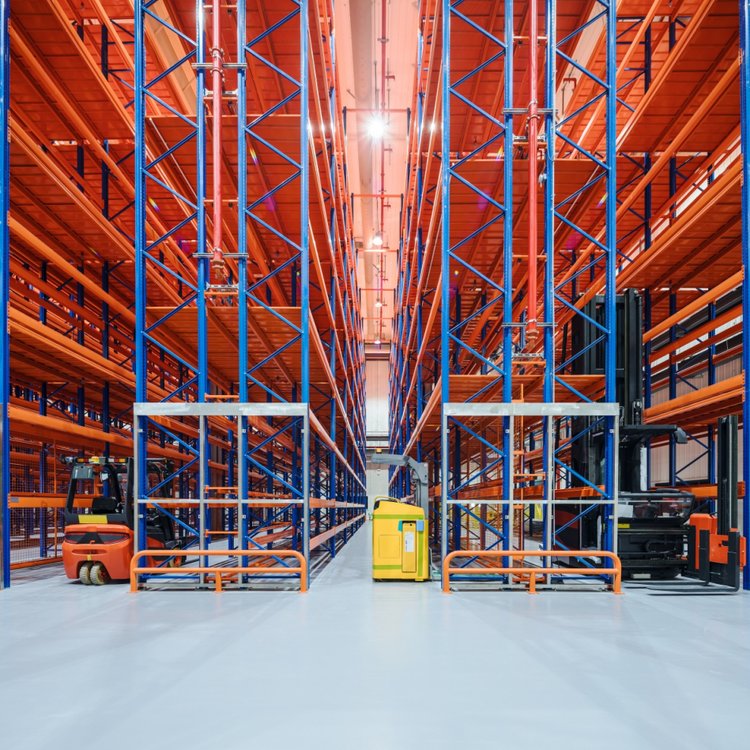
Traditional drive-in racking allows forklifts to enter lanes up to 8–10 pallets deep, but depth beyond 12 creates safety hazards (visibility, exhaust in cold storage). The 24 deep pallet racking architecture is almost exclusively implemented with radio shuttle systems (also called satellite trolleys). A single shuttle runs on rails inside the lane, transporting pallets from the aisle face to the deepest position. Key metrics:
Lane depth: 24 pallet positions (each 1200 mm deep for Euro pallet or 1100 mm for GMA) → total lane length ≈ 28.8 meters including 150 mm clearance between pallets.
Maximum storage density: Up to 95% of warehouse floor area used for storage (selective racking gives ~40%). For a 10,000 m² facility, 24 deep lanes add 3,500 additional pallet positions compared to drive-in.
Accessibility limitation: LIFO by lane – the first pallet loaded is the last retrieved unless shuttles relocate entire columns. For FIFO requirement, twin-shuttle or lane reversal strategies needed.
Engineers select 24 deep pallet racking when SKU variety is low (e.g., less than 100 SKUs per warehouse) but volume per SKU exceeds 2,000 pallets. Typical industries: bottled beverages, frozen foods, paper rolls, automotive tier-1 raw materials.
Longer lanes amplify structural loads and tolerances. Upright frames at the aisle face and at the rear (every 6 m) must resist both static pallet weight and shuttle dynamic forces. Critical parameters:
Rail straightness tolerance: ±3 mm over 28 m length. Deviation beyond ±5 mm causes shuttle binding and drive motor overload. Guangshun laser alignment verification is standard for every 24 deep lane.
Column section: Heavy-duty profiles (120×120×3.0 mm) vs. standard 90×70×2.0 mm for selective racking. Anchor bolt pattern: 4 bolts per base plate (M20 grade 8.8) embedded 150 mm into concrete C30/37.
Rail material: Cold-rolled C-channel (120×40×3 mm) made from S420MC steel (yield strength 420 MPa). Surface hardness HRC 35–40 to resist shuttle wheel wear.
Beam steps: Not used; pallets rest directly on rails via shuttle. Rail supports every 1200 mm. Static load per rail position: up to 2000 kg (Euro pallet).
Finite element analysis of a 24-deep lane (28.8 m length, 1.5 m width, 5 levels) under full load shows a first natural frequency of 2.8 Hz. Seismic zones require cross-aisle bracing and base shear capacity per ASCE 7-16: V = 0.24 × seismic weight. Guangshun provides seismic calculations for each site, including torsional effects due to asymmetric loading.
Radio shuttles used in 24 deep pallet racking differ from standard 10-deep shuttles in battery endurance, communication range, and speed control.
Travel distance per cycle: A full cycle (load pallet at face → transport to position 24 → return empty) covers 57.6 meters. High-speed shuttles (0.8 m/s) take 72 seconds one-way, 144 seconds round trip. Battery capacity must support 300 cycles per charge (typically Li-ion 48V/20Ah).
Positioning accuracy: Optical encoders with absolute positioning strips required. Error tolerance ±10 mm after 28 m travel. Inductive proximity sensors at each pallet position to confirm load placement.
Communication: Wi-Fi 2.4 GHz with redundant access points inside the rack structure – signal attenuation through steel rails and pallets demands antenna placement every 12 m.
Lift mechanism: Shuttles lift pallet 25–30 mm off rails for transport. Hydraulic or electric screw lifts? Electric actuators (ball screws) preferred for cold storage (-25°C) as hydraulics thicken.
Real-world data from a Dutch cold store (24-deep lanes, 6 levels, -22°C) shows average shuttle battery life 18 months with LiFePO4 cells. Scheduled charging during shift changes (two 30-minute charges per 8-hour shift) maintains throughput.
A Midwest US beer distributor stores 15,000 pallets of seasonal products. Using 24 deep pallet racking with 6 lanes per aisle, 5 levels. Incoming full truckloads (52 pallets per trailer) are stored in the deepest positions first. Outbound picks from the face lanes. Average retrieval time per pallet: 2.1 minutes (shuttle travel to position 18 and back) vs. 3.5 minutes for selective racking. Damage rate reduced by 40% because forklifts never enter the lane.
A UK frozen vegetable processor implemented 24-deep lanes with a FIFO solution: two shuttles per lane – one deposits from the front, a second rear shuttle removes from the deepest position after a cross-conveyor. Throughput: 120 pallets per hour per aisle. Energy cost for refrigeration decreased 12% because fewer aisle openings required for retrieval (one aisle serves 24 positions).
Paper reels weighing 1,200 kg each stored in 24-deep lanes. Rail deflection limit set to L/500 (0.5 mm per meter) to prevent shuttle derailing. Guangshun supplied reinforced rail system with intermediate supports every 600 mm instead of 1200 mm. Shuttle wheels modified with polyurethane coating to reduce noise (below 75 dBA).
NFPA 13 (2022) treats deep lane racking with solid pallets as “highly obstructed storage”. Requirements:
In-rack sprinklers required at every level and every 3 m horizontally along the lane. For 24 deep lanes (28.8 m), that means 10 sprinkler heads per level per lane.
Water supply density: 0.6 gpm/ft² over 3,000 ft² (ESFR K-25 sprinklers). Total flow demand exceeds 1,200 gpm for a 6-level system.
Smoke and heat vents above the racking: 1 vent per 500 m² of lane footprint.
Alternative: Install horizontal barriers (steel plates) every 6 m to limit fire spread. This reduces sprinkler count but increases steel weight.
Fire modeling (FDS simulation) for a 24-deep paper storage lane showed that without in-rack sprinklers, flashover occurs within 8 minutes. With K-17.2 in-rack heads at each level, temperature remains below 200°C.
Field installation of 24 deep pallet racking demands laser theodolite verification at every phase:
Base plate leveling: Maximum deviation ±1 mm over 20 m. Use epoxy grout under base plates to achieve.
Rail alignment: Two parallel rails per lane must maintain 1490±2 mm gauge (for 1200 mm pallets). Horizontal straightness: ±3 mm over lane length. Vertical undulation: ±2 mm over any 3 m section.
Shuttle test run: After assembly, run shuttle dry (no load) at max speed end-to-end 10 times. Record any binding or abnormal sound. Then load test with 120% of rated pallet weight at position 24.
Concrete floor flatness: Fmin ≥ 40 (per ASTM E1155). For new slabs, specify superflat tolerance in the shuttle aisle.
Guangshun provides on-site commissioning reports with laser measurements and infrared shuttle motor temperature logs.
Based on a 20,000-pallet facility, 10-year horizon:
Selective racking: $145 per pallet position (PPP). Aisle space 55% – requires 25,000 m². Total cost $2.9M + land lease.
Double-deep racking (2 pallets deep): $110 PPP. Floor space 18,000 m². Total $2.2M.
24 deep pallet racking with shuttles: $95 PPP (including shuttles amortized). Floor space 11,000 m². Total $1.9M. Land saving of 14,000 m² yields significant lease reduction (e.g., $12/m²/year = $168k/year savings).
However, 24 deep requires shuttle maintenance ($0.03 per pallet move) and longer retrieval time for deep positions. For fast-moving SKUs, hybrid systems (first 8 positions selective, deeper positions reserve) are emerging.
Q1: Can 24 deep pallet racking be converted to FIFO
(first-in-first-out) operation?
A1: Yes, but with
complexity. Standard LIFO can be adapted by using a “twin shuttle” system: one
shuttle inserts from the front, a separate extractor shuttle enters from the
rear (requires rear aisle access). Alternatively, a rail-mounted gantry that
picks from the deep end after front shuttles relocate pallets – costly. Most
users accept LIFO for homogeneous inventory. 24 deep pallet
racking from Guangshun can be supplied with a reversible shuttle
that supports “deepest-first” retrieval but not pure FIFO without rear
access.
Q2: What is the maximum pallet weight allowed in a 24-deep
lane?
A2: Limited by rail bending stress and
shuttle motor torque. Typical max: 1,500 kg per pallet for standard rail
(S420MC, 3 mm wall). For heavier loads (up to 2,000 kg), upgrade to rail section
150×50×4 mm and shuttle with 2 kW drive (instead of 0.75 kW). Always request a
deflection test at the deepest position – maximum rail sag under load < 5 mm
over 28 m.
Q3: How does the shuttle receive commands in a 24-deep lane if Wi-Fi
signal fades?
A3: Redundant communication: primary
2.4 GHz Wi-Fi with repeater antennas every 12 m. Secondary infrared (IR) or
inductive loop backup. If both fail, shuttle stops and sends audible alarm.
Guangshun’s remote diagnostic system logs signal strength per meter;
installation includes heat mapping to identify dead zones before
commissioning.
Q4: Can a 24-deep pallet racking system be retrofitted into an
existing selective racking building?
A4: Possible
if floor flatness meets Fmin 40 and ceiling height is at least 9 m (to
accommodate 5–6 levels). Existing columns may interfere with lane depth. The
largest challenge is fire sprinkler modification: retrofitting in-rack
sprinklers typically requires draining and re-piping. Budget $15–$20 per pallet
position for fire system upgrade. Guangshun offers feasibility audits
including laser floor mapping and sprinkler integration designs.
Q5: What battery technology is recommended for shuttles operating in
-25°C freezers?
A5: Lithium iron phosphate
(LiFePO4) with built-in self-heating (BMS preheats cells to 0°C before
discharging). Avoid lead-acid (acid freezes below -20°C) and standard NMC
lithium (degradation rapid below -10°C). Expected cycle life at -25°C: 1,500
cycles to 80% capacity, versus 3,000 cycles at room temperature. Cold storage
sites typically install battery swapping stations inside the warm area.
Q6: How do you handle lane cleaning or pallet debris accumulation at
24-deep positions?
A6: Debris (wood splinters,
plastic wrap) builds up on rails and can impair shuttle movement. Install rail
wiper brushes on the shuttle (replace every 500 cycles). Schedule quarterly lane
inspection using a remote camera cart (Guangshun provides a magnetic crawler
camera that runs on rails). For deep cleaning, a “buddy shuttle” with vacuum
attachment can be sent manually.
Implementing 24 deep pallet racking requires careful evaluation of inventory turnover, building constraints, and shuttle reliability. When applied to high-volume, low-SKU environments, it reduces floor space by more than 50% compared to selective racking and lowers cost per stored pallet. For engineering support—including dynamic shuttle simulations, rail fatigue analysis, and fire safety plans—consult Guangshun for a site-specific density audit and load case modeling.

 Wechat
Whatsapp
Wechat
Whatsapp