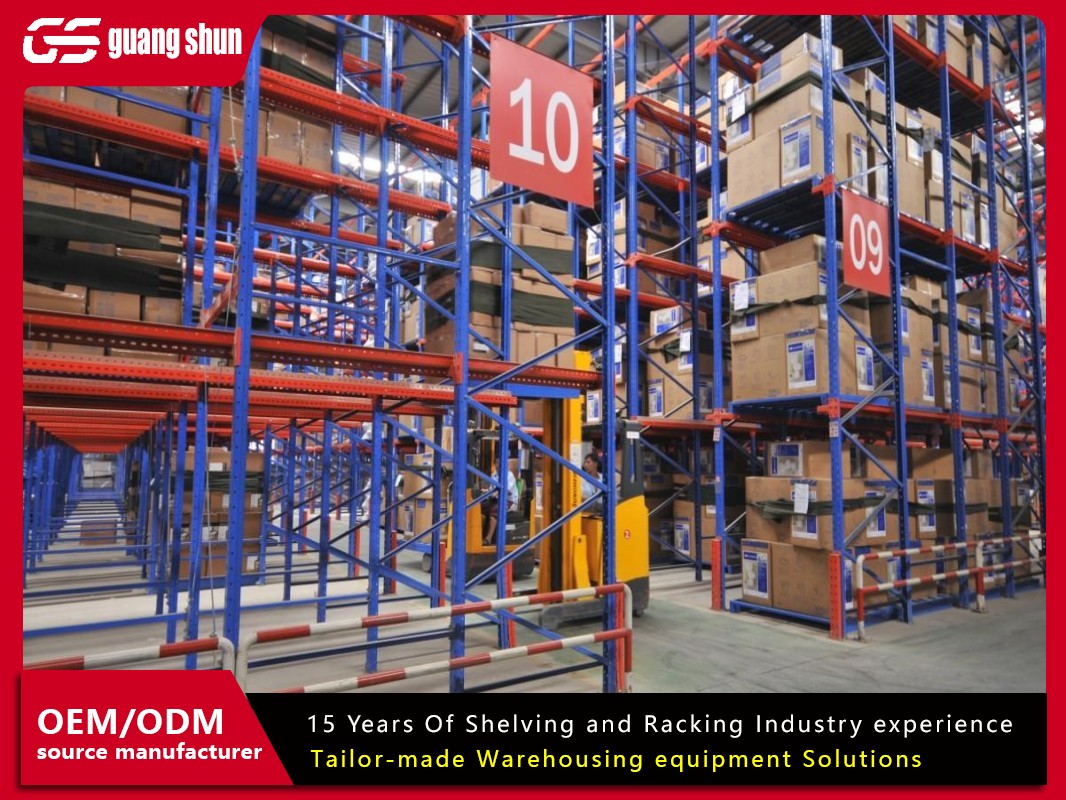
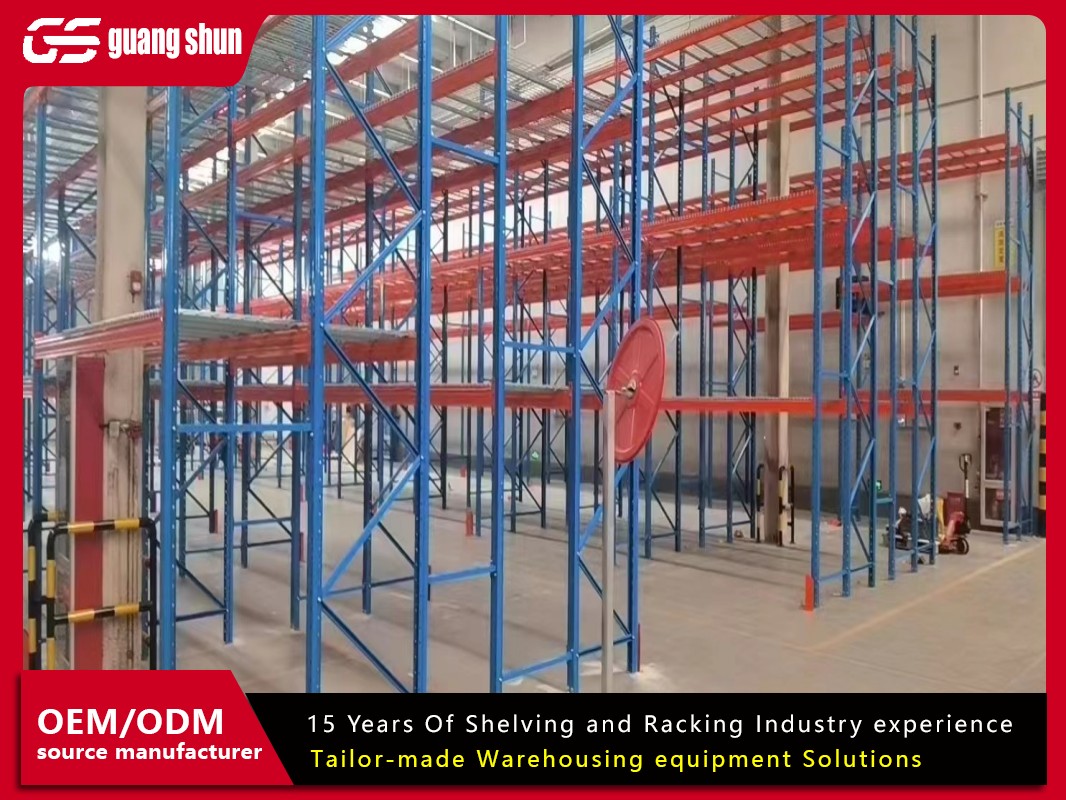
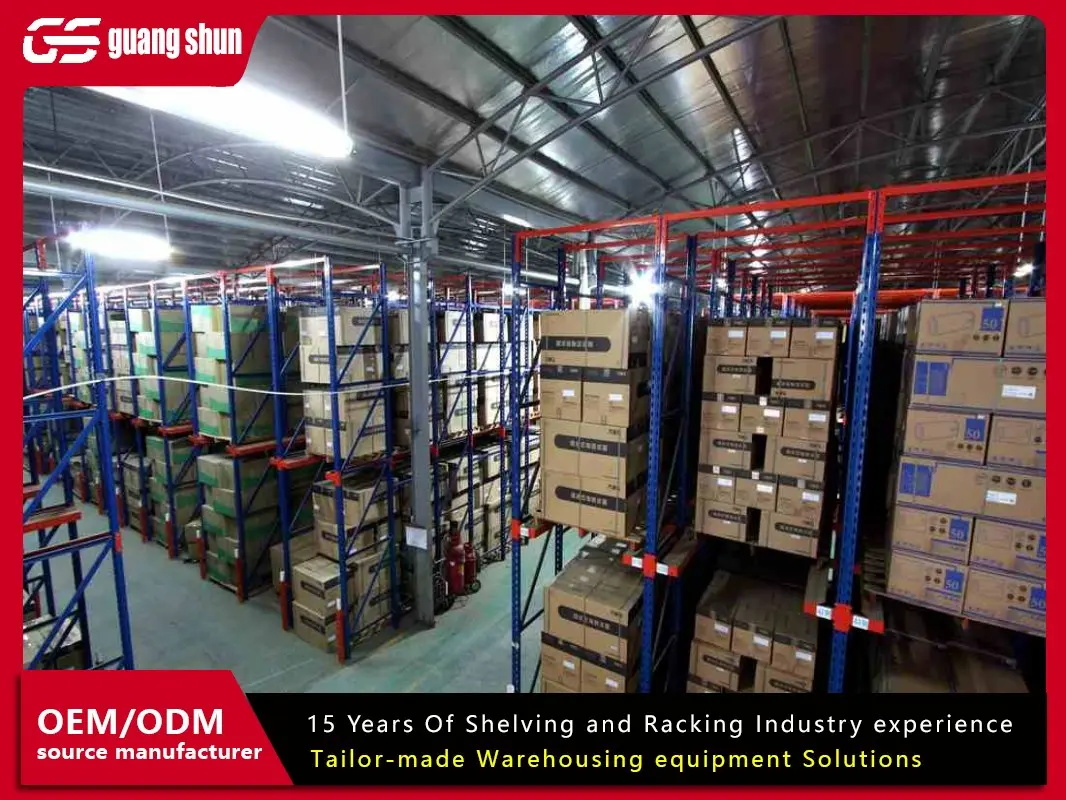
Standard 3‑inch and 4‑inch column depths dominate light‑duty racking, but 24 wide pallet rack uprights (nominal 24‑inch width across the column face) provide a fundamentally different mechanical profile. These wider uprights are specified when beam loads exceed 6,000 lbs per pair, when forklift impact frequency is high, or when building codes demand reduced inter‑story drift. This article delivers quantitative design criteria, failure mode analysis, and field data for engineers evaluating wide‑column racking systems.
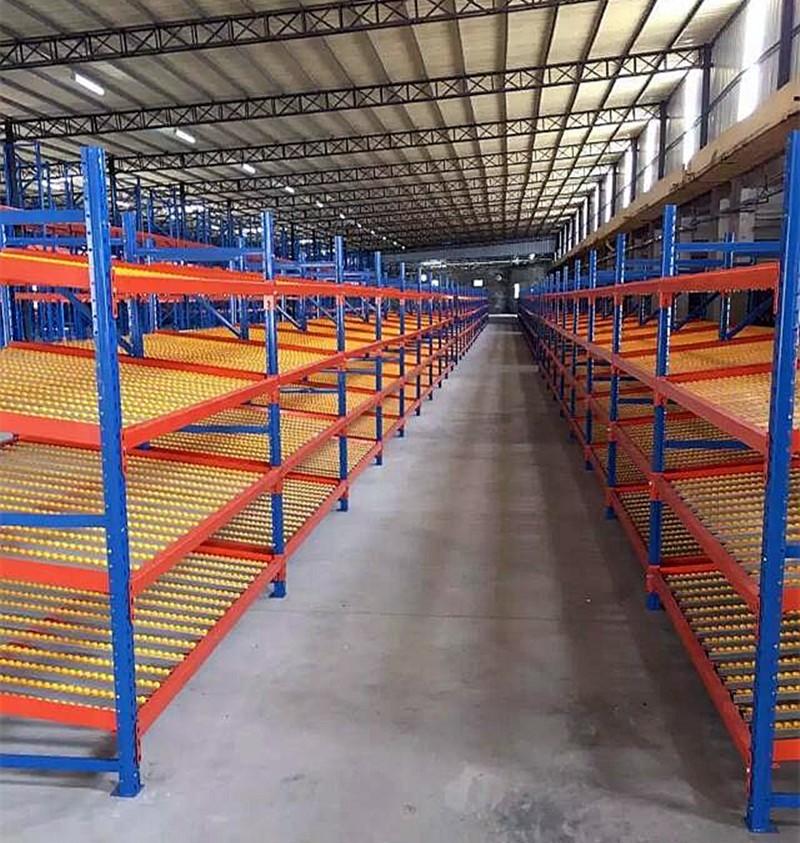
A 24 wide pallet rack upright typically uses a roll‑formed or cold‑formed steel section with flange widths between 220 mm and 260 mm (8.66″–10.24″) and web depths from 80 mm to 120 mm. The moment of inertia (Ix) for these profiles ranges from 12.5 in⁴ to 22.3 in⁴ depending on steel gauge (2.0 mm – 3.0 mm Q355B). Compared to standard 4″×2.5″ uprights (Ix ≈ 3.2 in⁴), the wide design provides 4‑6× higher bending stiffness, directly reducing lateral sway under dynamic braking loads from reach trucks or shuttles.
Load capacity is governed by Euler buckling in the weak axis. For a 20‑foot tall 24 wide pallet rack uprights with 4 cross braces per section, allowable axial load typically reaches 18,500 lbs per leg at an unbraced length of 48″ (brace spacing). However, perforation patterns (hole punching for beam connectors) reduce net section area by 12‑18%. A validated load table must include reduction factors for hole density – a detail many generic suppliers omit.
Two manufacturing routes exist for wide uprights:
Roll‑formed open section – lighter weight (12‑14 lbs/ft), lower cost, but prone to torsion under eccentric loads. Suitable for static storage with uniform pallet weights.
Rectangular hollow section (RHS) welded – closed profile eliminates torsion, increases impact resistance by 40%, but adds 30‑35% mass. Specified for AS/RS or drive‑in racks where lateral forces are high.
For facilities with daily forklift traffic exceeding 500 cycles per aisle, closed‑section 24 wide pallet rack uprights reduce long‑term damage rates. A beverage distributor in Texas replaced open‑section uprights with RHS wide columns, cutting annual column replacements from 47 to 3 over two years.
Wider uprights increase the frame’s effective width, which alters brace design requirements. According to RMI ANSI MH16.1‑2020, horizontal and diagonal braces must maintain the slenderness ratio (KL/r) below 200. For 24‑inch wide columns, standard X‑bracing with 1.5″×1.5″ angle members (2.5 mm thick) spaced at 48″ vertical intervals provides adequate restraint for loads up to 16,000 lbs per upright. However, when height exceeds 30 ft, horizontal sway braces every 24″ are mandatory to prevent out‑of‑plane buckling.
Three bracing patterns are field‑proven:
Standard X‑brace – lowest cost, acceptable for seismic zones A‑C.
K‑brace with gusset plates – increases energy dissipation by 25% during seismic events. Required for zone D/E.
Solid sheet or perforated panel – used in cold storage to prevent frost accumulation on braces, but adds significant weight.
Guangshun offers FEA‑validated bracing patterns for each upright configuration, including optional base plate stiffeners for high‑seismic applications.
Standard 3″ columns are insufficient in three specific operational environments.
Automotive engine blocks, steel coils, and concentrated industrial components generate point loads that cause local flange bending in narrow columns. Wide uprights distribute the beam connector reaction over a larger footprint. A case study from a midwest forging plant: switching to 24 wide pallet rack uprights increased allowable beam load from 4,200 lbs to 7,800 lbs per pair without changing anchor bolts or floor thickness. The wider column also reduced beam connector stress by 62%.
AS/RS cranes induce lateral accelerations of 0.2 g during deceleration. Narrow uprights exhibit resonant sway at frequencies below 1.5 Hz, which amplifies crane positioning errors. Wide uprights shift the natural frequency above 2.2 Hz, avoiding resonance with typical crane cycles. A European e‑commerce fulfillment center using 24 wide pallet rack uprights (52 ft height) reported 0.8 mm maximum horizontal deflection at beam level – well within AS/RS rail tolerance of ±1.5 mm.
Facilities in zone D/E often need to upgrade column capacities without replacing entire rack rows. Retrofit 24 wide pallet rack uprights can be spliced alongside original columns using bolted connection kits. The wider section provides additional moment resistance, reducing drift by 55‑70% compared to adding secondary standard columns. Guangshun provides engineered splice kits with pre‑calculated stiffness values for peer review.
Forklift impacts are the primary failure cause for rack uprights. Wide columns offer a larger sacrificial zone before the web yields. Impact tests per RMI‑2018 show that a 24‑inch wide upright (2.5 mm wall) withstands a 10,000 lb impact at 3 mph without residual drift exceeding 1/200 of height – a 4× improvement over 4″ standard uprights. However, once permanent deformation exceeds 1/4″ in the flange, replacement is mandatory.
Field repair procedures for damaged wide uprights:
Minor dent (<1/4″ depth) – cold straightening allowed if within elastic limit, followed by dye penetrant inspection.
Moderate dent (1/4″ – 1/2″) – bolt‑on column splint with grade 8.8 bolts, spanning 2 brace bays. Restores 85‑90% of original capacity.
Severe buckling or tearing – full column replacement with load transfer brackets during installation to avoid rack unloading.
Many warehouses delay repairs, but a single bent upright reduces the entire row’s capacity by 30‑40% due to load redistribution. Annual thermal imaging and laser alignment surveys are recommended for racks with high traffic.
Wide uprights demand stricter floor flatness because base plates are larger (typically 10″×12″ vs. 6″×6″ for narrow columns). According to ACI 302.1R‑15, the floor must have Fmin ≤ 1.5 mm over 3 m. Deviations exceeding 3 mm cause uneven base plate loading, leading to anchor bolt shear failure. For retrofit projects, a self‑leveling epoxy grout (compressive strength >8,000 psi) is applied under base plates to achieve full contact.
Anchor bolt patterns also differ: wide uprights use four 3/4″ diameter bolts with embedment depth of 6″ (epoxy‑ or mechanical‑anchored). Torque specification is 250 ft‑lbs with a re‑torque after 30 days to account for creep. 24 wide pallet rack uprights installed without this re‑torque step show 18% higher loosening rates over 12 months.
Initial material cost for 24‑inch wide uprights is 40‑55% higher than 4″ standard columns. However, total cost of ownership (TCO) over 20 years favors wide uprights in high‑density or high‑impact environments. A quantitative model for a 5,000‑pallet facility:
Standard uprights – $48,000 initial, $22,000 annual impact repairs, $9,500 annual downtime, $4,200 annual inspection. 20‑year TCO = $48,000 + 20×($22,000+$9,500+$4,200) = $762,000.
24 wide pallet rack uprights – $72,000 initial, $5,500 annual repairs (reduced due to higher impact resistance), $2,800 downtime, $3,100 inspection. TCO = $72,000 + 20×($5,500+$2,800+$3,100) = $300,000.
Savings of $462,000 over 20 years, plus additional storage density from tighter beam pitch (allowed by wider column stiffness). Payback period for the premium is 2.3 years.
Even experienced engineers make three errors when specifying wide uprights:
Ignoring hole pattern interference – beam connectors require specific hole locations. Using a generic upright with misaligned holes forces field drilling, which voids load certification.
Underestimating sway brace forces – wide columns transfer higher moment to braces. Standard 1‑1/2″ angle braces often buckle; 2″×2″×1/4″ angles or tubular braces are necessary for spans > 20 ft.
Neglecting anchor pullout resistance – wide uprights increase overturning moment. Concrete with compressive strength below 3,500 psi requires longer embedment or mechanical undercut anchors.
Always request a certified load test report for the exact combination of upright gauge, hole pattern, and brace spacing. Guangshun provides third‑party witnessed testing for every custom upright configuration.
Q1: What is the maximum height for 24 wide pallet rack uprights
without additional lateral support?
A1: According
to RMI/ANSI MH16.1‑2020, unbraced height depends on the section’s radius of
gyration (ry). For a typical 24″ wide open section with ry = 1.6″ and allowable KL/r = 200, maximum unbraced length is 26.7 ft (200 × 1.6″
/ 12). With intermediate horizontal braces every 8 ft, total height can exceed
50 ft. For closed RHS sections (ry ≈ 2.3″), unbraced height reaches
38 ft. Always perform column buckling analysis per AISC 360‑16 Chapter E.
Q2: Can I mix 24 wide uprights with standard 4″ uprights in the same
rack row?
A2: Not recommended without a transition
frame. The difference in section stiffness (Ix ratio of 4:1 or
higher) creates uneven load sharing, overloading the standard columns. A proper
solution uses a bolted transition column with tapered stiffness or replaces all
uprights in the same longitudinal bay. Some suppliers offer adapter base plates,
but field experience shows a 35% reduction in row capacity. Always consult a
structural engineer for mixed designs.
Q3: How do I verify if a used 24 wide pallet rack upright has hidden
fatigue cracks?
A3: Use a combination of magnetic
particle inspection (MPI) on flanges near beam connector holes and ultrasonic
thickness measurement on the web. Minimum remaining wall thickness after wear
must be ≥85% of original. Also check for “camber” (lateral bow) – a straightedge
over 8 ft should show deviation ≤ 1/8″. Any crack longer than 1/4″ or
through‑thickness corrosion pits mandates rejection. Third‑party RMI‑certified
inspectors provide formal reports for insurance compliance.
Q4: What fire rating does a 24 wide pallet rack upright provide
without additional coating?
A4: Bare steel uprights
lose 50% of yield strength at 1,000°F (538°C). In a standard time‑temperature
fire curve (ASTM E119), a 2.5 mm thick upright reaches critical temperature
(1,000°F) after approximately 12‑15 minutes. For facilities requiring 2‑hour
fire resistance, intumescent coatings (minimum DFT 1.5 mm) or concrete‑filled
columns are necessary. Note that perforated holes reduce coating effectiveness;
specify pre‑coating of hole edges.
Q5: How often should torque checks be performed on anchor bolts for
wide uprights?
A5: For facilities with daily
vibration (forklift traffic, conveyor systems), torque checks every 6 months for
the first 2 years, then annually. Use a calibrated torque wrench at 90% of
installation value (225 ft‑lbs for 3/4″ bolts). Re‑torque in a star pattern. Any
bolt that moves more than 15° before reaching torque indicates embedment damage
– replace with oversized epoxy anchor. Guangshun provides a
digital torque logging protocol for each anchor position.
Q6: Are 24 wide pallet rack uprights compatible with drive‑in racking
systems?
A6: Yes, but with modifications. Drive‑in
rails create eccentric loads that cause torsion. Wide uprights with closed RHS
sections and welded rail brackets (minimum 8 mm gussets) are required. Also, the
upright spacing must be increased to 10 ft (vs. 8 ft for selective rack) to
accommodate pallet overhang. A Michigan grocery DC successfully converted to
wide upright drive‑in, increasing rail load capacity from 2,800 lbs to 5,200 lbs
per position.
Selecting 24 wide pallet rack uprights involves trade‑offs between initial cost, structural stiffness, and long‑term damage resistance. For heavy loads, seismic zones, or automated systems, the wider profile delivers measurable ROI through reduced repairs and higher uptime. Work with an engineering‑led manufacturer like Guangshun to obtain certified load tables, FEA reports, and installation protocols tailored to your floor conditions and material handling equipment.

 Wechat
Whatsapp
Wechat
Whatsapp