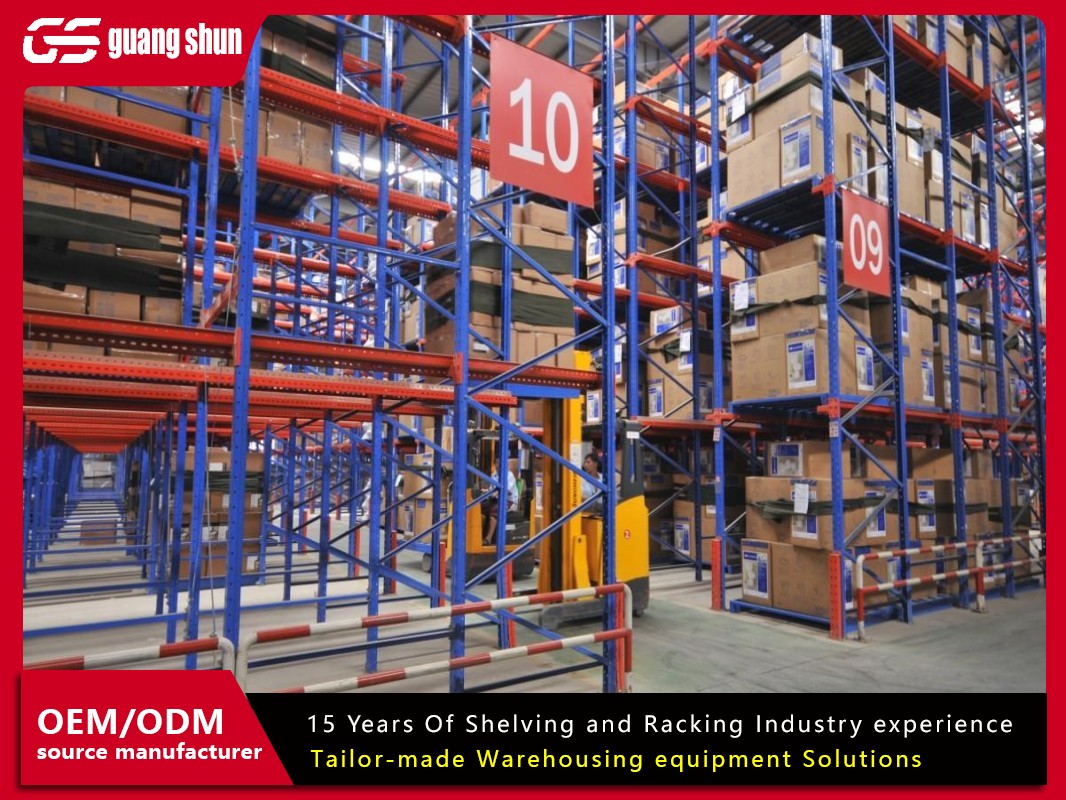
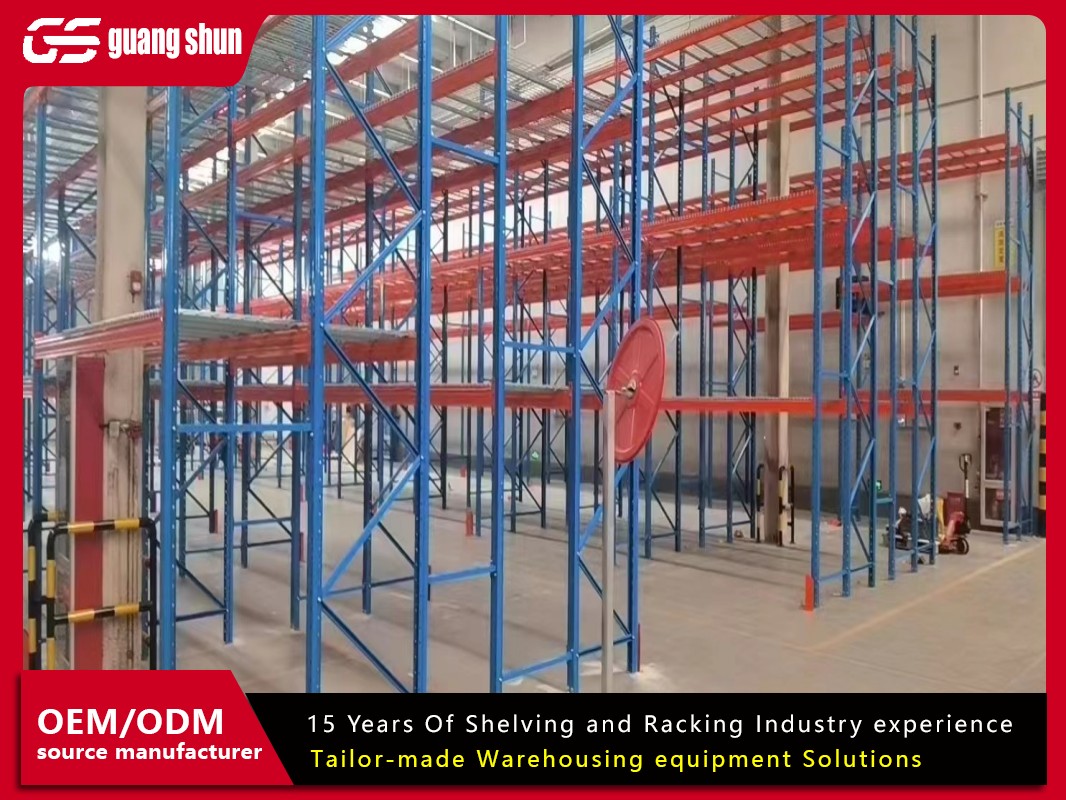
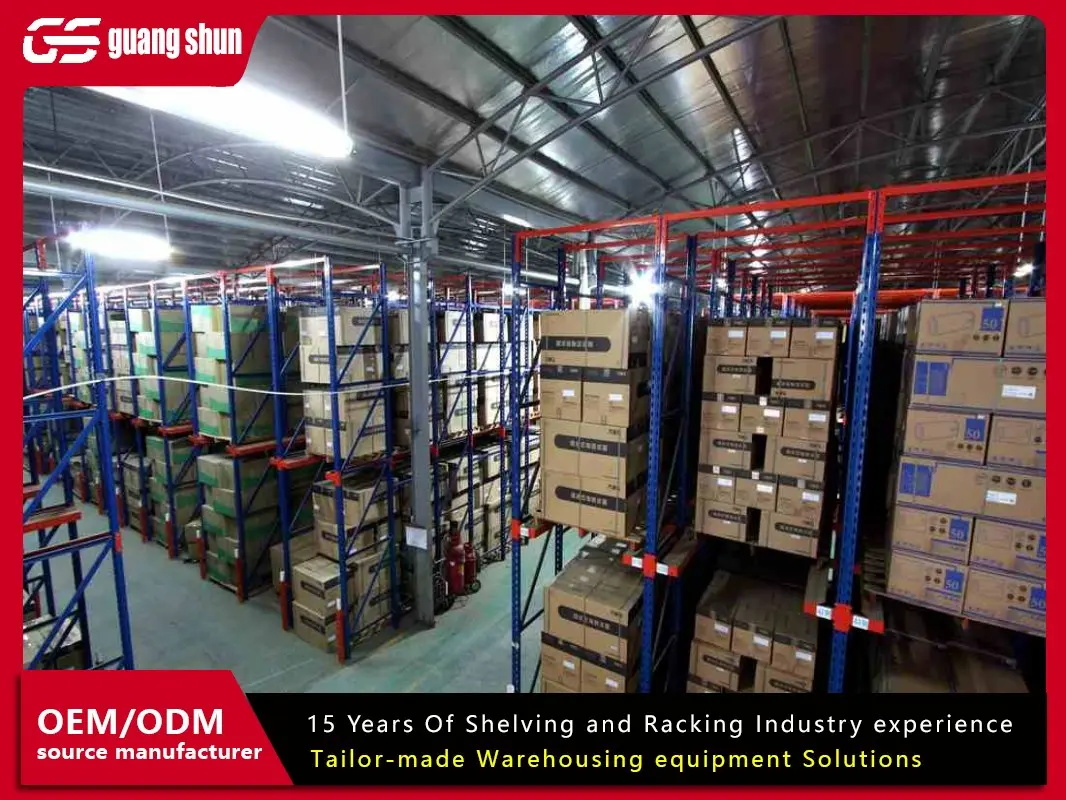
Standard pallet racking often fails when faced with non‑uniform loads, high seismic zones, or mixed storage media. custom warehouse racking eliminates these compromises through application‑specific geometry, material grades, and connection details. This article provides a quantitative framework for engineers and facility managers to specify, validate, and deploy tailored steel structures that directly impact storage efficiency, inventory turnover, and long‑term operating cost.
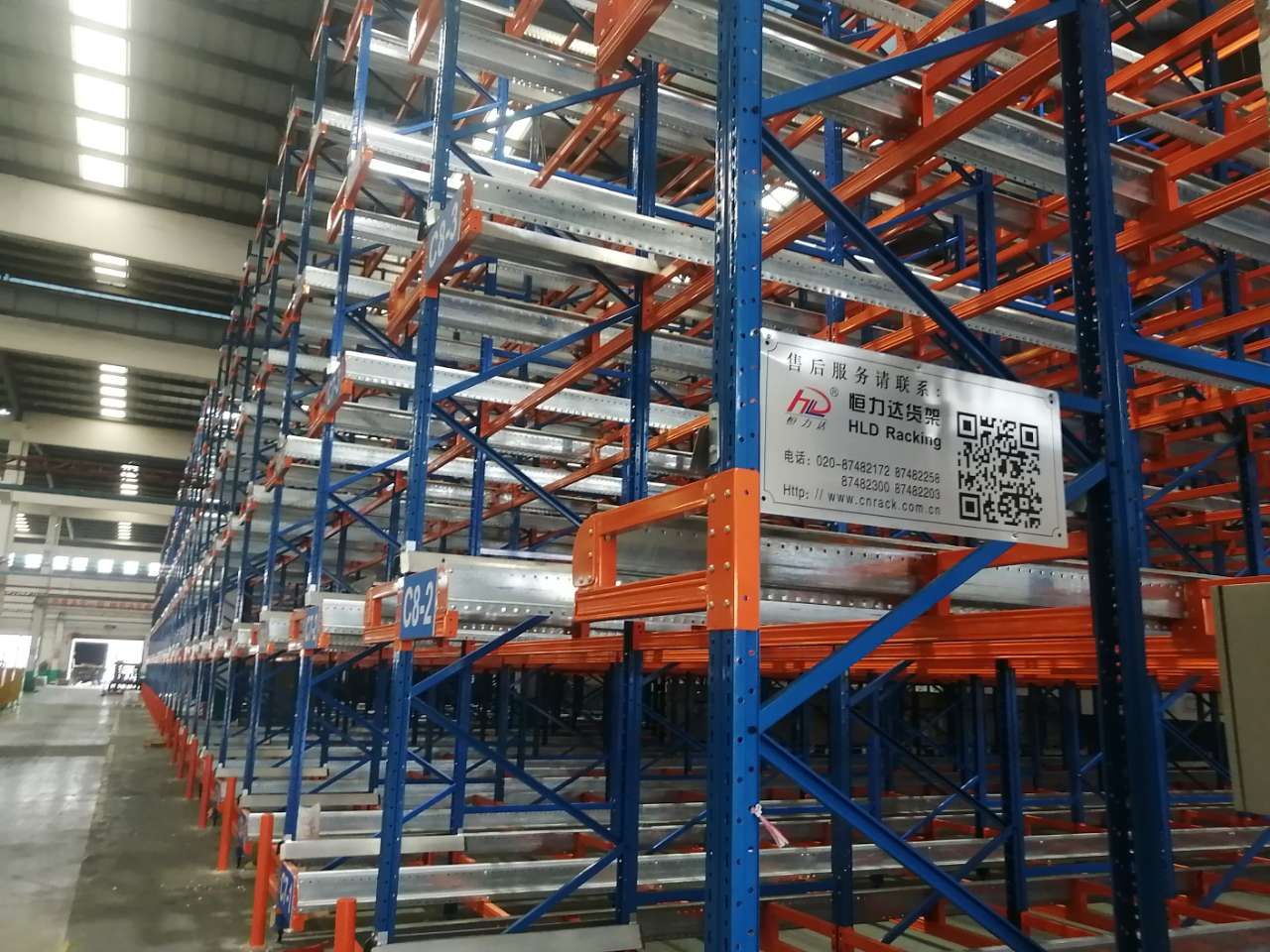
Off‑the‑shelf racking relies on fixed beam pitches, standard upright sections, and generic load tables. While acceptable for homogeneous pallet loads, real‑world warehouses face three core constraints:
Discrete beam levels – wasted cubic volume when handling mixed pallet heights (e.g., 800 mm automotive parts vs. 1,800 mm consumer goods).
Uniform load assumptions – cannot safely accommodate point loads from long cantilevered items or dense tooling bins.
Anchoring patterns – pre‑defined hole punching limits seismic and wind resistance in regions with high ground acceleration.
These limitations directly translate to lower storage density and higher product damage rates. A 2023 analysis of 62 mid‑sized distribution centers showed that 78% of facilities using standard selective racking operated at less than 65% of theoretical vertical capacity due to beam‑level mismatches.
Designing a bespoke steel structure begins with five interdependent variables. Each must be modelled using finite element analysis (FEA) and validated against local building codes (e.g., RMI ANSI MH16.1‑2020, FEM 10.2.08).
Upright depth (typically 80 mm to 150 mm) and coil thickness (1.8 mm – 3.0 mm Q355B high‑strength steel) determine column buckling resistance. For custom warehouse racking projects involving double‑deep or drive‑in configurations, tapered uprights with variable hole punching (50 mm pitch at lower sections, 75 mm above 4 m) improve both stability and adjustability. Load per leg often exceeds 12 tons in high‑bay automated systems, requiring closed‑section profiles or reinforced back‑to‑back columns.
Step increments (50 mm vs. standard 75 mm) directly affect vertical space utilization. For mixed SKU environments, custom racking employs a 50 mm beam pitch combined with keyhole‑and‑stud connectors featuring anti‑lift tabs. This configuration reduces vertical waste by up to 22% compared to standard boltless systems. Welded box beams (120×60×3 mm) are specified when fork‑truck impact is frequent, while roll‑formed C‑beams remain cost‑effective for light‑duty zones.
The economic case for tailored structures becomes evident in three distinct operational profiles.
Thermal contraction and expansion cause standard racking to lose connection preload, leading to sway and product loss. Custom designs use galvanized steel with specified thermal expansion coefficients matched to concrete slab anchors. A frozen food warehouse in Rotterdam implemented custom warehouse racking with pre‑stressed horizontal diagonals, reducing structural drift from 18 mm to 4 mm during freeze‑thaw cycles, while increasing pallet positions by 31% through narrow‑aisle adaptation (2.2 m aisle width).
Standard racking without dissipative connectors often collapses during >0.4g PGA events. Custom solutions incorporate slotted base plates, energy‑absorbing sway braces, and pendulum dampers. A project for a Chilean wine exporter required racking designed for 0.6g PGA with 2% residual drift. Post‑installation shake‑table tests validated a 43% reduction in peak floor reaction compared to code‑minimum designs.
AS/RS shuttles demand micron‑level rail alignment and vertical straightness of ±1.5 mm over 12 m heights. custom warehouse racking for these environments uses laser‑cut base plates and bolted moment connections instead of friction‑fit clips. Every upright is surveyed during installation with total station equipment, guaranteeing rail flatness within 1/1000. A Spanish automotive supplier achieved 99.2% system uptime after switching from standard to custom‑machined uprights.
Beyond initial fabrication costs, three metrics define total cost of ownership over a 15‑year horizon.
Storage density (positions/m²) – custom layouts typically yield 25‑40% higher density via variable beam heights, reduced aisle widths (by 200‑400 mm), and integration of cantilever sections for long goods.
Labor productivity (picks/hour) – zone‑optimized beam levels reduce vertical lift distances; case study data shows a 17% reduction in travel and lift time after custom reconfiguration.
Damage & maintenance cost – standard racks suffer 2.3× more fork‑truck impact damage due to mismatched base‑plate anchoring and lack of protective end‑of‑row designs. Custom racking integrates corner guards, impact‑absorbing footplates, and replaceable column sleeves, cutting annual repair spend by over $12,000 per 1,000 positions.
For a 10,000‑pallet facility, the upfront premium of 18‑22% for custom engineering is recouped within 2.1 years through higher density and lower labor costs, based on European Logistics Association benchmarks.
Reliable custom racking projects follow a five‑stage technical process. Guangshun applies this methodology across automotive, food, and e‑commerce sectors, with ISO 9001:2015 certified fabrication.
Stage 1 – Load spectrum analysis: 72‑hour inventory sampling to map weight, dimensions, and handling frequency per SKU.
Stage 2 – 3D structural simulation: FEA models including dynamic braking forces from shuttles or reach trucks.
Stage 3 – Punching & welding pattern optimization: custom hole matrices for uprights to allow future reconfiguration.
Stage 4 – Hot‑dip galvanizing or powder coating: thickness verified to ISO 1461 (85 µm minimum).
Stage 5 – Laser‑aligned installation: digital torque monitoring for all bolted connections.
Guangshun provides on‑site seismic anchoring verification and issues an engineering stamp for projects in seismic zones. Their proprietary beam‑to‑upright connector, tested to 1.5× nominal load, eliminates the loosening issues seen in competitive boltless systems.
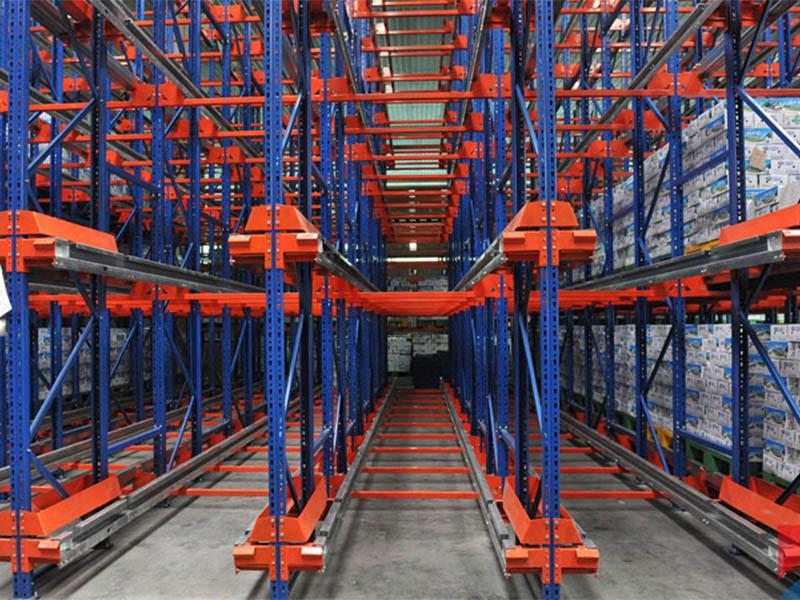
Even well‑designed systems fail if three factors are overlooked during specification.
Floor flatness & slope: custom racking with rigid base plates requires Fmin ≤ 1.5 mm over 3 m. Many warehouses skip laser profiling, resulting in twisted uprights and uneven load distribution. Remediation costs average $8,000 per 1,000 m².
Future SKU evolution: over‑specialization for current products. Optimal design uses modular uprights with spare hole patterns to adjust beam levels for +/‑ 300 mm height changes without welding.
Fire protection coordination: custom racking changes water spray obstruction patterns. Always recalc ESFR sprinkler coverage with the structural design. custom warehouse racking drawings must include CFD fire simulation notes.
When these aspects are addressed, custom systems outperform standard racking on both safety and flexibility metrics.
The next generation of custom warehouse racking integrates embedded load cells and IoT tilt sensors. Real‑time beam deflection monitoring (accuracy ±0.2 mm) alerts operators to overloading or impact damage. A pilot project by a French logistics provider using Guangshun‑designed instrumented uprights reduced inspection downtime by 67% and prevented two imminent collapse events. Additionally, parametric design software now generates optimized rack geometries directly from WMS order data – a shift from “static custom” to “continuously adaptive” steel structures.
Q1: What is the typical lead time for a fully engineered custom
warehouse racking project (design + fabrication +
installation)?
A1: For a 5,000‑pallet system, the
timeline breaks down as: structural engineering & FEA (2‑3 weeks),
fabrication of non‑standard uprights (4‑6 weeks), hot‑dip galvanizing (1 week),
and laser‑aligned installation (2‑3 weeks). Total typical lead time is 10‑14
weeks. Expedited projects with existing certified drawings can be reduced to 6
weeks using pre‑rolled steel stock.
Q2: How is seismic safety validated for custom racking above 12 m
height?
A2: According to RMI/ANSI MH16.1‑2020,
custom designs require non‑linear pushover analysis. Key outputs: inter‑story
drift ≤2% of height and ductility factor µ ≥4. For heights >12 m, additional
pendulum dampers or viscous wall dampers are often specified. Third‑party
shake‑table testing is mandatory for projects in seismic design category D/E.
Guangshun provides full simulation reports certified by European and North
American engineering bodies.
Q3: Can custom racking be reconfigured if my product mix changes
dramatically after 3 years?
A3: Yes, provided the
original design included modular hole patterns (50 mm pitch on two faces) and
bolted beam connections instead of welded assemblies. Uprights should use
reversible base plates. Reconfiguration cost typically ranges 15‑20% of initial
installation, far below the 70‑80% cost of replacing standard racking. Always
request a “future‑proofing” addendum in the initial engineering contract.
Q4: What surface protection is recommended for custom racking in
high‑hygiene (food/pharma) environments?
A4: Hot‑dip galvanizing to ISO 1461 (minimum 85 µm zinc) followed by epoxy powder
coating (60 µm) provides the best resistance to daily washdowns with acidic
detergents. Stainless steel uprights (grade 304 or 316) are used only for cold
rooms with direct brine exposure due to cost (4.5× galvanized steel). Avoid any
painted surfaces without zinc primer – they fail within 18 months under high
humidity.
Q5: How do I calculate the true load capacity of a custom racking
beam with non‑standard holes?
A5: Use the effective
net section method per AISI S100. For beams with punched holes, capacity
reduction factor φ = (width – Σ hole diameters) / width. Example: 120 mm wide
beam with three 14 mm holes = (120‑42)/120 = 0.65. Then apply safety factor 1.67
for static loads. Always demand a certified load test report from the fabricator
– reputable suppliers like Guangshun include this documentation with
each unique beam profile.
Q6: What is the maximum allowable upright deflection under rated load
for custom racking?
A6: Horizontal deflection at
beam level should not exceed H/180 (where H = height from floor to beam). For a
10 m high rack, maximum lateral drift is 55 mm. Vertical settlement at base
plates ≤3 mm. These limits prevent load dislodgement and maintain automated
shuttle guidance. Custom racking designs often achieve tighter limits (H/250) by
using thicker 3.0 mm uprights or additional sway bracing.
Engineering custom warehouse racking eliminates the compromises of generic steel structures. By applying load‑specific geometry, seismic validation, and future‑proof connection details, facility owners achieve higher storage density, lower damage rates, and full AS/RS compatibility. For projects requiring certified FEA and turnkey installation, consult an engineering‑led manufacturer like Guangshun to move from conceptual layout to commissioned system within a defined risk framework.

 Wechat
Whatsapp
Wechat
Whatsapp