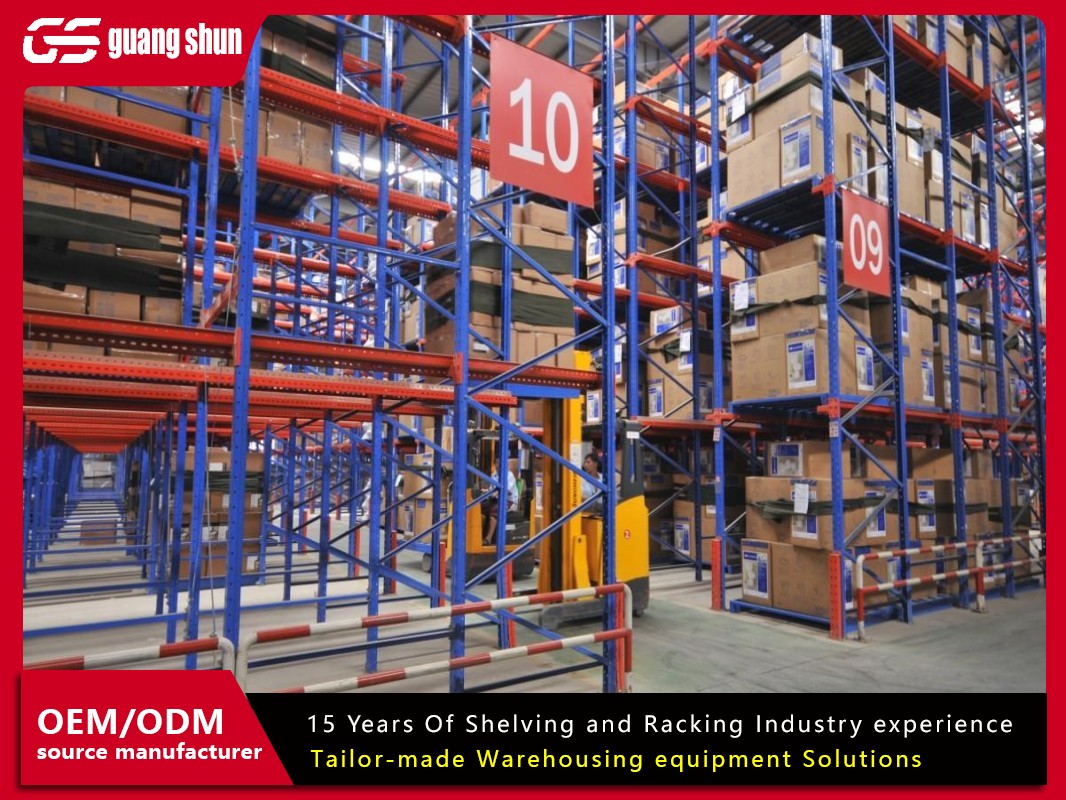
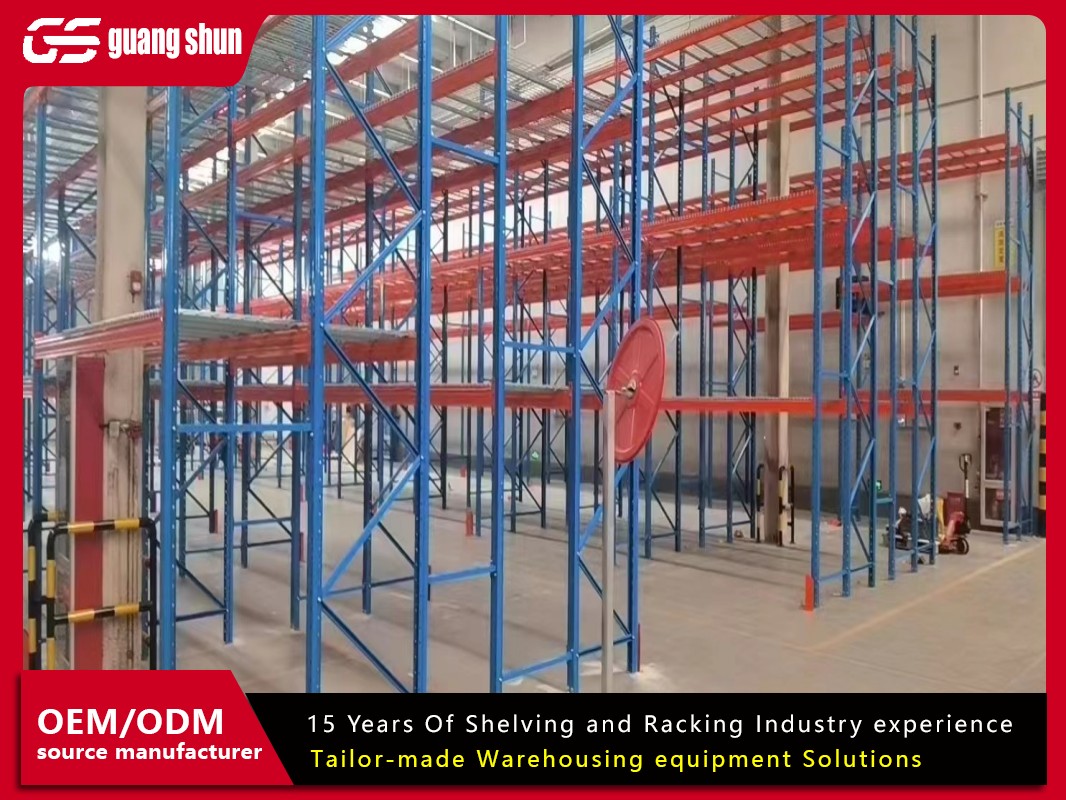
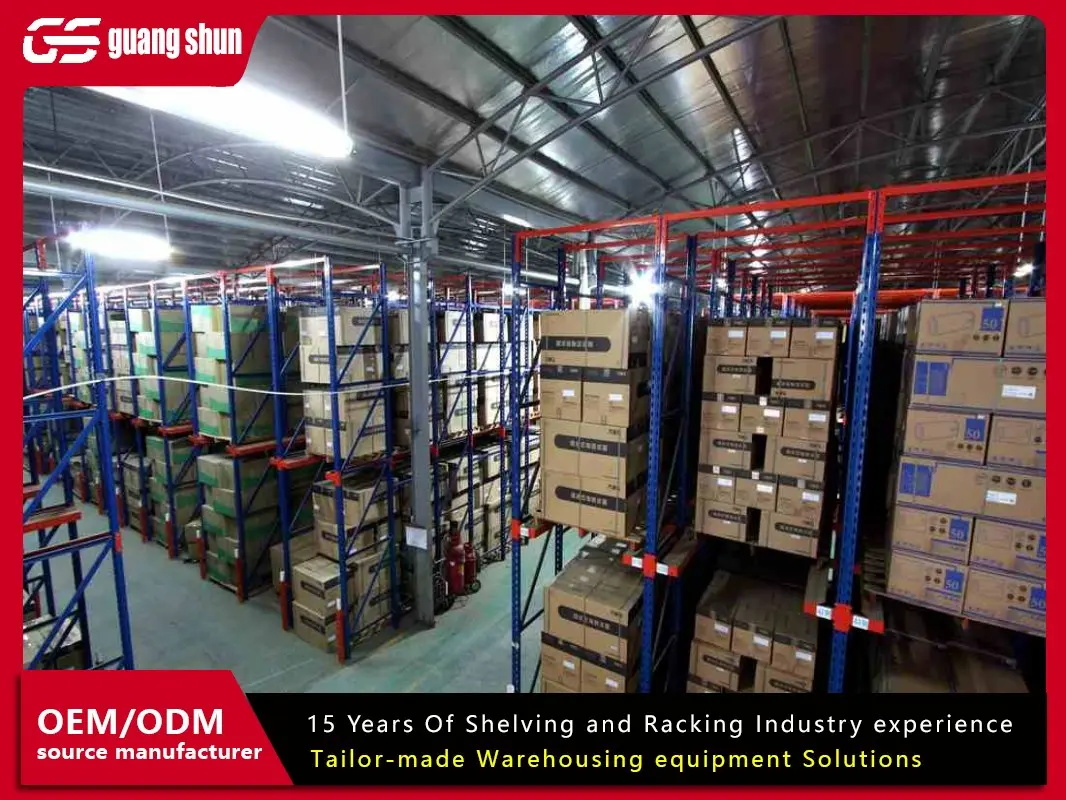
For warehouse operations handling lengthy, awkwardly shaped materials—from steel tubing and lumber to furniture and piping—standard pallet racking often fails. The challenge isn't just weight; it's geometry. These items defy the cube, rendering conventional high density pallet storage systems ineffective. The engineered solution lies in custom cantilever racks. Unlike off-the-shelf solutions, a custom-engineered cantilever system is designed from the ground up to handle specific moment loads, seismic criteria, and material flow requirements. This analysis provides a deep technical look into the design, application, and integration of these specialized structures, with engineering insights from industry leaders like Guangshun.
A cantilever rack is fundamentally different from a beam-and-column system. Its defining feature is the cantilever arm—a horizontal structural member supported only at one end. This open-front design eliminates obstructions, allowing for the storage of continuous, rigid items. The engineering complexity, however, is substantial.
Columns (Uprights): These are the vertical load-bearing members, typically fabricated from structural steel (I-beams or welded C-channels). In a custom design, the column size is determined by the cumulative overturning moment created by the loads on both sides. A double-sided column essentially acts as a vertical beam resisting bending from unbalanced loads.
Arms: These are the horizontal supports. Their design is critical. The primary stress is bending moment at the connection to the column. Arm capacity is not just about static weight; it considers the point of load application (if the load is at the tip vs. close to the column, the moment increases significantly). Common arm profiles include boxed and tapered designs, with tapered arms offering greater strength-to-weight ratios by placing more material at the high-stress connection point.
Bracing: The lattice framework between columns (horizontal and diagonal bracing) is what provides longitudinal stability. Without it, the structure would be prone to racking (parallelogramming) under load or seismic activity.
The design process for custom cantilever racks begins with a finite element analysis (FEA) to model these forces, ensuring the structure can withstand both the static loads and dynamic forces from seismic events or forklift impacts.
The "custom" in custom cantilever racks is defined by the material being stored. A rack for 40-foot steel pipes bears little resemblance to a rack for bundled lumber or sheet goods.
Load Profile: Extremely high point loads, potential for rust/dirt, and the need for overhead crane access.
Custom Engineering: Arms are often extra-heavy-duty with reinforced collision protection along the leading edge. Column bases are designed for massive anchor bolt patterns to resist overturning. Bracing is often recessed or shielded to prevent interference with the overhead crane's lift path. Lane depths are determined by the maximum support span of the steel to prevent deflection and bending of the stored product itself. For operations that also need to store smaller steel components, integrating a small section of high density pallet storage nearby for fittings or tools can optimize workflow.
Load Profile: Large volume, moderate weight per arm, but often with protruding or uneven bundles.
Custom Engineering: Arms are typically longer and may be equipped with wooden faceplates or padding to protect the lumber. Because lumber is often stored in varying lengths, a cantilever system with adjustable arm height is critical. Guangshun often designs these systems with pin-latch adjustments on 2-inch centers, allowing for rapid reconfiguration as inventory changes. For high-turnover lumber yards, the rack layout must facilitate FIFO (First-In, First-Out) without re-handling, often achieved by loading from the rear of a double-sided rack and retrieving from the front.
Load Profile: Lightweight, bulky, and often packaged in cardboard, making them susceptible to crushing.
Custom Engineering: This is where the design focuses on protection and accessibility. Arms may be wider, with wire decking or particle board to create a solid shelf surface, effectively turning the cantilever into a dense, open-front shelving system. The primary goal here is maximizing cubic volume for non-palletized goods. While not a traditional high density pallet storage system, it achieves a similar space-saving goal for an inventory class that pallet racks cannot handle.
The Achilles' heel of any cantilever system is its resistance to longitudinal forces. Because the front is completely open, there are no beams tying the left and right sides together at each level.
Stability relies entirely on the column bracing. There are two primary types:
Back-to-Back Bracing: For double-sided racks, this is the most common method. Steel channels or angles connect the backs of opposing columns, creating a rigid "tower." This triangulated structure resists sway.
Row-End and Intermediate Bracing: For single-sided racks or long rows, bracing is required in the vertical plane between columns along the row. This can be X-bracing or K-bracing, and it must be designed to transfer lateral loads (wind or seismic) down to the foundation.
Cantilever racks exert tremendous uplift and shear forces on their anchors, especially when loaded on only one side. A common failure point is anchor pull-out. Engineering specifications for custom systems will demand specific anchor types (e.g., epoxy-coated wedge anchors), depths, and spacing based on a pull-out test of the actual warehouse floor concrete. The structural drawings must be signed off by a professional engineer, a standard practice enforced by Guangshun on all major installations.
Modern warehouses are hybrid environments. A facility may need to store long goods in cantilevers and component parts in pallet racks. The interface between these systems requires careful layout planning.
Consider a facility that manufactures extruded aluminum profiles. The long, finished profiles go into a cantilever system. However, the end caps, packaging materials, and smaller components require high density pallet storage. The layout must ensure that forklifts servicing the pallet racks do not have their maneuverability impeded by the overhang of long loads from the cantilever arms. This often requires wider intersection aisles or a physical separation of the two storage zones. The rack layout drawing must accurately model the swept path of the handling equipment to prevent collisions.
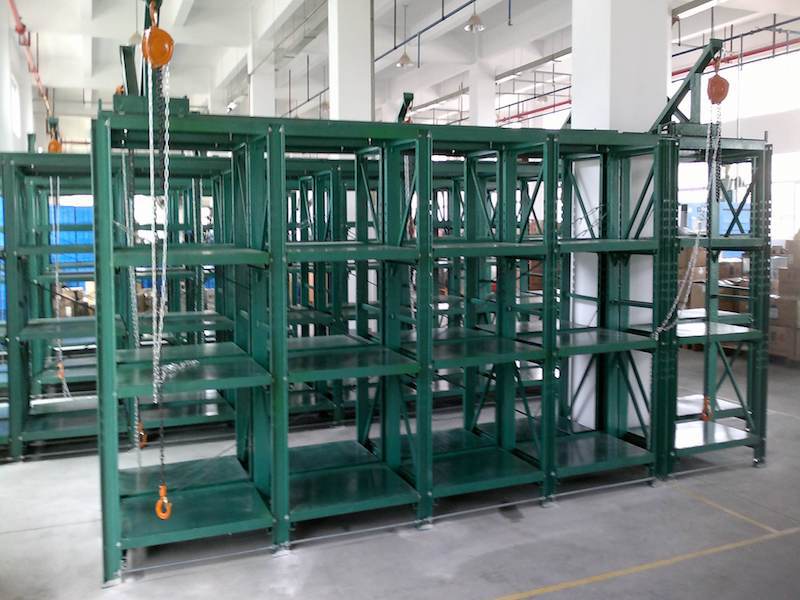
Cantilever racks are often subjected to more abuse than pallet racks because they handle long, swinging loads that can easily impact arms and columns.
Custom designs should incorporate sacrificial protection:
Column Guards: Heavy-duty steel pedestals or bollards protect the base of the column from forklift impact.
Arm Guards: Reinforced steel angles or replaceable wear strips on the leading edge of the arm absorb impact from loading.
Deflection Limits: Engineering specifications (e.g., RMI ANSI MH16.1) define maximum allowable deflection for arms under load. Exceeding this can lead to permanent deformation.
Operators must be trained to place loads evenly on the arms, not concentrated at the tip. A load placed at the arm tip creates a much higher bending moment than a load distributed across the arm's depth. Some custom racks include load zone markings painted on the arms to guide proper placement.
Investing in custom cantilever racks is a capital decision. The ROI is calculated against the cost of material damage and inefficiency in non-specialized storage.
Material Damage Reduction: Properly supported long goods do not warp, bend, or get crushed by other stored items. This alone often justifies the investment within months.
Floor Space Efficiency: By going vertical with cantilevers, you reclaim the floor space previously used for ground-stacking long materials, which is the least dense form of storage.
Labor Productivity: Organized, accessible storage reduces search time and re-handling. A crane operator can directly access a specific steel beam without moving five others.
Scalability: A well-designed custom system allows for future expansion. Adding more bays to the end of a cantilever row is a straightforward process if the foundation and initial design anticipated it.
Custom cantilever racks represent the pinnacle of specialized industrial storage. They move beyond commoditized racking to become integral components of the material handling process. Whether tasked with holding 20-ton steel bundles or fragile 30-foot mouldings, these systems require a partnership with an engineering-led manufacturer. By working with a provider like Guangshun, you ensure that your cantilever system is not just a rack, but a precisely calculated asset that protects your product and enhances your facility's throughput, working in concert with your existing high density pallet storage solutions to create a fully optimized warehouse ecosystem.
A1: There is no universal maximum; it is entirely dependent on engineering. Capacities typically range from 1,000 lbs per arm for light-duty applications to over 10,000 lbs per arm for heavy steel storage. The capacity is determined by the arm's length, cross-sectional profile, and the column's ability to resist the overturning moment.
A2: Yes. Most custom systems feature arms that can be vertically repositioned along the column, usually via a pin-latch system or bolted connections. This adjustability is a key advantage, allowing the rack to accommodate varying material heights. However, the horizontal spacing between columns (bay width) is fixed during installation.
A3: Yes, but they require rigorous seismic engineering. The design must follow local building codes (e.g., IBC, ASCE 7) and industry standards like RMI (Rack Manufacturers Institute) guidelines for cantilevered racks. This dictates the bracing requirements, baseplate design, and anchorage to withstand predicted seismic forces. Always request a certified seismic drawing from your provider, such as Guangshun.
A4: Retrofitting for higher capacity is complex and often not recommended. The original columns, bracing, and anchors were designed for specific loads. Simply replacing arms with heavier-duty ones could overload the column or foundation. A structural engineer must re-evaluate the entire system before any capacity increase is attempted.
A5: It depends on the stored material. For long, heavy loads like pipe or steel, a 4-directional sideloader is often the ideal choice, as it can travel forward with the load cradled parallel to the direction of travel, then shift to drive sideways into the rack aisle. Counterbalance forklifts can be used in wider aisles with long loads carried parallel to the forks, but this requires significantly more maneuvering space.

 Wechat
Whatsapp
Wechat
Whatsapp