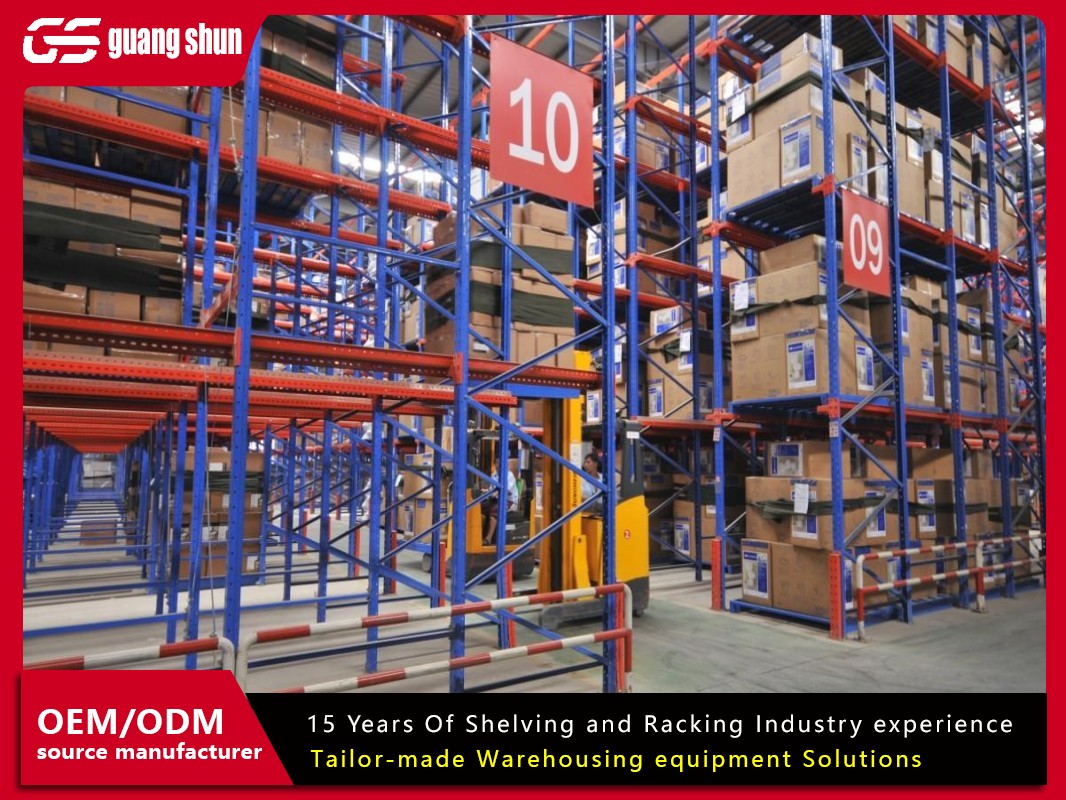
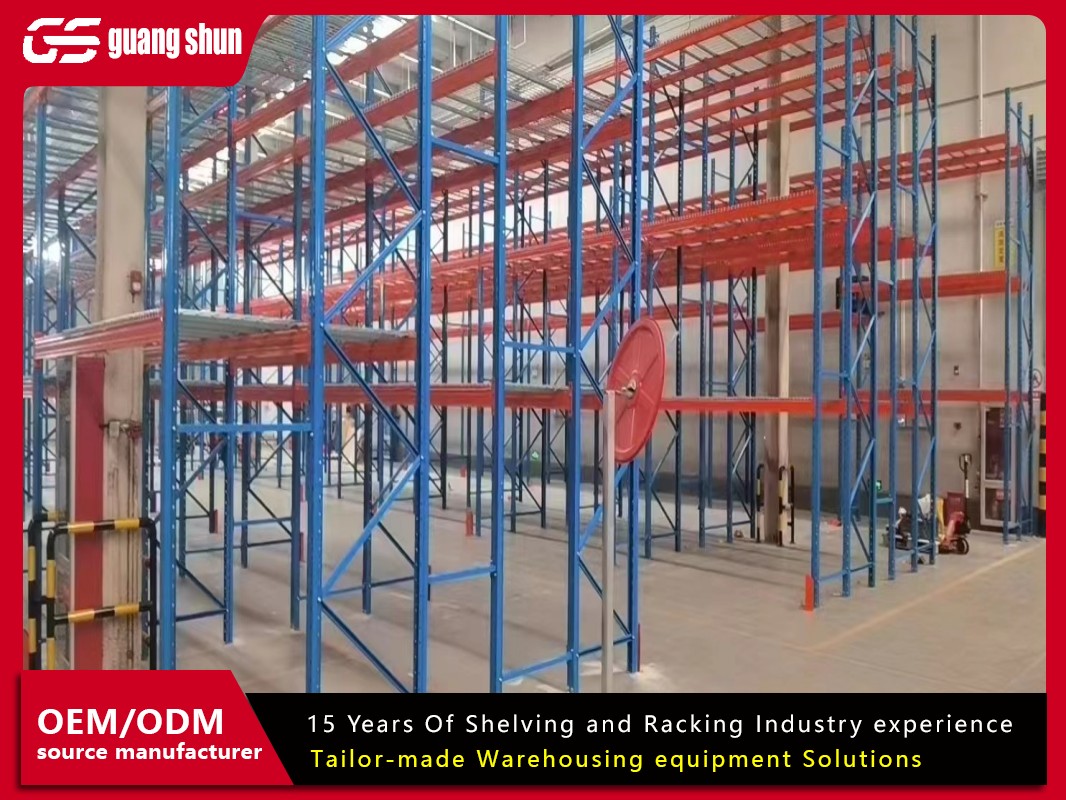
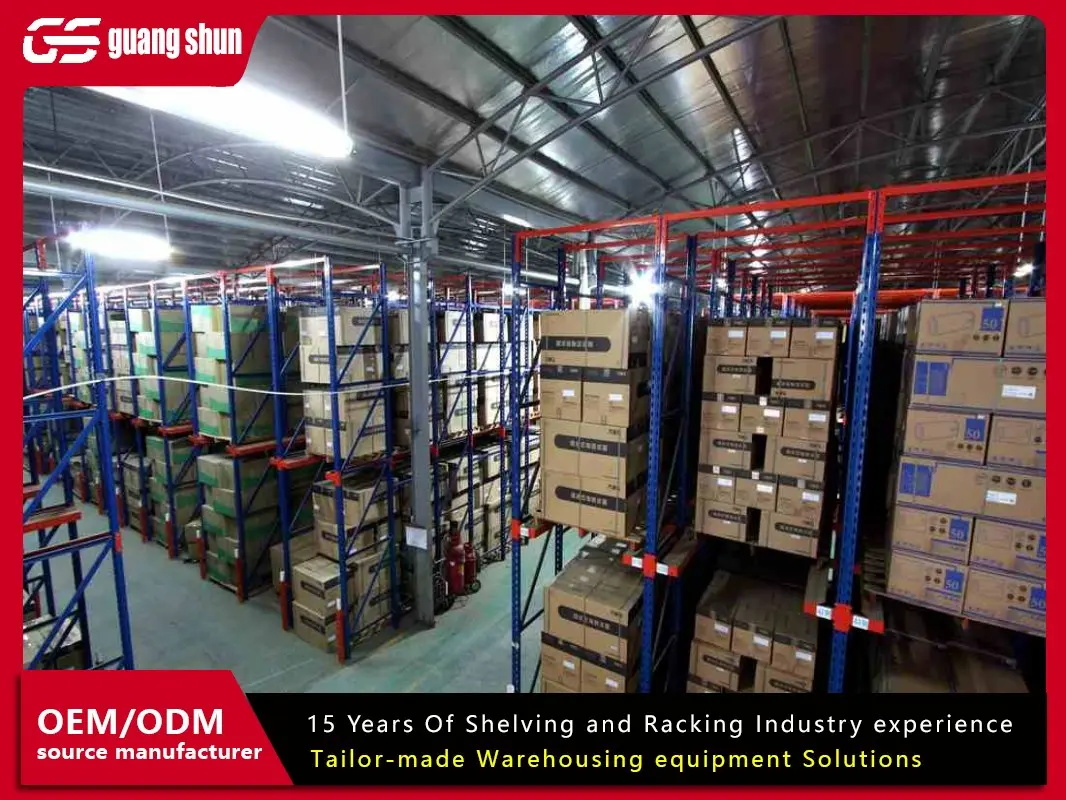
For logistics and supply chain managers, the pressure is relentless: reduce operational costs while increasing throughput, all within an existing four-wall footprint. Expanding the warehouse is often not an option, or economically prohibitive. The solution lies not in horizontal expansion, but in vertical optimization. Implementing a truly effective high density pallet storage strategy is the single most impactful way to unlock latent capacity. This analysis moves beyond basic definitions to explore the engineering principles, application-specific configurations, and financial justifications of these systems, with insights from industry leaders like Guangshun.
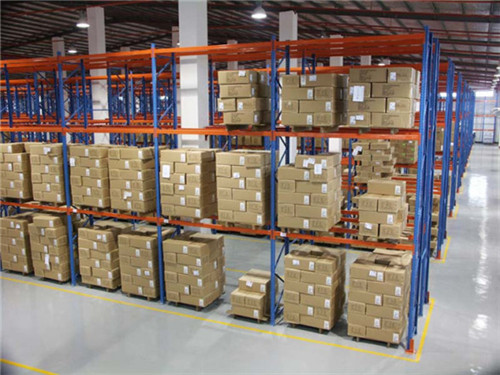
The term "high density" is often misused. In engineering terms, true high density pallet storage refers to systems where pallets are stored in the deepest possible configuration relative to the number of access aisles. Standard selective racking dedicates an aisle to every row of racks, wasting up to 60% of your floor space on aisles. Dense storage systems reclaim this space by reducing or eliminating aisles, forcing a trade-off between accessibility and storage capacity.
The choice of system dictates your warehouse's volumetric efficiency. Consider a facility with 1,000 pallet positions required:
Selective Rack: Requires approximately 25,000 sq. ft. (Baseline).
Drive-In Rack: Can house the same 1,000 pallets in roughly 15,000 sq. ft. – a 40% reduction in floor space.
Pallet Flow / Push Back: Offers a 30-35% space saving over selective, but with better selectivity than drive-in.
This isn't just about storing more; it's about lowering your cost per pallet position. Guangshun's engineering teams often begin projects by calculating this "cube utilization" to prove ROI before the first rack is fabricated.
Selecting the right high density pallet storage architecture requires a forensic analysis of your SKU velocity and handling characteristics.
Application: Best for large quantities of homogeneous, non-perishable goods where pallets don't need frequent rotation, such as bulk raw materials or seasonal finished goods.
Technical Consideration: Drive-in racking operates on a Last-In, First-Out (LIFO) basis. Forklift drivers enter the rack structure to deposit or retrieve pallets. Rail-supported lanes, often 5 to 10 pallets deep, guide the truck. The structural integrity relies on horizontal bracing to handle the dynamic forces of a moving 3-ton forklift inside the structure. Tolerance is critical; a deviation of just ½ inch in rail alignment can cause operational bottlenecks and product damage.
Application: Ideal for intermediate inventory with 2-3 pallets per SKU, operating on a LIFO basis. It offers better pallet access than drive-in without the complexity of gravity flow.
Technical Consideration: This system uses nested carts on inclined rails. When a pallet is placed, it pushes the existing pallets back one position. Retrieving a pallet reveals the next one, rolling forward to the front face. The mechanical simplicity (no gravity speed controls) makes it robust, but it requires consistent pallet quality to prevent carts from jamming.
Application: Essential for perishable goods, time-sensitive inventory, or operations requiring strict stock rotation. Ideal for high-volume distribution centers.
Technical Consideration: Pallet flow uses gravity to move pallets from the loading (rear) to the unloading (front) aisle on a slightly inclined track with speed controllers (brakes) embedded in the rails. The engineering challenge lies in calibrating these brakes to handle varying pallet weights and conditions. A mis-calibrated lane can lead to "racetracking" (pallets accelerating) or "stoppage" (pallets failing to flow), halting productivity.
Application: High-throughput warehouses with a mix of SKUs requiring immediate, random access.
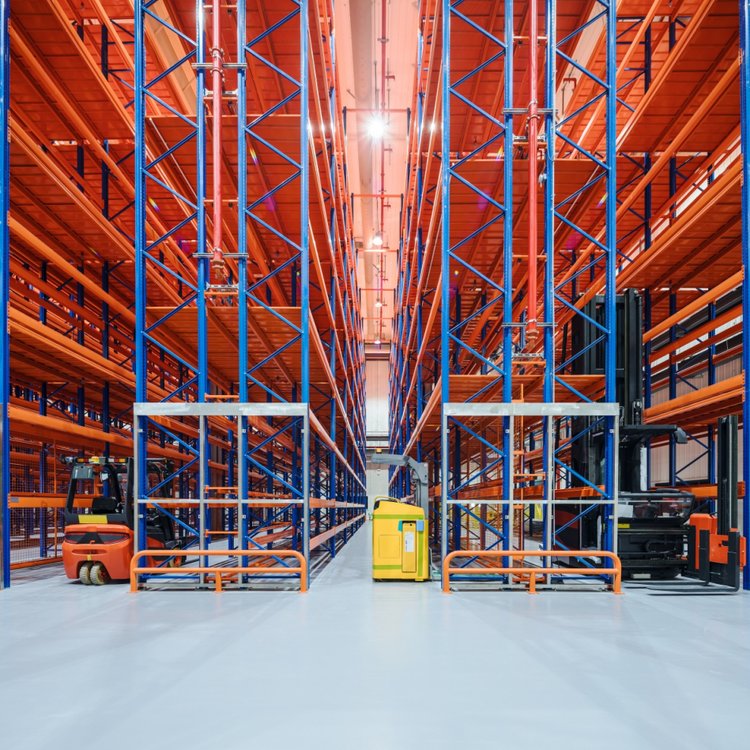
Technical Consideration: VNA isn't deep storage but high-density positioning. By reducing aisle width to just over 6 feet (compared to 12+ feet for counterbalance trucks) and utilizing turret trucks or wire-guided systems, you dramatically increase pallet positions per square foot. This requires a significant investment in floor flatness tolerances (often FM2 or better) and guidance systems, but it marries selectivity with density.
Adopting any form of high density pallet storage changes your material flow dynamics.
Access Time: In drive-in or deep-lane systems, accessing a pallet at the back of a lane takes significantly longer than in selective rack. This must be factored into your labor modeling.
Honeycombing: This is the critical inefficiency of deep storage. If you partially empty a lane (e.g., 5 pallets deep, you take the front 3), the remaining 2 pallets in the back are inaccessible until the lane is cleared. Effective warehouse management systems (WMS) must be programmed to minimize this wasted space.
Forklift Technology: Dense systems demand specialized trucks. Drive-in requires a truck with a strong mast and good visibility. Pallet flow and push back can often use standard counterbalance trucks, but VNA requires purpose-built turret or reach trucks. The integration of the rack system and the handling equipment is non-negotiable.
A frequent oversight in high density pallet storage design is seismic compliance. Because these systems hold more weight in a smaller footprint, the dynamic loads on the rack structure during an event are immense.
Guangshun emphasizes the use of FEA (Finite Element Analysis) in design to model these forces. In high-density configurations, standard connections may not suffice. Upgrading to heavier column sections, increasing the number of anchor points, and adding supplemental cross-aisle bracing are non-negotiable requirements in seismic zones. Furthermore, the interaction between the moving loads (pallets) and the structure must be considered, especially in pallet flow lanes where pallets are constantly in motion.
The next frontier is integrating automation with high density pallet storage.
AS/RS: Automated Storage and Retrieval Systems (AS/RS) can be integrated into high-density lanes, eliminating the need for a forklift driver to enter the structure. Cranes or shuttles operate autonomously within the rack, providing unparalleled accuracy and allowing for even greater height (up to 100+ feet).
Shuttle Systems: Battery-powered shuttles run on rails within each lane, depositing and retrieving pallets. This offers deep-lane storage with the ability to access any pallet in the lane (eliminating honeycombing) and is inherently FIFO-compatible, bridging the gap between density and selectivity.
Before committing to a system, calculate your effective storage capacity and cost per pallet. A project with Guangshun typically follows this financial model:
Land/Building Cost: Calculate the cost of the square footage you will save.
Operational Efficiency: Factor in the cost of longer travel times or honeycombing.
Product Protection: Factor in potential damage from forklifts entering structures (drive-in) versus the controlled flow of pallet flow.
Installation & Safety: Get a detailed engineering stamp and installation plan.
The goal is to find the "sweet spot" where the marginal gain in storage density outweighs the marginal loss in accessibility or increase in system complexity.
High density pallet storage is not a one-size-fits-all product, but a strategic tool. Whether you require the deep-lane capacity of drive-in, the rotational integrity of pallet flow, or the selective density of VNA, the engineering principles must align with your operational data. By partnering with an experienced fabricator like Guangshun, you ensure that your storage solution is a calculated investment in throughput and capacity, not just an equipment purchase.
A1: LIFO (Last-In, First-Out), used in drive-in and push-back racking, is best for non-perishable items where the newest stock is retrieved first. FIFO (First-In, First-Out), used in pallet flow racking, ensures older stock is used first, which is critical for perishable goods or items with expiration dates.
A2: Lane depth varies by system. Drive-in racking commonly ranges from 3 to 10 pallets deep. Pallet flow and push-back systems are typically 2 to 5 pallets deep. The optimal depth depends on your SKU velocity and the acceptable level of honeycombing.
A3: It depends on the system. Standard counterbalance forklifts can be used with pallet flow, push-back, and the entry level of drive-in racking. However, VNA (Very Narrow Aisle) systems require specialized turret trucks or reach trucks with wire or rail guidance. Always verify your truck's turning radius and mast height against the system's specifications.
A4: Yes, but it requires specific engineering. The system must be designed by a structural engineer using seismic coefficients for your specific region. This involves heavier steel gauge, more anchor points, and specific bracing patterns. Always ensure the manufacturer, like Guangshun, provides a certified seismic analysis.
A5: Honeycombing is the creation of unusable empty spaces within a deep storage lane. For example, if you remove two pallets from a five-deep lane, the two pallets at the back become inaccessible until the front positions are refilled and cleared again. This reduces your effective storage capacity and must be managed by a smart WMS.

 Wechat
Whatsapp
Wechat
Whatsapp