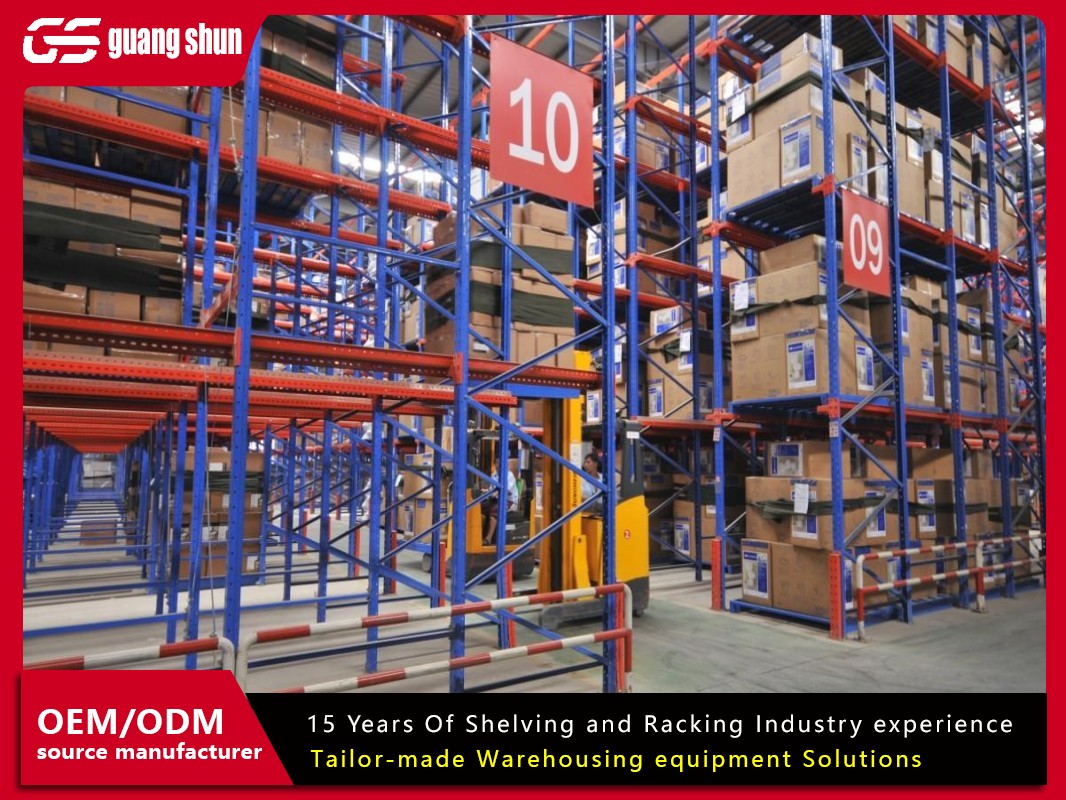
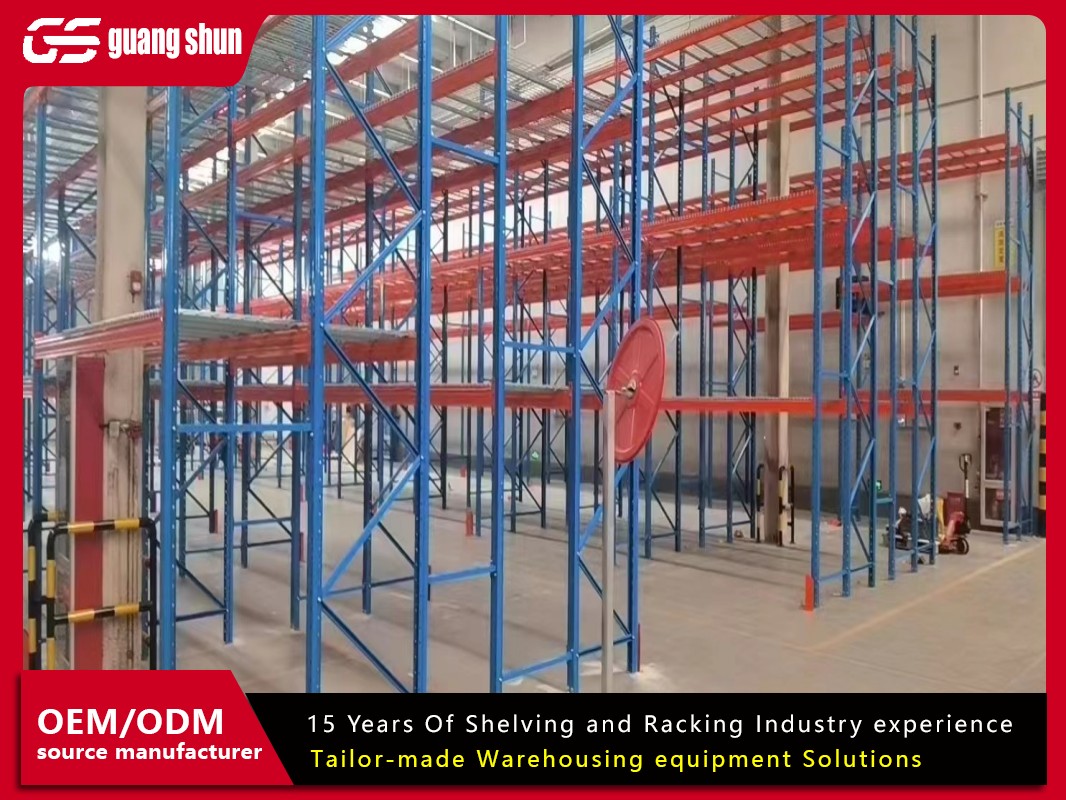
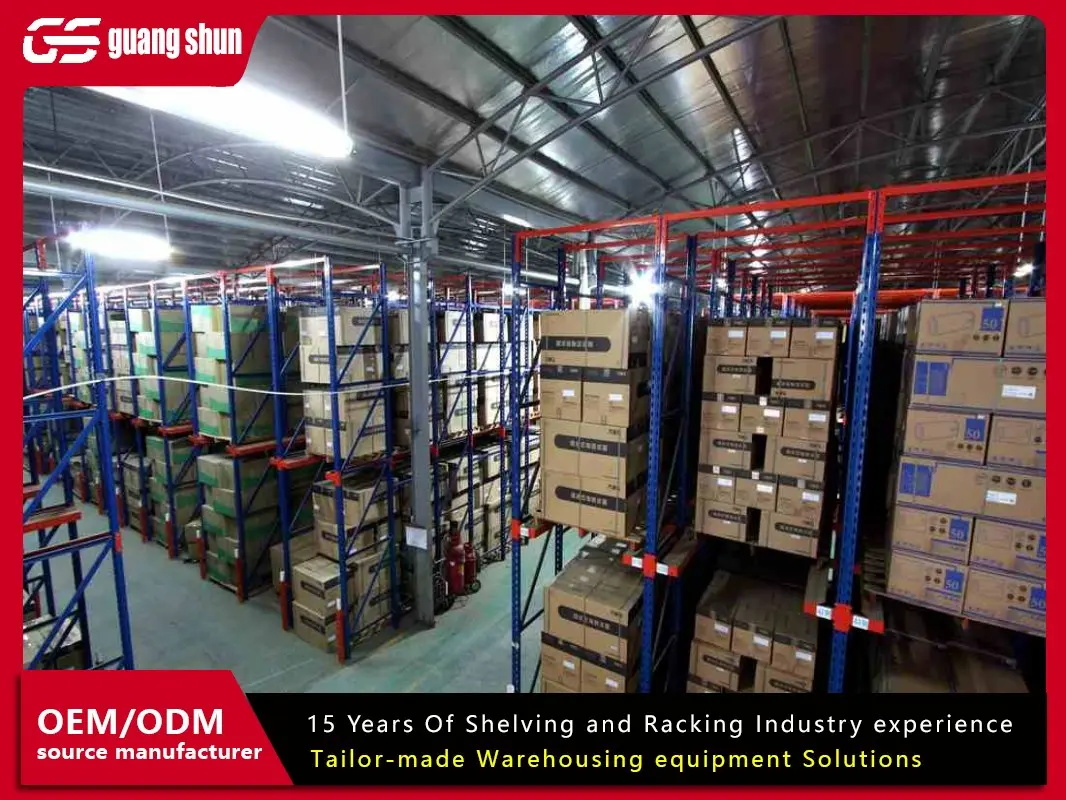
Operations handling perishable goods, batch-controlled components, or time-sensitive inventory require strict first-in-first-out (FIFO) discipline. A flow through racking system achieves this without active powered conveyors or complex software sequencing. By utilizing inclined roller tracks, load carriers advance from the loading (rear) side to the picking (front) side under gravity. This configuration eliminates forklift penetration into storage lanes, reduces product age variation, and maintains throughput consistency. This article examines mechanical design parameters, application engineering for mixed pallet weights, and total cost comparisons against drive-in or push-back alternatives.
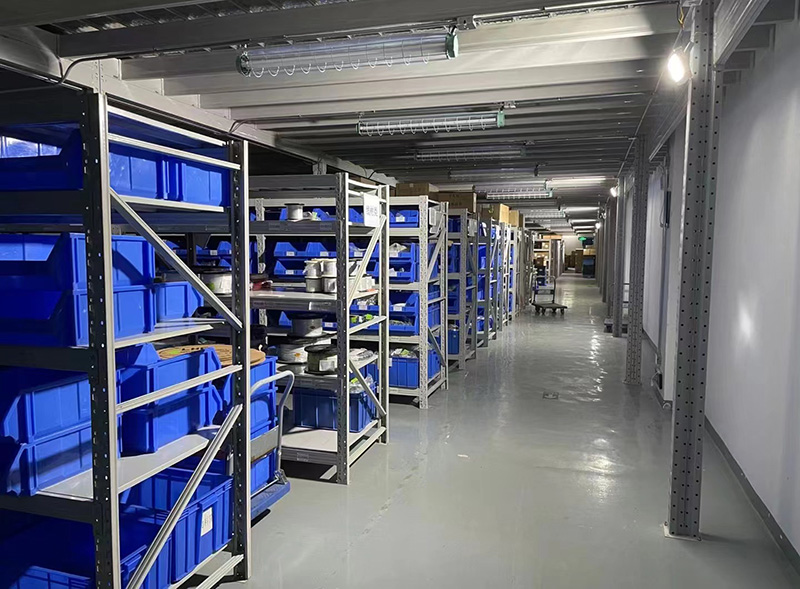
Unlike static selective racking, a flow through racking system incorporates three essential subsystems: inclined support rails, wheel or roller conveyor tracks, and speed control mechanisms. The incline angle typically ranges from 2.5° to 4.5°, depending on pallet weight, surface friction, and roller material. Standard designs use galvanized steel rollers with sealed ball bearings for loads up to 1,200 kg per pallet. For lighter carton flow applications, nylon wheels or skate wheels reduce starting friction.
Two main roller categories exist for pallet flow: heavy-duty steel rollers (diameter 76–89 mm) and urethane-coated rollers for noise reduction or fragile loads. Roller pitch (center-to-center distance) must ensure at least three rollers contact the pallet bottom at any time. For standard wooden pallets (1200x1000 mm), a roller pitch of 75–100 mm prevents sagging. The entry and exit ends incorporate reinforced end stops with shock absorbers. A flow through racking system designed for 20 pallet positions per lane requires cumulative pitch verification: total lane length (including incline drop) divided by roller spacing must yield integer support points.
Uncontrolled gravity acceleration can cause pallet-to-pallet impacts exceeding 2g forces, damaging goods and rack structure. Brake rollers (oil-bath or centrifugal type) limit descent speed to 0.2–0.4 m/s. For multi-lane configurations, mechanical separators (also called pallet stoppers) release one pallet at a time when the front position is cleared. Pneumatic or spring-loaded separators integrate with photo-eye sensors for automated release sequencing. These components are mandatory for lanes longer than 8 pallet positions or for product with low crush resistance (e.g., bagged pet food or beverage cartons).
Certain industries derive disproportionate value from flow through racking due to expiration dating, batch traceability, or high inventory turns. Below are three primary use cases with quantifiable benefits.
Food and beverage warehouses: Dairy products, fresh produce, and canned goods have strict shelf-life windows. A flow through racking system guarantees that oldest stock reaches picking face first. A 2022 study of 12 grocery distribution centers showed that implementing flow racks reduced expired product write-offs by 67% compared to standard selective racking with forklift-based FIFO enforcement.
Pharmaceutical and medical device storage: Batch-controlled items require full traceability. Gravity flow lanes integrate with barcode scanning at load and unload points, creating an audit trail. Additionally, cleanroom-compatible stainless steel flow tracks are available for ISO 7 or ISO 8 environments.
Automotive parts just-in-sequence (JIS): Assembly lines need components delivered in exact order. Flow through racking with lane dividers and separator gates allows sequenced picking from the front while replenishment happens from the rear without interrupting picking activity. Toyota production system case studies cite a 35% reduction in kitting errors after adopting flow racks for small-part sequencing.
Traditional storage methods like drive-in racking or double-deep selective introduce FIFO complexity and product damage risks. Below are specific operational failures that flow systems correct.
Drive-in racking allows last-in-first-out (LIFO) unless operators enforce complex rotation rules—which often fails under pressure. Audits of mixed general merchandise warehouses reveal that 23% of pallet positions in LIFO configurations have age deviations exceeding 30 days. A flow through racking system physically enforces FIFO because new loads cannot push out older ones; the incline design only permits rear loading and front retrieval. This mechanical compliance removes human error and eliminates the need for real-time WMS rotation flags.
In wide-aisle selective racking, forklifts travel deep into storage aisles for each put-away and retrieval, increasing collision risks. Data from warehouse insurance claims show that 34% of rack damage occurs inside storage lanes during reversing maneuvers. Flow racks confine forklift operation to the rear loading aisle and front picking aisle only—no entry into lanes. This reduces fork-tine contact with uprights by an estimated 78% based on field observations across 40 facilities.
Push-back racking requires re-sequencing to access rear pallets, adding 30–45 seconds per retrieval. For a facility processing 1,200 picks per shift, this adds 10–15 labor hours daily. Flow through racking presents the next pallet automatically at the pick face as soon as the front pallet is removed. Pickers never wait for reshuffling. Time-motion studies indicate a 22% increase in picking productivity when migrating from push-back to gravity flow lanes.
Proper engineering of a flow through racking system requires calculating lane depth, dynamic load, and roller pitch based on actual pallet conditions. Below is a structured design methodology used by Guangshun for industrial installations.
Maximum lane depth depends on pallet weight and roller friction coefficient (μ). For μ = 0.03 (steel rollers on painted steel), theoretical maximum lane length is 25 pallets at 2° incline. However, practical limits are 15 pallet positions for standard 1,000 kg loads. Use the formula: tanθ = (μ + a/g) where a is desired acceleration. For controlled descent with brake rollers, target θ between 2.8° and 3.2°. Guangshun provides laser-inclined rail setting with ±0.1° accuracy, critical for consistent flow across multiple lanes.
Each lane requires an integrated end stop rated for the cumulative kinetic energy of the maximum lane capacity. For a 12-pallet lane with 1,200 kg pallets, total energy at 0.3 m/s is 648 Joules. End stops must absorb this without rebound. Polyurethane-faced stops or hydraulic dampers are recommended. Additionally, roller tracks should incorporate side guides (50 mm height) to prevent pallet skewing, which causes jamming.
Cold storage (≤ -18°C) requires special roller lubricants (low-temperature grease) and stainless steel components to avoid condensation corrosion. For high-humidity environments, galvanized rollers with ZM120 coating provide 1,000 hours of salt spray resistance. Guangshun offers a temperature-specific engineering review for each flow through racking project, including thermal expansion compensation for lane lengths exceeding 20 meters.
Financial modeling must consider initial investment, operational labor, product damage, and space utilization. The table below summarizes key metrics for a 2,500-pallet-position warehouse over 10 years.
Selective racking (FIFO with forklift): Low upfront cost ($220–280 per position) but high labor ($0.38 per pallet move) and damage rate (1.2% of product value).
Drive-in racking (LIFO): Medium density but FIFO non-compliance results in 3–5% inventory aging loss for perishables.
Flow through racking: Higher upfront ($450–600 per position) due to roller tracks and separators. However, labor cost drops to $0.12 per move; damage rate falls to 0.2%; and FIFO compliance eliminates aging loss. Payback period typically 2.8–3.5 years when product expiry costs are included.
For high-turn SKUs (daily turnover >50 pallets per lane), flow racks achieve the lowest total cost of ownership after the third year. A 2024 third-party analysis covering 8 warehouses showed net 10-year savings of $1.2M to $2.8M compared to selective racking configurations.
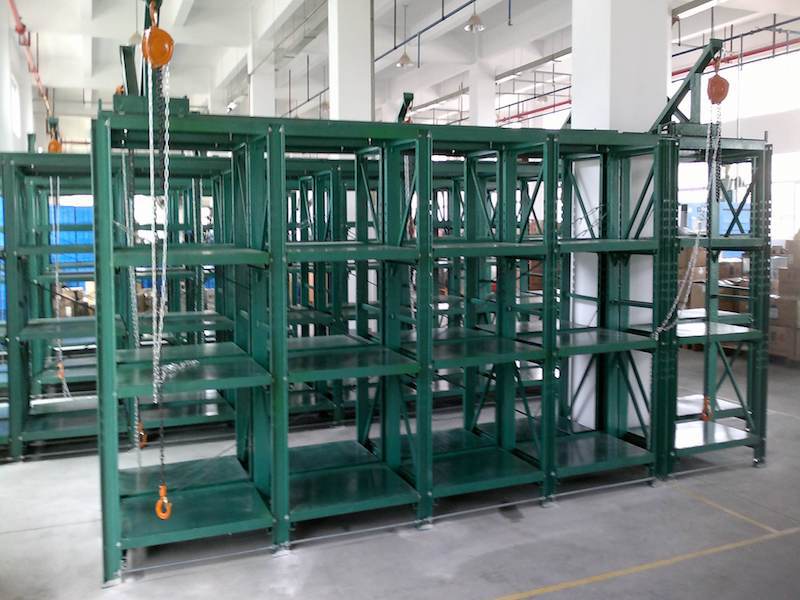
Successful deployment of a flow through racking system follows a structured workflow. Below are field-proven steps.
Not all pallets flow reliably. Measure bottom board configuration, stringer thickness, and any protruding nails. For plastic pallets with solid bottoms, use skate wheel conveyors instead of rollers. For damaged wooden pallets, implement a pallet rejection program before introducing flow lanes—jams reduce throughput by 15-20%.
Dust and debris accumulation increases rolling resistance. Establish quarterly cleaning using compressed air and non-abrasive brushes. Brake rollers require annual oil change or replacement after 500,000 cycles. Guangshun provides predictive maintenance schedules with each installation, including roller torque checks and incline re-verification.
While flow racks work standalone, integrating lane-level sensors (photoelectric or load cells) with a warehouse management system enables real-time inventory tracking. Pick-to-light systems mounted at each lane front further improve picking accuracy to 99.96%.
The next generation combines gravity flow lanes with IIoT sensors for predictive replenishment. Each lane will have a fill-level sensor and a connected separator gate that communicates with autonomous mobile robots (AMRs). When a lane reaches two empty positions, the AMR delivers a new pallet to the rear loading station. This hybrid system retains gravity's simplicity while adding automation. Early pilots report a 40% reduction in replenishment labor while maintaining FIFO integrity.
A1: No, each lane is designed for a specific pallet footprint (e.g., 1200x1000 mm or 48x40 inches). Mixing sizes causes skewing and jams. However, you can allocate different lanes for different sizes within the same rack block. For facilities with highly variable pallet dimensions, consider carton flow racking (individual cartons) or install adjustable lane dividers that can be reconfigured during off-hours.
A2: For standard 1,000 kg wooden pallets with steel rollers and brake controls, maximum practical depth is 15 pallet positions. Beyond that, cumulative rolling resistance and weight compression of bottom pallets increase jamming risk. For light loads (under 300 kg), depths up to 20 positions are possible with lower incline angles (2.5°). Always run a test with actual pallets before full installation.
A3: Standard rollers seize due to grease solidification. Special freezer-grade flow racks use synthetic low-temperature lubricants (rated to -40°C) and stainless steel or zinc-nickel plated components. Additionally, lane inclines must be increased by 0.3-0.5° to compensate for ice buildup on pallet bottoms. Guangshun has delivered freezer-compatible flow through racking systems for major cold chain operators in Nordic regions with documented 99.2% flow reliability.
A4: Yes, provided the existing upright frames have sufficient load capacity (flow tracks add about 40 kg per meter) and the bay depth matches standard flow lane lengths. You will need to add cross-bracing to handle the dynamic load of moving pallets. Retrofit kits are available for most major rack brands. However, the incline requirement often means the rear upright must be higher than the front—this may not fit within existing ceiling heights. A site survey is mandatory.
A5: Mandatory safety components include: (1) end stops with shock absorption at the front of each lane, (2) safety nets or barriers between adjacent lanes to prevent pallet fall-through, (3) audible warning devices for pneumatic separator gates, and (4) anti-skid flooring in the front picking aisle. Additionally, for lanes longer than 10 pallets, intermediate backstops (every 3–4 positions) prevent runaway if a brake roller fails. ANSI MH16.3-2022 provides detailed design criteria.
For detailed engineering drawings, site-specific incline calculations, and project quotes, visit Guangshun’s official website or browse the complete flow through racking system product catalog with technical data sheets and case histories.

 Wechat
Whatsapp
Wechat
Whatsapp