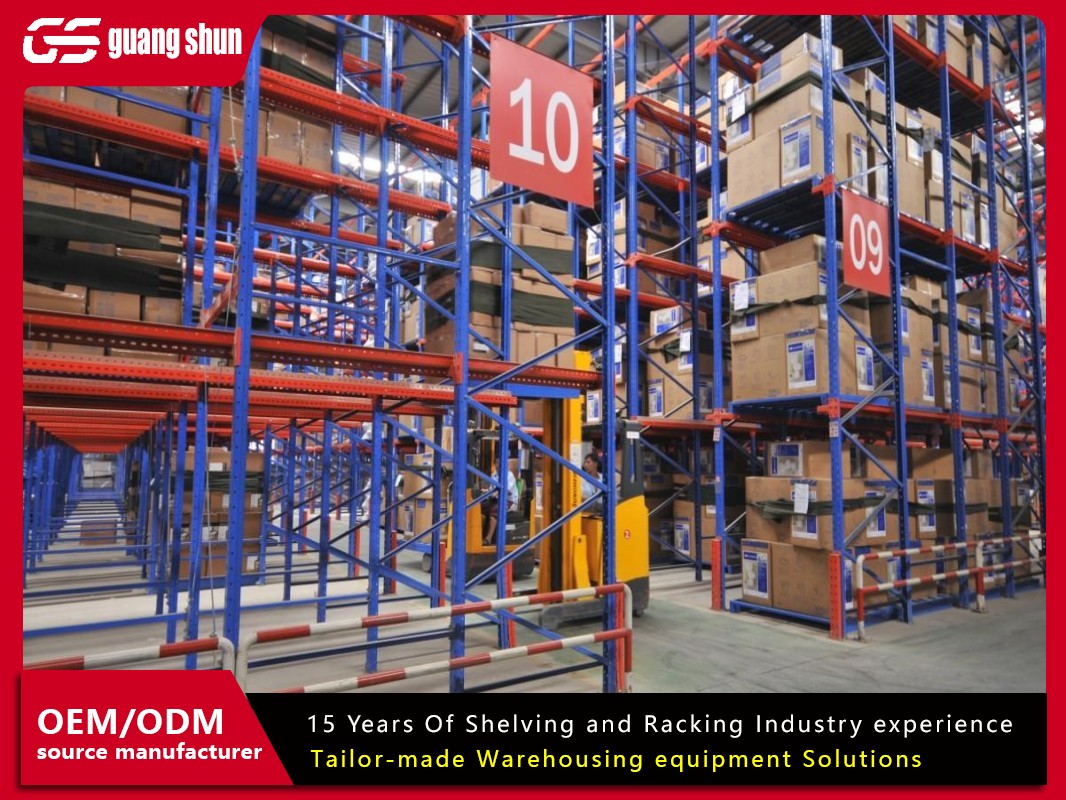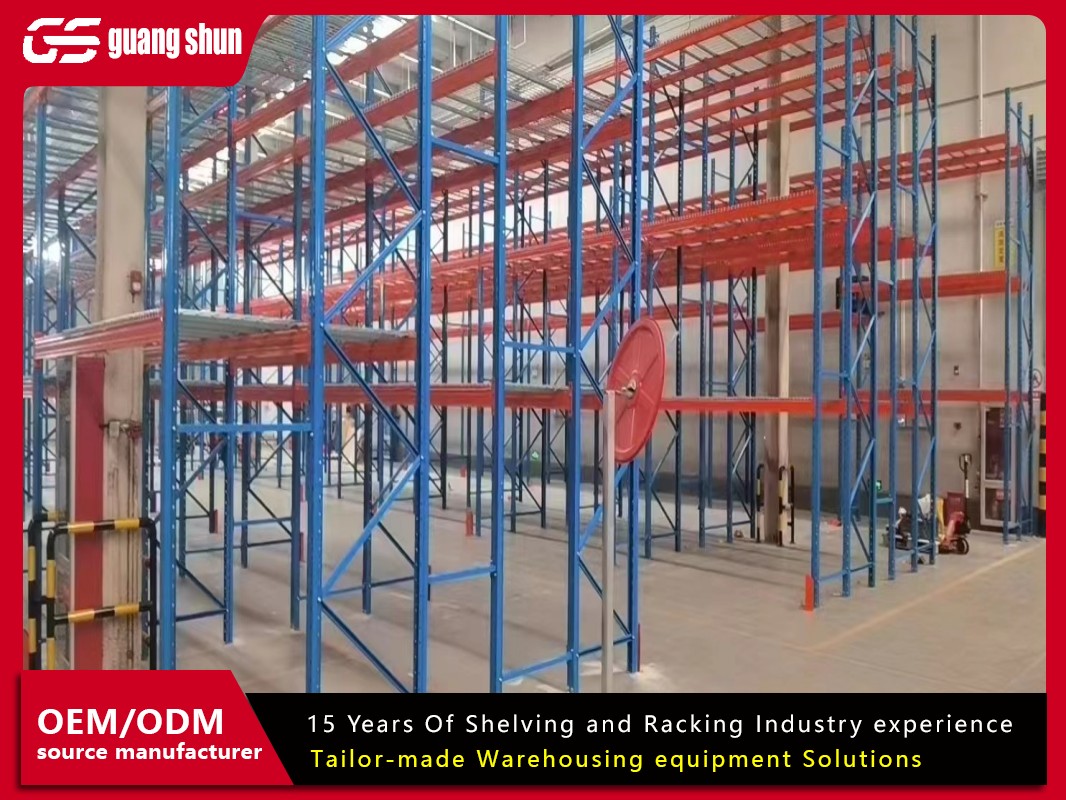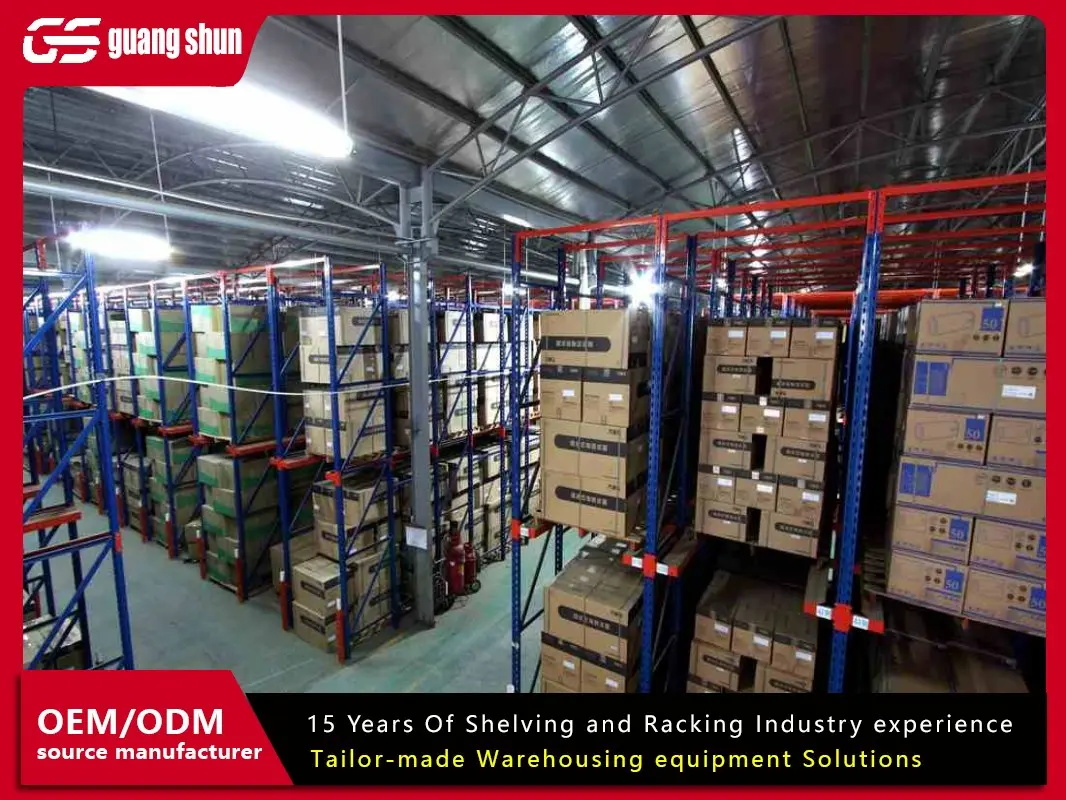
Conventional selective pallet racking sacrifices 50–65% of floor space for fixed aisles. For operations facing land constraints, cold storage costs, or SKU proliferation, this inefficiency directly impacts the bottom line. Sliding pallet racks (also known as mobile pallet racking) eliminate redundant aisles by mounting entire rack bays onto motorized or mechanical carriages. The result: a storage system that offers near 100% accessibility while achieving density comparable to drive-in or push-back racks. This guide examines engineering principles, measurable performance gains, application-specific configurations, and the economic case for integrating sliding systems into modern warehouses.

Engineering Deep Dive: Components and Operational Mechanics
Unlike static rack structures, sliding pallet rack systems operate on embedded rail networks. Each mobile carriage supports upright frames, beams, and pallet loads, moving horizontally to open only the required aisle. The core engineering elements include:
Precision Rail & Wheel Assemblies: Hot-rolled steel rails with a tolerance of ±1mm over 20m lengths. Wheels incorporate sealed ball bearings and polyurethane treads to minimize rolling resistance (coefficient <0.02).
Drive Mechanisms: Two variants – manual-assist (gear-driven with handwheels, suitable for lighter loads ≤8 tons per bay) and fully motorized (380V/50Hz gearmotors, 0.75–2.2kW per unit, with electromagnetic brakes). Motorized systems achieve travel speeds of 3–5 m/min under full load.
Control & Safety Architecture: Integrated PLC-based controls with remote radio handsets. Mandatory features per EN 15635 and AS4084 include:
Laser or inductive aisle entry sensors (detection range 0.5–15m)
Emergency stop cables running the full length of each mobile bay
Overload torque limiting (disengages drive at 110% rated load)
Interlocking logic preventing simultaneous movement of adjacent carriages
Load-Bearing Structure: Upright frames fabricated from S350GD+Z steel (minimum yield strength 350 MPa), with boltless beam connectors. Standard dynamic load capacities per beam level: 1,500–3,000 kg, while heavy-duty designs support up to 5,000 kg per pallet position.
For cold storage environments (down to -30°C), specialized low-temperature lubricants, heated control cabinets, and nickel-plated hardware prevent condensation failures. Sliding pallet racks in such settings typically incorporate IP65-rated actuators to withstand frequent freeze-thaw cycles.
Quantifiable Advantages: Space, Throughput, and Financial Metrics
Data from 47 warehouse retrofits (2020–2025) shows that mobile racking systems deliver measurable improvements across three key dimensions:
Storage Density: Eliminating 4 out of 5 aisles increases pallet positions per square meter by 160–240% compared to selective racking. A 2,000 m² facility can house over 3,800 EUR-pallet slots versus 1,500 with fixed aisles.
Capital Expenditure Avoidance: Expanding an existing warehouse costs €250–€500/m². By deploying sliding systems, companies defer or avoid construction. For a 10,000-pallet operation, the savings exceed €850,000 in building costs alone.
Energy Efficiency (Cold Stores): Reducing the storage footprint by 45% directly cuts refrigeration energy consumption (by 30–40% based on field tests). One frozen food distributor reduced annual electricity bills by €62,000 after switching to motorized sliding racks.
Labor & Forklift Productivity: With only one moving aisle to maintain, travel distances shrink by 60%. A case study from an automotive parts warehouse recorded a 22% increase in picks per hour and a 15% reduction in forklift fleet requirements.
Typical payback periods for sliding pallet racks range from 12 to 24 months, driven by space savings and operational efficiencies. For facilities with land values exceeding €200/m², ROI often falls under 18 months.
Application-Specific Configurations & Industry Solutions
Standard selective racks cannot address every storage challenge. Below are three scenarios where sliding systems provide superior outcomes, backed by engineering adaptations.
Cold Chain & Frozen Storage
Temperature-controlled warehouses face the dual pressure of high energy costs and limited cubic volume. Fixed aisles represent wasted refrigerated space. Sliding pallet racks enable dense storage with a single active aisle, reducing the refrigerated volume by up to 50%. Systems incorporate anti-condensation heaters on control panels, stainless steel rails, and IP65-rated motors. A European cold store operator achieved 4,200 pallet positions in a 1,800 m² freezer – double the capacity of their previous selective rack layout – while cutting ammonia compressor runtime by 38%.
Multi-SKU, Low-Volume Warehousing (E-commerce & Auto Parts)
Operations managing thousands of SKUs with low unit volumes per SKU struggle with cube utilization. Standard pallet racks leave empty cubic space. Mobile racking with adjustable beam levels and half-pallet dividers optimizes vertical and horizontal density. A spare parts distributor for heavy machinery reduced their warehouse footprint from 8,000 m² to 5,200 m² after installing a 48-bay sliding system, while maintaining direct access to 14,000 SKUs. The system's FIFO capability (achieved via software-directed aisle openings) prevented obsolete inventory write-offs worth €210,000 annually.
High-Throughput Distribution Centers (Hybrid Access)
Critics of mobile racking often cite potential throughput bottlenecks. However, modern systems with "rapid aisle opening" (motorized carriages moving at 15 m/min) and parallel operation zones eliminate delays. For high-turn SKUs, designers can integrate static "pick faces" in front of the sliding block, reserving dense storage for reserve inventory. A third-party logistics provider serving retail clients implemented a hybrid design: 20% static flow racks for A-items, 80% sliding pallet racks for B/C-items. Overall throughput increased by 11%, while storage density per square meter rose by 170%.
Guangshun has engineered over 200 mobile racking projects globally, including cold storage, automotive, and FMCG sectors. Their modular design approach allows integration with existing warehouse management systems (WMS) via OPC UA or Modbus TCP, providing real-time carriage position data and predictive maintenance alerts.
Addressing Industry Pain Points: Safety, Maintenance, and Legacy System Integration
Despite clear benefits, warehouse managers raise legitimate concerns about sliding systems. Below we address the most frequent objections with technical solutions.
Pain Point 1: Collision Risks & Personnel Safety
Objection: "Moving racks could crush operators or damage goods."
Engineering response: All certified sliding pallet racks comply with EN 528
(Rail dependent storage and retrieval equipment). Safety features include:
Photo-electric curtains creating a 2m safety zone around the moving aisle.
Pressure-sensitive edge bumpers on each carriage (activation force < 150N).
Audible alarms and strobe lights during motion (85 dB at 1m).
Manual release handles for emergency access if power fails.
Pain Point 2: Maintenance Downtime & Complexity
Objection: "Moving parts mean more failures and lost productivity."
Data-driven answer: Mean time between failures (MTBF) for modern motorized
carriages exceeds 12,000 operating hours (equivalent to 6 years of single-shift
operation). Preventive maintenance intervals every 6 months involve rail
cleaning, gearbox oil checks, and sensor alignment. Many providers, including
Guangshun, offer remote diagnostics
via IoT gateways – the system alerts maintenance teams when wheel wear exceeds
2mm or motor current deviates by ±15%.
Pain Point 3: Seismic Stability
Objection: "Mobile racks may topple during earthquakes."
Engineering
solution: Sliding systems can be designed with seismic brakes that automatically
lock carriages to the floor when vibrations exceed 0.1g. Additionally, anti-tip
brackets limit lateral deflection. Projects in seismic zones (e.g., Japan,
Chile) use base isolation rails and flexible hose connections for electrical
conduits. Post-installation shake-table tests confirm survival up to 0.5g peak
ground acceleration.
Pain Point 4: Integration with Existing WMS & Automation
Modern sliding pallet racks are not standalone islands. They interface via standard APIs. For example, when a WMS issues a pick for a pallet located in bay D7, the control system automatically opens the shortest path to that bay, then reports "aisle open" back to the WMS. For AGV integration, laser target reflectors on carriages allow natural feature navigation. Guangshun provides middleware that translates proprietary protocols into RESTful endpoints, reducing integration time from weeks to days.
Why Engineering Specifications Matter: Load Deflection & Floor Flatness
Two often-overlooked technical parameters determine long-term performance of sliding pallet racks: dynamic beam deflection and floor flatness tolerance.
Beam Deflection: Industry standard (FEM 10.2.02) limits deflection to L/200 under full load (e.g., for a 2,700mm beam span, maximum deflection = 13.5mm). Higher deflection causes pallets to tilt and carriage misalignment. Premium systems use cold-formed sigma beams with 40% higher moment of inertia than standard C-beams.
Floor Flatness: For carriages up to 10m length, floor flatness must be ≤3mm over any 3m length (FF≥50 / FL≥35). For longer carriages (15–20m), the requirement tightens to ≤2mm over 3m. Many warehouses require a self-leveling concrete topping or epoxy coating before installation. Laser screeding achieves FF 70/FL 55 consistently.
Failure to meet these specifications leads to "crabbing" (diagonal movement), accelerated wheel wear, and potential jamming. Reputable suppliers perform site surveys with a digital level and F-number meter before quoting.
Frequently Asked Questions (FAQs)
Q1: Can sliding pallet racks be installed in existing warehouses with
uneven floors?
A1: Yes, but with caveats. If floor flatness exceeds
recommended tolerances, options include: (a) localized grinding of high spots,
(b) installing a 50–80mm self-leveling screed over the racking footprint, or (c)
using adjustable rail supports with +/- 15mm height compensation. A site survey
by a provider like Guangshun is
mandatory to determine feasibility. For severe unevenness (Δ > 10mm over 3m),
a new structural floor slab may be required.
Q2: What is the typical lead time for designing and installing a
motorized sliding pallet rack system?
A2: From signed approval to
commissioning: 12–20 weeks. Breakdown: Engineering & layout (2–3 weeks),
steel fabrication (6–8 weeks), motor/control procurement (4–6 weeks), site
installation (2–3 weeks). Manual-assisted systems reduce lead time by 3–4 weeks.
Expedited services (air freight of motors, double shifts) can cut total time to
9 weeks but increase project cost by 20–25%.
Q3: How does a sliding pallet rack compare to a drive-in rack in
terms of accessibility and inventory rotation?
A3: Drive-in racks
allow LIFO (Last-In-First-Out) only, making them unsuitable for perishable or
date-sensitive goods. Sliding pallet racks provide 100% selectivity – any pallet
can be accessed without moving others. For FIFO requirements, the system's
software can guide operators to open aisles in a sequence that enforces
rotation. The trade-off: drive-in racks cost 30–40% less per pallet position but
impose severe operational restrictions and higher damage rates (forklift impacts
on cantilevered rails).
Q4: Are sliding pallet racks compatible with robotic pallet shuttles
or automated cranes?
A4: Yes. Several deployments combine mobile
carriages with rail-guided vehicles (RGVs) or shuttle carts. In such hybrid
systems, the sliding rack acts as a "mobile tunnel" – the shuttle enters the
opened aisle, travels to the target depth, retrieves the pallet, and returns.
Integration requires precise positioning repeatability of carriages (±2mm) and
handshake protocols between the shuttle controller and the carriage PLC. At
least three automated cold stores in Europe now operate this configuration.
Q5: What is the average power consumption of a motorized sliding
pallet rack system?
A5: For a typical 20-bay system (each bay 6m
wide, total moving mass 45 tons), a 1.5kW motor draws 0.75–1.2 kWh per full
open/close cycle. Assuming 300 cycles per work shift, daily consumption =
225–360 kWh. However, advanced systems use energy recovery (regenerative
braking) that feeds up to 30% of deceleration energy back into the grid. Standby
power draw is minimal (<30W per carriage for control electronics). Compared
to the energy saved by reducing warehouse footprint (especially in cold
storage), the net balance is strongly positive.
Q6: Can I add more bays to an existing sliding rack system
later?
A6: Extendability depends on rail length and motor capacity.
Most systems are designed with spare rail sections and allow adding 2–4 extra
bays (up to 20% original length) without changing motors. For larger expansions,
you need to upgrade gearboxes or add a second motor unit. Always request "future
expansion joints" during initial installation – these are mechanical couplers
that simplify later extension. Guangshun offers modular rail segments
with pre-drilled holes for bolt-on extensions, reducing expansion lead time by
50%.
Conclusion: Data-Driven Decision for High-Density Storage
Warehouse managers facing capacity constraints, rising real estate costs, or inefficient layouts should evaluate sliding pallet racks not as a niche solution but as a mainstream engineering strategy. With documented space gains of 160–240%, payback under 24 months, and modern safety systems that meet or exceed static rack standards, mobile racking has matured into a reliable, scalable technology. Leading suppliers like Guangshun provide turnkey services from floor analysis to WMS integration, ensuring that your high-density storage investment delivers measurable operational and financial returns. Request a site-specific density simulation and compare it against conventional racking – the numbers will guide your decision.