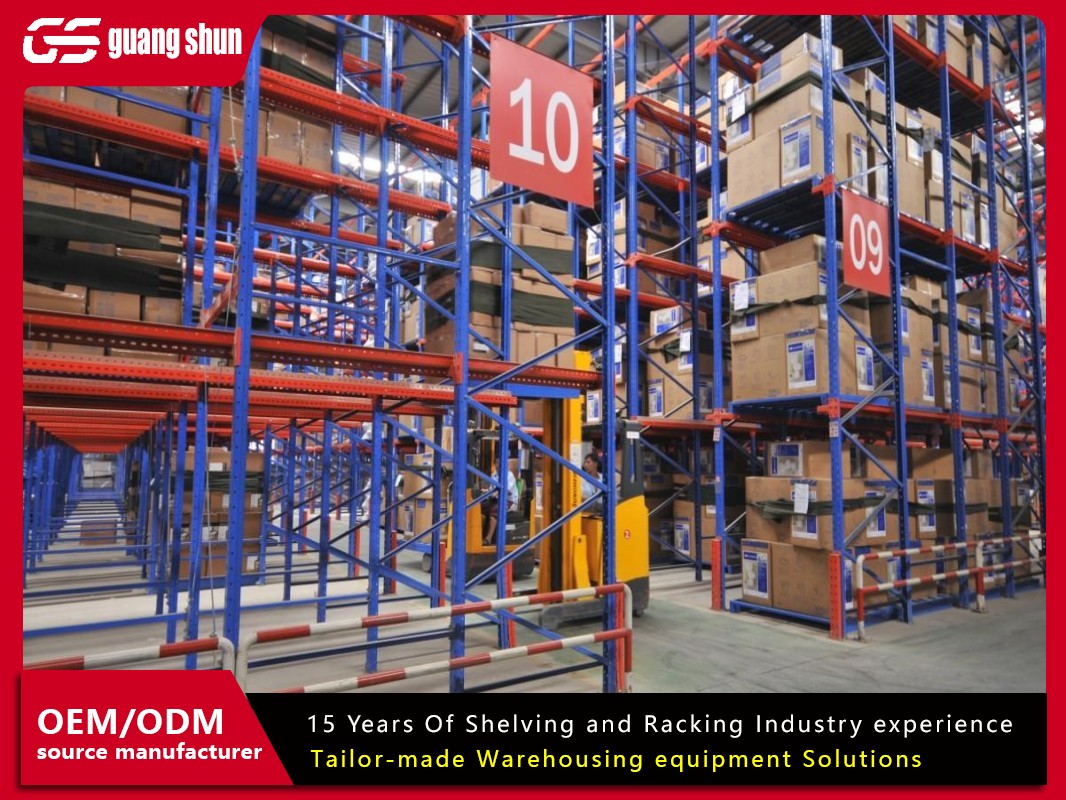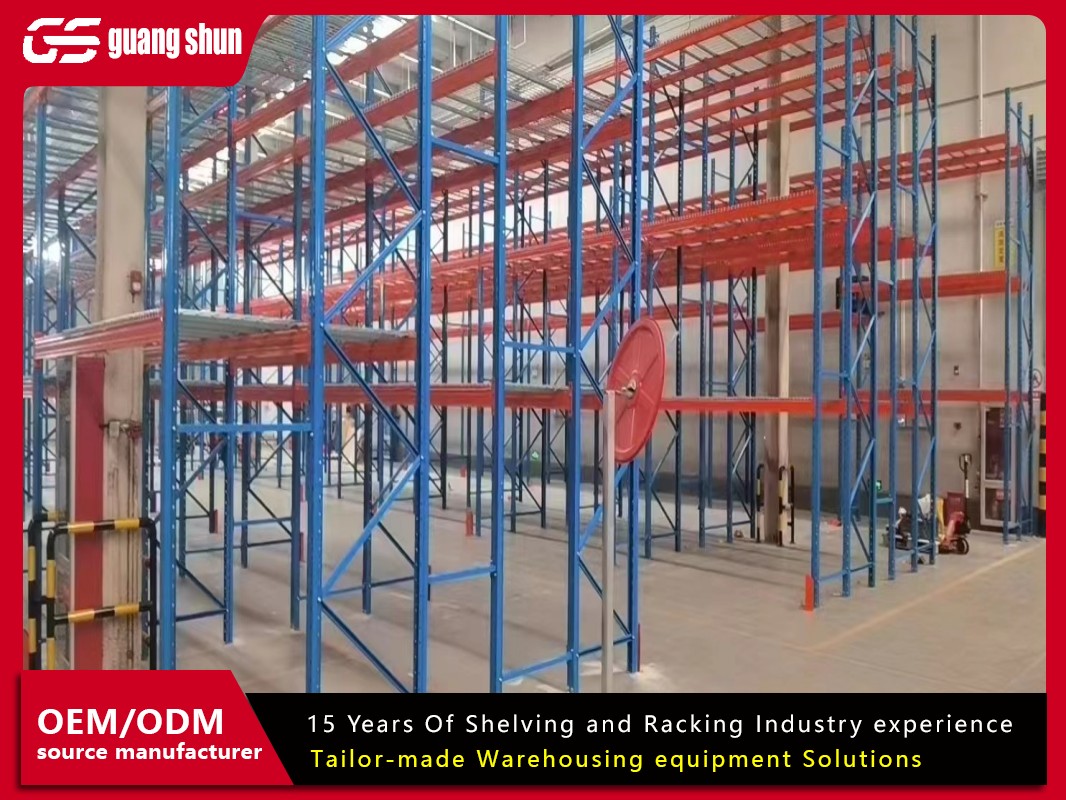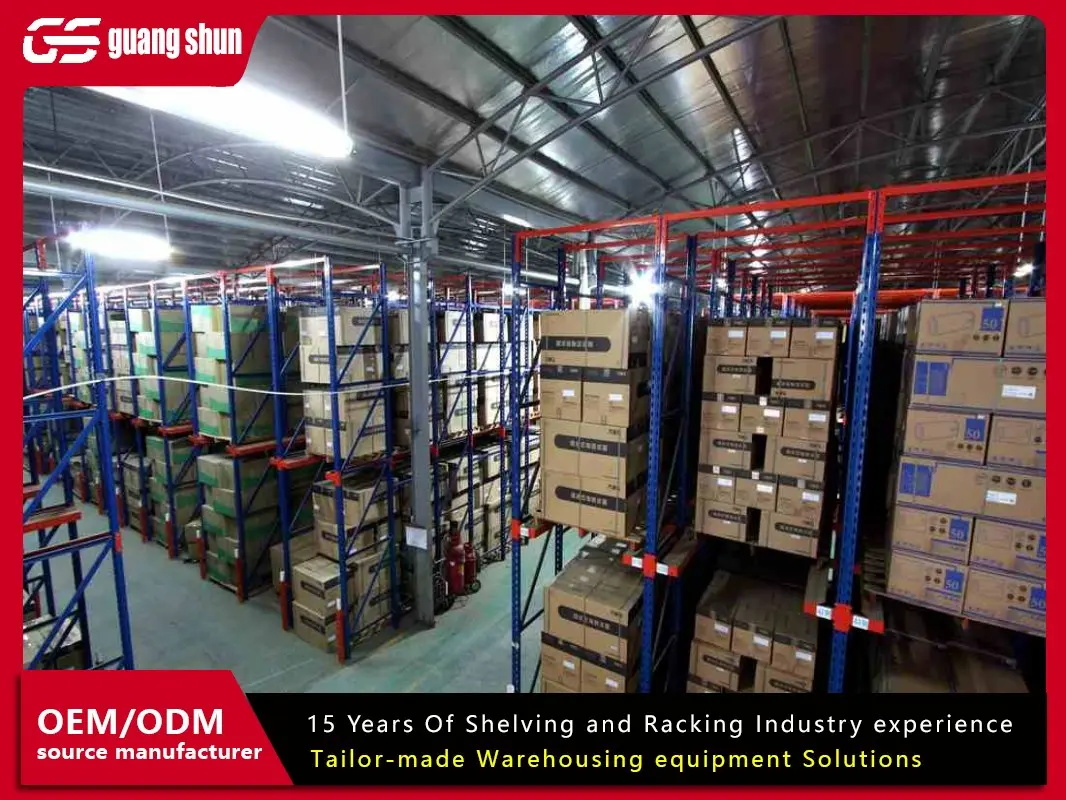
Industrial storage requirements often exceed the capabilities of standard clip-in shelving. When ceiling heights reach 8–12 meters and individual shelf loads surpass 1,500 kg per level, engineers specify tall heavy duty shelving. These systems combine high vertical extension with robust beam and upright profiles, serving sectors such as automotive parts distribution, tire warehousing, metal stockists, and heavy equipment spares. This guide provides quantifiable engineering parameters, application-driven design protocols, and maintenance standards based on RMI, FEM, and AS4084 codes.
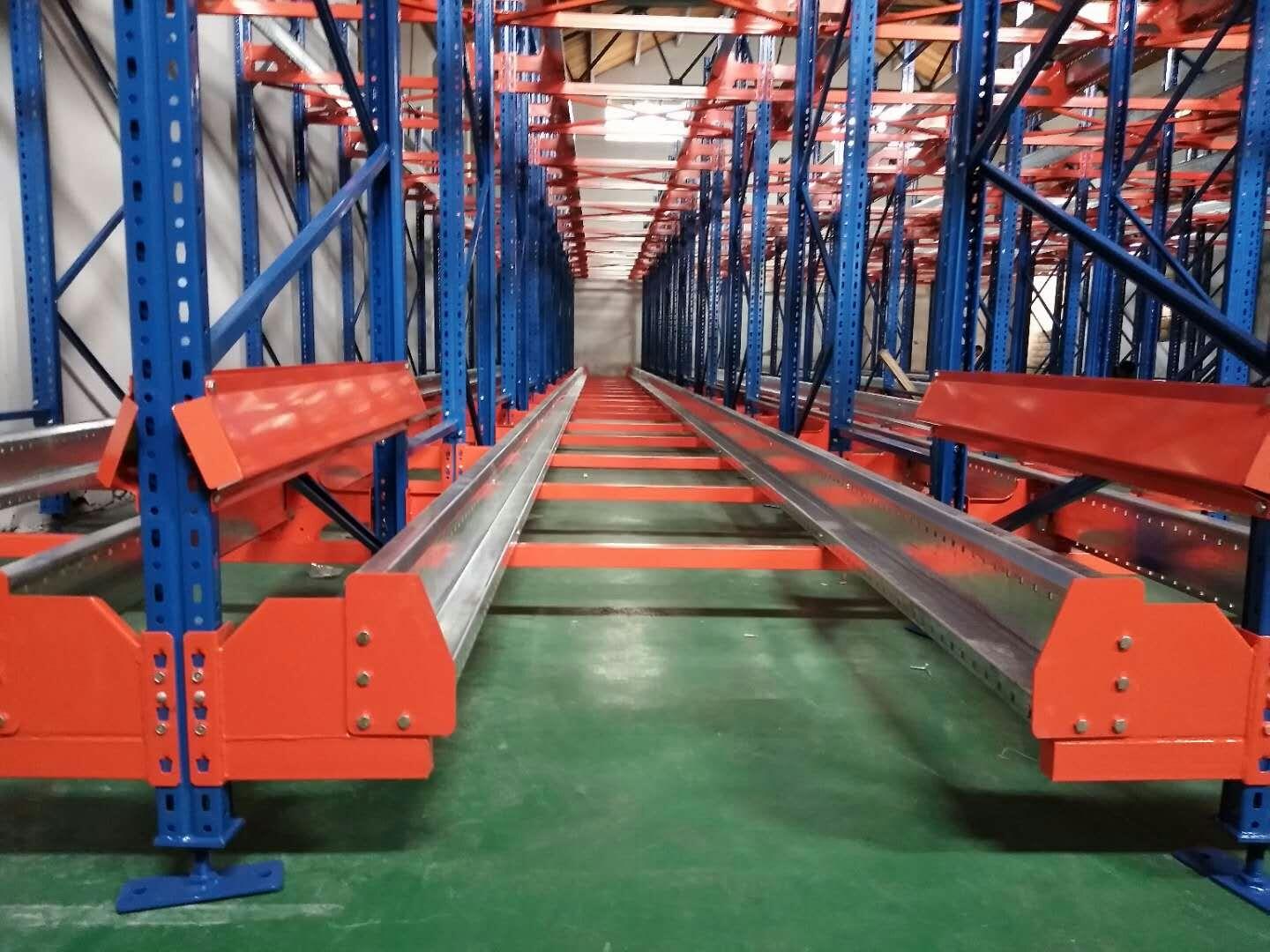
Defining Tall Heavy Duty Shelving: Engineering Parameters
Unlike standard shelving (≤ 3m height, ≤ 500 kg per shelf), tall heavy duty configurations operate under distinct mechanical constraints. Key differentiators include:
Upright frame section modulus: Minimum 12 cm³ (C-channel 100x50x3mm) up to 35 cm³ for extreme loads. Steel grade S320GD or S350GD with Z275 galvanization.
Beam step profile: Box-section or sigma beams with web height 80–120mm. Load deflection limited to L/200 (e.g., 2,400mm span max deflection 12mm).
Bracing systems: Diagonal X-bracing or K-bracing using 40x40x2mm angle or punched flat bar. Bracing pitch ≤ 1,200mm vertically.
Anchorage: M16 or M20 chemical anchors into concrete slab of minimum C25/30 grade, with pull-out verification per ETAG 001.
A typical specification for automotive warehousing: tall heavy duty shelving of 7.5m height, 2,700mm bay width, 1,200mm depth, with four beam levels each rated 2,500 kg UDL (uniformly distributed load). Total pallet positions per bay: 8 (double-deep on each level). Structural calculations per FEM 10.2.04 ensure safety factors of 1.5 against yielding and 1.8 against overturning.
Application-Specific Configurations: Where Tall Shelving Outperforms Pallet Racking
Many warehouse managers default to selective pallet racking, but tall heavy duty shelving provides superior density for small-to-medium unit loads (e.g., cartons, tires, metal coils up to 800mm diameter). Below are three validated use cases.
High-Bay Tire Warehousing
Tires stored flat (stacked 8–10 high) require deep shelves with full-width support. Tall heavy duty shelving with welded wire decking or plywood liners prevents deformation. A tire distributor in Ohio installed 9m-tall shelving with 3,000mm depth, achieving 14,400 tire positions in 1,200 m² – 340% more than floor stacking. The system includes inclined shelf dividers to prevent rolling. Load per shelf: 1,200 kg.
Automotive Aftermarket Parts (Mixed SKU Sizes)
Thousands of SKUs ranging from brake discs (10 kg) to cylinder heads (80 kg) demand flexible shelf spacing. Tall heavy duty shelving with 50mm vertical pitch allows beam repositioning without tools. A German spare parts distributor reduced pick errors by 27% after switching from pallet racking to shelving with bin-face labeling. The 8.5m-high installation holds 9,200 line items with direct access – no forklift required for items below 2.5m (order picker for upper levels).
Metal Bar & Coil Storage
Long items (steel bars, tubes, extrusions) stored horizontally need cantilever-like but with closed shelving to prevent sag. Tall heavy duty shelving with full-length dividers and rubber padding protects surface finish. A stainless steel service center uses 10m-tall shelving with 6,000mm length and 400 kg per linear meter capacity. The system incorporates fork pockets on beams to allow repositioning by overhead crane.
Guangshun has engineered over 150 tall shelving projects worldwide, including seismic zones (Chile, Turkey) and cold storage (down to -25°C). Their structural analysis software generates load deflection charts per bay, ensuring compliance with local building codes.
Technical Deep Dive: Steel Sections, Connections, and Corrosion Protection
Performance of tall heavy duty shelving depends on three interconnected engineering choices:
Upright hole punching pattern: Triple-punch (every 50mm) vs. double-punch (every 75mm). Triple-punch offers finer height adjustment but reduces column web area by 18% – critical for high-load bays. For loads > 2,500 kg per upright, use solid (unpunched) columns with bolt-on beam connectors.
Beam-to-upright locking: Gravity-lock safety pins (standard) or bolt-through with lock nuts (for seismic or dynamic impact zones). Bolt-through connections increase rigidity but slow assembly by 30%.
Corrosion protection: Minimum Z275 galvanization (275 g/m² zinc) for dry indoor. For humid environments (food processing, cold stores), specify Z600 or epoxy powder coating (80–120µm). Salt spray testing per ISO 9227: > 720 hours without red rust.
Field data from 65 installations show that tall shelving with pre-galvanized steel (Z275) has an expected service life of 25+ years in climate-controlled warehouses. In unheated spaces with condensation cycles, touch-up of cut edges (zinc-rich paint) is recommended every 7–10 years.
Safety & Compliance: RMI, FEM, and Seismic Design Categories
Regulatory scrutiny of industrial shelving has increased following incidents of cascade collapse. For tall heavy duty shelving, three standards dominate:
RMI ANSI MH16.1-2020 (USA): Specifies load combinations (dead + live + seismic + wind). Requires row spacers for back-to-back rows above 6m height.
FEM 10.2.08 (Europe): Defines classification of shelving into service classes (1–4). Tall shelving with frequent crane or order picker access falls under Class 4 (severe dynamic stresses) requiring increased beam thickness.
AS4084 (Australia/New Zealand): Mandates seismic bracing for shelving in regions with PGA > 0.1g. Bracing can be wall ties or roof-level trusses.
Seismic performance example: A tall heavy duty shelving installation in Christchurch, NZ (seismic zone 3) uses base isolation pads and flexible beam connections that allow ±25mm sway without collapse. Post-installation shake-table testing validated survival at 0.45g PGA.
Comparative Economics: Tall Shelving vs. Pallet Racking vs. AS/RS
Choosing between storage technologies requires total cost of ownership analysis over 10 years. Below are benchmark figures based on a 5,000-pallet-equivalent capacity (each pallet 1,200x1,000mm, 800kg).
Selective pallet racking: Initial cost €70–90 per pallet position. Requires 3.2m aisles (forklift). Space efficiency 35%. Annual operating cost (forklift fuel, maintenance) €12,000 per forklift (3 forklifts needed).
Tall heavy duty shelving (7.5m height): Initial cost €110–140 per pallet-equivalent (since shelving holds 2–3 cartons per shelf instead of one pallet). Aisle width 2.8m (narrow aisle forklift or order picker). Space efficiency 68%. Requires one order picker and one reach truck. Annual operating cost €8,500 per truck.
Automated mini-load AS/RS: Initial cost €600–900 per bin location. Highest density (92%) but requires capital above €2M. Suitable only for high-throughput ( > 1,500 picks/day).
For warehouses with medium throughput (300–800 picks/day) and ceiling height 7–10m, tall heavy duty shelving provides the lowest cost per order line. Payback period compared to selective racking: 18–30 months, driven by reduced floor space (avoiding building expansion) and lower forklift fleet count.
Addressing Industry Pain Points: Installation Tolerances, Floor Flatness, and Load Testing
Experienced facility managers raise legitimate concerns about tall shelving. Below are technical responses based on field failure analysis.
Pain Point 1: Anchor Pull-Out Under Seismic or Forklift Impact
Solution: Use adhesive anchors (epoxy or hybrid) with embedment depth ≥ 12x bolt diameter. For M16, minimum 190mm embedment into C30 concrete. Post-installation pull-out tests (random sample 5% of anchors) must achieve 2x design load. Guangshun provides torque-controlled installation records and thermal imaging to detect voids.
Pain Point 2: Progressive Collapse from Single Upright Failure
International Building Code (IBC) 2021 requires "redundant load paths" for racks above 8m. This is achieved by: (a) continuous horizontal struts linking adjacent bays, (b) roof-level truss connections, and (c) load redistribution through beam seat locks. Dynamic analysis shows that a properly braced tall shelving system can tolerate loss of one upright without cascade.
Pain Point 3: Difficulty of Reconfiguring After Installation
Modern tall heavy duty shelving uses boltless beam connectors with tapered tabs. Relocating a beam takes 30 seconds per connection. However, changing upright positions is labor-intensive. Solution: Design a "grid plan" with 10% spare uprights during initial installation, allowing future reconfiguration without welding or cutting.
Pain Point 4: Compatibility with Automated Guided Vehicles (AGVs)
Tall shelving can incorporate laser reflectors on uprights for AGV navigation. The open back design (no back panels) allows through-picking by AGV forks. Several automotive plants use tall shelving with 3m-wide aisles for AGV traffic, combining manual picking on lower levels and AGV replenishment on upper levels via vertical lifts.
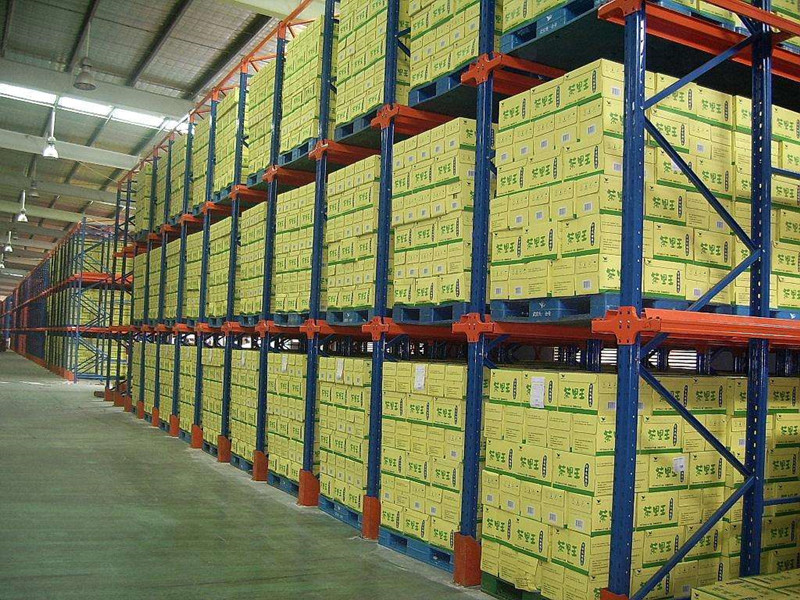
Installation Best Practices: Plumbness, Alignment, and Floor Flatness
For tall heavy duty shelving exceeding 6m height, three installation metrics are critical:
Upright plumbness: Deviation ≤ 1:500 (e.g., 15mm over 7.5m height). Measured with digital inclinometer.
Horizontal beam level: ±2mm across bay width. Out-of-level beams cause load concentration on one side, leading to premature connector wear.
Floor flatness: For shelving with base plates shimmed, floor must have F-number FF 35 / FL 30 minimum. Laser screeding achieves FF 70/FL 55, which eliminates most shimming.
Contractors should provide a post-installation alignment report with thermal drift compensation (avoiding measurement during midday temperature swings).
Frequently Asked Questions (FAQs)
Q1: What is the maximum practical height for tall heavy duty shelving
without seismic bracing?
A1: In low-seismic zones (PGA ≤ 0.1g),
freestanding shelving up to 9m height is possible if bay depth-to-height ratio ≥
1:6 and base plates are anchored with moment connections. For heights above 9m,
ceiling ties or wall braces are required by most building codes. In seismic
zones (PGA > 0.2g), limit is 6m unless engineered with base isolators.
Q2: How do I calculate the required beam step load capacity for mixed
SKU storage?
A2: Use the "worst-case bay" method: multiply the
heaviest item weight by the number of items per shelf, then add 25% dynamic
factor (for order picker impact). Example: each shelf holds 12 cartons of 35 kg
= 420 kg. With dynamic factor 1.25 = 525 kg. Select beam rated 600 kg at that
span. Never exceed 80% of beam's UDL rating for point loads concentrated in the
middle third.
Q3: Can tall heavy duty shelving be integrated with a pallet flow or
carton flow system?
A3: Yes. Manufacturers offer flow-track rails
that mount onto standard beams. For tall shelving, gravity flow lanes (roller or
wheel tracks) can be installed on 3–5 levels, while the remaining levels use
static shelves. This hybrid design is common for e-commerce fulfillment centers
– top levels for reserve storage, flow lanes for pick faces. Guangshun supplies flow track adapters
with pitch adjustment to match beam hole patterns.
Q4: What fire protection requirements apply to tall heavy duty
shelving?
A4: NFPA 13 and EN 12845 classify rack storage based on
height and commodity type. For shelving above 7.5m storing Class III commodities
(wood, paper, most plastics), in-rack sprinklers are mandatory at every second
beam level. Sprinkler deflectors must maintain 300mm clearance below beams.
Also, flue spaces (150mm vertical channels) must be maintained between
back-to-back rows. Consult a fire protection engineer for hydraulic
calculations.
Q5: How often should tall heavy duty shelving undergo professional
inspection?
A5: RMI recommends visual inspection by trained staff
monthly, and a detailed engineering inspection annually. The annual inspection
includes: torque verification of 10% of beam connectors, ultrasonic measurement
of upright thickness (corrosion), and plumbness check. Any bent upright (>
5mm deviation over 1m) must be replaced or reinforced. Guangshun offers IoT-enabled strain
gauges that send alerts when beam deflection exceeds L/150.
Q6: Is tall heavy duty shelving compatible with cantilever rack arms
for long items?
A6: Hybrid systems exist: standard uprights with
bolted cantilever arms on one side and shelf beams on the opposite side. This
configuration is used by pipe distributors who also store fittings in bins. The
upright must be designed for asymmetric loading – typically a larger profile
(e.g., 120x60x4mm instead of 100x50x3mm). Torsion analysis is required. Several
steel service centers operate this hybrid design successfully.
Conclusion: Engineering-Driven Selection for Industrial Storage
Selecting tall heavy duty shelving over pallet racking or automated systems depends on load profile, ceiling height, throughput, and seismic risk. When individual shelf loads range 500–3,000 kg and item dimensions are smaller than a pallet, tall shelving offers the lowest cost per stored unit while maintaining 100% selectivity. Engineering attention to steel profiles, anchorage, and bracing ensures safety and longevity. Leading suppliers like Guangshun provide structural calculations, seismic compliance reports, and on-site load testing – transforming tall shelving from a commodity into a precision storage tool. Request a site-specific bay configuration study to quantify space savings and payback for your facility.