Understanding the investment required for a pallet flow storage system is crucial. Many businesses search for "pallet flow rack cost" seeking a clear number. The truth is, pricing isn't one-size-fits-all.
This article breaks down the key elements that determine your final pallet flow rack cost. We will provide a realistic framework for budget planning.
Pallet flow racks are a type of high-density storage system. They use inclined rails and wheel or roller tracks. Gravity moves pallets from the loading end to the picking face.
This system operates on a First-In, First-Out (FIFO) basis. It is ideal for perishable goods or items with expiration dates. The design significantly increases storage density and improves picking efficiency.
The cost of a pallet flow rack system is higher than static shelving. But the gains in space utilization and operational speed often justify the investment.
The final price tag depends on several variables. A system for light loads will differ vastly from one for heavy machinery.
The physical dimensions of your system are the most obvious cost drivers. More lanes and higher levels mean more materials and higher costs.
Consider the number of flow lanes, their length, and the overall height. A multi-deep, multi-level system has a higher pallet flow rack cost than a simple, single-level setup. The total number of pallet positions directly correlates with the investment.
The weight each lane must hold is critical. Systems designed for 1,000 lbs per pallet cost less than those rated for 4,000 lbs.
Pallet size and condition also matter. Standard 48"x40" pallets are most common. Non-standard or damaged pallets may require custom wheel configurations. This customization increases the cost per lane.
The choice between wheels and rollers affects price and performance. Polymer wheels are common for general use. Steel rollers are for heavier loads but often cost more.
The quality of the chassis, guide rails, and braking systems varies. Industrial-grade components have a higher upfront pallet flow rack cost. But they offer better durability and a longer lifespan.
A clear budget requires understanding what you're paying for.
This is the core of your pallet flow rack cost. It includes the upright frames, flow rails or tracks, brakes, and separators. Material choices, like high-tensile steel, impact the price.
Professional design is non-negotiable for safety and efficiency. Engineering services ensure the system meets local seismic and safety codes. This upfront service adds to the cost but prevents costly errors.
Installation complexity influences final cost. A large, multi-level system requires skilled technicians and equipment. Site preparation, like floor leveling, can add unexpected expenses to your pallet flow storage system cost.
These racks are bulky and heavy. Shipping costs can be significant, especially for international projects. Always factor freight into your total budget calculations.
Providing a single price is misleading. However, we can outline general ranges for planning.
A basic, medium-duty lane might start at a certain range. Remember, this is just for one lane of flow track hardware, not the full structure.
A complete, installed system typically has a cost per pallet position. This metric helps compare quotes. Prices can range widely based on the factors above.
For a modest system with several dozen pallet positions, expect a total investment in the lower range. Large, high-capacity installations can reach into the higher bracket.
The pallet flow rack cost per lane is a useful benchmark during vendor discussions. Always request detailed quotes that separate material, design, and installation.
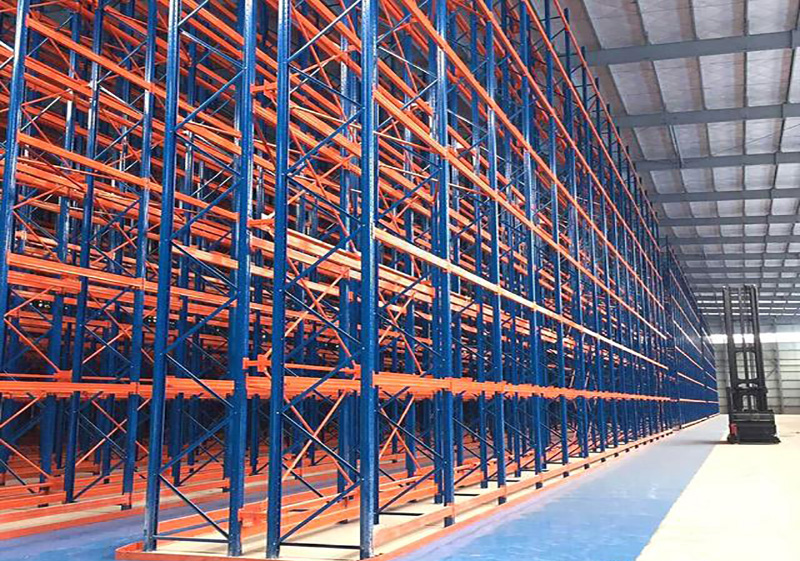
Is the pallet flow rack cost worth it? Compare it to alternatives.
Static selective racking has a much lower upfront cost. But it offers far lower storage density. You may need twice the warehouse space.
Automated systems (AS/RS) have a much higher initial investment. Pallet flow offers a strong middle ground. It provides high density and improved throughput without full automation costs.
The return on investment often comes from saved space and labor. Faster picking reduces operational costs over time. This makes the pallet flow rack cost a strategic operational investment.
Smart planning can optimize your budget without sacrificing quality.
First, standardize your pallets. Using uniform, high-quality pallets minimizes needs for custom, costly track adjustments.
Optimize your lane depth. Deeper lanes (more pallets per lane) reduce the cost per pallet position. But ensure it aligns with your inventory turnover to avoid product aging.
Consider refurbished or quality used components for non-critical areas. This can lower the initial pallet flow rack cost. However, always buy new, rated flow tracks for core functionality.
Plan for future expansion in your initial design. This avoids costly reconfiguration later. Getting multiple detailed quotes is also essential for competitive pricing.
The true pallet flow rack cost is evaluated over its lifetime. A well-designed system lasts for decades with minimal maintenance.
The savings in warehouse space can be dramatic. This either reduces facility size needs or frees up space for other operations.
Improved picking efficiency and reduced labor costs provide ongoing savings. Fewer forklift trips and less product handling also lower the risk of damage and injury.
View the pallet flow rack cost as a capital improvement. It boosts your warehouse's throughput capacity and operational bottom line for years.
Q1: What is the typical price range for a complete pallet flow rack system?
A1: There's no single price. A small to medium system might range from several thousand to tens of thousands. Large, complex installations can reach six figures. The final pallet flow rack cost depends entirely on size, capacity, and configuration. Always get a site-specific quote.
Q2: Does the cost include installation?
A2: Not always. Some quotes are for materials only. Professional installation is highly recommended and is a separate line item. Be sure to clarify what is included in any pallet flow rack cost estimate you receive.
Q3: Are there ongoing maintenance costs?
A3: Yes, but they are typically low. Regular maintenance involves inspecting wheels/rollers for wear, ensuring brakes function, and checking for pallet debris. Budgeting for occasional replacement of wear items like rollers is part of the long-term operational cost.
Q4: How does load capacity affect the price?
A4: Significantly. Heavy-duty systems require stronger materials, more robust brakes, and often a different track type (rollers vs. wheels). The cost per lane increases substantially as the weight capacity rating goes up.
Q5: Can I save money by installing it myself?
A5: It is strongly discouraged. Improper installation can lead to catastrophic rack failure, product damage, and serious injury. Installation requires precise leveling, secure anchoring, and adherence to safety standards. The labor cost for professional installers is a worthwhile safety and performance investment.

 Wechat
Whatsapp
Wechat
Whatsapp