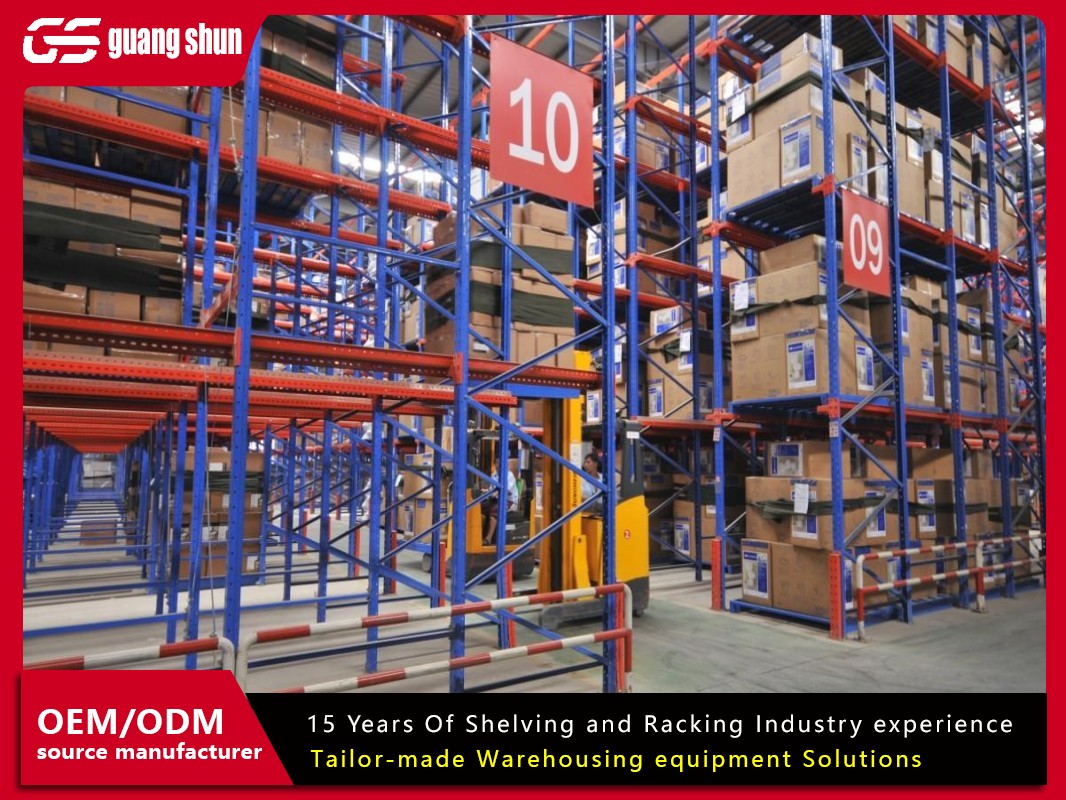
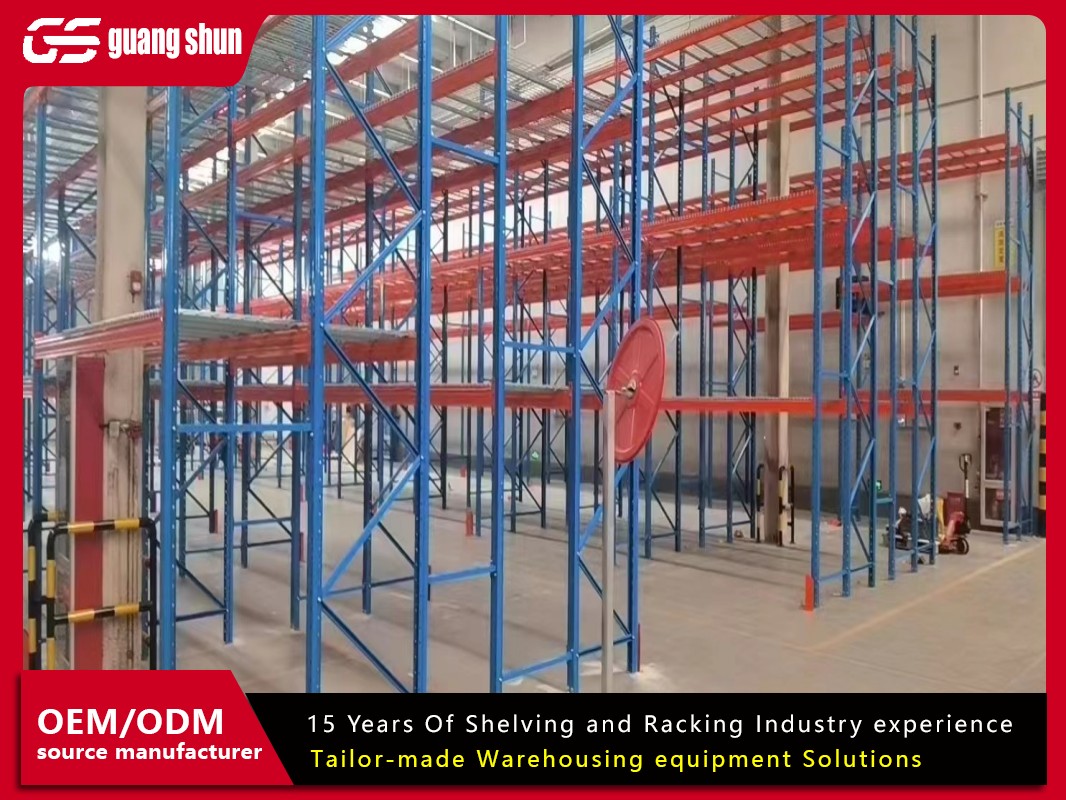
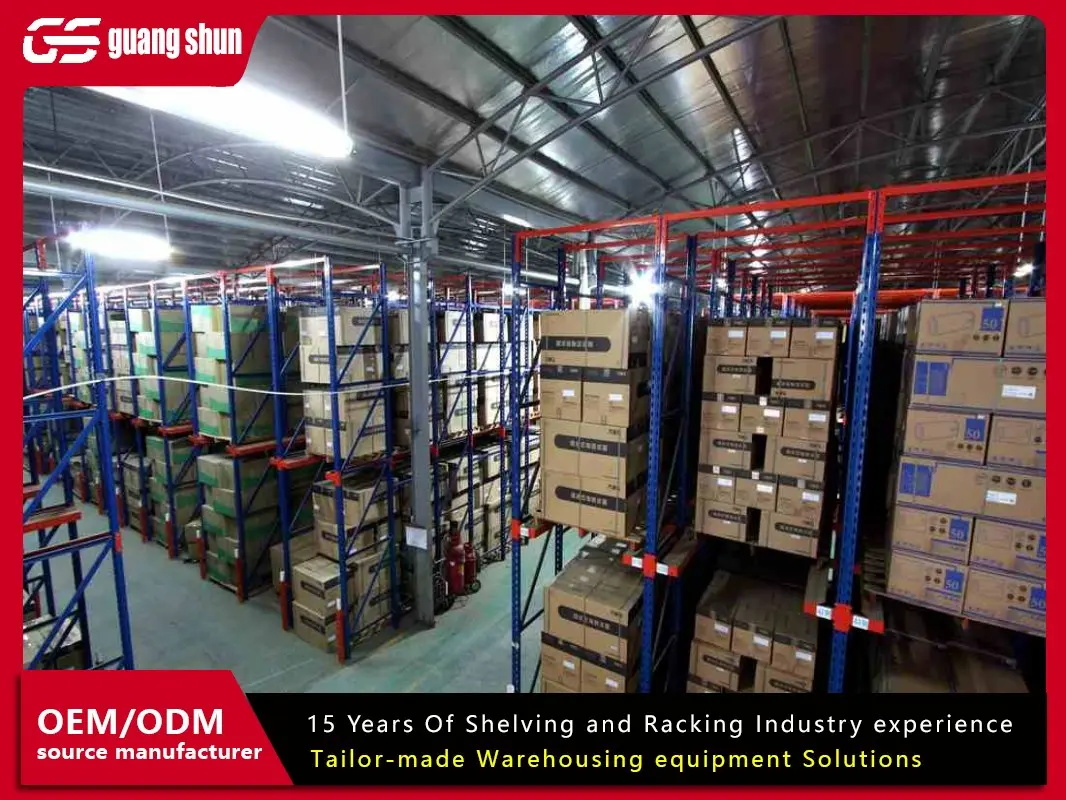
High bay racking warehouse facilities, defined by storage heights exceeding 12 meters and often reaching 45 meters, represent the pinnacle of space utilization in modern logistics. By exploiting the vertical cube, these structures reduce land footprint by up to 80% compared to conventional warehouses with the same pallet capacity. However, the engineering complexity—from sway tolerances of 1:1000 to automated storage and retrieval system (AS/RS) integration—demands specialized expertise. This article examines the structural, mechanical, and safety engineering principles underpinning successful high bay racking warehouse projects. Guangshun has engineered and installed rack-supported buildings across Asia and Europe, and the following data derives from those implementations.
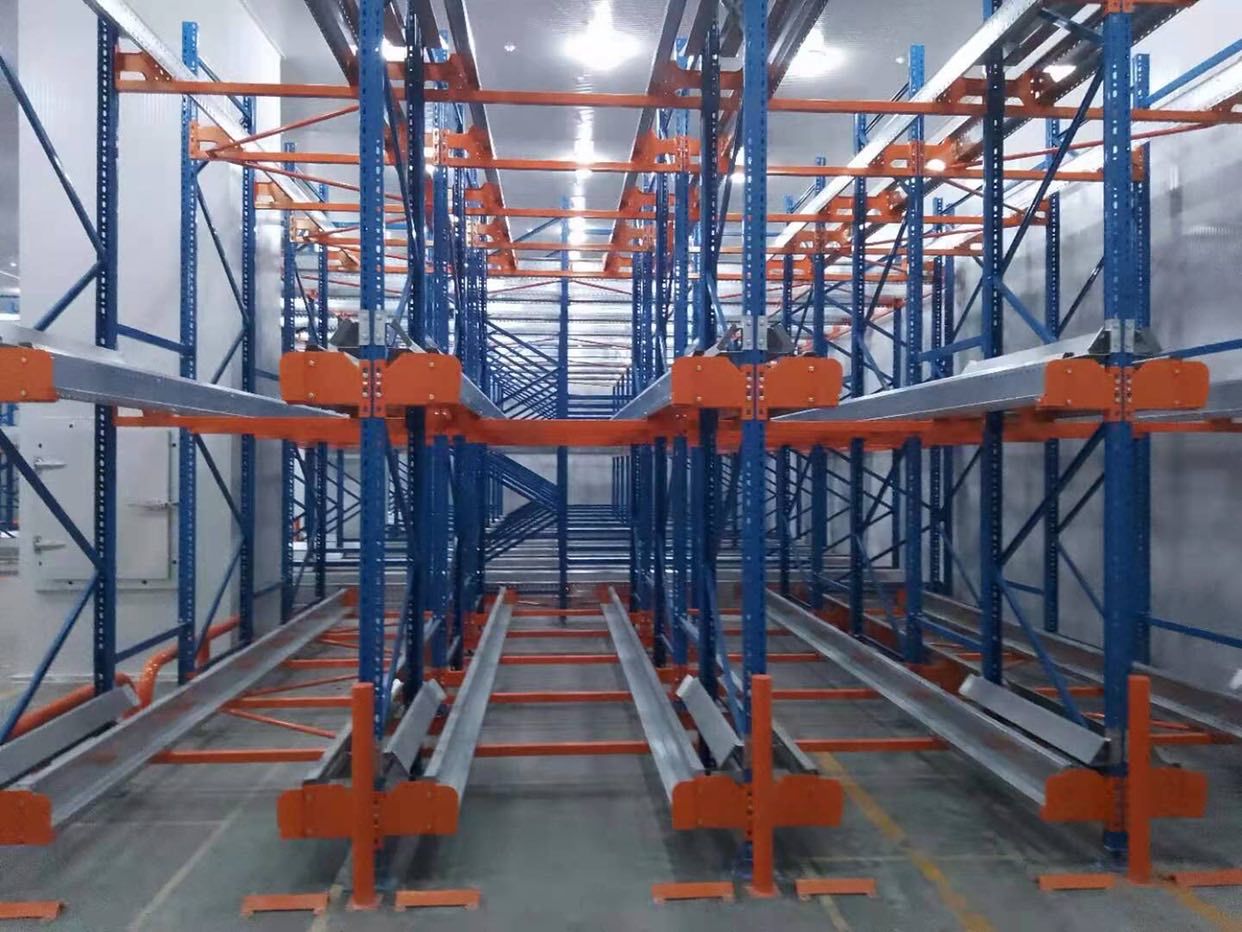
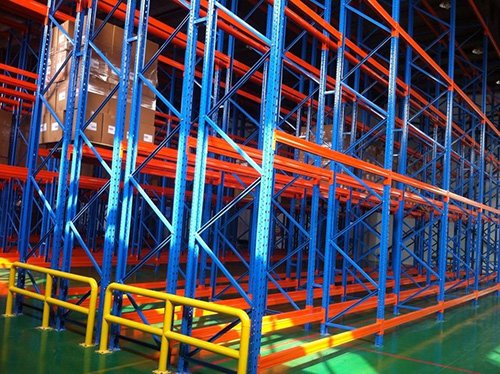
Unlike low-bay facilities where racking is independent of the building, a high bay racking warehouse often employs rack-supported or rack-clad construction. In these designs, the racking itself carries the roof and wall cladding, eliminating separate structural steel and reducing costs by 15–20%.
Rack-supported: Upright frames are designed as building columns, with purlins attached to carry roofing. Requires closer column spacing (typically 6–8 m) but maximizes usable volume.
Stand-alone with integrated racking: Independent building structure with racking inside. Allows wider column grids but reduces storage density slightly.
For heights above 25 m, rack-supported construction is almost universal due to material efficiency. Guangshun’s Guangshun engineers perform finite element analysis (FEA) combining pallet loads, self-weight, wind, and seismic forces.
Vertical loads from pallets (typically 1,000–1,500 kg per position) travel through uprights to baseplates and into pile caps or raft foundations. Horizontal loads from wind or earthquakes require moment-resisting bases or cross-bracing. In a 30 m high bay, total vertical load can exceed 50,000 kN, necessitating deep foundations (bored piles or driven piles) in all but the best soils. Settlement analysis must limit differential movement to 5 mm across adjacent columns to maintain AS/RS rail alignment.
The defining challenge of any high bay racking warehouse is maintaining dimensional tolerances over extreme heights. AS/RS machines require guide rails with verticality better than H/1000 (e.g., 30 mm deviation maximum at 30 m height).
Erection procedures use laser trackers and theodolites at every splice. Typical specifications:
Overall plumbness: ≤ 20 mm over full height.
Local bow: ≤ 5 mm per 3 m segment.
Rail straightness: ±2 mm over 3 m.
Thermal expansion must be accommodated: a 30 m steel column can grow 10 mm with a 30°C temperature swing. Sliding connections at roof level or slotted bolt holes allow movement without distortion.
The floor beneath a high bay racking warehouse must meet Superflat tolerances (FM3 or better) with F-number requirements of FF 50–100 depending on crane type. Laser-guided grinding is often required after concrete placement. Guangshun coordinates with flooring contractors to ensure interface details between rack bases and floor joints prevent step displacements.
High bay warehouses are almost exclusively automated, using single- or multi-deep AS/RS cranes. The high bay racking warehouse structure must accommodate crane rails, power rails, and control cabinets.
AS/RS cranes travel on floor-mounted rails and are guided by top rails attached to the rack structure. Top rail brackets must allow vertical adjustment (typically ±10 mm) for alignment. Crane thrust forces (acceleration/deceleration up to 0.5 m/s²) are transmitted through the rack bracing to foundations. Dynamic analysis ensures that crane-induced vibrations do not cause resonance in the rack structure.
Modern AS/RS cranes use laser positioning with accuracy of ±3 mm. This demands that beam elevations vary by less than 5 mm across the entire warehouse. Guangshun achieves this through CNC-punched connections and precision shimming during installation.
Fire safety is the most critical operational concern in high bay racking warehouse design. Standard sprinkler systems are ineffective above 12 m due to limited water penetration. Solutions include:
ESFR (Early Suppression Fast Response) sprinklers at multiple levels within the racking. Design density typically 0.6–0.8 gpm/ft² over the most remote 2,000 ft². Water demand can exceed 2,000 gpm, requiring dedicated pumps and tanks.
Mechanical or natural smoke exhaust systems maintain visibility and tenability. CFD modeling determines vent locations and sizes. Rack-supported buildings require integrated smoke curtains to prevent lateral smoke spread.
Fire walls (2–4 hour rating) subdivide very long warehouses. These walls must accommodate rack displacement without breaching—slip joints or fire-resistant expansion joints are used. Guangshun’s designs are reviewed with FM Global or local authorities for compliance.
In seismic zones, high bay racking warehouse structures must survive design basis earthquakes (typically 475-year return period) without collapse. Analysis per ASCE 7 or Eurocode 8 includes:
Moment frames or buckling-restrained braces (BRBs) provide ductility. Connections are detailed to yield in a controlled manner (capacity design). For rack-supported buildings, the rack uprights themselves may be designed as seismic fuses—replaceable after a major event.
AS/RS cranes, piping, and sprinklers must be seismically restrained. Cranes are designed to remain on rails during shaking, with guide rollers and anti-derailment devices. Guangshun provides seismic anchorage calculations for all components.
High bay warehouses inherently reduce land use, but additional measures improve sustainability:
Daylighting: Roof lights in aisle spaces reduce lighting loads.
Insulated panels: Rack-clad buildings use composite panels (PIR or mineral wool) for U-values <0.25 W/m²K.
Regenerative drives: AS/RS cranes recover energy during lowering, reducing net consumption by 20–30%.
Guangshun offers lifecycle carbon assessments for clients pursuing LEED or BREEAM certification.
Erecting a high bay racking warehouse involves simultaneous work at height and on the ground. Typical sequence:
Foundations: Piles and ground beams installed, allowing 28-day concrete cure.
Baseplates and first lifts: Laser-aligned and grouted.
Rack erection: Mobile cranes assemble uprights and beams in sections; top rails installed progressively.
Cladding and roofing: Applied after rack steel is complete to avoid weather delays.
AS/RS installation: Cranes placed after rails are verified.
Commissioning: Integrated testing of structure, fire systems, and automation.
Safety during erection requires engineered fall protection—horizontal lifelines or netting at every working level. Guangshun’s site teams follow strict OSHA-compliant procedures.
Capital expenditure for a high bay racking warehouse typically ranges from $600–1,200 per pallet position, depending on height, automation level, and seismic requirements. Despite higher upfront cost compared to low-bay warehouses (which might cost $300–500 per position), the ROI is driven by:
Land savings: 80% smaller site footprint.
Operating efficiency: AS/RS reduces labor cost by 60–80%.
Energy savings: Smaller volume to heat/cool.
Inventory accuracy: Real-time tracking reduces safety stock.
Payback periods of 5–8 years are common in high-value land markets like Singapore or the Netherlands.
High bay racking warehouse facilities represent a convergence of structural engineering, automation, and fire protection science. The design must integrate racking as both storage medium and building structure, while maintaining micron-level tolerances for AS/RS operation. Seismic resilience, thermal movement, and fire safety demand multidisciplinary analysis. High bay racking warehouse technology continues to evolve with taller cranes (now exceeding 50 m) and AI-driven inventory optimization. For logistics operators facing land scarcity and labor costs, these vertical warehouses offer a technically validated path to scalable capacity. Guangshun’s turnkey approach—from geotech investigation to handover—ensures that each high bay racking warehouse meets its operational and financial targets.
A1: A high bay racking warehouse typically refers to storage facilities with clear heights exceeding 12 meters (40 feet). Industrial installations commonly reach 30–45 meters, using automated cranes rather than forklifts. The threshold varies by region—in Europe, 12 m+ is high bay; in North America, 20 m+ is more common due to different forklift traditions.
A2: Fire codes (IFC, NFPA 230, local standards) require in-rack sprinklers at multiple levels, typically every 6–8 m vertically. ESFR sprinklers are standard. Smoke ventilation systems must be designed to maintain a smoke layer above the highest storage. Compartmentation with fire walls (2–4 hour rating) limits fire spread. Guangshun coordinates with fire engineers to model suppression effectiveness.
A3: Conversion is rarely feasible due to foundation capacity, floor flatness, and building height limitations. High bay structures require deeper foundations and tighter tolerances. It is usually more economical to demolish and rebuild. However, some facilities add mezzanine floors or multi-tier racking as an intermediate step.
A4: Common types include single-mast cranes (for loads up to 1,500 kg), double-mast cranes (heavier loads), and satellite or shuttle-based systems for deep-lane storage. Mini-load AS/RS handles totes and small parts. Cranes are rail-guided at floor and top, with speeds up to 240 m/min horizontally and 60 m/min vertically.
A5: From groundbreaking to commissioning, typical projects take 12–24 months depending on height and complexity. Foundations require 3–4 months, rack erection 4–6 months, cladding 2–3 months, and AS/RS installation/commissioning 3–5 months. Concurrent activities (e.g., sprinkler installation during rack erection) shorten overall duration.
A6: Seismic performance is verified through non-linear time-history analysis using site-specific ground motion records. Full-scale shake table tests of critical connections or sub-assemblies may supplement analysis. Guangshun provides third-party peer-reviewed seismic calculations for projects in high-risk zones like California or Japan.
For feasibility studies or detailed engineering proposals, visit Guangshun’s high bay racking page or contact our vertical warehouse specialists.

 Wechat
Whatsapp
Wechat
Whatsapp