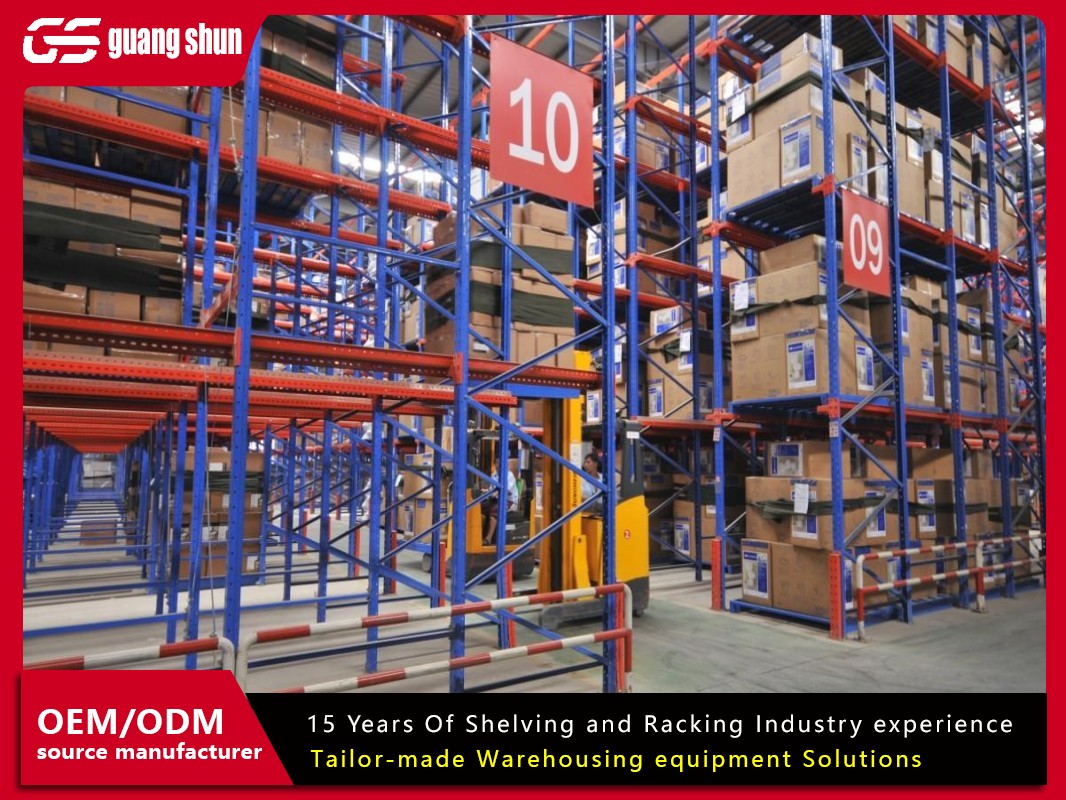
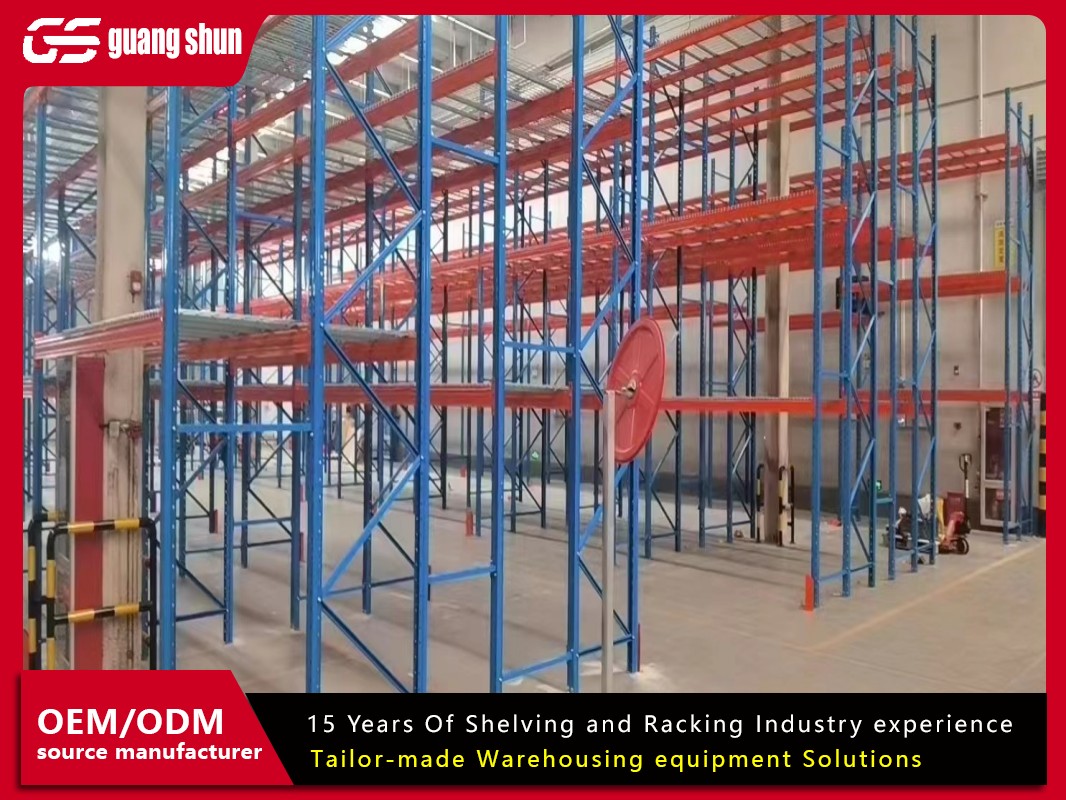
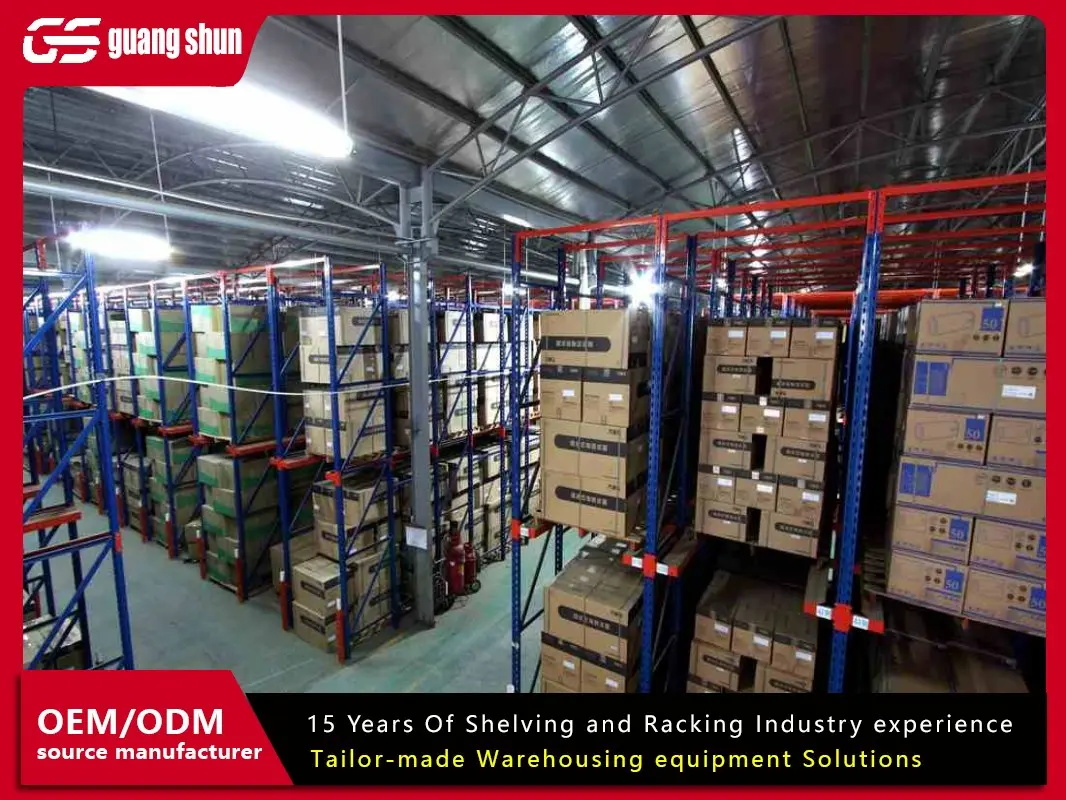
Push back racking cost is a critical consideration for warehouse managers balancing storage density against selectivity. Unlike selective racking, push back systems use nested carts on inclined rails, storing 2–6 pallets per lane while maintaining Last-In, First-Out (LIFO) rotation. This article dissects the components that contribute to push back racking cost, from raw steel and carts to seismic engineering and long-term maintenance. Guangshun has installed push back systems across multiple industries, and the data below reflects actual project economics.
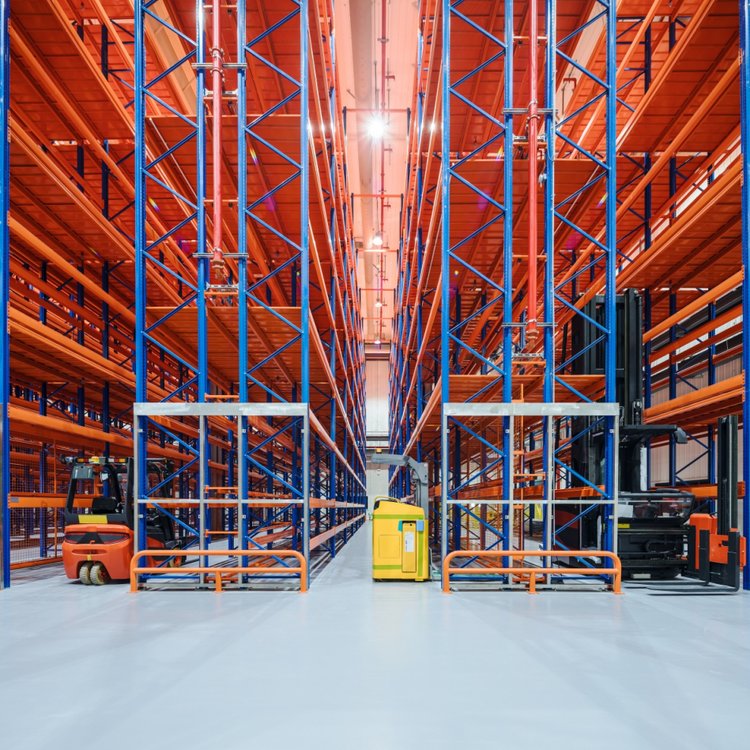
The total installed push back racking cost comprises several distinct elements, each influenced by site conditions and operational requirements.
Upright frames and beams: Roll-formed or structural steel, typically 2.5–4.0 mm thick. Prices vary with steel grade (S235 vs. S355) and coating (powder-coated vs. galvanized).
Push back carts: Nested steel carriages with polyurethane or steel wheels. Each lane requires one cart per pallet position (minus one). Cart quality affects smoothness and longevity.
Inclined rails: Roll-formed channels with precise slopes (3/8" per foot). Rail gauge and bracing add to material cost.
Material typically accounts for 60–70% of total push back racking cost. Guangshun sources steel from certified mills and offers thickness certifications.
Push back systems require engineered drawings that account for seismic loads, impact forces, and floor conditions. Structural calculations (FEM, RMI) are mandatory for permitting. Engineering fees range from 2–5% of project cost but are essential for safety and compliance.
Installation by experienced crews ensures proper slope, cart alignment, and anchor torque. Labor costs vary regionally but typically constitute 15–25% of total push back racking cost. Mobile cranes or scissor lifts may be needed for high-bay systems.
Push back racking demands flat floors (FM2 or better) to maintain cart movement and prevent pallet jams. If existing floors are uneven, grinding or self-leveling overlays add $5–15/m². Baseplate shimming and anchor drilling are included in installation.
Understanding push back racking cost relative to alternatives helps justify the investment.
Drive-in racking is typically 20–30% less expensive per pallet position because it uses simpler rails without carts. However, push back offers higher throughput (no forklift entry into the structure) and better selectivity. For operations with more than 3 pallets per SKU, the added cost of push back is often recovered through faster cycle times.
Pallet flow (gravity) systems are comparable in cost to push back, but require more precise slope adjustment and speed controllers. Pallet flow is FIFO and can handle deeper lanes (up to 20 pallets). For LIFO applications with moderate depth, push back is more cost-effective.
Selective racking has the lowest upfront cost per pallet ($100–200), but requires more aisles. Push back reduces aisle count by 50%, increasing density. The break-even point occurs when land or building costs exceed $500/m²—common in urban logistics hubs.
Several variables cause push back racking cost to fluctuate between projects.
Deeper lanes (e.g., 6 pallets deep) increase the number of carts per lane and require heavier rail sections. A 6-deep system costs 20–30% more per pallet than a 3-deep due to additional carts and structural reinforcement.
Standard push back carts handle up to 1,200 kg per pallet. For heavier loads (1,500–2,000 kg), carts with reinforced frames and larger wheels are needed, adding $50–100 per cart. Guangshun’s heavy-duty carts use sealed bearings for reduced rolling resistance.
In seismic zones (e.g., California, Japan), push back systems require additional cross-aisle bracing, baseplate anchorage calculations, and possibly energy-dissipating devices. Seismic engineering can increase total push back racking cost by 10–15%.
Galvanized finishes for cold storage add 15–20% to material cost. Custom colors, laser-cut signage, or integrated flow rails for mixed SKUs also raise costs. Guangshun offers modular designs that minimize customization expenses.
Initial push back racking cost is only part of the financial picture. Maintenance and operational impacts must be factored into a TCO analysis.
Cart wheel replacement: Polyurethane wheels wear after 5–10 years; cost ~$20–40 per wheel.
Rail cleaning: Debris accumulation can impede movement; regular sweeping is required.
Impact repairs: Bent rails or damaged carts from forklift collisions; budget 1–2% of initial cost annually.
Push back systems reduce travel time because multiple SKUs are stored in the same lane depth. Compared to drive-in, forklift cycle times are 20–30% faster, translating to labor savings of $5,000–10,000 per year per forklift.
By eliminating aisles, push back can increase storage capacity by 50–75% over selective racking. In a 10,000 m² warehouse, this avoids the need for a 5,000 m² expansion, saving millions in construction or land costs.
Quantifying the return on investment requires comparing incremental push back racking cost against operational savings.
Assume a warehouse needs 2,000 pallet positions. Selective racking costs $200,000 (at $100 per position) but requires 3,000 m². Push back costs $400,000 (at $200 per position) but fits in 2,000 m². If land/construction costs are $1,000/m², push back saves $1,000,000 in space—a net benefit of $600,000. Even with higher upfront cost, ROI is immediate.
A European beverage distributor replaced drive-in racking with a 4-deep push back system from Guangshun. The push back racking cost was €350,000 for 1,500 pallet positions. Throughput increased by 40%, reducing forklift fleet size from 12 to 9. Labor savings of €90,000/year yielded payback in 3.9 years. Additionally, product damage decreased by 60% due to reduced forklift interaction.
Given the variables, obtaining precise quotes requires:
Detailed load data: Pallet dimensions, weights, and SKU profiles.
Site survey: Floor flatness, column locations, clear height, and seismic zone.
Access requirements: Forklift type (counterbalance, reach truck) dictates aisle widths and turning radii.
Future flexibility: Consider if lane depths or cart configurations may need changes.
Guangshun provides free 3D layouts and budgetary pricing based on these inputs. Visit push back racking cost page to request a customized quote.
Push back racking cost must be evaluated not as an isolated expense but as an investment in density and efficiency. While upfront costs exceed selective or drive-in systems, the space savings, reduced labor, and lower product damage often deliver rapid payback. By understanding the cost drivers—lane depth, load capacity, seismic needs—and performing a TCO analysis, warehouse operators can make informed decisions. Guangshun’s engineering team supports clients with transparent cost breakdowns and ROI projections tailored to their operations.
A1: Installed push back racking cost typically ranges from $180 to $350 per pallet position, depending on lane depth, load capacity, and seismic requirements. Deeper lanes (5–6 deep) and heavy loads push costs toward the higher end.
A2: Yes, push back typically costs 20–40% more than drive-in racking per pallet position due to the added carts and rails. However, push back offers higher throughput (forklifts never enter the structure) and less product damage, which can offset the initial premium through operational savings.
A3: Yes, but existing floors must meet flatness tolerances (FM2 or better). Low ceilings may limit lane depth if forklift mast height is restricted. Guangshun performs on-site surveys to assess suitability and provide accurate push back racking cost estimates.
A4: Annual maintenance averages $5–10 per pallet position, covering wheel replacement, rail cleaning, and impact repairs. Regular inspections (quarterly) catch issues early. Guangshun offers maintenance contracts to ensure system longevity.
A5: Increasing lane depth adds more carts per lane (one per pallet position minus one) and requires heavier rails. A 6-deep system costs about 25% more per pallet than a 3-deep. However, space efficiency improves, so the cost per stored unit may be lower overall.
A6: Yes, Guangshun offers complete turnkey services including engineering, fabrication, delivery, installation, and commissioning. Our project managers coordinate all site work to minimize downtime. Contact us for a detailed push back racking cost proposal.
For a personalized cost analysis or to request a quote, visit Guangshun’s push back racking page or speak with a storage solutions engineer.

 Wechat
Whatsapp
Wechat
Whatsapp