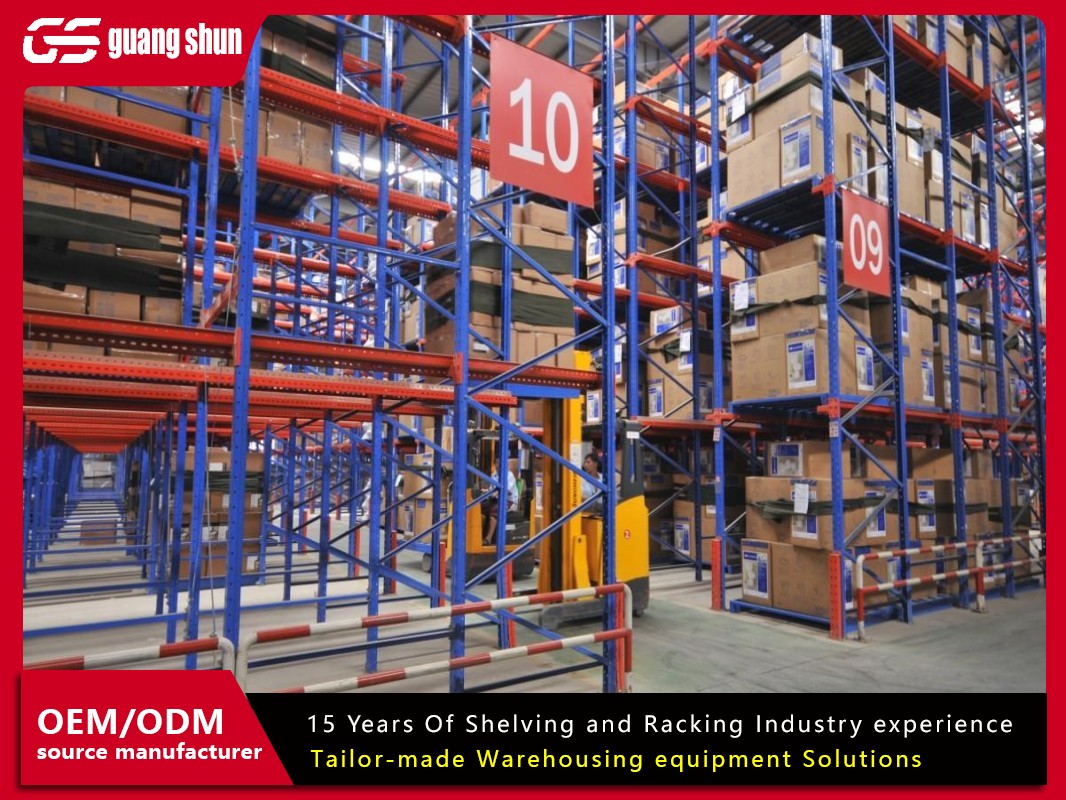
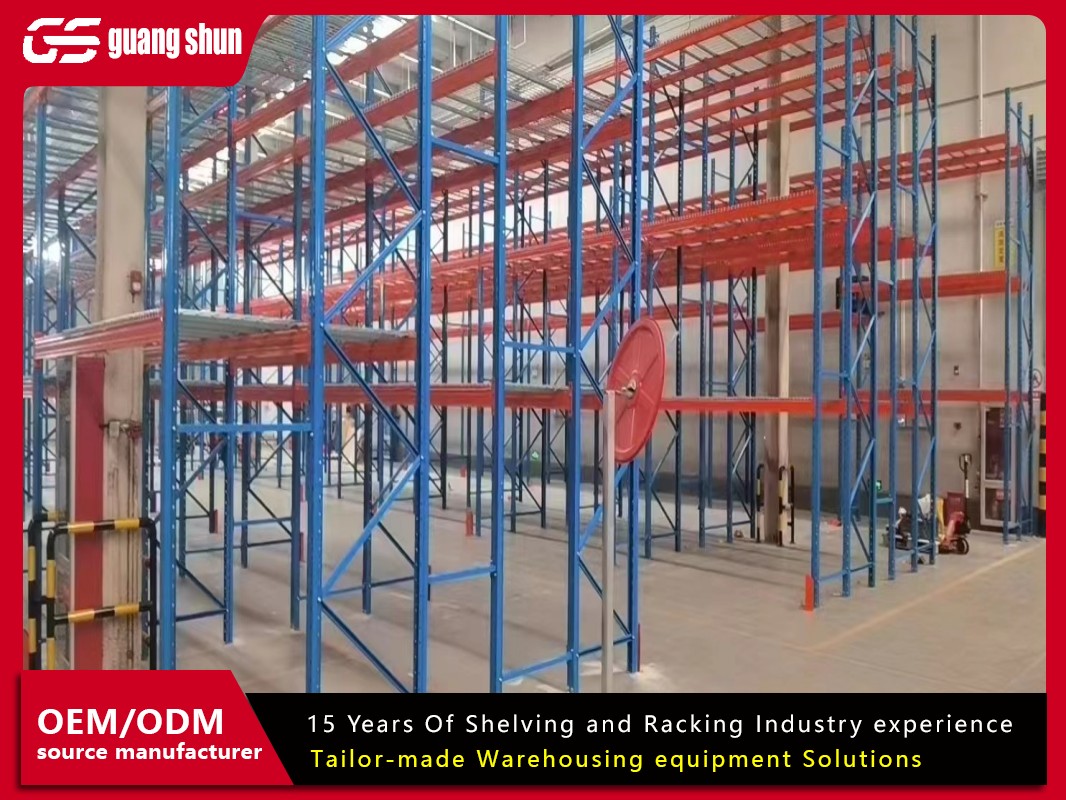
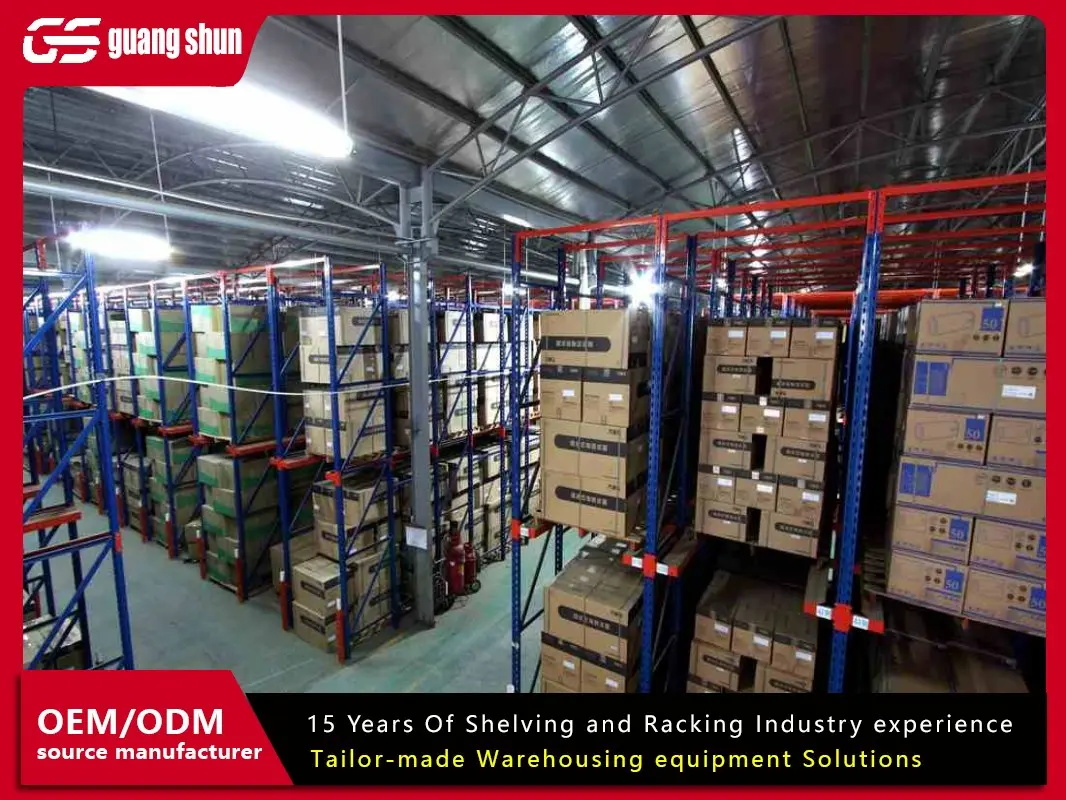
Warehouses are constantly fighting for space. As inventory grows, the available square footage doesn’t. This is where high-density storage solutions come into play. Among them, push back storage racks stand out for their unique blend of efficiency and accessibility.
If you're looking for a system that offers more selectivity than drive-in racks but better density than traditional selective pallet racking, push back might be the answer. This article explains how push back storage racks work, their key benefits, and how to determine if they're right for your operation.
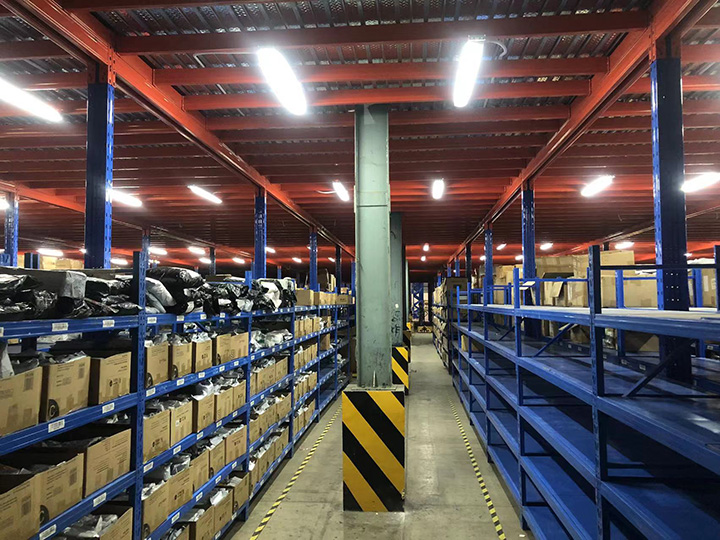
Let's start with the basics. Push back storage racks are a type of pallet racking system designed for high-density storage. They operate on a Last-In, First-Out (LIFO) inventory basis. This means the last pallet you put into a bay is the first one you'll take out.
The system consists of inclined rails set at a slight decline from the loading face to the back of the rack. Pallets are stored on wheeled carts, often called carriers or shuttles, that move along these rails.
Each bay typically holds multiple pallets deep, usually between two to six pallets deep. This design allows you to store more pallets in a smaller footprint compared to single-deep selective racks.
The operation is surprisingly straightforward, which is a big part of its appeal. Understanding the mechanics helps visualize its efficiency.
A forklift places the first pallet directly onto the inclined rails at the front of the bay. The next pallet is then loaded. As the forklift pushes this second pallet into the bay, it contacts the first pallet. The force gently pushes the first pallet back along the rails, making room for the new one.
This process repeats. Each new pallet pushes the previous pallets further back into the lane. The wheeled carts glide smoothly on the rails, requiring minimal force from the forklift.
Unloading is the reverse. The forklift removes the pallet sitting at the very front of the bay. Once that pallet is removed, the next pallet in the lane automatically rolls or is gently urged forward by gravity to the front position, ready for the next pick.
The gravity-assisted movement is key. The slight incline ensures that pallets naturally want to move toward the aisle, making retrieval quick.
Why do so many operations choose push back storage racks? The advantages are compelling, especially for specific inventory profiles.
This is the primary benefit. By storing pallets multiple rows deep, you dramatically reduce the number of aisles needed. You can achieve much higher storage density within the same warehouse cube. This allows you to store more goods without expanding your building.
Unlike some high-density systems (like drive-in racks), push back racks offer direct access to every pallet lane from the main aisle. You don't need to drive into the rack structure. The operator never enters the rack, enhancing safety. While it's LIFO, each lane is independent, providing more selectivity than a single, deep drive-in lane.
The forklift operator works entirely from the safety of the main aisle. There is no need to navigate deep into a dark rack structure. This reduces the risk of product damage from collisions and significantly lowers the chance of accidents involving the rack itself.
Because loading and unloading happen from a single, fixed aisle position, forklift travel time is minimized. The operator doesn’t spend time maneuvering in and out of deep lanes. This can lead to faster cycle times and higher throughput.
No system is perfect for every application. It's crucial to weigh these factors before investing in push back storage racks.
The LIFO principle is the system's core constraint. It works exceptionally well for non-perishable goods with high turnover of identical SKUs. Think of bottled beverages, paper products, or canned goods where you are constantly replenishing and shipping the same item.
It is not suitable for products with expiration dates or batch codes where strict FIFO (First-In, First-Out) rotation is mandatory.
Push back systems are more complex than standard selective racks. The cost per pallet position is higher due to the specialized carts, rails, and structural components. You must evaluate this against the long-term savings from increased density and operational efficiency.
These systems have specific weight limits for the carts and rails. They work best with uniform, stable pallet loads. Irregular or excessively heavy loads may not be suitable. Consistent pallet size and condition are also important for smooth operation.
The wheeled carts are mechanical components. While designed for durability, they may require occasional maintenance or replacement over the system's lifespan. It's wise to factor in this potential for long-term upkeep.
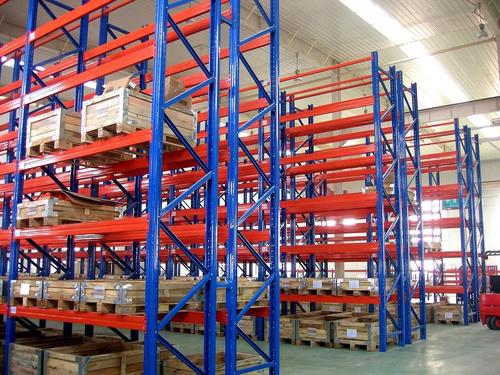
How do you know if push back storage racks will solve your problems? They excel in specific scenarios.
The perfect candidate for push back storage is a product with high throughput of a single SKU per lane. You should be storing multiple pallets of the same item. The system shines in industries like food and beverage distribution, manufacturing with raw material staging, and consumer goods warehousing.
This system requires well-planned aisle widths and clear workflow patterns. It’s most effective when you have a clear inbound (loading) and outbound (picking) process for the same SKUs stored in dedicated lanes. Consider your current and future forklift traffic patterns.
It's useful to compare. Drive-in racks offer even higher density but virtually no selectivity and greater operational complexity. Pallet flow (FIFO) racks offer dynamic rotation but at a higher cost and with more mechanical components. Push back racks sit in a valuable middle ground.
Planning is critical for a successful installation. Rushing this process can lead to inefficiency or safety issues.
Analyze your inventory. Identify the SKUs with the highest pallet volume and consistent turnover. These are your prime candidates for the push back storage racks lanes. Calculate the required lane depth (number of pallets deep) for each SKU based on your safety stock levels.
While the interface is simple, operators need training. They must understand how to engage the pallet correctly, apply the right amount of force, and recognize any potential issues with the carts or rails. Proper technique prevents damage.
Your needs may change. Some push back systems allow for the reconfiguration of lane depths. When planning your layout, consider potential future SKU mix changes. Leaving some areas for adjustable or selective racking can provide valuable flexibility.
A1: The main difference is accessibility and selectivity. With push back storage racks, the forklift operator never enters the rack structure; all work is done from the aisle. Each lane is also independently accessible. Drive-in racks require the forklift to drive deep into the rack to place or retrieve a pallet, and lanes are not independently selective.
A2: No, standard push back racks are strictly a LIFO (Last-In, First-Out) system. If you require FIFO (First-In, First-Out) rotation, you should consider a different high-density system like pallet flow racks, which use gravity rollers to automatically rotate inventory.
A3: Typically, push back storage racks are designed to be between 2 and 6 pallets deep. The most common depths are 3 to 5 pallets. The specific depth is chosen based on your storage volume per SKU and the system's weight capacity.
A4: Yes, when installed correctly and used properly, they are a very safe option. A key safety benefit is that the forklift operator remains in the main aisle, reducing collision risks. The systems also include features like safety locks on carts and robust design to handle the dynamic loads. Proper operator training is essential for safety.
A5: Maintenance primarily involves inspecting and servicing the wheeled carts. This includes checking for worn wheels, ensuring they roll freely, and verifying that any braking or locking mechanisms function. The structural rails and frames should be inspected periodically for damage, just like any other racking system.
A6: Generally, no. Standard counterbalance or reach trucks can be used. The most important factor is that the forklift has the correct reach height and load capacity for your specific rack configuration. The operator simply needs to be able to place the pallet onto the rails at the front of the bay.
Push back storage racks offer a powerful solution for warehouses that need to store more without building more. By balancing high density with good accessibility and safety, they can streamline operations for the right inventory. Carefully assess your SKU profile, turnover, and workflow to decide if this system will push your warehouse efficiency forward.

 Wechat
Whatsapp
Wechat
Whatsapp