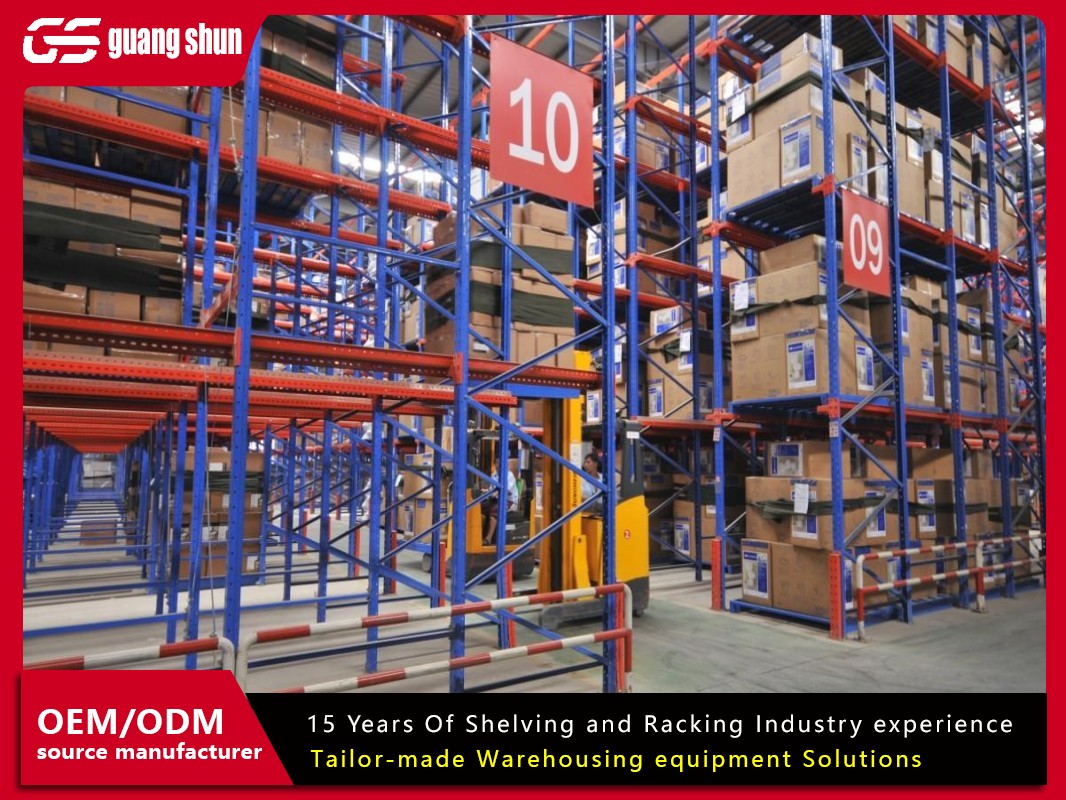
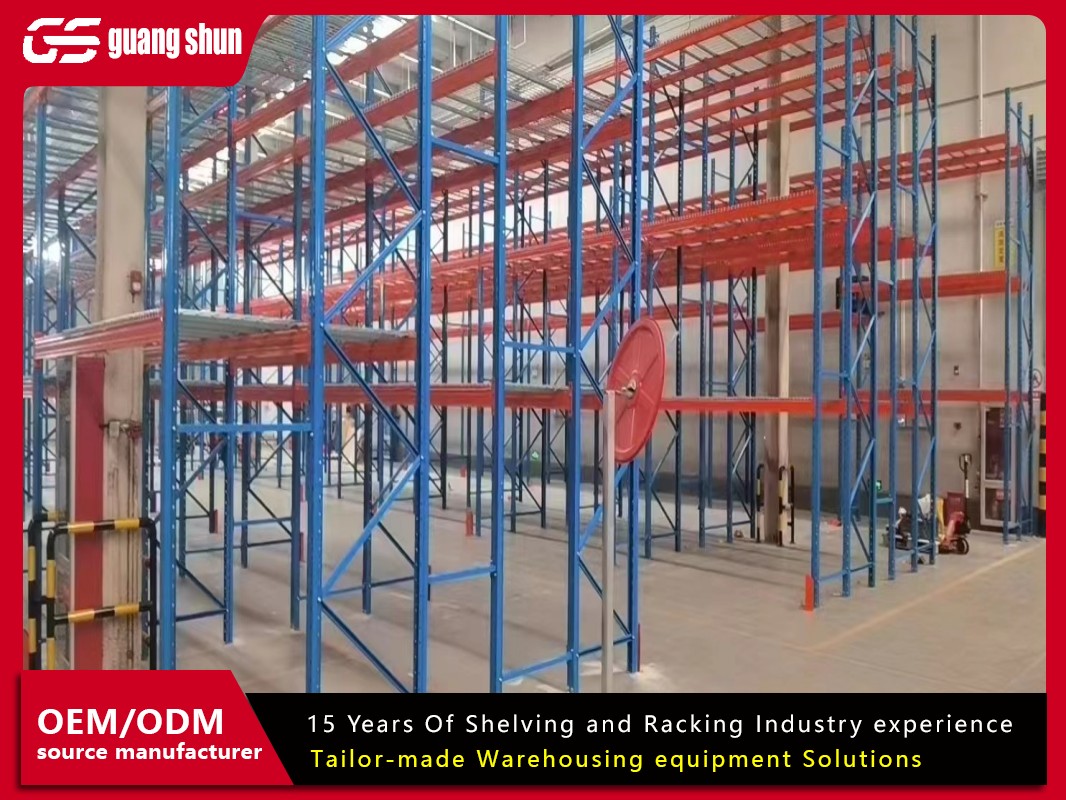
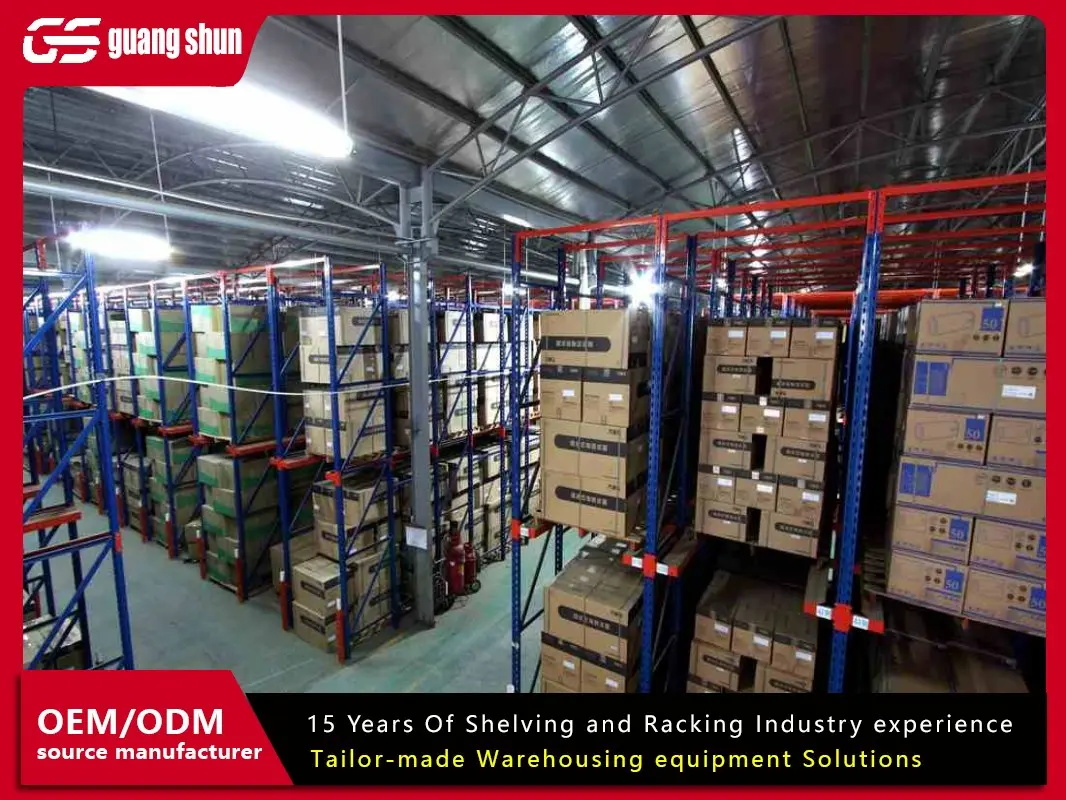
Push back roller racking represents an evolution in high-density storage, combining the space efficiency of drive-in systems with the selectivity and throughput advantages of push-back technology. Unlike cart-based push-back systems, roller-based designs utilize inclined rails fitted with precision rollers or wheels, enabling pallets to glide smoothly as each new load pushes preceding pallets deeper into the lane. This article provides a comprehensive technical examination of push back roller racking, covering roller material science, slope engineering, load dynamics, and system integration. Guangshun has engineered roller-based push-back systems for beverage, pharmaceutical, and cold storage facilities, and the following insights derive from those installations.
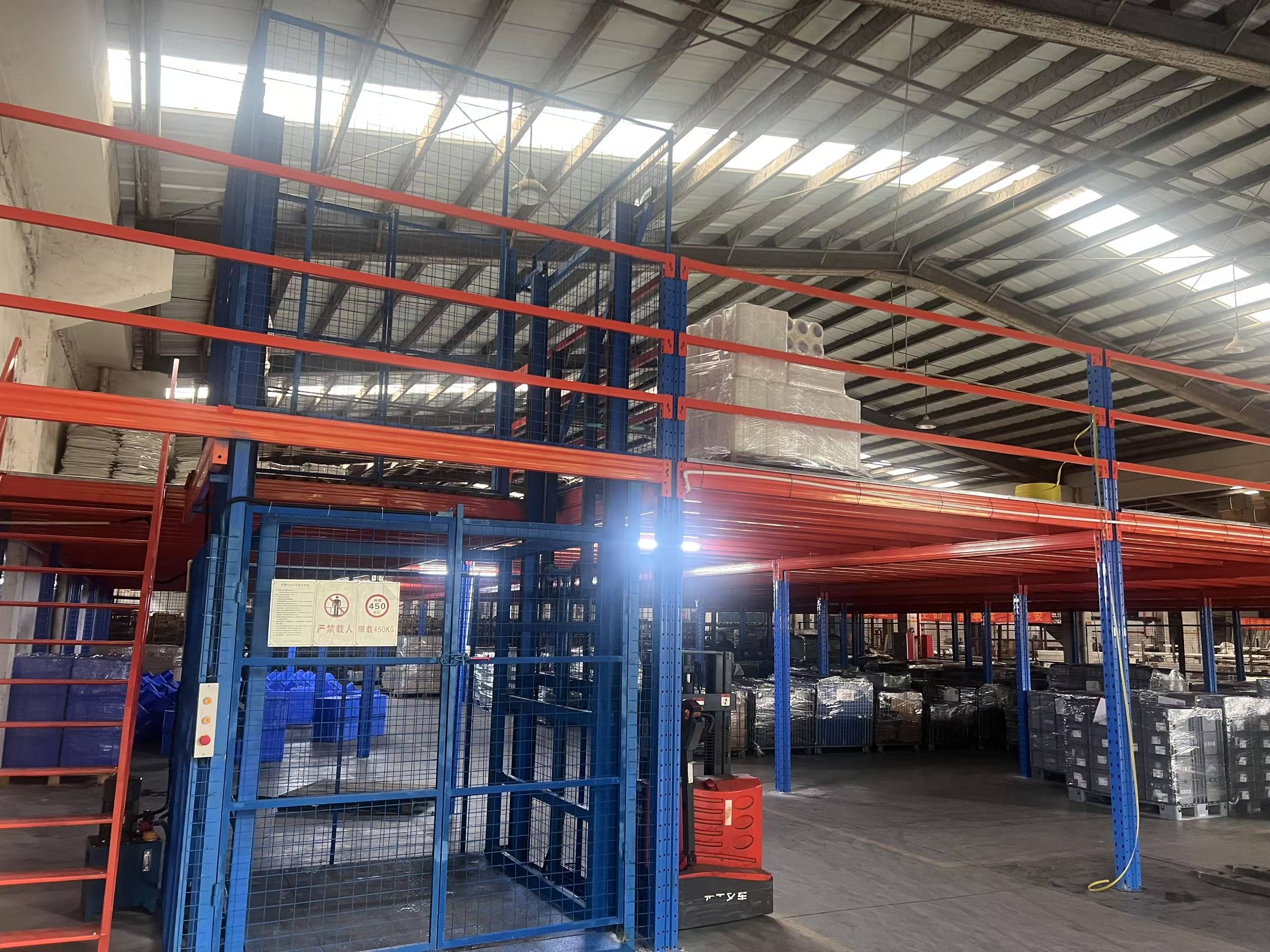
Unlike selective racking where each pallet has direct access, or cart-based push-back where nested carriages move on rails, push back roller racking uses gravity-assisted roller tracks to manage pallet movement. The system relies on a precisely calculated slope and low-friction rollers to ensure controlled pallet travel.
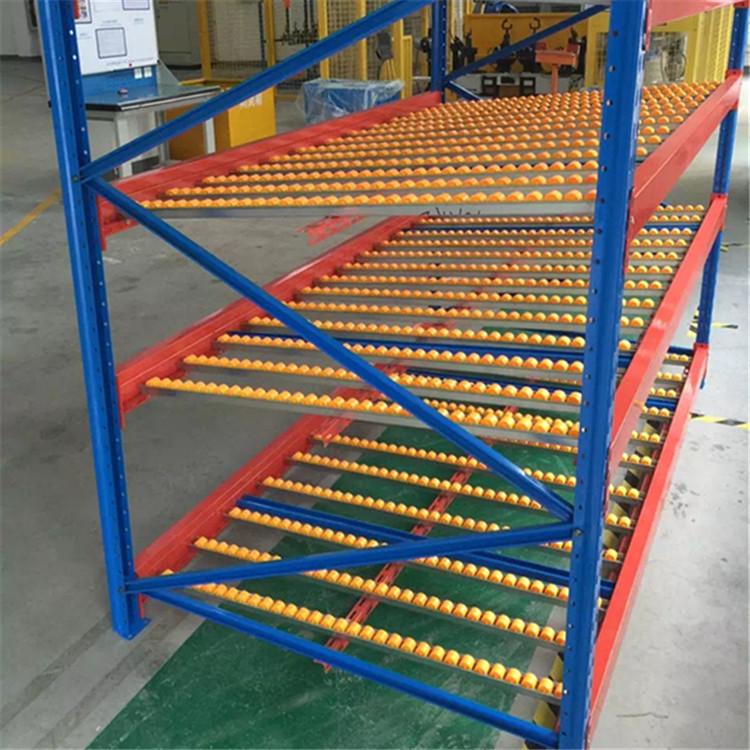
Each lane in a push back roller system consists of multiple sets of roller tracks mounted on inclined rails. Pallets are placed directly onto the rollers. As a new pallet is loaded, it pushes the previous pallet(s) backward along the slope. The system operates on a LIFO (Last-In, First-Out) principle, typically accommodating 2–5 pallets per lane.
Roller engagement: Pallet bottom surfaces contact roller crowns; friction coefficients are engineered between 0.02 and 0.05 for smooth movement.
Slope gradient: Standard pitch is 3/8" per foot (approximately 3.1% slope), though gradients may be adjusted based on pallet weight and roller material.
Speed control: Hydraulic or mechanical brakes on roller axles prevent pallets from accelerating excessively.
Roller-based systems offer distinct advantages over cart-based alternatives:
Fewer moving parts: No nested carts, reducing initial cost and maintenance complexity.
Lower profile: Roller tracks are shallower than cart rails, allowing more vertical storage space.
Better for uniform loads: Ideal for standard pallets with smooth bottom decks.
However, cart-based systems may be preferred for uneven pallet bottoms or heavier loads (>1,500 kg per pallet).
The performance and longevity of push back roller racking depend critically on roller material, bearing selection, and maintenance accessibility.
Polyurethane-coated steel rollers: Provide quiet operation and protect pallet surfaces. Polyurethane hardness typically 80–95 Shore A. Ideal for ambient warehouses and lighter loads (≤1,200 kg).
Steel rollers (galvanized or stainless): Offer maximum durability and load capacity (up to 2,500 kg per pallet). Used in heavy industrial or cold storage applications.
Nylon or acetal rollers: Light-duty applications; lower friction but susceptible to wear under heavy loads.
Guangshun's roller tracks use sealed ball bearings (ABEC 3 or higher) to reduce rolling resistance and protect against debris. Roller shafts are typically 12–20 mm diameter, mounted in formed steel channels.
Bearing type: Deep-groove ball bearings with double seals to prevent contamination.
Lubrication: Synthetic grease rated for operating temperature range (-30°C to +80°C).
Bearing life: Designed for 50,000+ cycles at full load; periodic lubrication intervals extend service life.
Roller spacing is determined by pallet bottom configuration:
Standard wood pallets: Roller spacing typically 75–100 mm to ensure at least three rollers contact each bottom board.
Plastic or steel pallets: Continuous or solid bottoms may require closer spacing (50–75 mm) to prevent sagging.
Damaged pallets: Roller systems may not perform reliably with broken bottom boards; cart-based systems may be preferred.
Push back roller racking must accommodate both vertical loads and horizontal forces from pallet movement.
The supporting structure consists of:
Upright frames: Roll-formed or structural steel columns, typically 2.5–4.5 mm thickness.
Horizontal beams: Formed channel sections that support the roller tracks; designed for UDL of 1,500–3,000 kg per lane.
Inclined rails: Heavy-gauge formed steel channels with precisely fabricated slopes; rails are welded or bolted to beams.
Each pallet applies load to the roller tracks, which transfer forces to the beams and uprights. Key calculations:
Beam deflection: Limited to L/180 under full load to maintain slope consistency.
Roller deflection: Maximum 1 mm under rated load to prevent pallet bottom damage.
Upright buckling: Per RMI/FEM standards with safety factor of 1.5.
Uncontrolled pallet descent can cause impact damage and safety hazards. Speed control mechanisms include:
Centrifugal brakes: Attached to roller axles; increase resistance as rotational speed increases.
Hydraulic dampers: Provide constant resistance; adjustable for different pallet weights.
Friction pads: Contact roller flanges to provide controlled deceleration.
Guangshun's systems incorporate adjustable speed controls calibrated during commissioning based on actual pallet weights.
Push back roller racking is particularly suited to specific operational profiles.
High-volume, uniform pallets of beverages, canned goods, and packaged foods are ideal for push back roller systems. LIFO rotation aligns with shelf-life management where newer product is used first. Roller systems reduce forklift travel by 40–60% compared to selective racking. Guangshun has installed roller push-back systems for beverage distributors handling 3,000+ pallet movements daily.
In cold storage, space efficiency translates directly to energy savings. Push back roller racking with galvanized steel rollers and low-temperature lubricants operates reliably at -30°C. The reduced aisle requirement (typically 1 lane per 4–6 pallet positions) cuts refrigerated footprint by 50% compared to selective racking.
Strict inventory rotation requirements in pharmaceutical distribution often favor LIFO systems for batch control. Stainless steel roller tracks with smooth surfaces facilitate cleaning and meet sanitary requirements. Load capacities in these applications typically range from 800–1,200 kg per pallet.
Heavier components (brake drums, rotors, batteries) benefit from heavy-duty roller systems rated for 1,500–2,000 kg per pallet. Steel rollers with hardened bearings withstand frequent loading cycles.
Proper installation is critical for reliable roller system performance.
Slope consistency: Each lane must maintain uniform slope within ±1 mm per meter; deviations cause pallet hesitation or runaway.
Laser leveling: Used during installation to verify slope across multiple lanes.
Field adjustment: Rail mounting brackets allow vertical adjustment (±10 mm) for final alignment.
Floor flatness: FM2 or better (≤4 mm deviation over 3 m) required for anchor integrity.
Baseplates: Steel shims used to level uprights; no wood shims permitted.
Anchor torque: Verified with torque wrench; typically 150–250 N·m for M16 anchors.
Roller parallelism: All rollers in a lane must be parallel within 0.5 mm to prevent pallet skew.
Height consistency: Roller crowns must be coplanar within 1 mm across the lane width.
Guangshun's installation crews use precision jigs and laser tools to verify alignment before system handover.
Proper maintenance extends the operational life of push back roller racking to 15–20 years.
Monthly: Remove debris from roller tracks; check for loose fasteners; test speed controls.
Quarterly: Lubricate bearings per manufacturer specifications; inspect roller wear.
Annually: Verify slope with laser; load test lanes; replace worn rollers.
Roller seizure: Caused by debris accumulation or bearing failure; replace individual rollers.
Speed control malfunction: Brakes or dampers may lose calibration; recalibrate per load profile.
Track deformation: Impact damage from forklifts or overload; repair or replace sections.
Recommended spare parts inventory:
10% of rollers (especially for high-wear areas like lane entrances).
2–3 speed control units per system.
Assorted bearings and lubrication.
Push back roller racking typically costs $250–450 per pallet position installed, compared to $150–250 for selective racking and $200–350 for cart-based push back. Despite higher upfront cost, ROI is driven by:
Space efficiency: 50–70% density increase over selective racking; reduces need for new construction.
Labor savings: Reduced forklift travel time (40–60% less than selective).
Energy savings: Smaller refrigerated volume in cold storage applications.
Reduced product damage: Forklifts never enter lanes, eliminating pallet damage from impact.
Payback periods typically range from 18 to 36 months in high-volume operations.
When specifying push back roller racking, engineers should evaluate:
Pallet condition: Uniform bottom boards required for roller systems; damaged pallets may cause jams.
Load range: Systems can accommodate varied weights but speed controls may require adjustment for mixed loads.
Throughput: Lane depth selection (2–5 pallets) balances density against retrieval time.
Environmental factors: Temperature, humidity, and sanitation requirements determine roller material and coating.
Integration: Compatibility with WMS, barcode scanning, and automated equipment.
Push back roller racking offers a proven solution for warehouses requiring high density with LIFO rotation and moderate throughput. The engineering behind these systems—from roller material selection and slope calibration to speed control and structural design—demands precision manufacturing and installation. Push back roller racking systems from Guangshun integrate heavy-duty components, adjustable speed controls, and factory-trained installation to deliver reliable performance across diverse applications. By understanding the technical parameters outlined above, facility managers can select a system that maximizes space utilization while maintaining operational efficiency and safety.
A1: Standard push back roller racking systems accommodate 2 to 5 pallets per lane. Deeper lanes (4–5 pallets) maximize density but increase retrieval time for the deepest pallets. Lane depth selection should be based on SKU velocity and turnover frequency.
A2: Roller systems perform best with uniform wood, plastic, or steel pallets having continuous or closely spaced bottom boards. Damaged pallets with broken boards or protruding nails can jam between rollers. For mixed or irregular pallets, cart-based push back may be preferred.
A3: Speed control devices—centrifugal brakes, hydraulic dampers, or friction pads—are mounted on roller axles. These devices adjust resistance based on rotational speed, ensuring controlled descent regardless of pallet weight. Guangshun systems include adjustable controls calibrated during commissioning.
A4: Yes, with appropriate materials: galvanized steel rollers, low-temperature lubricants (rated to -40°C), and bearings with cold-weather seals. Guangshun offers freezer-rated roller systems with documented performance at -30°C.
A5: Monthly cleaning of roller tracks to remove debris; quarterly lubrication of bearings; annual inspection of slope alignment and speed control calibration. Rollers typically last 5–10 years depending on usage; replacement is straightforward without dismantling the entire lane.
A6: Push back roller systems use LIFO (Last-In, First-Out) rotation and are typically limited to 2–5 pallets per lane. Pallet flow systems use FIFO (First-In, First-Out) and can accommodate deeper lanes (10–20 pallets). Push back is generally lower cost per pallet position and requires less floor slope precision, but flow systems offer better rotation for perishable goods.
---
For engineering consultations, slope calculations, or to request a
layout simulation, visit Guangshun's push back roller
racking page or contact our storage systems specialists.

 Wechat
Whatsapp
Wechat
Whatsapp