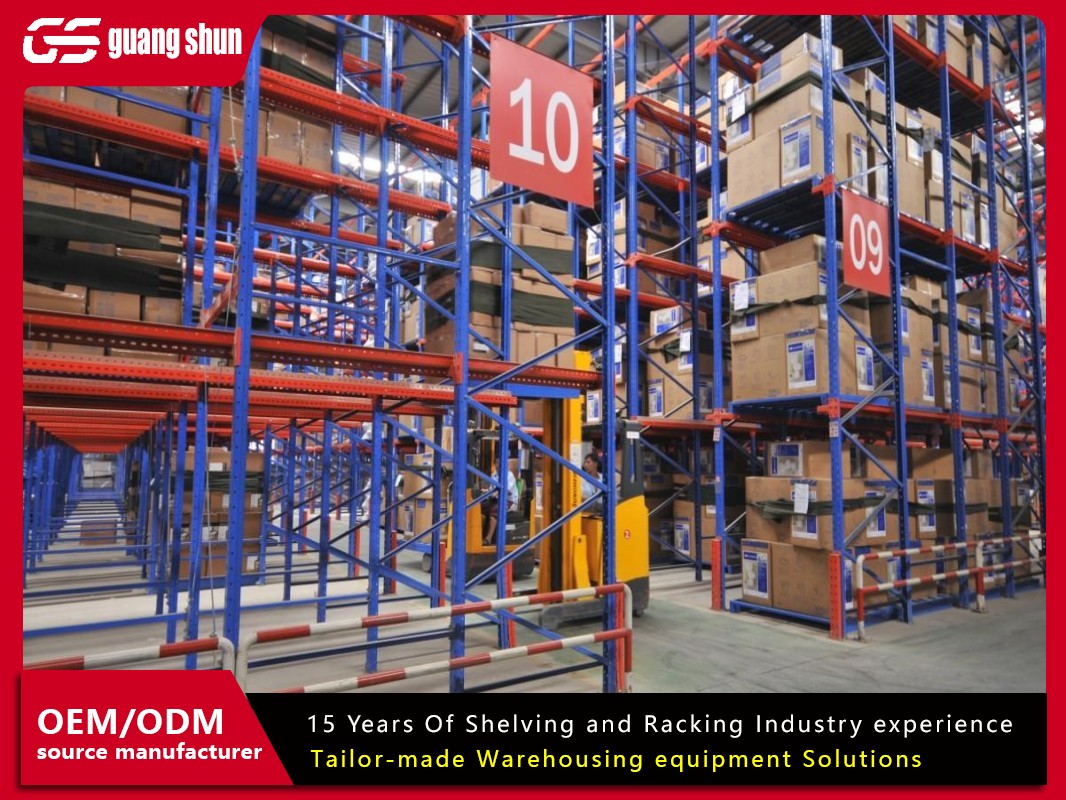
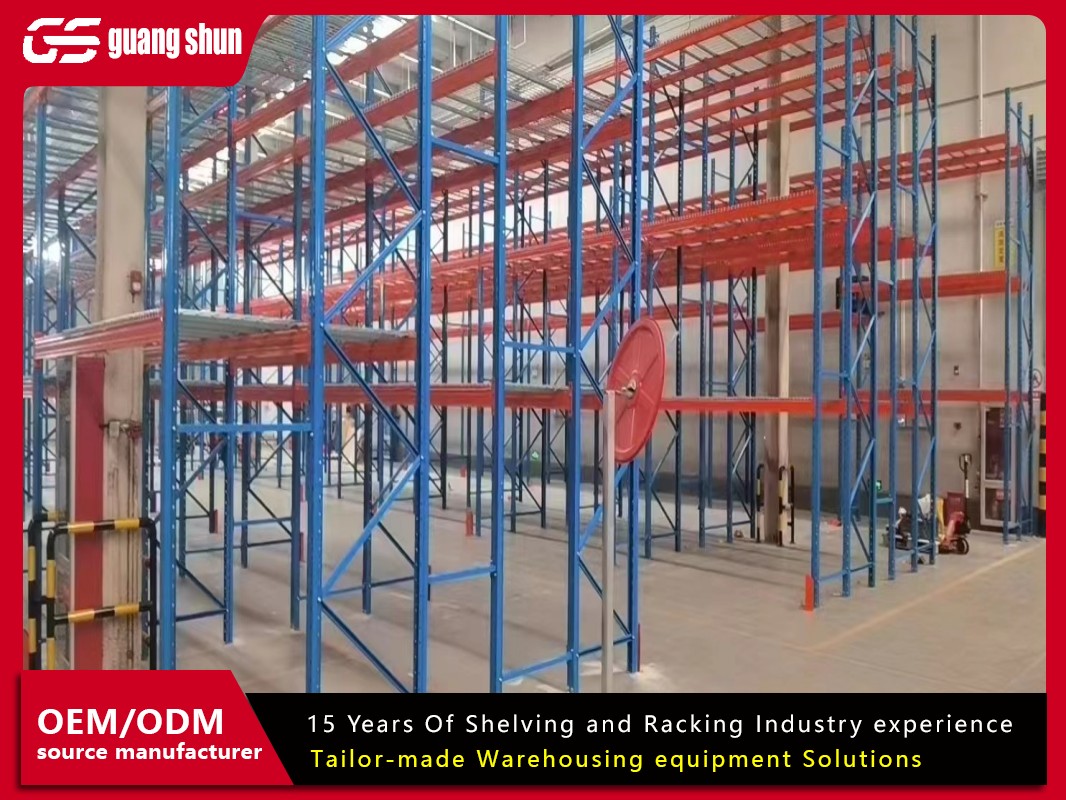
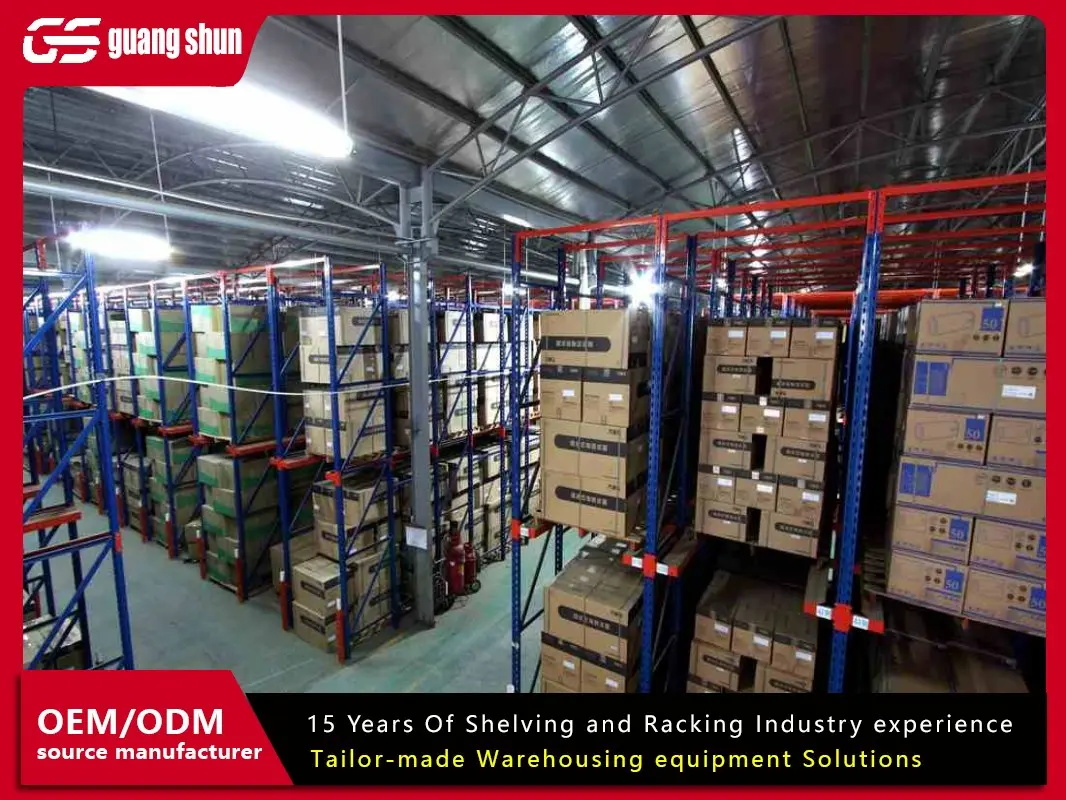
Heavy duty mobile racking represents the convergence of high-density storage and extreme load capacity. Unlike standard mobile shelving used for light archives, these engineered systems support multiple tonnes of palletized goods per carriage while moving laterally on precision rails. By eliminating fixed aisles, heavy duty mobile racking can increase storage density by 50–100% compared to selective racking, making it indispensable for cold storage, automotive parts distribution, and high-turnover logistics centers where floor space is at a premium. Guangshun has engineered and installed these systems across multiple continents, and the following technical analysis draws from that field experience.
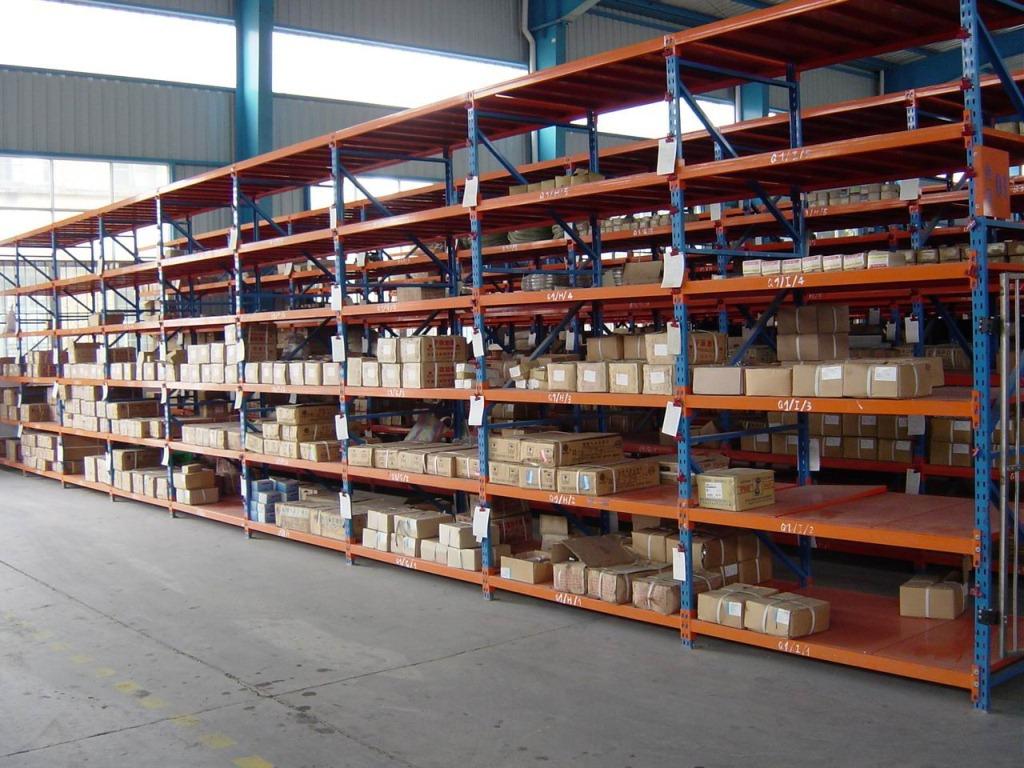
A heavy duty mobile racking system consists of multiple carriages—each supporting several bays of pallet racking—that move laterally on floor-mounted rails. The defining characteristic is load capacity per carriage, which typically ranges from 20 to 100 tonnes when fully loaded.
Light industrial mobile racking: Up to 20 tonnes per carriage; suitable for carton storage, light pallets (500–1,000 kg).
Medium duty: 20–50 tonnes; typical for standard pallet loads (1,000–1,500 kg per position).
Heavy duty mobile racking: 50–100+ tonnes; designed for automotive parts, steel coils, or high-density cold storage with 2,000+ kg pallets.
These systems often reach heights of 10–15 m, requiring structural engineering that integrates racking stability with moving carriage dynamics.
Travel speed: 3–8 m/min, inverter-controlled for soft start/stop.
Aisle opening time: 20–45 seconds depending on carriage travel distance.
Positioning accuracy: ±2 mm via laser or encoder feedback.
Operational cycles: Designed for 50,000+ movements over system life.
The carriage itself is a welded steel structure that must withstand both static loads (full pallet weight) and dynamic forces (acceleration, deceleration, and seismic).
Material: Structural steel (S355JR or equivalent) fabricated into box or I-beam sections.
Welding: Full penetration welds per AWS D1.1; non-destructive testing (NDT) for critical joints.
Finite element analysis (FEA): Models deflection under full load; carriage frame deflection limited to L/500.
Corrosion protection: Hot-dip galvanized or two-pack epoxy for harsh environments.
Guangshun's carriages are designed with integral lifting points and are tested to 1.2× rated load before shipment.
For heavy duty mobile racking, wheel and rail selection is critical to long-term reliability.
Wheel type: Forged steel flanged wheels (200–400 mm diameter) with heat-treated rims. Polyurethane tires are insufficient for heavy loads due to compression set.
Bearing selection: Spherical roller bearings with high radial and axial load capacity; sealed for debris protection.
Rail profile: Flat-bottom or V-groove rails, typically 50–70 kg/m rail steel (grade 70 ksi yield minimum).
Wheel load calculations: Each wheel typically carries 5–15 tonnes; contact pressure limited to 500 MPa to avoid rail indentation.
Rail installation requires laser alignment with straightness ≤1 mm per 3 m and gauge tolerance ±1 mm.
Reliable movement of multi-ton carriages demands robust drive systems with precise control.
Motor type: AC induction motors with variable frequency drives (VFD); power 2–10 kW per carriage depending on mass.
Transmission: Gearbox with chain drive or direct coupling to wheel axles; gear ratio selected for torque requirements.
Braking system: Spring-applied, power-off brakes (SIL3 rated) that engage immediately upon power loss or emergency stop.
PLC-based control: Distributed I/O with central PLC; protocols include Profinet, EtherCAT, or Modbus TCP.
Positioning: Laser distance sensors (accuracy ±2 mm) or absolute encoders on drive shafts.
Operator interface: Touchscreen panels at carriage ends, radio remote, or integration with warehouse management system (WMS).
Fleet management: Software coordinates multiple carriages to prevent collisions and optimize aisle access sequences.
Guangshun's control systems include diagnostic dashboards that track run hours, fault history, and predictive maintenance alerts.
With moving masses exceeding 50 tonnes, safety systems for heavy duty mobile racking must be redundant and fail-safe.
Photoelectric sensors: Through-beam or retro-reflective sensors at aisle entrances; beam interruption stops all carriage movement immediately.
Safety edges: Mechanical contact strips along carriage ends and sides; 25 N activation force triggers emergency stop within 0.5 seconds.
Emergency stop buttons: Hardwired to safety relays (SIL3/PL e) located on carriages and remote controls.
Audible alarms: Horns or beacons activate during movement to warn personnel.
Mechanical buffers: Polyurethane or rubber stops at rail ends absorb impact if travel limits are exceeded.
Inductive proximity sensors: Provide deceleration and final stop signals.
Rail clamps: Optional for seismic zones; automatically engage during earthquakes to prevent carriage movement.
In seismic zones, heavy duty mobile racking must resist horizontal accelerations. Anti-tip devices lock carriages to the floor during seismic events, and baseplate anchors are designed for ductile performance per ASCE 7.
These systems are most valuable where space is expensive and loads are heavy.
Refrigerated space carries high construction and operating costs. Mobile racking reduces footprint by 50–70%, directly lowering refrigeration energy consumption. Guangshun has installed freezer-rated heavy duty mobile racking operating at -30°C, using low-temperature steel (S355NL), synthetic lubricants, and heated control enclosures.
Automotive warehouses store heavy components (engines, transmissions, dies) that require per-level capacities of 2,000–4,000 kg. Mobile racking consolidates multiple SKUs into a smaller footprint while maintaining selectivity. Heavy duty mobile racking in these facilities often integrates with flow rails for FIFO rotation of fast-moving parts.
Steel coils, bars, and sheet metal are among the heaviest stored items. Mobile racking with reinforced carriages and heavy-duty wheels can support 50+ tonnes per carriage, allowing dense storage without the multiple aisles required by cantilever racks.
E-commerce warehouses with bulky goods (furniture, fitness equipment) benefit from mobile racking to maximize cube utilization. Carriages can be configured with multi-tier shelving for reserve storage, while pick faces are maintained at accessible levels.
Heavy duty mobile racking demands precision installation to ensure long-term reliability.
Straightness: ≤1 mm per 3 m, verified with laser tracker.
Parallelism: ≤2 mm over entire rail length.
Level: ±1 mm over 3 m; shimmed where needed.
Anchor torque: Verified with torque wrench; typically 200–400 N·m for M20–M24 anchors.
Wheel alignment: All wheels must be coplanar within 0.5 mm to prevent binding.
Drive synchronization: Dual-drive carriages require encoder feedback to maintain alignment.
Load testing: Full-load operational test over entire travel length before commissioning.
Guangshun's installation crews are factory-trained and use laser alignment tools for every project.
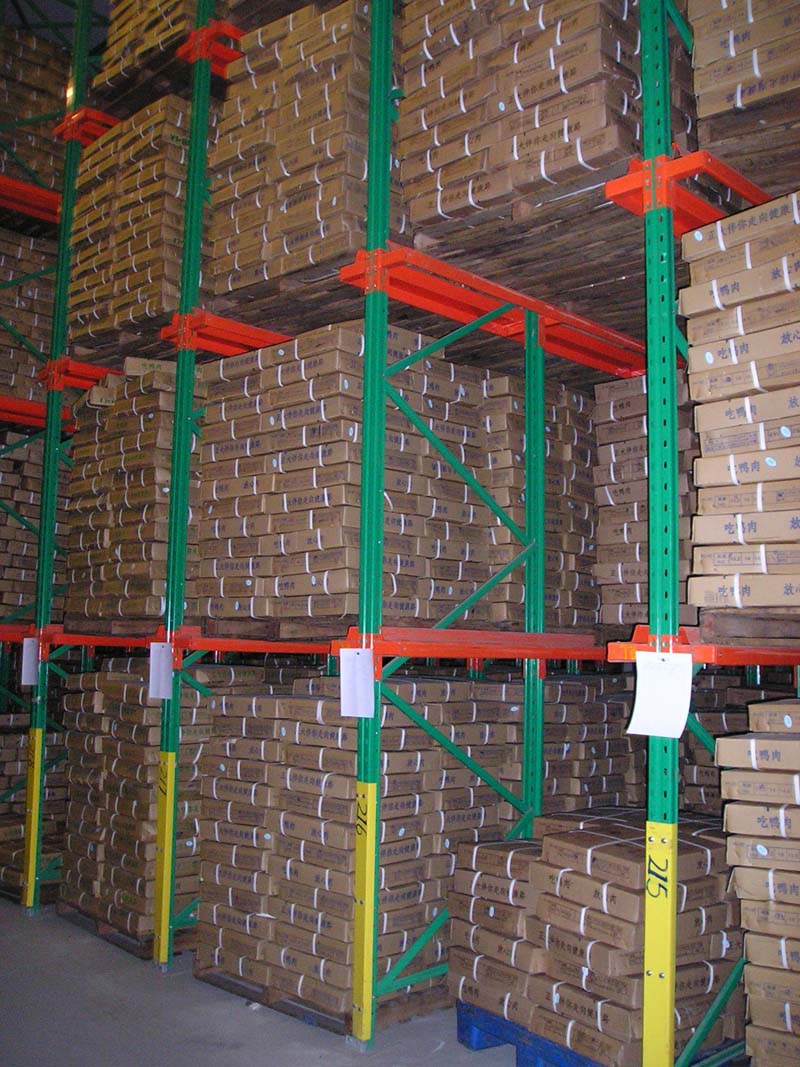
Proper maintenance extends system life to 20+ years.
Monthly: Clean rails and debris from wheel paths; inspect safety sensors and emergency stops.
Quarterly: Lubricate bearings and chains; check brake function; inspect wheel wear.
Annually: Full electrical inspection (insulation resistance, contactor wear); load test; rail wear measurement.
While initial investment in heavy duty mobile racking is higher than static racks (typically 2–3× selective racking cost), TCO analysis often favors mobile systems due to:
Space savings: Avoiding new construction at $1,500–3,000/m².
Energy reduction: Smaller heated/cooled volume.
Labor efficiency: Reduced travel distances.
Maintenance: Lower than drive-in racks due to reduced forklift impacts.
Payback periods typically range from 2 to 5 years.
These systems are optimal when:
Floor space is constrained and land costs are high.
Loads exceed 1,500 kg per pallet position.
Cold storage or cleanroom environments require minimized footprint.
SKU variety requires selectivity but density is paramount.
Future flexibility is needed—mobile systems can be reconfigured or relocated.
Heavy duty mobile racking systems represent a sophisticated engineering solution for warehouses facing space constraints with heavy loads. From robust carriage design and precision rail systems to redundant safety controls, these systems deliver density without compromising safety or accessibility. Heavy duty mobile racking from Guangshun integrates FEA-validated structures, PLC-based controls, and comprehensive safety features, supported by factory-trained installation and maintenance programs. For facilities where every square meter counts, mobile racking offers a technically proven path to doubling capacity within existing footprints.
A1: Heavy duty mobile racking systems typically support 20–100 tonnes per carriage, depending on carriage size, wheel configuration, and rail design. Guangshun has engineered carriages exceeding 120 tonnes for specialized applications such as steel coil storage.
A2: Mobile racking typically achieves 50–100% higher density than selective racking and 10–30% higher than drive-in racking, while maintaining 100% accessibility to every pallet (drive-in is LIFO with limited selectivity). Mobile systems also eliminate forklift entry into storage lanes, reducing product damage.
A3: Required safety features include photoelectric sensors at aisle entrances, mechanical safety edges, emergency stop buttons, audible movement alarms, and spring-applied brakes. Seismic zones require anti-tip devices and ductile baseplate anchors. All systems comply with ANSI MH16.1 or FEM 9.831.
A4: Yes, with freezer-rated components: low-temperature steel (S355NL), hot-dip galvanized coating, synthetic lubricants rated to -40°C, and heated control enclosures. Guangshun has installed freezer-rated mobile systems operating reliably at -30°C for over a decade.
A5: FM2 or better (≤4 mm deviation over 3 m). For systems over 15 m tall, FM1 or Superflat tolerances (≤3 mm over 3 m) are recommended to maintain rail alignment and carriage stability. Guangshun performs laser surveys to verify floor conditions before installation.
A6: With proper maintenance, 20–25 years. Key components like wheels and bearings may require replacement at 10–15 years. Galvanized systems in controlled environments have exceeded 30 years of service. Guangshun offers predictive maintenance programs to maximize system life.
---
For engineering consultations, load calculations, or to discuss a
heavy duty mobile
racking project, visit Guangshun's heavy-duty racking page or contact our
mobile systems specialists.

 Wechat
Whatsapp
Wechat
Whatsapp