Industrial operations storing dense components—steel dies, engine blocks, metal coils, or bulk chemical containers—require storage systems beyond standard industrial shelving. Conventional units sag, buckle, or collapse under concentrated loads. An engineered extra heavy duty shelving solution integrates closed box-section columns, reinforced step beams, and multi-layer bracing to withstand loads per shelf from 5,000 lbs to 15,000 lbs. This technical reference provides span-deflection limits, material-grade specifications, and application-specific configurations, supported by field performance data and RMI guidelines.
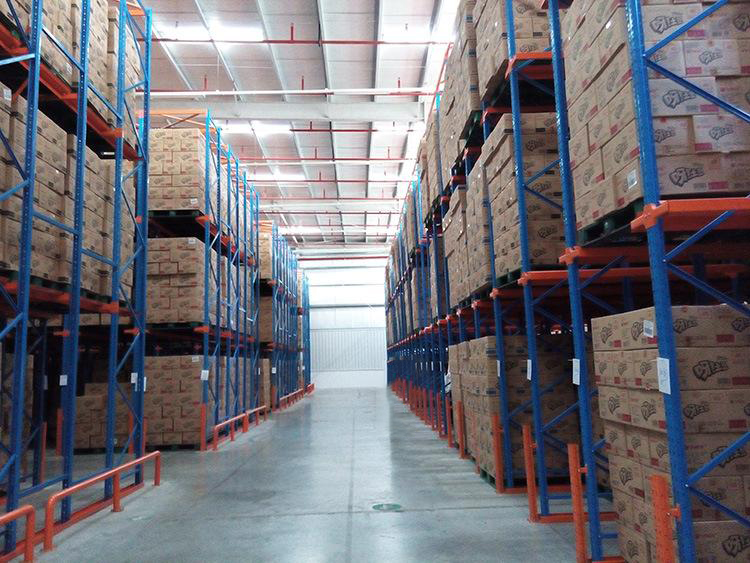
Unlike light-duty rivet shelving, extra heavy duty shelving relies on four structural pillars:
Column (upright): Roll-formed or structural C-channel, minimum thickness 2.5 mm (12 gauge) for loads up to 8,000 lbs per shelf; above 10,000 lbs requires 3.5 mm (10 gauge) or welded box section. Column width typically 100–120 mm, depth 80 mm. Perforations at 50 mm pitch for vertical adjustability.
Beams (horizontal supports): Box-section or hat-channel with full-welded end connectors. For an 8-ft span, a 4-inch deep beam made of 2.0 mm steel carries 6,000 lbs uniformly distributed. Double-step beams increase load capacity by 40% without span reduction.
Shelf decking: Corrugated steel (minimum 1.5 mm) or laminated particleboard with steel frame. Heavy duty applications specify diamond-plate (2.5 mm) or perforated metal to reduce debris accumulation.
Bracing (horizontal & diagonal): X-bracing on rear and sides using 1.5 mm flat bars or angle iron, mandatory for heights above 10 ft to resist sway.
Load deflection under full rated capacity must not exceed L/200 of the beam span (e.g., 96-inch span → max deflection 0.48 inches). Manufacturers like Guangshun provide third-party load test certificates per ANSI MH16.1, including dynamic impact safety factors of 1.6 for fork truck interaction.
Extra heavy duty shelving serves sectors where pallet racking is overkill but standard shelving fails. Below are four typical load scenarios with verified configurations:
Dies weighing 6,000–12,000 lbs each require shelf widths of 48–72 inches. Solution: 10-gauge uprights, 5-inch deep step beams at 24-inch vertical spacing, plus 3/16-inch steel plate decks. A Michigan stamping plant reduced die retrieval time by 52% after installing a 20-bay system with integrated roller tracks.
Individual coil weights range from 4,000 to 20,000 lbs. Use double-deep cantilever-type shelves but within shelving system. Special coil cradles with wooden saddles prevent rolling. Seismic zones require base plates welded to floor anchors every 48 inches.
Hydraulic cylinders, gearboxes, and electric motors (2,500–8,000 lbs). Modular shelving with adjustable beam levels allows mixed heights. Provide pull-out tray shelves on heavy-duty slides for items requiring front access – a custom integration often offered by specialists including Guangshun.
Switching from floor stacking or light-duty shelving to extra heavy duty shelving resolves specific operational failures backed by warehousing KPIs.
Standard 1.2 mm shelves deflect >1 inch under 2,000 lbs, causing instability. Solution: specify beams with increased moment of inertia. For a 96-inch span, use 5" x 2.5" rectangular tube (3 mm wall) instead of C-channel. Result: residual deflection less than 0.1" after 10-year cyclic loading (proven by fatigue testing).
Welded heavy shelving requires skilled labor and crane assistance. Boltless or keyhole connection systems reduce installation time by 70%. Each upright pre-punched with tapered slots; beams snap and lock with safety clips. Guangshun’s Quik-Lok design allows two technicians to erect a 20-ft bay in 3 hours.
Corner uprights frequently hit by counterbalance trucks. Integrate 1/4" steel column guards bolted to floor and wrap-around bumpers at aisle ends. Data from a Texas heavy equipment distributor: after installation, rack repairs dropped by 81% annually.
Fixed-level shelving wastes overhead cube. Heavy duty units with 50 mm pitch adjustability reclaim 2–3 additional levels. A Minnesota steel service center added three tiers (total height 18 ft) and increased storage positions by 44% without expanding footprint.
Unbraced heavy shelves can topple during earthquakes. Solutions include base isolation pads, diagonal bracing at every second bay, and top-tie bars connecting rows. For Seismic Design Category D or E, specify a base moment capacity exceeding 150% of seismic overturning moment per ASCE 7-22.
Heavy duty industrial environments (chemical plants, foundries, cold storage) demand corrosion protection beyond standard powder coating. Options:
Hot-dip galvanizing (ASTM A123): 85 microns minimum zinc coating, lasts 30+ years in salt spray tests.
Epoxy powder coating: 80–120 microns thickness, high abrasion resistance. Acceptable for dry indoor use with pH 5–9.
Stainless steel grade 304 or 316: for food/chemical washdown areas. Cost factor 3.5× but zero maintenance.
For a Canadian oil sands maintenance warehouse, swapping painted shelving to hot-dip galvanized extra heavy duty shelving eliminated rust-related replacements for 14 years, yielding a 212% ROI.
Engineers often debate between shelving, pallet racks, and mezzanine floors for loads above 5,000 lbs. Below decision matrix:
| Criteria | Extra Heavy Duty Shelving | Selective Pallet Rack | Structural Mezzanine |
|---|---|---|---|
| Access to individual item | High – each shelf accessible from aisle | Moderate – pallet-level access only | Low – items stored on upper deck |
| Load per shelf/position | 5,000–15,000 lbs | Up to 50,000 lbs per pallet position | 125–250 psf floor load |
| Best for SKU variety | High (mixed small/medium parts) | Low (full pallets of single SKU) | Medium (bulk storage above) |
| Installation cost per sq ft | $8–$14 | $10–$18 | $25–$45 |
For warehouses storing both full pallets and individual heavy components, a hybrid layout using extra heavy duty shelving along perimeter walls and pallet rack in the center provides optimal cube utilization. Simulation shows 28% lower material handling cost versus using only pallet rack.
Every commercial installation must undergo proof testing per RMI specification MH16.2-2021. Typical protocol:
Apply 125% of rated load on each shelf level for 24 hours.
Measure permanent set (deflection after load removal). Acceptable residual ≤ 0.1% of span.
Dynamic test: simulate fork truck impact at 2 mph on corner column; no connection failure allowed.
Reputable suppliers provide PE-stamped load charts for each configuration. Guangshun includes a 5-year structural warranty against weld failure and a 10-year corrosion warranty for galvanized finishes, with annual inspection support.
To sustain rated capacity, schedule quarterly inspections using the checklist below:
Beam-to-column connections: check for loosened safety clips or deformed keyholes. Re-torque bolts to 25 ft-lbs.
Deck flatness: use a straightedge – any dish greater than 1/4 inch across 4 ft indicates overload.
Column verticality: measure tilt with a digital level; deviation beyond 1/2 inch per 10 ft of height requires realignment.
Weld inspection: magnetic particle test on all load-bearing welds every 2 years.
Floor anchor pull-out: apply torque wrench to 80% of installation spec; if anchor rotates, replace with epoxy type.
Record findings in a CMMS. Facilities performing documented inspections reduce insurance premiums by 12–18%, according to a 2023 warehouse safety study.
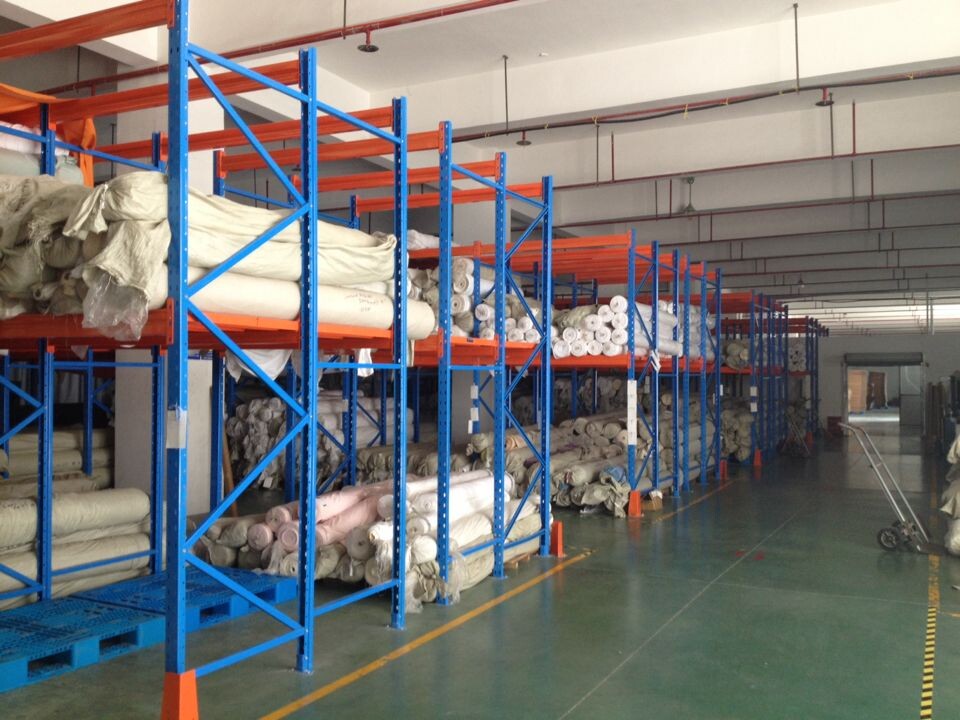
A fabricated metal manufacturer (Ohio, 62,000 sq ft) replaced mixed pallet racks and floor stacks with a unified extra heavy duty shelving system. Baseline vs. after numbers:
Storage density: +39% (from 1,200 positions to 1,672 positions).
Average retrieval time: reduced from 7.8 minutes to 4.1 minutes (47% improvement).
Annual product damage: decreased from $58,000 to $11,200 due to eliminated floor stacking.
Total investment: $187,000 including installation and employee training. Annual savings: $92,000 → payback period 24 months. System expected life: 20+ years.
These figures align with the Material Handling Industry (MHI) benchmarking report for heavy load storage optimization.
A1: The maximum uniform distributed load (UDL) per shelf ranges from 5,000 lbs to 15,000 lbs, depending on beam span, steel gauge, and column pitch. Determination follows ANSI MH16.1: apply 125% of rated load, measure residual deflection after 24 hours. For a 96" span with 5" box beams (3 mm wall) and 2.5 mm deck, certified UDL = 8,000 lbs. Never exceed 80% of UDL for dynamic loads (forklift placed). Always consult load chart provided by manufacturer.
A2: Boltless (keyhole and tab) designs exist for loads up to 8,000 lbs per shelf. For loads above that, most engineers specify bolted connections (grade 5 bolts, 3/8" diameter) due to higher resistance to vibration and impact. Boltless systems from Guangshun include a secondary locking clip that prevents accidental dislodging. For seismic zones or frequent forklift traffic, bolted assembly is recommended.
A3: Yes, but with two restrictions: wire mesh decks (typically 4 gauge wire, 2" x 4" grid) must be supported by beams at ≤24" centers, and the load must be evenly distributed (no point loads smaller than 6" diameter). For items like dies or coils with small footprint, solid steel decking (minimum 10 gauge) or plywood with steel support frame is mandatory to prevent wire deformation. Wire decks also reduce fire sprinkler obstruction, so consult NFPA 13 for your specific commodity class.
A4: Floor load = total weight of all shelves (including structure) divided by footprint area. Example: 10-bay system (4 ft deep x 10 ft wide each bay → footprint 400 sq ft). Each shelf rated 8,000 lbs, 3 shelves per bay, plus structure weight 2,500 lbs per bay → total = (10 bays x 3 shelves x 8,000 lbs) + (10 bays x 2,500 lbs) = 240,000 + 25,000 = 265,000 lbs. Floor load = 265,000 / 400 = 662.5 psf. Reinforced concrete slab must be designed for ≥ 1,000 psf (including safety margin). Consult a structural engineer if existing slab thickness <6 inches or concrete strength <3,500 psi.
A5: For standard configurations (pre-drilled uprights, standard beam lengths), lead time is 2–4 weeks. For custom heights (over 16 ft), special coatings (galvanizing), or seismic bracing, lead time extends to 6–8 weeks, including engineering stamping and shop drawings. Guangshun offers a 15-day rapid build service for emergency replacements in North America and Europe, with air freight of critical components.
A6: Yes, heavy duty mobile shelving systems (compactors) exist for loads up to 10,000 lbs per carriage. Carriages ride on steel rails embedded in the floor, powered by electric motors or mechanical handwheels. Typical configuration uses 4-post shelving with reinforced bases. Application: toolrooms, die storage, and archival record warehouses where floor space cost is extremely high. Expect 200–300% cost premium over static shelving but up to 80% space savings.
A7: According to IFC 2018 and NFPA 13, any shelving storing combustible materials (wood, paper, plastics, rubber) must have in-rack sprinklers when height exceeds 12 ft or when commodities are classified as Group A plastics. Additionally, horizontal barriers (solid shelves) must be limited to 16 sq ft of contiguous surface to prevent fire spread. Your local Authority Having Jurisdiction (AHJ) may require a fire protection engineer to approve the shelving layout and sprinkler coverage.
Selecting an extra heavy duty shelving system demands scrutiny of column gauge, beam cross-section, deck thickness, and seismic bracing. Facilities that implement certified systems achieve 30–50% higher space utilization, lower damage costs, and safer access to heavy components. Work with suppliers who provide FEA reports, site-specific load calculations, and on-site installation audits. Guangshun combines 18 years of heavy industrial storage experience with ISO 9001-certified production, delivering turnkey solutions from engineering layout to technician training. Before replacing existing shelving, perform a load inventory and cycle count—then match each SKU’s weight profile to the appropriate shelving grade. Properly specified, extra heavy duty shelving will operate safely for two decades or more, forming the backbone of high-performance warehouse operations.

 Wechat
Whatsapp
Wechat
Whatsapp