Industrial facilities handling long, bulky materials—steel bars, lumber, pipes, or aluminum extrusions—face distinct storage challenges. Standard pallet racks often fail due to length restrictions and accessibility constraints. The cantilever storage rack system resolves these limitations through an unobstructed front design, adjustable arms, and robust column-base engineering. This guide provides engineering data, application-specific configurations, and maintenance protocols, drawing from industry standards (ANSI MH16.3, RMI specifications) and field performance records.
Unlike selective racks, a cantilever rack relies on moment resistance at the column-to-base connection. Key structural components include:
Column (upright): Typically C-channel or I-section, gauge from 14 to 7 (2.0–4.5 mm). Higher gauge increases moment capacity but requires thicker base plates.
Arms (cantilever beams): Tapered or straight profiles, available in 2–6 ft lengths. Load ratings per arm range from 1,500 lbs to 12,000 lbs, depending on arm depth and column spacing.
Base and floor anchors: Base plate thickness ≥½ inch, with 4–6 anchor bolts per column. For seismic zones, epoxy-grouted anchors increase pull-out resistance by up to 300%.
Deflection under load is a critical design factor. Industry practice limits vertical deflection to L/180 of arm length. For a 48-inch arm, maximum deflection should not exceed 0.27 inches under rated load. Cantilever storage rack system manufacturers like Guangshun provide finite element analysis (FEA) reports to validate arm-to-column joint integrity, crucial for high-cycle operations.
Cantilever racks solve length-restricted storage across six primary sectors. Below are specific operational parameters:
Coils, flat bars, and structural beams (up to 40 ft). Hybrid designs with cantilever arms plus coil cradles maximize density. A typical installation: 20-ft columns, double-sided arms, 8,000 lbs per arm, achieving 85% space utilization vs. floor stacking.
Dimensional lumber, plywood, and trim boards. Moisture-resistant finishes and inclined arm designs prevent warping. For a 30,000 sq. ft facility, a single-sided cantilever layout reduces forklift travel by 40% compared to A-frame racking.
Long hollow profiles require uniform support to avoid sag. Arm spacing every 24–36 inches with rubber padding prevents surface damage. In high-throughput pipe distribution centers, the cantilever storage rack system enables first-in-first-out (FIFO) access without rehandling.
Traditional block stacking and pallet racks introduce four major operational pains. Here is how cantilever designs provide measurable solutions:
Welded fixed-arm racks waste vertical space. Cantilever arms can be repositioned every 4 inches along the column, adapting to inventory mix changes. One automotive parts supplier reduced wasted cubic volume by 32% after reconfiguring arm spacing.
Impact from load handling can bend columns. Integrate bolt-on guard plates (3/8-inch steel) at aisle sides. Data from warehouse safety reports shows 63% reduction in rack repairs after installing column protectors with cantilever installations.
Unbraced cantilever rows can collapse under lateral forces. For regions with seismic design category D or higher, specify horizontal diagonal bracing at every third column bay and base moment capacity exceeding 150% of applied seismic load. Cantilever storage rack system seismic certification (per ASCE 7-16) is now standard with qualified suppliers.
Maximize floor space by reducing aisle width from 12 ft (typical) to 8.5 ft using reach trucks with cantilever-specific mast tilt. Simulation models show productivity gains of 27–35% for long-load retrieval.
Engineers must compute cumulative load moment (arm load × arm length from column face). The industry standard safety factor is 1.65 for static loads and 1.9 for dynamic loads (forklift interaction). Example calculation:
Arm length = 36 inches, rated load = 4,000 lbs → moment = 12,000 in-lbs.
Column must resist accumulated moments from all arms per side (max 8 arms on 20-ft column → 96,000 in-lbs).
Base plate size derived from allowable soil bearing (2,500–4,000 psf) and concrete anchor shear capacity.
Choose a supplier that provides stamped engineering drawings. Guangshun delivers site-specific load charts for every cantilever storage rack system, including deflection curves and anchor torque requirements (150–250 ft-lbs for ¾-inch anchors).
Forward-thinking warehouses select modular cantilever rows. The ability to add columns, extend arm lengths, or integrate row spacers reduces future CAPEX by 40–60%. Three expansion-ready features:
Add-on bay connectors: Link new columns to existing ones using bolted splice kits (no welding).
Variable arm pitch: Insert additional arms without removing stored loads—a feature unique to bolt-in designs.
Height extension kits: Increase column height from 12 ft to 20 ft using pinned adapters; re-rate load capacity accordingly.
For a Midwest US metal distributor, phasing a modular cantilever rack over three years saved $210,000 compared to a non-expandable structure.
Decision matrix for storage of materials exceeding 10 ft in length:
| Parameter | Cantilever Rack | Pallet Rack (with beam extensions) |
|---|---|---|
| Maximum load length | Unlimited (continuous arms) | Limited to 12–16 ft (beam spacing) |
| Accessibility to each piece | 100% front access | Partial – blocked by uprights |
| Vertical space utilization | High – arms every 3–4 ft | Medium – beam levels at 4–5 ft |
| Installation cost per pallet position | 15–20% higher for first bay, but lower cost per linear foot for long lengths | Higher per long-length position due to redundant uprights |
This data confirms the cantilever storage rack system provides superior total cost of ownership (TCO) for lengths beyond 20 ft. Additional advantage: no horizontal beams to obstruct crane or forklift movements.
To achieve 20+ years of safe operation, follow this quarterly inspection checklist (based on RMI Annex D):
Column base plates: Check for uplift gaps >1/16 inch; re-torque anchor bolts to specified ft-lbs.
Arm locking pins: Verify spring-loaded pins fully engage into column slots. Replace any pin with wear exceeding 10% of diameter.
Weld integrity: At column-to-arm connections, look for cracks using dye penetrant test every 2 years.
Coating condition: Powder coat thickness ≥60 microns prevents corrosion. Touch-up any scratch deeper than substrate.
Deflection test: Measure arm tip deflection under 110% rated load; compare with original design allowance.
Operators should record each inspection in a CMMS (Computerized Maintenance Management System). Guangshun offers on-site training for inspection crews and provides replacement arm kits with 2-day lead time for critical industries.
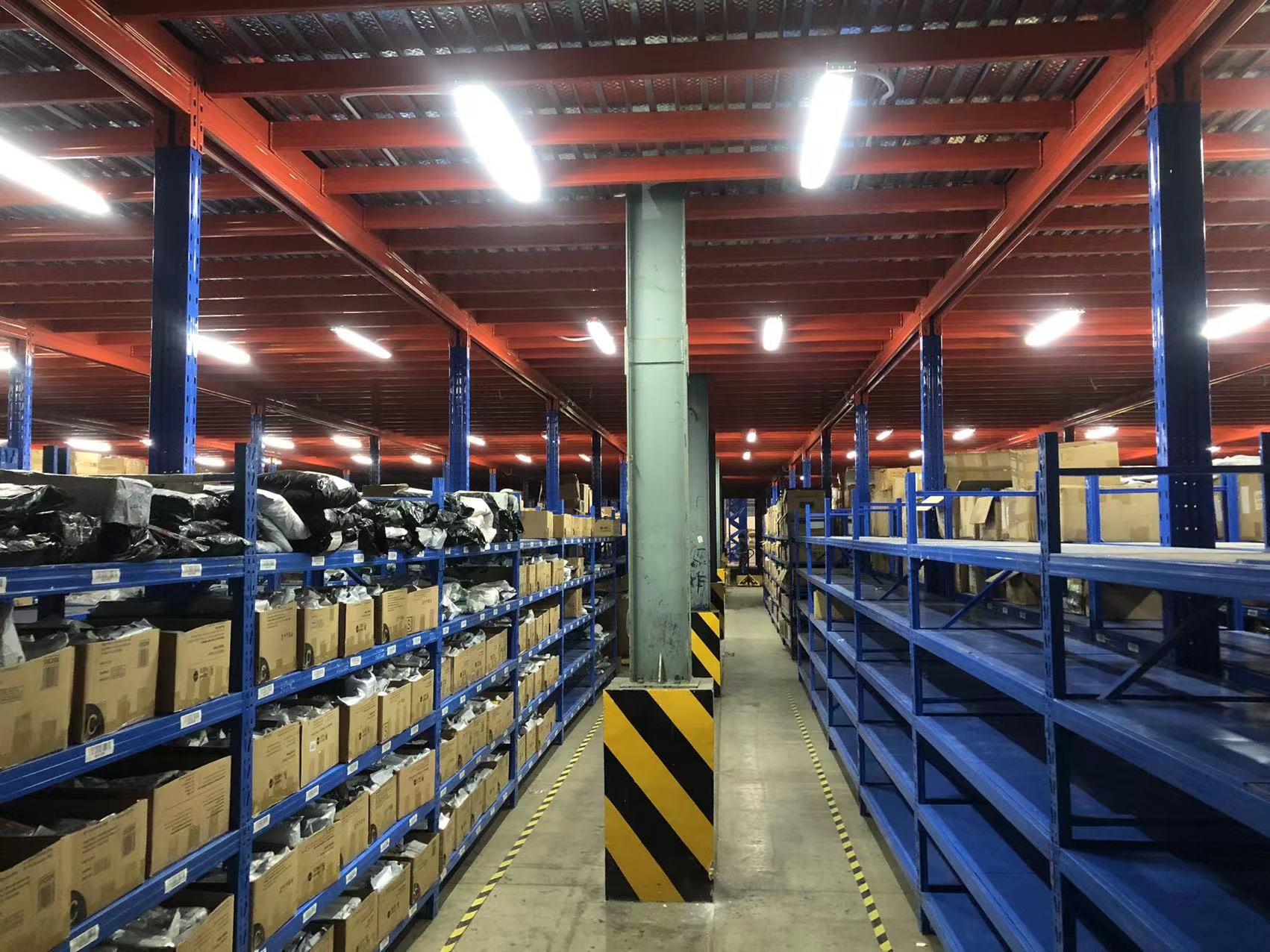
Case study from a structural steel fabricator (Ohio, 85,000 sq ft) after switching from floor storage to a double-sided cantilever storage rack system:
Before: 22% of floor space dedicated to material laydown; average retrieval time = 12 minutes per beam.
After: 7% floor space for racks; retrieval time = 3.2 minutes (73% improvement).
Damage costs: Scrap due to bending/scratching dropped from $47,000/year to $8,200/year.
ROI period: 14 months including installation and forklift operator re-certification.
These figures align with the Warehousing Education and Research Council (WERC) benchmarks for long-load storage optimization.
A1: Arm capacity depends on three factors: arm section modulus (steel gauge and profile), column spacing (distance between uprights), and the load’s center of gravity from the column. Typical single-arm ratings vary from 1,500 lbs for light-duty (3-ft arm, 12-gauge steel) to 12,000 lbs for heavy-duty (5-ft arm, 7-gauge plus reinforced heel). Always consult manufacturer load charts – never exceed the arm’s published uniform distributed load (UDL). For example, a 48-inch arm rated at 4,000 lbs UDL must be derated by 20% if the load is concentrated at the tip.
A2: Yes, all freestanding cantilever racks must be anchored to a reinforced concrete floor (minimum 4-inch thickness, 3,000 psi). Use wedge anchors (for dry conditions) or epoxy anchors (for wet or cracked concrete). Anchor diameter: typically 5/8-inch for columns under 12 ft, 3/4-inch for taller racks. Embedment depth = 12× anchor diameter. Pull-out tests should achieve at least 2× the calculated seismic or overturning moment load. Unanchored cantilever rows can tip under uneven loading – a serious safety violation per OSHA 1910.176.
A3: Yes, specialized cantilever ASRS exists for long loads. Systems use a rail-guided shuttle that runs along the aisle, extracting arms or load trays. Key design modifications: increased column stiffness (to resist shuttle acceleration forces), precision arm alignment (within ±1/16 inch), and inductive guidance strips. While upfront cost is 2.5× that of manual systems, labor savings reach 60–70% in high-throughput environments. Several European timber mills have deployed cantilever-based ASRS handling 12-meter boards.
A4: Use the 80/20 rule: design for the 80th percentile of your longest material. If most items are ≤10 ft, specify 48-inch arms (supporting 10 ft with 2 ft overhang per side). For materials varying from 6 ft to 20 ft, consider telescoping arms or add a second row with longer arms. Vertical spacing: set arm pitch at 2/3 of the average material height. For example, storing 4-inch diameter pipes – 36-inch vertical spacing allows for 9 levels on a 28-ft column. Leave at least 4 inches of clearance above each level for hand access.
A5: Demand these three documents: (1) RMI (Rack Manufacturers Institute) Specification compliance – for structural design and testing, (2) ISO 9001:2015 quality management system certification, (3) PE-stamped engineering drawings (Professional Engineer) for your specific configuration, including seismic zone analysis if applicable. Additionally, ask for proof of third-party load testing per ANSI MH16.3-2022. Guangshun provides all three certificates with every engineered cantilever rack order, plus a 10-year structural warranty against manufacturing defects.
A6: Yes, IBC and NFPA 13 dictate specific clearance requirements. For cantilever racks storing combustibles, in-rack sprinklers must be installed every 10 ft vertically and 12 ft horizontally. Also, the rack structure cannot impede water distribution – arms should have open profiles (no solid shelves). Flue spaces (minimum 6 inches vertical and 18 inches transverse) must be maintained. Many jurisdictions require a fire safety analysis report signed by a licensed fire protection engineer. Non-compliance can void insurance coverage.
A7: Standard modular components ship in 2–3 weeks. Custom configurations (non-standard arm lengths, special coatings, seismic bracing) require 4–6 weeks, including FEA and shop drawings approval. For mission-critical upgrades, select manufacturers with in-house roll-forming and welding; Guangshun maintains a 10-day express service for expedited rack projects within North America and Europe.
Implementing a well-designed cantilever storage rack system transforms long-load handling from a bottleneck into a competitive advantage. By focusing on moment-resistant columns, certified load testing, modular expansion, and regular inspections, operations cut retrieval times, floor space waste, and product damage. For facilities dealing with pipes, lumber, steel profiles, or any material exceeding standard pallet dimensions, the cantilever architecture is the industry-proven standard. Partner with engineering-led suppliers like Guangshun who provide site-specific seismic calculations, 3D layout simulations, and on-site commissioning – ensuring compliance with OSHA, RMI, and local building codes. Evaluate your current storage ratio and request a load capacity audit before expanding or replacing outdated racks.

 Wechat
Whatsapp
Wechat
Whatsapp