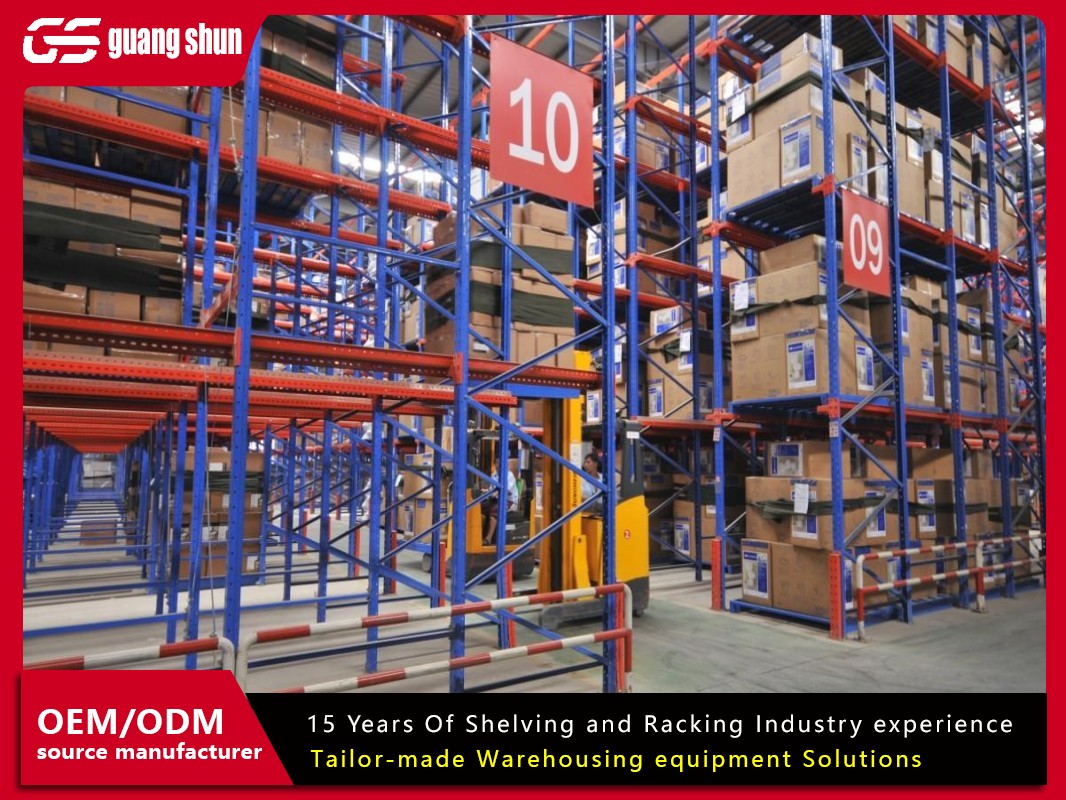
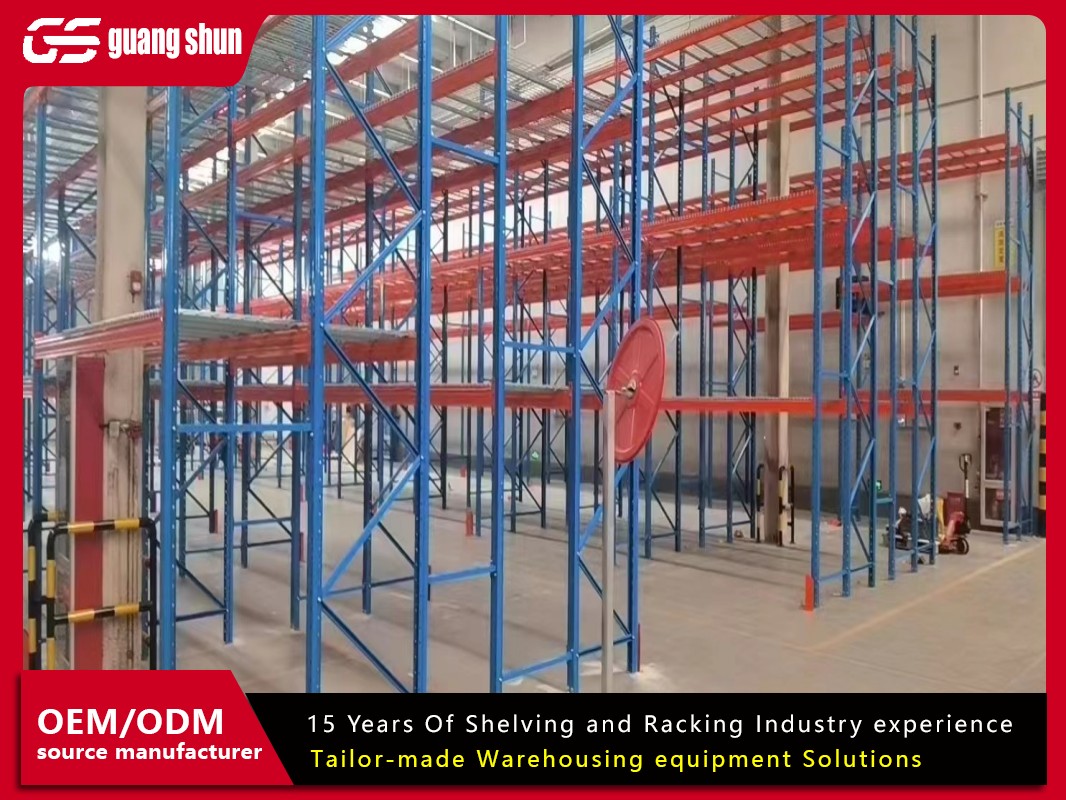
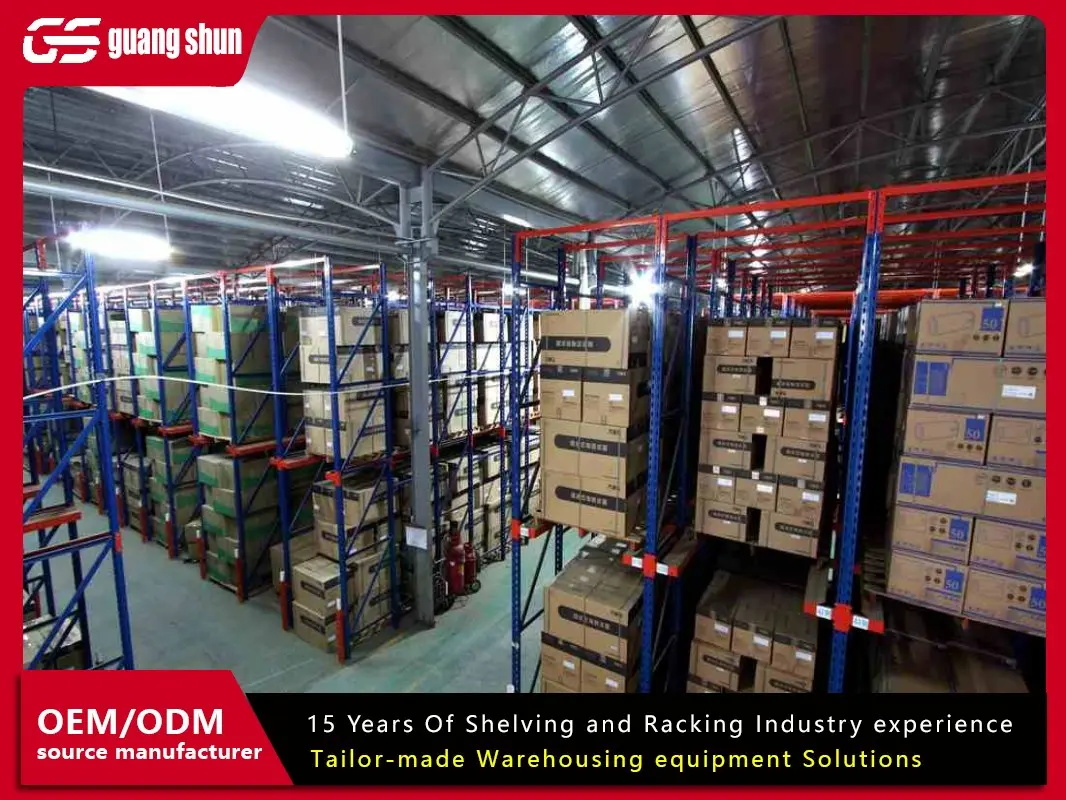
In the specialized domain of material handling and industrial storage, the management of lengthy, irregular, and heavy loads—such as steel bars, piping, lumber, or aluminum extrusions—presents a unique set of logistical challenges. Standard pallet racking systems often prove inadequate, leading to inefficient space utilization, increased product damage, and compromised workplace safety. For over a decade, Guangshun has engineered solutions that address these exact pain points, with their cornerstone product being the highly versatile adjustable cantilever racking system. This article provides a deep, technical exploration of why adjustable cantilever racking is the definitive choice for facilities seeking to transform their storage operations from a bottleneck into a strategic asset.
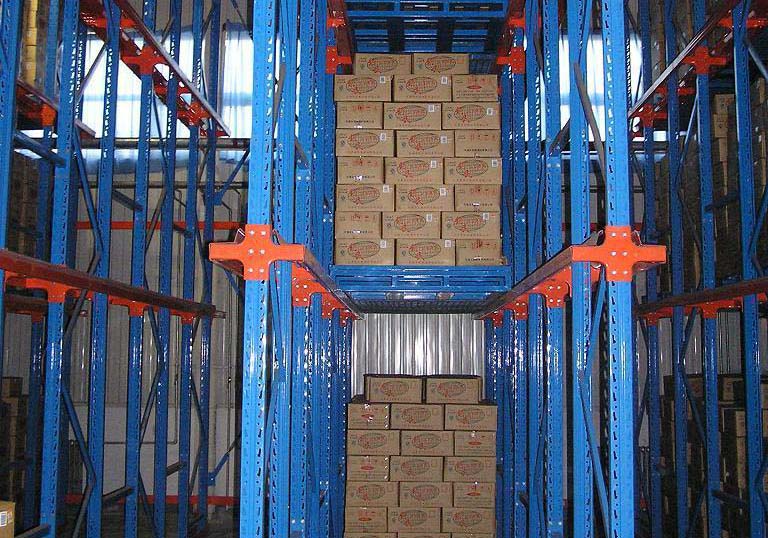
Unlike static storage solutions, the defining feature of an adjustable cantilever racking system lies in its modular architecture. The system is composed of three primary components: a vertical column (or upright), cantilever arms that attach to the column, and horizontal bracing that ensures structural rigidity. The “adjustable” factor is critical; it allows operators to reposition the arms along the column at standard increments—typically every 2 to 4 inches. This granular control offers a level of inventory management that fixed-arm systems cannot match.
Engineering integrity begins with the column. High-capacity systems utilize cold-formed, roll-formed steel columns with intricate rib patterns. The column’s moment of inertia directly dictates the overall system capacity. When specifying a adjustable cantilever racking configuration, the key engineering considerations include:
Column Hole Pattern: The punched hole pattern on the column must be compatible with the arm locking mechanism. High-cycle facilities often require double-tabbed or interlocking arm connectors to prevent arm dislodgment under dynamic load shifts.
Arm Taper and Capacity: Arms are designed with a slight upward taper to counteract deflection under load. Arms are categorized by load ratings—light-duty (1,000–2,500 lbs per arm), medium-duty (2,500–5,000 lbs), and heavy-duty (5,000–10,000+ lbs per arm). Selecting the correct arm gauge is critical for preventing yield deformation.
Base Plate and Floor Anchoring: In seismic zones or high-bay applications, the base plate thickness (typically 0.5 to 1 inch) and the quality of floor anchoring (using chemical epoxy anchors vs. mechanical wedge anchors) determine the system’s resistance to overturning moments.
The adoption of adjustable cantilever racking transcends basic storage; it is a strategic tool for lean manufacturing and just-in-time (JIT) inventory. By eliminating the need for multiple bays or floor clutter, it enables facilities to achieve up to 40% greater space utilization compared to traditional pallet racks when storing long materials.
In steel processing, inventory is a mix of full-length bundles (20-40 feet) and cut-to-size remnants. A fixed-arm system would force operators to reserve an entire bay for a single length. However, with adjustable cantilever racking, operators can reconfigure arms within minutes to accommodate varying bundle heights. For instance, a 20-foot bay can store three tiers of flat bar stock on the left side and one tier of heavy structural beams on the right, simply by repositioning the arms. This adaptability reduces “honeycombing” (unusable vertical space) by over 25%.
For lumber yards, the ability to implement First-In-First-Out (FIFO) rotation is paramount to minimize material degradation. Double-sided adjustable cantilever racking arrays allow forklift operators to load from one aisle and retrieve from the opposite aisle. The adjustable arms facilitate the storage of varying board thicknesses—from 1-inch decking to 12-inch laminated veneer lumber (LVL)—without cross-contamination or damage to material edges.
According to OSHA data, improper storage of long materials accounts for a significant percentage of warehouse injuries, primarily due to material avalanches and forklift collisions. The engineering of adjustable cantilever racking directly mitigates these risks through specific design features.
One of the highest costs in warehousing is rack repair due to impact damage. High-quality systems, such as those manufactured by Guangshun, incorporate robust column protectors and base plates that act as sacrificial barriers. Furthermore, the open-front design of cantilever racks provides superior visibility for forklift operators, reducing the likelihood of “spearing” loads into the rack structure, a common hazard with closed-back selective racks.
When dealing with long loads, the risk of arm deflection (sagging) increases with the length of the arm. High-performance systems utilize structural steel “C” channel arms or welded box-section arms to maintain a maximum deflection of L/180 (length divided by 180). This ensures that loads do not shift or roll off the arms. For facilities storing round materials like pipe or conduit, specifying the correct arm lining (e.g., UHMW plastic or rubberized sleeves) is crucial to prevent rolling and to protect the material finish.
While the initial capital expenditure for a heavy-duty adjustable cantilever racking system is higher than that of a generic selective rack, the return on investment (ROI) manifests through three primary channels: labor efficiency, space consolidation, and future-proofing.
Labor Efficiency: By eliminating the need to restack materials to access lower layers (a common issue with floor storage), retrieval times are reduced by 30-50%. A well-designed system allows for direct access to any SKU without “reshuffling.”
Space Consolidation: Real estate costs continue to rise. By utilizing the vertical cubic space effectively—often extending to heights of 20 to 30 feet—facilities can defer or eliminate the need for building expansions. A single 24-foot-high cantilever rack can replace up to 5,000 square feet of ground-level material laydown area.
Future-Proofing: The adjustable nature of the racking ensures that when inventory profiles change—for example, switching from primarily 10-foot stock to 24-foot stock—the system can be reconfigured with new arms or extended columns rather than requiring a complete replacement.
The longevity of a adjustable cantilever racking system is heavily dependent on the precision of installation and a proactive maintenance schedule. Misalignment during installation—specifically column plumbness—can lead to uneven load distribution and premature fatigue failure.
Professional installation teams utilize laser alignment tools to ensure that the column centerlines are within 1/8 inch tolerance. After installation, maintenance should focus on:
Bolt Torque Verification: Checking anchor bolt and column splice bolt torque every 6 months.
Arm Lock Integrity: Inspecting the locking pins or wedges for deformation, especially in high-traffic areas.
Corrosion Protection: In environments with high humidity or chemical exposure, a powder-coated finish (minimum 60 microns thickness) or hot-dip galvanizing is essential to prevent rust that could compromise structural integrity.
To ensure that your adjustable cantilever racking investment aligns with operational goals, procurement must move beyond simple “length and width” metrics. Here is a technical checklist used by Guangshun engineering consultants:
Load Characteristics: Determine the maximum uniform load per arm and point load concentration. (e.g., a single 2,000 lb bundle vs. multiple 500 lb pieces).
Arm Length and Taper: Select arm lengths based on the longest material width. Arms should extend to at least 80% of the material width to prevent overhang instability.
Column Spacing (Bay Length): This is determined by the maximum material length. A standard rule is that columns should be spaced such that the material overhang does not exceed 30% of the unsupported span to prevent bowing.
Seismic Design Category (SDC): For facilities in seismic zones, the racking must be engineered with additional horizontal bracing and specialized base plate connectors to meet IBC (International Building Code) seismic requirements.
As Industry 4.0 permeates material handling, adjustable cantilever racking is evolving from a passive structure to an active asset. We are seeing increased integration with:
Automated Guided Vehicles (AGVs): Systems are being designed with precision laser guides and standardized arm spacing to allow for autonomous retrieval of long materials.
RFID and Sensor Technology: Embedded weight sensors in the arms and RFID tags on the columns allow for real-time inventory tracking. This digital twin capability allows warehouse management systems (WMS) to suggest optimal arm height adjustments based on inbound SKU volumes, maximizing fill rates dynamically.
For companies like Guangshun, the focus is on manufacturing systems that are not only durable but also “automation-ready,” ensuring that the steel structure itself does not become a limiting factor in operational digitization.
A1: The capacity per column varies significantly based on the column profile, steel gauge, and bracing configuration. For heavy-duty industrial systems, a single column can support total loads ranging from 12,000 lbs to over 30,000 lbs. This is distributed across the arms. It’s critical to consult the manufacturer’s load charts, as the capacity is dictated by the column’s moment capacity at specific heights, not just the arm ratings. A structural engineer should validate the configuration for any loads exceeding 20,000 lbs per column.
A2: Standard pallet racking uses horizontal beams and requires the load to be placed on pallets, which creates a “lip” that can obstruct access to long materials and wastes vertical space. Adjustable cantilever racking features an open-front design with no vertical obstructions, allowing for the storage of extremely long materials (up to 60+ feet) without interference. It also provides unrestricted vertical adjustability, enabling you to optimize the arm spacing for the exact height of your inventory, unlike the fixed beam levels in pallet racking.
A3: Most high-quality systems, including those from Guangshun, offer adjustment increments of 2 inches or 4 inches along the column. Adjustments typically require no specialized tools—a simple pry bar or a lifting tool to disengage the safety pin and reposition the arm onto the desired locking lugs. This reconfiguration can usually be performed by a single operator, allowing for rapid inventory layout changes without significant downtime.
A4: Yes, they are widely used in outdoor lumber yards, pipe yards, and recycling centers. However, for outdoor applications, the racking must be specified with a corrosion-resistant finish. Standard powder coating is suitable for indoor, climate-controlled environments. For outdoor use, hot-dip galvanizing (meeting ASTM A123 standards) is the industry standard to prevent rust degradation over decades of exposure to rain, snow, and UV radiation.
A5: The optimal bay length is determined by the material’s length and its deflection characteristics. For materials up to 20 feet, a common configuration is a “back-to-back” setup with a 20-foot bay length. For materials exceeding 24 feet, it is often more cost-effective to use single-sided racks against a wall or use a “drop-in” design. A standard engineering rule is that the unsupported material overhang beyond the last column should not exceed 25% of the material’s total length to prevent bending or unsafe retrieval. Always provide the material lengths and unit weights to the racking manufacturer for a finite element analysis (FEA) of the proposed design.
For tailored engineering specifications and a detailed load capacity analysis, consult the technical team at Guangshun to review your facility’s unique operational profile and material flow requirements.

 Wechat
Whatsapp
Wechat
Whatsapp