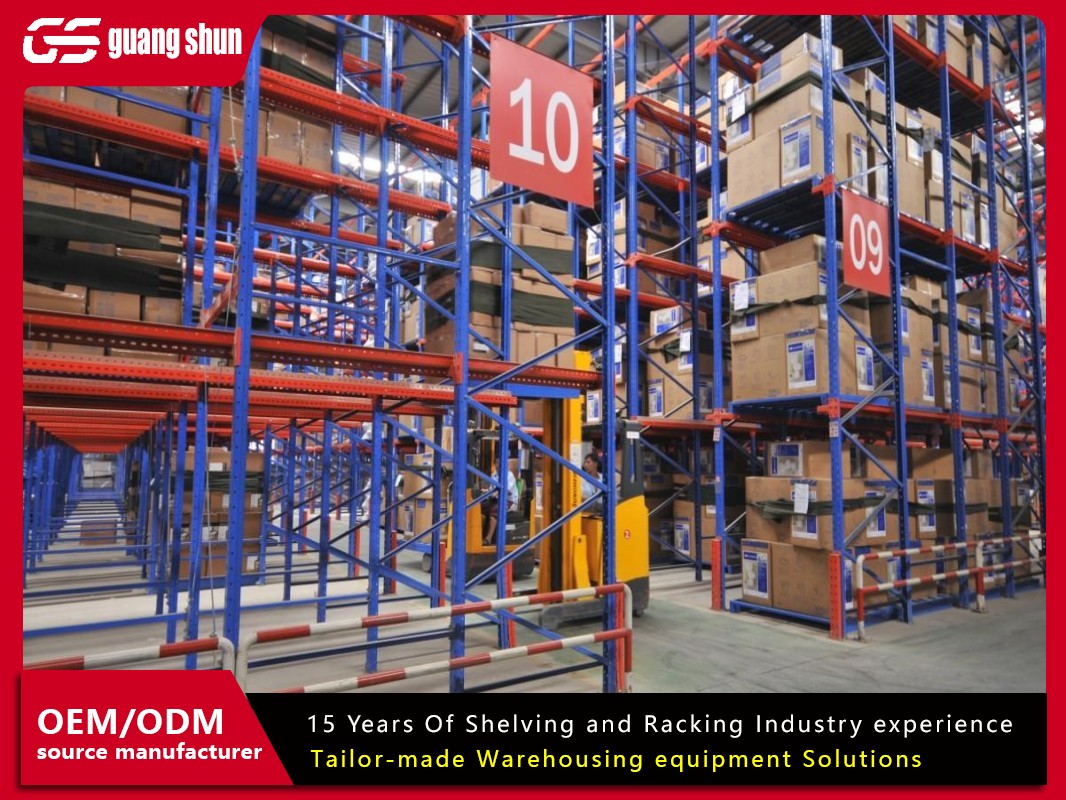
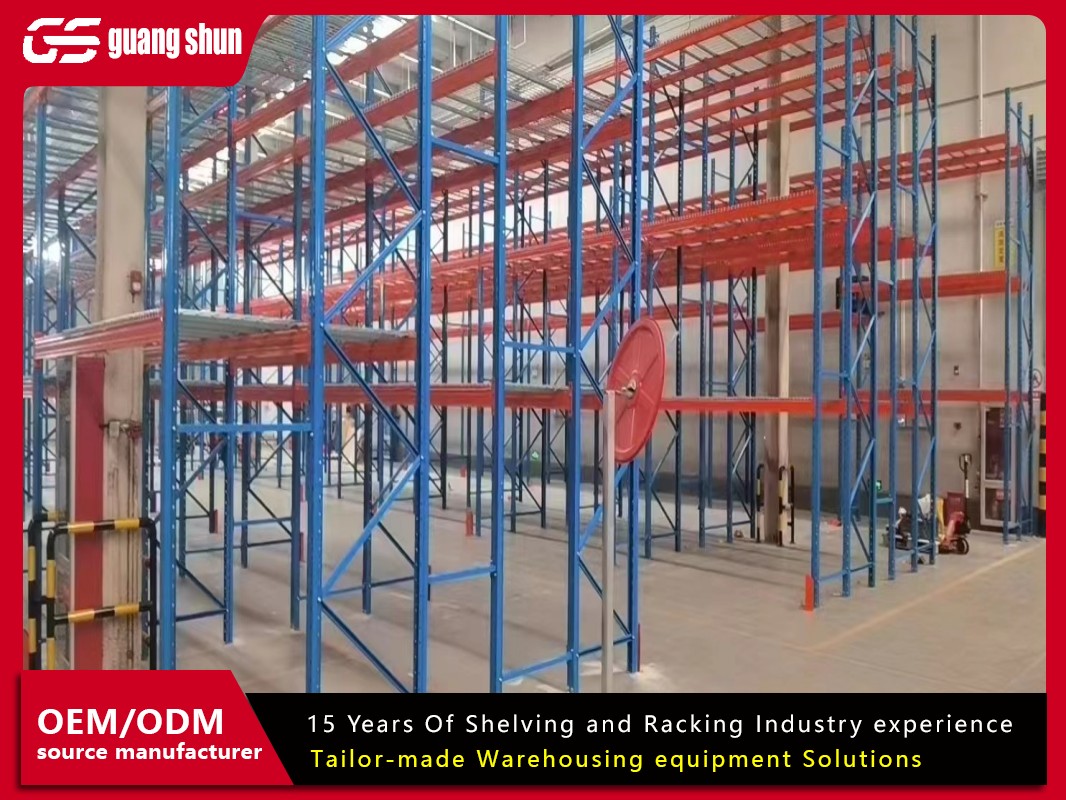
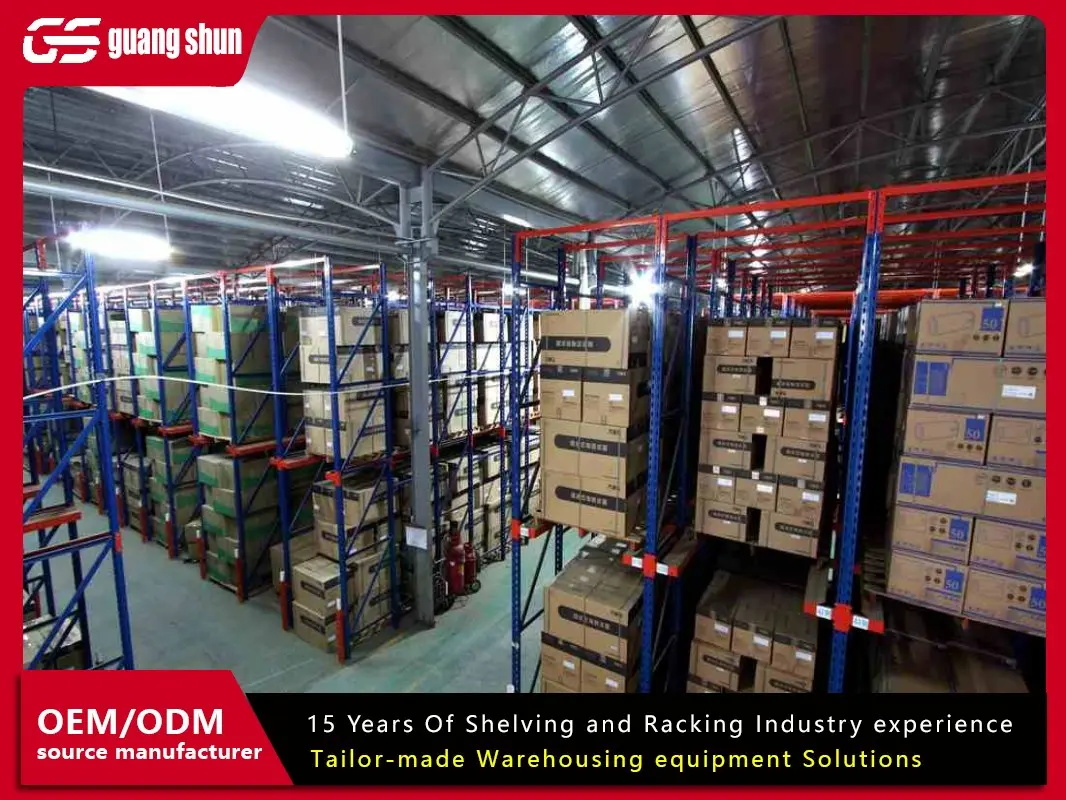
For warehouses storing lengthy, bulky items—steel bars, lumber, piping, or aluminum extrusions—standard selective pallet racks fail due to beam interference and load overhang. cantilever metal storage racks eliminate front columns, allowing unobstructed horizontal access. Their structural performance depends on the moment-resisting connection between the vertical column and horizontal arms (booms), plus base stability under eccentric loads. This analysis covers cantilever rack design per ANSI MH26.2-2022, material selection for high-deflection scenarios, and field-proven solutions to common failures such as boom sagging or column twist.
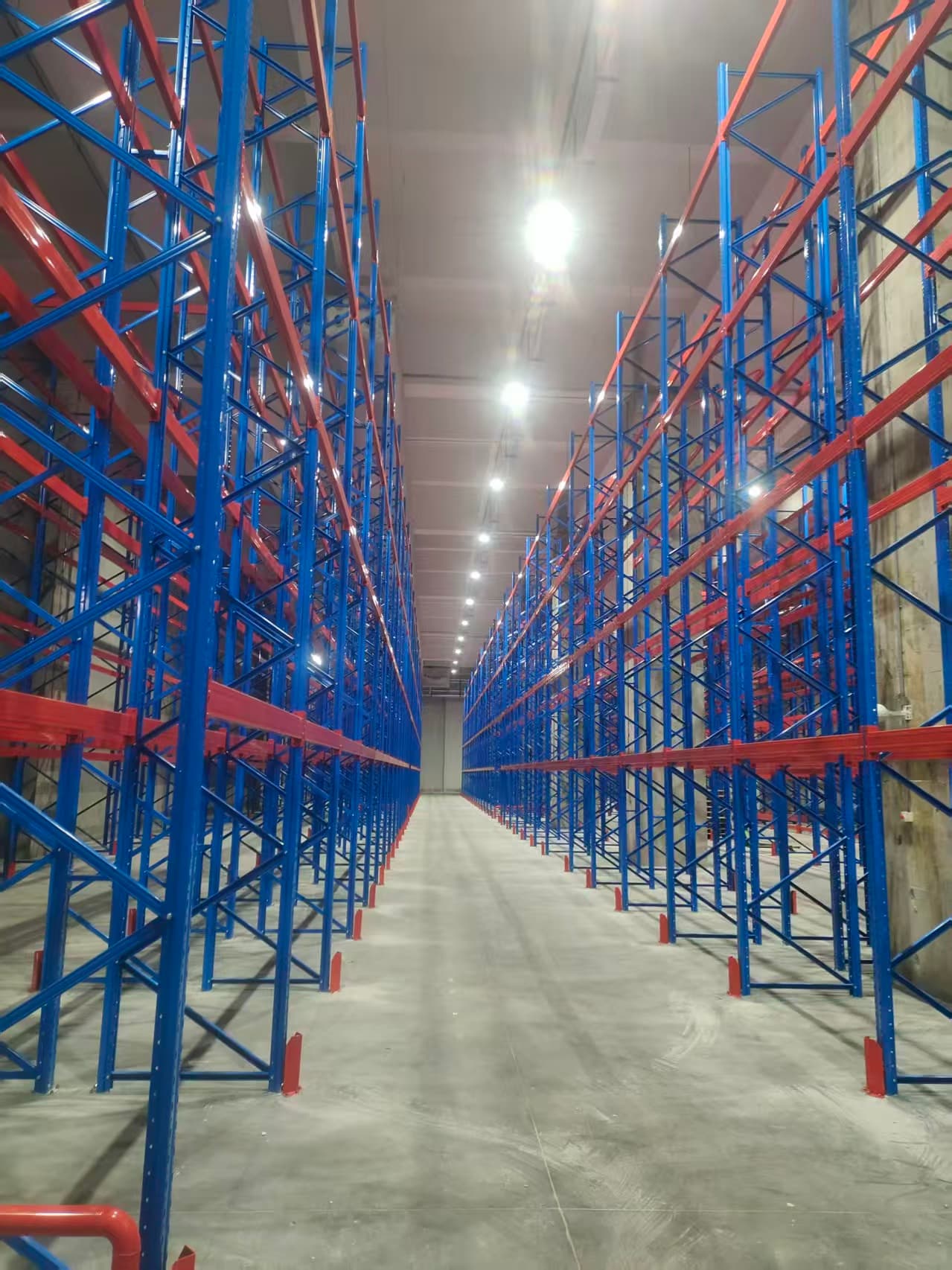
Conventional pallet racks require a front upright that blocks side loading of 6-meter pipes or 8-meter timber planks. In cantilever metal storage racks, the load rests on arms projecting from a single row of columns, with no obstruction at the aisle face. This design reduces horizontal space consumption by 30-40% compared to double-sided selective racks for similar storage density. Key performance differentiators include:
Clear span between columns: Up to 1.8 m for light-duty, 1.2 m for heavy configurations.
Arm load capacity per pair: Ranges from 500 kg to 4,500 kg depending on arm length (300-1200 mm).
Column height: Typically 4 m to 9 m, with base plates anchored to reinforced floors.
However, the absence of front columns means the entire system relies on column base fixity and arm-to-column joint rigidity. A 2022 survey by the Material Handling Institute found that 43% of cantilever rack failures originated from loose arm connection bolts, causing progressive deflection under dynamic loads.
Unlike uprights in selective racks that mainly experience compression, columns in cantilever metal storage racks undergo combined axial load (from upper levels) and bending moment from eccentrically placed arm loads. The worst-case condition occurs at the lowest arm level, where the moment equals arm load × arm length. For a 1,200 mm arm carrying 2,000 kg, the moment at the column face reaches 23.5 kN·m. This moment must be resisted by:
The column’s section modulus (W_x), typically 150-250 cm³ for heavy-duty profiles.
A bolted connection with 6-8 M16 grade 10.9 bolts per arm bracket.
Back-to-back column profiles (C-channel welded or bolted) to increase torsional stiffness.
Thin-walled columns without internal stiffeners exhibit local flange bending under moment loads. Finite element analysis shows that adding a 6 mm thick gusset plate at the arm connection reduces flange stress by 58%.
Excessive arm deflection causes load instability and pallet misalignment. The RMI standard limits vertical deflection at the arm tip to L/150 (where L = arm length). For a 1,000 mm arm, maximum permissible tip deflection is 6.7 mm. Achieving this requires selecting the correct arm profile:
Light-duty (≤500 kg per arm): Roll-formed C-channel, 2.5 mm steel, 120 mm height.
Medium-duty (500-1,500 kg): Welded box section 80x120x3.5 mm, with a tapered profile.
Heavy-duty (1,500-4,500 kg): Structural steel I-beam (IPE 140) with a welded end plate.
Long-term creep in cantilever arms is negligible for cold-formed steel below 60% of yield strength, but aluminum arms (used in corrosive environments) require a 30% capacity derating due to lower modulus of elasticity (69 GPa vs. 200 GPa for steel).
Different industries impose distinct stress patterns on cantilever metal storage racks. Below are three high-demand scenarios with engineering solutions:
Steel service centers (heavy, long bars): Bundles of rebar or structural steel often exceed 6 tons per level. Require reinforced columns with double back-to-back C-channels (2x 3.0 mm), plus a concrete curb to protect column bases from forklift impact. Arm spacing must be 900 mm or less to prevent bar sagging between supports.
Lumber and building material warehouses: Dimensional lumber (2x4s, 2x6s) is relatively light but highly susceptible to moisture-induced swelling. Specify hot-dip galvanized arms with 85 µm coating and a 3-degree upward tilt to counter load deflection over time. Use polymer glide pads on arm surfaces to reduce friction during manual loading.
Automotive tubing and extrusions: High-value aluminum profiles require zero scratching. Equip arms with replaceable rubber sleeves or PVC covers. The rack structure must be grounded to prevent static discharge, and column base plates should be isolated from floor with neoprene pads to avoid galvanic corrosion.
A frequent oversight is neglecting aisle width for cantilever systems. Since loads are inserted from the side, the required aisle width equals load length plus 600 mm for forklift maneuverability. For 6 m pipes, minimum aisle width is 6.6 m—often underestimated, leading to product collision with opposite racks.
Due to their high center of gravity and lack of front columns, cantilever metal storage racks are vulnerable to overturning during seismic events. The International Building Code (IBC 2024) requires specific bracing for racks taller than 4.5 m or those storing hazardous materials. Three seismic design strategies are:
Back-to-back column tying: When two rows of cantilever racks are placed back-to-back, they must be connected with horizontal struts every 2.4 m vertically. This doubles the lateral load capacity.
Diagonal cable bracing in the down-aisle direction: Steel cables (10 mm diameter) with turnbuckles provide tension-only bracing; preload to 5 kN to remove slack.
Base plate moment connections: Instead of simple anchor bolts, use embedded column sleeves or cast-in anchor channels with 8 bolts per column. This increases overturning resistance by 200% compared to standard 4-bolt patterns.
Wind loads on outdoor cantilever racks (e.g., at lumber yards) follow ASCE 7-22 Exposure C. For a 6 m tall rack with 1.2 m deep arms, wind pressure can generate a 12 kN·m base moment. Without proper bracing, the rack will slide or tip. Guangshun provides wind load calculation sheets for each outdoor installation, factoring local basic wind speeds (up to 150 km/h).
Field data from 150 warehouses indicates that 67% of cantilever rack damages are caused by three mechanisms:
Boom twisting under off-center loads: When a load is placed only on the outer half of an arm, torsion develops. Solution: specify rectangular tube arms instead of open C-sections; tubes have 12 times higher torsional rigidity.
Column base plate yielding: Repeated moment loads cause base plate bending between anchor bolts. Mitigation: increase base plate thickness to 12 mm and add stiffener ribs between plate and column.
Anchor bolt pull-out in cracked concrete: Frequent forklift vibrations loosen anchors. Use epoxy-grouted threaded rods with 200 mm embedment, and perform torque checks every 6 months (target 150 N·m for M20 bolts).
When retrofitting existing racks, never weld reinforcements onto cold-formed columns unless the manufacturer approves. Welding creates heat-affected zones that reduce yield strength by up to 40%. Instead, use bolt-on column wraps or sister channels.
With over 20,000 tons of structural storage systems delivered globally, Guangshun applies proprietary roll-forming and robotic welding to produce cantilever metal storage racks that meet or exceed ANSI MH26.2. Each column is laser-measured for straightness within 1.5 mm per 3 m length—twice as strict as industry norms. Their testing protocol includes:
Arm load testing to 150% of rated capacity with deflection recorded at 0%, 50%, 100%, and 150% loads.
Cyclic fatigue testing of arm-to-column connections: 20,000 cycles at 80% rated load without loosening of bolts.
Salt spray testing (ASTM B117) for 800 hours on powder-coated finishes, ensuring corrosion resistance in high-humidity environments like paper storage warehouses.
All cantilever rack components are traceable via QR codes linking to mill certificates and welding operator logs. Guangshun also offers on-site rack safety inspections using ultrasonic thickness gauges to detect hidden corrosion under arm connection plates.
Proper installation of cantilever metal storage racks follows a seven-step engineering procedure:
1. Verify floor flatness: max 3 mm deviation over 3 m; use epoxy leveling compound if exceeding.
2. Mark column centerlines and drill anchor holes with a core drill to avoid micro-cracks in concrete.
3. Set column base plates on 10 mm thick steel shims to achieve perfect vertical plumb (max 1:500 inclination).
4. Tighten anchor bolts in a star pattern to 70% of final torque, then to 100% after 24 hours.
5. Install arms starting from the lowest level, torquing each bolt to specification (typically 80 N·m for M12 bolts).
6. Conduct a proof load test at 125% of maximum intended load per level, measuring permanent deformation.
7. Apply yellow safety stripe tape on arms at 80% of length to warn operators of load overhang limits.
Quarterly maintenance includes: checking bolt torque on 5% of connections (increase to 20% if any loosening found), inspecting arm welds for cracks with dye penetrant, and measuring column plumbness with a digital inclinometer. Replace any arm showing permanent tip deflection beyond L/100.
Q1: What is the maximum arm length for cantilever metal storage racks
without additional support?
A1: For heavy-duty
steel arms (3.5 mm box section), maximum unsupported arm length is 1,200 mm at
1,500 kg capacity. Beyond that, telescopic arms or intermediate support posts
are required. Light-duty racks (500 kg) can extend to 1,800 mm, but deflection
may exceed L/150. Always consult the manufacturer’s load-deflection chart.
Q2: How do I calculate the total column load for a multi-level
cantilever rack?
A2: Sum all arm loads on one side
of the column plus 50% of loads from the opposite side (if double-sided).
Multiply by a dynamic factor of 1.3 for forklift placement. Then add column
self-weight (approx. 45 kg per meter). For a single-sided rack with 4 arms at
2,000 kg each, total load = 8,000 kg × 1.3 = 10,400 kg. Column capacity must
exceed this by a safety factor of 1.5.
Q3: Can I convert existing selective pallet racks into cantilever
racks?
A3: No. Cantilever racks require specific
column sections with arm connection holes and higher moment capacity.
Retrofitting is structurally unsafe. However, you can purchase conversion
brackets that attach to standard uprights, but these only work for very light
loads (<300 kg per arm) and are not compliant with RMI standards.
Q4: What coating provides the best corrosion protection for outdoor
cantilever racks?
A4: Hot-dip galvanizing per ASTM
A123 gives 85-100 µm zinc thickness, lasting 50+ years in moderate industrial
atmospheres. For severe coastal environments (within 1 km of saltwater), specify
duplex coating: galvanizing + epoxy powder coat (total 200 µm). Avoid zinc-rich
paint alone—it only provides 30 µm protection and fails within 5 years.
Q5: How do I fix a bent cantilever arm without replacing
it?
A5: Straightening is not permitted—cold bending
weakens steel. The only field repair is bolting a reinforcement channel (same
length, 2 mm thinner) to the top flange using 6 bolts per meter. Derate the
repaired arm to 60% of original capacity and mark it with a red tag. Replace at
next scheduled downtime.
Q6: Are aluminum cantilever racks suitable for heavy
loads?
A6: Aluminum (6061-T6) has 1/3 the stiffness
of steel. For a 1,000 mm arm, aluminum deflects 3 times more than steel under
the same load. Use aluminum only for light to medium loads (<500 kg per arm)
where corrosion resistance is mandatory (e.g., food processing wash-down areas).
For heavy loads, specify galvanized steel.
Q7: What is the minimum concrete thickness for anchoring cantilever
rack columns?
A7: For racks up to 5 m height with
2,000 kg per arm, concrete slab must be at least 150 mm thick with compressive
strength of 25 MPa. For taller racks or heavier loads, increase to 200 mm with
#4 rebar mesh. Always perform a concrete pull-out test before full installation.
Guangshun provides anchor design
software that matches bolt patterns to local concrete conditions.
Selecting cantilever metal storage racks requires precise engineering of column moments, arm deflection, and base anchorage. By applying the load factors, bracing rules, and material specifications detailed above, warehouse operators can achieve safe, dense storage for pipes, bars, and sheets. Routine inspections focusing on bolt torque and arm tip deflection remain the most effective way to avoid sudden failures. For engineered systems with full traceability, manufacturers like Guangshun provide certified load charts and third-party test reports to simplify compliance with local building codes.

 Wechat
Whatsapp
Wechat
Whatsapp