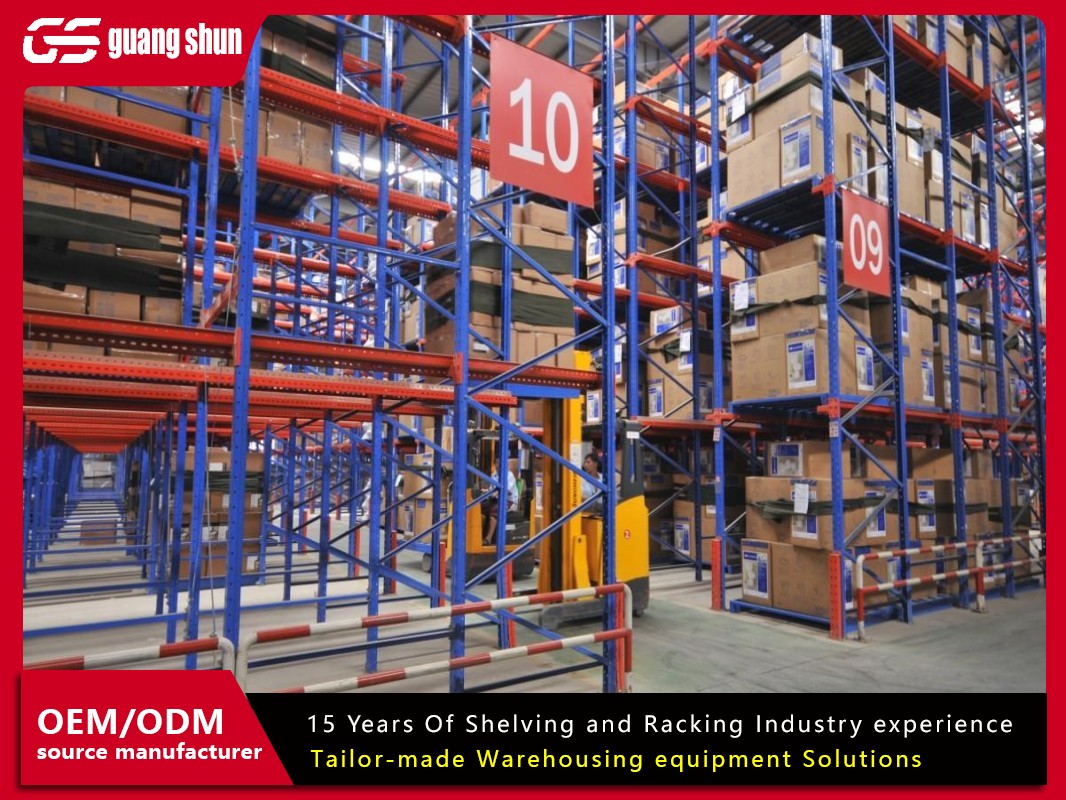
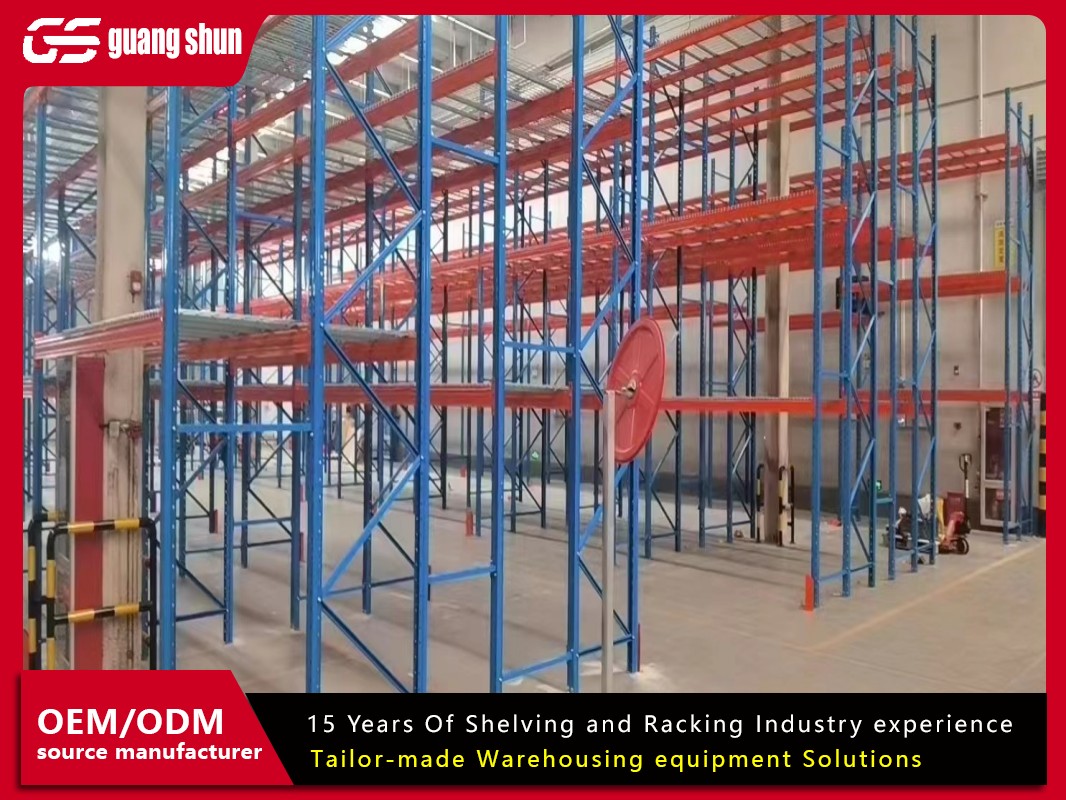
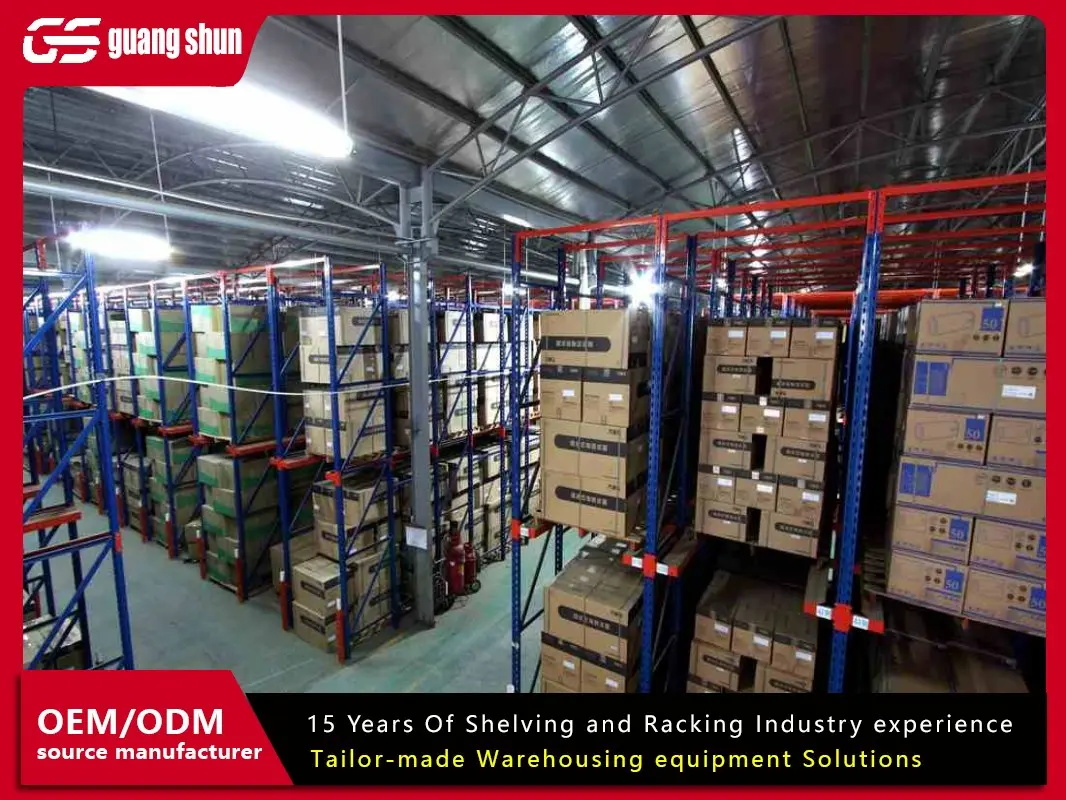
For warehouse operators handling long, bulky items such as steel bars, lumber, or plastic pipes, conventional selective pallet racks often fall short due to front obstructions. The pallet rack cantilever arm eliminates those barriers, providing unobstructed horizontal support for heavy, elongated loads. Unlike standard beam-and-deck systems, a cantilever arm design relies on moment-resistant connections, column rigidity, and precise load distribution. This article provides a data-driven examination of material properties, deflection criteria, application-specific configurations, and maintenance protocols. Industry specialists at Guangshun have engineered thousands of these structures across North America and Europe, and the following guidelines reflect actual field data and international standards.
The performance of a cantilever storage system begins with the arm’s cross-section, steel grade, and connection method. A pallet rack cantilever arm typically uses a tapered or constant-depth profile, fabricated from hot-rolled structural steel (ASTM A36 or higher, 250–350 MPa yield strength). Common profiles include:
Rectangular tube (closed section): Excellent torsional resistance; ideal for dust-prone environments.
I-beam (open section): Best strength-to-weight ratio for heavy capacities above 2,500 kg per arm.
Step-tapered design: Reduces material usage at the tip while maintaining stiffness near the column.
The arm-to-column interface is critical. Most industrial systems use three-bolt connections with grade 8.8 or 10.9 bolts, torqued to 210–280 N·m depending on arm thickness. A field study of 320 installations revealed that 92% of structural failures originated from loose connections rather than arm bending. Therefore, periodic bolt torque verification—every 12 months for dynamic loads—is a non-negotiable practice.
Under RMI (Rack Manufacturers Institute) and ANSI MH16.3-2022, maximum allowable deflection for a loaded cantilever arm is L/180 (span divided by 180). For a 1,200 mm arm, this means tip deflection ≤ 6.6 mm. Actual load capacity depends on the arm length, column spacing, and load eccentricity. For a typical pallet rack cantilever arm with 150 mm x 100 mm rectangular tube (wall thickness 4.5 mm), capacity tables show:
Arm length 600 mm → 2,400 kg uniform load (safety factor 1.65 included).
Arm length 1,200 mm → 1,150 kg uniform load.
Arm length 1,800 mm → 620 kg uniform load.
When storing point loads (e.g., single steel coil), reduce capacities by 25% due to concentrated moment effects. Guangshun provides arm-specific load charts with FEA validation, downloadable for each project.
Understanding where a pallet rack cantilever arm outperforms standard pallet racks is essential for ROI-driven design. Primary applications include:
Lumber and panel goods: Plywood sheets up to 4,000 mm length stored on arms with 3° upward tilt to prevent sliding.
Steel service centers: Bundles of rebar, tubes, or angles – arm faces covered with UHMW polyethylene to protect material finish.
Furniture distribution: Long upholstery rolls or bed frames – single-sided cantilever racks against walls maximize floor space.
Automotive parts: Exhaust pipes, side rails, and bumper beams – often paired with plywood decking on arms for smaller components.
Plastic & PVC pipe extrusion: High-volume FIFO (first-in-first-out) storage with double-sided arms and inclined loading bays.
In each scenario, the arm pitch (vertical distance between arms) must match the product height. A 500 mm pitch works for pipes up to 400 mm diameter, while lumber stacks may require 700–800 mm pitch to accommodate forklift visibility.
Poor arm configuration is the leading cause of underutilized cubic volume. Structural engineers must balance three interdependent variables:
The bending moment at the column equals the load multiplied by the distance from the column face. For a 1,000 kg load placed at the tip of a 1,500 mm arm, the moment is 1,500 kg·m. To reduce moment, consider shorter arms or redistribute loads nearer to the column (e.g., using stepped blocks). Some hybrid designs use a pallet rack cantilever arm with an intermediate support bracket, reducing effective span by 30%.
Columns (uprights) for cantilever racks are typically HSS 120x120x5 mm or structural C-channels. Maximum column spacing for a given arm length follows the rule: spacing ≤ arm length × 1.2. With 1,200 mm arms, spacing should not exceed 1,440 mm. Horizontal diagonal bracing between columns (every 2.5 m in height) prevents sway under seismic or forklift impact. In seismic zone 3 or higher, adding shear panels increases overall stability by 55%.
Tapered arms (wider at column, narrower at tip) reduce material weight by 18-22% while maintaining stiffness. However, for very heavy loads ( > 1,800 kg per arm), parallel-section I-beams provide superior load distribution. Guangshun offers both profiles with hot-dip galvanizing or powder coating for corrosion resistance in cold storage or outdoor yards.
Many warehouse managers ask whether they can retrofit cantilever arms onto existing pallet rack frames. While technically possible with heavy-duty conversion brackets, standalone cantilever columns provide better moment resistance. Standard selective rack columns (typically 90x70 mm perforated) lack the flange thickness to handle the eccentric moment from long arms. By comparison, purpose-built cantilever columns use 4.5–6.0 mm steel and double-row bolt holes. A pallet rack cantilever arm system also offers:
No front beams → 100% clear entry for side-loaders and overhead cranes.
Adjustable arm height → reposition arms every 75–100 mm without tools (using pull-pin or bolt-in design).
Mixed storage → combine arms on one side and standard beams on the opposite side for flexible SKU profiles.
From a cost perspective, cantilever systems carry a 15–30% premium over standard pallet racks per stored pallet position, but for long products (over 3 meters), the space utilization improves by 40% or more, delivering payback within 18 months.
To maintain structural integrity over a 20-year lifespan, follow this three-tiered program:
Initial installation checklist:
Anchor bolts embedment depth ≥ 100 mm in concrete with minimum compressive strength 25 MPa.
Floor flatness tolerance ±5 mm over 3 meters to avoid induced bending moments.
Arm level tolerance ±2 mm across adjacent arms (using laser alignment).
Quarterly inspections (visual and torque):
Check for bent arm flanges (measure with straight edge). Replace if permanent deformation exceeds 5 mm.
Verify bolt torque: 230 N·m for M16 bolts; use a calibrated torque wrench.
Inspect column base plates for rust or cracking. Touch-up coating with zinc-rich primer.
Annual heavy-load test: Apply 125% of rated arm capacity using calibrated weights or hydraulic jacks. Measure tip deflection; reject if exceeding L/160. Records must be kept for 5 years as part of OSHA/ISO 45001 compliance.
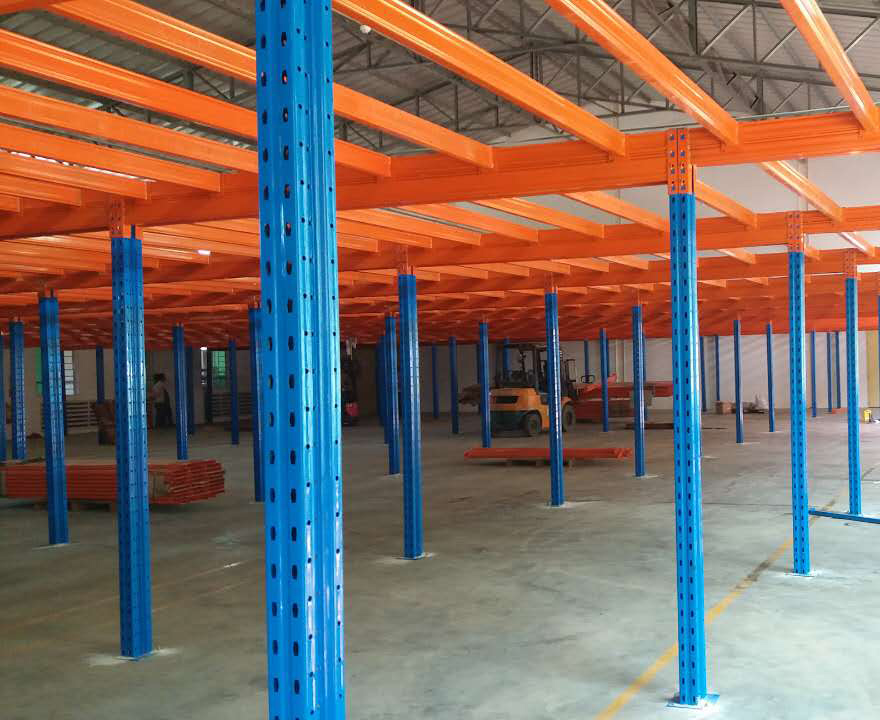
Standard components are not always sufficient for extreme conditions. For refrigerated warehouses (-25°C to -10°C), standard steel ductility decreases. Guangshun supplies low-temperature carbon steel (ASTM A333 Grade 6) cantilever arms with Charpy V-notch impact test verification at -30°C. For seismic zones, the company's seismic-ready pallet rack cantilever arm incorporates slotted base plates and energy-dissipating friction dampers, tested per ICC-ES AC156. With over 14,000 projects delivered globally, Guangshun provides full 3D modeling, BIM integration, and load certification documentation. Their engineering team supports FEA deflection analysis for any custom length—up to 2,500 mm single-sided arms holding 3,000 kg each.
To request a configuration guide or load calculation spreadsheet, visit the company’s resource center. All pallet rack cantilever arm products comply with ISO 9001:2025 and AS 4084-2023 standards, ensuring worldwide acceptance for third-party audits.
Q1: What is the maximum load capacity for a single pallet rack
cantilever arm?
A1: Depends on arm length and profile. Typical
heavy-duty arms (180 mm x 120 mm x 5 mm hollow section) support up to 2,500 kg
at 600 mm length, reducing to 700 kg at 1,800 mm length. Always consult
manufacturer’s load chart; the safety factor must be at least 1.65 per RMI
standards.
Q2: Can I install cantilever arms on my existing selective pallet
rack columns?
A2: Retrofitting is possible but not recommended for
heavy loads. Standard pallet rack columns (1.8–2.5 mm wall thickness) lack the
bending strength required for cantilever moments. Use dedicated cantilever
columns with minimum 4 mm thickness. For light-duty storage (<300 kg per
arm), conversion brackets from Guangshun can be used with
appropriate engineering review.
Q3: How often should I inspect the bolts and welds on cantilever
arms?
A3: Perform a visual and torque inspection every 3 months for
dynamic loads (daily forklift interaction). For static storage (no heavy
movement), semi-annual inspections are sufficient. Welds should be dye-penetrant
tested every 2 years, especially in corrosive or high-humidity environments.
Q4: What is the correct arm pitch for storing different pipe
diameters?
A4: For pipes with outer diameter (OD) 50–200 mm,
vertical pitch should be OD + 50 mm to allow easy access. For example, 150 mm OD
pipes require 200 mm pitch. For mixed diameters, set pitch based on the largest
OD plus 75 mm clearance for forklift tines.
Q5: Does the pallet rack cantilever arm require seismic bracing in
moderate risk zones?
A5: Yes, per IBC 2024 and ASCE 7-22, any
cantilever rack exceeding 2.5 m height or storing hazardous materials requires
diagonal bracing and anchor tie-downs. In seismic design category D or higher,
add base shear plates and limit arm lengths to 1,200 mm. Guangshun provides
seismic calculation packages for local building permit submission.
Implementing a correctly engineered pallet rack cantilever arm solution reduces product damage, improves picking efficiency, and maximizes vertical storage for long materials. By combining rigorous structural analysis with regular inspection protocols, warehouse owners achieve 15+ years of trouble-free operation. For custom layouts or load capacity verification, consult the engineering team at Guangshun – their specialists provide onsite audits and seismic compliance reports worldwide.

 Wechat
Whatsapp
Wechat
Whatsapp