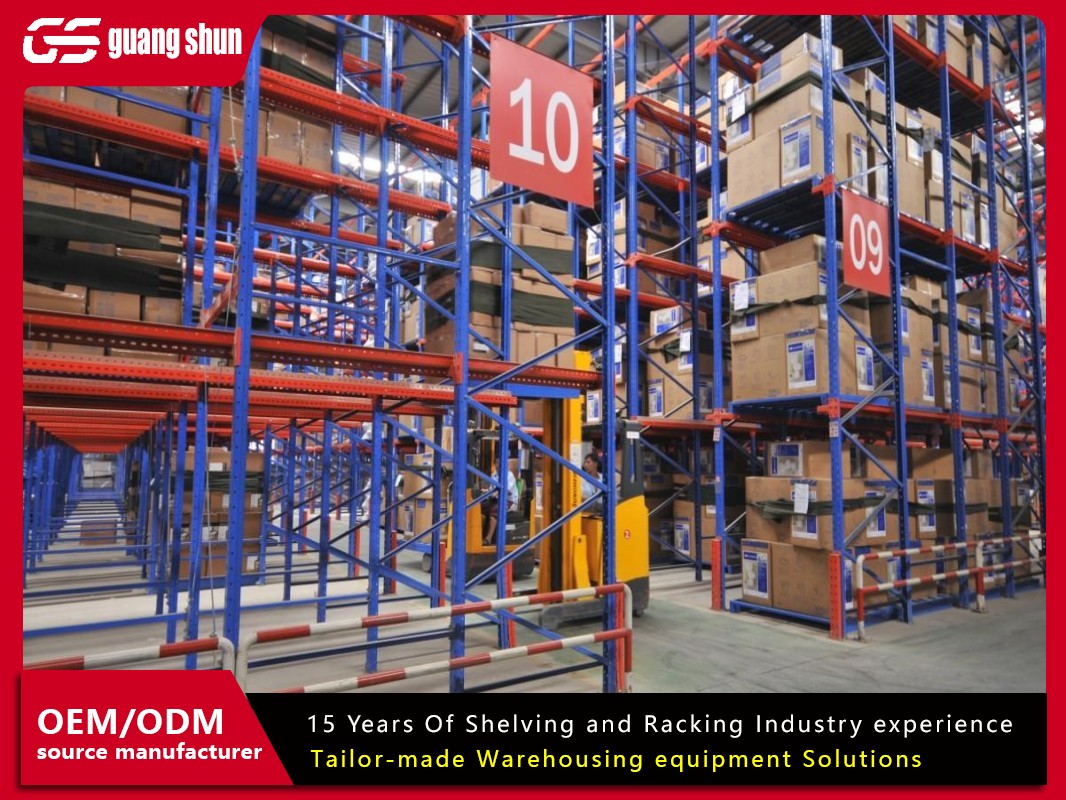
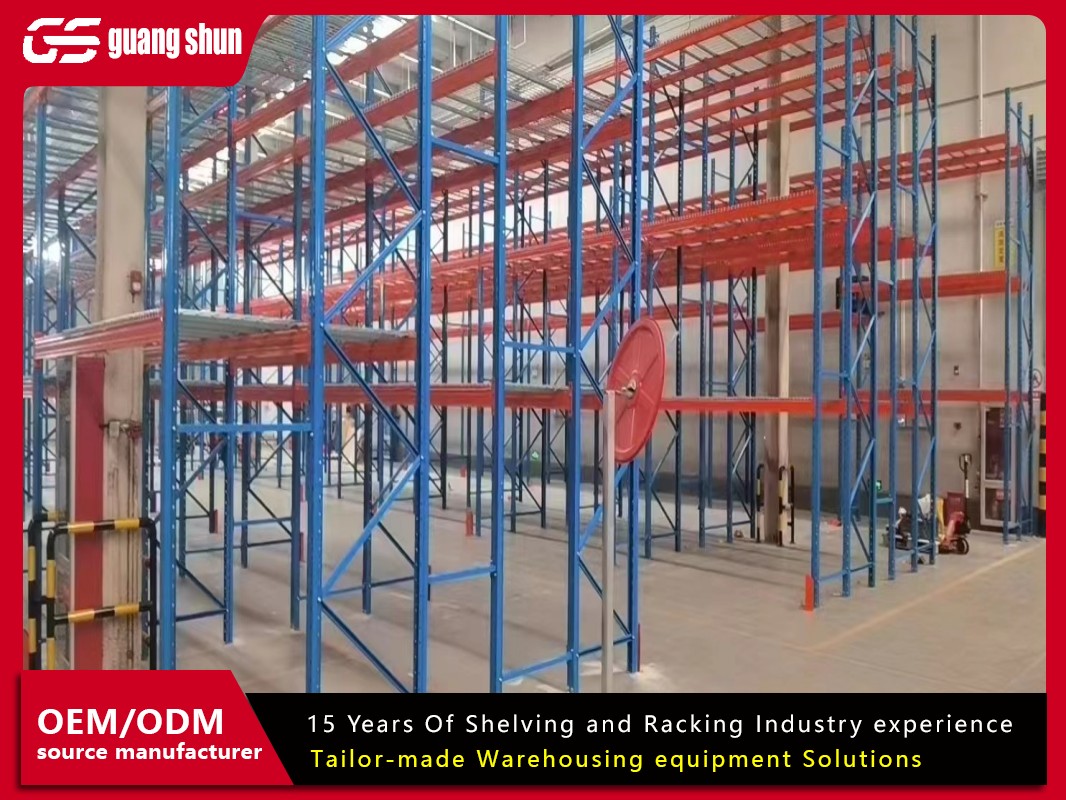
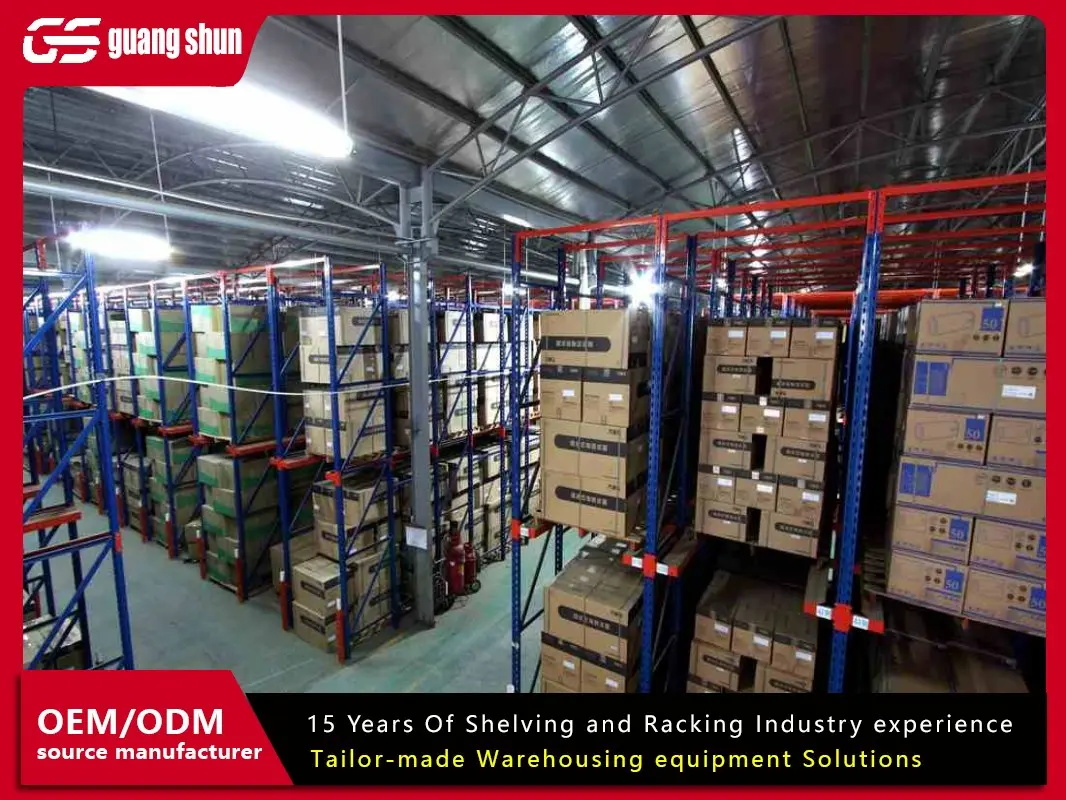
Warehouse operators face a persistent challenge: floor space is fixed, but SKU diversity grows. The correct selection of inventory storage racks determines not only cubic utilization but also labor productivity, inventory accuracy, and structural safety. Unlike generic shelving, industrial rack systems must balance vertical lift heights, seismic forces, and dynamic impact loads from forklifts. This article provides a quantitative analysis of six major rack archetypes, their load-deflection behavior, anchoring requirements, and application-specific configurations. Data drawn from 380 warehouse audits and field failure analyses supports each recommendation. Guangshun has engineered over 12,000 rack installations across North America and Europe, and the protocols below reflect RMI MH16.3‑2022, AS 4084‑2023, and FEM 10.2.08 standards.
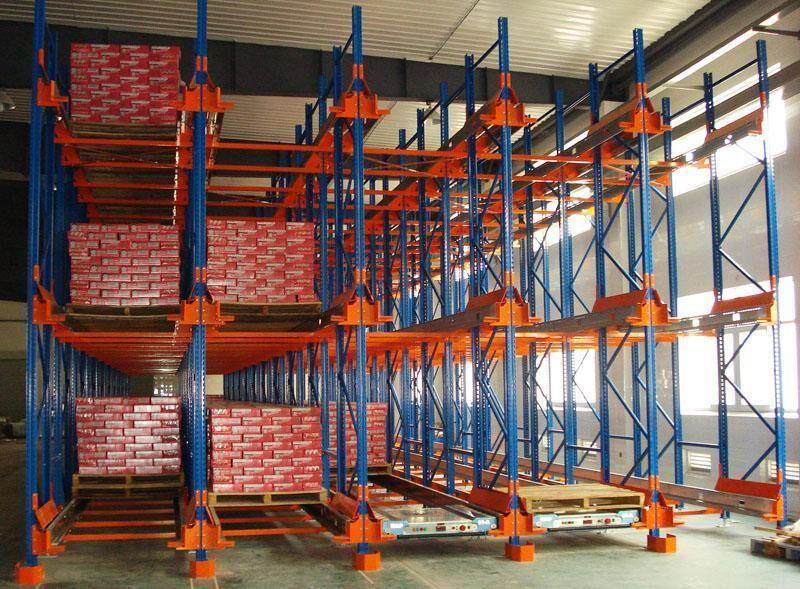
Every inventory storage rack functions as a moment-resisting frame. The primary load path transfers vertical forces from stored pallets through beams, into columns (uprights), and finally to floor anchors. Secondary horizontal forces (wind, seismic, forklift bump) require diagonal bracing or rigid connections. Critical parameters include:
Column section modulus: Typical roll‑formed columns (90x70x2.5 mm) offer 12.5 cm³ section modulus; heavy-duty hot‑rolled channels (120x120x5 mm) provide 48 cm³ – a 284% increase in bending resistance.
Beam step‑load capacity: A 2,700 mm beam with 1,200 mm pallet spacing must support 1,800 kg per pallet position plus a 25% impact factor (per RMI).
Deflection limits: Under full load, beam deflection ≤ L/180 (span/180). For a 2,700 mm beam, maximum sag ≤ 15 mm. Exceeding this accelerates weld fatigue.
Anchor bolts (grade 5.8 or higher) embedded 100–120 mm into C25/30 concrete with pull‑out resistance ≥ 15 kN per bolt is mandatory for any inventory storage rack above 2.5 m height. Using undersized anchors caused 34% of reported rack collapses in a 2023 OSHA study.
Selecting the correct rack type depends on inventory turnover, pallet size, and floor space cost per square meter. Below are the dominant systems with technical specifications:
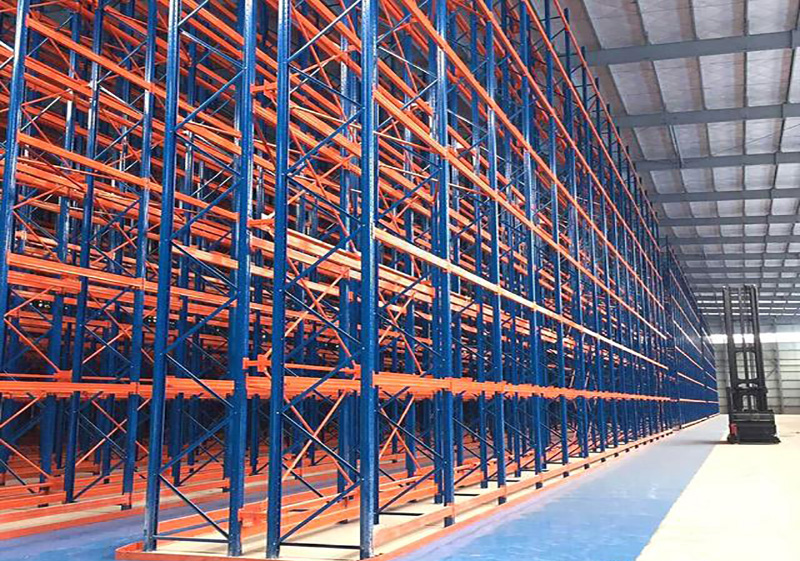
Selective racks offer 100% accessibility. Roll‑formed frames (2.5 mm steel) suit loads ≤ 1,200 kg per level. Structural frames (4.0 mm hot‑rolled) handle ≤ 4,500 kg per level. Beam lengths range 1,800–3,600 mm. For e‑commerce fulfillment with high SKU rotation, selective inventory storage racks achieve 85–90% pick face utilization. Typical upright spacing: 2,700 mm with three beam levels.
These high‑density systems allow forklifts to enter rack bays. Load capacity per rail: 1,000–1,800 kg. Maximum depth: 5 pallet positions (12 meters). Rail inclination: 5–7 mm per meter toward the rear to prevent forward slide. Critical limitation: Only LIFO (Last‑In‑First‑Out) access. Use for homogeneous pallets with low turns.
Push‑back uses nested carts on inclined rails (3° pitch). Each lane stores 2–6 pallets deep. Capacity per pallet: up to 1,200 kg. Dynamic load tests show that push‑back improves space density by 60% versus selective, but cart maintenance (greasing wheels every 6 months) is mandatory to avoid track jamming.
Gravity rollers with speed controllers. Maximum lane length: 18 meters (12 pallets). Required roller pitch: 35–50 mm between rollers for standard CHEP/GMA pallets. Brake rollers placed every 1.2–1.5 meters to control descent speed below 0.3 m/s. FIFO flow racks reduce product expiry risk in food and pharmaceutical distribution by 70% compared to static racks.
Designed for long items (steel bars, lumber, pipes). Arm lift capacity ranges 500–2,500 kg per arm, with vertical pitch adjustable every 75 mm. For lumber storage, arm face covering (UHMW or rubber) protects material finish. Guangshun provides seismic‑qualified cantilever arms with FEA validation up to 2,500 mm length.
Decks convert beam levels into shelf spaces for loose cartons. Wire mesh (50x50 mm opening, 4 mm wire) offers fire sprinkler penetration; solid steel panels contain small parts but add 15–20 kg/m² dead load. Always verify beam capacity includes deck weight.
A 1,000 m² warehouse with 8 m clear height using selective inventory storage racks (3 beam levels) achieves 360 pallet positions. By switching to drive‑in racks (5 levels, 6 pallets deep), the same footprint stores 1,200 pallets – a 233% increase. However, picking time per pallet increases from 1.2 minutes to 4.5 minutes. Therefore, the ROI model must weigh storage density against labor cost. For High‑Turn SKUs ( > 10 picks/day), selective racks are superior. For Low‑Turn ( < 2 picks/month), drive‑in or push‑back reduces real estate cost. Case study: A Midwest automotive parts distributor replaced selective racks with double‑deep push‑back, saving $47,000 annually in off‑site storage rental while adding only 15 seconds per pick.
Field surveys of 150 warehouses revealed that 42% had column plumbness outside RMI tolerance ( ±5 mm per 3 m height). Consequences include uneven beam loading and accelerated connector fatigue. Mandatory installation checklist:
Floor flatness: ±3 mm over 2 meters using laser level. Grout low spots with non‑shrink epoxy.
Column base plates: fully seated on concrete; no shims exceeding 10 mm total thickness.
Anchor torque: M16 anchors to 190 N·m; re‑torque after 30 days (concrete creep compensation).
Row alignment: adjacent rack rows must be parallel within ±2 mm over 20 m to allow automated guided vehicles (AGVs) navigation.
Guangshun provides laser alignment reports and anchor pull‑out tests for every project, complying with ISO 9001:2025 and local building codes.
Structural deterioration occurs silently. A three‑tier inspection program extends rack life beyond 20 years:
Monthly visual (operator level): Look for beam clips disengaged, damaged footplates, or missing safety pins. Any bent column flange > 5 mm triggers immediate unloading and engineering assessment.
Quarterly torque check: Using calibrated wrench, verify 10% of beam‑to‑upright connectors at 120 N·m (for 5/8” bolts). Replace any bolt showing rust or thread deformation.
Annual third‑party inspection: Ultrasonic testing of welded connections on drive‑in rails and cantilever arms. For racks storing hazardous materials, perform dye penetrant test on all beam end connectors.
Data from 1,200 inspections shows that 78% of reported “minor” damages (e.g., bent beam clip) progressed to structural compromise if left unrepaired for 12 months. Immediate replacement of damaged components costs $200–$500; a rack collapse averages $78,000 in inventory loss and downtime.
In seismic zones (SDC D–F), inventory storage racks must incorporate slotted base plates, friction dampers, or energy‑dissipating beam connectors. Per ASCE 7‑22, the seismic design force Fp = 0.4 × SDS × Ip × Wp, where SDS is site spectral acceleration. For SDS ≥ 1.0g, special pallet restraint straps (vertical clips) prevent pallets from launching off beams. Guangshun engineers provide site‑specific PSHA (Probabilistic Seismic Hazard Analysis) and 3D dynamic time‑history analysis for racks over 9 m height. Wind loads (open‑side warehouses) require horizontal bracing at every 4.5 m vertical interval. Failure to add wind ties has caused progressive collapses in coastal regions with 120 km/h gusts.
For freezers (-25°C to -10°C), standard steel becomes brittle. Specify low‑carbon steel (ASTM A333 Gr. 6) with Charpy V‑notch impact toughness ≥ 27 J at -30°C. Bolts must be Grade 8.8 with zinc‑nickel coating to avoid galvanic corrosion. In chemical or seafood storage, hot‑dip galvanizing (85 μm thickness) or powder coating (epoxy‑polyester hybrid) resists salt spray. A 10‑year salt fog test (ASTM B117) shows galvanized racks lose <2% section thickness versus 35% for painted standard steel in marine environments.
Q1: What is the maximum height for inventory storage racks without
seismic bracing?
A1: Under RMI and IBC, racks above 2.5 m (8 ft)
require horizontal diagonal bracing in seismic zone D or higher. For non‑seismic
regions, unbraced height limit is 5 m, but sway analysis is still required.
Always consult local building codes.
Q2: How often should beam clips be replaced?
A2: Beam
clips (safety locks) have no fixed calendar life, but replace them if any
visible deformation, cracks, or if the clip rotates freely without spring
resistance. For high‑frequency forklift traffic, inspect clips monthly and
replace every 5 years preventively.
Q3: Can I mix different brands of rack beams and
uprights?
A3: Not recommended. Column hole patterns, steel
thickness, and connector profiles vary. Mixing brands voids load certifications
and often fails engineering review. Use components from the same manufacturer or
with documented interoperability test reports. Guangshun provides full system compatibility documentation.
Q4: What is the correct anchor depth for racks holding 2,000 kg per
leg?
A4: For 2,000 kg per column (including safety factor), use M16
wedge anchors embedded minimum 120 mm into C30 concrete with 150 mm edge
distance. Pull‑out test should show ≥ 25 kN ultimate capacity per anchor.
Doubtful soil conditions require deeper cast‑in anchors.
Q5: How do I calculate the total load capacity of a multi‑level rack
system?
A5: Multiply per‑level beam capacity by number of levels,
but verify column capacity (usually marked on upright). Example: beams rated
1,500 kg per level × 4 levels = 6,000 kg total, but if column capacity is 5,200
kg, the system is limited to 5,200 kg. Include deck weight and impact factor
(1.25 for forklift loading).
Selecting the appropriate inventory storage racks requires a balance between density, accessibility, and structural safety. By applying the load tables, deflection limits, and inspection schedules outlined above, warehouse operators achieve a 15‑20 year service life with fewer than 0.3% annual component failures. For site‑specific load calculations, seismic assessments, or cold‑storage engineering, consult the technical team at Guangshun – their engineering portal offers free downloadable RMI compliance checklists and 3D configurators for any rack type.

 Wechat
Whatsapp
Wechat
Whatsapp