In high-density storage environments, the pallet racking beam is far more than a simple horizontal member. It is a precision-engineered component that directly determines load capacity, system stability, and operational safety. Selecting the correct beam profile, steel grade, and connection type requires a clear understanding of material science, structural mechanics, and industry standards. This article provides a data-driven examination of pallet racking beam engineering, covering metallurgical properties, deflection calculations, connection systems, and inspection protocols. For warehouse operators, system integrators, and safety officers, mastering these parameters is the foundation of reliable storage infrastructure.
The mechanical performance of any pallet racking beam begins with its base material. Most industrial rack beams are manufactured from hot-rolled or cold-formed steel, with grades such as ASTM A36, A572 Grade 50, and A992 commonly specified in North American projects. European standards often reference S235JR and S355JR grades. The yield strength of these materials ranges from 235 MPa to 355 MPa, directly influencing the beam's resistance to plastic deformation under live loads.
For cold-formed sections—frequently used in roll-formed rack beams—the post-yield behavior and strain-hardening characteristics are equally important. Steel with a higher yield-to-tensile ratio provides better ductility, which is critical when a pallet racking beam experiences impact forces from forklift operations or seismic events. Guangshun applies strict material verification protocols, including tensile testing and chemical composition analysis, to ensure every beam batch meets the specified mechanical thresholds. This attention to metallurgical consistency reduces the risk of unexpected failure modes, particularly in environments with temperature fluctuations or corrosive atmospheres.
Yield Strength (Fy): The stress at which permanent deformation begins. For rack beams, Fy values between 300–350 MPa are typical for heavy-duty applications.
Ultimate Tensile Strength (Fu): The maximum stress the steel can withstand before fracture. A higher Fu/Fy ratio (≥1.2) indicates better ductility and energy absorption.
Practical implication: Beams with lower Fy may require thicker sections to achieve the same load rating, increasing material cost and dead weight.
Beyond raw strength, surface treatment significantly affects the service life of a pallet racking beam. Powder coating, hot-dip galvanizing, and pre-galvanized steel are the primary options. In food-grade or cold-storage warehouses (operating at -25°C to +5°C), moisture condensation accelerates corrosion, making a minimum coating thickness of 60 microns essential. Guangshun offers customized coating solutions that comply with ASTM A123 and ISO 1461 standards, balancing corrosion resistance with cost efficiency for each project environment.
Determining the safe working load (SWL) of a pallet racking beam involves more than consulting a generic load chart. The beam's section modulus, moment of inertia, and unsupported span length must be integrated into a deflection analysis. Industry standards such as ANSI MH16.1-2024 and RMI Specification 2023 require that beam deflection under full design load does not exceed L/180 (where L is the span length). For example, a 2,400 mm span beam must have a maximum vertical deflection below 13.3 mm to maintain pallet stability and prevent load shifting.
Section modulus (Sx): Directly proportional to bending resistance. A higher Sx allows the beam to carry greater loads with less deflection.
Moment of inertia (Ix): Affects stiffness. Doubling the beam depth increases Ix by approximately eight times, dramatically reducing deflection.
Safety factor: Most engineered rack systems apply a global safety factor of 1.5 to 2.0 against yield, depending on the application (static vs. dynamic loading).
In practice, a beam rated for 2,500 kg at a 2,700 mm span may have its capacity reduced to 1,800 kg when the span extends to 3,600 mm, due to the quadratic relationship between span and deflection. Therefore, procurement specifications must always reference the beam's load-deflection curve at the actual span used in the warehouse layout. Engineers should also account for eccentric loading—where the pallet's center of gravity is not aligned with the beam's midline—which introduces torsional stresses that reduce effective capacity by 10–15%.
The interface between the pallet racking beam and the upright frame is a critical load-transfer point. Three connection types dominate the global market: teardrop-punch, keyhole-slot, and bolted clip connections. Each has distinct performance characteristics regarding shear resistance, installation speed, and seismic behavior.
Teardrop connections: The most common in selective rack systems. Beam connectors feature tapered tabs that lock into punched holes on the upright. This design allows for 25 mm vertical adjustability but relies on the tab's shear strength (typically 8–12 kN per tab).
Keyhole-slot connections: Often used in drive-in and push-back racks. The beam's welded studs slide into keyhole slots, providing higher pull-out resistance under dynamic loads.
Bolted clip connections: Preferred in seismic zones or when beam replacement frequency is high. Bolted clips offer predictable torque-controlled clamping force but require more installation time.
Regardless of the connection type, the beam end connectors must be inspected for weld integrity and deformation. Fatigue cracks in the connector-to-beam weld zone are a leading cause of sudden beam failure, particularly in facilities with high forklift traffic. Guangshun implements automated robotic welding for beam connectors, ensuring consistent penetration and reduced residual stress, which significantly enhances fatigue life compared to manual welding processes.
In regions with seismic activity, the beam-to-upright connection must accommodate lateral drift without brittle fracture. Beam connectors with slotted holes or elongated tabs can provide up to 12 mm of movement in the horizontal plane, reducing the transmission of seismic forces to the beam itself. Additionally, the beam's end-plate design influences the rack's overall sway stiffness. A stiffer beam-upright joint increases the system's natural frequency, potentially avoiding resonance with ground motion periods (typically 0.2–2.0 seconds).
Regular inspection of pallet racking beams is mandatory under OSHA and HSE guidelines. The primary failure mechanisms include: (a) local buckling at the load-bearing flange, (b) distortion of the beam web due to impact, (c) corrosion pitting reducing section thickness, and (d) fatigue cracking at connector welds. A visual inspection checklist should cover the following parameters:
Flange flatness: Deviation > 3 mm over 300 mm indicates plastic deformation.
Web straightness: Lateral bow > L/300 requires immediate unloading and engineering assessment.
Connector wear: Reduction in tab thickness by more than 20% from original dimensions compromises shear capacity.
Paint/coating integrity: Rust creep at scratches or impact points should be measured; a 10% loss in section thickness reduces load capacity by approximately 15%.
When damage is detected, a two-tiered approach is recommended: (a) temporary load reduction (e.g., 50% of SWL) while replacement beams are procured, and (b) complete beam substitution if any crack is visible to the naked eye. It is a common industry error to replace only the visibly damaged beam without checking adjacent beams that may have experienced overload sharing. Load redistribution often means neighboring beams are also stressed beyond their design limits, even if they show no outward distortion.
For warehouse designers and procurement managers, the selection process should be structured around four core parameters: span length, load per level, bay depth, and clearance height. Each parameter influences the beam's section choice and material grade. A practical workflow is as follows:
Step 1 – Define the maximum pallet weight and footprint: This establishes the required load per beam pair. Use the uniform load distribution assumption for standard pallets, but apply point-load calculations for oversize or non-uniform loads.
Step 2 – Determine the beam span: Measured center-to-center of uprights. Longer spans require deeper sections (e.g., 120 mm vs. 80 mm beam height) or higher-grade steel to control deflection.
Step 3 – Select the beam cross-section profile: Rectangular tubes offer higher torsional rigidity than open C-sections, making them preferable for drive-in racking where beam ends are unsupported.
Step 4 – Verify connection compatibility: Ensure the beam connector pitch matches the upright hole pattern. Incompatible connectors are a frequent cause of installation errors and safety violations.
Step 5 – Review the manufacturer's load table: Always use the table corresponding to the exact beam model, steel grade, and span. Do not interpolate between spans unless the manufacturer provides an interpolation formula validated by physical testing.
For complex projects, finite element analysis (FEA) can be used to simulate beam behavior under combined loads—vertical weight, horizontal acceleration from forklift braking, and seismic forces. FEA results often reveal that the maximum stress occurs not at the beam midpoint but near the connector zone, due to stress concentration. This insight allows engineers to specify local reinforcement (e.g., doubler plates) without over-designing the entire beam, achieving cost savings of 8–12% while maintaining safety margins.
Any pallet racking beam installed in a regulated facility must comply with applicable design codes and testing protocols. The primary references are:
ANSI MH16.1-2024: Specification for the Design, Testing, and Utilization of Industrial Steel Storage Racks.
RMI (Rack Manufacturers Institute) Specification 2023: Focuses on beam deflection, connector strength, and impact resistance.
FEM 10.2.02 (European): Specifies beam load classification and test methods for static and dynamic conditions.
ISO 9001: Quality management systems for manufacturing process control.
Third-party certification (e.g., from TÜV or Intertek) provides additional assurance that the beam's published load ratings are based on actual physical testing rather than theoretical calculations alone. A certified beam will have a traceable test report showing the load-deflection curve, ultimate failure load, and mode of failure. This documentation is indispensable for insurance audits and liability defense in case of accidents.
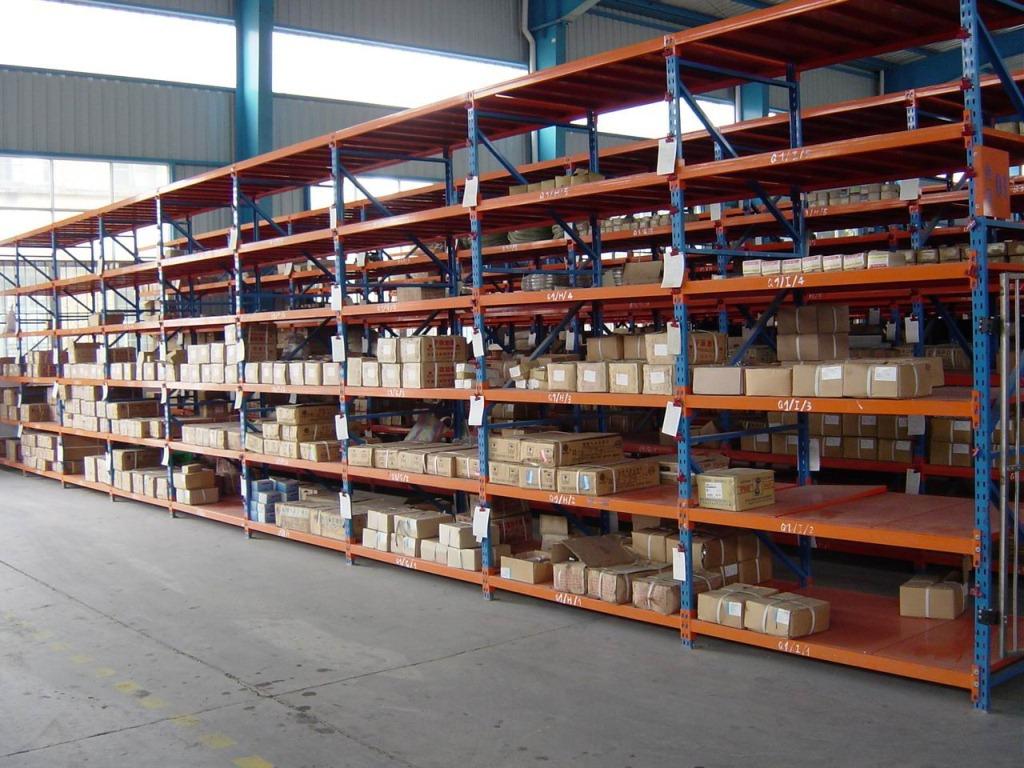
Even experienced engineers occasionally make errors when specifying or inspecting pallet racking beams. The most frequent pitfalls include:
Ignoring beam end fixity: Assuming simply supported conditions when the connector actually provides partial fixity. This error underestimates bending moments by up to 20%.
Overlooking dynamic load amplification: Forklift travel over uneven floors induces impact loads that can exceed static weights by 30–50%. Always apply a dynamic factor (minimum 1.3) for aisles with high traffic.
Using mismatched beam depths: Combining beams of different depths on the same level creates uneven load distribution and may cause pallet tipping.
Neglecting bolt torque checks: For bolted connections, under-torquing reduces shear capacity, while over-torquing can strip threads or induce residual tensile stress.
Failing to account for beam self-weight: For long spans (≥4,500 mm), the beam's own mass adds 5–10% to the total load, which must be included in the deflection calculation.
To mitigate these risks, a comprehensive engineering review should be conducted at each project phase—design, procurement, installation, and commissioning. Guangshun provides a digital beam selection tool that integrates these parameters, allowing users to input span, load, and environmental conditions to generate a validated beam specification with real-time compliance alerts.
The pallet racking beam is a deceptively simple component that demands rigorous engineering scrutiny. From steel grade selection and deflection analysis to connection design and inspection protocols, every decision affects the safety and efficiency of the storage system. By adhering to industry standards, applying proper safety factors, and leveraging advanced simulation tools, warehouse operators can achieve beam performance that meets both operational targets and regulatory requirements. The convergence of material science, structural mechanics, and practical field experience ultimately determines the reliability of every rack level. For organizations that prioritize long-term asset integrity, investing in technically verified beams—backed by documented test data and manufacturer expertise—is not an expense but a strategic necessity.
Q1: What is the standard safety factor applied to pallet racking beam
load ratings?
A1: Industry standards (ANSI MH16.1, RMI) require a
minimum global safety factor of 1.5 against yield strength for static loads. For
dynamic loads, including forklift impact and seismic forces, the factor
increases to 2.0. Manufacturers typically publish load tables that already
incorporate these factors, so the user should not apply an additional multiplier
unless the operating conditions deviate significantly from the standard
assumptions (e.g., extreme temperatures or corrosive environments).
Q2: How often should pallet racking beams be inspected in a
high-throughput warehouse?
A2: For facilities operating 24/7 with
forklift traffic, a visual inspection of all beams should be conducted monthly,
with a more detailed engineering inspection (including measurements of flange
flatness and connector wear) every six months. High-risk zones—such as aisle
entry points and turning areas—require weekly checks. All inspections must be
documented and retained for at least three years for liability and insurance
purposes.
Q3: Can I mix beams from different manufacturers within the same rack
system?
A3: Mixing beams from different manufacturers is strongly
discouraged unless the beam profiles, steel grades, and connector geometries are
identical and validated by structural analysis. Even if the beam depth matches,
differences in material yield strength or connector shear capacity can create
load imbalances. If mixing is unavoidable, the system's load rating must be
downgraded to the lowest-capacity beam, and a structural engineer must approve
the configuration.
Q4: What are the signs that a pallet racking beam has reached its
fatigue life?
A4: Fatigue failure is often preceded by visible
cracks at the beam connector welds, flaking of the paint coating in localized
areas (indicating cyclic strain), or a noticeable increase in beam deflection
under the same load compared to when new. Ultrasonic thickness testing can
detect internal micro-cracks before they propagate. A beam that has experienced
more than 500,000 load cycles at near-maximum capacity should be replaced, as
the cumulative damage reduces its residual strength.
Q5: How does beam span affect the required steel grade and section
depth?
A5: Span length has a quadratic effect on deflection and a
linear effect on bending stress. For a given load, increasing the span from
2,400 mm to 3,600 mm requires either upgrading the steel grade from 300 MPa to
350 MPa (a 17% strength increase) or increasing the beam depth from 100 mm to
130 mm (a 30% stiffness increase). In practice, the most economical solution
depends on the available standard profiles. Using a higher-grade steel often
adds 5–8% to material cost but avoids the weight and handling disadvantages of
deeper sections.

 Wechat
Whatsapp
Wechat
Whatsapp