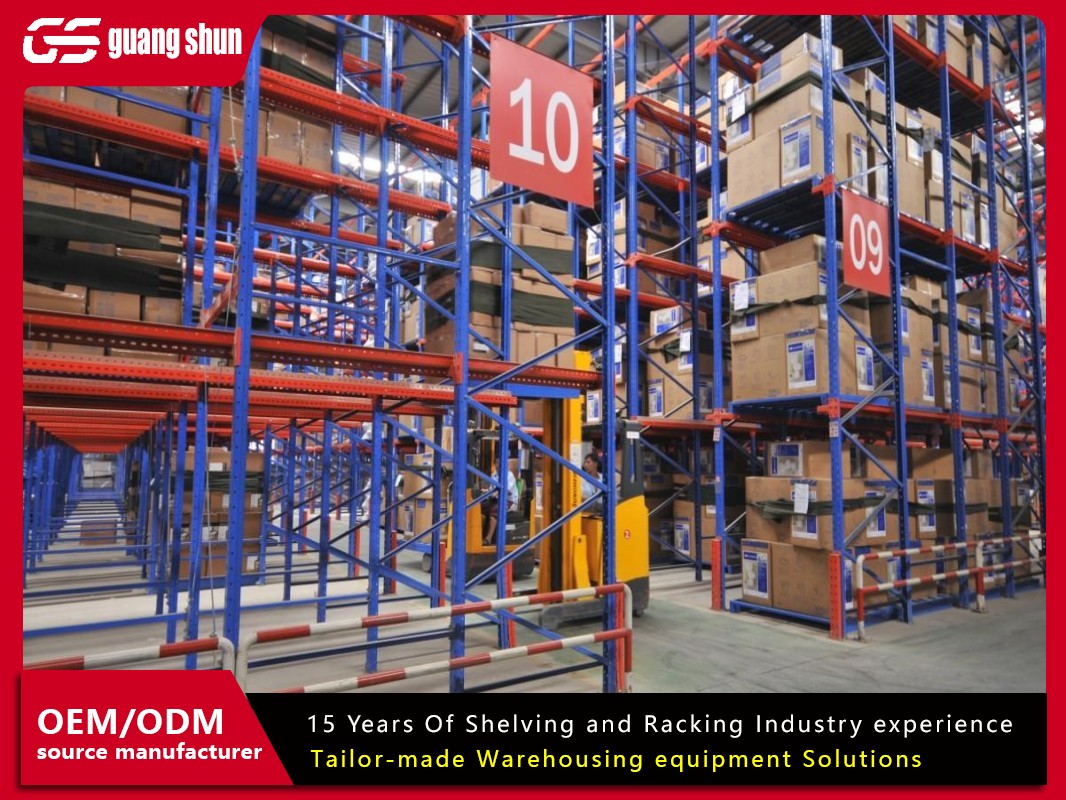
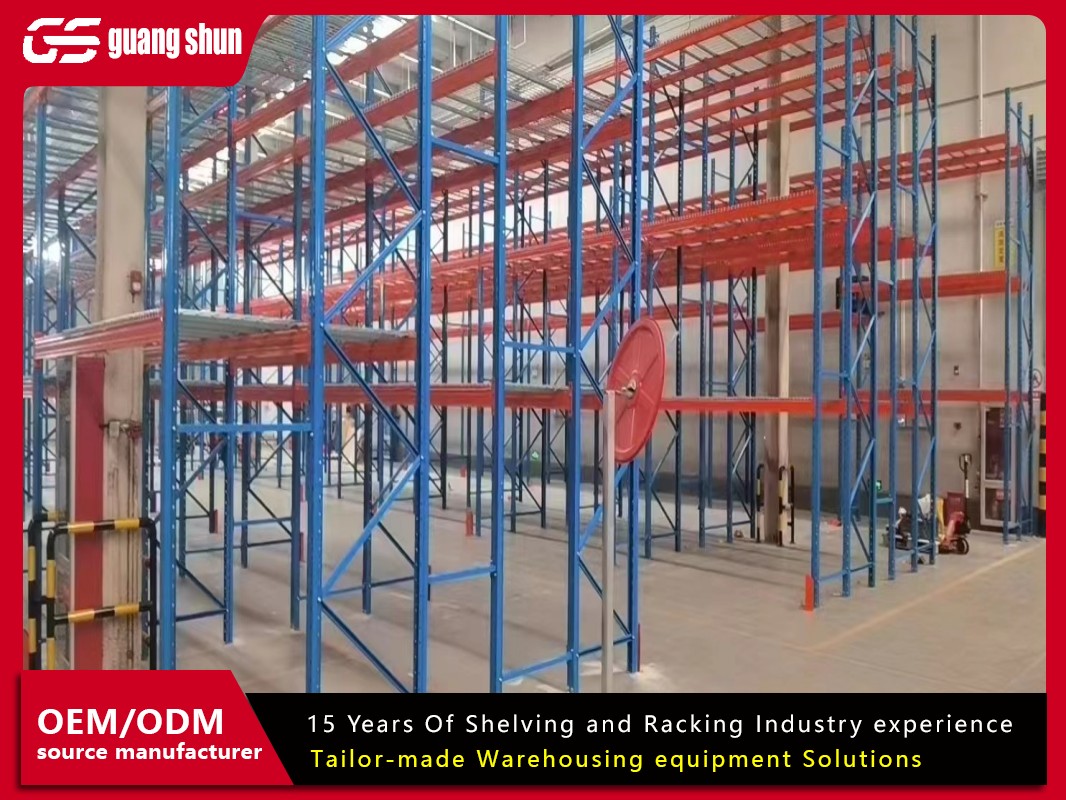
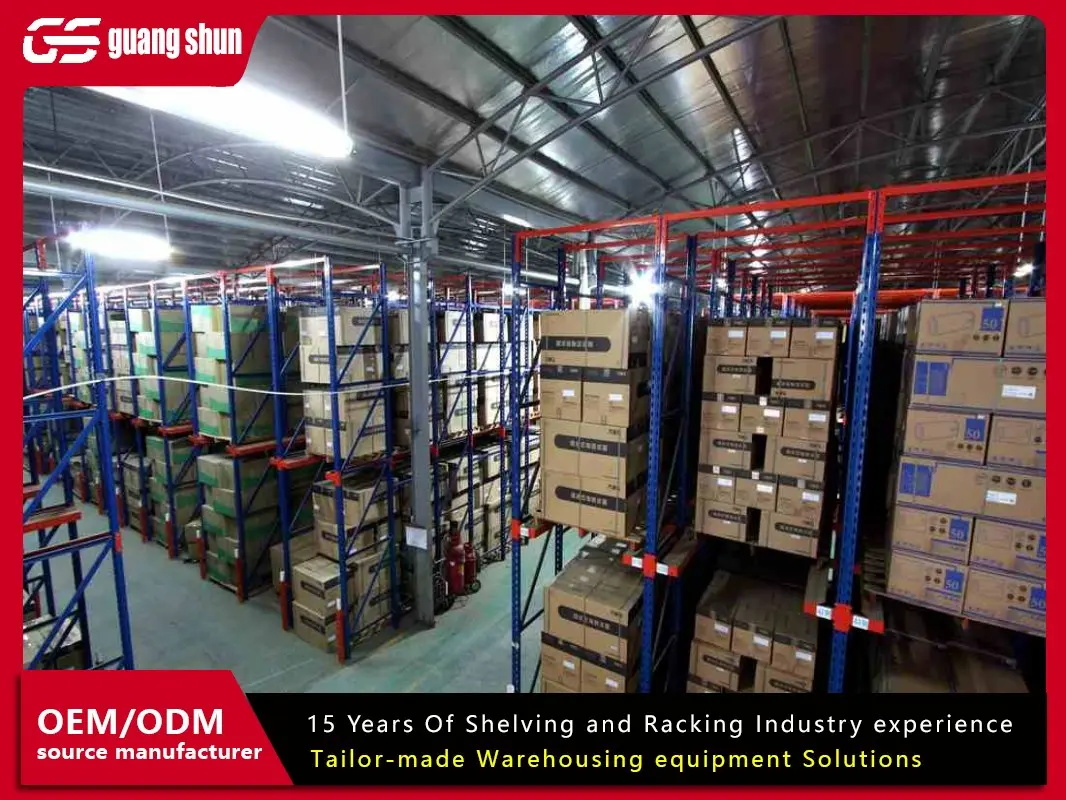
Modern warehousing operations face mounting pressure to maximize storage density per square foot while maintaining reasonable throughput speeds. Under these constraints, pallet shuttle racking has emerged as a practical solution for facilities that need deep-lane storage without sacrificing accessibility. Unlike conventional selective racking, which dedicates a full aisle to every single pallet face, shuttle-based systems use motorized carriers to move pallets horizontally within the rack structure itself, eliminating the need for forklifts to enter the storage lanes.
This article examines the technical architecture, operational characteristics, and application scenarios of pallet shuttle racking. It also compares the system against other high-density alternatives and provides selection criteria that warehouse engineers and operations managers can apply directly.
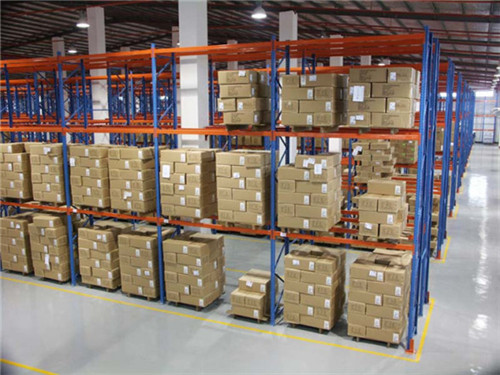
At its core, the system consists of a set of rails mounted inside each storage lane, a battery-powered shuttle cart that travels along those rails, and a forklift or reach truck that places and retrieves the shuttle at the lane entrance. The shuttle carries the pallet to the deepest available position or returns it to the face of the rack when called upon.
The operational sequence works as follows:
A forklift positions the shuttle at the lane entry point.
The forklift places a pallet on the shuttle platform.
The shuttle travels to the first available position and lowers the pallet onto the rails.
The shuttle returns to the lane entrance for the next cycle.
For retrieval, the process reverses: the shuttle lifts the target pallet and brings it to the face.
This design allows lanes to be configured with 10, 15, or even 20+ pallet positions deep, depending on the shuttle model and rail configuration. The result is a storage density that approaches that of drive-in racking, but with significantly reduced risk of rack damage and far better selectivity within each lane.
The shuttle cart is the defining component of the system. Modern units typically operate on 24V or 48V lithium-ion batteries and offer load capacities ranging from 1,000 kg to 1,500 kg per pallet. Key specifications to evaluate include:
Travel speed: Loaded speeds of 0.8–1.2 m/s are common; unloaded speeds can reach 1.5 m/s.
Battery life: Eight to ten hours of continuous operation is typical, with opportunity charging available during breaks.
Positioning accuracy: Laser or encoder-based systems achieve ±5 mm placement precision.
Communication: Radio frequency or infrared control between the forklift operator's remote and the shuttle.
Rails must be rated for both the shuttle's weight and the pallet load. Cold-rolled steel profiles with galvanized or powder-coated finishes are standard. The rack uprights and beams are typically designed to RMI or FEM standards, with safety factors appropriate for the intended load class. For facilities operated by Guangshun, rail alignment tolerances are held to within 2 mm over a 10-meter span to prevent shuttle derailment and ensure smooth travel.
Safety features include obstacle detection sensors, emergency stop functions, and automatic speed reduction when the shuttle approaches the lane end. Some advanced models offer pallet presence detection, which prevents the shuttle from attempting to place a pallet on an occupied position.
Warehouse planners often compare pallet shuttle racking with drive-in racking, push-back racking, and automated storage and retrieval systems (AS/RS). Each has trade-offs.
Reduced rack damage: Forklifts never enter the storage lane, so uprights and rails are not exposed to impact from moving equipment.
Higher throughput: The shuttle can travel faster than a forklift inside a confined lane, and multiple shuttles can operate in different lanes simultaneously.
Better space utilization: Lanes can be shorter in height because the shuttle does not require the vertical clearance that a forklift mast needs.
Push-back systems rely on gravity and nested carts, which limits depth to typically 2–4 pallets. Pallet shuttle racking supports far deeper lanes and does not require the slight incline that push-back systems need. This makes it suitable for facilities with level floors and high ceilings where vertical storage is a priority.
Full AS/RS installations offer the highest throughput and accuracy, but at a capital cost that is often three to five times higher than shuttle-based systems. For operations that do not require fully automated order picking, pallet shuttle racking provides a middle ground: semi-automated deep-lane storage with a fraction of the infrastructure investment.
The system is particularly well-suited to operations with the following characteristics:
High-volume, low-SKU environments: Beverage, food, and consumer packaged goods warehouses where large quantities of the same product are stored.
Cold storage: The reduced need for forklift access inside lanes lowers energy loss from open doors and minimizes frost buildup on equipment.
Seasonal inventory surges: Shuttle systems can be expanded lane by lane as volume grows, unlike fixed AS/RS installations.
Third-party logistics (3PL) operations: The ability to reconfigure lane depths and shuttle assignments supports changing client requirements.
In a cold storage project completed by Guangshun Racks, a 12,000-square-meter facility achieved 40% more pallet positions than its previous selective racking layout by converting to shuttle-based deep lanes. The operator reported a 25% reduction in forklift travel distance per shift.
Before committing to a pallet shuttle racking system, warehouse engineers should evaluate the following factors:
Shuttles require pallets with consistent dimensions and structural integrity. Damaged or undersized pallets can cause the shuttle to misplace loads or stall. Facilities with poor pallet control may need to invest in pallet inspection and repair programs.
While shuttle systems are faster than drive-in racking, they are not as fast as conveyor-based AS/RS. Calculate peak hourly pallet movements and verify that the number of shuttles and lane configurations can meet demand.
Modern shuttles can communicate with WMS platforms to track pallet positions and automate retrieval sequences. This is particularly valuable in FIFO (first-in, first-out) applications, where the system must ensure that older stock is retrieved before newer inventory. Not all shuttle models offer this capability, so it should be specified during procurement.
Battery replacement, wheel wear, and sensor calibration are the most common maintenance items. Facilities should confirm that spare parts are readily available and that technicians can be trained on-site. Remote diagnostics, available on some higher-end models, can reduce downtime by allowing technicians to troubleshoot without entering the rack structure.
Q1: What is the maximum lane depth for pallet shuttle racking?
A1: Lane depth depends on the shuttle model and rail design. Most systems support 10–20 pallet positions per lane, though some configurations reach 30 or more. Deeper lanes increase storage density but can reduce selectivity, so the optimal depth depends on SKU velocity and order profiles.
Q2: Can pallet shuttle racking be used in freezer environments?
A2: Yes. Cold storage is one of the most common applications. Shuttles used in freezers must be rated for low temperatures, typically -30°C or lower. Battery performance degrades in cold conditions, so operators should plan for shorter run times or additional battery swaps.
Q3: How does the shuttle know where to place a pallet?
A3: Most shuttles use sensors and encoders to count rail positions. The operator selects the lane and the shuttle automatically travels to the first available position. Some advanced models use laser positioning for higher accuracy.
Q4: What happens if a shuttle breaks down inside a lane?
A4: Most systems include a manual retrieval mode or a tow hook that allows a forklift to pull the shuttle out of the lane. Regular preventive maintenance reduces the likelihood of in-lane failures.
Q5: Is pallet shuttle racking suitable for FIFO inventory management?
A5: Yes, but it requires either a WMS-integrated shuttle system or a disciplined manual process. In FIFO mode, the shuttle retrieves pallets from the deepest position first, working backward toward the lane face. This is slower than LIFO operation but ensures stock rotation.
Q6: How does the cost of pallet shuttle racking compare with selective racking?
A6: The initial investment is higher due to the shuttle units and rail systems. However, the increased storage density often reduces the total square footage required, which can offset the upfront cost—especially in markets with high warehouse rental rates.
Pallet shuttle racking offers a balanced approach to high-density storage: more pallet positions per square meter than selective racking, better safety and throughput than drive-in racking, and lower capital cost than full automation. The system is not universal—it requires consistent pallet quality, careful throughput analysis, and a willingness to invest in operator training. But for warehouses dealing with high-volume, low-SKU inventory, it represents a practical and scalable solution.
As with any racking investment, the key is to match the technology to the operational profile. Engineers and operations managers who take the time to model pallet flows, evaluate lane depths, and plan for maintenance will find that the system delivers reliable performance for years.

 Wechat
Whatsapp
Wechat
Whatsapp