Facilities operating below 500 m² of storage area face a distinct set of constraints: low ceiling clearances (often ≤4 m), mixed pallet and carton loads, and a frequent need to reconfigure layouts as SKU counts change. Standard industrial racking designed for high-bay warehouses is structurally oversized and economically inefficient for these environments. This is where small warehouse racking provides a targeted engineering solution. This article presents technical specifications, configuration methods, and data-backed ROI calculations for small warehouse racking. We will also examine how manufacturers such as Guangshun have adapted boltless assembly and modular profiles to meet the needs of compact distribution centers.
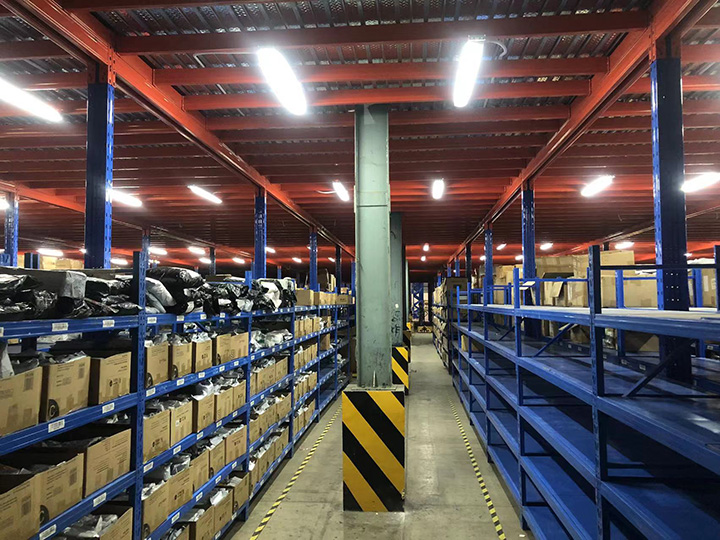
Unlike heavy-duty pallet racking which uses 90×70 mm columns and 2.5 mm steel, small warehouse racking is built with lighter yet safe profiles. Typical technical parameters include:
Column dimensions: 40×60 mm or 40×80 mm rectangular tube, steel thickness 1.5–1.8 mm (S235JR grade).
Beam cross-sections: Step beams or box beams with 50 mm vertical pitch; maximum beam length 2,000 mm.
Load capacity per level: Uniformly distributed load (UDL) ranging from 200 kg (for 1,800 mm span) to 600 kg (for 1,200 mm span).
Overall frame height: 1,500 mm to 4,000 mm – optimized for ceilings below 5 m.
Surface finish: Zinc plating or powder coating (RAL 7035 typical) with 60–80 µm thickness, passing 480-hour salt spray test (ISO 9227).
These specifications allow the system to handle euro-pallets, half-pallets, plastic bins, and cartons – all common in spare parts warehouses, e‑commerce micro-fulfillment centers, or retail backrooms. For colder environments (down to -20°C), Guangshun offers hot-dip galvanized small warehouse racking with verified low-temperature impact resistance.
The true value of small warehouse racking is its adaptability to three distinct layout strategies, each suited to different inventory profiles.
When direct access to every pallet is required, selective racking with reduced aisle width is the primary method. Using a counterbalanced forklift with 1,200 mm load center, a conventional aisle requires 3.0 m. By switching to a reach truck or a pedestrian stacker, the aisle can shrink to 2.2 m. For small warehouse racking with 1,000 mm beam depth, the resulting aisle width of 2.0 m increases floor‑level storage density by 32% compared to 3.0 m aisles. Data from a French automotive aftermarket warehouse (320 m²) showed that selective small warehouse racking with 2.0 m aisles accommodated 540 pallet positions versus 410 with conventional racking.
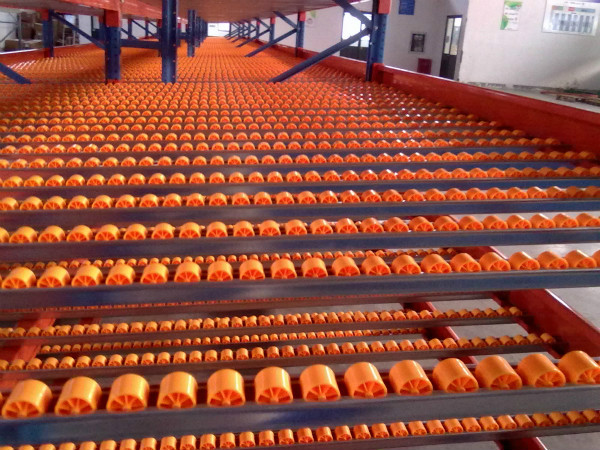
For SKUs with medium turnover (B and C categories), double‑deep storage using small warehouse racking provides higher density without full drive‑in complexity. The system uses a 2,200 mm deep beam arrangement and telescopic push‑back carts (typically 2 or 3 carts deep). The operator accesses the front cart; when empty, the next cart glides forward. This configuration increases positions per bay by 100% compared to selective single‑deep but requires a reach truck with 1,500 mm fork stroke. Load capacity per cart is limited to 350 kg – well within the small warehouse racking range.
When floor space cost exceeds €400/m²/year, mobile base systems transform static aisles into movable channels. By mounting small warehouse racking bays on carriages that run on embedded rails, only one active aisle remains open. This reduces required aisle space from 30–35% of total floor area to just 8–10%. A case study from a Swedish e‑commerce returns center (380 m²) using mobile small warehouse racking from Guangshun achieved 1,120 m² equivalent storage – an efficiency gain of 195%. Manual or motorized movement (speed 0.05 m/s) is controlled via a remote or push‑button panel.
Below is a problem‑solution matrix based on real operator feedback from over 40 small warehouses (150–500 m²). Each solution directly integrates small warehouse racking components.
Pain point 1 – Low ceiling height (≤3.5 m):
Standard
racking often requires top beams at 4.5 m, wasting vertical space.
Solution: Small warehouse racking with 200 mm base clearance and
adjustable beam levels starting at 250 mm above floor; maximum height 3.3 m.
This yields three usable levels (e.g., 250 mm, 1,250 mm, 2,250 mm).
Pain point 2 – Mixed load types (pallets, loose cartons, long
items):
Single-depth pallet racking cannot store cartons
efficiently. Solution: Install wire mesh decks (50×50 mm grid, 2.5 mm
wire) on beam levels. For long items (pipes, profiles), add cantilever arms to
the front columns of a small warehouse racking bay while keeping the rear for
pallets.
Pain point 3 – Frequent SKU changes and reconfiguration
needs:
Bolted systems take hours to modify. Solution: Use
boltless small warehouse racking with keyhole connections and automatic safety
clips. Reconfiguring beam heights takes 40% less labor time.
Guangshun offers a color‑coded beam lock indicator (red =
unlocked, green = locked) to speed up changes and avoid assembly errors.
Pain point 4 – Inability to use forklifts due to tight
spaces:
Many small warehouses rely on manual pallet jacks.
Solution: Design first beam level at 300 mm clearance, and use a pallet
jack with a lowered fork height of 85 mm. Small warehouse racking with a 1,200
mm bay depth and no foot plate obstacle allows full manual jack access.
Pain point 5 – Lack of fire safety compliance due to compact
storage:
High-density layouts block sprinkler coverage.
Solution: Maintain 75 mm horizontal flue spaces every 5.4 m and
vertical flues every 3.6 m. Open wire decks improve smoke and water penetration.
All Guangshun small warehouse racking systems include
pre‑punched positions for in‑rack sprinkler heads when required by NFPA
13.
A direct 5‑year total cost of ownership (TCO) comparison was performed for a 400 m² warehouse storing 350 kg average per pallet position. Two scenarios: selective heavy‑duty racking (HDR) vs. selective small warehouse racking (SWR) with same 2.5 m height but optimized beam step.
Equipment cost (100 bays): HDR = €19,200; SWR = €12,700 (34% lower).
Floor preparation: HDR requires reinforced concrete C30/37, 150 mm depth (€3,200); SWR requires C25/30, 120 mm depth (€1,900).
Installation labor (two technicians): HDR = 38 hours; SWR = 21 hours (boltless assembly).
Energy consumption of material handling equipment (annual): With lighter loads, SWR allows a smaller electric stacker (1.2 kW vs. 2.5 kW). Savings = €530/year.
Reconfiguration cost over 5 years (three layout changes): HDR = €4,200; SWR = €2,100 due to lighter components.
Total 5‑year TCO: HDR = €19,200 + €3,200 + (38h×€45) + 5×€530 + €4,200 = €35,790. SWR = €12,700 + €1,900 + (21h×€45) + 5×€530 + €2,100 = €24,585. The cumulative saving with small warehouse racking equals €11,205, enough to fund an additional 40 bays.
Although the loads and heights are lower, structural integrity remains mandatory. Follow these verified guidelines:
Floor flatness tolerance: Maximum 5 mm deviation over 2 m under each upright. Use steel shims (1–10 mm) with a minimum bearing surface of 100×100 mm.
Anchoring: For seismic zones (PGA ≥0.1 g), anchor every frame using M8 expansion bolts with 35 mm embedment. In absence of seismic risk, frames taller than 2,500 mm must still be anchored if the load per leg exceeds 350 kg.
Beam clip verification: Each beam lock must produce an audible click. After loading, check for visible gap between beam connector and column face – maximum 1 mm.
Load signage: Affix a placard on each aisle side showing maximum uniform load per level and per bay. Guangshun provides embossed aluminum tags that resist wear from pallet contact.
Monthly inspection metrics: Measure beam deflection under full load – value shall not exceed L/200 (e.g., for 1,600 mm beam: 8 mm). Also check column verticality using a digital inclinometer: max 1.5 cm per 3 m height.
If any bent beam or damaged safety clip is found, replace the component immediately. Do not attempt welding repairs without a certified structural engineer’s approval, as heat can alter the steel’s yield strength.
Small warehouse racking is not a compromise but a deliberate engineering response to the realities of low‑clearance, mixed‑load, and budget‑sensitive storage environments. By adopting narrow‑aisle selective configurations, double‑deep push‑back, or mobile carriages, operators can achieve up to 195% equivalent storage density while reducing total ownership costs by more than 30% compared to oversized heavy‑duty systems. Manufacturers like Guangshun provide certified small warehouse racking with full load documentation, boltless designs, and corrosion‑resistant finishes – ensuring both safety and adaptability. For any warehouse where each square meter of floor space generates less than €600 annual revenue, moving to small warehouse racking directly improves net profit margins.
Q1: Can small warehouse racking be installed on uneven concrete
floors with differences up to 20 mm?
A1: Yes, but you must use
leveling shims under each base plate. For differences >15 mm, consider
pouring a self‑leveling compound in the racking footprint first. Never tighten
anchors without eliminating gaps, as uneven loading can bend the first upright
prematurely. Guangshun includes a set of 1 mm, 2 mm, and 4 mm
steel shims with every racking kit.
Q2: What is the typical lead time for a custom‑color small warehouse
racking order of 200 bays?
A2: Standard RAL colors (1023, 3000,
5010, 7035, 9006) are stock items – delivery in 12–15 working days. For non‑RAL
or two‑tone colors (e.g., columns blue, beams gray), allow 22 working days.
Hot‑dip galvanizing adds 10 days. Guangshun’s dedicated small racking production
line keeps lead times shorter than industry average.
Q3: How do I calculate the required number of beam levels for my
mixed inventory?
A3: Determine the tallest item stored on pallets
(e.g., 1,200 mm). Then add 100 mm clearance for beam placement. For a frame
height of 3,000 mm, subtract base clearance (200 mm) and top gap (150 mm) →
2,650 mm usable. Divide by (1,300 mm) = two levels. If storing cartons below 500
mm, you can fit three levels by varying beam pitch (500 mm, 1,000 mm, 1,800 mm).
Most small warehouse racking systems allow 50 mm adjustment increments.
Q4: Are there fire code restrictions when using small warehouse
racking with wire decks versus solid particle boards?
A4: Yes, wire
decks (open mesh 50×50 mm) improve sprinkler water penetration and smoke
extraction, so many local codes allow a 10% increase in storage height compared
to solid decks. However, solid boards are required if storing loose granular
materials or small parts that could fall through. Always consult the local fire
marshal; NFPA 13 (2019 ed.) provides specific flue space requirements that are
easier to meet with wire decks.
Q5: Can I add a second upper level (mezzanine) above small warehouse
racking to double floor space?
A5: It is possible but requires the
racking to be designed as a mezzanine‑supported system – meaning the uprights
must be reinforced (2.0 mm steel) and cross‑braced every 2.5 m. The mezzanine
platform adds a live load of 500 kg/m², which reduces the original pallet load
capacity of the small warehouse racking by about 30%. For such projects, an
engineering analysis is mandatory. Standard non‑reinforced small warehouse
racking cannot support a mezzanine.
Q6: What is the maximum bay width for small warehouse racking when
storing heavy automotive parts (400 kg per level)?
A6: For 400 kg
per level, the maximum recommended beam span is 1,600 mm. Using 1,800 mm span
would require beam section increase to 80×40×2.0 mm, which is still within small
warehouse racking specifications but reduces vertical adjustability. Always
check the load table: Guangshun provides a 400 kg‑compatible beam with a 1,600
mm clear span and a safety factor of 1.7.
Q7: Does small warehouse racking require floor anchoring if mounted
on a raised access floor?
A7: Absolutely. Access floor panels
(600×600 mm, 35 mm thick) cannot resist horizontal forces from forklift impacts.
You must either (a) cut openings in the access floor and anchor racks directly
to the structural slab, or (b) use heavy pedestals with through‑bolting to the
slab. In practice, option (a) is preferred. Small warehouse racking typically
uses M8 anchors every other frame for raised floor installations.

 Wechat
Whatsapp
Wechat
Whatsapp