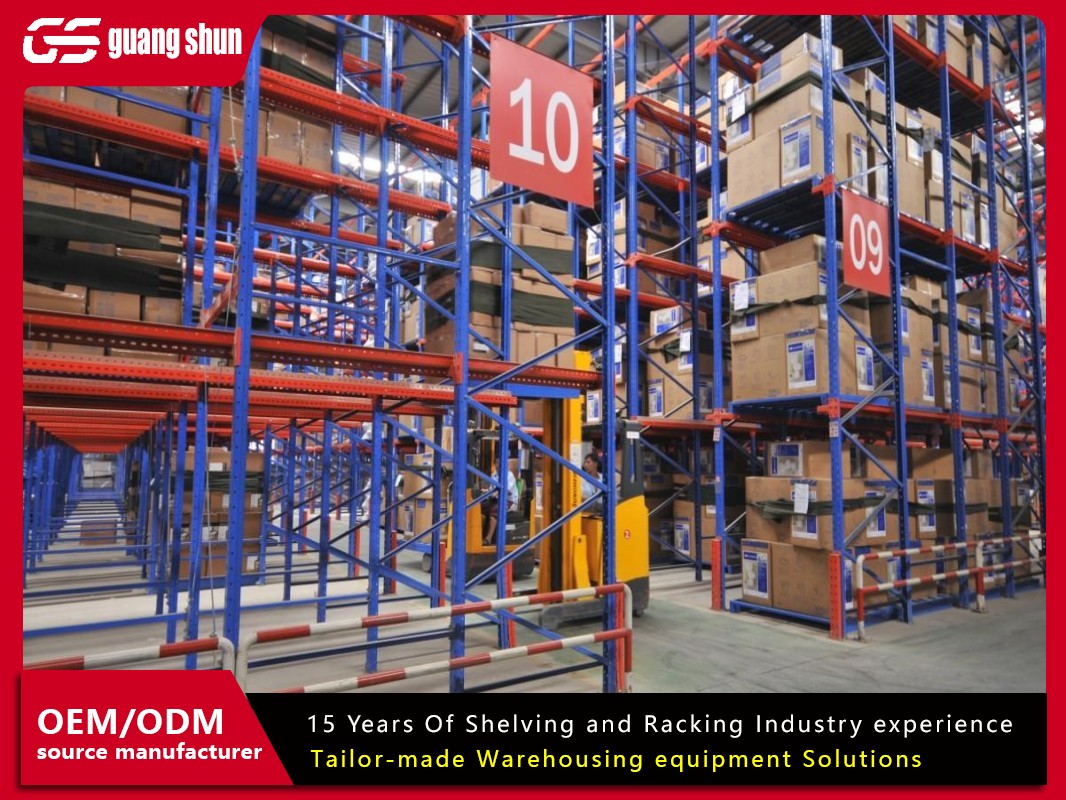
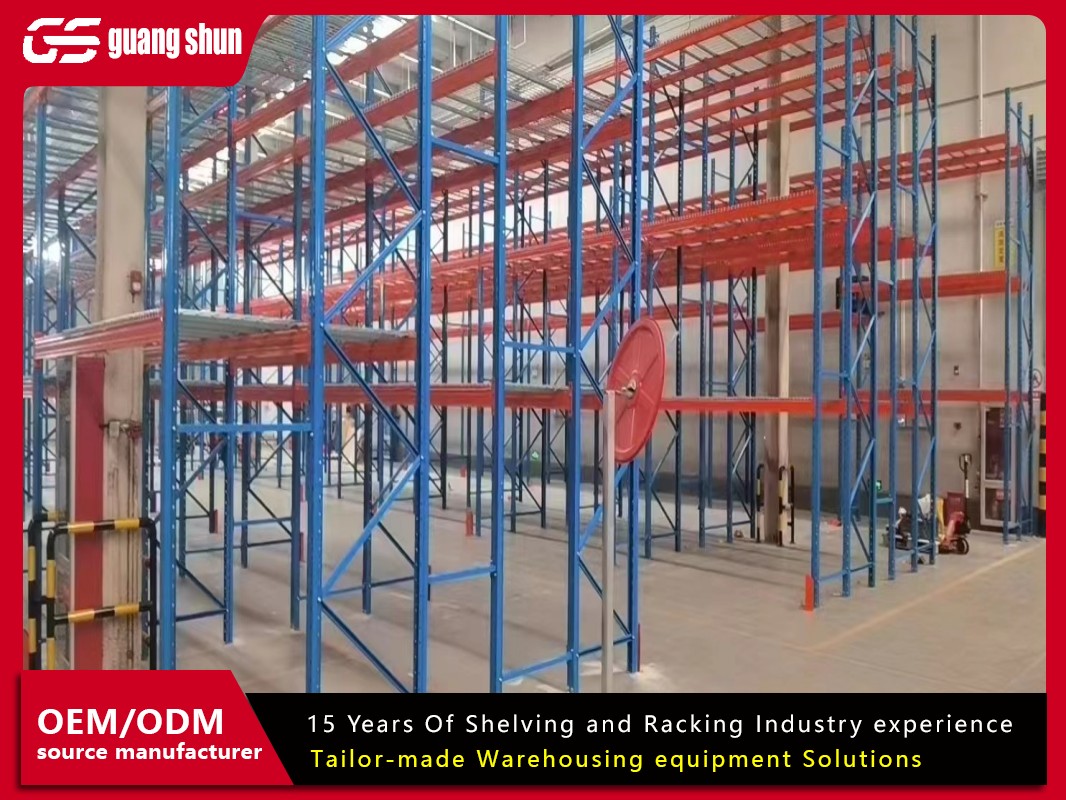
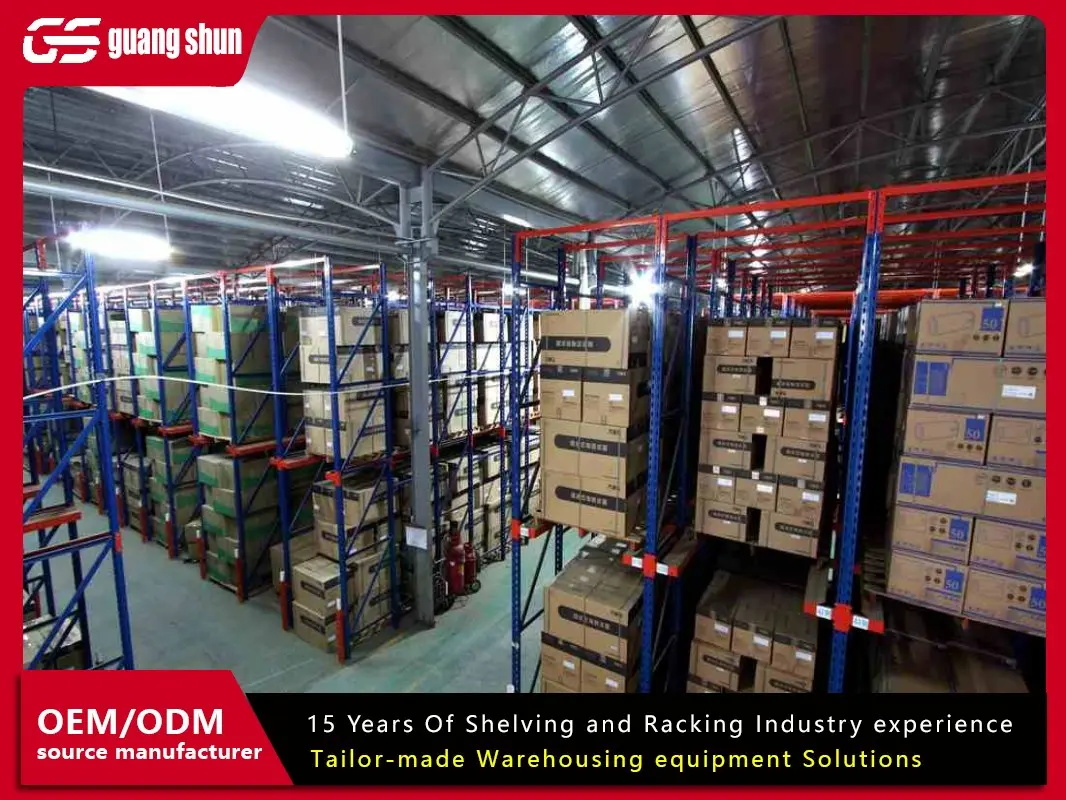
In modern warehousing and distribution centers, SKU proliferation and rising floor space costs have pushed operators to re-evaluate conventional heavy-duty pallet racking. For light-to-medium load profiles, mini pallet racking offers a technically refined alternative. This article provides a data-driven analysis of structural parameters, load capacity distributions, aisle width optimization, and real-world ROI calculations for mini pallet racking. We will also examine industry-specific pain points and how modular designs from manufacturers like Guangshun address these challenges without over-engineering.
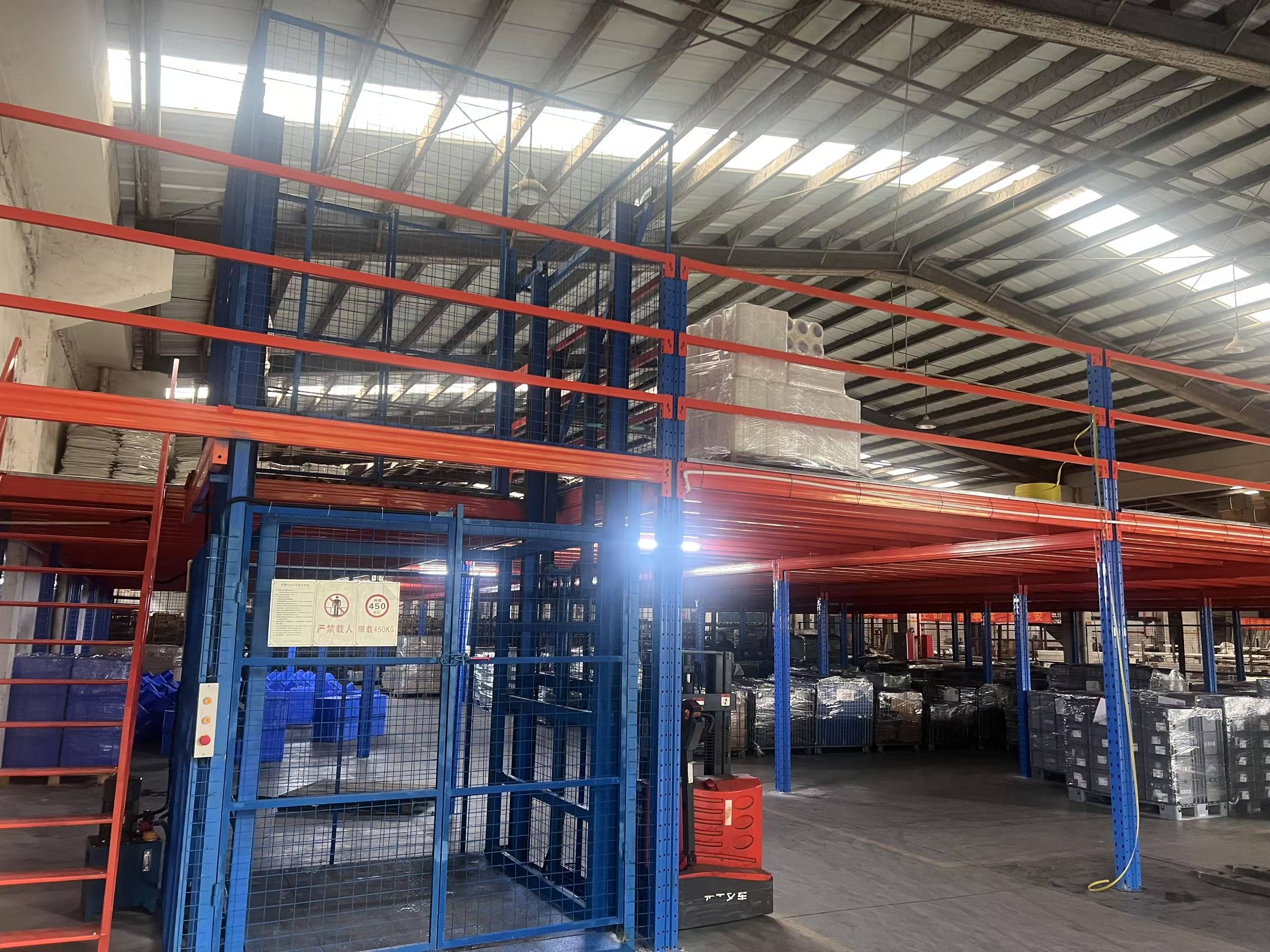
Unlike standard selective pallet racking designed for 1,000–2,500 kg loads per level, mini pallet racking is engineered for unit loads ranging from 300 kg to 800 kg per beam level. Key distinguishing parameters include:
Column profile: Typically 40×60 mm or 40×80 mm, 1.5–2.0 mm steel thickness (vs. 2.5–3.0 mm for heavy-duty).
Beam sections: Box-shaped or C-channels with step pitch of 50 mm for vertical adjustment.
Standard bay depths: 600 mm, 800 mm, 1,000 mm (accommodating euro-pallets, half-pallets, or plastic bins).
Frame heights: 1,500 mm to 4,000 mm – optimized for ceiling heights under 6 meters.
These specifications allow warehouse managers to deploy mini pallet racking in areas where heavy-duty systems would be structurally excessive and cost-inefficient. The reduced material gauge also lowers the system’s dead weight, simplifying floor load calculations for mezzanines or upper levels.
Authentic engineering data must drive any mini pallet racking selection. Below are typical performance characteristics based on EN 15512 or FEM 10.2.02 standards (global equivalents):
Beam capacity (UHL – Uniformly Horizontal Load):
– 1,500
mm length → up to 600 kg per pair of beams
– 2,000 mm length → up to 450 kg
per pair
– 2,500 mm length → up to 300 kg per pair
(Safety factor 1.5
against yield strength).
Column compression capacity: 3,000 kg per upright for 2,500 mm unbraced height (buckling class B).
Wire mesh decks / particle boards: Optional integration with 50×50 mm grid wire decks for small-part containment (load distribution 200 kg/m²).
Surface treatment is typically zinc-plated or thermosetting powder coating (60–80 microns) to pass 480-hour salt spray tests per ISO 9227. For cold-storage applications, special pre-galvanized steel and anti-condensation profiles are available. Guangshun conducts third-party load testing on all beam and frame assemblies, providing stamped certificates for each batch – a requirement often overlooked by low-cost suppliers.
One of the primary drivers for adopting mini pallet racking is the ability to shrink aisle widths without sacrificing accessibility. For conventional forklifts, the minimum aisle width (MAW) for 1,200 mm long pallets sits around 2.7 m. With mini pallet racking and reach trucks or manual pallet jacks, MAW can be reduced to 2.0–2.2 m, increasing storage density by 25–30%. Several configuration models are common:
Single-deep selective: Direct access to each pallet, ideal for fast-moving SKUs (25–40% of the inventory).
Double-deep mini racking: Uses a 2,200 mm deep beam arrangement; requires reach truck with 1,500 mm fork stroke. Increases pallet positions by 40% compared to single-deep.
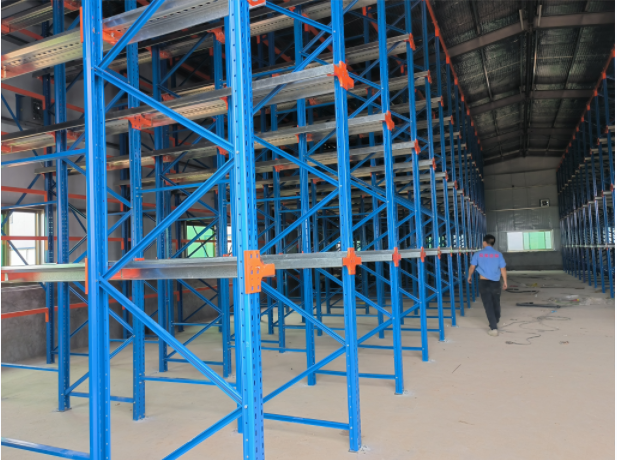
Drive-in / drive-through (limited): For high-density low-rotation items, a modified mini pallet racking with continuous rails can support three to four pallets deep. However, load capacities must be recalculated due to reduced beam support.
Additionally, integrating mini pallet racking with mobile carriage bases (manual or motorized) converts static aisles into dynamic moving aisles, compressing floor coverage by nearly 70% for archival or spare-part storage. Real-world case studies from Guangshun show that a spare-parts warehouse of 500 m² can achieve 850 m² equivalent storage if mobile mini racks are deployed.
The versatility of mini pallet racking makes it suitable for operations outside traditional pallet storage. Below are three high-value use cases, each with typical pain points and engineered solutions.
Pain point: Hundreds of mixed-SKU return bins with varying
weights, shape irregularities, and need for fast re-sorting. Standard pallet
racking’s large openings cause bin instability and wasted air
volume.
Solution: Mini pallet racking with 400 mm beam
spacing and included wire deck dividers. By adding drop-in steel dividers every
600 mm, each shelf becomes a segregated compartment for returns categories.
Throughput increased by 22% in a pilot by an Italian logistics integrator.
Guangshun provides laser-cut dividers fitting any beam length
without welding.
Pain point: Mixed pallet sizes (400×600 mm boxes to
800×1,200 mm small pallets), heavy corrosion potential due to oil residues, and
manual picking from floor-level stacks.
Solution: Use
galvanized mini
pallet racking with adjustable beam heights from 250 mm to 1,000
mm. Implement a first-expiry-first-out (FEFO) operation by adding inclined
roller tracks for light bins at the lower levels. The compact beam pitch avoids
wasted cube, and the galvanized finish resists oil and solvents.
Pain point: Strict particle emission regulations (ISO Class
7–8) and frequent sanitation. Racking must have minimal horizontal surfaces
where dust can accumulate.
Solution: Mini pallet racking
with fully welded wire mesh decks (opening ≤25×25 mm) and sloped top surfaces.
The open structure reduces air turbulence and allows cleaning from below.
Polyester powder coating with anti-microbial additive is available upon
request.
A direct comparison of total cost of ownership (TCO) over 10 years between heavy-duty racking and mini pallet racking for a 300–500 kg average load per pallet position clearly favors the mini version:
Initial equipment cost: 35–40% lower due to lighter steel sections and simpler boltless assembly (no base plates or floor anchors required for frames up to 2.5 m).
Floor preparation: No need for reinforced concrete slab; 120 mm thickness C25/30 is sufficient vs. 150 mm for heavy-duty (saving €12-18 per m²).
Energy consumption: Forklifts in narrower aisles and lighter loads reduce electric reach truck energy use by roughly 15% annually.
Reconfiguration flexibility: Mini pallet racking components are ½ the weight, lowering labor cost for future layout changes (approx. 20 person-hours vs. 45 per 100 positions).
Calculating an average warehouse of 1,200 pallet positions (300 kg average load), switching from heavy-duty selective racking to mini pallet racking generates an initial capex saving of approximately €18,000 – €24,000 (European market, 2025 pricing). Over ten years, cumulative savings, including energy and modification expenses, exceed €55,000.
Although mini pallet racking is easier to assemble than heavy-duty systems, specific guidelines guarantee structural integrity:
Floor flatness: Maximum deviation 5 mm per 3 m under loaded legs – use steel shims for correction.
Seismic anchoring: In zones with PGA ≥0.15 g, anchor frames to floor using M8 expansion bolts (torque 18–22 Nm) and install diagonal braces every third bay.
Beam locking mechanisms: Ensure each beam has a positive safety clip (spring or pin type) that snaps automatically. Audible click required during installation.
Load signage: Each bay must display maximum uniform load per level and per upright. Guangshun supplies weatherproof polycarbonate labels with laser-etched capacity data.
Monthly inspections should focus on beam deflection (maximum allowable L/200, where L is beam span) and column verticality (1.5 cm per 3 m). In case of any bent component, replacement must be with identical gauge and hole pattern. Never mix brands or differing steel grades.
Mini pallet racking is not a “light-duty” compromise but an optimized engineering solution for a large segment of SKUs that never approach heavy-class loads. By correctly matching load profiles, aisle configurations, and material treatments, logistics managers can achieve density improvements of 28–42% while cutting upfront investment by more than one-third. Manufacturers like Guangshun provide certified mini racking components with full traceability and custom perforation patterns, ensuring the system grows with the warehouse. For any facility where floor space costs exceed €300/m² per year, the decision toward mini pallet racking is a direct profit enabler.
Q1: What is the maximum load capacity per level of mini pallet
racking in real-world use?
A1: For standard 2,000 mm beam length and
upright spacing 2,500 mm, most mini pallet racking systems support 400–600 kg
uniformly distributed load (UDL). Special reinforced models with 2.0 mm thick
columns and double beams can reach 800 kg per level, but then the definition
shifts toward light-medium duty. Always refer to the manufacturer’s load matrix
– Guangshun provides 3D simulation for each configuration.
Q2: Can mini pallet racking be used with automated guided vehicles
(AGVs) or robotic forklifts?
A2: Yes, provided the AGV manufacturer
confirms compatibility with mini pallet racking beam profiles. Many AGVs today
can handle 600–800 kg loads and require a beam front face height ≤60 mm to allow
fork entry without collisions. Also, AGV navigation (laser or QR code) needs
clear floor space between uprights – a minimum of 2.2 m aisle width is typical.
Several automation integrators have pre-configured interfaces for mini
racking.
Q3: How does mini pallet racking perform in cold storage (down to
-25°C)?
A3: Steel undergoes slight ductility reduction below -10°C.
Use only S235JR or S355MC grades with documented low-temperature impact
toughness (27J at -20°C). Standard powder coatings become brittle; instead, opt
for hot-dip galvanizing (Z600 coating mass) or epoxy primer with polyurethane
topcoat. Also, design must account for ice buildup – closed box beams are
preferable over open sections to avoid internal ice expansion.
Q4: Is it possible to convert existing standard selective racking
into mini pallet racking?
A4: Not directly, because column hole
patterns and beam step increments differ. However, you can replace beam levels
and add wire decking to reduce effective load capacity artificially, but the
structural frame remains oversized – leading to higher cost and wasted floor
connection points. It is more economical to sell the heavy racking and install
dedicated mini pallet racking with correct load rating.
Q5: What fire safety regulations apply to mini pallet
racking?
A5: According to EN 13501-1 or local codes, mini pallet
racking is classified as steel storage equipment – non-combustible class A1.
However, the stored goods determine fire load. Required sprinkler system density
(e.g., NFPA 13) for compact storage of cartons on wire decks often demands 18.25
mm/min over 232 m². A vertical barrier (flue spaces) every 6 m in both
directions must be maintained regardless of racking size. For mini racking in
buildings with ceiling height < 5 m, in-rack sprinklers may be optional, but
always verify with authorities.
Q6: What is the typical lead time for a customized mini pallet
racking order of 500 bays?
A6: From order acknowledgment to delivery
– 18 to 25 working days for standard powder-coated finishes (RAL 3000, 5010,
7035). If hot-dip galvanizing is required, add 10 business days.
Guangshun operates a dedicated mini racking production line,
reducing lead time to 14 days for 500 bays within Europe and North America,
including all load certificates.
Q7: Can mini pallet racking be installed on an upper mezzanine floor
with load limits?
A7: Yes, but you must calculate floor point load.
A mini pallet racking column loaded to 600 kg exerts roughly 60 kg/cm² through
the base plate. Most mezzanine floor panels (38 mm thick, 3 mm top steel) can
support this, provided the subframe spacing is ≤1,200 mm. Distribute loads by
adding a 150×150×6 mm steel base plate under each foot. In projects where the
mezzanine has been designed for heavy-duty racks, Guangshun engineers can provide a stamped analysis for approval.

 Wechat
Whatsapp
Wechat
Whatsapp