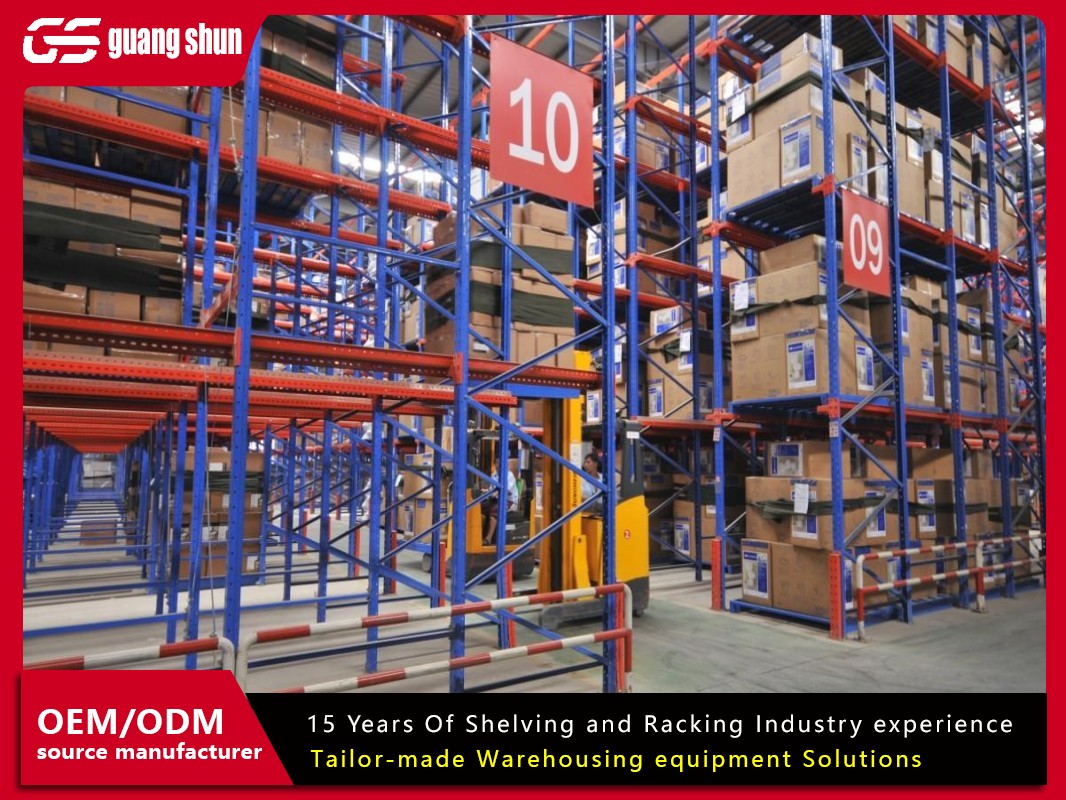
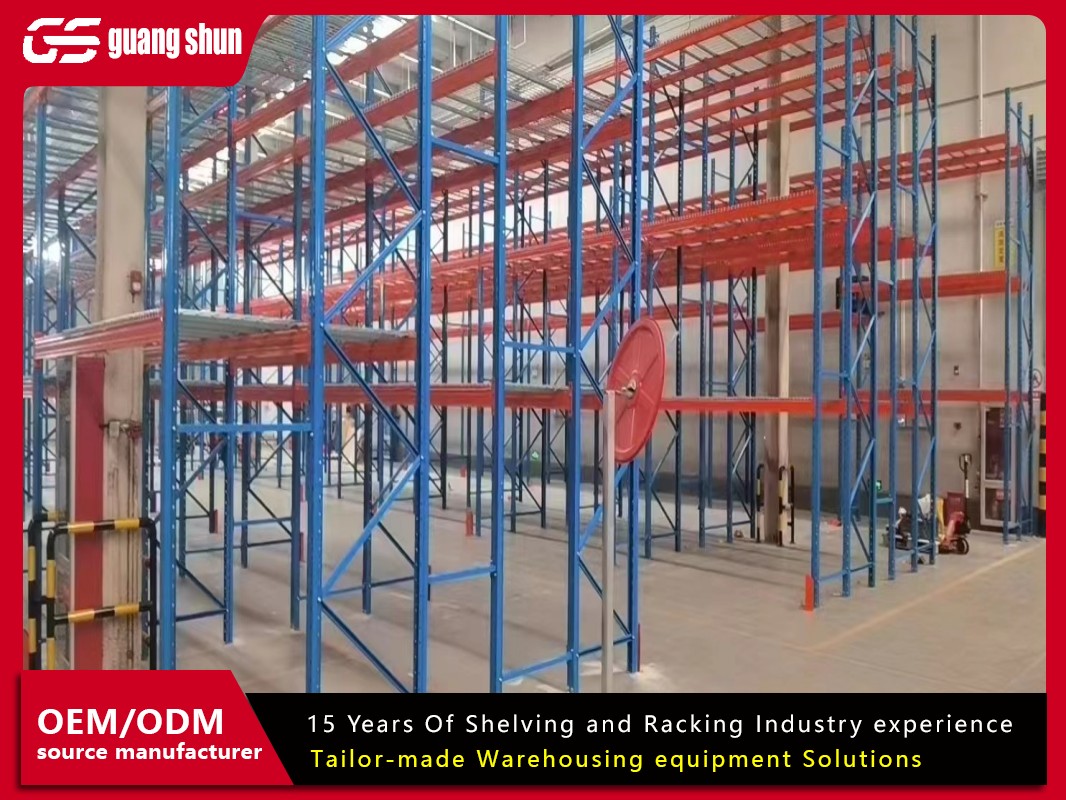
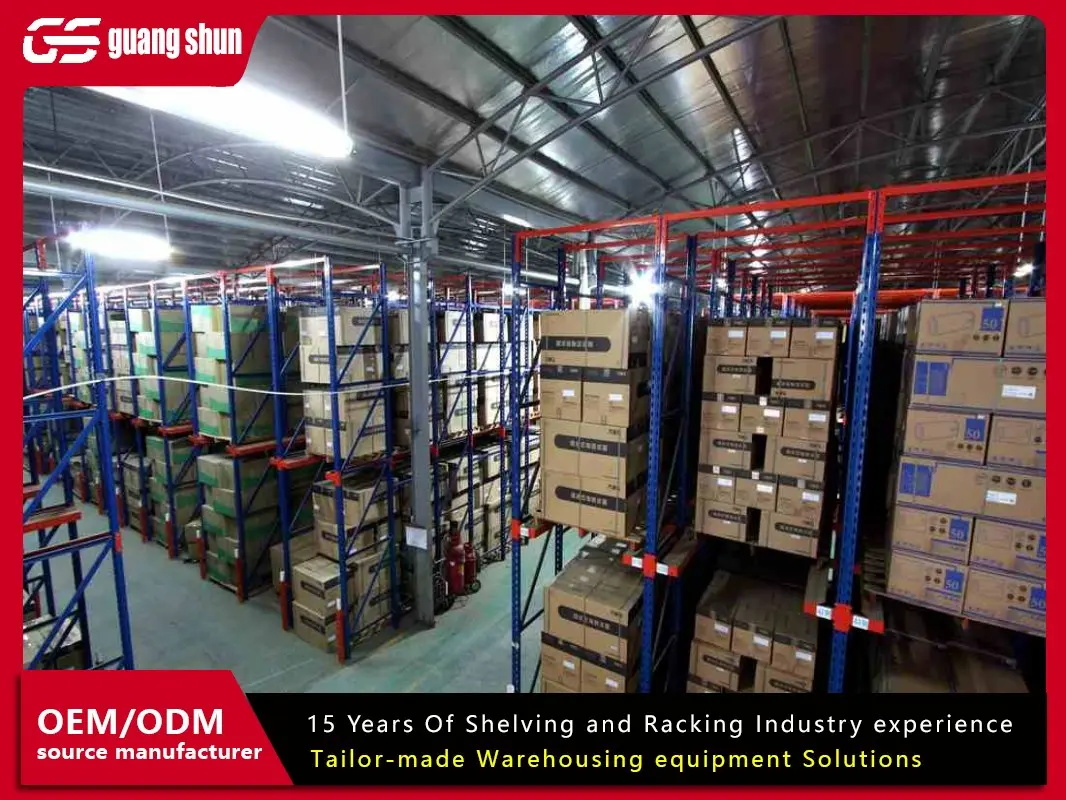
In modern distribution centers, the shift from static storage to dynamic, software-driven material flow demands more than just robotic hardware. The fundamental enabler is automated warehouse racking — a structural framework engineered to interface precisely with stacker cranes, shuttle carts, and autonomous lift vehicles. Unlike conventional selective pallet racks, these systems integrate load-bearing geometry with guidance rails, sensor brackets, and real-time positioning targets. This article provides a technical examination of automated racking architectures, performance metrics from live deployments, and quantifiable cost models for logistics directors and engineering procurement teams.
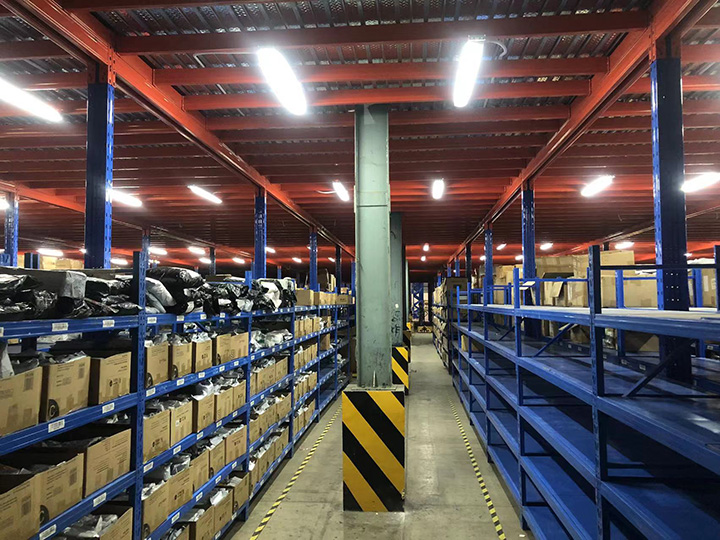
Automated racking is not a single product but a family of engineered systems designed around specific load units, throughput profiles, and automation interfaces. The choice of typology directly affects cycle times, energy consumption, and storage density.
These structures support unit loads from 500 kg to 2,500 kg, typically using double-deep or single-deep beam levels. Key engineering features include: hot-rolled steel uprights with 8–12 mm thickness, rail-integrated columns for mast guidance, and floor-fixed base plates with epoxy grouting. Tolerances for guide rails are kept within ±2 mm over 20 m heights to ensure smooth stacker crane operation. Many facilities deploy automated warehouse racking in a rack-supported building design, where the rack structure also carries roof and facade loads — eliminating separate structural steel.
For small parts (totes up to 50 kg), shuttle-based automated racking uses captive or roaming shuttles that travel inside each level’s rails. The racking profiles are roll-formed with precision notches for shuttle position detection. Lane depths range from 10 to 60 positions, and FIFO/LIFO configurations are set by lane-end buffer conveyors. This design reduces aisle space to 1.2 m, achieving density improvements of 60–80% compared to standard flow racks.
VNA structures combine fixed aisles (1.6–1.8 m wide) with articulated fork AGVs that lift to 15 m. The racking must resist lateral forces from mast tilt during high-reach cycles. Anti-seismic base plates and diagonal bracing are mandatory in seismic zones. VNA automated racking provides a retrofit path for existing buildings where full AS/RS integration is cost-prohibitive.
Structural integrity under dynamic loads is the primary differentiator for automated racking. Static load ratings from RMI or FEM standards are insufficient because shuttles and cranes introduce horizontal forces (acceleration/deceleration up to 0.5 g). Engineers must calculate:
Seismic load combinations per ASCE 7 or Eurocode 8 – automated racks require ductile connections to avoid progressive collapse.
Fatigue limits – rail joints and bolt connections experience >1 million load cycles per year in high-throughput systems.
Floor flatness tolerances – DIN 18202 class 4 or better, with local deviations ≤3 mm over 2 m to prevent racking sway and crane misalignment.
Fire safety integration – in-rack sprinkler systems must align with horizontal barriers and flue spaces; automated racking often needs customized nozzle placement due to beam obstructions.
Leading suppliers like Guangshun perform finite element analysis (FEA) for each automated racking design, simulating dynamic braking forces and thermal expansion in facilities with wide temperature ranges (e.g., cold stores at -25°C).
Data from 18 material handling projects (2022–2025) show that migrating from conventional racking to automated warehouse racking yields measurable improvements:
Floor space utilization increases from 35–45% to 70–85% by reducing aisle widths (from 3.5 m to 1.0–1.8 m) and using vertical space up to 25 m.
Throughput per square meter rises 2.5× to 4× when combining shuttle systems with goods-to-person workstations.
Order picking accuracy reaches 99.9% due to laser/encoder positioning and barcode validation integrated into the racking’s pick faces.
Labor cost reduction – each automated aisle replaces three to five reach-truck operators, with ROI typically within 32–48 months.
Transitioning to automated storage requires a phased engineering approach. Below is the validated sequence used by system integrators:
Phase 1 – SKU and throughput profiling – analyze ABC curves, pallet/tote mix, and hourly order lines. This determines whether a shuttle, mini-load, or VNA solution fits.
Phase 2 – structural assessment – evaluate existing floor slab load-bearing capacity (typically 60–80 kN/m² for high-bay racks). For greenfield sites, rack-supported building designs are modeled.
Phase 3 – 3D simulation – discrete event modeling (e.g., using FlexSim or AnyLogic) validates cycle times, crane/shuttle utilization, and buffer sizing. Guangshun provides digital twins of automated racking before any steel is cut.
Phase 4 – phased installation – start with a single aisle or a low-height section to test integration with WMS and material flow controllers. After acceptance, scale to full system.
Different sectors face unique constraints that automated racking must address:
Cold chain / frozen food – racking coatings must resist ice buildup and condensation (epoxy polyester hybrid, 120 µm thickness). Stainless steel guide rails for shuttles prevent galling at -30°C. Automated retrieval reduces door openings, cutting refrigeration energy by 18–25%.
Automotive JIT (just-in-time) – sequenced racking with lane dividers and integrated RFID portals ensures correct engine/transmission flow. Racking beam heights adjust via manual jigs to accommodate mixed load sizes.
E-commerce micro-fulfillment – tote-based automated racking with 3-deep shuttle positions and dynamic slotting reduces travel time. Vertical lift modules (VLMs) nested inside the racking structure further compress footprint.
Total cost of ownership (TCO) for automated warehouse racking includes capital expenditure (steel, actuators, sensors, controllers), installation (crane rental, laser alignment), and operational costs (energy, preventive maintenance, software licenses). Using a 10-year horizon, benchmark data indicates:
Initial investment – $450–$800 per pallet position for high-bay AS/RS racking (including rails and structural steel), versus $150–$250 for conventional selective racks.
Annual maintenance – 2–3% of capital cost, covering rail lubrication, bolt torque checks, and shuttle battery replacement. Automated racking requires fewer lift truck repairs, reducing MHE maintenance by 40%.
Labor savings – $120,000–$200,000 per year per automated aisle (two shifts) in markets with $20–$25/hour warehouse wages.
Real estate cost avoidance – increasing storage density by 60% in a 20,000 m² warehouse avoids leasing an additional 12,000 m². At $8/m²/month, annual savings exceed $1.15M.
Typical payback periods: 3–4 years for greenfield high-bay systems, 4–5 years for retrofit VNA automated racking. Shuttle systems for small parts break even in 2.5–3 years when integrated with existing conveyors.
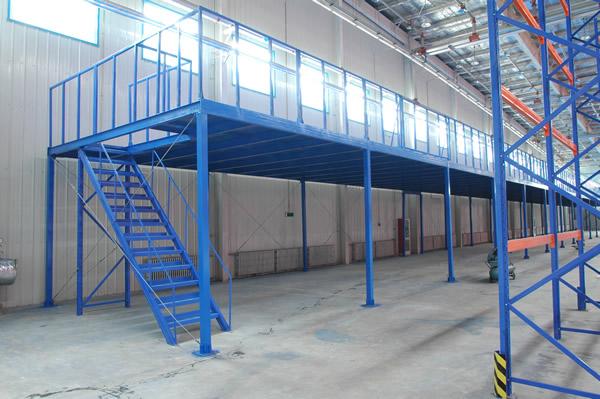
Automated racking is not a standalone structure; it communicates with WCS (warehouse control system) and WMS. Each rack location has a unique 2D barcode or RFID tag. The control layer translates WMS orders into movement commands: “Shuttle 7, retrieve tote from lane B14, level 5, position 3.” Real-time positioning uses:
Incremental encoders on shuttles and cranes, calibrated against absolute position magnets embedded in racking rails.
Laser distance measurement (accuracy ±1 mm) for height positioning in AS/RS cranes.
Photoeye arrays at each rack depth to confirm load presence and prevent double-stacking.
The software also monitors structural health: vibration sensors on uprights detect loose bolts or impact damage. This predictive maintenance layer reduces unplanned downtime by over 50%.
Tomorrow’s warehouses require adaptability. Modular automated racking allows expansion in three dimensions:
Horizontal expansion – bolt-on bay sections extend lane depth or add new aisles. Splice connections preserve rail alignment within 0.5 mm/m.
Vertical extension – some racking columns are designed with pre-drilled couplers to raise height from 12 m to 18 m, adding two or three storage levels. This requires reinforcing base plates and checking crane mast extension.
Mixed automation – one rack block can serve both shuttle systems (for fast movers) and crane-served pallet positions (for slow movers) by using dual-profile uprights.
Leading engineering firms such as Guangshun now offer “automation-ready” racking with standard mounting interfaces for any shuttle or crane brand, reducing future conversion costs by up to 40%.
Q1: What is the typical lead time from design to commissioning for a
fully automated racking system?
A1: For a medium-sized system (5,000
pallet positions, 15 m height), engineering and fabrication take 16–20 weeks.
On-site installation (including floor preparation, column anchoring, rail
alignment, and shuttle/crane integration) requires 8–12 weeks. Total lead time:
6–8 months. Using pre-assembled modules can reduce field work by 25%.
Q2: Can automated racking be retrofitted into an existing building
with uneven floors?
A2: Yes, but with additional engineering. Uneven
floors (slopes >5 mm/m) require self-leveling base plates, adjustable shim
stacks, or a secondary structural floor (e.g., a steel grid bolted to the
existing slab). Laser leveling and grouting under each upright compensates for
local deviations. However, for very narrow aisle VNA racks, floor grinding or a
new topping slab is often more cost-effective.
Q3: What safety certifications apply to automated racking
systems?
A3: Automated racking must comply with EN 15620 (adjustable
pallet racking), EN 528 (rail-dependent storage and retrieval equipment), and
seismic requirements per local codes (IBC 2024, Eurocode 3). Additionally, CE
marking for the integrated automation components (shuttles, lifts) is mandatory
in Europe. For North America, RMI (Rack Manufacturers Institute) specifications
plus ANSI MH27.1 apply. Fire safety follows NFPA 13 for in-rack sprinkler
systems.
Q4: How do you maintain shuttle and crane guidance rails inside the
racking?
A4: Rail maintenance is scheduled quarterly or every 5,000
operating hours. Procedures include: laser alignment check (tolerance ±1 mm over
10 m), cleaning debris from rail joints, re-torquing rail splice bolts to 120
N·m, and lubricating sliding surfaces with low-temperature grease for cold
storage. For very high racks ( >20 m), a rail inspection carriage is deployed
— a small maintenance shuttle that travels on the same rails and captures
geometric data.
Q5: Does automated racking work for mixed pallet sizes (e.g.,
800×1200 mm and 1000×1200 mm)?
A5: Yes, through multi-depth beam
design. Adjustable pallet supports or telescopic beam shelves allow
reconfiguring lane widths without cutting steel. However, to maintain shuttle
compatibility, the racking’s rail pitch must match the smallest pallet
dimension. For mixed SKU profiles, a “mixed-case” automated racking uses robotic
shuttles with adjustable fork arms. That configuration increases shuttle cost by
20–30% but eliminates manual reconfiguration.
Selecting automated warehouse racking is not a commodity purchase; it is a foundational engineering decision that dictates throughput ceilings, maintenance regimes, and expansion flexibility. The combination of high-strength steel profiles, sub-millimeter rail alignment, and software-integrated sensing transforms a passive storage structure into an active participant in material flow. For operations aiming to cut labor costs by 35–50% while doubling storage density, the technical and financial case is well-proven. Engage with structural automation specialists early in the design phase — the racking itself becomes the most durable asset in the automation portfolio.
For detailed technical datasheets and project-specific FEA simulations, visit Guangshun for engineering support across automated storage projects worldwide.

 Wechat
Whatsapp
Wechat
Whatsapp