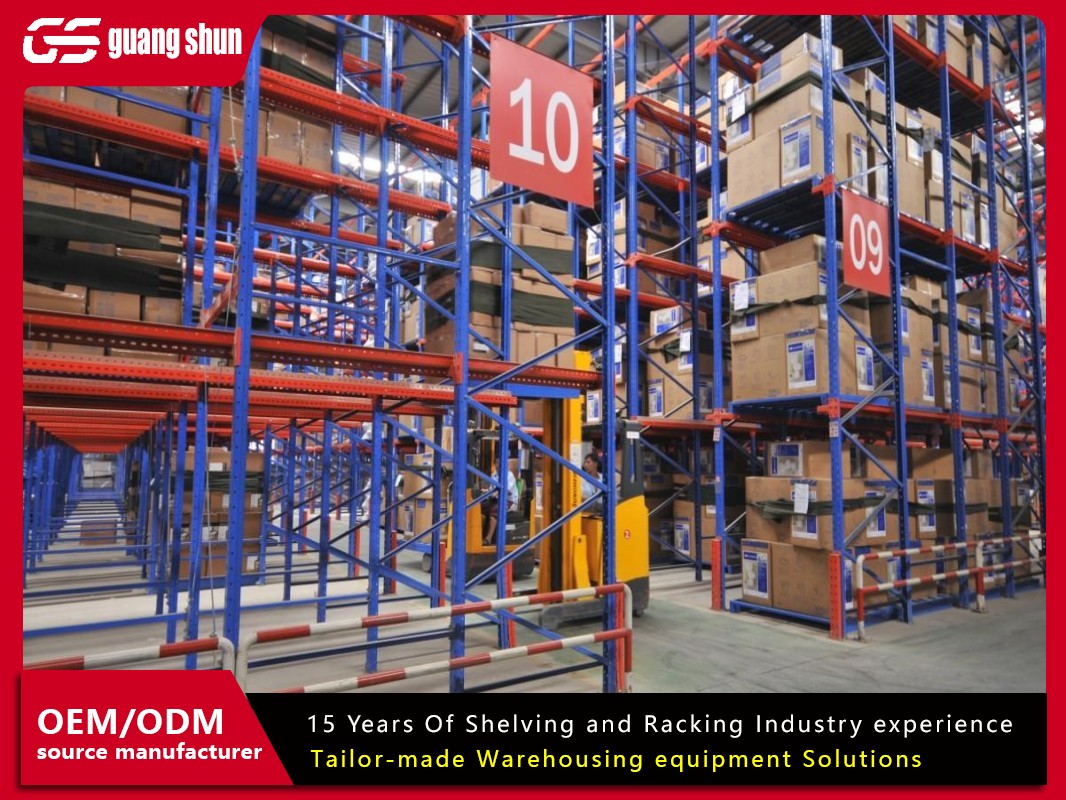
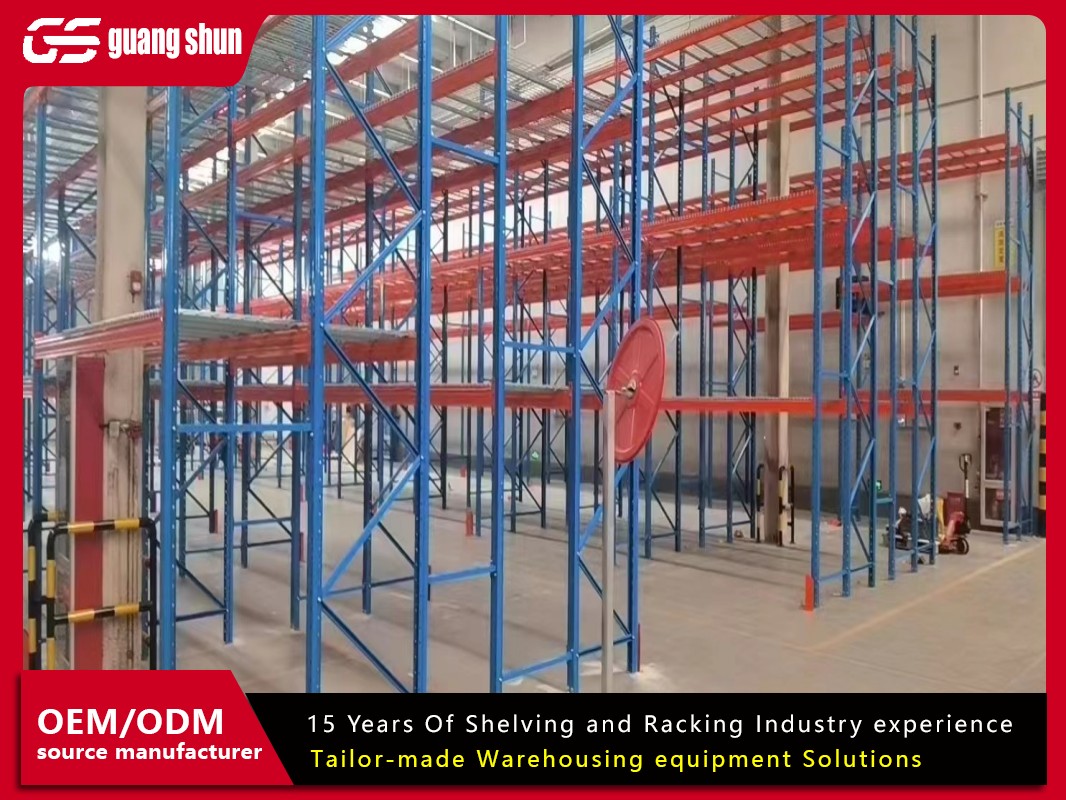
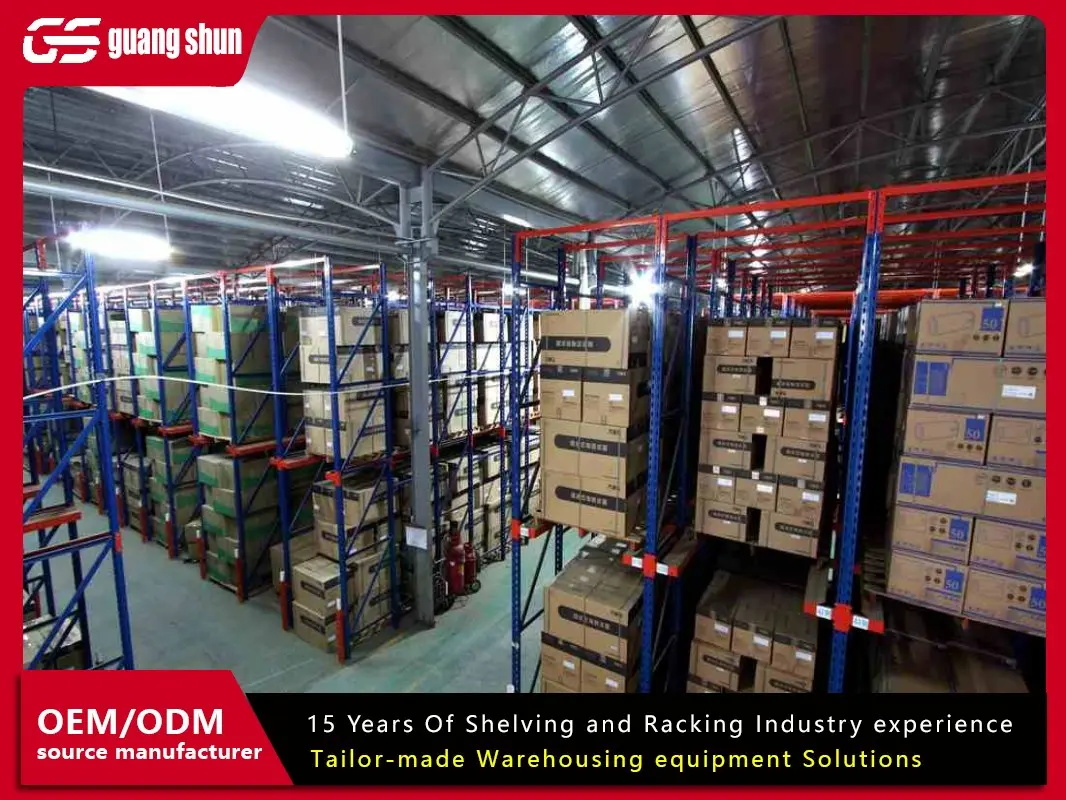
For logistics managers facing cube utilization limits and rising real estate costs, a mobile racking warehouse provides a deterministic solution: instead of fixed aisles, carriages mounted on floor rails move laterally, opening only the required aisle. This eliminates multiple permanent aisles, achieving storage densities of 85–95% compared to 35–50% in static selective racking. This article examines engineering parameters, safety control architectures, application-specific design rules, and total cost of ownership for mobile systems. We draw from installations across cold chain, document archives, and high-value spare parts warehouses.
A mobile racking warehouse consists of several carriages (mobile bases) that carry upright frames, beams, and pallet supports. Each carriage integrates wheels, a drive motor, a controller, and obstacle detection sensors. Key structural components:
Rail system – hot-rolled steel rails embedded in or surface-mounted to the concrete floor. Rail flatness must meet DIN 18202 class 3 (deviation ≤ 3 mm over 4 m). Two-rail or three-rail configurations depending on carriage width and load (up to 48,000 kg per carriage).
Carriage frame – welded box-section steel with integrated motor mounting plates. Frame torsion stiffness is critical to prevent racking lean when moving uneven loads.
Drive and transmission – AC geared motors (0.55–2.2 kW per carriage) with electromagnetic brakes. Drive wheels are polyurethane-coated steel to reduce floor wear and provide friction (μ = 0.6–0.7).
Power supply – trailing cable chains (for shorter systems, up to 80 m) or conductor bars on the floor. For very long runs, busbar systems with segmented power zones.
Leading engineering firms such as Guangshun also offer integrated anti-tilt mechanisms: horizontal stabilizer wheels that run inside a C-profile rail, preventing the carriage from tipping under eccentric loads or seismic events.
Safety is the primary differentiator between residential sliding systems and industrial mobile racking. Regulations (EN 15635, AS 4084) mandate multiple redundant protections:
Photoelectric presence detection – each aisle has a floor-level light curtain or laser scanner. If any person or object enters the aisle, all adjacent carriages lock movement within 0.2 seconds.
Emergency stop cables – running along each aisle, pulling the cable cuts power to all motors and applies mechanical brakes.
Soft-start and soft-stop profiles – acceleration limited to 0.15 m/s² to prevent load sway. Maximum travel speed typically 4–8 m/min for heavy-duty systems.
Interlocking protocols – when a carriage moves, the adjacent carriage on the opposite side cannot move simultaneously, preventing crushing hazards.
Advanced controllers include absolute encoders on drive shafts, enabling the warehouse management system (WMS) to track exact carriage positions (±1 mm). For cold storage (e.g., -25°C), control cabinets are heated and IP54 rated. Many mobile racking warehouse installations also integrate remote diagnostics – each carriage reports motor current, vibration, and cycle count via Modbus TCP or PROFINET.
The density advantage comes from removing fixed aisles. For a warehouse with 10 rows of static pallet racks (each row 30 m long, aisle width 3.2 m), total floor area = (10 rows × rack depth 1.2 m) + (9 aisles × 3.2 m) = 12 m + 28.8 m = 40.8 m width for rack + aisles. With a mobile system, you keep one movable aisle. The same 10 rows occupy (10 × 1.2 m) + 1 movable aisle (1.0 m when open, but when closed the aisle disappears). Effective width = 12 m + 0 (aisle is created only when needed). However, you need space for the mobile carriage base and control cabinet access. Actual density improvement factor: (static width)/(mobile width) = 40.8/12 ≈ 3.4×. In real projects, a mobile racking warehouse typically stores 2.5–4 times more pallets per square meter than selective racks.
For totes and small parts, the density gain is even higher because aisle width can be reduced to 0.9 m (walk-through) compared to 2.5 m for reach trucks. Document archives achieve up to 95% density – only one moving aisle for 20+ double-sided carriages.
Different industries impose distinct requirements on mobile racking:
Cold storage / frozen food – rails must resist ice accumulation; heated rail covers or stainless steel profiles prevent freezing. Motors need moisture-proof windings and low-temperature grease (operational down to -30°C). Mobile systems reduce refrigeration load because fewer aisles mean less open space volume – cooling energy drops 15–20% compared to wide-aisle static racks.
Archives and records management – high-density mobile shelving (light-duty, 150–300 kg per shelf) uses hand-wheel or push-assist manual drives. However, for files exceeding 5,000 linear meters, motorized carriages with automatic aisle selection reduce retrieval time. Guangshun has delivered systems for national archives where fire-rated carriages include intumescent coatings and smoke seals.
Slow-moving spare parts (MRO) – A/B/C analysis often places C-items (low turnover) in mobile racking to free up prime locations. Integration with vertical lift modules (VLM) or automated tote retrievers is possible: the mobile carriage moves to a pick station, and a small robot extracts the required bin.
Mobile racking experiences dynamic loads not present in static racks: starting/stopping forces, floor irregularities, and seismic lateral forces. Engineering calculations must include:
Horizontal inertial load – F = m × a (mass × acceleration). For a 30,000 kg carriage decelerating at 0.2 m/s², horizontal force = 6,000 N at the drive wheel contact point. Uprights must resist this bending moment without exceeding 0.5% drift.
Seismic design – per ASCE 7-22, mobile racking is classified as “nonstructural component with high importance factor.” Base isolation is rarely used; instead, carriages have locking pins that engage when seismic sensors detect P-wave acceleration > 0.1 g. These pins fix the carriage to floor anchors, preventing runaway during aftershocks.
Floor flatness and slope limits – maximum slope 2 mm/m in any direction. For retrofit projects, self-leveling compounds or grinding are mandatory. Rail installation uses laser-guided concrete drilling and epoxy-anchored studs every 500 mm.
Evaluating a mobile racking warehouse requires comparing upfront investment against long-term savings. Based on 12 projects (2021–2024) in Europe and North America:
Capital cost – $550–$850 per pallet position for motorized mobile racks (including rails, motors, controls) vs. $180–$250 for static selective racks. Manual mobile racking (hand-wheel) costs $300–$450 per position.
Floor preparation – $15–$30 per m² for grinding and rail embedding. New construction can integrate rail channels into the slab pour, reducing cost.
Annual electrical consumption – each carriage motor operates only during aisle opening (typically 10–20 cycles per hour, 5 seconds per move). Average power draw: 0.3–0.8 kW per carriage. For 20 carriages, annual energy cost ≈ $800–$2,000.
Real estate savings – by tripling density, a 5,000 m² warehouse avoids constructing or leasing an additional 10,000 m². At $10/m²/month, annual avoidance = $1.2M. Even after deducting mobile racking amortization, net savings exceed $700,000/year.
Payback period for motorized mobile racking in high-rent regions: 18–30 months. For manual systems (lower throughput), payback extends to 3–4 years.
Modern mobile racking connects to WMS via PLC interfaces. Typical workflows:
WMS receives a pick list – it calculates which carriage contains the required SKU.
The controller moves the target carriage to create an aisle, while adjacent carriages stay locked.
After movement, a green light illuminates above the correct bay; pick-to-light or voice picking guides the operator.
When the operator exits the aisle (detected by light curtain), a timer starts (configurable 30–300 seconds). After timeout, carriages automatically close to restore density.
For high-security environments (e.g., pharmaceutical vaults), biometric access control on the control panel restricts movement authority. Audit logs record every carriage move and operator ID.
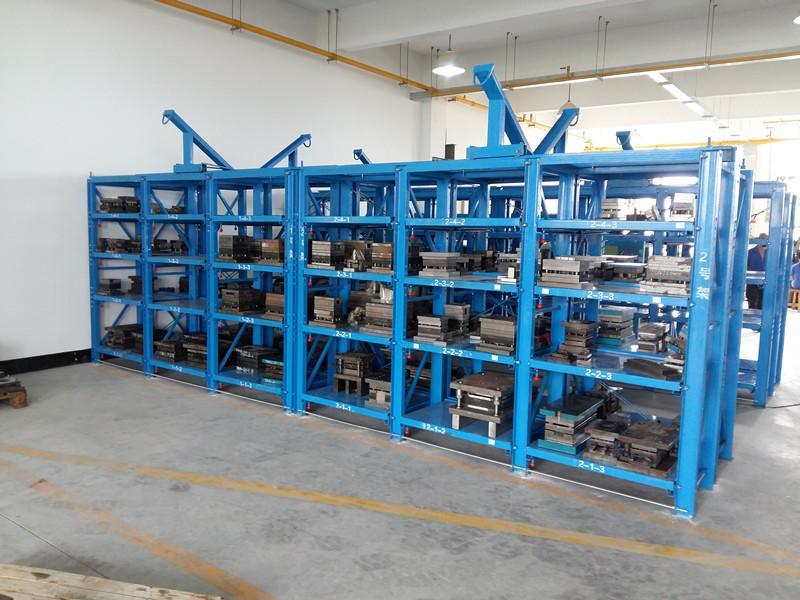
Each dense storage technology suits different profiles:
Mobile racking – best for very low to medium throughput (20–50 pallets retrieved per hour per zone), high inventory variety, and full pallet access. No forklift restrictions; any counterbalance or reach truck works.
Shuttle systems – higher throughput (150+ cycles/hour), but require specific shuttle vehicles and deeper lanes (minimum 5 positions deep). Higher capital and maintenance cost.
Push-back / drive-in – lower density than mobile (max 4–6 positions deep), LIFO only, and structural damage risk from forklifts.
For archives and slow-moving items, mobile racking provides the lowest cost per stored cubic meter while maintaining random access to any pallet without relocation.
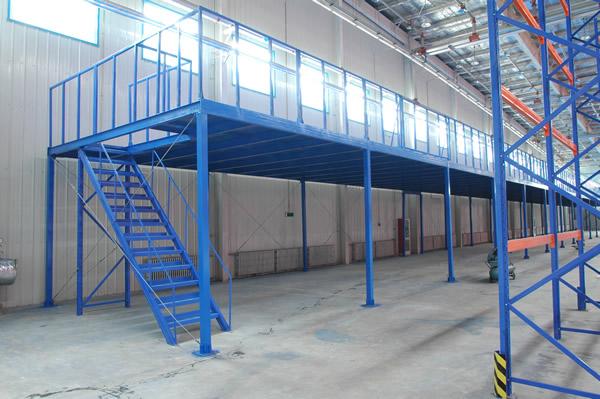
Q1: Can mobile racking be installed on an existing mezzanine
floor?
A1: Yes, but the mezzanine must be engineered for rolling
point loads. Each carriage wheel transmits 8–12 kN. The floor deck requires
steel plate reinforcement or additional joists. Deflection under load must stay
below L/600 to prevent rail misalignment. Many projects use a dedicated
structural steel frame on top of the mezzanine to distribute loads to
columns.
Q2: What happens during a power failure? Do pallets become
trapped?
A2: Modern systems include manual override mechanisms. Each
carriage has a hand crank or a hydraulic hand pump that disengages the brake and
allows manual movement (force required: 150–300 N for a fully loaded carriage).
For safety, aisle-opening handles are located at both ends. Backup batteries
(UPS) for controls keep light curtains active for 30 minutes.
Q3: How do you maintain the rails and drive wheels?
A3:
Rail maintenance is semi-annual: clean debris, check for flatness using a laser
tracker, and tighten anchor bolts (torque 200 N·m). Drive wheels require
inspection every 2,000 operating hours – polyurethane tread wear indicator
(replace when worn >3 mm). Wheel bearings are sealed and greased for 10,000
hours. Guangshun provides a
predictive maintenance package: vibration sensors on each carriage report
bearing condition via IoT gateway.
Q4: Is mobile racking suitable for frozen warehouses
(-25°C)?
A4: Yes, with cold-rated components. Use silicone-free
low-temperature grease, heaters on control cabinets, and IP65 connectors. The
rail must be made of quenched and tempered steel (grade C45) to prevent
brittleness. Polyurethane wheels remain functional down to -40°C if formulated
for cold. Many cold storage operators choose mobile racking because it reduces
the open floor area, lowering defrost cycles and energy use by 18–22%.
Q5: What fire safety provisions apply to mobile
racking?
A5: Fire codes (NFPA 13, EN 12845) require in-rack
sprinklers when storage exceeds 3.7 m height. However, mobile racking’s moving
carriages complicate rigid pipe connections. Solutions include flexible
sprinkler hoses (twisted design, tested for 10,000 movement cycles) or
ceiling-level sprinklers with extended coverage (K-22 heads) if density is not
extremely high. Additionally, carriage movement must automatically send a signal
to the fire alarm panel to pause sprinkler water flow if a carriage is moving –
this is handled by a microswitch that cuts water via a solenoid valve during
movement. After movement stops, flow resumes. Always consult local fire marshal
with engineering drawings.
When faced with land costs exceeding $150 per m² or building expansion impossible, a mobile racking warehouse transforms the storage economics. By converting fixed aisles into on-demand access, it achieves density levels only approached by fully automated AS/RS but at a fraction of the investment and with simpler maintenance. The key to success lies in proper floor flatness, redundant safety sensors, and selecting the right carriage motorization level (manual, semi-auto, or full auto). For operations with low-to-medium throughput and high cube utilization requirements, mobile racking delivers a proven ROI within three years.
For project-specific load calculations, seismic certification, or a density simulation, contact Guangshun – engineering support for mobile racking systems across logistics, cold chain, and archival sectors.

 Wechat
Whatsapp
Wechat
Whatsapp