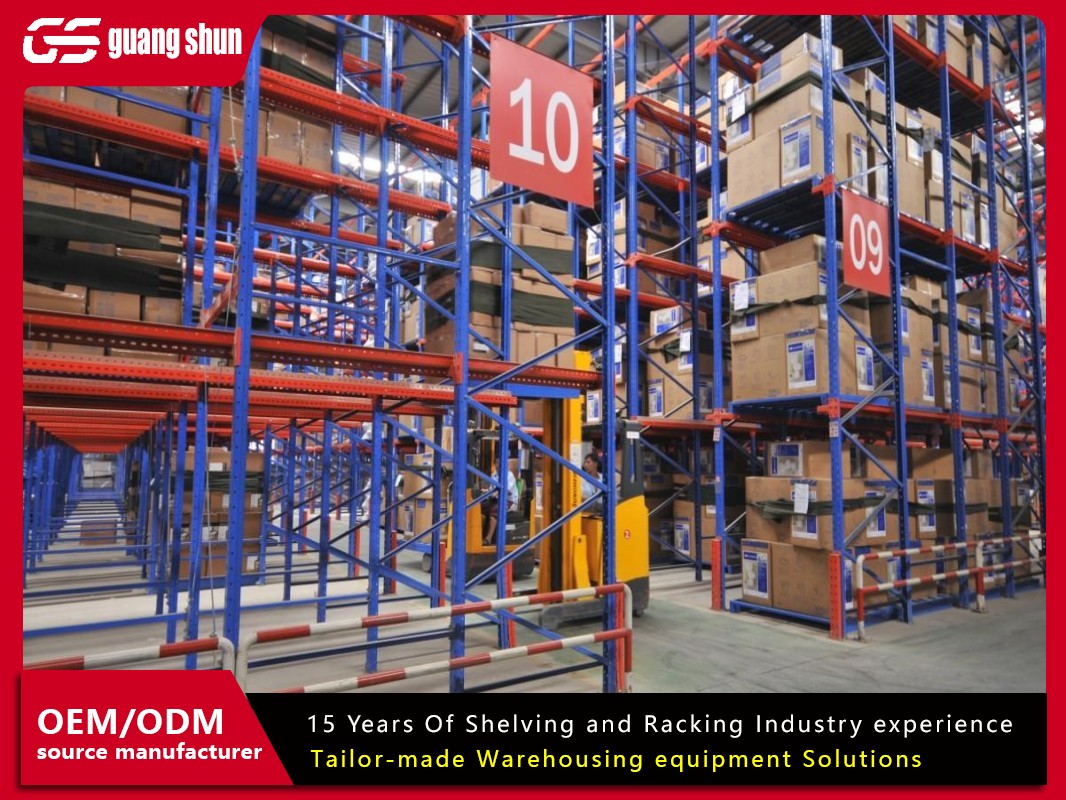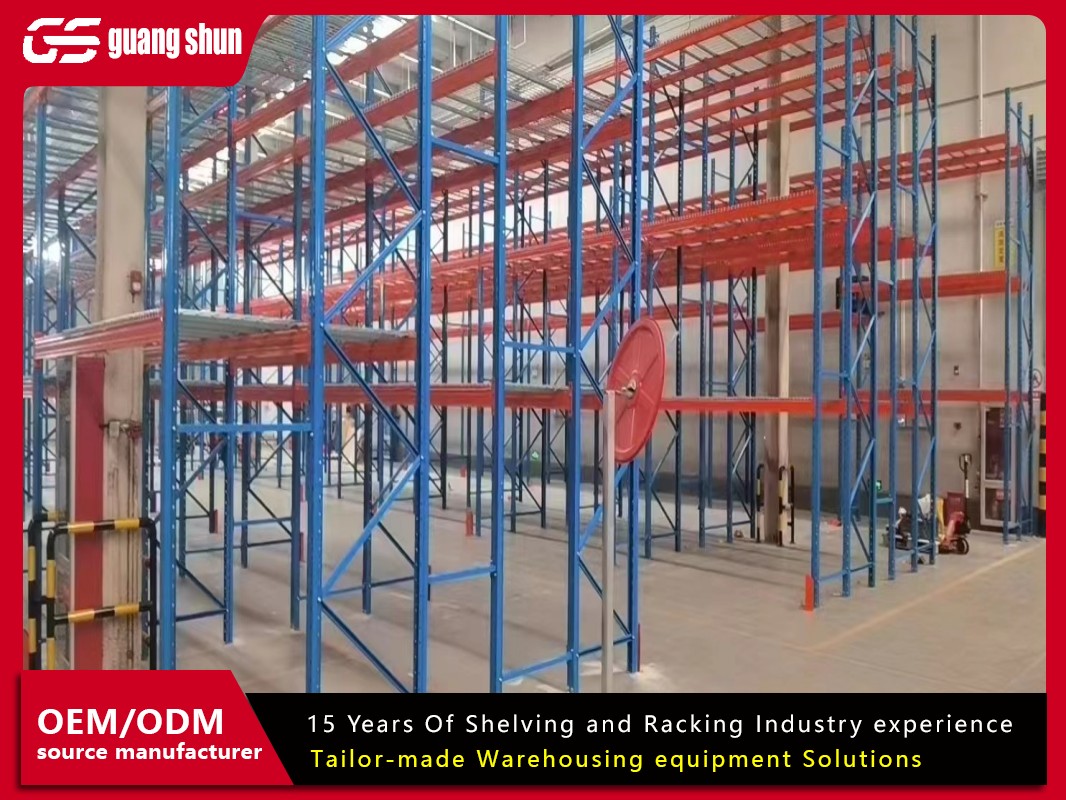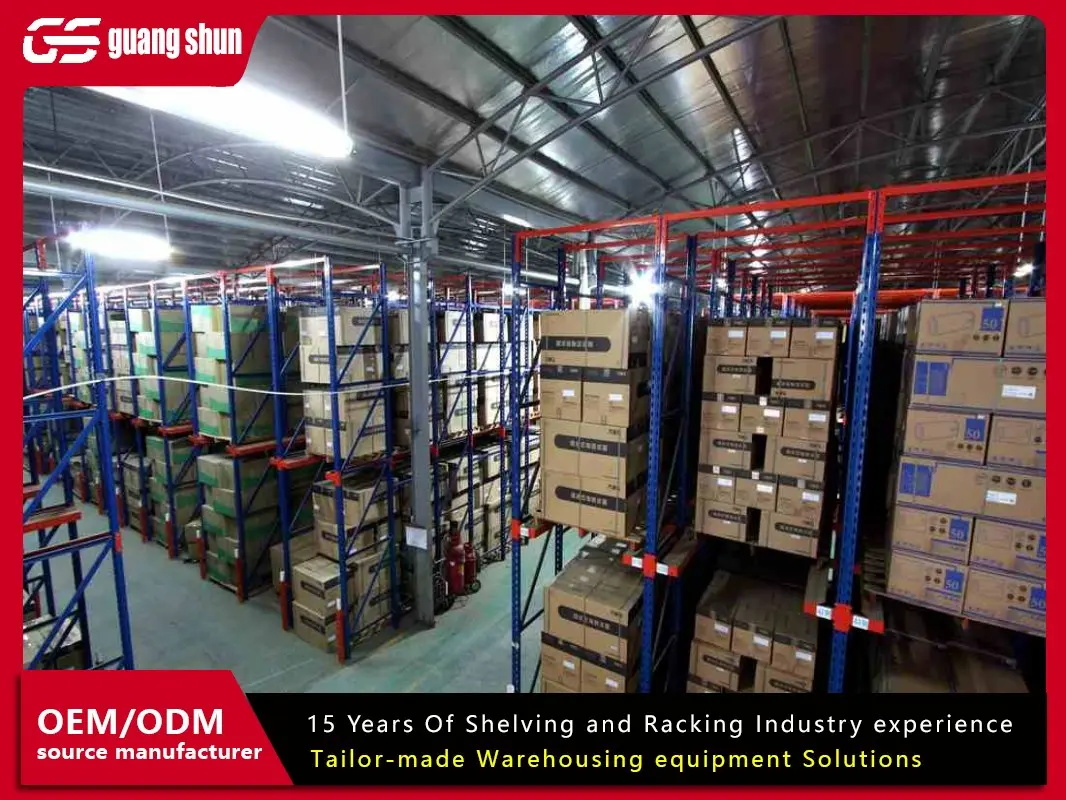
When warehouse floor space is at a premium and inventory volumes exceed static racking capacity, the logical evolution is to eliminate non-essential aisles. heavy duty mobile storage racks achieve exactly that—by mounting entire rack blocks on carriages that move along floor-embedded rails. This dynamic approach can increase storage density by up to 90% compared to fixed shelving, while still allowing direct access to any pallet or bin. At Guangshun, we have supplied mobile systems for industries ranging from automotive manufacturing to cold-chain logistics, each engineered to withstand continuous movement and heavy point loads.
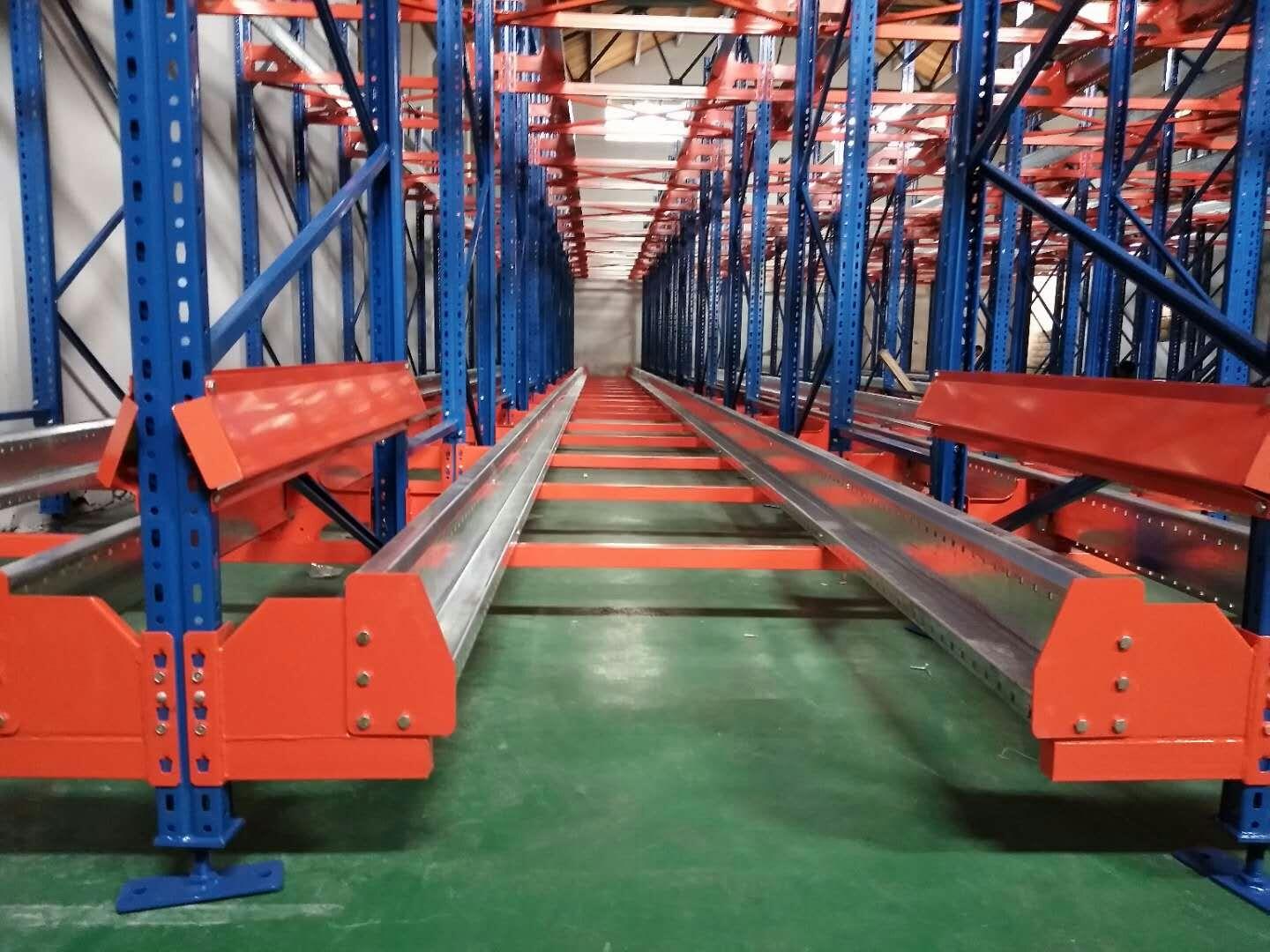
System Architecture: Carriages, Rails, and Drive Assemblies
A heavy duty mobile storage racks system consists of three primary engineered sub-systems:
Base carriage and wheel assemblies: Fabricated from structural steel channels, each carriage supports the rack uprights. Heavy-duty flanged wheels (typically forged steel with polyurethane treads) run on precision-ground rails. Wheel load ratings often exceed 4,000 kg per wheel, with four to eight wheels per carriage depending on system length.
Drive mechanism: Electric motors (0.75 kW to 2.2 kW) drive the wheels through reduction gearboxes. For manual or backup operation, a hand-crank mechanism can be integrated. Control systems include programmable logic controllers (PLC) for synchronized movement and obstacle detection.
Rail system and floor preparation: Rails are recessed into the floor slab or surface-mounted with ramps. Tolerances are critical: rail parallelism within ±2 mm over 20 m ensures smooth travel. Guangshun provides laser-alignment protocols during installation.
Safety peripherals: Passive infrared sensors, pressure-sensitive floor edges, and emergency stop buttons are mandatory to prevent personnel entrapment.
The marriage of high-strength racking with precision movement makes these systems suitable for unit loads up to 3,000 kg per pallet position, a domain previously reserved for static racking.
Load Protocols: Static and Dynamic Ratings
Engineers must consider both the static load on the racks and the dynamic forces during movement. Guangshun’s mobile systems are designed to FEM 9.831 and EN 15095 standards.
Upright frame capacity: Roll-formed from high-strength steel (minimum yield 350 MPa), frames can support up to 12,000 kg per bay. Frame deflection under full load is limited to H/200 to prevent binding during movement.
Beam capacity: Box-section beams with integrated safety locks support 1,500–3,000 kg per level, depending on span and section profile.
Carriage drive torque: Motors are sized to accelerate a fully loaded carriage (up to 30 tons) from standstill to 0.2 m/s within 2 seconds, with emergency braking distance ≤50 mm.
Seismic compatibility: In seismic zones, mobile systems require anti-tilt brackets and carriage locks that engage automatically when movement stops. Finite element analysis (FEA) validates that the system meets local building codes.
For cold-store applications, Guangshun specifies low-temperature greases and seals to maintain mobility at -30°C.
Solving Space Constraints: Key Applications for Mobile Racking
Automotive parts warehousing: A Tier‑1 supplier in Detroit replaced 3,500 m² of static pallet racking with heavy duty mobile storage racks, reducing the footprint to 2,100 m² while maintaining the same inventory of 8,500 pallets. The system’s ability to create an aisle only when needed allowed just-in-time sequencing areas to be incorporated directly in front of the mobile blocks.
Cold storage distribution: A Dutch logistics provider storing frozen meat required dense storage but also needed to maintain strict FIFO rotation. Mobile racks with drive-in configuration on the carriages enabled four-deep pallet storage, with temperature data loggers integrated into the control system to monitor product dwell time. Energy savings from the reduced refrigerated volume paid back the investment in 22 months.
Die and mold storage: In heavy manufacturing, tooling dies weighing up to 5 tons each are stored in heavy duty mobile storage racks equipped with reinforced cantilever arms. The mobility allows a single aisle to serve dozens of die sets, drastically cutting travel time for overhead cranes.
How to Specify the Correct Mobile Racking Configuration
Selecting a mobile system requires a multi-step technical assessment:
1. Load and duty cycle analysis
Determine the maximum number of daily accesses. For high-frequency operations (e.g., 50+ moves per shift), motorized systems with PLC control and fast aisle opening (under 20 seconds) are essential. For lower frequency, mechanical-assist or manual systems may suffice.
2. Floor flatness and structural support
Mobile racks concentrate tremendous loads on the rail footprint. A geotechnical survey is mandatory: floor flatness must meet FM 2 or better (≤3 mm deviation over 3 m). The slab must be reinforced to carry point loads from wheels, often requiring a 200 mm thick concrete slab with steel fibers.
3. Safety integration with warehouse operations
If forklifts enter the aisles, the system must detect both pedestrian and vehicle presence. Guangshun offers integrated laser scanners that halt movement if an object is detected in the moving path. Additionally, aisle lighting can be triggered only when the aisle is opened, saving energy.
4. Customizations for special loads
For long goods (pipes, lumber), Guangshun designs mobile cantilever racks; for very heavy coils, we use saddles with V-decks. Each customization is validated by FEA to ensure no resonance during movement.
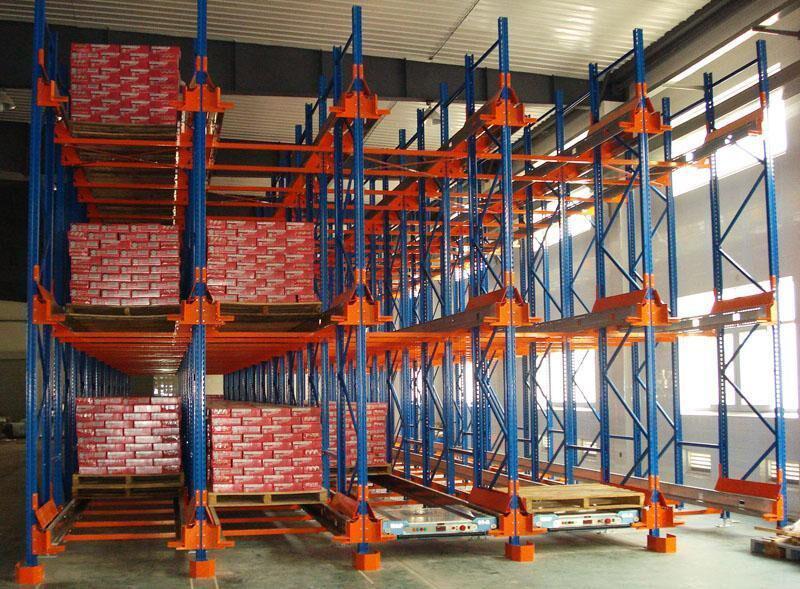
Precision Installation and Long-Term Reliability
Installation of heavy duty mobile storage racks is a civil and mechanical engineering project. Key steps:
Rail alignment: Using laser trackers, rails are positioned to within ±1 mm horizontally and vertically. Grout is poured to embed the rails, then cured for 7 days before carriage placement.
Carriage assembly: Wheel bogies are mounted, then carriage frames are torqued to specifications. Drive units are aligned with the drive shaft to within 0.5° to prevent binding.
Rack erection: Uprights are anchored to the carriages, and beams are installed level. All bolts are torqued and marked for quality audit.
System commissioning: No-load and full-load test cycles verify smooth movement, emergency stops, and positional accuracy.
Preventive maintenance includes quarterly inspection of wheel wear, rail cleanliness, and motor brush conditions. Guangshun provides remote diagnostics via IoT modules that report drive currents and cycle counts.
Frequently Asked Questions on Heavy Duty Mobile Storage Racks
Q1: How much floor space can I save compared to static racking?
A1: In typical layouts, mobile racks reduce the number of aisles from multiple to one (or two) per block. Space savings range from 40% to 90% depending on bay depth and aisle width requirements. A detailed layout study by Guangshun engineers can provide exact figures for your facility.
Q2: Can mobile racks handle very heavy loads like steel coils?
A2: Yes. We have supplied systems supporting up to 8,000 kg per pallet position. The carriages are reinforced with additional wheels and heavier structural sections. For coil storage, we design cradles with rubber padding to prevent damage.
Q3: What happens during a power outage? Can I access my goods?
A3: All motorized systems include a manual override—either a hand crank or a hydraulic pump that allows you to move the racks manually. For large systems, a backup generator connection is recommended.
Q4: Are there specific fire protection requirements for mobile racks?
A4: Yes, NFPA 13 and EN 12845 require in-rack sprinklers if solid shelves are used. With mobile racks, sprinkler lines must be flexible to accommodate movement. Guangshun offers flexible hose kits and design coordination with fire protection engineers.
Q5: What is the typical lifespan of a heavy duty mobile storage rack system?
A5: With proper maintenance, the structural components (racks, carriages) exceed 25 years. Drive motors and electronics may require replacement after 10–15 years, but these are modular and readily available.
Q6: Can I retrofit existing static racks onto a mobile carriage?
A6: Often yes, provided the existing racks are structurally sound and have compatible footprints. Guangshun has completed retrofits where clients’ existing pallet racks were mounted on new mobile carriages, achieving density gains at lower cost than full replacement.
Q7: How fast do the racks move? Is it safe for personnel?
A7: Typical travel speed is 0.2 m/s – slow enough to prevent injury but fast enough to open an aisle in under 30 seconds. Multiple safety sensors (light curtains, pressure mats) ensure movement stops immediately if anyone enters the path.
Implementing heavy duty mobile storage racks is a strategic decision that requires rigorous engineering analysis—from load distribution to control system integration. The payoff is a leaner, more productive warehouse that can adapt to changing inventory profiles without expanding the building footprint. Guangshun combines structural expertise with motion control experience to deliver mobile systems that operate reliably for decades. Contact our applications team to discuss your density goals and schedule a preliminary site assessment.