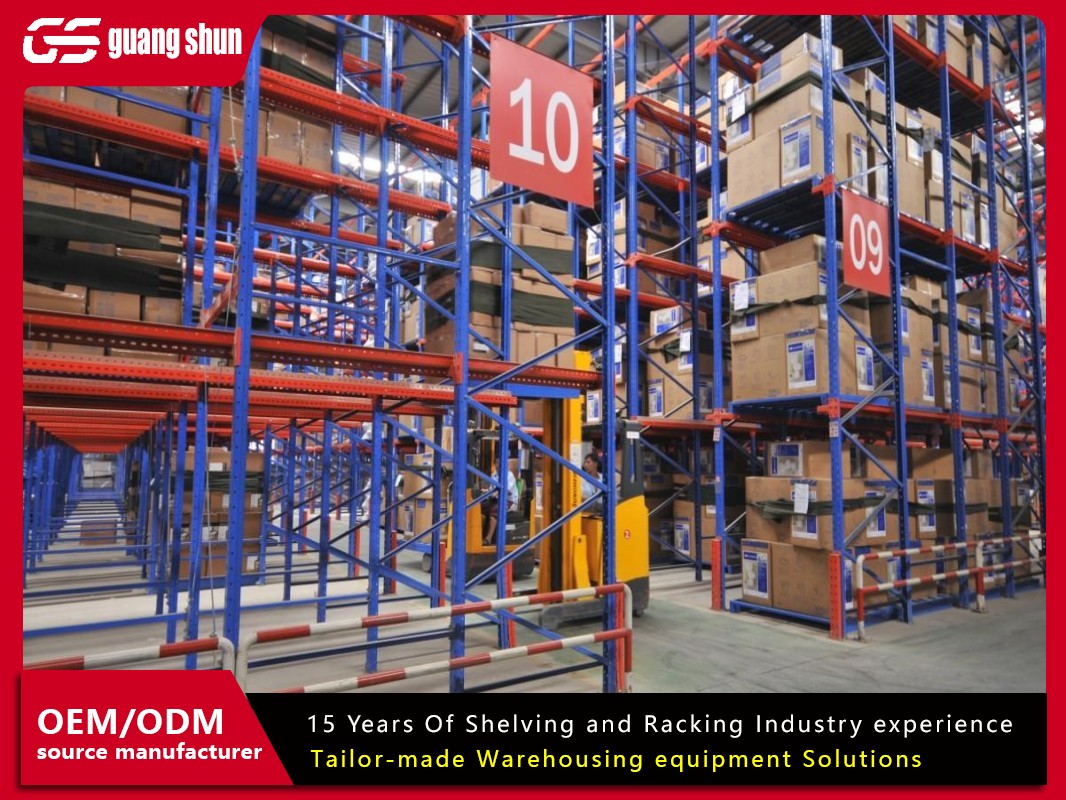
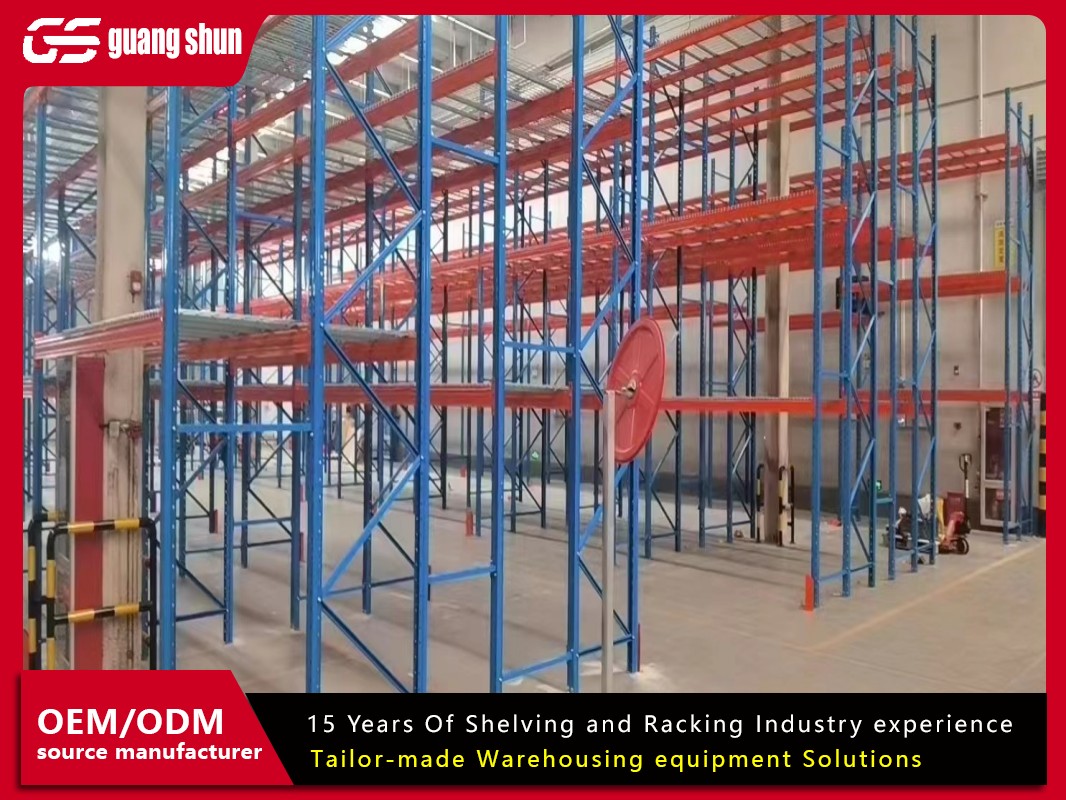
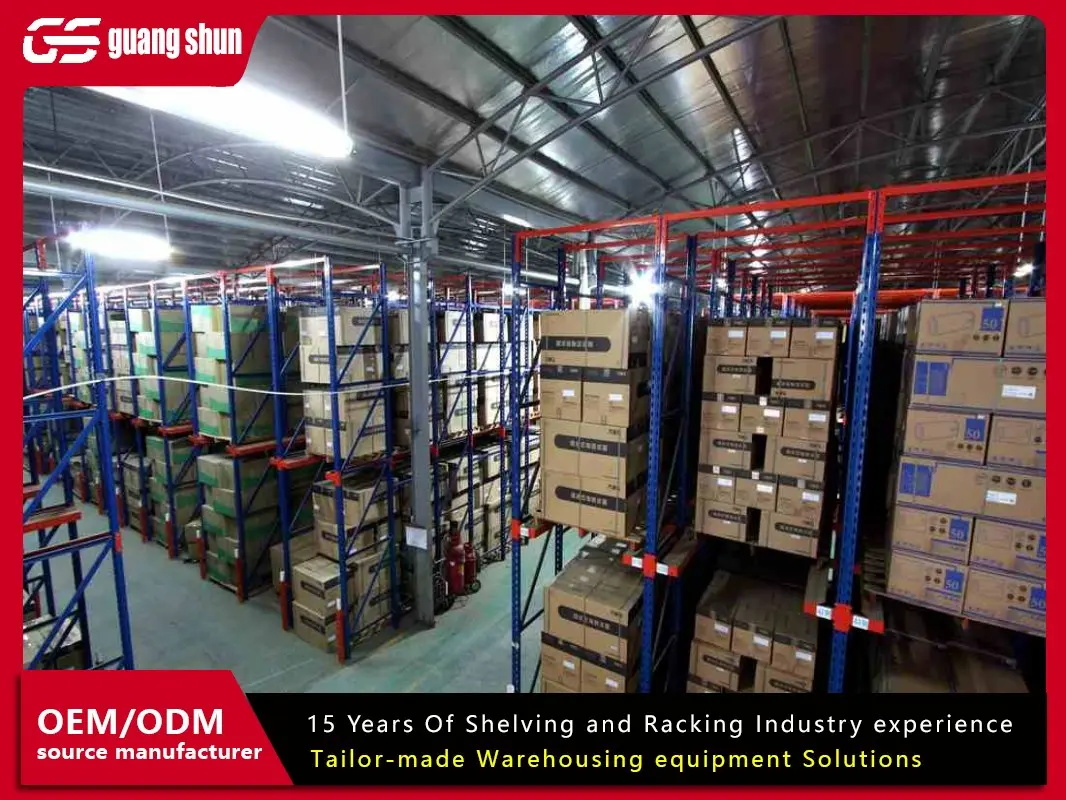
Distribution center managers face a persistent problem: static storage infrastructure cannot accommodate fluctuating inventory dimensions. An adjustable racking system solves this through modular uprights, tool-less shelf repositioning, and variable beam spacing. However, not all adjustable designs provide the same structural integrity. This article examines nine engineering parameters—from column hole patterns to seismic base shear coefficients—that separate industrial-grade adjustable racking from consumer-grade alternatives. Guangshun has manufactured these systems for 18 years, integrating ISO 7173 dynamic load protocols. Below, we quantify each principle with field test results and application-specific recommendations for automotive, pharmaceutical, and e-commerce logistics.
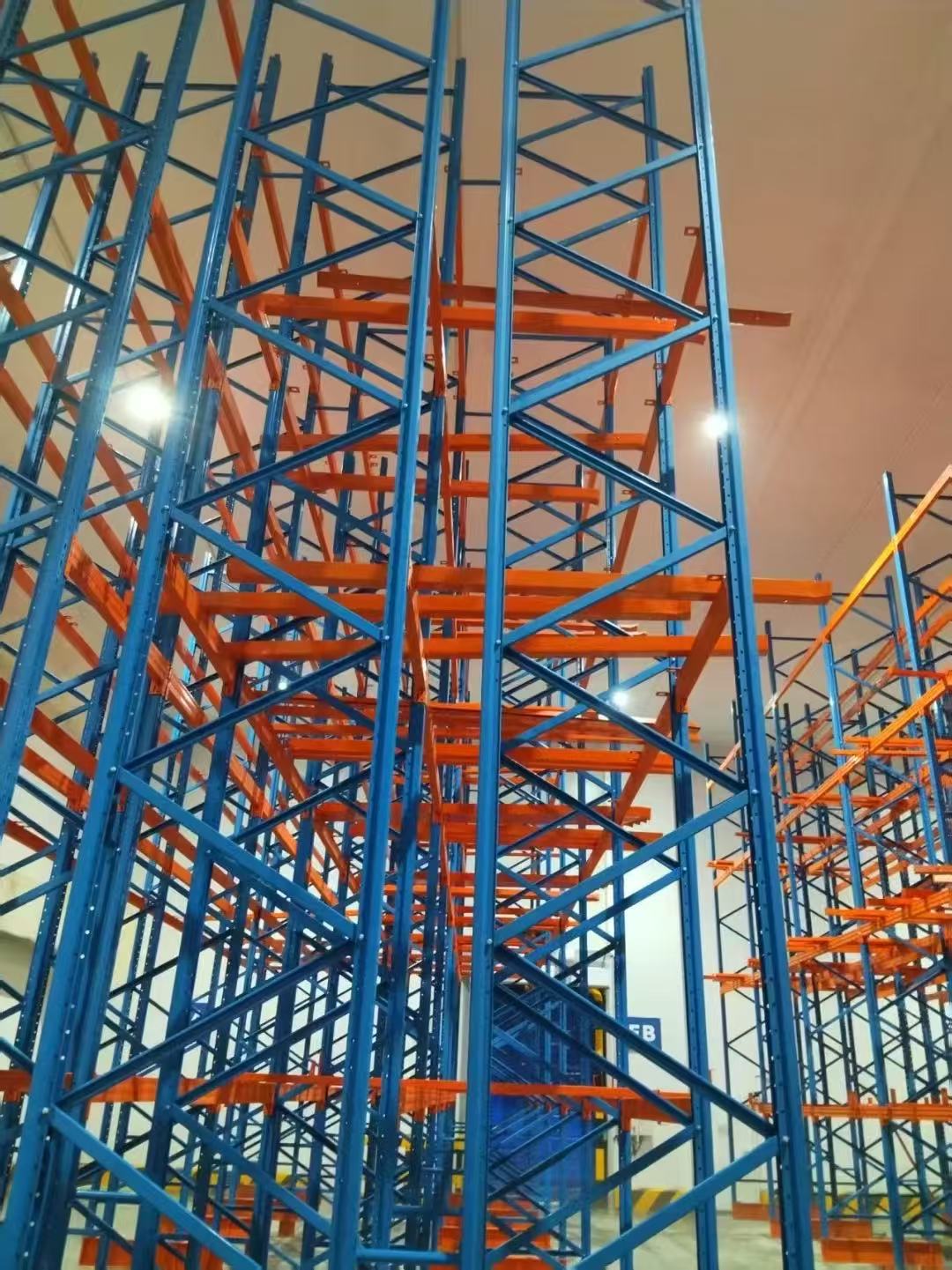
The core of any modular pallet racking is the upright column’s hole pattern. Two dominant standards exist: diamond-shaped perforations (common in European designs) and teardrop slots (prevalent in North America). A professional adjustable racking system uses teardrop or keyhole patterns with 50mm or 75mm vertical pitch. This allows beam connectors to seat fully without wobble. Beam locking lugs must be at least 5mm thick and manufactured from high-strength steel (yield strength ≥ 350 MPa). Tests performed by Guangshun show that with a 2mm engagement depth, each lug can resist 1,200 kg of pull-out force. Avoid systems with spring-loaded plastic pins; they degrade after 30 adjustment cycles. The optimal design includes a secondary safety clip that prevents accidental dislodging during forklift impact.
Load capacity is often listed only as uniform distributed load (UDL) per shelf. But in real-world warehousing, point loads from machinery or concentrated cartons create stress concentrations. For a standard beam length of 2,700 mm, Guangshun’s adjustable racking achieves UDL of 2,500 kg per level, with a point load limit of 900 kg over a 200 mm footprint. More important is deflection under dynamic conditions—forklift acceleration generates horizontal forces that cause frame sway. Acceptable sway at the top of a 6 m tall rack is less than H/250 (24 mm). Always request a load-deflection chart from the manufacturer. For cold storage (below -20°C), select steel with low-temperature impact toughness (Charpy V-notch ≥ 27 J at -30°C) to avoid brittle fracture.
Anchoring failures cause over 60% of adjustable racking collapses (according to RMI 2024 incident data). Base plates must be minimum 150x150 mm with four anchor holes. Use epoxy-grouted wedge anchors (M12 or 1/2″ grade 5) embedded to a depth of at least 100 mm into reinforced concrete (minimum 25 MPa compressive strength). For seismic zones, calculate uplift force using F_anchor = (0.5 * S_DS * W_rack) / N_anchors, where S_DS ≥ 0.5g. Guangshun provides base plates with integrated leveling shims—critical when floor flatness exceeds 3 mm per meter. Never rely on rubber pads alone; they increase sway by 40%.
Frequent SKU height changes demand fine vertical adjustment. Standard increments are 50 mm (2 inches). However, for mixed-load warehouses handling both tall pallets (1.8 m) and flat cartons (0.3 m), a 50 mm increment is adequate. Studies show that reducing adjustment time from 5 minutes to 1 minute per beam increases reconfiguration productivity by 380% over a year. Tool-less beam connectors with drop-in engagement achieve this. A flexible storage solution with quick-adjust beams also reduces forklift damage because bent beams can be replaced in 90 seconds without unbolting the entire rack. Guangshun’s one-click safety lock has been certified for 10,000 insertion cycles without loss of holding force.
Warehouses in high-wind regions (hurricane zones) or seismic zones require special bracing. Adjustable racking systems without diagonal back-ties fail at 0.6g acceleration. For a 9 m tall rack, add horizontal and vertical sway braces every 3 m of height. The brace connection must use at least two M10 bolts with lock washers. In seismic design category D, the adjustable racking system must also include base shear transfer plates connecting adjacent bays. Guangshun’s seismic kits include slotted gusset plates that allow ±5 mm movement during ground motion, then self-center. Always commission a third-party structural calculation (IBC 2024 compliant) before installing racks above 8 m.
Beam connectors and hole edges are the first points to rust. A standard powder coat (60-80 µm) provides 400 hours salt spray resistance (ASTM B117). For high-humidity environments (breweries, cold stores), upgrade to zinc-rich primer plus polyester topcoat (120 µm total). Chrome-plated bolts and clips last longer—Guangshun offers a hybrid coating process combining electro-galvanization (15 µm) with a clear trivalent chromate, achieving 800 hours to red rust. Avoid painting over threaded adjustment holes; hole burrs must be removed by deburring tools to prevent coating delamination.
Modern warehouses require racking to interface with automated systems. An adjustable racking system can be fitted with guide rails for automated guided vehicles (AGVs). Minimum aisle width for AGVs with laser navigation is 2.4 m (for 1.2 m pallets). The bottom beam must be at least 300 mm above floor to allow AGV lifting forks. Additionally, pick-to-light systems require cable trays running along beams—pre-drilled holes at 500 mm intervals simplify installation. Guangshun provides pre-configured wire management channels that snap into beam profiles, supporting both power and data cables up to 25 mm diameter.
NFPA 13 (2025 edition) mandates that adjustable racking with solid shelves must maintain 18 inches (457 mm) clearance below sprinkler deflectors. However, open-beam racking (no solid shelves) allows for denser storage because water penetrates freely. The obstruction rule for beams: if beam depth exceeds 12 inches or horizontal spacing is less than 3 feet, additional in-rack sprinklers are required. A common mistake: storing shrink-wrapped palettes directly under beam levels without gap—this traps heat. Always calculate the sprinkler coverage area using the formula A_max = S * L, where S ≤ 4.5 m (light hazard). Guangshun’s design team provides hydraulic calculation reports for FM Global compliance.
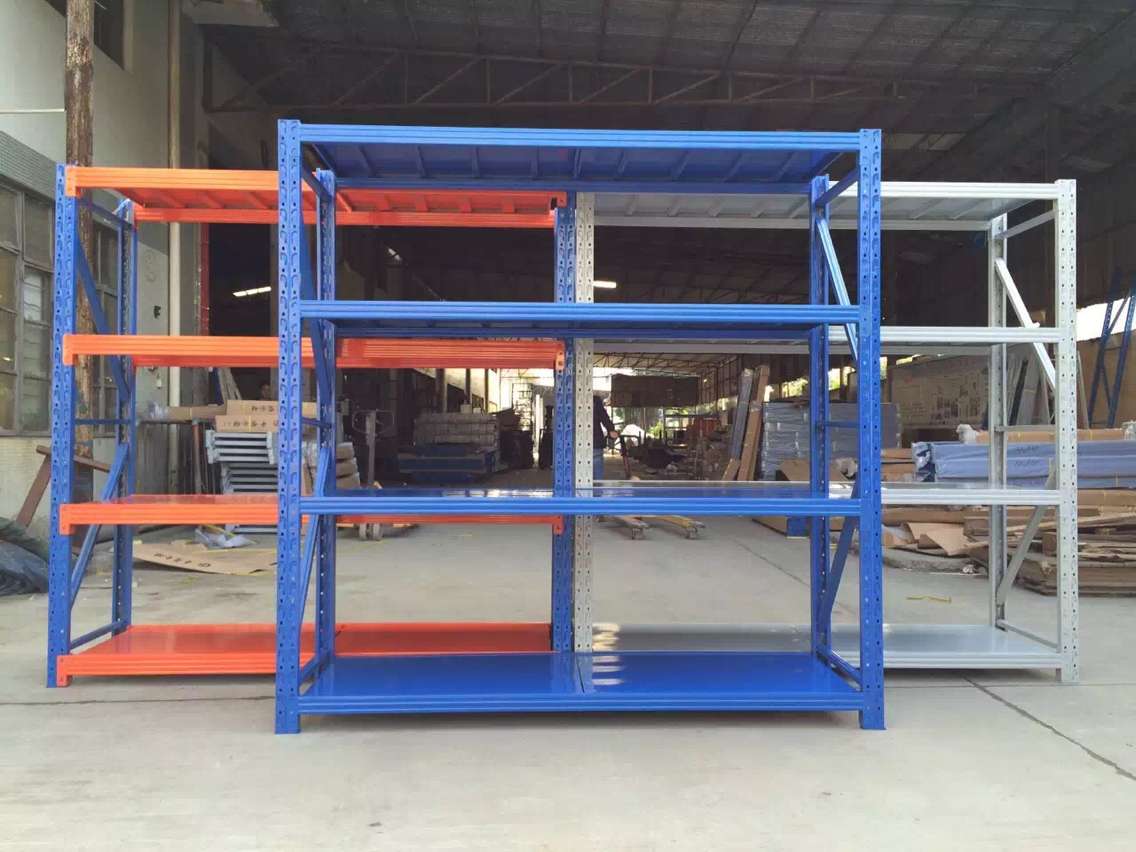
Initial purchase price of a bolted adjustable system is 25–40% higher than welded fixed shelving. However, over a 15-year horizon, adjustable racking yields lower total cost of ownership (TCO) due to reusability. For a 10,000 pallet-position warehouse, reconfiguration every 3 years (changing 40% of beam levels) costs $2,500 in labor for adjustable systems vs. $47,000 for welding new fixed racks. Including residual value—adjustable racks retain 55% of original cost after a decade versus 15% for welded—the net present value (8% discount) favors adjustable by $89,000. Guangshun offers a trade-in program for old adjustable racking, further lowering TCO. For fast-moving consumer goods (FMCG) with seasonal SKU changes, the flexibility alone justifies the premium.
When specifying an adjustable racking system, request these documents: beam load test certificate (ISO 22038), salt spray report, seismic analysis, and a sample of the safety clip. Partnering with an experienced manufacturer such as Guangshun ensures that each component meets published specifications. Their engineers provide on-site installation supervision and 3D laser scanning for precise anchoring layouts.
Q1: How often should I inspect the beam locks on an adjustable
racking system?
A1: Perform visual inspection
monthly for any bent or disengaged lugs. Every six months, test the locking
mechanism by lifting the beam slightly—there should be no vertical play. Replace
any beam with a deformed connector immediately. Guangshun recommends full torque
verification of floor anchors annually, using a calibrated torque wrench to 60
N·m for M12 anchors.
Q2: Can adjustable racking systems be reconfigured after they are
loaded?
A2: No. Always unload the beam completely
before repositioning. Relocating a loaded beam can deform the connector holes in
the upright, reducing future load capacity. Use a systematic approach: move one
level at a time, starting from the top down. For large reconfigurations, consult
the manufacturer’s re-engineering guidelines to avoid exceeding upright column
load limits.
Q3: What is the standard warranty period for industrial adjustable
racking?
A3: Leading manufacturers provide 10 years
against structural defects (weld cracks, steel fracture) and 2 years on
coatings. Guangshun extends this to 12 years for frames and 5 years for powder
coating when installed per their manual. Damage from forklift impact is not
covered, but replacement beams are stocked for fast shipment.
Q4: Does adjustable racking comply with AS4084 (Australian standard)
or FEM 10.2.02?
A4: Yes, if the system is
certified. Always check for a compliance plate on the upright. Guangshun’s
adjustable racking carries both FEM 10.2.02 and AS4084:2023 certification for
static and seismic loads up to 0.8g. For European projects, request EN 15512
compliance documentation.
Q5: What is the maximum height for an adjustable racking system
without special bracing?
A5: For standard 42x42 mm
uprights with 2.5 mm wall thickness, the unbraced height limit is 3.5 m. Above
that, you must install horizontal and diagonal bracing every 2 m. For a 9 m high
system, use heavy-duty uprights (3.5 mm wall) and full bracing. Guangshun
provides free structural calculations for any height up to 12 m.
For technical datasheets, load charts, or a customized layout design for your warehouse, visit Guangshun online. Properly engineered adjustable racking system remains the most future-proof investment for dynamic inventory environments.

 Wechat
Whatsapp
Wechat
Whatsapp