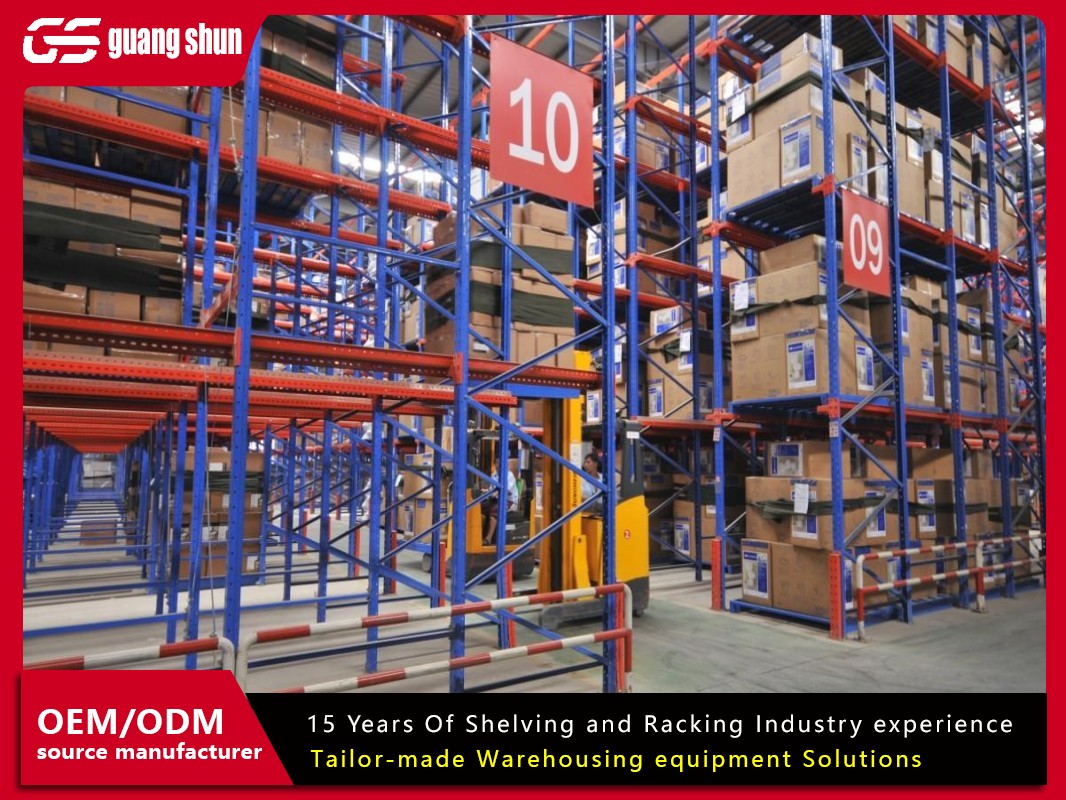
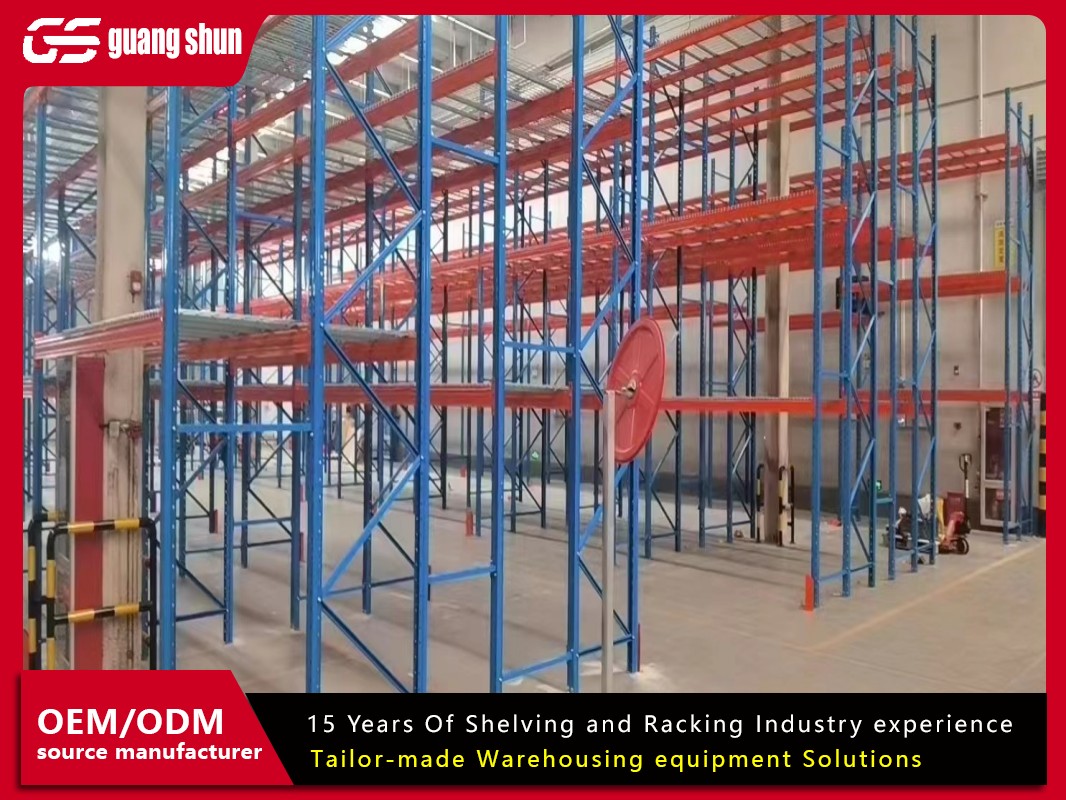
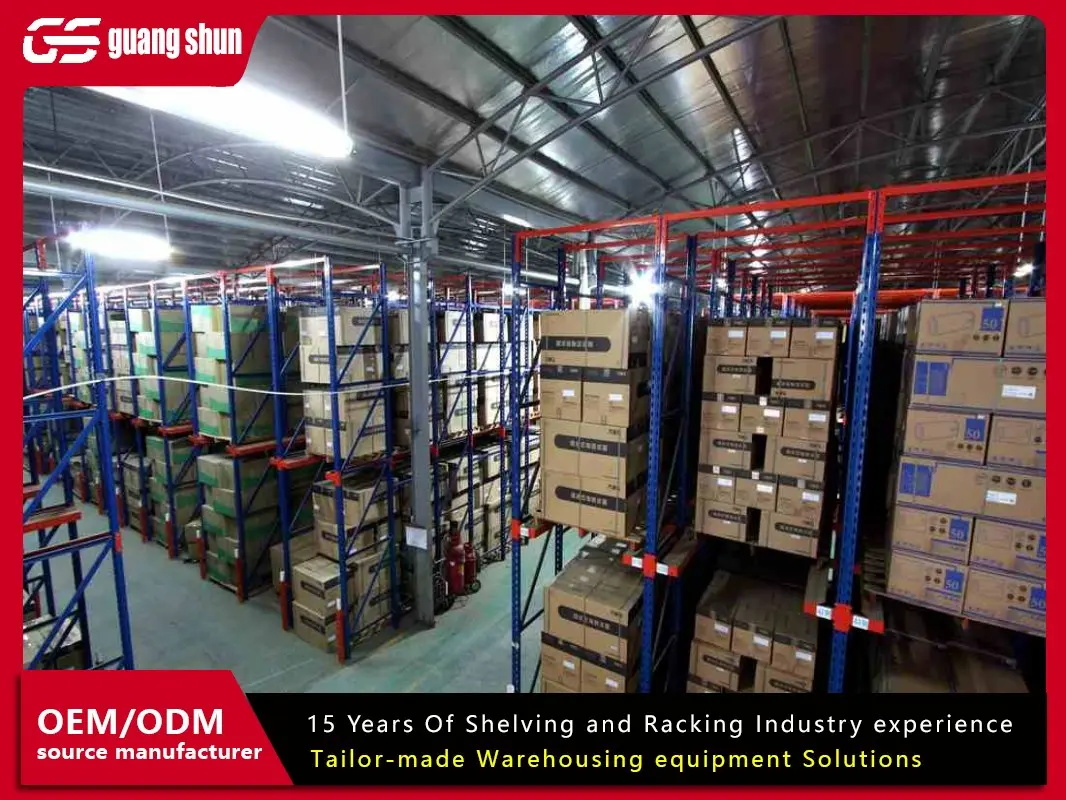
In modern warehouse operations, selecting the correct medium-to-heavy load storage system directly impacts throughput, safety, and total cost of ownership. For loads ranging from 500 kg to 2,500 kg per level, heavy duty longspan shelving offers a structural middle ground between light-duty boltless units and capital-intensive pallet racking. This article provides an evidence-based analysis of material grades, deflection criteria, seismic considerations, and industry-specific implementations. We draw on established standards (RMI, FEM 10.2.02) and real-world performance data to assist engineers and facility managers in specification decisions.
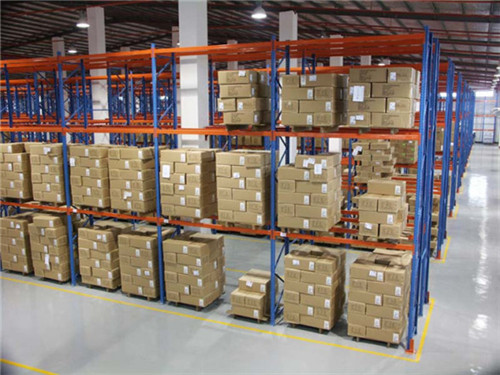
Unlike standard clip-in shelving, heavy duty longspan shelving relies on cold-formed steel profiles with higher section moduli. Key components include:
Upright frames: Typically fabricated from Q235 or Q345 steel with C-channel sections (80×40 mm to 120×60 mm). Column thickness ranges from 1.8 mm to 2.5 mm depending on height and load requirements. Perforation pitch (50 mm or 75 mm) allows vertical beam adjustment in 2-inch increments.
Step beams: Box-section or lipped channel beams with 1.5 mm to 2.0 mm base steel. Beam profiles (e.g., 120×60 mm) include integral safety locks to prevent accidental dislodging under dynamic loads.
Surface finishing: Phosphate pretreatment followed by thermosetting polyester powder coating (60–80 μm thickness). Salt spray resistance exceeds 500 hours per ASTM B117, essential for cold storage or humid environments.
Connection mechanism: Boltless keyhole and tab designs reduce assembly time, but for high seismic zones, bolted variants (Grade 8.8 hardware) are recommended to maintain rigidity during horizontal accelerations.
Finite element analysis (FEA) performed on a standard bay (2700 mm width × 1200 mm depth × 4500 mm height) shows a safety factor of 1.65 against yielding under uniform distributed load (UDL) of 2000 kg per shelf. The maximum deflection at the beam mid-span is held below L/200 (typically ≤ 13.5 mm), per FEM 10.2.02 guidelines, ensuring stability of stored pallets or cartons.
When specifying heavy duty longspan shelving, three load metrics must be evaluated:
Uniformly Distributed Load (UDL) per shelf: Ranges from 500 kg to 2500 kg, with beam span and depth playing inverse roles. For example, a 2700 mm span × 1000 mm depth beam supports 1800 kg UDL at 2.0 mm steel thickness. Reducing span to 2000 mm increases capacity to 2500 kg.
Point load concentration: Forklift handling or irregular items create point loads. Standard designs tolerate point loads up to 40% of UDL if localized reinforcement (load spreader bars) is absent.
Dynamic impact factor: For manual handling (walking) – factor 1.2; for reach truck operation – factor 1.4. The rack structure must incorporate these factors into column base plate design and anchor bolt shear calculations.
Deflection limits directly affect pallet stability. Excessive sag (beyond L/180) leads to pallet overhang and potential tip-over. Through third-party tests, Guangshun longspan configurations maintain deflection below L/250 under full rated load – a margin that protects wire mesh decking and particleboard shelf liners from permanent deformation.
Facility planners often compare heavy duty longspan shelving with selective pallet racking (SPR) and structural steel shelving. The following table summarizes selection criteria:
Accessibility: Longspan permits 100% item selectivity without beam obstructions, similar to shelving, but can accommodate mixed pallet and hand-stacked loads. SPR requires palletized unit loads only.
Cost per storage position: Longspan costs average $120–$180 per shelf position (installed), versus $200–$300 for SPR and $250+ for structural bolted shelving.
Floor load uniformity: Longspan uprights exert point loads of approx. 1200 kg per foot at full capacity, which often eliminates need for thickened floor slabs (common with heavy racking).
Adjustability: Beams reposition every 50 mm without tools, offering greater flexibility than riveted structural shelving.
For warehouses managing mixed SKU sizes (e.g., automotive components, e-commerce small parcels, metal coils), heavy duty longspan shelving bridges the gap between low-density static racking and overly dense mobile systems. Guangshun provides hybrid designs where lower levels accommodate pallets and upper levels use wire decks for break-pack items.
A Midwest U.S. automotive logistics provider faced excessive picking errors using floor-stacked containers. Implementation of 1200 mm deep × 3600 mm high longspan bays with integrated divider supports reduced search time by 34%. Each bay holds 1800 kg per level, storing bumpers, dashboards, and small subassemblies. The boltless adjustability allowed reconfiguration for model changeovers within two shifts.
For a European 3PL handling 15,000 SKUs, heavy duty longspan shelving was deployed in forward-pick zones. Span lengths of 2400 mm accommodated mixed pallets (800×1200 mm) and flow racks. The open back design enabled cross-aisle access, doubling pick density compared to cantilever alternatives. Operational data showed 22% increase in units picked per labor hour.
A die-casting facility utilized longspan with reinforced beam connectors (double-riveted) to store die sets weighing up to 1500 kg each. Standard pallet racking could not provide the necessary shelf spacing for irregular molds. Over three years, zero structural failures occurred, and the powder coating resisted coolant and oil contamination.
Professional specification of heavy duty longspan shelving demands adherence to:
RMI (Rack Manufacturers Institute) ANSI MH16.1-2020: Defines allowable stress design (ASD) for steel storage racks. Longspan systems with a height-to-depth ratio >6:1 require floor anchoring and row spacers.
FEM 10.2.02 (European): Establishes beam deflection classes (Class 1: L/200; Class 2: L/250). Seismic zones require Class 1 with additional diagonal bracing.
CEMA (Conveyor Equipment Manufacturers Association): For automated integration, longspan must accommodate vibration frequencies from conveyor transfers. Minimum natural frequency >6 Hz is recommended.
All Guangshun longspan configurations are third-party load tested to 125% of rated capacity, with certificates traceable to raw material mill reports. Systems also comply with OSHA 1910.176(b) for clear aisle marking and load limit postings.
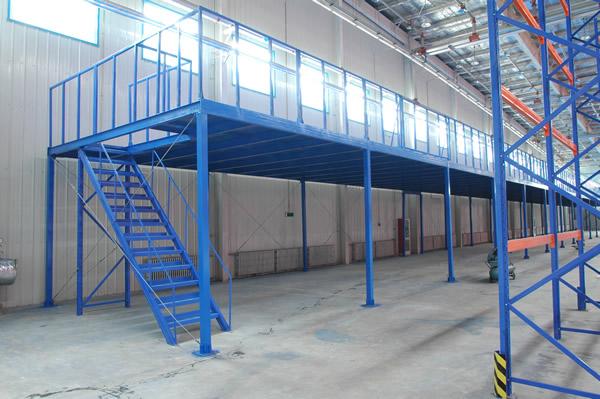
Deploying heavy duty longspan shelving requires systematic engineering workflow:
Step 1 – Site survey: Concrete floor flatness (Fmin ≥ 35), anchor pull-out capacity (minimum 15 kN per bolt), and seismic design category (SDC).
Step 2 – Load mapping: Identify maximum live loads per shelf – including future growth. Use load combination per ASCE 7-22: 1.2D + 1.6L.
Step 3 – Layout optimization: Apply warehouse simulation software (e.g., FlexSim) to minimize travel distance. Longspan block stacking vs. single-row layouts impact efficiency.
Step 4 – Assembly & anchoring: Torque anchor bolts to 85 N·m (M12) with epoxy grout for high-vibration zones. Check beam level tolerance ±3 mm over 6 m.
Step 5 – Safety labeling: Install red load capacity placards at each bay entrance and provide operator training on overhang limits.
Guangshun provides free 3D layout drawings (DXF/STEP) and anchor bolt pattern verification, reducing engineering man-hours by up to 40% compared to generic suppliers.
To maintain structural integrity over a 15-year lifespan, follow this inspection matrix:
Weekly visual checks: Look for beam lock disengagement, bent uprights (>5 mm out-of-plumb requires corrective shimming), and loose floor anchors.
Monthly torque audit: Using a calibrated torque wrench, test 5% of column base bolts – re-torque if below 80% of specification.
Quarterly load audit: Verify that no shelf exceeds posted capacity. Overload by 10% reduces fatigue life by approx. 50% per cycle analysis.
Annual engineering inspection: Perform ultrasonic thickness measurement on beam brackets and upright corners (minimum remaining thickness after corrosion: 80% of original).
For damage repair, never straighten a bent upright – replace entire section. Guangshun offers individual spare uprights and beams with 48-hour shipping for urgent repairs.
Q1: What is the typical maximum load per shelf for heavy duty
longspan shelving?
A1: Depending on beam profile,
span, and steel thickness, standard configurations support 500 kg to 2500 kg per
shelf. For a 2400 mm span with 120×60×2.0 mm beams, capacity is 1500 kg
uniformly distributed. Always consult the manufacturer’s load table – do not
extrapolate. Heavy
duty longspan shelving load tables at Guangshun include safety
factors per RMI.
Q2: Can heavy duty longspan shelving be used for pallet storage in a
freezer environment (-25°C)?
A2: Yes, but material
selection is critical. Standard cold-rolled steel embrittles below -10°C. Use
low-temperature carbon steel (ASTM A36 with impact test at -30°C) and galvanized
finish (zinc flake coating) rather than powder coating. Welds must be
stress-relieved. Guangshun offers arctic-grade longspan with certification for
continuous -30°C operation.
Q3: What are the differences between heavy duty longspan shelving and
selective pallet racking for mixed SKU storage?
A3: Longspan provides continuous shelf surfaces (wire deck, particle board, or steel
panels), allowing storage of loose items, cartons, or irregular loads without
pallets. Selective pallet racking requires palletized unit loads and has deeper
beam spacing (typically >900 mm). Longspan is superior for high-SKU
environments with non-uniform packaging; pallet racking is more efficient for
full-pallet in/out operations.
Q4: How do I calculate the required anchor bolt specification for
longspan against seismic forces?
A4: Use ASCE 7-16
seismic design category D: \( V = 0.2 \times S_{DS} \times W_p \) where \( W_p
\) is the seismic weight of rack plus stored goods. For a 4-bay longspan section
(total weight 8000 kg), \( V \) approx. 6.4 kN. Select post-installed adhesive
anchors (e.g., Hilti HIT-HY 200) with 2× safety factor. Always engage a
structural engineer for final calculations.
Q5: Does Guangshun provide custom size heavy duty longspan shelving
for non-standard bay dimensions?
A5: Yes,
Guangshun manufactures
custom upright heights from 1500 mm to 8000 mm and beam lengths up to 4000 mm
without intermediate support. Custom perforation patterns, cutouts for sprinkler
systems, and integrated conveyor supports are also available. Lead time for
custom orders is typically 15–20 working days after engineering approval.
Q6: How often should longspan shelving undergo professional load
testing?
A6: RMI recommends full recertification
every 5 years or after any structural modification. For facilities with daily
forklift traffic, conduct nondestructive proof-load testing annually using
calibrated hydraulic jacks (apply 110% of rated capacity, measure residual
deflection). If permanent set exceeds 1 mm, derate the bay by 20% or replace
components.
Guangshun offers on-site load testing services and provides certified load capacity plaques after verification. For critical infrastructure, combine with IoT strain gauges on key beams for real-time deflection monitoring.
Selecting the correct heavy duty longspan shelving system demands rigorous attention to material science, load deflection limits, and application-specific hazards. By adhering to RMI/FEM design rules and implementing a structured maintenance protocol, facilities achieve 15+ years of reliable service. For project-specific engineering support, consult the technical team at Guangshun – including free FEA reports and seismic calculations.

 Wechat
Whatsapp
Wechat
Whatsapp