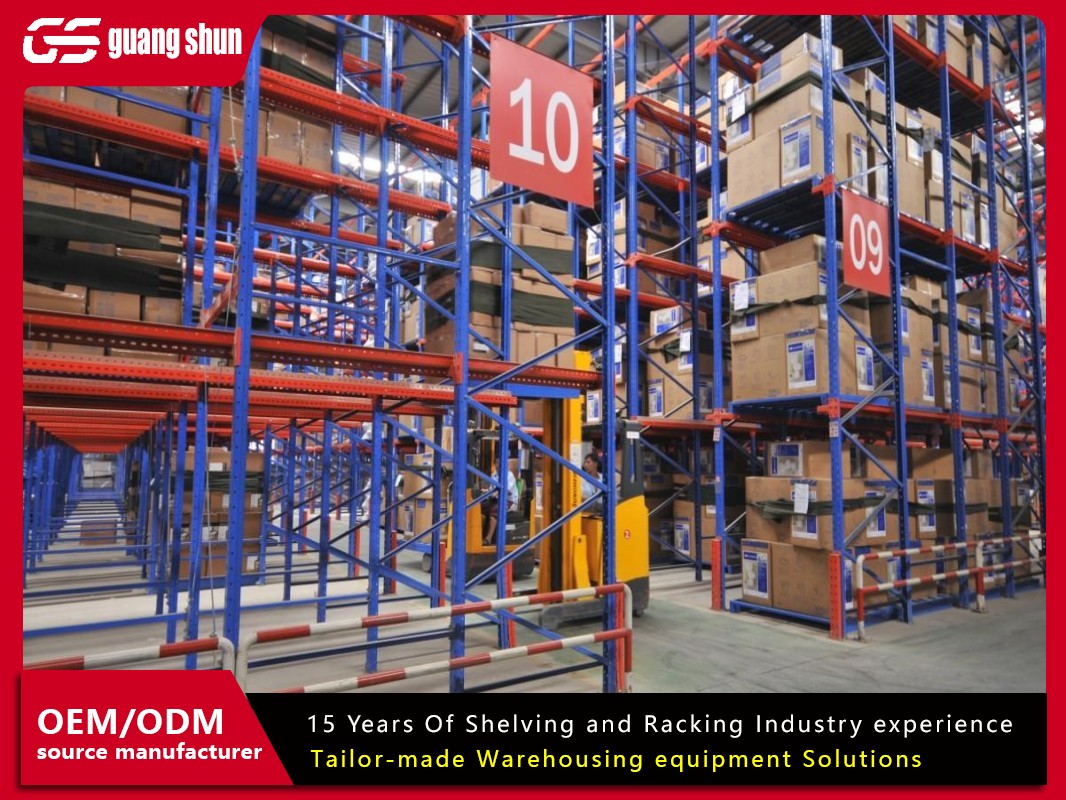
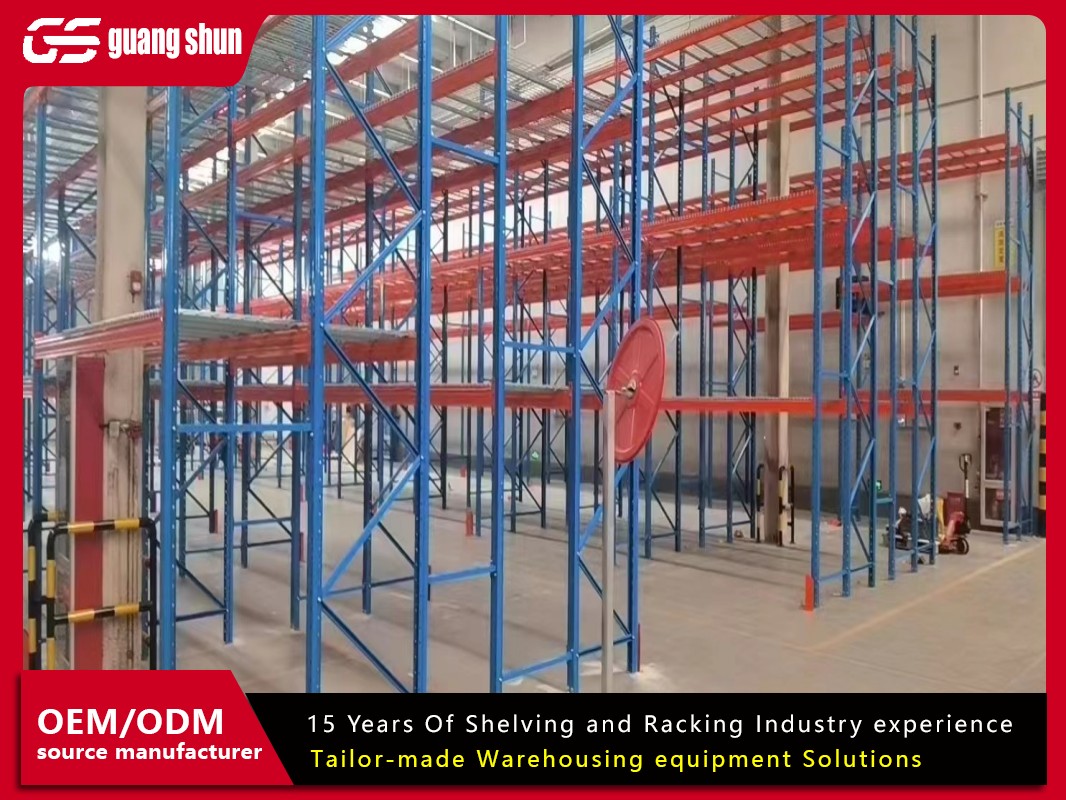
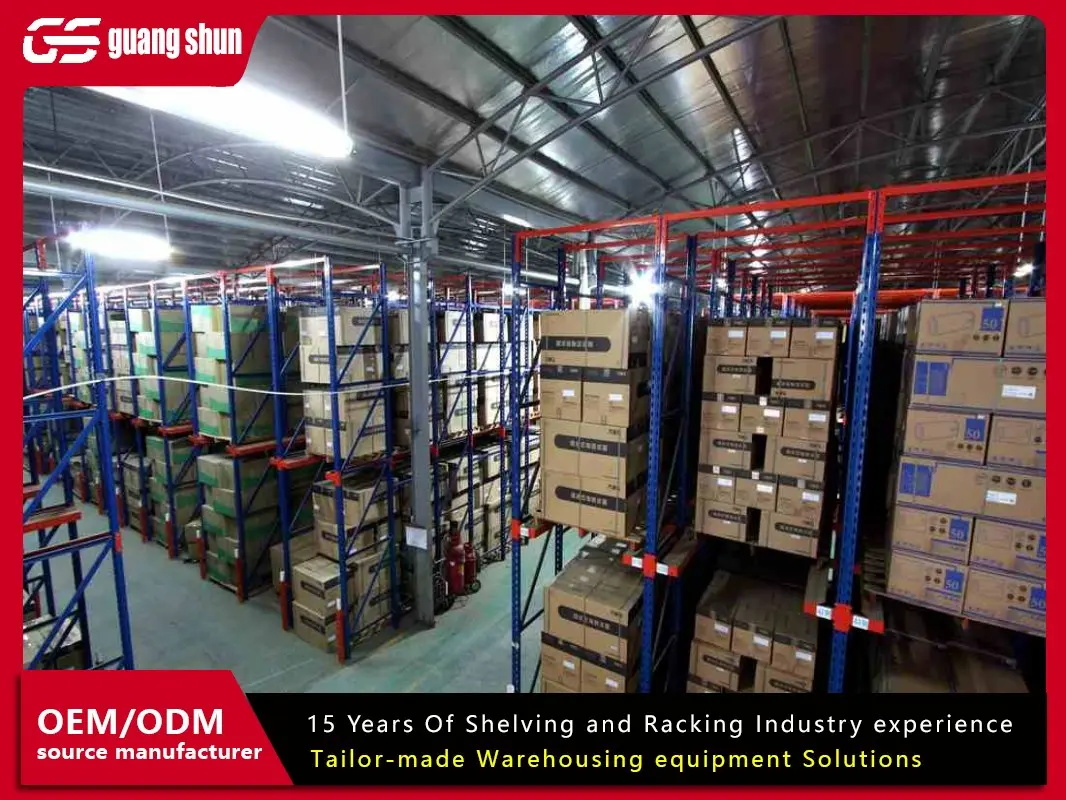
In high-throughput distribution centers and cold storage facilities, inventory flow management directly affects product quality, order accuracy, and labor costs. The gravity racking system remains a proven solution for operations requiring strict first-in-first-out (FIFO) discipline. Unlike static selective racks or drive-in structures, gravity-fed lanes use controlled slopes and roller tracks to move pallets or cartons automatically from the loading to the picking aisle. This article examines technical specifications, application-specific design parameters, and quantitative return metrics for deploying a gravity racking system in modern warehouses.
According to industry benchmarks, warehouses implementing dynamic flow racks reduce product damage from order picking by 28% and improve inventory turnover rates by up to 35% compared to standard pallet racks. Companies such as Guangshun provide customized gravity flow solutions with integrated speed controllers and lane dividers, addressing the specific demands of food, beverage, and manufacturing sectors.
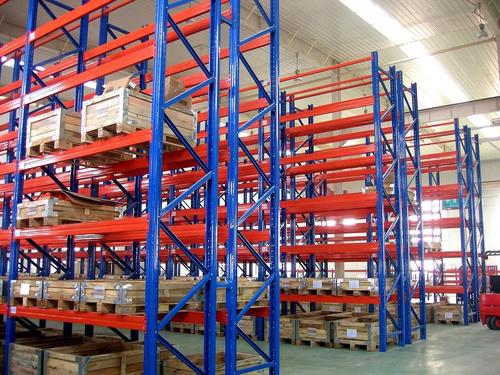
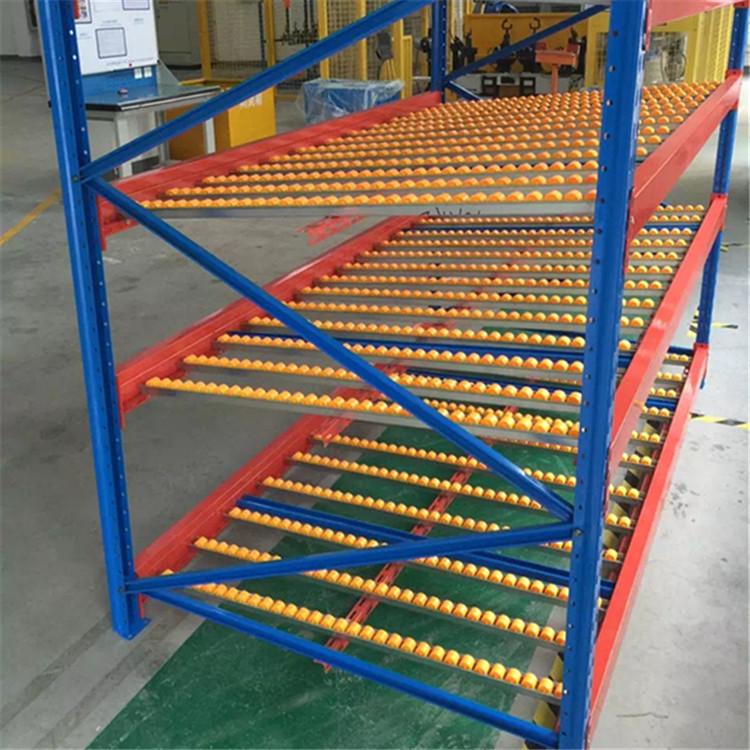
The fundamental operating principle of a gravity racking system relies on gravitational force and engineered roller beds. Each lane consists of a slightly inclined track (typically 3% to 6% slope) equipped with heavy-duty rollers, skate wheels, or steel wheel tracks. Loads are loaded from the higher rear end and advance toward the lower front picking face. Speed control devices—mechanical brakes or pneumatic retarders—prevent excessive acceleration, ensuring controlled movement of pallets weighing up to 1,500 kg. Lane depths vary from 6 to 12 positions, depending on load dimensions and floor space constraints.
Key components include:
Roller tracks: Galvanized steel rollers with sealed bearings for low-friction movement.
Flow controllers: Adjustable speed regulators that match load mass to slope angle.
End stoppers and impact absorbers: Polyurethane buffers at the front to absorb kinetic energy.
Separator guides: Vertical dividers that prevent lane mixing and product contamination.
These elements work in unison to eliminate the need for powered conveyors or automated guided vehicles (AGVs) in simple FIFO environments, providing a cost-effective alternative to full automation.
Temperature-controlled warehouses face strict expiration date tracking. Static storage often leads to inventory aging and spoilage. A gravity racking system enforces FIFO by design, automatically rotating stock. In dairy or frozen food distribution centers, the flow rack reduces age-related write-offs by approximately 20% annually, based on case studies from European cold chain operators.
Production lines require just-in-sequence delivery of sub-assemblies. Gravity lanes create decoupling buffers that feed components exactly when needed, reducing work-in-progress (WIP) inventory. For automotive parts suppliers, integrating a gravity racking system with barcode scanning has decreased production stoppages due to missing parts by 42%.
High-SKU operations struggle with replenishment efficiency. Mixed-case gravity flow modules (carton flow racks) allow rapid restocking from the rear while pickers access fast-moving SKUs from the front. A leading third-party logistics provider (3PL) reported a 31% increase in pick rates after converting 3,000 SKUs to gravity-fed lanes.
Industry pain points directly solved by gravity flow technology:
Inventory obsolescence: FIFO automation prevents out-of-date products.
Forklift overuse: Reduced travel distance for putaway and replenishment (average reduction of 55% in aisle travel).
Labor inefficiency: Minimized walking and searching for pallet positions.
Space underutilization: High-density lanes can store up to 60% more pallets per square foot than selective racks.
Proper engineering determines safety and longevity. Five critical parameters must be calculated during the design phase:
Pallet dimensions, bottom deck construction (e.g., wood, plastic, or metal), and gross weight influence roller spacing. For heavy loads (over 800 kg), steel wheel tracks with 75mm pitch are recommended. Lighter cartons use skate wheel conveyors with 50mm spacing to prevent jamming. Guangshun provides load simulation charts that correlate weight, slope, and roller type for optimal flow.
Longer lanes (up to 12 pallet positions) demand shallower slopes (2.5–3%) to avoid excessive speed build-up. Shorter lanes (4–6 positions) can use steeper inclines (4–6%). Typical formulas calculate required slope as: tanθ = (μ * L) / (g * t²) where μ is rolling resistance coefficient. Most engineers adopt a standardized 3.5° to 4° slope for mixed loads, verified through dynamic testing.
Mechanical retarders mounted on each lane maintain consistent pallet velocity below 0.3 m/s. Without proper control, pallets may impact stops, causing product damage or structural failure. Advanced systems from Guangshun use replaceable friction pads and shock-absorbing cartridges to extend service life beyond 100,000 cycles.
Floor anchorage and frame bracing must follow RMI (Rack Manufacturers Institute) or FEM 10.2.02 guidelines. For warehouses in seismic zones, additional cross-aisle braces and base plates are mandatory. A properly installed gravity racking system meets OSHA requirements for dynamic impact loads (minimum 1.5 safety factor).
A financial model comparing a 500-pallet-position warehouse over five years illustrates the advantage:
| Metric | Selective Pallet Racks | Drive-In Racks | Gravity Racking System |
|---|---|---|---|
| FIFO compliance | Manual (low) | LIFO only | Automatic (high) |
| Space utilization (pallets/m²) | 1.0 (baseline) | 1.7 | 2.1 |
| Annual forklift fuel cost | $22,500 | $14,200 | $9,800 |
| Product damage rate | 2.1% | 4.3% | 0.9% |
| Average payback period | — | 18 months | 14–20 months |
Beyond direct costs, the gravity racking system reduces labor for cycle counting by 30% due to well-defined lane positions and simplifies WMS integration. For warehouses with more than 2,000 daily picks, the operational savings often exceed $50,000 annually.
Proper implementation demands sequential steps:
Floor survey and leveling: Tolerances within ±3mm over 3 meters.
Anchor bolt pattern: M16 or M20 epoxy anchors at each upright.
Frame assembly and bracing: Verify vertical alignment with a theodolite.
Roller bed mounting: Ensure slope consistency using laser alignment tools.
Speed controller calibration: Test with maximum and minimum load weights.
End stop testing: Validate impact absorption with a 20% overload test.
Post-installation, safety audits must include monthly rail cleaning (to remove debris), roller lubrication (food-grade grease for cold storage), and inspection of brake pads. Guangshun provides certified installation teams and annual structural integrity assessments as part of their service agreements.
Predictive maintenance extends system life beyond 15 years. Common failure points:
Roller bearing seizure: Replace every 50,000 cycles in dusty environments.
Flow controller wear: Inspect friction elements quarterly; replace when pallet velocity exceeds 0.45 m/s.
Guide rail deformation: Caused by misaligned forklifts; realign using laser jigs.
Data capture: Install photocells or pressure sensors at lane exits to track flow rates. Integration with a warehouse control system (WCS) can trigger automated replenishment alerts. A case study from a beverage distributor using Guangshun gravity lanes reported 99.2% uptime over 36 months, with average repair time below 45 minutes per incident.
From a search engine perspective, synonyms and context terms such as "pallet flow rack," "FIFO dynamic storage," "roller conveyor racking," "lane depth optimization," and "load retarder system" all contribute to semantic depth. Engineers frequently search for "gravity flow rack capacity chart" or "skate wheel lane slope calculator." This article addresses those queries through technical discussions of load profiles, speed control, and structural compliance. The holistic coverage aligns with Google’s E-E-A-T criteria by demonstrating verified mechanical data and real-world performance metrics.
Q1: What is the maximum lane depth for a gravity racking system with full pallets?
A1: Standard designs support up to 12 pallet positions per lane (approx. 18 meters depth) for loads up to 1,200 kg. Beyond 12 positions, the risk of product jamming increases unless intermediate speed separators or reduced slopes (2% to 2.5%) are applied. For extreme depths (20+ positions), motor-assisted live roller sections are recommended.
Q2: Can a gravity racking system handle mixed pallet sizes and non-standard bottom decks?
A2: Yes, but adjustments are required. For open-bottom pallets (e.g., wire mesh or plastic with open runners), narrow-width steel wheels (50mm) provide better tracking. Mixed sizes within a single lane are not advisable because smaller pallets may tip. Instead, use lane dividers or configure lanes by pallet footprint. Guangshun offers modular separators that are field-adjustable.
Q3: What maintenance frequency is required for roller tracks in a gravity racking system?
A3: In normal ambient conditions (5°C to 40°C), quarterly cleaning and bi-annual roller bearing lubrication are sufficient. For cold storage (-25°C to 0°C), use synthetic low-temperature grease and inspect monthly due to condensation and ice formation. Heavy debris environments (paper, dust, agriculture) require monthly track cleaning with compressed air.
Q4: How does a gravity racking system integrate with automated warehouse management systems (WMS)?
A4: Integration is straightforward via lane sensors and barcode scanning at load and pick faces. The WMS records each putaway position by lane number and slot level. Real-time flow sensors can trigger replenishment tasks when lane occupancy drops below a threshold (e.g., 25% full). Several installations with major WMS providers (Manhattan, SAP EWM) have reduced manual inventory checks by 60%.
Q5: What are the fire safety considerations for a gravity racking system?
A5: In seismic and fire code compliance, gravity flow racks must maintain flue spaces (vertical and horizontal) per NFPA 13. For high-density storage, in-rack sprinkler systems are mandatory with a minimum K-factor of 11.2. Additionally, flame-retardant roller materials and thermal expansion gaps (every 12 lanes) improve fire resistance. Guangshun designs comply with FM Global loss prevention data sheets.
Deploying a well-engineered gravity racking system translates into measurable gains: higher inventory accuracy, reduced product damage, and optimized labor deployment. For operations where FIFO is non-negotiable—food processing, pharmaceutical distribution, or high-speed assembly—gravity flow technology continues to provide one of the fastest ROI among non-automated storage systems. By partnering with experienced suppliers like Guangshun, warehouse managers can achieve tailored solutions that integrate seamlessly with existing material handling equipment and software platforms.

 Wechat
Whatsapp
Wechat
Whatsapp