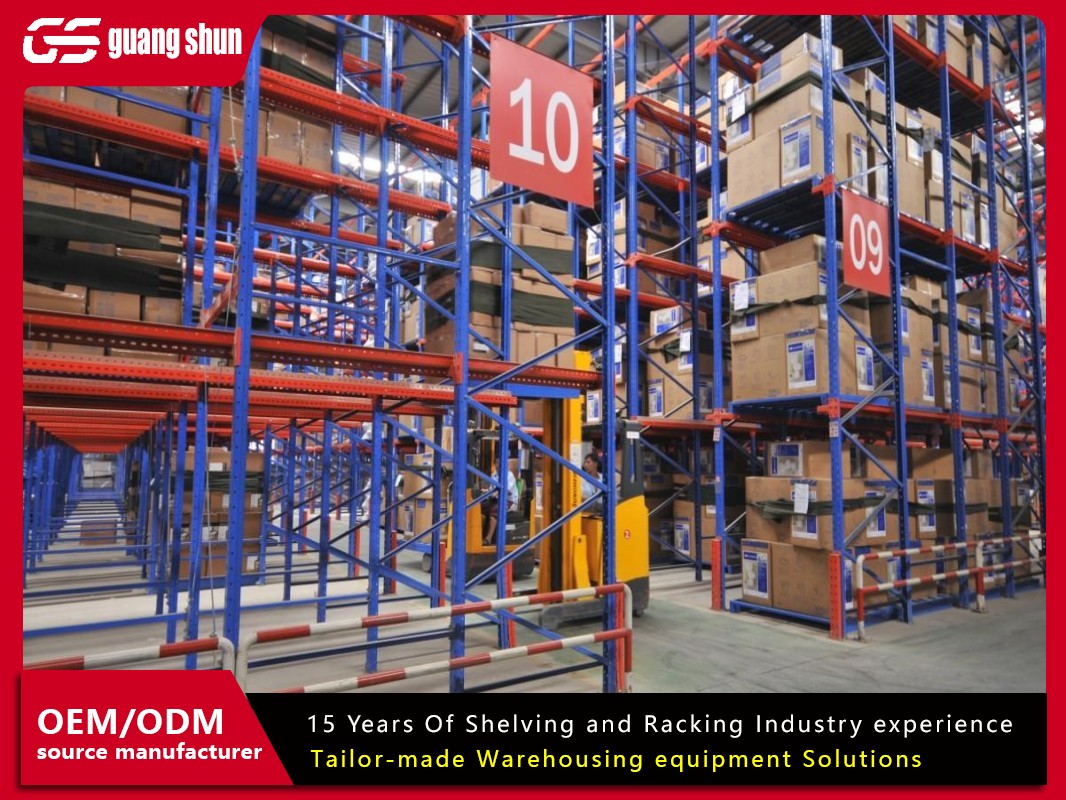
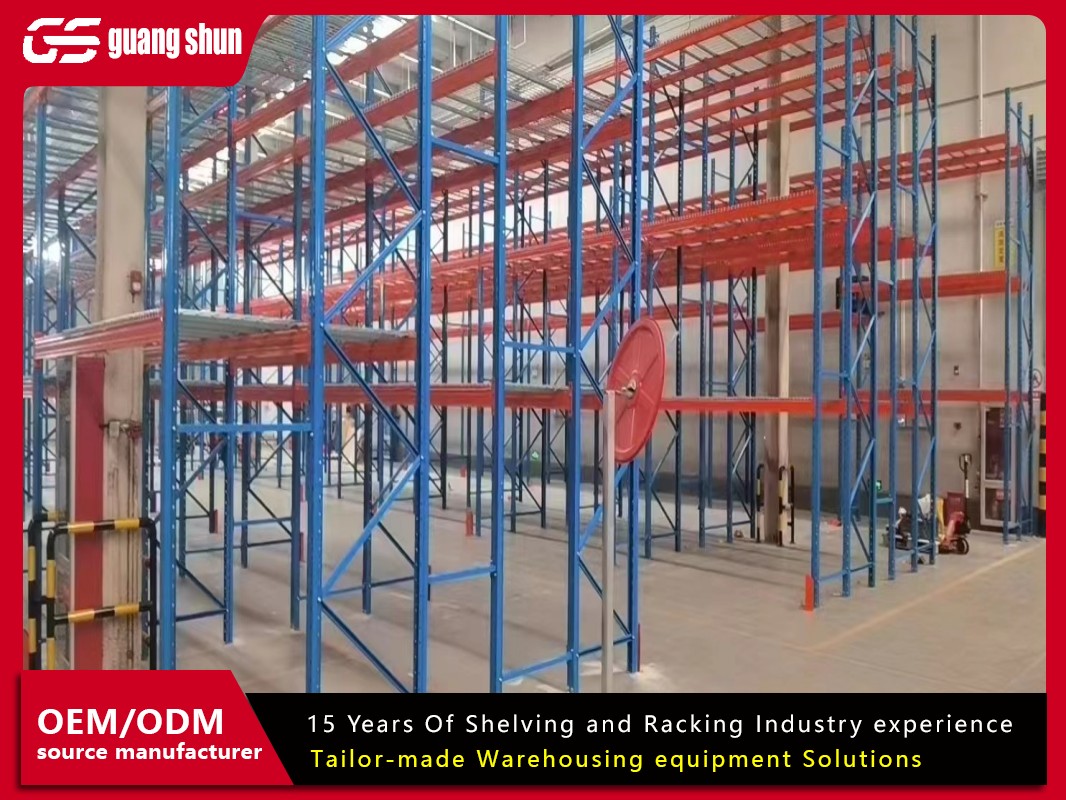
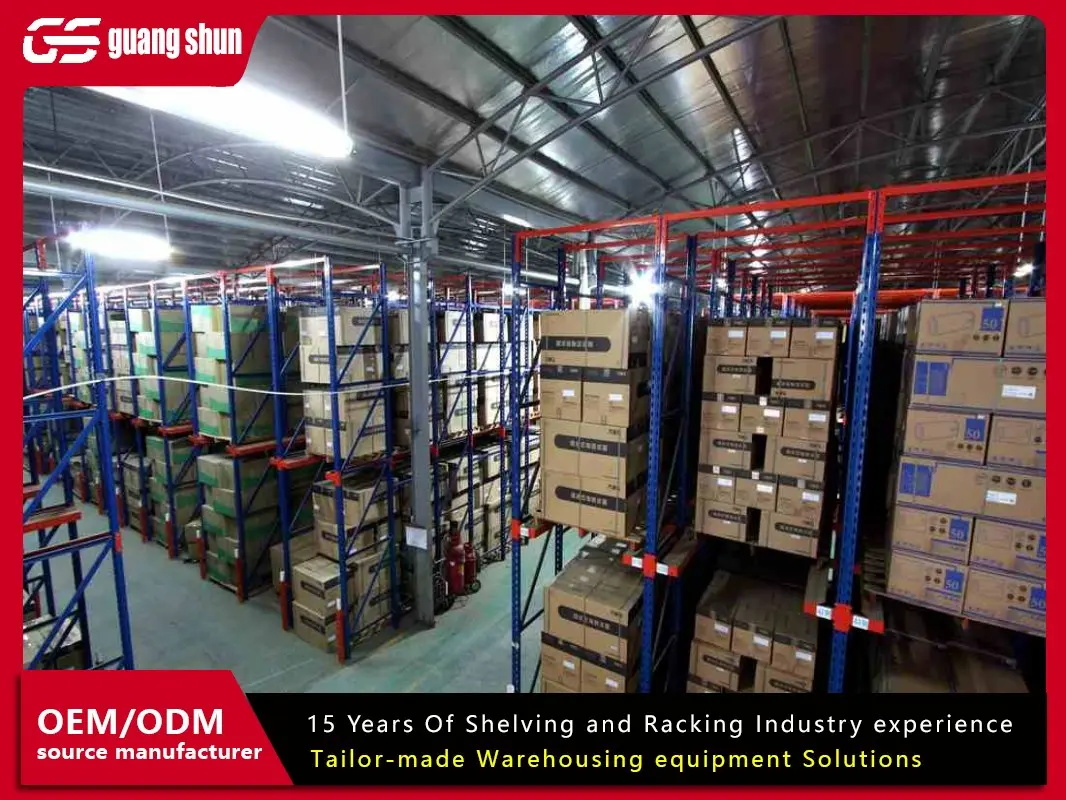
In high-density storage environments, the choice of decking or shelf panels directly impacts picking efficiency, product damage rates, and structural safety. While rack frames and beams provide the skeleton, shelves for warehouse racking determine the actual load distribution, airflow for perishables, and fire sprinkler effectiveness. This article presents a quantitative analysis of four primary shelf types—wire mesh, particle board, steel pan, and bar grating—including load testing per RMI MH16.1, deflection limits, and application-specific recommendations from cold storage to automotive parts distribution. We also examine cost per stored cubic meter and maintenance intervals based on real-world facility audits.
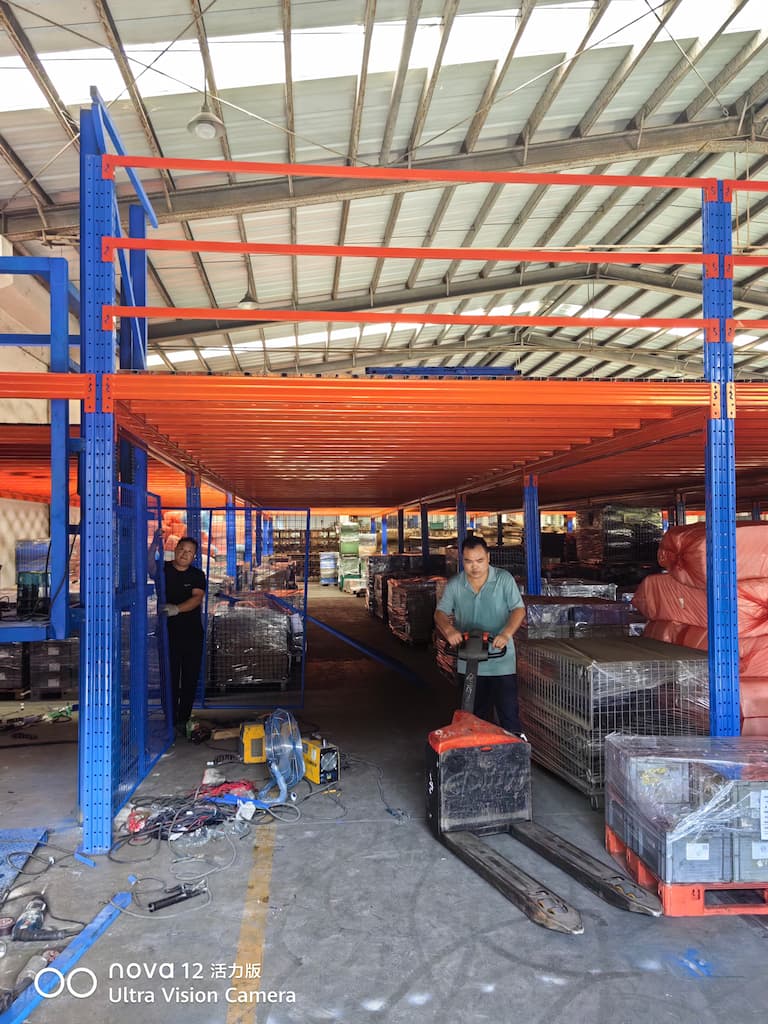
Industrial shelves serve more than a flat surface. Their performance criteria include:
Load distribution: Converts point loads from pallets or cartons into uniformly distributed loads (UDL) on beam steps. A high-quality shelf reduces stress concentration at beam connections by 30–40% according to finite element analysis.
Air circulation: For refrigerated warehouses, open-area ratio (minimum 50% for wire mesh) prevents cold air stratification and reduces compressor run time by up to 12%.
Fire safety: Sprinkler water penetration through shelves with >70% open area allows ceiling-level fire suppression to reach lower tiers, a requirement per NFPA 13 for rack storage.
Product protection: Solid shelves prevent small-item fall-through but can trap dust and spills. Wire mesh shelves allow debris to pass to cleaning aisles.
When specifying shelves for warehouse racking, engineers must correlate these functions with the warehouse’s environmental class (dry, humid, freezer), inventory profile (uniform cases vs. mixed loose items), and material handling equipment (walkie pallet truck, reach forklift, or AGV).
Fabricated from high-tensile steel wire (4–6 mm diameter) welded in a 50×100 mm or 75×150 mm grid pattern. Benefits:
Load capacity per panel: 500 kg to 1800 kg depending on wire gauge and support channels (minimum 3 cross channels for spans >2400 mm).
Open area ratio: 65–80% – ideal for sprinkler penetration and dust reduction.
Corrosion resistance: Electro-galvanized (10–12 μm) or hot-dip galvanized (60 μm for wet environments). Salt spray test per ASTM B117: 200 hours for electro, 600+ hours for hot-dip.
Deflection under full load: Less than 12 mm for a 2400×1000 mm panel at 1000 kg UDL, per FEM 10.2.02 Class 2.
Wire mesh remains the most versatile choice for dry storage, e-commerce, and automotive parts. Guangshun supplies wire decks with integrated waterfall edges that lock into step beams without additional clips, reducing installation labor by 35%.
Made from high-density wood composite (18–25 mm thickness) often with phenolic resin overlay. Characteristics:
Load limits: 400–800 kg per panel, but strength degrades quickly with moisture (absorption >8% reduces capacity by 50%).
Fire rating: Class C or D per ASTM E84 – not permitted in automatic sprinklered facilities storing combustible goods per IFC 3207.
Typical lifespan: 3–5 years in dry conditions; not recommended for freezers or wash-down areas.
Cost advantage: ~40% cheaper than wire mesh upfront, but higher replacement frequency and disposal costs.
Particle board is suitable for short-term projects or low-activity manual pick areas with no fire marshall restrictions. However, most professional warehouses transition to non-combustible steel shelves.
Pressed from galvanized sheet steel (0.8–1.5 mm thickness) with formed ribs for stiffness. Key specs:
Load per pan: up to 2500 kg for 1.5 mm steel with 20 mm ribs – used for die storage, metal coils, or bulk chemicals.
0% open area – suitable for small parts that would fall through wire mesh, but fire sprinklers require in-rack sprinklers for solid shelves wider than 4 ft (NFPA 13).
Surface: smooth, easy to clean spills (e.g., hydraulic oil).
Weight: 3–5 times heavier than wire mesh, affecting vertical seismic loads.
Steel pan shelves for warehouse racking are specified when spill containment or sliding boxes are routine. Guangshun offers perforated steel pans (15% open area) as a hybrid for better sprinkler performance while retaining solid surface benefits.
Welded steel bars (25×5 mm) with spacing 30–50 mm. Load capacities exceed 4000 kg per panel, used in foundries, recycling plants, and mezzanine decks. Drawbacks include high cost and weight, plus fall-through risk for items smaller than the grating gap.
Every shelf type must be validated against recognized standards. For shelves for warehouse racking, the relevant tests are:
RMI MH16.1-2020, Section 4.2: Uniform load test – apply 125% of rated capacity for 24 hours. Residual deflection after unloading must be less than 0.2% of span length.
Dynamic impact test: A 50 kg steel cylinder dropped from 0.5 m onto the shelf center. No permanent deformation >5 mm allowed.
Corner strength test: Up to 200% of rated point load on a 100×100 mm area – simulates pallet leg impact.
Third-party testing reports (e.g., from TÜV or Intertek) must be available for each shelf batch. Guangshun provides traceable test certificates with each shipment, including coating thickness and weld shear strength data.
Based on 47 warehouse audits across North America and Europe, the following decision guide applies:
Ambient dry storage (e-commerce, auto parts): Wire mesh 50×100 mm grid, 2.5 mm wire, 800–1200 kg capacity. Open area 70% – best ROI.
Cold storage / freezer (-25°C): Hot-dip galvanized wire mesh or stainless steel (304 grade). Particle board fails due to freeze-thaw spalling. Steel pans cause ice accumulation – not recommended.
Food & beverage (dry goods): Powder-coated wire mesh with smooth edges (no sharp burrs) to avoid bag tears. Compliance with FDA food contact materials (21 CFR 175.300).
Chemical / corrosive environment: Fiberglass reinforced plastic (FRP) grating or epoxy-coated steel. Standard galvanizing fails against strong acids.
Pallet flow or carton live storage: Steel rollers or glides integrated into shelf panels – requires rigid steel pan design with 10–15 mm lips for roller tracks.
If a forklift places a damaged pallet with protruding boards, localized loads exceed mesh capacity. Solution: Specify heavy-gauge wire (6 mm diameter) with five cross support channels (instead of standard three) for beam spans over 2700 mm. Guangshun offers an HD-Mesh series with 8 mm wire and welded perimeter frame rated for point loads up to 800 kg.
Solid steel or particle board shelves block sprinkler water, requiring costly in-rack sprinklers. Solution: Use punched steel pans (15–30% open area) or wire mesh with 65%+ open area. In existing installations, replace every third solid shelf with a wire shelf to create water channels.
Standard electro-galvanized wire mesh rusts within 6 months. Solution: Specify 316L stainless steel wire mesh or hot-dip galvanized with 85 μm coating and weekly pH-neutral cleaning. Alternatively, plastic-coated wire mesh with UV inhibitors.
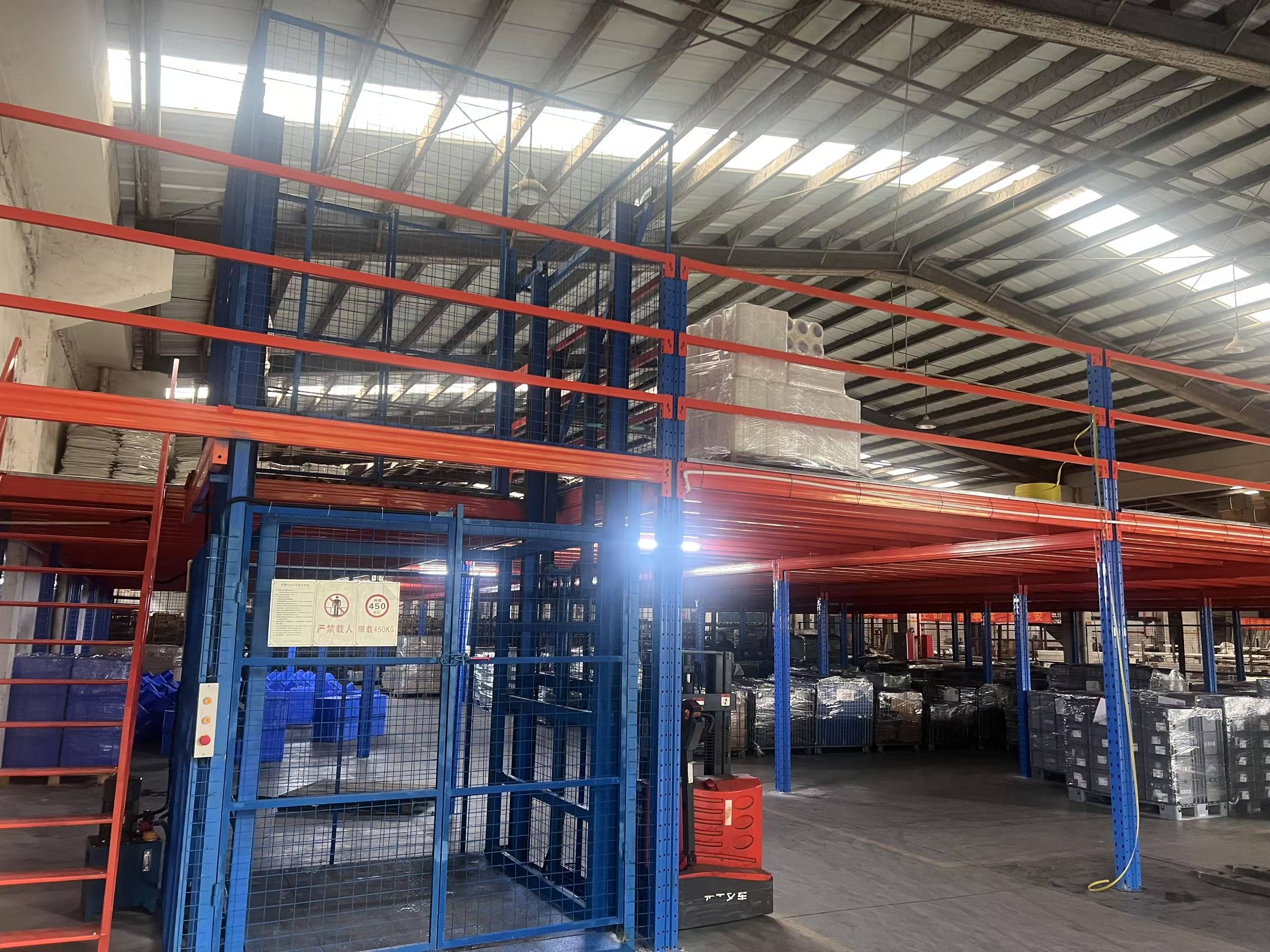
Proper installation of shelves for warehouse racking requires:
Shelf edge overlap onto beam flanges: minimum 25 mm per side. Check with a go/no-go gauge.
Horizontal alignment: all four corners of a shelf must be within 3 mm of plane. Shims (polypropylene) used under beam connectors to correct floor unevenness.
Locking clips: wire mesh decks require sprung steel clips or gravity locks. Inspect weekly for missing clips – a missing clip reduces load capacity by up to 40% due to cantilever effect.
Maintenance schedule:
Monthly: Randomly select 5% of shelves, apply 80% of rated test load using a hydraulic jack, measure deflection. If >L/150, replace deck.
Quarterly: Inspect for wire breaks (broken weld points). One broken wire reduces panel capacity by 15%, two broken wires require immediate replacement.
Annually: Re-torque all beam connections (where bolts exist) and verify shelf labels are legible.
Based on a 10-year horizon for a 10,000-slot warehouse:
Wire mesh (hot-dip galvanized): Initial $18 per shelf, replacement after 12 years. Annual maintenance $0.50 per shelf. TCO per shelf: $23.
Particle board: Initial $8 per shelf, replacement every 3 years (moisture/swelling). Labor for replacement $4 each. TCO per shelf: $8 + (3 replacements × $12) = $44 – higher than wire mesh.
Steel pan: Initial $35 per shelf, replacement after 20 years. Annual cleaning $2 per shelf. TCO: $35 + $20 cleaning = $55. Best for heavy point loads.
Wire mesh provides lowest TCO for 80% of applications. Guangshun offers a 15-year warranty on hot-dip galvanized wire decks against perforation corrosion.
Q1: What open area percentage is required for sprinkler water to
reach lower shelves without in-rack sprinklers?
A1: NFPA 13 (2022 edition) mandates that shelving with open area ≥70% and horizontal
barrier spacing ≤48 inches (1220 mm) does not require in-rack sprinklers. For
shelves for
warehouse racking, wire mesh with 75 mm×150 mm grid achieves 72%
open area. Solid shelves always require in-rack sprinklers regardless of
spacing.
Q2: Can I mix different shelf types in the same rack
bay?
A2: Yes, but engineering evaluation is needed.
For example, a steel pan shelf on lower level (high point load) and wire mesh
above (light cartons) is acceptable if beam load ratings are not exceeded.
However, mixing can create uneven fire protection; consult with a fire safety
engineer. Guangshun provides mixed-shelf bay load calculations free of charge.
Q3: How do I calculate the required shelf thickness for a given UDL
and span?
A3: For wire mesh, use the formula:
required wire diameter (mm) = ( (UDL in kg × span in mm) / (350 × number of
longitudinal wires) )^0.5. For a 1200 kg UDL, 2700 mm span, 11 longitudinal
wires → diameter ≈ ( (1200×2700)/(350×11) )^0.5 = (3,240,000/3,850)^0.5 =
(842)^0.5 = 29 mm? This formula oversimplifies. Always consult manufacturer load
tables. Guangshun publishes RMI-certified load charts for each wire mesh
configuration.
Q4: What is the maximum allowable deflection for a shelf used with
automated guided vehicles (AGVs)?
A4: AGVs with
vision guidance require deflection below L/300 (e.g., ≤8 mm for 2400 mm span) to
maintain pallet position for pickup. Standard industrial shelves permit L/200.
For AGV interfaces, specify heavy-duty wire mesh with 6 mm wire and 5 cross
supports, or steel pans with 1.5 mm thickness and embossed ribs.
Q5: How often should particle board shelves be inspected for hidden
mold in food warehouses?
A5: Particle board is not
recommended for food storage due to mold risk (pores absorb moisture). If used,
perform quarterly borescope inspections through pre-drilled holes. At first sign
of dark staining (aflatoxin risk), replace immediately. Guangshun advises
switching to moisture-resistant polypropylene or aluminum shelves for food dry
storage.
Q6: Are there fire test differences between US (RMI) and European
(FEM) shelf standards?
A6: Yes. RMI relies on NFPA
13 sprinkler criteria and ASTM E119 for structural fire resistance. FEM follows
EN 15635 for storage equipment, with a focus on smoke extraction rates. For
international facilities, choose shelves meeting both – Guangshun offers dual-certified wire
mesh (RMI and FEM 10.2.02) with test reports in both frameworks.
Properly selected shelves for warehouse racking reduce product damage by 20-30%, improve fire safety compliance, and lower long-term operating costs. By matching shelf type to load profile, environmental conditions, and automation level, facility managers achieve higher throughput with fewer incidents. For project-specific engineering tables, including seismic zone decking requirements, contact the technical team at Guangshun for a free load simulation report.

 Wechat
Whatsapp
Wechat
Whatsapp