A racking project rarely fails because the steel cost too much. It fails because the specification missed something — a deflection limit, a seismic zone, a forklift impact rating, or a decking type that could not survive the load profile. Large steel shelves sit at the centre of that risk. They carry palletized inventory, cartons, tooling and spare parts across spans of 1.8 m to 3.6 m and heights beyond 12 m, and every one of those dimensions changes the structural calculation underneath it. What follows are the seven factors that decide whether a racking investment performs for fifteen years or becomes a maintenance line item.
The confusion starts with vocabulary. Suppliers use "shelving" and "racking" interchangeably, and buyers inherit that ambiguity in their tender documents. The engineering distinction is straightforward.
Light-duty shelving: 150–500 kg per level, 0.8–1.2 mm cold-rolled steel, rivet or clip assembly, hand-loaded, usually under 4 m high.
Medium-duty long-span shelving: 500–1,200 kg per level, 1.2–1.8 mm steel, beam-and-upright frames, often 2–3 levels.
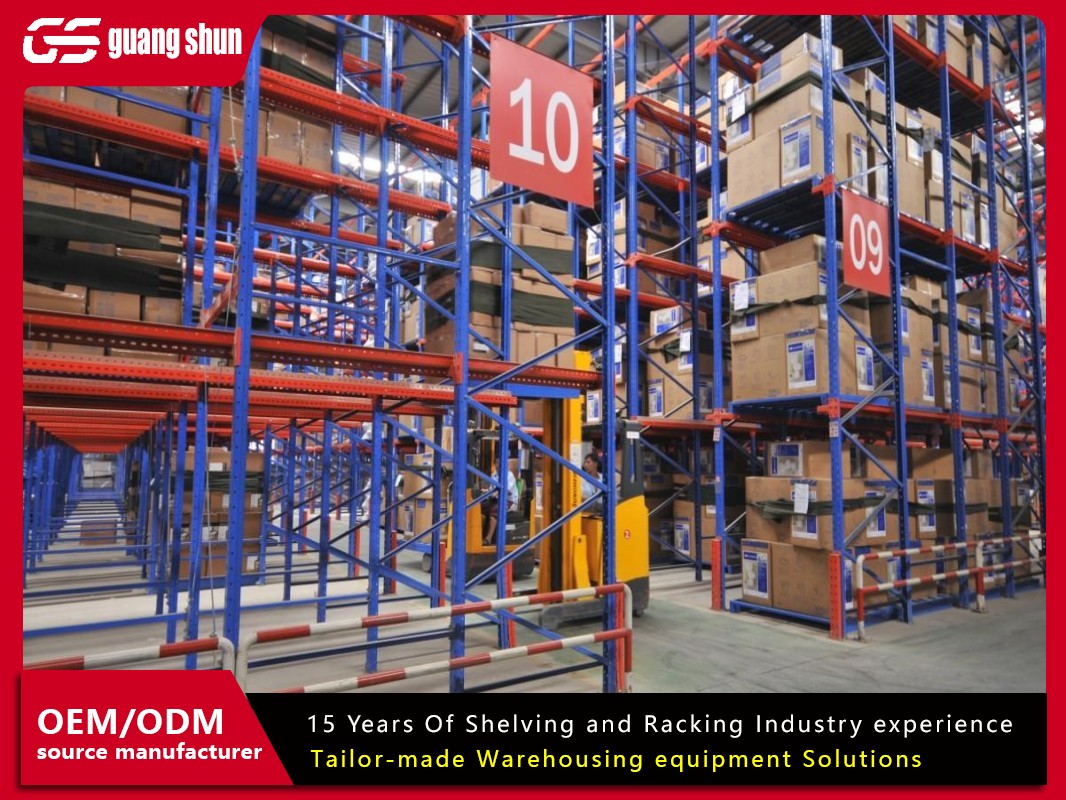
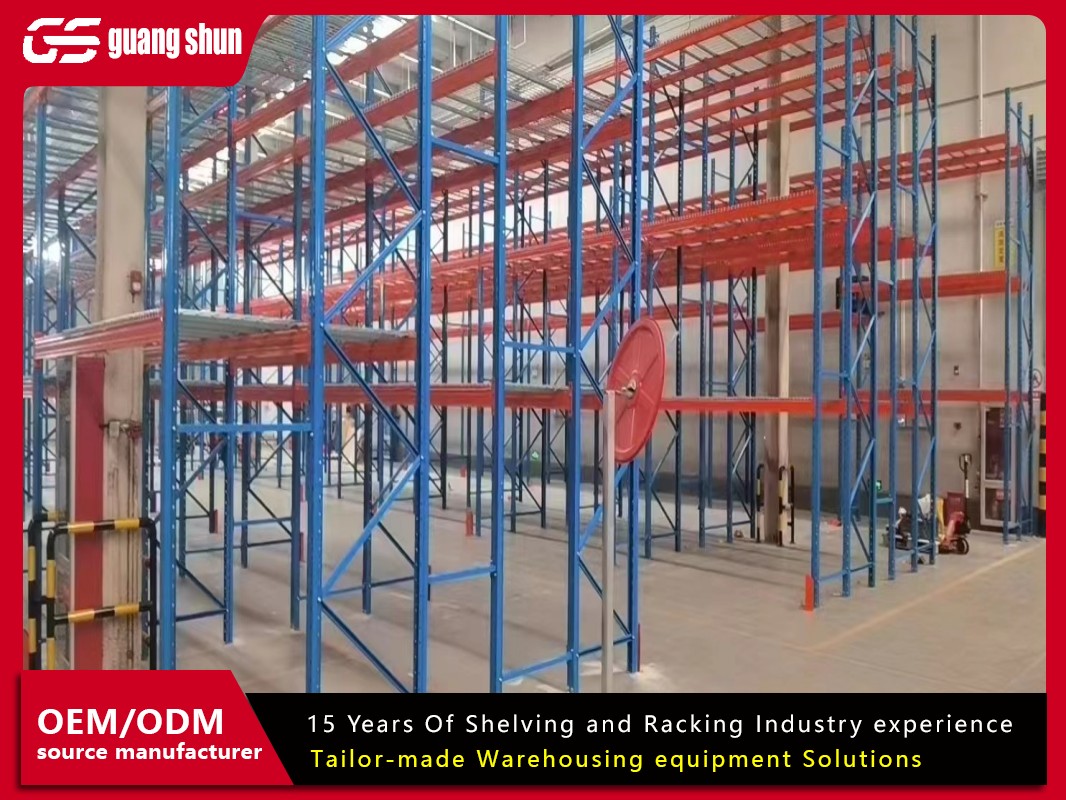
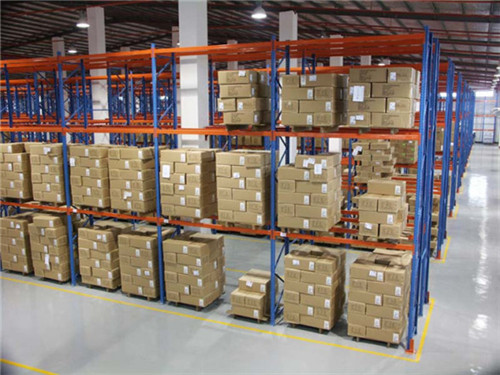
Large steel shelves: 1,000–4,500 kg per level, uprights from 80×60 mm to 120×90 mm, steel thickness of 1.8–2.5 mm, bolted beam connectors with safety locks, forklift or stacker loaded.
When a buyer specifies a 1,000 kg per-level requirement, the shelf moves out of the shelving catalogue and into structural racking territory. That shift brings testing standards, anchor requirements, plumb tolerances and inspection obligations with it.
| Parameter | Light-Duty Shelving | Large Steel Shelves |
|---|---|---|
| Load per level | 150–500 kg | 1,000–4,500 kg |
| Upright steel thickness | 0.8–1.2 mm | 1.8–2.5 mm |
| Typical bay span | 0.9–1.2 m | 1.8–3.6 m |
| Design standard | Manufacturer internal | EN 15512 / RMI MH16.1 / FEM 10.2.02 |
| Anchoring | Optional | Mandatory, floor-fixed |
UDL is the figure printed on the load label, and it is almost never the figure that governs real performance. A 2,000 kg UDL rating assumes the weight is spread evenly across the beam pair. A single 1,200 kg machine casting placed mid-span generates a very different bending moment and can exceed the beam's local capacity even though the total weight is below the label.
Rack damage in operating warehouses comes disproportionately from impact, not from overload. Published data from rack inspection programmes consistently show that 60–80% of damaged components are uprights in the lower 1 m — the zone where forklift trucks operate. Specify uprights with a minimum 2.0 mm steel thickness in drive aisles, and add column protectors or end-of-aisle barriers as a standard line item rather than an afterthought.
Beam deflection is normally limited to L/180 or L/200 under the rated load, depending on the standard applied. On a 3,600 mm beam, L/180 means 20 mm of sag. That is acceptable structurally and catastrophic practically, because a 20 mm sag changes the clearance between levels and can block pallet entry. For automated or semi-automated handling, tighten the limit to L/250 or better.
Most export-grade racking uses Q235B or S235JR steel, with Q355B / S355JR specified for high-bay or heavy-duty applications. The grade matters less than the section geometry and the coating system, which together determine service life.
Upright sections: open C-sections are cheaper; closed or semi-closed sections deliver higher torsional stiffness and resist impact better.
Beam connectors: three to five hooks per connector with a spring-loaded safety latch. Connectors without a positive lock should be rejected outright.
Galvanization: hot-dip galvanizing to ISO 1461 (minimum 55 µm) suits cold rooms, food plants and outdoor yards.
Powder coating: 60–80 µm epoxy-polyester is adequate for dry, temperature-controlled distribution centres.
Surface preparation: shot blasting to Sa 2.5 before coating. This is the step most frequently skipped by low-cost suppliers, and it is the reason their coating fails within three years in humid climates.
Configuration drives storage density, and storage density drives the payback calculation. The four mainstream options for large steel shelves are:
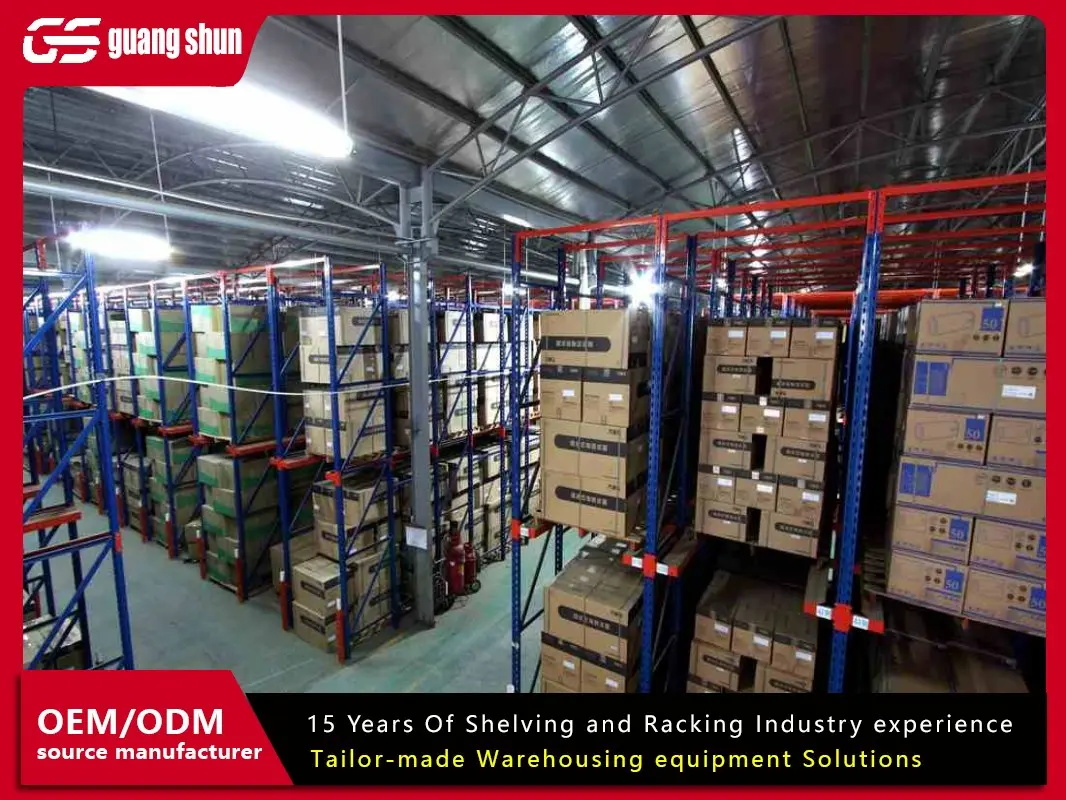
Selective pallet racking: 100% SKU accessibility, 4–6 pallets deep per bay face, the default choice for mixed inventory.
Long-span shelving: beam-and-shelf hybrids for cartons, tooling and hand-picked parts, usually 2–4 levels.
Multi-tier systems: two to four elevated walking levels, typically lifting floor-space utilisation by 200–300% on constrained sites.
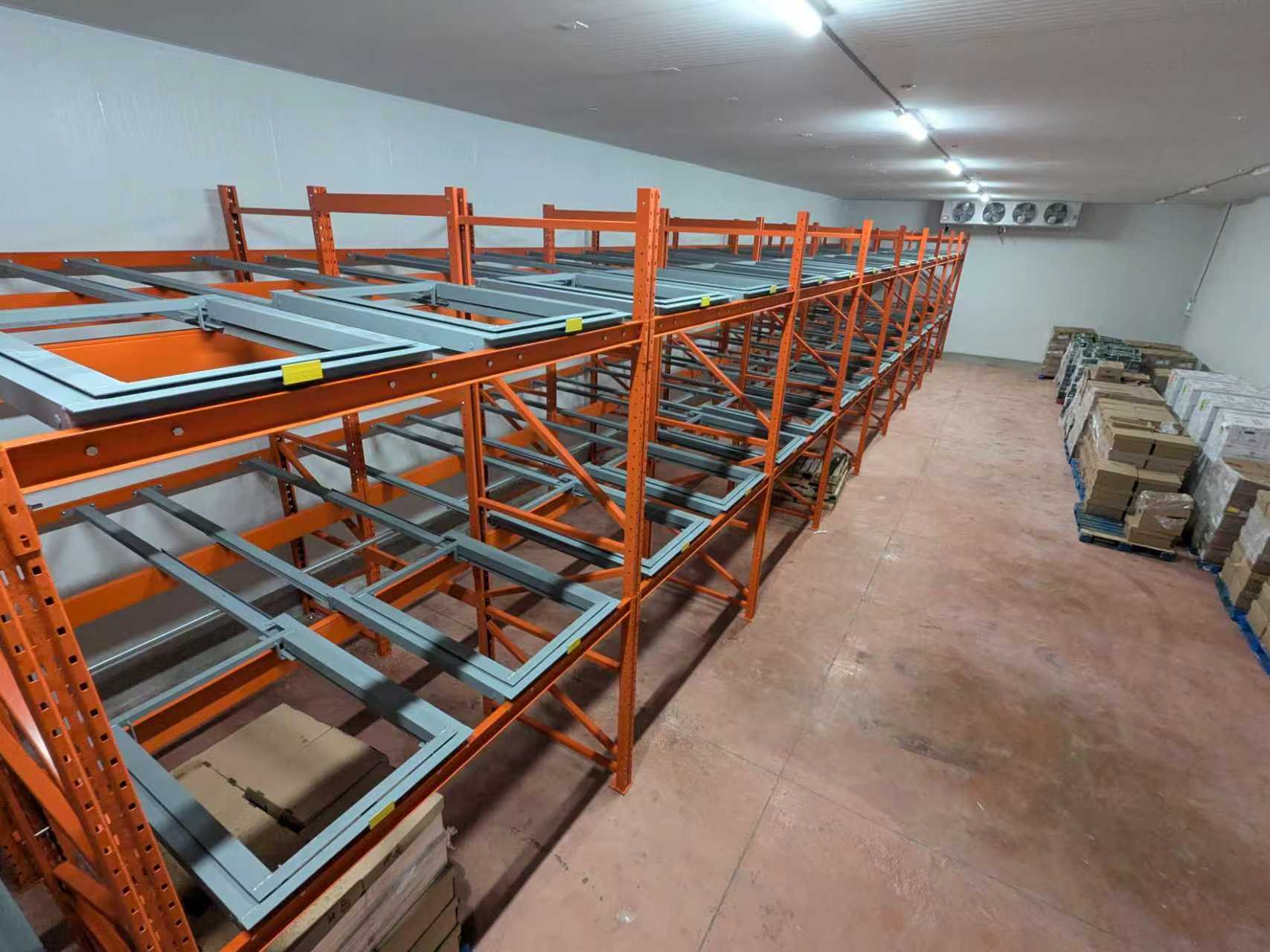
Drive-in / push-back: 60–75% more pallet positions per square metre than selective, at the cost of reduced SKU selectivity and stricter beam tolerances.
Cold-chain and pharmaceutical operators frequently pair galvanized frames with multi-tier walkways, because the combination keeps inspection access simple while meeting hygiene requirements.
Seismic design is not a regional formality. Rack structures are non-building structures, and their behaviour under lateral load differs fundamentally from a warehouse shell. Key requirements:
Base plate thickness of 6–10 mm, with anchor bolts sized to the calculated uplift and shear.
Anchor embedment depth verified by pull-out testing on site, not assumed from a generic table.
Frame bracing in both down-aisle and cross-aisle directions.
Pallet retention: safety bars, lip retainers or mesh decks for high-seismic zones.
In low-seismic regions, anchoring is still mandatory for stability against forklift contact and thermal movement in cold stores.
Decking choice affects sprinkler design, load distribution and inspection frequency.
Wire mesh decks: best sprinkler water penetration, highest cost, excellent for food and pharma.
Steel panels: highest stiffness, lowest maintenance, but require in-rack sprinkler assessment.
Particle board / plywood: economical, but moisture-sensitive and typically excluded from cold rooms and wash-down zones.
Fire engineering studies such as those produced under NFPA 13 and FM Global Data Sheet 8-9 treat decking as a variable in the sprinkler calculation. Changing deck type after the fire protection design is signed off invalidates the approval — a costly sequencing error.
Rack performance is as much an installation outcome as a design outcome. Practical tolerances that should appear in the contract:
Upright plumb: maximum 1/350 of height, checked over the full frame height.
Beam levelness: within 5 mm across the bay, measured under load.
Frame line alignment: within 10 mm over any 10 m run.
Torque verification on all bolted connections, documented with a calibrated wrench.
Post-handover, a documented inspection cycle is the single highest-return maintenance activity. Industry practice sets inspection intervals based on risk: monthly visual checks in high-traffic aisles, annual detailed inspection by a trained technician, and immediate inspection after any reported impact. Damaged uprights should be replaced rather than straightened, because cold-working a bent section introduces residual stress and reduces capacity.
Purchase price typically represents 55–70% of the fifteen-year cost of ownership for large steel shelves. The remainder breaks down across installation, inspection, repair, and productivity loss from damaged or poorly configured bays.
A representative payback model for a 6,000-pallet-position selective racking installation:
Capital cost: USD 180,000–260,000 depending on steel grade and decking.
Floor-space saving versus a lower-density layout: 1,200–1,800 m².
At a warehouse lease cost of USD 60/m²/year, that equals USD 72,000–108,000 in avoided annual cost.
Payback period: 2.5–3.5 years, before counting throughput gains from aisle configuration.
The model is sensitive to density, not to unit steel price. Reducing upright thickness to save 8% on material typically costs 15–20% of usable load capacity and shortens service life — a net negative.
Third-party logistics: selective racking with adjustable beam levels, because SKU profiles change quarterly.
Automotive spare parts: heavy-duty long-span with steel panel decks for irregular castings and tooling.
Cold chain: hot-dip galvanized frames, wire mesh decking, low-temperature rated anchors and sealants.
E-commerce fulfilment: multi-tier pick modules with integrated walkways and gravity flow lanes.
Manufacturing buffer stores: push-back racks for high-volume repeat SKUs near the production line.
Load rating per level, with UDL and point load both stated.
Beam length and required deflection limit.
Upright section drawing and steel thickness tolerance.
Steel grade and mill certificate availability.
Coating type, thickness and surface preparation standard.
Applicable design standard and load test certification.
Anchor specification and on-site pull-test requirement.
Installation tolerances and inspection documentation.
Spare parts availability commitment, minimum ten years.
Guangshun manufactures racking and shelving systems for distribution centres, cold stores and manufacturing plants, with in-house roll forming, automated welding and a coating line that handles both powder coat and hot-dip galvanizing. Projects are delivered with load test reports, mill certificates and installation drawings suitable for permit submission. For buyers who need a single supplier across selective racking, long-span shelving and multi-tier structures, Guangshun provides engineering support from layout through commissioning.
A1: Start from the heaviest single unit load, then apply a safety margin. For palletized goods, 1,000–1,500 kg per level covers most distribution applications. For dense components, castings or tooling, specify 2,000–4,500 kg and confirm the point load case separately, because a heavy item placed mid-span stresses the beam differently from an evenly spread load.
A2: Selective racking stores pallets and is loaded by forklift, with 100% SKU access at the aisle face. Long-span shelving stores cartons, totes and hand-picked parts on solid or mesh shelf decks, usually 2–4 levels high, and is often picked manually. The structural design and the safety accessories differ, so the two are not interchangeable.
A3: A workable baseline is a monthly visual check by trained warehouse staff in high-traffic aisles, an annual detailed inspection by a competent technician, and an immediate inspection after any forklift impact. Inspection records should be written and retained, since insurers and safety regulators increasingly request them.
A4: Q235B and S235JR are the common baseline. Q355B and S355JR are specified when higher yield strength is needed for tall frames or heavy beam loads. What matters as much as the grade is the section geometry, the steel thickness tolerance and whether the surface was shot blasted to Sa 2.5 before coating.
A5: Yes, with adjustments. Specify hot-dip galvanized frames to ISO 1461, wire mesh or steel decking rather than particle board, low-temperature rated anchor adhesives where chemical anchors are used, and verify that the steel's ductility remains adequate at the operating temperature. Cold rooms also require more frequent inspection because condensation accelerates corrosion at base plates.
A6: For custom-configured projects, production lead time typically runs 25–45 days after drawing approval, plus shipping. Minimum order quantities depend on the supplier's production setup; many manufacturers accept container-load minimums for export orders and will combine multiple configurations in a single shipment. Drawing approval is usually the longest controllable step, so early engineering sign-off shortens the schedule more than any logistics decision.
Specifying large steel shelves is a structural engineering decision disguised as a procurement decision. Buyers who state load cases, deflection limits, steel grades, coating standards and inspection requirements in the RFQ receive comparable quotations and predictable performance. Buyers who compare on price per pallet position alone usually discover the difference during the first repair cycle.

 Wechat
Whatsapp
Wechat
Whatsapp