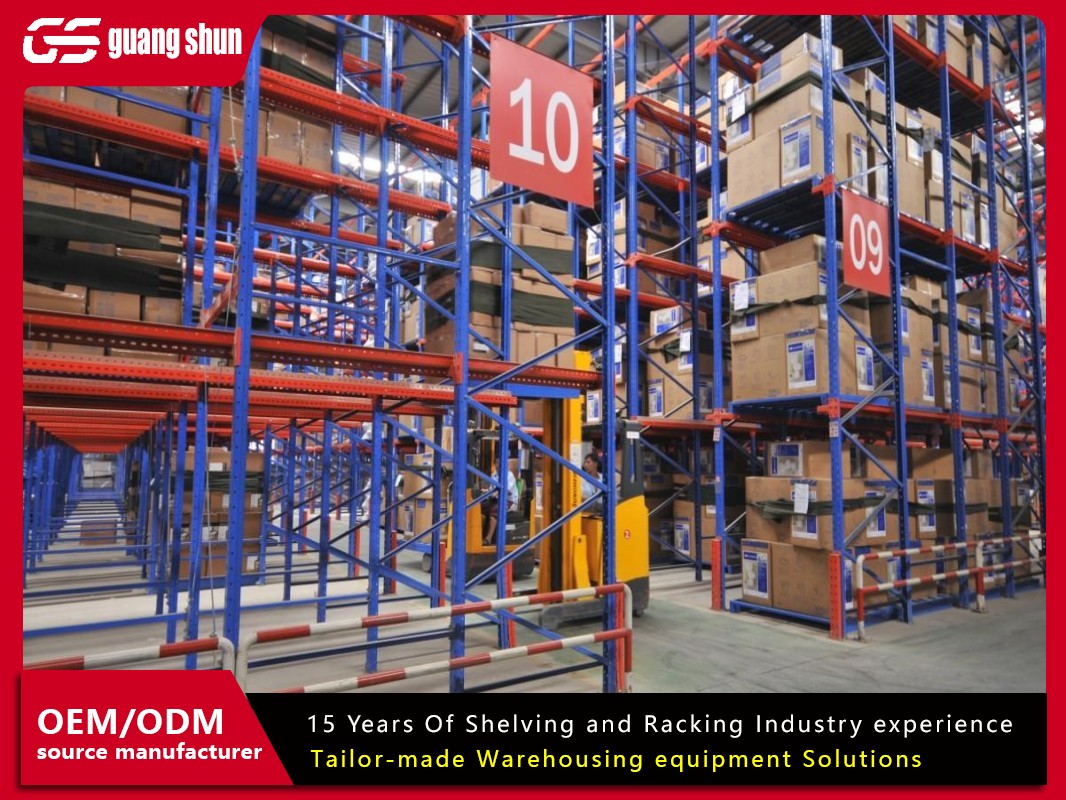
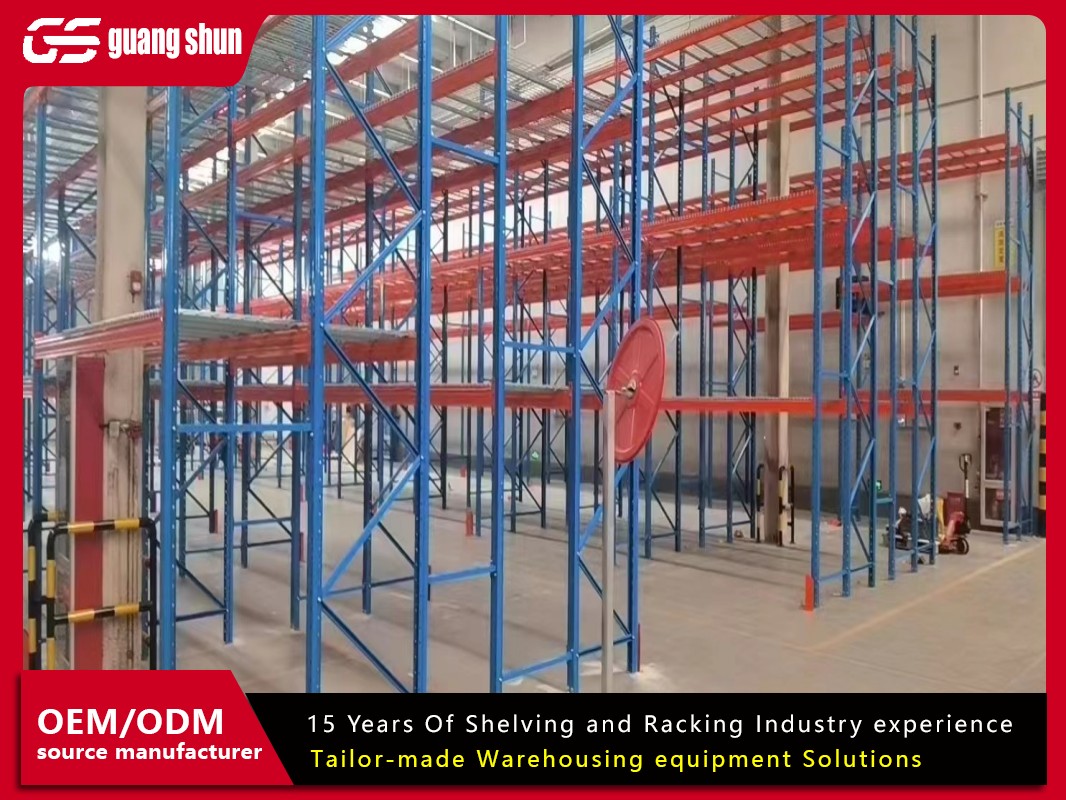
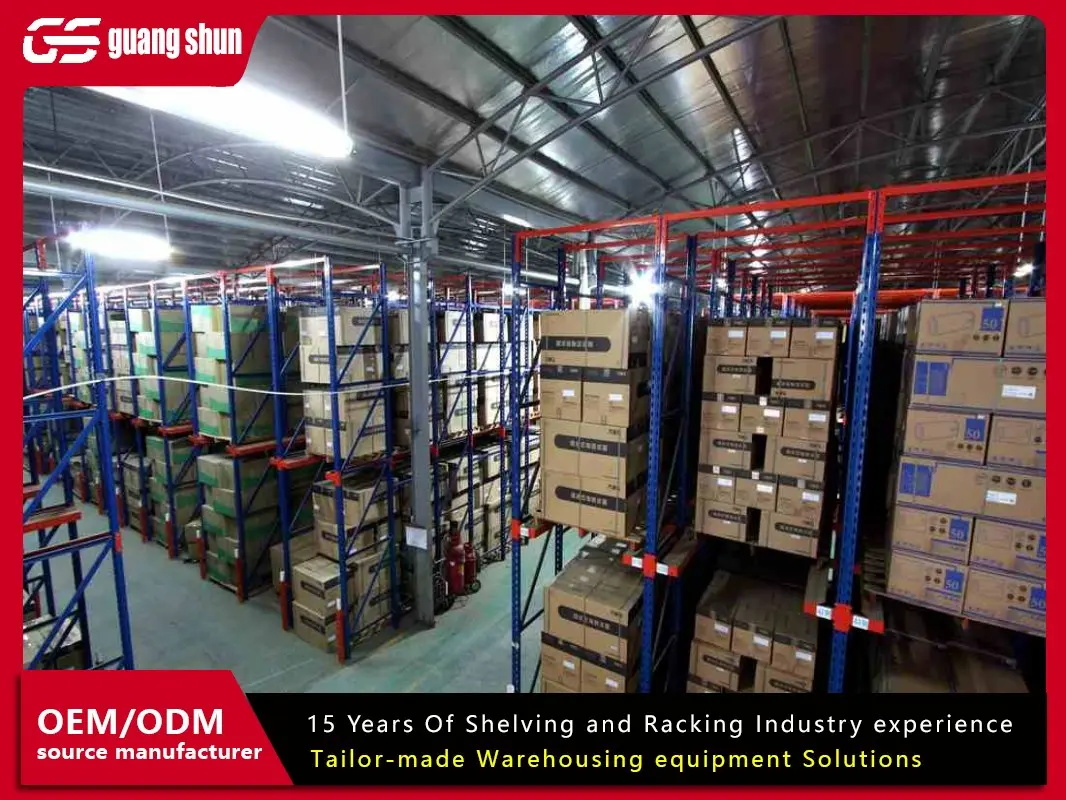
48 pallet rack beam configurations represent one of the most common storage solutions in North American and Asian warehouses, designed to accommodate two standard 40" x 48" pallets per level. Despite their prevalence, specifying the correct beam involves nuanced engineering decisions regarding steel grade, section profile, connection type, and deflection limits. This article provides a technical deep-dive into 48 pallet rack beam design, including load testing protocols, seismic considerations, and long-term performance factors. Guangshun has manufactured and tested thousands of these beams, and the following data reflects actual performance under industrial conditions.
A 48 pallet rack beam refers to a horizontal load-supporting member spanning 48 inches between upright frames. This span typically supports two GMA-style pallets (40" x 48") placed side by side, with each pallet overhanging the beam by approximately 4 inches on each side—a standard configuration that maximizes space while maintaining stability.
Step beams (also called structural channel beams): Most common for 48-inch spans. Feature a recessed step that accepts pallet supports or wire decks. Step depth typically 2–3 inches.
Box beams: Rectangular tube sections with flush surfaces. Used when decking or load bars require a flat bearing surface.
Angle beams: L-shaped profiles for light-duty applications, less common in heavy industrial settings.
Guangshun's step beams for 48-inch spans are roll-formed from high-strength steel (minimum yield 50,000 psi) with integrated safety locks that engage automatically during installation.
For a 48-inch clear span, typical beam depths range from 3 to 6 inches depending on load requirements:
3-inch beam: Light-duty (up to 2,000 lbs per level).
4-inch beam: Medium-duty (2,000–4,000 lbs per level).
5-inch beam: Heavy-duty (4,000–6,000 lbs per level).
6-inch beam: Extra-heavy duty (6,000–10,000 lbs per level).
Material thickness ranges from 1.5 mm (16 ga) to 3.0 mm (11 ga), with heavier gauges required for higher loads or seismic applications.
Structural performance of a 48 pallet rack beam is governed by three limit states: bending strength, shear strength, and deflection serviceability.
Beam capacity is typically rated for uniformly distributed loads (UDL), but real-world conditions often involve point loads from pallet feet. Engineers apply reduction factors when point loads exceed 50% of total load. For 48-inch spans, worst-case loading occurs when a single heavy pallet is placed in the center. Guangshun tests beams under both UDL and concentrated configurations to verify capacity.
RMI (Rack Manufacturers Institute) and FEM standards limit beam deflection to L/180 under full load. For a 48-inch span, maximum allowable deflection is 0.267 inches (6.8 mm). This ensures:
Pallet stability (excessive sag can cause tipping).
Compatibility with automated systems (AS/RS require consistent elevations).
Prevention of beam roll from asymmetric loading.
Deflection is a function of moment of inertia (I), which varies with beam depth and shape. A 4-inch step beam has approximately 4x the stiffness of a 3-inch beam of the same gauge.
Rack beams are designed with a safety factor of 1.5–2.0 against yield. The rated capacity includes this factor. For example, a beam with a rated capacity of 4,000 lbs will have an ultimate capacity of 6,000–8,000 lbs. Guangshun publishes load tables based on actual destructive testing per AISI S100.
The performance of a 48 pallet rack beam depends critically on its connection to upright frames. Moment-resisting connections prevent beam roll and transfer horizontal forces.
Most modern systems use punched keyholes in uprights mating with welded tabs on beam ends. Tabs are typically 5/16" or 3/8" thick, heat-treated for ductility. Safety locks (spring clips or bolted plates) prevent accidental dislodgement from forklift impact.
For loads exceeding 6,000 lbs or seismic zones, beams may have bolted end-plates with Grade 5 or 8.8 bolts. These provide semi-rigid connections that contribute to overall frame stability. Guangshun recommends bolted connections when beam loads exceed 5,000 lbs per level.
In seismic design categories D–F, beam-to-upright connections must withstand cyclic loads without fracture. Special seismic clips or energy-absorbing devices may be required. RMI's seismic testing protocols (including full-scale shake table tests) validate connection ductility.
Steel grade and finish significantly affect the longevity of a 48 pallet rack beam.
SS400 / A36: 36–40 ksi yield; standard for most applications.
Q355B / A572 Grade 50: 50 ksi yield; higher strength allows lighter sections.
Dual-phase or HSLA: Used for specialty high-capacity beams.
Yield strength directly impacts beam weight—a Grade 50 beam can be 20–30% lighter than a Grade 36 beam for the same capacity, reducing material costs and installation labor.
Powder coating: Polyester or epoxy, 60–80 μm thickness. Color-coded for visual management.
Galvanized (pre-galvanized or hot-dip): Ideal for cold storage or chemical environments. Hot-dip provides 50–80 μm zinc coating.
Pre-painted steel: Factory-applied paint on coil before roll-forming; consistent but less durable at cut edges.
For food-grade warehouses, Guangshun recommends powder-coated beams with smooth surfaces to prevent bacterial growth.
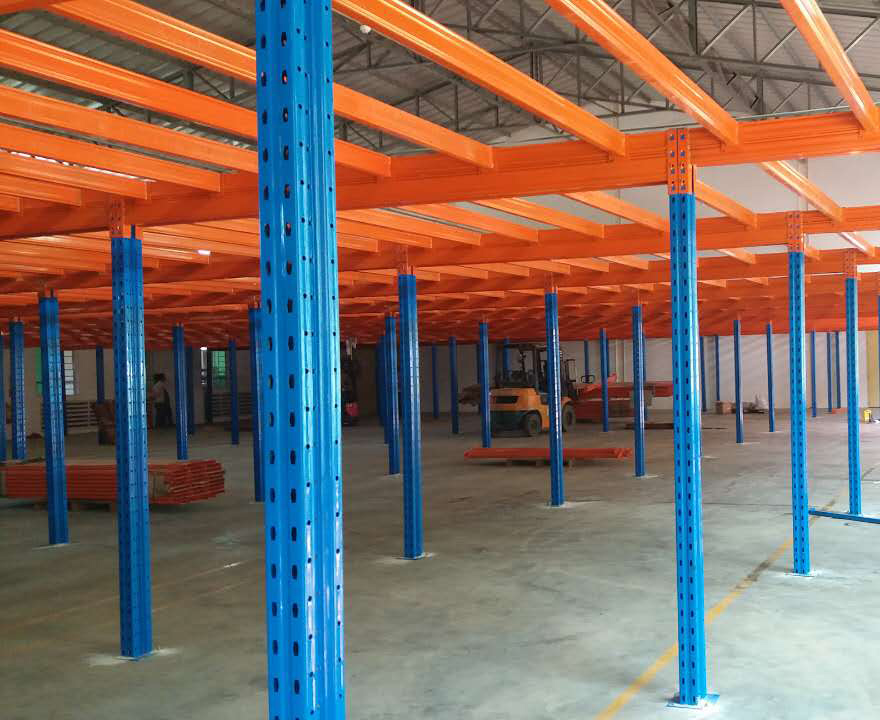
A 48 pallet rack beam does not function in isolation—it must interface with decking, load supports, and automation.
Step beams accept various support options:
Wire mesh decks: Provide fall protection and allow sprinkler water penetration. Must be rated for beam spacing and load.
Timber or steel pallet supports: Placed in the beam step to support pallets directly.
Roll-formed shelves: Continuous surfaces for cartons or small items.
Deck attachment must prevent dislodgment during forklift operations—clips or wire hooks are standard.
Automated warehouses require consistent beam elevations and barcode label locations. Beams may be drilled for label holders or have integrated label channels. Guangshun offers beams with pre-punched slots for RFID tag mounting.
Certified 48 pallet rack beam production involves rigorous testing.
Per RMI guidelines, beams are proof-tested to 1.5× rated capacity. Deflection at full load is recorded, and permanent set after unloading must be <0.2% of span. Guangshun maintains ISO 9001-certified facilities with in-house test rigs capable of 20,000 lbs per beam.
Beam-end welds are critical—they must resist shear and moment. Visual inspection per AWS D1.1 is supplemented by periodic macro-etch testing. Ultrasonic testing is available for seismic applications.
Understanding failure mechanisms helps in specifying and maintaining 48 pallet rack beams.
Beams can twist sideways under load if not laterally restrained. Causes: missing safety locks, wide flange, or excessive deflection. Prevention: proper beam selection, secure locking, and load distribution.
Occurs when flange width-to-thickness ratio exceeds limits (typically >15). Heavy-gauge beams or stiffeners prevent this. Guangshun's beams comply with AISI width/thickness ratios.
Forklift strikes cause permanent bends. Cold straightening is allowed once per beam, but if kinked >5° or cracked, replacement is mandatory. Impact guards on uprights protect beams indirectly.
The unit cost of a 48 pallet rack beam varies with steel price, coating, and quantity. Typical ranges:
Standard 4" step beam, 3,000 lb capacity: $30–50 per beam.
Heavy-duty 5" beam, 6,000 lb capacity: $60–90 per beam.
Galvanized or seismic-rated beams: Add 15–25%.
Bulk orders (500+ beams) reduce per-unit costs. Guangshun offers volume discounts and just-in-time delivery to minimize inventory costs.
48 pallet rack beam selection involves more than matching span and load. Engineers must evaluate beam depth, section properties, connection details, and environmental factors to ensure safe, durable storage. Compliance with RMI/FEM standards and third-party testing provides assurance against failure. 48 pallet rack beam systems from Guangshun are engineered with full traceability, from steel mill certificates to final load tests. By understanding the technical parameters above, warehouse operators can specify beams that deliver 20+ years of reliable service.
A1: A standard 48 pallet rack beam (4" step, 14 ga) typically supports 3,000–4,000 lbs uniformly distributed. Heavy-duty 5" or 6" beams can support up to 10,000 lbs. Always consult manufacturer load tables for exact capacities.
A2: Two 2,500 lb pallets total 5,000 lbs. You would need a beam rated at least 5,000 lbs capacity, typically a 5" step beam in 12 ga or heavier. Verify deflection limits (L/180) and ensure the upright frame and floor can support the combined load.
A3: Measure from the inside face of one upright to the inside face of the opposite upright—this is the clear span. For a 48" clear span, the beam overall length will be slightly longer (typically 51–54") to engage the connectors. Measure existing beam overall or consult the manufacturer's specifications.
A4: Generally no. Beam-end connector patterns, step dimensions, and safety lock designs vary between manufacturers. Mixing brands can compromise connection integrity. If replacing, order matching beams from the original supplier or retrofit with universal connectors—but consult an engineer first.
A5: Industry standards (RMI, FEM) limit deflection to L/180 under full load. For a 48-inch span, this is 0.267 inches (6.8 mm). Exceeding this risks pallet instability and accelerated fatigue.
A6: Yes, Guangshun offers custom beam depths, gauges, coatings, and connector configurations. We also provide seismic-rated beams with full engineering documentation. Contact our technical sales team with your load and dimensional requirements.
For load tables, engineering drawings, or pricing, visit Guangshun’s beam product page or speak with a storage solutions engineer.

 Wechat
Whatsapp
Wechat
Whatsapp