Pallet rack dolly systems enable high-density storage by allowing rack sections or pallets to move laterally or within the rack structure. Whether integrated into mobile racking carriages or used as shuttle carts for deep-lane storage, these dollies significantly improve space utilization while maintaining accessibility. This article covers the mechanical design, control systems, safety features, and economic justification of pallet rack dolly technology. Guangshun has engineered dolly systems for cold storage, automotive, and distribution centers, and the following insights reflect field data from these installations.
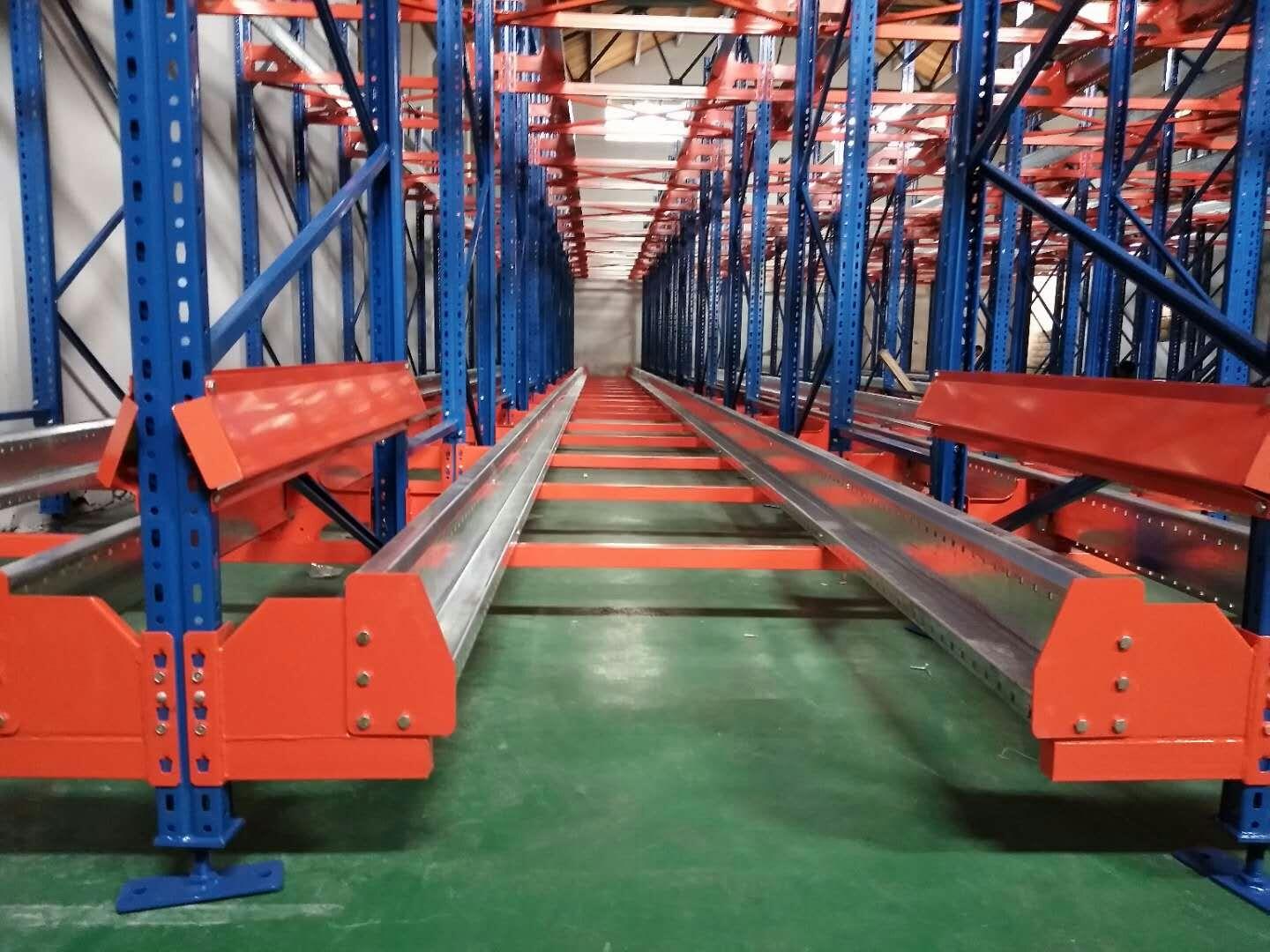
A pallet rack dolly is a wheeled platform or carriage that supports either entire rack sections (in mobile racking) or individual pallets (in shuttle systems). By moving on rails embedded in the floor, these dollies eliminate multiple aisles, increasing storage density by 50–100% compared to selective racking.
In mobile racking systems, each carriage supports several bays of pallet racking. Dollies are powered by electric motors and move laterally to create an access aisle only when needed. Typical carriage lengths range from 6 to 30 m, supporting loads up to 60 tonnes. The dolly’s wheels, bearings, and drive train must withstand continuous high loads and frequent starts/stops.
Shuttle systems use battery-powered dollies that travel within rack lanes, depositing and retrieving pallets. These pallet rack dolly units operate on guide rails and can be controlled remotely. They enable FIFO or LIFO rotation in lanes up to 40 m deep, ideal for high-turnover products like beverages or cold storage goods.
Some facilities use transfer cars (a type of dolly) to move pallets between aisles or to interface with conveyors. These units often combine rail guidance with laser positioning for precision alignment with rack openings.
The structural integrity of a pallet rack dolly determines its load capacity and service life. Components must be engineered for both static and dynamic forces.
Material: High-strength steel (S355JR or equivalent) welded into box or I-beam sections.
Load distribution: Frames are analyzed for bending and torsion under full payload; deflection limited to L/500.
Corrosion protection: Hot-dip galvanizing or two-pack epoxy for freezers or wash-down areas.
Guangshun’s dollies use robotic welding with full penetration to ensure fatigue resistance under 1 million+ cycles.
Wheel material: Forged steel with polyurethane tires (for quiet operation) or all-steel flanged wheels (for heavy loads).
Bearing selection: Spherical roller bearings for high radial/axial loads; sealed for debris protection.
Rail types: Flat-bottom rails (similar to crane rails) or V-groove rails. Rail steel grade minimum 70 ksi yield.
Wheel load calculations: Each wheel typically carries 2–5 tonnes; contact pressure limited to 500 MPa to avoid rail indentation.
Modern pallet rack dolly systems rely on precise motion control to ensure safe operation and integration with warehouse management systems.
Motor type: AC induction motors with variable frequency drives (VFD) for smooth acceleration; power typically 1–5 kW per dolly.
Transmission: Gearbox with chain or direct drive to wheel axles. Efficiency >95%.
Positioning: Laser distance sensors or absolute encoders provide ±2 mm accuracy for aisle alignment.
PLC-based: Centralized or distributed I/O; communication via Profinet or EtherCAT.
Operator interface: Push-button panels, wireless remote, or tablet with warehouse system integration.
Fleet management: In multi-dolly systems, software coordinates movements to avoid collisions and optimize aisle opening times.
Guangshun’s control systems include diagnostic screens for maintenance, recording run hours, fault history, and wheel wear data.
Safety is paramount when moving multi-ton loads. Pallet rack dolly systems incorporate multiple redundant protections per international standards (ANSI MH16.1, FEM 9.831, AS4084).
Photoelectric sensors: Through-beam or diffuse sensors monitor aisle entrances; breakage of beam stops all motion immediately.
Safety edges: Mechanical contact strips along dolly ends; 25 N activation force triggers emergency stop within 0.5 s.
Emergency stop buttons: Located on dolly and remote controls; hardwired to safety relays (SIL3/PL e).
Electromechanical brakes: Spring-applied, power-off brakes hold dolly stationary when power is removed.
Rail clamps: Optional for seismic zones or slopes; automatically engage during earthquakes.
In seismic regions, dollies must resist horizontal accelerations. Anti-tip devices engage during seismic events, locking carriages to the floor. Seismic calculations per ASCE 7 include dolly mass and center of gravity.
Choosing the right pallet rack dolly requires matching specifications to operational needs.
Mobile racking dollies: 10–100 tonnes per carriage; travel speed 3–8 m/min.
Shuttle dollies: 1–2 tonnes per pallet; travel speed up to 60 m/min.
Duty cycle: Number of movements per hour affects motor sizing and thermal rating.
Rail straightness: ≤1 mm per 3 m.
Floor flatness: FM2 or better (≤4 mm deviation over 3 m).
Expansion joints: Accommodated with rail gaps or flexible couplings.
Temperature: Freezer applications require low-temperature steels and special lubricants.
Cleanliness: Food/pharma may require stainless steel and wash-down capable seals.
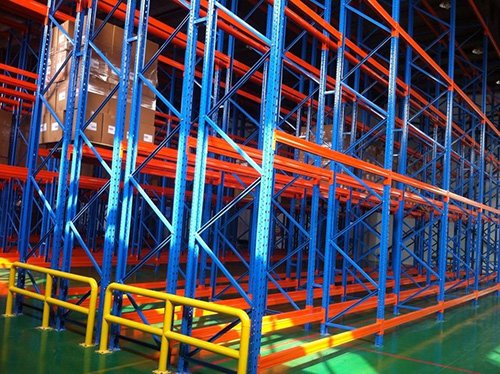
Proper installation ensures long-term reliability of pallet rack dolly systems.
Rails are laser-aligned and epoxy-grouted into floor channels. Key steps:
Survey floor for high spots; grind if needed.
Set rails to exact gauge and level; tolerance ±1 mm over 10 m.
Torque anchor bolts to specification (typically M16–M24, 150–300 N·m).
Monthly: Clean rails; inspect wheels for wear; check safety sensors.
Quarterly: Lubricate bearings and chains; verify brake torque.
Annually: Full electrical inspection; load test; measure rail wear.
Guangshun offers maintenance contracts with remote monitoring of dolly health.
While pallet rack dolly systems have higher initial costs than static racks, the space savings and operational efficiencies often yield rapid payback.
Dollies and drives: $5,000–20,000 per carriage depending on capacity.
Rails and installation: $200–400 per linear meter.
Controls and safety: $10,000–50,000 per system.
Engineering: 5–10% of total cost.
Mobile racking dollies reduce aisle count, increasing pallet positions by 50–100% within the same footprint. For a 10,000 m² warehouse, this can avoid building an additional 5,000 m² at $1,500/m² – saving $7.5 million.
Labor: Reduced travel time; AS/RS integration cuts forklift needs by 30–50%.
Energy: Smaller heated/cooled volume (especially in cold storage).
Maintenance: Lower than drive-in racking because dollies reduce impact damage.
Payback periods typically range from 2 to 5 years
Pallet rack dolly systems are a proven solution for maximizing warehouse density without sacrificing accessibility. From robust mechanical design to sophisticated safety controls, each component must be engineered for the specific application. Pallet rack dolly technology continues to evolve with IoT-enabled monitoring and automated guided vehicles. Guangshun provides turnkey dolly systems backed by structural analysis, on-site commissioning, and long-term support. By understanding the technical parameters outlined above, warehouse operators can confidently invest in high-density storage that delivers measurable ROI.
A1: Load capacities vary widely. Mobile racking dollies typically support 10–60 tonnes per carriage, while shuttle dollies handle 1–2 tonnes per pallet. Pallet rack dolly systems from Guangshun are custom-engineered for specific loads and duty cycles.
A2: Aisle opening typically takes 20–45 seconds, depending on carriage mass and travel distance. High-speed systems with VFDs can achieve 8 m/min, opening a 3 m aisle in about 22 seconds.
A3: Yes, but special materials are required: low-temperature steel (e.g., S355NL), synthetic lubricants rated to -40°C, and heated control enclosures. Guangshun has installed freezer-rated dolly systems in -30°C warehouses.
A4: Systems include photoelectric sensors at aisle entrances, mechanical safety edges, emergency stop buttons, and spring-applied brakes. In seismic zones, anti-tip devices lock dollies during earthquakes. All comply with ANSI and FEM standards.
A5: Monthly cleaning of rails, visual inspection of wheels and sensors; quarterly lubrication of bearings and chains; annual electrical and load testing. Guangshun provides predictive maintenance via remote monitoring.
A6: Initial cost is 2–3 times higher than selective racking, but space savings of 50–100% often yield payback within 2–5 years. Total cost of ownership is lower when land and labor savings are factored.
For engineering consultations or to request a quote, visit Guangshun’s dolly systems page or contact a storage solutions specialist.

 Wechat
Whatsapp
Wechat
Whatsapp